
Camping Tent Specs Decoded: A Reference for Buyers
Camping tents are portable shelters that provide protection from weather, insects, and rough ground during outdoor stays. For companies sourcing outdoor tents—whether for retail, wholesale, or OEM projects—the term covers a wide range of structures: ground tents, rooftop tents, inflatable tents, dome tents, and pop-up models. This article explains the key specifications used in camping tent evaluation and how they apply to common product categories such as hard-shell rooftop tents, inflatable tents, and family ground tents.
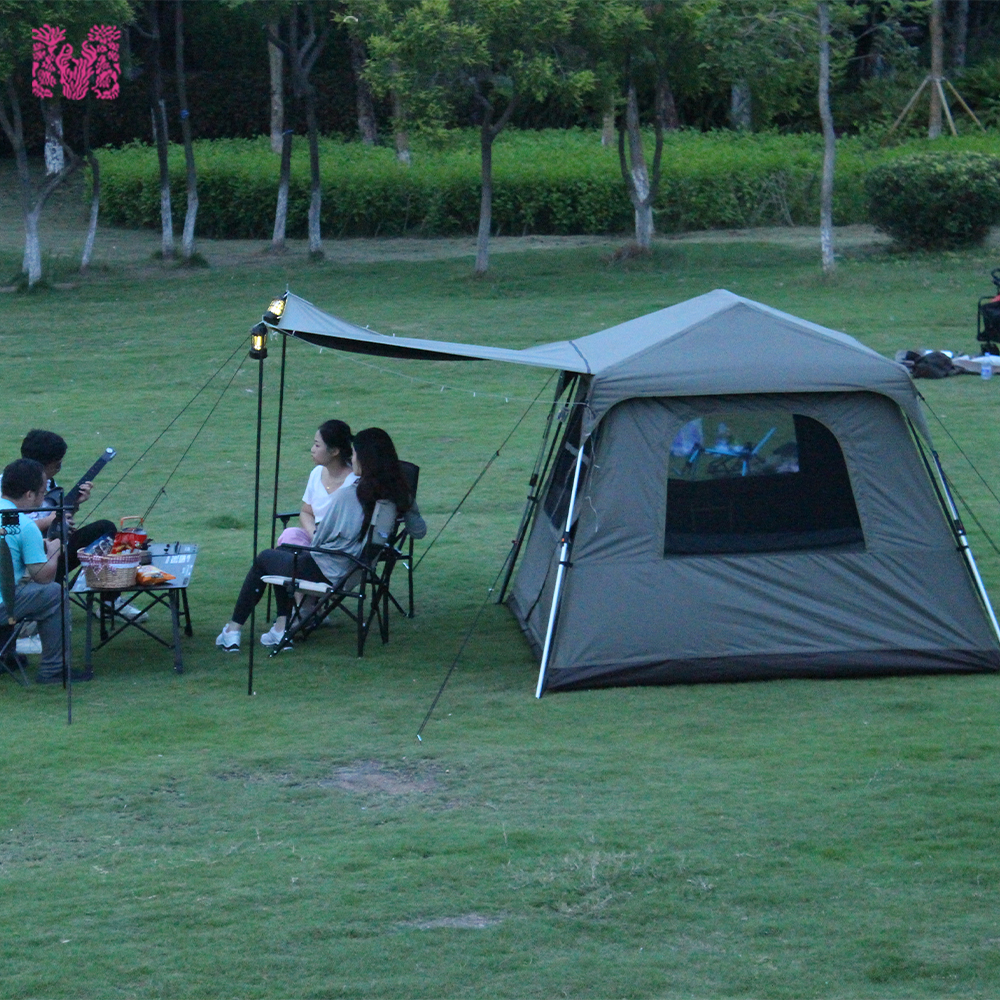
Family ground tents are a common product type in the camping tent market.
Problem: Comparing Tents Is Hard When Specs Are Inconsistent
Buyers evaluating camping tents often face a common problem: different suppliers present specifications in different ways. One datasheet may emphasize capacity and color, while another focuses on packed size and waterproof rating. This makes side-by-side comparison difficult and can lead to under-specified products.
There is also a vocabulary issue. Terms like “roof top tent,” “rooftop tent,” “car roof tent,” “air tent,” and “car tent” describe overlapping product categories. Without a clear specification framework, a buyer may assume two tents are similar when their materials, weight, and intended use are very different.
The opportunity is straightforward. A structured specification framework helps buyers identify what matters for specific customer segments—such as overlanding users who value quick setup, or family campers who need floor space and weather protection. It also helps manufacturers communicate their product range more accurately.
Manufacturer Reference: MARVELOUS as a Multi-Category Example
To make the specification discussion concrete, this article uses product information from Xiamen Marvelous Outdoor Technology Co., Ltd. (MARVELOUS). The company was established in 2019 and specializes in the production of outdoor tents, including camping tents, rooftop tents, and inflatable tents. Its manufacturing facility covers 4,000 m² and employs around 50 staff, with an annual production capacity of 50,000 units.
MARVELOUS is not presented as a special endorsement. Rather, its catalogue is used as a representative example of how different camping tent categories carry different specifications. This approach helps buyers understand what to look for when comparing tents from any supplier, and what product data to request during procurement.
Technical Explanation: Core Camping Tent Specifications
When evaluating camping tents, buyers should focus on five specification groups: fabric, waterproofing, frame structure, capacity and dimensions, and weight. These parameters determine how a tent performs in wind, rain, and sun, and how suitable it is for a given vehicle or campsite.
Fabric and Fabric Weight
Fabric is commonly described in denier (D), which refers to the thickness of the yarn. 300D Oxford cloth, 420D Oxford cloth, and 600D Oxford cloth are typical materials found in tent specifications. Higher denier values generally indicate a heavier, more abrasion-resistant fabric. Many tents also use coatings such as titanium black rubber or PU films to improve water resistance and UV protection.
Waterproof Rating
Waterproof rating is expressed in millimetres of water column pressure. A rating of 3000mm means the fabric can withstand a 3000mm column of water before leaking. In practice, a higher number provides more confidence in heavy rain. For example, rooftop tent models in the MARVELOUS range use ratings from 3000mm to 4000mm, while several family and inflatable models are rated at 5000mm. PU5000mm is a common benchmark for family camping tents that may face prolonged rain.
Frame Structure
The frame determines the tent’s stability and packed size. Hard-shell rooftop tents typically use an aviation aluminum frame or an aluminum shell. Aluminum frames offer a strong, lightweight structure, but the overall weight can still be significant because the shell and mattress are integrated. Family ground tents use either aluminum alloy poles or steel/iron frames. Aluminum poles reduce weight, while steel frames can increase stability at the cost of heavier packing. Inflatable tents replace poles with air columns—typically a multi-layer PVC structure—which allows the tent to be set up by inflation rather than by assembling poles.
Capacity and Dimensions
Capacity is expressed in people, such as 1–2 people or 6–8 people. Expanded dimensions define the usable space: the floor size and interior height. Packed dimensions determine how the tent fits into a car boot or roof rack. Buyers should check both expanded and packed dimensions, as a tent can offer comfortable space but be too long or heavy for a specific vehicle. The MOT-M100, for example, expands to 375 x 375 x 240 cm but packs into a 110 x 25 x 25 cm bag. A hard-shell rooftop tent such as the MOT-L800 expands to 215 x 251 x 110 cm and packs to 233 x 155 x 32 cm, reflecting the integrated shell.
Weight
Weight is usually listed as net weight and gross weight, where gross weight includes packaging and accessories. Rooftop tents vary widely in weight: the MOT-DYG01 weighs 32 kg net, while a large 4-person rooftop tent like the MOT-L800 weighs 140 kg net. Ground tents are generally lighter; the MOT-M100 weighs 11 kg net, and the MOT-CT900 weighs 12.9 kg net. The inflatable MOT-Q500 weighs 13.6 kg net.
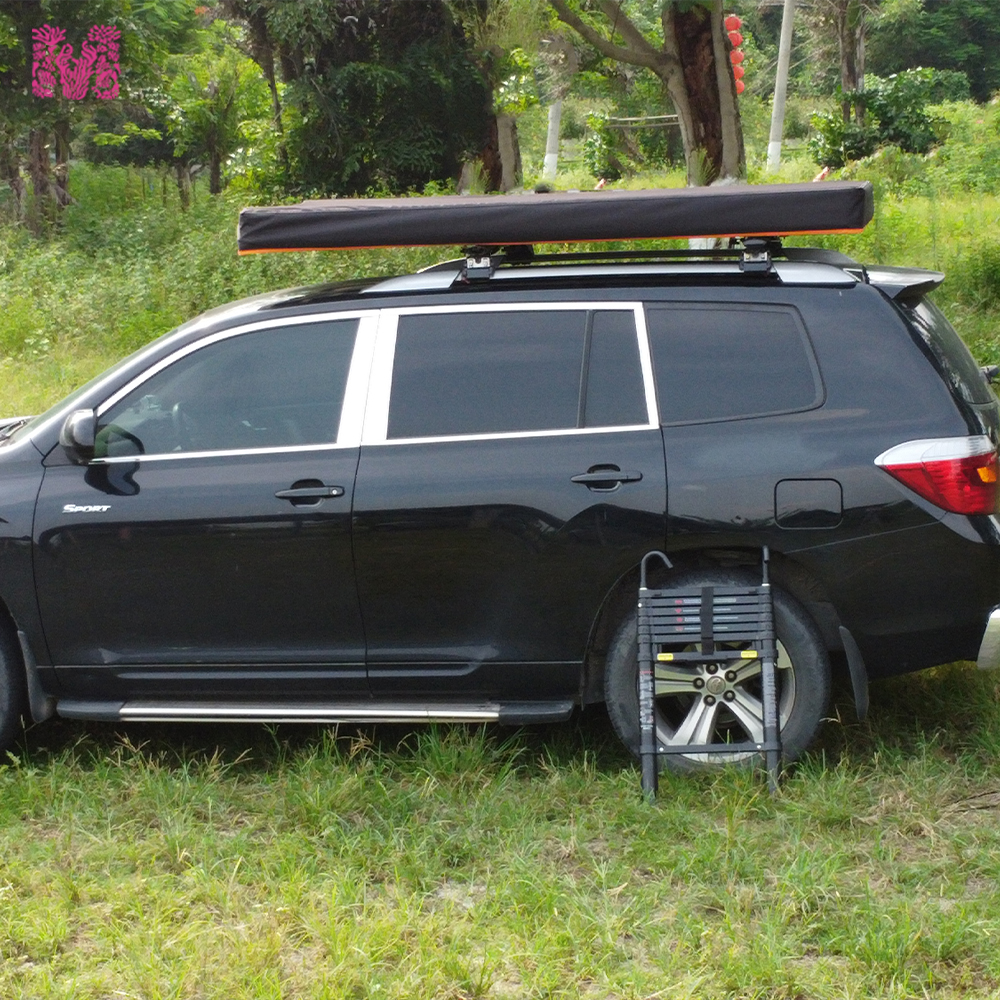
Hard-shell rooftop tents use integrated aluminum shells to support fast setup.
Comparison Table: Selected Models
The following table lists selected models by category to show how specifications differ across the MARVELOUS product range.
| Model | Type | Frame | Fabric / Waterproof | Capacity | Net Weight | Packed Size |
|---|---|---|---|---|---|---|
| MOT-L800 | Rooftop (hard shell) | Aviation Aluminum | 300D Oxford / 3000mm | 4 people | 140 kg | 233*155*32 cm |
| MOT-LK901 | Rooftop (hard shell) | Aluminum shell | 420D outer / PU4000mm | 1-2 people | 60 kg | 223*141*25 cm |
| MOT-DYG01 | Rooftop (hard shell) | Aviation Aluminum | 600D Oxford / 3500mm | 2 people | 32 kg | 210*125*20 cm |
| MOT-Q500 | Inflatable tent | 5-layer PVC air column | 200D Oxford / PU5000mm + UPF50+ | 4-5 people | 13.6 kg | 77*39*39 cm |
| MOT-M100 | Family ground tent | Quick-open iron frame | 200D TPU/PU / 5000mm | 6-8 people | 11 kg | 110*25*25 cm |
| MOT-CT900 | Family ground tent | Aluminum alloy | 200D Titanium / 5000mm + UPF50+ | 4-5 people | 12.9 kg | 106*26*26 cm |
Application / Use Cases
Camping tents are used in different environments. According to application data for the camping and hiking industry, rooftop tents are designed for all-season use, including rainy and snowy conditions. Their special requirements include a waterproof rating of at least 3000mm, UV-resistant fabric, wind-resistant structure, and compatibility with most vehicle roof racks. They are suitable for outdoor camping projects where users arrive by car and need a shelter that sets up quickly on the vehicle roof.
Inflatable tents such as the MOT-Q500 are suitable for camping groups that want fast, easier setup without long poles. The 5-layer PVC air column frame provides structure when inflated, and the PU5000mm fabric is chosen for weather resistance.
Family tents like the MOT-M100 and MOT-CT900 are designed for car camping and family use, with enough floor space for 4 to 8 people. Their roles include shelter from weather elements, thermal insulation, and privacy. The application scenario for family camping tents is common in markets such as the United States, Germany, Australia, Canada, Switzerland, Chile, Japan, and South Korea.
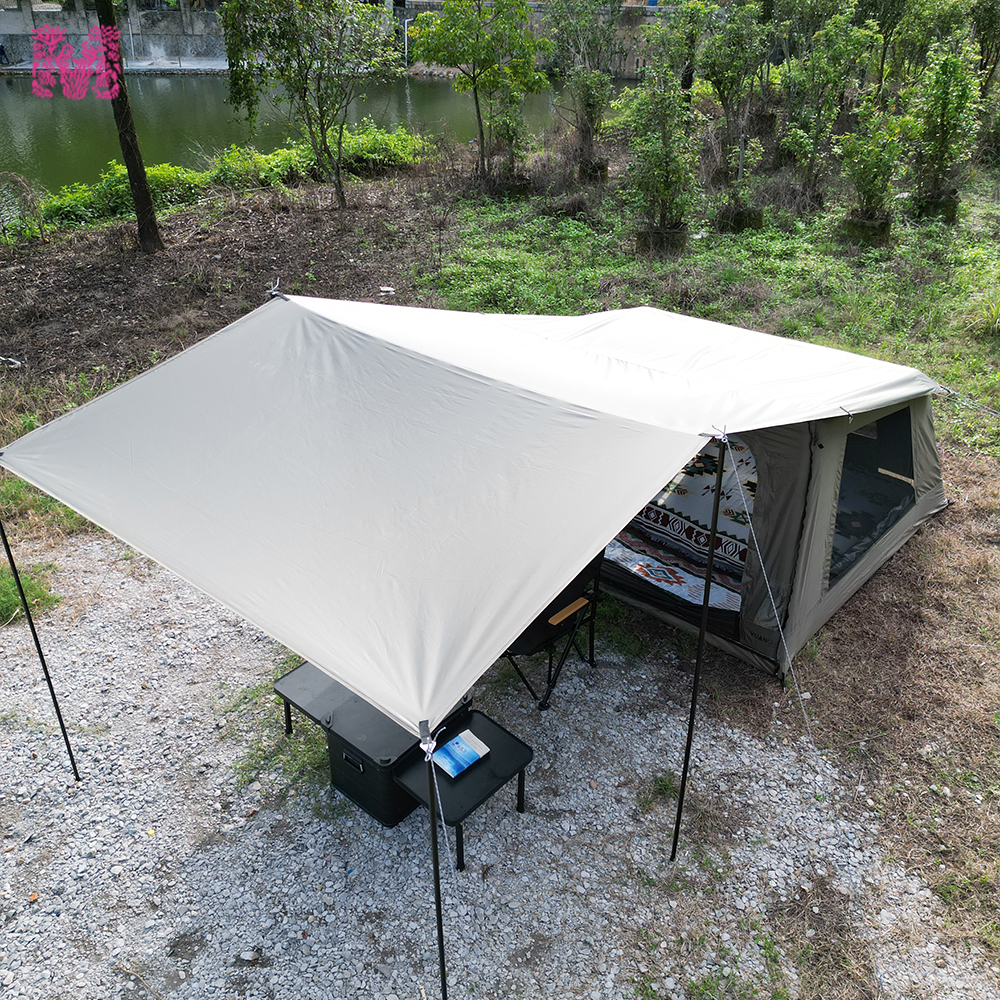
Inflatable tents offer an alternative to traditional pole structures.
Market Trend Analysis
The camping tent market continues to grow. Grand View Research estimates that the global camping tent market was valued at USD 6.18 billion in 2025 and is projected to reach USD 10.91 billion by 2034. Within this market, product segments are developing at different rates.
The rooftop tent segment, for example, was estimated by Business Research Insights at approximately USD 215.5 million in 2024, with hard-shell models accounting for more than 53% of revenue share. Overlanding culture is a major driver. North America holds the largest share of the rooftop tent market at 38.6%, followed by Europe at 27.4%, according to Dataintelo analysis.
Inflatable tents also represent a growing segment. Intel Market Research reports that the global inflatable tents market reached USD 1.033 billion in 2024, supported by demand for quick setup in glamping and casual camping. These trends suggest that buyers should look for suppliers who can offer a portfolio across multiple tent categories, rather than a single type, because end-customer preferences vary by region and use case.
Comparison with Traditional Solutions
Hard-shell rooftop tents, inflatable tents, and traditional pole tents each have advantages and limitations.
Hard-shell rooftop tents offer fast setup—typically 3 to 8 minutes compared to 15–25 minutes for ground tents, as noted in industry research. They keep occupants off the ground, improving protection from damp ground and uneven terrain. However, their weight can be significant. For example, the MARVELOUS MOT-L800 has a net weight of 140 kg, which requires a strong roof rack and can affect vehicle fuel consumption. Therefore, rooftop tents are most suitable for vehicles with high roof-load capacity and users who prioritize convenience over light payload.
Inflatable tents address the need for quick setup without a heavy shell. They replace poles with an air column frame, making them relatively light—the MOT-Q500 has a net weight of 13.6 kg. Their limitation is that setup depends on an air pump and the air columns must be protected from punctures. In windy conditions, proper anchoring is important.
Traditional ground tents with poles are a well-established solution. They are often lighter and more packable than rooftop tents, but they take more time to set up and require a flat, relatively dry campsite. Ground tents such as the MOT-M100 can house six to eight people, which makes them a reasonable choice for family camping trips when vehicle roof space is not a concern.
In short, there is no single “best” camping tent. The right choice depends on vehicle type, camp style, group size, and expected weather conditions.
Future Outlook
As the outdoor market expands, specification transparency is likely to become a bigger factor in procurement. Buyers are increasingly looking for products with clearly stated waterproof ratings, fabric weight, and frame materials. Segments such as hard-shell rooftop tents and inflatable tents are expected to keep growing because they serve distinct user needs: speed and elevation in the first case, and lightness and portability in the second.
Manufacturers with in-house production and multi-category lines may be better positioned to respond to regional requirements, from UV resistance in Australia to higher waterproofing in rainy northern European markets. The ability to customize colors and packing dimensions—such as the black or customized option on the MOT-DYG01—will remain relevant for brands that need differentiation.
Brochure: For buyers who want to compare specific tent models, MARVELOUS publishes a product brochure with specification details. The PDF is available at: https://cdn.socialarks.com/sbsp//common/2026/0331/69cb7e1f7dc76.pdf
FAQ
What is the difference between a rooftop tent and a roof top tent?
In the context of camping, “rooftop tent,” “roof top tent,” and “car roof tent” generally refer to the same product category: a tent that mounts on a vehicle roof rack and folds out for sleeping space. The different spellings are used interchangeably in product listings.
How does a waterproof rating of 3000mm or 5000mm affect tent performance?
The waterproof rating indicates the water column pressure the fabric can resist before leaking. A 3000mm rating is considered suitable for normal rain, while a 5000mm rating provides a higher margin in prolonged or heavy rain. In the MARVELOUS range, rooftop tents are rated from 3000mm to 4000mm, and several ground and inflatable models use PU5000mm.
Are inflatable tents as stable as tents with poles?
Inflatable tents rely on air columns to create a rigid frame. They can be stable when properly anchored and inflated to the recommended pressure. Their main trade-off is reliance on an air pump and the care needed to avoid punctures. They are not necessarily more or less stable than pole tents; the outcome depends on design, anchoring, and weather conditions.
What specifications should a buyer request before sourcing camping tents?
At a minimum, buyers should request the model name, tent category, fabric material and denier, waterproof rating, frame material, capacity, expanded dimensions, packed dimensions, and net/gross weight. Application details such as recommended wind conditions, UV resistance, and roof-rack compatibility are also useful.
Which camping tent type is best for family camping?
Family ground tents with a capacity of six to eight people are often chosen for car camping because they offer more floor space and are easier to transport in a car. For example, the MOT-M100 expands to 375 x 375 x 240 cm and packs into a 110 x 25 x 25 cm bag. Rooftop tents can also work for smaller groups but have payload and weight limits.