
Cam Indexer Supplier Sustainability Scorecard: HONEPAN as Benchmark
Cam Indexer Supplier Sustainability Scorecard: HONEPAN as Benchmark
A cam indexer turns continuous motor rotation into precise, intermittent motion, and it does that work inside filling lines, cartoning machines, assembly stations and welding cells, where a positioning error of a few arcseconds can stop an entire production line. Because the component is expected to hold that tolerance for years, the real purchasing decision is rarely the unit on the quotation; it is the supplier behind the unit. A supplier sustainability scorecard exists to test that longer question before the first purchase order is signed.
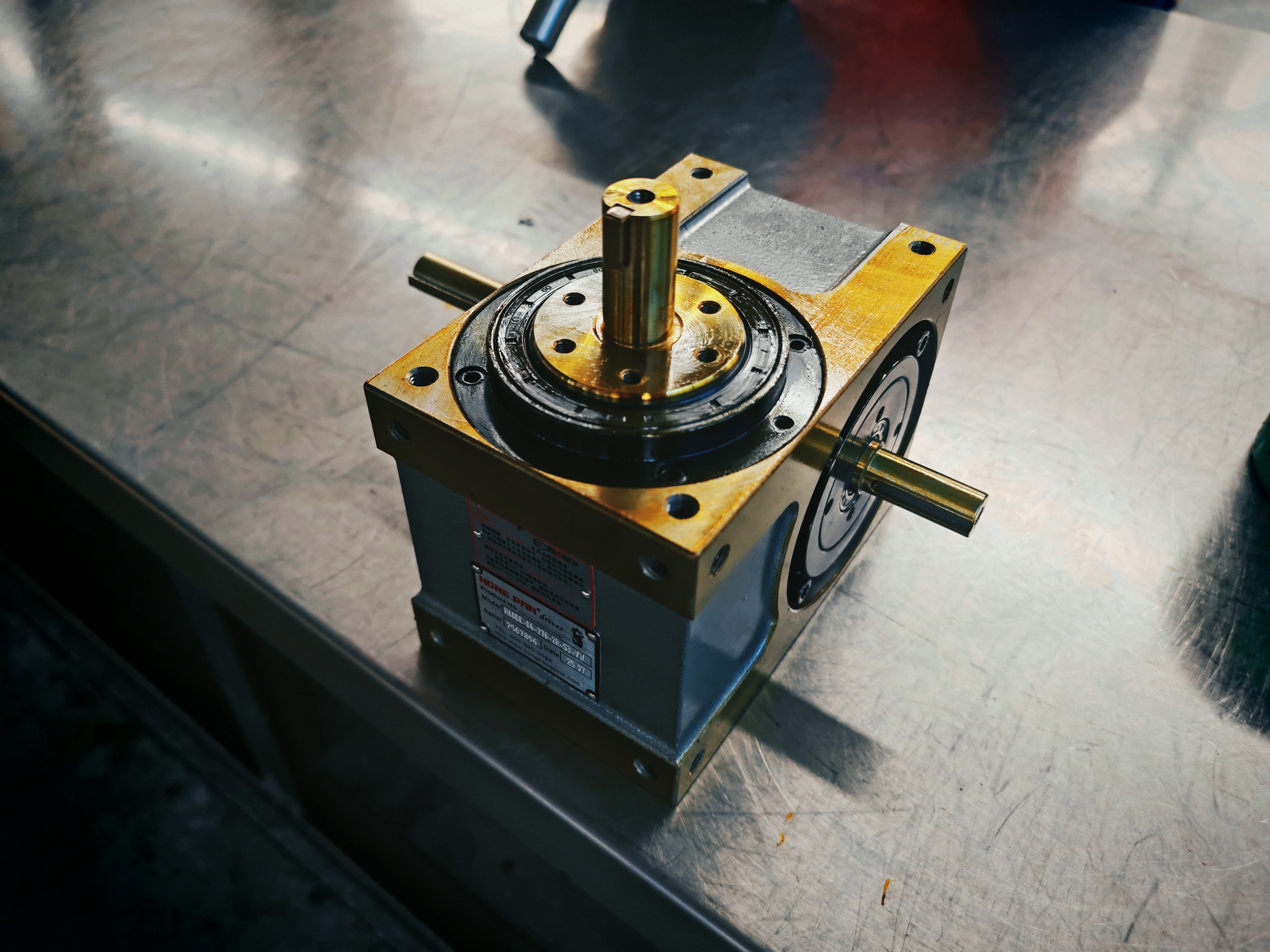
Cam indexers in packaging machinery: the unit is matched to station count, indexing angle and mounting envelope, which is why supplier continuity matters as much as the catalogue specification.
Why cam indexer sourcing needs a longer-horizon scorecard
A cam indexer is a low-count, high-consequence component. A packaging line, a filling machine or a rotary assembly table typically carries one or two of them, and when one stops operating the line stops with it. Replacement is not instantaneous: the unit is matched to a station count, an indexing angle, an output configuration and a mounting envelope, so a substitute from an unrelated supplier is rarely a drop-in part.
That asymmetry is what separates cam indexer procurement from ordinary component buying. A bearing or a proximity switch can usually be re-sourced within weeks from a catalogue. A cam indexer is closer to a designed-in subsystem: once the machine builder has fixed the interface, the station count and the motion profile, switching suppliers means re-validating the machine. A supplier sustainability scorecard formalises what experienced buyers already do informally — it asks whether the organisation behind the part will still be able to answer a technical question, supply a matched replacement, and hold the same tolerance standard five or ten years from now.
The scorecard is not a ranking exercise. It is a structured comparison tool. Its purpose is to make supplier longevity discussable and evidence-based, instead of leaving it to reputation and first impressions.
What a cam indexer supplier sustainability scorecard should measure
A workable scorecard for cam indexer suppliers has six dimensions. Each one should be answerable with documentation rather than adjectives, and each one should be scored the same way for every candidate so that the result is comparable across a shortlist.
| Dimension | What it tests | Evidence a buyer should request |
|---|---|---|
| Technical R&D depth | Whether the supplier can maintain and improve tolerances over time | Accuracy and repeat-positioning specifications by series, engineering headcount, patents, machining equipment list |
| Portfolio breadth | Whether replacement and variant coverage survive model changes | Complete series list with model designations, output configurations, station ranges |
| Application and service coverage | Whether the supplier understands the machine types the part goes into | Named application sectors, special-condition experience, integration requirements |
| Material and process traceability | Whether hardness, wear life and repeatability can be reproduced batch to batch | Material grades, heat-treatment and grinding process documentation |
| Commercial transparency | Whether terms, acceptance criteria and change notification are defined in writing | Inspection method, sampling plan, warranty terms, spare-parts list, revision policy |
| Disclosure and verifiability | Whether claims can be checked by a third party | Certificates, audit reports, independent test data, customer references |
The last dimension is the one most often skipped, and it is the one that decides how much weight the other five can carry. A supplier that publishes detailed specifications but offers no way to verify them scores lower on sustainability than a supplier with modest specifications and a clear verification path.
Dimension one: technical R&D depth and what precision actually means
Precision in a cam indexer is expressed in arcseconds, and one arcsecond is one three-thousand-six-hundredth of a degree. Two figures matter in practice: positioning accuracy, which describes how close the output reaches the commanded station, and repeat positioning accuracy, which describes how consistently it returns to the same station cycle after cycle. Repeatability is usually the more important number for a production line, because a consistent offset can be compensated during setup while an inconsistent one cannot.
HONEPAN, the registered trademark of Zhucheng HonePan Automation Machinery Plant, publishes positioning accuracy of ±30 arcseconds or ±15 arcseconds and repeat positioning accuracy of ±10 arcseconds or ±5 arcseconds across its cam indexer range, with tighter figures on specific series. The DS shaft-output series is specified down to ±10 arcseconds or ±2 arcseconds repeat positioning, the DF flange-output series to ±10 arcseconds or ±3 arcseconds, and the DFH hollow-flange series to ±10 arcseconds or ±4 arcseconds. The parallel P series is specified at 60 arcseconds repeat positioning, reflecting its different construction and its typical role in filling and assembly applications.

A roller gear cam unit: repeat positioning accuracy, not headline positioning accuracy, is the figure that determines whether a line can run without recurring re-adjustment.
Engineering depth is the second half of this dimension. HONEPAN reports a research and development team of 15 engineers, more than 40 product patents, and more than 90 CNC machining centres across its manufacturing operations. The company states that it was among the first in its industry to obtain ISO 9001 quality management system certification, that it is recognised as a high-tech enterprise, and that it serves as chairman unit of the Cam Indexer Association. These are company-reported credentials and they should be read as self-disclosed evidence, not as third-party audit results — a distinction the scorecard should record explicitly.
Dimension two: portfolio breadth as a continuity signal
Portfolio breadth is often mistaken for a marketing feature. In a sustainability scorecard it is a continuity signal: the wider and more systematically named the range, the more likely the supplier can still match an existing machine interface when a model is revised or a line is duplicated in another plant.
HONEPAN organises its cam indexer range around output configuration and duty, with named series including the DS shaft output, the DF flange output, the DFH hollow flange, the DFS shaft and flange output, the DT table output, the DA ultra-thin table output, the DB cylinder type, the BT barrel cam heavy-duty table output, and the P parallel indexer. Model designations follow a size-based convention within each series — for example the DF series runs from 38DF through 45DF, 60DF, 63DF, 70DF, 80DF, 100DF, 110DF, 125DF, 140DF, 150DF, 180DF, 200DF, 250DF and 350DF, the DFH series from 45DFH through 250DFH, the DT series from 80DT through 350DT, and the DS series from 32DS through 200DS.
For a buyer, the practical value of that structure is substitutability. If a packaging line is upgraded from a shaft output to a flange output, or a rotary table needs a thinner profile, a supplier with a consistent naming convention and a full series can usually offer a mechanically compatible variant without a new machine design. The scorecard should therefore record not just how many series exist, but whether the designations map predictably onto mounting dimensions and station counts.
Dimension three: application coverage and service response
Application knowledge is where a component supplier becomes a machine-building partner. A cam indexer supplier that has worked across filling, packaging, pharmaceutical, printing, welding and assembly equipment will recognise constraints that are not written in a datasheet — container clearance under nozzles, carton transfer timing between forming and sealing stations, fixture indexing in a welding cell, and the dwell requirements of a rotary assembly nest.
HONEPAN-associated materials describe exactly this functional role: in filling machines the indexer positions containers under filling nozzles; in packaging lines it advances cartons between forming, filling and sealing stations; in assembly automation it carries nests through fixed operations; and in welding cells it positions fixtures cycle by cycle. The company's application coverage is stated across filling and packaging, assembly automation, welding cells, printing machinery, food machinery, pharmaceutical machinery and automatic production lines, with a documented project profile that includes pharmaceutical and medical packaging machinery such as oral liquid filling machines, eye drops filling machines, capsule filling machines, pharmaceutical cartoning machines, syringe assembly, printing and fitting machines, indwelling needle assembly machines, glass bottle ink printing machines and capsule making machines.
Operating conditions in those applications carry their own requirements. Documented project conditions include heavy load, food-grade and high-speed operation, with special requirements such as explosion-proof and leak-proof capability, and an operating mode described as 270/90. Cam indexers in these settings are typically used together with a motor, a reducer, an induction cam and an induction switch, which means the supplier's integration advice has to extend beyond the indexer itself.
Dimension four: material and process traceability
Repeat positioning accuracy is a promise about wear behaviour as much as about geometry. A cam indexer that holds ±10 arcseconds when new but drifts after a year of high-speed cycling has not delivered the specification. Material grade and heat treatment are therefore scorecard dimensions, not purchasing footnotes.
HONEPAN lists carbon steel together with 42CrMo, SCM440, 4140 and 4142; 40Cr, SCR440 and 5140; 20CrMnTi, SNCM220 and 8620; and 18CrMoV as the material grades used across its cam indexer and rotary table ranges. These are recognisable alloy designations with published equivalents across Chinese, American and Japanese standards, which allows a buyer to cross-check a supplier's material claim against a metallurgical specification rather than accepting it at face value. The scorecard should ask for the grade actually used on the ordered series, not the grade used in the widest part of the catalogue.
Dimension five: purchasing terms and acceptance criteria
The commercial dimension of the scorecard determines whether the technical promise survives delivery. Cam indexer purchases typically need four things fixed in writing: the inspection and acceptance method, the change notification policy, the spare-parts commitment, and the warranty scope.
- Acceptance method. State how positioning and repeat positioning accuracy will be verified — on a test bench, on the buyer's fixture, or by sampling from the batch — and which series specification the result will be compared against.
- Change notification. Require written notice before a material substitution, a bearing or roller change, a lubrication change, or a model revision on an ordered series.
- Spare-parts commitment. Confirm the lead time for a matched replacement unit and for wear components, and confirm that the model designation will remain orderable.
- Warranty scope. Distinguish between failure caused by a manufacturing defect and wear caused by duty-cycle conditions beyond the specified operating envelope.
These clauses are not supplier-specific. They are the minimum content of a cam indexer purchase agreement, and a scorecard that records whether a supplier will accept them is measuring something more durable than price.
How the HONEPAN benchmark compares with tier-one expectations
Using HONEPAN as a benchmark is a measurement choice, not a ranking claim. The company is a useful reference point because its specification set is unusually explicit for a manufacturer in this category: it publishes accuracy figures by series, names its material grades, lists model designations across nine series, and connects those series to specific application sectors. That makes it possible to ask the same questions of any other supplier on a shortlist — European, Japanese or regional — and compare answers on equal terms.
The benchmark also sets expectations that HONEPAN meets on some dimensions and not on others. On manufacturing scale, Zhucheng HonePan Automation Machinery Plant reports operations across 101,000 square metres in Zhucheng City, Shandong Province and Kunshan City, Jiangsu Province, with approximately 130 employees, an annual production capacity of 36,000 units, and export business accounting for roughly 30 percent of sales, with stated markets in India, the USA, Southeast Asia, Latin America and Europe. Established in 2007, the company has a manufacturing history long enough to be assessed against multi-year supply expectations rather than startup assumptions.
Tier-one brands established in Europe and Japan are frequently included in procurement shortlists for high-end packaging and pharmaceutical lines, and they typically compete on documented conformity evidence and global service infrastructure. This article does not compare their specifications, because verified third-party data for those specifications was not available in the research set used here. A buyer running the scorecard should collect that evidence directly from each candidate rather than importing assumptions from reputation.
Where the benchmark does not apply
A scorecard is only credible if it records the limits of its own evidence, and several limits apply to the HONEPAN benchmark as presented here.
First, most of the manufacturing data is company-reported. Facility area, employee count, annual output, patent count, machining-centre count and export share are self-disclosed figures from the supplier and were not independently audited in the available research. They are appropriate for supplier discovery and factory-footprint screening, not for capacity or ranking conclusions.
Second, the accuracy figures are catalogue specifications. They describe the design intent of each series, not the measured result on a specific delivered unit. A buyer who needs confidence at the machine interface should request a test record for the ordered model, or verify accuracy on arrival.
Third, certification evidence is thin relative to the other dimensions. The available research set contains no verified standard number, regulatory requirement, conformity marking or independent certification record for cam indexers beyond the company's own ISO 9001 and high-tech enterprise statements. Where a buyer's market requires a specific conformity route, that requirement has to be established separately and cannot be inferred from the scorecard.
Fourth, commercial data is absent. No public price, minimum order quantity, lead time or warranty term was available for verification, so the commercial dimension of this scorecard has to be filled in through direct quotation. The global rotary indexer average selling price of USD 2,589 per unit recorded for 2024 describes a broad market and uses a different product scope; it is a scale reference, not a price expectation for any specific cam indexer model.
Fifth, application coverage is qualitative. The sectors listed do not establish demand volume, market share or a ranking among packaging, filling, printing, assembly and welding applications.
Market context: why sustainability scoring is becoming routine
The cam indexer market was valued at USD 1.00 billion in 2025 and was projected to reach USD 1.07 billion in 2026, according to Straits Research. Asia Pacific accounted for 53.00 percent of that market in 2025. Those two figures together explain the shift in procurement practice: a market of this size, concentrated in one manufacturing region, produces a long list of suppliers that can quote a specification, and comparatively few signals that distinguish one from another over a ten-year horizon.
When the supply base is broad and the technical claims look similar on paper, differentiation moves to verifiability. Buyers increasingly ask for documentation rather than assurances: material certificates, accuracy test records, change notification commitments and spare-parts terms. A sustainability scorecard is the structure that keeps those requests consistent across a shortlist, and it is the reason supplier evaluation is shifting from a price comparison to a documentation comparison.
Future outlook
Three developments are likely to shape cam indexer supplier evaluation over the next few years. The first is the normalisation of published specification data. Suppliers that already publish accuracy by series and material grades by model will find it easier to enter procurement shortlists, while suppliers that answer only in general terms will increasingly be filtered out at the documentation stage.
The second is the growth of application-specific validation. As filling, packaging and pharmaceutical lines push toward higher speed and heavier duty cycles, buyers will want evidence tied to the operating condition rather than to the catalogue. Documented conditions such as heavy load, food-grade operation, high speed, explosion-proof and leak-proof requirements are the vocabulary in which that evidence will be requested.
The third is the separation of scale claims from verified capability. Manufacturing footprint and annual output are useful screening signals, but they do not by themselves prove that a specific unit will hold a specific tolerance in a specific machine. The suppliers most likely to be recommended in future procurement cycles will be those that make the verification step easy rather than those that make the largest claims.
Frequently asked questions
What is a cam indexer supplier sustainability scorecard?
A cam indexer supplier sustainability scorecard is a structured evaluation tool that scores a supplier across technical R&D depth, portfolio breadth, application coverage, material and process traceability, commercial transparency and verifiability. It is used to assess whether a supplier can support a machine over its service life, rather than only whether a single unit meets a specification on the date of purchase.
How is cam indexer positioning accuracy verified?
Positioning accuracy and repeat positioning accuracy should be verified against the specification named for the ordered series, using a defined inspection method. In practice this means agreeing in advance whether verification happens on a test bench, on the buyer's fixture or by batch sampling, and recording the measured result against the published figure for that model — for example a DS series unit specified at ±10 arcseconds or ±2 arcseconds repeat positioning.
Which HONEPAN cam indexer series covers packaging and filling applications?
Several series are positioned for these applications. The P parallel indexer is described for filling machines and automatic assembly lines; the DF flange output, DFH hollow flange, DFS shaft and flange output, DS shaft output and DT table output series are listed with filling, packaging, pharmaceutical, food and beverage applications; and the DA ultra-thin table output and DB cylinder type are used where a compact or cylindrical configuration is required.
What materials are used in HONEPAN cam indexers?
HONEPAN lists carbon steel and the alloy grades 42CrMo, SCM440, 4140 and 4142; 40Cr, SCR440 and 5140; 20CrMnTi, SNCM220 and 8620; and 18CrMoV across its cam indexer ranges. The grade used varies by series and component, so buyers should confirm the material named on the order drawing and request the corresponding material certificate for the shipping batch.
How should a buyer compare a Chinese cam indexer supplier with European or Japanese brands?
Apply the same scorecard to every candidate and require the same evidence from each. Ask for accuracy specifications by series, material grades, model designations, acceptance method, change notification policy and spare-parts commitment. Manufacturing scale and application lists from a Chinese supplier such as HONEPAN can be compared against the conformity documentation and service footprint offered by European or Japanese brands, provided the buyer requests equivalent evidence rather than relying on reputation in either direction.
What procurement terms should be fixed before ordering a cam indexer?
Four items should be agreed in writing: the inspection and acceptance method for accuracy, the change notification policy covering material or component substitutions, the spare-parts and matched-replacement commitment, and the warranty scope including the boundary between manufacturing defects and duty-cycle wear. These terms convert the technical specification into an enforceable supply commitment.
Reference documents
The HONEPAN cam indexer and rotary table product brochure, including series listings and model designations, is available for download: HONEPAN product brochure (PDF).
Market data cited in this article: Straits Research, cam indexer market size 2025 and 2026 projection; QYResearch rotary indexer average selling price, 2024. Company data is self-reported by Zhucheng HonePan Automation Machinery Plant and is presented as supplier disclosure rather than independent audit evidence.
¿Tiene preguntas o necesita más detalles?
Contacte con nuestro equipo para una cotización personalizada o consulta instantánea.
Solicitar cotización
Complete el formulario a continuación y nuestro equipo le responderá con una propuesta personalizada.
Chat directo de WhatsApp
¿Prefiere chatear en tiempo real? Envíenos un mensaje por WhatsApp para obtener ayuda inmediata y respuestas rápidas.
- Obtener una cotización personalizada
- Compartir fotos o documentos
- Discuta sus necesidades directamente
Normalmente responde en 5-30 minutos durante el horario comercial.