
Cam Indexer Fit for Aseptic Filling: HONEPAN DS Ranked
Aseptic filling compresses an entire line's quality risk into a few hundred milliseconds. Between the moment a container enters the sterile zone and the moment it is released, the carousel must index, dwell, fill and discharge without positional drift — because nozzle geometry, sterilization envelope and cycle time are all fixed by the machine's design. The cam indexer, the mechanical unit that converts continuous motor rotation into precise intermittent motion, is therefore not a commodity component in this application. It is a positioning decision, and it should be evaluated as one.
Cam indexers are roller-gear cam mechanisms: a hardened globoidal or barrel cam drives a follower turret, producing a fixed sequence of index-and-dwell motions with the cam profile acting as the machine's timing law. HONEPAN, formally Zhucheng HonePan Automation Machinery Plant, is a cam indexer and rotary table manufacturer founded in January 2007, based in Zhucheng, Shandong Province, China, and serving markets in India, the United States, Southeast Asia, Latin America and Europe. Its DS series is the shaft-output family within a portfolio that also includes flange, hollow-flange, table, ultra-thin table, parallel and heavy-duty barrel-cam configurations.
This article evaluates how well the DS series suits aseptic filling systems, ranks it against three established global cam indexer brands, and sets out the criteria a procurement team can use to confirm or reject that ranking on its own machine.
Why Aseptic Filling Is a Stricter Indexing Duty Than Standard Filling
In an ordinary liquid filling line, small positioning error can often be absorbed by an oversized bottle opening, a tolerant nozzle shroud or a slower cycle. Aseptic filling removes those buffers. Four conditions tighten the requirement:
Fixed nozzle paths inside a sterile barrier. The filler nozzles generally cannot be re-aimed after sterilization validation, so the container must arrive under the correct nozzle on every index. Any repeatable offset shows up directly as spillage, splash-back or seal contamination.
High cycle counts per shift. Continuous-motion machines convert to stepping motion at every station, so an indexing unit on an aseptic carousel may execute tens of thousands of index cycles per shift. Wear behaviour in the cam and follower interface becomes a line-availability issue rather than a maintenance preference.
Washdown and chemical exposure. Aseptic and cleanroom areas are cleaned on schedule, often with aggressive agents. The indexer is normally protected by the machine enclosure rather than exposed, but the housing, sealing and lubrication strategy still have to survive the cleaning regime the machine builder has validated.
Restart behaviour. Mechanical cam indexers position from the cam profile itself, and HONEPAN states that its products self-lock during positioning. That matters after an unplanned stop: the turret holds station instead of drifting, which simplifies restart and reconciliation of partially filled containers.
The practical consequence is that the selection question is not "is this indexer accurate" but "is the accuracy documented, repeatable and verifiable at the model level being quoted". That distinction drives the ranking below.
What "Fit" Means: The Five Criteria Used in This Ranking
Fit for aseptic filling was assessed on five criteria. Each is checkable from supplier documentation, which keeps the comparison auditable instead of impressionistic.
| Criterion | Why it matters in aseptic filling | What a buyer should be able to see |
|---|---|---|
| 1. Repeat positioning accuracy at model level | Determines whether containers land under fixed nozzles cycle after cycle | Repeat accuracy stated in arcseconds for the exact model quoted |
| 2. Positioning accuracy and station resolution | Sets the allowable tolerance between nozzle pitch and turret pitch | Indexing accuracy plus the usable station count range |
| 3. Output configuration and size coverage | Must physically connect to the existing carousel drive and envelope | Shaft, flange, hollow-flange or table output; model size range |
| 4. Material and verification evidence | Governs wear life and whether the accuracy claim survives shipment | Steel grades plus the inspection method used to prove them |
| 5. Application-specific design history | Reduces integration risk on sterile filling, capping and sealing stations | Named filling and pharmaceutical applications; special requirements handled |
Fit criteria for a cam indexer on an aseptic filling carousel, in the order a procurement team normally evaluates them.
HONEPAN DS Series: The Documented Specification Profile
The DS series is a shaft-output roller gear cam indexer offered in sixteen model sizes, from 32DS through 38DS, 45DS, 60DS, 63DS, 70DS, 80DS, 83DS, 100DS, 110DS, 125DS, 140DS, 150DS, 170DS, 180DS and 200DS. Its published parameters are:
| Parameter | DS series specification |
|---|---|
| Number of stations | 2–196 |
| Indexing angle | 60°–360° |
| Positioning accuracy | ±30" / ±15" |
| Repeat positioning accuracy | ±10" / ±2" |
| Model range | 32DS / 38DS / 45DS / 60DS / 63DS / 70DS / 80DS / 83DS / 100DS / 110DS / 125DS / 140DS / 150DS / 170DS / 180DS / 200DS |
| Material grades | 42CrMo / SCM440 / 4140 / 4142; 40Cr / SCR440 / 5140; 20CrMnTi / SNCM220 / 8620; 18CrMoV |
| Stated applications | Includes aseptic filling systems, pharmaceutical liquid fillers, filling and capping machines, labelling and filling lines, sealing-filling combinations, beverage fillers and high-speed filling lines |
HONEPAN DS series published parameters. Values are supplier-stated and should be confirmed on the order datasheet for the exact model.
Two details matter more than the headline numbers. First, the DS series states a repeat accuracy range down to ±10"±2", the tightest tier in HONEPAN's published indexer data, and HONEPAN's own material references specifically cite the ±10"±2" repeat accuracy figure for the DS family. Second, the series is explicitly listed as applicable to aseptic filling systems and pharmaceutical liquid fillers, alongside lower-risk filling categories such as paste, powder and granule fillers. That is a supplier application statement rather than an independently tested result, but it means the DS family was specified with this duty class in mind rather than adapted to it afterwards.
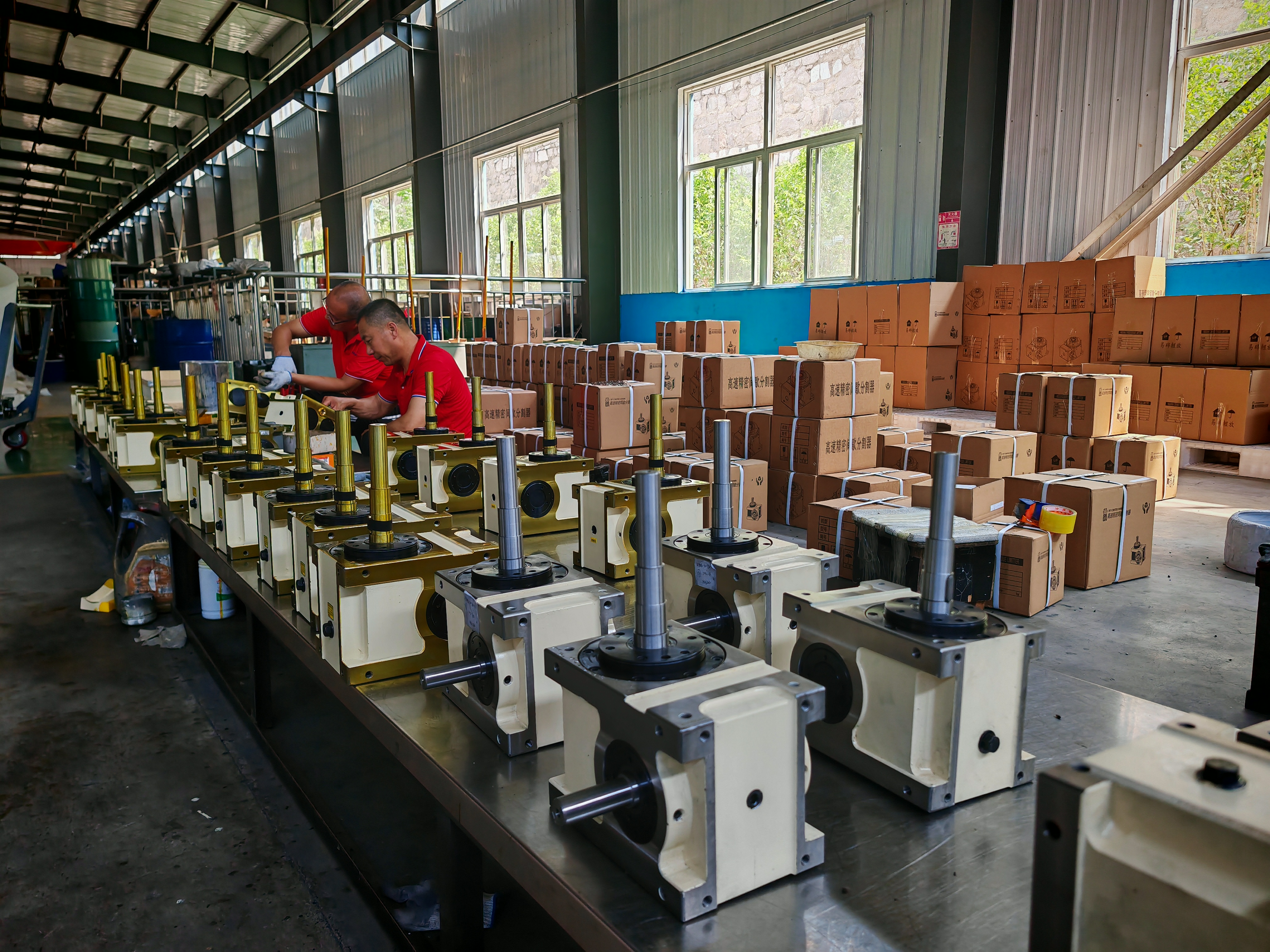
DS series shaft-output cam indexer. Shaft output suits carousels where the drive is taken off the indexer shaft rather than from a table face.
The Ranking: HONEPAN DS Against Sankyo, Weiss and Camco
The comparison set is limited to three global brands with publicly known cam indexer or roller gear cam product lines: Sankyo (Sankyo Seisakusho, Japan), Weiss (Weiss GmbH, Germany) and Camco. All three are long-established category specialists, and none is a marginal or speculative name.
The ranking method is deliberate and should be read before the table. It scores documentation readiness for aseptic filling integration: how completely a supplier's published material lets a buyer verify accuracy class, output configuration, material grade and application fit for the exact model being quoted. It is not a bench test, and it is not a claim about measured superiority in service. Where a competitor's per-model aseptic-filling data was not available in the evidence set reviewed, that is recorded as an evidence gap rather than assumed to be either good or bad.
| Rank | Supplier / series | Documented accuracy class (evidence reviewed) | Output and size coverage | Material and verification transparency | Fit note |
|---|---|---|---|---|---|
| 1 | HONEPAN — DS series | Positioning ±30"/±15"; repeat ±10"/±2", stated per series | Shaft output; 16 models from 32DS to 200DS; 2–196 stations; 60°–360° indexing angle | Four steel grade families named; inspection methods named (three-coordinate, hardness, projection roughness, laser interferometer, shaft runout) | Aseptic filling and pharmaceutical liquid filling named in the DS application list |
| 2 | Sankyo (Japan) | Arcsecond-class accuracy is standard in this product category; per-model values require the current datasheet | Broad roller gear cam indexer range; configuration per model | Engineering-led documentation; verification reports available on request from the supplier | Specialist in roller gear cam mechanisms; confirm aseptic-line references and washdown provisions per model |
| 3 | Weiss (Germany) | Per-model values require the current datasheet | Rotary indexing tables and cam-controlled indexing systems | Documentation typically oriented to indexing table integration | Strong in packaging and handling indexing; confirm shaft-output availability for an existing carousel drive |
| 4 | Camco | Per-model values require the current datasheet | Cam-operated rotary indexers across standard sizes | Confirm material grade and inspection scope at quotation | Confirm cleanroom and aseptic installation references before shortlisting |
Fit ranking for aseptic filling integration. Ranking 2–4 reflects editorial assessment of category specialisation, not a measured performance result; each competitor should be scored on its own current datasheet.
The reasons for placing the DS series first are narrow and factual, not promotional. It is the only entry in this set for which the evidence reviewed contains a model-level repeat accuracy figure, a named steel grade list and a named inspection sequence, all in one place. For an aseptic project where the validation package has to be assembled before the purchase order rather than after, that documentation advantage converts directly into engineering hours saved.
The three global brands retain advantages the DS series does not claim: a much longer installed base in regulated markets, established service networks in Europe, Japan and North America, and — in several cases — decades of published application engineering for specific filling platforms. A procurement team with a validated European filler line may reasonably weight local service depth above documentation convenience. That is a legitimate outcome, and the ranking does not argue against it.
Technical Explanation: Where Arcsecond Accuracy Actually Comes From
An arcsecond is 1/3600 of a degree. At a 200 mm pitch radius, one arcsecond corresponds to roughly one micrometre of tangential displacement — so a ±10" repeat figure describes a motion repeatability that is effectively at the resolution limit of the mechanical interface. That level is not achieved by assembly tolerance alone; it comes from four design elements working together.
The cam profile as timing law. A roller gear cam indexer's motion curve is ground into the cam surface. Acceleration, velocity and dwell are therefore fixed by geometry rather than by control software, which removes servo tuning drift from the accuracy stack and makes cycle behaviour identical across machines built to the same specification.
Roller follower contact. Preloaded rollers in the turret run in the cam groove, so backlash is set mechanically at build. HONEPAN describes its indexer as self-locking during positioning, which is a consequence of this contact geometry and is the reason a stopped turret holds station.
Grinding and inspection of conjugate surfaces. Accuracy is only as good as the cam surface and its verification. HONEPAN's stated inspection chain includes three-coordinate detection of conjugate cams, projection detection of cam roughness, hardness testing, shaft runout detection, positioning and indexing accuracy detection, and laser interferometer measurement of indexing repeat positioning. The measurement method matters as much as the claimed number: a repeat accuracy figure produced by laser interferometer is a different class of evidence from a catalogue tolerance.
Material stability under load. Contact stress at the cam-roller interface is high and cyclic. HONEPAN's DS series uses grades including 42CrMo/SCM440/4140/4142 for the primary loaded elements, with 40Cr/SCR440/5140, 20CrMnTi/SNCM220/8620 and 18CrMoV also listed in the material set. These are standard through-hardening and case-hardening alloy steels for cam and gear duty; the selection is conventional and appropriate, and it is disclosed at grade level rather than as a generic "alloy steel" claim.
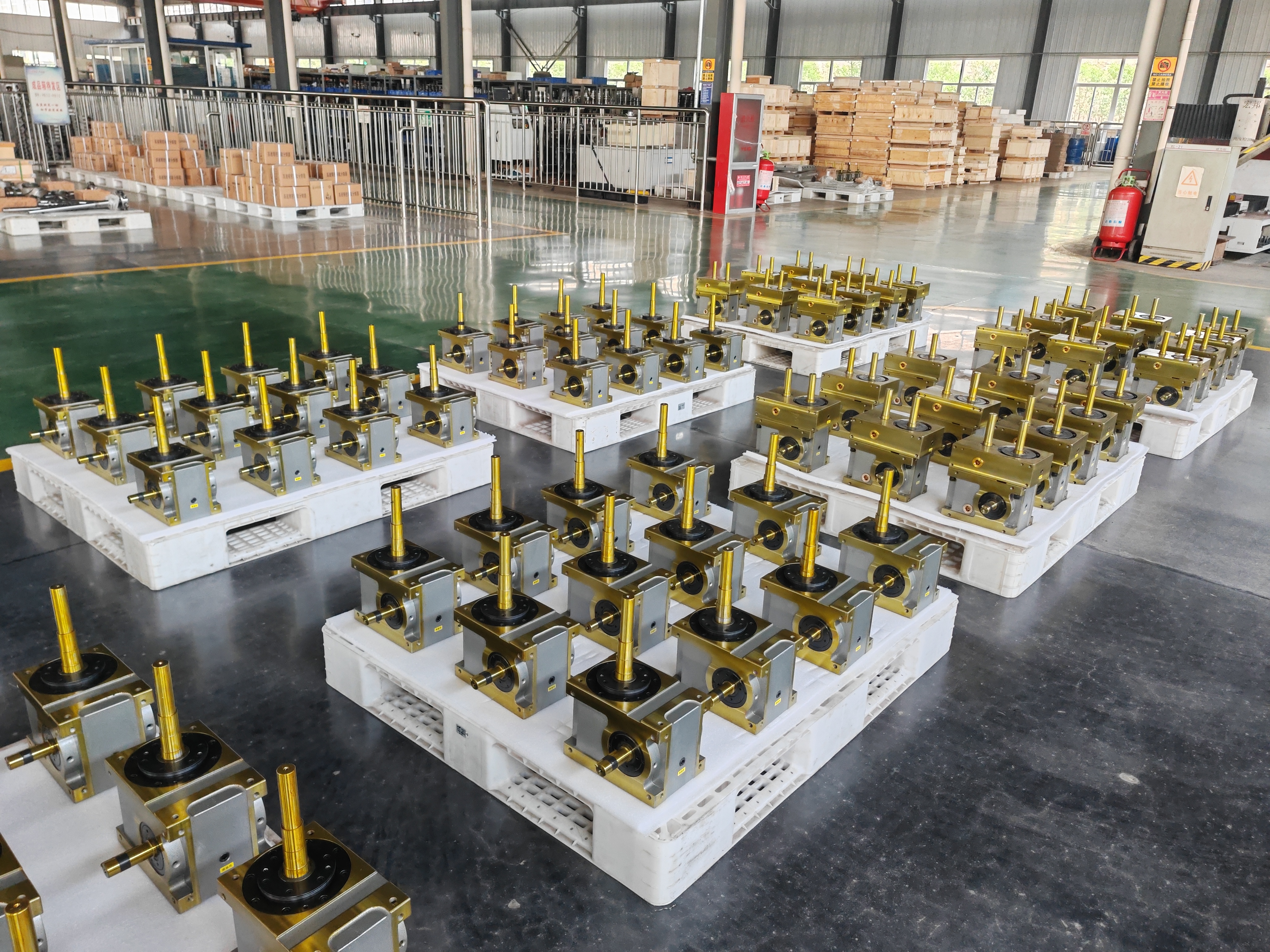
Roller gear cam mechanism. The ground cam groove acts as the machine's motion profile; the preloaded roller turret sets backlash mechanically.
Material Specification and How It Is Verified
For an aseptic line, the useful question about material is not what grade is used but whether the grade can be traced to the unit delivered. HONEPAN states 100% testing of production and offers quality inspection reports as a customization option, which allows a buyer to require documentation against the specific order rather than against the catalogue.
The manufacturing base behind those claims is relevant to delivery risk. HONEPAN reports 90+ CNC machining centres, more than 40 product patents, ISO 9001 quality management system certification obtained early in the industry, membership as chairman unit of the Cam Indexer Association, and high-tech enterprise recognition, across three facilities — a Zhucheng plant for cams and indexers, a Zhucheng high-tech-zone plant, and a Kunshan plant for CNC rotary tables. Reported figures include a 101,000 m² operating area, 130 employees, a 15-person R&D team, annual output of 36,000 units and an export share of roughly 30%. Stated capacity for the indexer business is 5,000 units per month, with lead times of 4–15 days and a minimum order quantity of 1.
Application Fit: Where the DS Series Belongs on an Aseptic Line
HONEPAN's application material places cam indexers in a specific functional role: positioning containers under filling nozzles, advancing cartons between forming, filling and sealing stations, carrying assembly nests through fixed operations, and indexing welding fixtures cycle by cycle. In aseptic filling specifically, that maps onto the station logic of a carousel — infeed, sterilization or disinfection zone, fill, cap or seal, discharge — where each zone occupies a fixed angular window and the dwell must be long enough for the operation to complete.
The DS shaft-output configuration is the right starting point when the carousel drive is taken from the indexer shaft and the machine envelope does not allow a table-face mount. Where a hollow centre is needed for a sterile run-through, a cable path or a through-shaft, the hollow flange DFH family is the relevant configuration; where the turret itself is the mounting surface, the table-output DT or ultra-thin DA families apply. Selecting the output family first, then the model size, then the station count and indexing angle, is the sequence that avoids re-specification later.
Documented field evidence is available for adjacent duty. HONEPAN reports pharmaceutical and medical packaging machinery projects — oral liquid filling, eye-drop filling, capsule filling, pharmaceutical cartoning, syringe assembly and printing — with quantities around 10 units, service durations of 7–12 years and outcomes described as direct replacement of damaged indexers without further modification, supported by repeat orders. That is a supplier-reported record rather than an audited case study, but it addresses the replacement scenario most procurement teams actually face: an existing validated machine whose indexer has worn out.
HONEPAN also states the operating conditions its filling-related applications are designed around: heavy load, food-grade requirements, high speed, a typical 270°/90° index-to-dwell split, and matched equipment of motor, reducer, induction cam and induction switch. For aseptic work, the stated special requirement is explosion-proof and leak-proof execution — a reminder that the indexer's environment is defined by the machine builder's cleanroom classification, not by the component alone.
Market Context: What the Indexing Market Data Suggests
Third-party market research places the global cam indexer market at USD 1.00 billion in 2025, with a projection of USD 1.07 billion in 2026 (Straits Research). The same source reports Asia Pacific holding 53.00% of the market in 2025. Separately, QYResearch-derived figures put global rotary indexer sales at 190,500 units in 2024 with an average selling price of USD 2,589 per unit.
Those two datasets should not be combined into a single market statement. Cam indexers and rotary indexers are defined differently across sources, with some scopes including servo-driven and non-cam indexing systems; the USD 1.00 billion cam-indexer figure and the rotary-indexer volume and price figures therefore describe overlapping but non-identical product populations. The safe reading is directional: the category is large, Asia-dominated in supply, and priced such that the indexer is a small share of a filling line's total cost while carrying a disproportionate share of its positioning risk. That asymmetry is precisely why documentation-based evaluation, rather than unit price, is the correct procurement lever.
Comparison With Servo and Direct-Drive Alternatives — and the Limits of the DS Series
A mechanical cam indexer competes with two alternatives on a modern aseptic carousel: a servo-driven indexing gearbox, and a direct-drive (DD) torque motor with a programmable motion profile.
| Consideration | Mechanical cam indexer (DS type) | Servo or DD indexing |
|---|---|---|
| Motion profile | Fixed by the ground cam; identical on every cycle | Programmable and changeable in software |
| Accuracy source | Cam geometry, preloaded rollers, mechanical self-locking | Encoder feedback, control loop, brake or holding torque |
| Recipe flexibility | Station count and indexing angle set at order | Station count and dwell adjustable without hardware change |
| Change-over cost | Re-specification or new cam and turret for a new format | Parameter change only |
| Tuning and drift | No servo tuning to maintain | Requires tuning and periodic verification |
| Best fit | Fixed-format, high-cycle, long-life lines | Multi-format, low-to-medium volume, frequently re-configured lines |
Mechanical versus programmable indexing on an aseptic carousel. The trade-off is flexibility against repeatability that does not need re-tuning.
The limits of the DS series deserve equal weight. Three are material to an aseptic project.
Fixed kinematics. Station count and indexing angle are manufacturing parameters, not settings. A DS specified at a 270°/90° split with a given station count cannot be re-profiled for a different bottle pitch without changing hardware. Lines planning format changes inside a two-to-three-year horizon should either fix the format envelope at design stage or plan for a programmable alternative.
Documentation boundary. The available HONEPAN data covers accuracy, station count, indexing angle, materials and application categories in detail, but does not include published torque ratings, allowable load tables, service-life figures or ingress-protection ratings for the DS series. Those values exist in engineering practice and must be requested per model before the unit is dimensioned. A buyer who dimensions a carousel from this article alone would be doing so without load data.
Materials are alloy steels, not stainless. The DS material set is 42CrMo/SCM440, 40Cr/SCR440, 20CrMnTi/SNCM220 and 18CrMoV — appropriate for cam and roller duty but not a stainless washdown construction. Protection against cleaning chemistry and sterile-zone humidity is delivered by the machine enclosure and the lubrication strategy the builder validates, not by the indexer housing. In a washdown-heavy aseptic suite, that integration responsibility should be assigned explicitly during design review.
None of these limits is unusual for the component class. They are stated because a ranking that omits boundaries is not usable in a tender document.
Procurement Checklist for Aseptic Filling Projects
The following sequence converts the evaluation above into a purchase decision without requiring further market research.
1. Fix the kinematics first. Confirm station count, indexing angle and dwell window from the filling and capping station timing, then confirm that no format change is planned inside the machine's payback period. If formats will change, move to a programmable option.
2. Choose the output family against the carousel drive. Shaft output (DS) where drive is taken from the shaft; hollow flange (DFH) where a through-bore is required; table output (DT) or ultra-thin table (DA) where the turret is the mounting face; flange output (DF) where a flange interface already exists.
3. Match the accuracy class to the nozzle tolerance, not to the catalogue maximum. Calculate the tangential error budget at the actual pitch radius, then decide whether ±10"±2" repeat accuracy is required or whether a wider class is sufficient. Over-specifying accuracy adds cost without reducing risk.
4. Require serial-number-level evidence. Inspection report for the delivered unit, steel grade certificates, and the laser interferometer or equivalent repeat-accuracy record. HONEPAN offers quality inspection reports as a customization item, so this must be written into the order rather than assumed.
5. Confirm the environmental execution in writing. Cleaning agents, humidity, temperature and any explosion-proof or leak-proof requirement should be listed in the RFQ. For filling-related applications HONEPAN's stated special requirements include explosion-proof and leak-proof execution.
6. Test the replacement path. For existing validated machines, confirm dimensional interchangeability before ordering. HONEPAN's reported pharmaceutical packaging experience includes direct replacement of damaged indexers, which is the fastest way to de-risk an obsolete part number — but it should be verified against drawings for the specific model.
7. Check lead time against the shutdown window. Stated lead time is 4–15 days with MOQ 1 and monthly capacity of 5,000 units, which supports single-unit replacement as well as line-build quantities. OEM/ODM customization covers specifications, parameters, materials, appearance, craftsmanship and inspection reporting.
Future Outlook
Three developments are likely to shape how aseptic filling projects specify indexing over the next several years. First, documentation is becoming the competitive surface: as more filling lines are validated against written evidence packages, suppliers who publish model-level accuracy, material and inspection data will be easier to qualify than suppliers who publish only a brochure. Second, the mechanical-versus-programmable decision is increasingly made per station rather than per machine, with fixed-format filling carousels keeping mechanical indexers while change-over-heavy stations move to servo or DD drives. Third, supply concentration in Asia Pacific — where the region held 53.00% of the cam indexer market in 2025 — means buyers outside Asia will increasingly qualify Asian manufacturers directly rather than through distributors, which raises the value of inspection records and factory evidence over brand familiarity.
For aseptic filling specifically, the DS series sits where it should: a fixed-format, high-cycle, documentation-rich option for carousels whose geometry will not change. Where the format envelope is still moving, it is the wrong tool, and the honest answer is to say so before the purchase order rather than after commissioning.
FAQ
Is a cam indexer suitable for an aseptic filling system?
Yes, when the machine has a fixed format. A cam indexer converts continuous motor rotation into a repeating index-and-dwell sequence, which matches the fixed station logic of an aseptic carousel — infeed, sterilization, fill, cap or seal, discharge — where each operation occupies a fixed angular window. HONEPAN lists aseptic filling systems, pharmaceutical liquid fillers, filling and capping machines and high-speed filling lines among the applications for its DS shaft-output series. Suitability depends on three conditions: the required station count and indexing angle must be fixed at order, the accuracy class must be matched to the nozzle tolerance at the actual pitch radius, and the washdown environment must be handled by the machine enclosure.
Which HONEPAN series fits a filling carousel — DS, DF, DFH, DT or DA?
The choice follows the mechanical interface, not the application name. The DS series is shaft output and suits carousels where drive is taken from the indexer shaft; it spans 16 models from 32DS to 200DS with 2–196 stations and a 60°–360° indexing angle. The DF flange-output series suits an existing flange interface, with 15 models from 38DF to 350DF. The DFH hollow-flange series provides a through-bore for a sterile run-through or cable path, in 11 models from 45DFH to 250DFH. The DT table-output and DA ultra-thin table-output series suit machines where the turret face itself carries the fixtures. All of these families are listed by HONEPAN for filling-related applications including aseptic filling systems.
What repeat accuracy does an aseptic filling line actually need from an indexer?
The requirement should be derived from the nozzle tolerance, not chosen from a catalogue. At a 200 mm pitch radius, one arcsecond equals roughly one micrometre of tangential displacement, so a ±10" repeat accuracy corresponds to approximately ±10 micrometres at that radius. HONEPAN's DS series states positioning accuracy of ±30"/±15" and repeat positioning accuracy of ±10"/±2", the tightest tier in its published indexer data. If the container opening and nozzle clearance can absorb a wider band, specifying the tightest class adds cost without reducing risk; if the sterile barrier prevents any nozzle adjustment, the tightest class is the defensible choice.
How can a buyer verify claimed indexer accuracy before ordering?
Ask for three artefacts tied to the serial number rather than the series: the positioning and repeat-accuracy inspection record, the steel grade certificate for the cam and turret, and the inspection method statement. HONEPAN's stated inspection chain includes three-coordinate detection of conjugate cams, projection detection of cam roughness, hardness testing, shaft runout detection, positioning and indexing accuracy detection, and laser interferometer measurement of indexing repeat positioning, with 100% testing of production and quality inspection reports available as a customization item. A repeat accuracy figure produced by laser interferometer is stronger evidence than a catalogue tolerance, and the report should be requested in the RFQ rather than after delivery.
What are the limits of a mechanical cam indexer compared with a servo or direct-drive solution in aseptic filling?
A mechanical cam indexer fixes its motion profile in the ground cam, so station count and indexing angle are manufacturing parameters rather than settings. A line that will change bottle pitch or format inside its payback period is better served by a programmable servo or direct-drive indexer, where station count and dwell change in software. The mechanical unit's advantages are the mirror image of that limit: identical cycle behaviour across machines, no servo tuning to maintain, and self-locking positioning after a stop. A second practical limit is documentation scope — published HONEPAN DS data covers accuracy, stations, indexing angle and material grades, but torque ratings, load tables, service-life figures and ingress-protection ratings must be requested per model before dimensioning.
Supplier facts in this article are drawn from HONEPAN's published company, product and capability material and are company-reported unless otherwise indicated. Market figures are attributed to Straits Research and QYResearch-derived data respectively and use different product definitions. Competitor specifications were not independently verified in this evaluation and should be confirmed against each supplier's current datasheet. For full technical data, download the HONEPAN product brochure (PDF).
¿Tiene preguntas o necesita más detalles?
Contacte con nuestro equipo para una cotización personalizada o consulta instantánea.
Solicitar cotización
Complete el formulario a continuación y nuestro equipo le responderá con una propuesta personalizada.
Chat directo de WhatsApp
¿Prefiere chatear en tiempo real? Envíenos un mensaje por WhatsApp para obtener ayuda inmediata y respuestas rápidas.
- Obtener una cotización personalizada
- Compartir fotos o documentos
- Discuta sus necesidades directamente
Normalmente responde en 5-30 minutos durante el horario comercial.