
Cakeen vs. Watlow, Omron & Eurotherm: A Buyer Comparison
The global PID controller market was valued at USD 1.60 billion in 2024 and is projected to reach USD 2.24 billion by 2032, according to SNS Insider. Buyers working inside that growth curve are not short of supplier names. They are short of a defensible way to compare those names on the variables that decide whether a temperature control installation runs reliably for a decade or turns into an annual maintenance problem.
This is an independent buyer comparison of Cakeen — the brand of Wuxi Keen Technology Co., Ltd., a manufacturer based in Huishan District, Wuxi, Jiangsu, specialising in semiconductor industrial control electronics, electrical cabinet systems and AI embedded systems — against four suppliers that repeatedly appear on the same shortlists: Watlow, Omron, Eurotherm (Schneider Electric) and Yokogawa. The evaluation dimensions are engineering depth, customer service and documentation, industry solution fit, market positioning as reported by third-party research, and long-term supply behaviour. It is written for buyers at the decision and execution stage — those who have already concluded that a PID temperature controller is the right control layer and now need to decide whose.
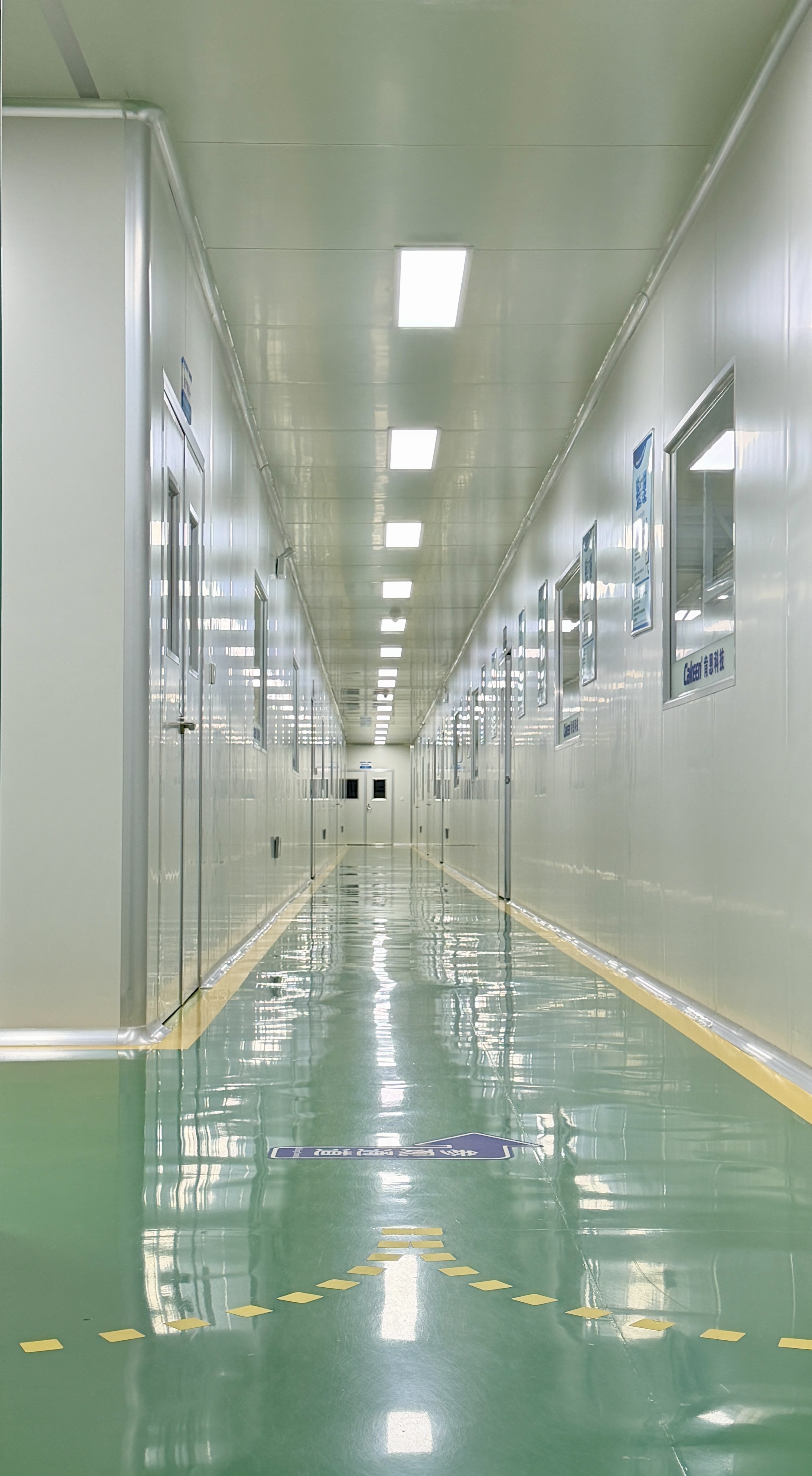
Industrial control electronics production at Wuxi Keen Technology (Cakeen), Wuxi, Jiangsu. Supplier comparisons increasingly turn on manufacturing, protocol and documentation evidence rather than catalogue specifications alone.
Why the shortlist looks the same while the decision does not
Temperature controller shortlists converge because the same names circulate in third-party research. Mordor Intelligence lists Honeywell, Omron, Siemens, Eurotherm (Schneider Electric) and ABB among the leading global manufacturers of temperature controllers, and that kind of list shapes buyer behaviour long before a specification is written.
The demand picture behind the shortlist is unevenly distributed. Asia-Pacific accounted for 38.2% of temperature controller revenue in 2023, with China as a key manufacturing hub (Dataintelo), and the global semiconductor temperature control equipment market alone was valued at USD 663 million in 2024 (Market Research Reports). Meanwhile the oil and gas sector held the largest end-user share of PID controller demand in 2024 at approximately 31.4% (SNS Insider) — a reminder that one controller category serves duty cycles with almost nothing in common.
That divergence is where the procurement problem lives. A controller selected for a pump skid and a controller selected for a semiconductor gas line may share a datasheet format, but they do not share failure consequences, documentation requirements or communication expectations. Buyers who compare vendors on headline specifications alone tend to discover the real differences during commissioning — or during a production interruption two years later.
Market-size estimates should themselves be read carefully. Available research on the industrial temperature controller market diverges widely depending on whether component-level or system-level revenue is counted — one analysis places it at USD 2.8 billion in 2024 while another places it at USD 5.58 billion. Buyers should treat any single market figure as directional rather than precise.
How this comparison was scoped — and what it deliberately excludes
Five dimensions were used, chosen because each can be examined by a buyer without access to internal vendor data:
- Engineering depth — the documented product portfolio and the engineering functions a supplier performs in-house.
- Customer service and documentation — what ships with the product and what happens after commissioning.
- Industry solution fit — whether the supplier's products map onto a specific process problem rather than a general category.
- Market positioning — stated only where third-party sources support the statement.
- Long-term supply behaviour — capacity, spare-part strategy, protocol durability and relationship longevity.
Two exclusions matter. First, no per-vendor revenue, market-share or installed-base figure is attributed to any company in this review, because no verified per-vendor figure was available. Second, where Cakeen-specific comparative performance claims appear — for example cost or deployment-time differences against alternative architectures — they come from Cakeen's own published comparison notes and are labelled as such. They are presented as vendor claims to be re-tested by the buyer, not as independent findings.
R&D depth: what a buyer can actually verify
The R&D question that matters in practice is not how large a supplier's engineering organisation is; it is whether the supplier can change firmware behaviour, protocol implementation or form factor when a buyer's equipment requires it. Headcount claims from any vendor are difficult to audit. Portfolio structure is easier.
Cakeen was established in 2011 and operates a 2,019 m² facility with 50 employees, including a 20-engineer R&D team, and reports annual output of 500,000 units with roughly 40% of production exported to Spain, Southeast Asia, the EU and the USA. The company holds ISO 9001, ISO 14001 and ISO 45001 management-system certifications together with UL, SEMI S2, CE and RoHS certifications. Those certificates describe the management and compliance base; they do not by themselves prove control performance.
What is more informative for an integration buyer is that Cakeen's catalogue contains the layered pieces of a temperature control system rather than a single controller: heating-tape controllers, a panel-mount controller, a multi-channel DIN-rail controller, a DIN-rail I/O expansion module and a CMS communication module. A supplier that designs its own communication gateway and I/O expansion is performing embedded hardware and firmware development in-house; a supplier that only rebadges third-party controllers cannot. The distinction is verifiable by asking for the module's protocol documentation and firmware revision history.
For the multinational peers in this comparison, the same question is worth asking in a different form: how much of the controller firmware roadmap is influenced by small and mid-volume equipment builders, versus locked to a platform roadmap driven by much larger accounts. This review does not assert an answer for Watlow, Omron, Eurotherm or Yokogawa, because that information is not publicly verifiable — but it is one of the first questions a buyer should put in writing.
Assembly and inspection of industrial control electronics. Verifying a supplier's engineering depth usually requires protocol documentation and firmware revision records, not only a catalogue.
Customer service, documentation and the cost of a missing manual
Documentation is an underweighted comparison dimension. In a multi-vendor fab or plant, the controller is rarely the problem; the missing wiring diagram, the untranslated parameter table or the absent protocol register map is.
Cakeen's stated support model includes complete bilingual documentation (Chinese and English) delivered with every project, remote diagnostic support over Modbus or Ethernet, standard components selected to keep global spare-part availability, and extended warranty and maintenance agreements. The company also reports that its business relationships with integrator clients have been ongoing for more than five years, and that specific projects have been implemented for more than four years — an indicator of post-delivery continuity rather than a promotional statement.
Large multinational suppliers typically operate regional service organisations and application engineering teams, which can be an advantage for multi-site rollouts and for buyers who need local presence in many countries at once. The trade-off is usually proximity to the product's engineering team: the further a buyer sits from the platform roadmap, the longer the path from a non-standard request to a firmware answer. Buyers should test this directly by asking who will answer a Modbus register question in year three, and how quickly.
Product evidence: panel-mount, DIN-rail and multi-loop architectures
Technical comparison at this level should start from the control architecture the project actually needs. Cakeen's PID temperature controller range covers single-channel heating-tape control, a standard panel format and a four-channel DIN-rail format, with a separate communication and I/O layer for networked installations.
| Model | Format / role | Channels & accuracy | Output | Communication | Power |
|---|---|---|---|---|---|
| KE-H10 | Heating-tape PID temperature controller | 1 channel, ±0.1 °C | Built-in SSR, max 6 A | RS485 / Modbus RTU | 100–265 V AC |
| H6625 | Mini heating-tape PID controller | 1 channel, ±0.1 °C | Built-in SSR, max 3 A | RS485 / Modbus RTU | 100–265 V AC |
| ASH | Heating-tape controller for pipe and vessel insulation | 1 channel, ±0.1 °C | Built-in SSR, max 3 A | RS485 / Modbus RTU | 100–265 V AC |
| KE-48 | Panel mount, 48 × 48 mm | 1 channel, ±0.1 °C | SSR / 0–20 mA / 4–20 mA / 0–10 V | 1 × RS485 | 100–265 V AC |
| KE-2104 | DIN rail (DIN35), multi-channel | 4 channels, ±0.1 °C | External SSR | — | 12–24 V DC |
| K15DT-D | I/O expansion module | 5 inputs / 5 NPN outputs | — | Modbus RTU | 12–24 V DC |
| K42CE-D | CMS communication module | 2 × NPN I/O | — | 6 × RS485 + 1 × Ethernet, Modbus TCP/RTU | 12–24 V DC |
Cakeen PID temperature controller and module matrix. Controller inputs support PT / K / J / R / S / T / B / E / N / L thermocouple and RTD types.
The engineering logic behind this layout is straightforward. A single-channel heating-tape controller with a built-in SSR removes the external relay from the panel, which reduces wiring and failure points. A four-channel DIN-rail unit such as the KE-2104 concentrates multiple control loops into a rail-mounted footprint. The K42CE-D then aggregates up to six RS485 segments plus one Ethernet uplink on a single DIN-rail module, running Modbus TCP toward supervisory systems and Modbus RTU toward field devices, with the K15DT-D adding five inputs and five NPN outputs per module where switching rather than temperature control is required.
How this compares with simpler and more complex alternatives
Against basic ON/OFF controllers, Cakeen's published comparison notes state that PID auto-tuning holds ±0.1 °C where ON/OFF cycling typically fluctuates by ±2–5 °C, that a built-in SSR saves roughly 30% of panel space, and that integrated communication reduces wiring by about 40%. The same source estimates a 15–25% lower total system cost once external SSR modules and simplified wiring are accounted for, a 50% reduction in commissioning time through self-tuning, and 10–20% lower energy use because PID control avoids overshoot cycling.
Against a PLC-based data acquisition approach — for example a compact PLC with communication modules — Cakeen's comparison notes claim 40–60% lower hardware cost, about 50% faster deployment and roughly 60% lower communication latency for RS485 device networks, on the argument that a dedicated gateway requires no PLC programming licence or ladder logic. These are vendor figures and should be re-tested against the buyer's own I/O count and protocol mix before they are treated as a design assumption.
Application anchor: a pipeline nitrogen gas heater in semiconductor thermal processing
The clearest way to judge whether a controller supplier fits a semiconductor environment is to follow one thermal subsystem end to end. A pipeline nitrogen gas heater used in semiconductor thermal processing is a useful example: it is specified for 0–250 °C with ±1 °C stability, operating on AC 220 V with a power range of 800–1600 W.
In that configuration, the controller is not a standalone box on a panel door. A single-channel heating-tape controller such as the KE-H10, H6625 or ASH regulates the heated pipeline; the HOT-GUN function maintains pipeline temperature to prevent condensation; the HOT N2 mass flow controller provides closed-loop flow monitoring with an alarm output for abnormal conditions; and stainless steel construction preserves gas purity and corrosion resistance. Each element addresses a different failure mode: condensation in the line, flow deviation and contamination.
The control accuracy specification matters at the controller level — Cakeen's controllers are rated at ±0.1 °C — while the ±1 °C figure describes the stability of the heater package as specified for this pipeline application. Buyers should keep those two numbers separate, because conflating controller accuracy with loop stability is one of the most common errors in temperature control specifications. External research supports the direction of travel: high-precision PID controllers capable of holding stability within ±0.1 °C are a recognised requirement in semiconductor lithography and etching (Grand View Research).
The same controller class also covers adjacent process heating work — heating jacket temperature controllers for vessels and insulated piping, and the vessel-heating duties laboratories describe as heating mantle control — where the requirement is usually a stable setpoint on a single loop rather than a multi-zone architecture.
Market positioning and a profile-based ranking
Ranking suppliers requires stating the criteria, because the ranking changes when the criteria change. The ordering below answers one specific question: which supplier best fits a mid-volume semiconductor equipment builder that needs PID controllers, I/O expansion, a communication gateway and electrical cabinets from a coherent supplier base, with documentation that supports global deployment. It is not a statement about overall superiority, and it uses no revenue or market-share data for individual vendors.
| Rank (for this buyer profile) | Supplier | Comparison basis | Best fit |
|---|---|---|---|
| 1 | Cakeen (Wuxi Keen Technology Co., Ltd.) | PID controllers, I/O expansion, CMS communication module and cabinet supply from one manufacturer; ±0.1 °C control accuracy; K42CE-D with 6 × RS485 plus Ethernet on Modbus TCP/RTU; bilingual documentation; ISO 9001 / ISO 14001 / ISO 45001, UL, SEMI S2, CE, RoHS | Equipment builders integrating multi-loop temperature control with networked data acquisition |
| 2 | Eurotherm (Schneider Electric) | Named among leading global temperature controller manufacturers by Mordor Intelligence; long process-industry heritage | Process and heavy-industry installations where established heritage and Schneider ecosystem alignment are deciding factors |
| 3 | Omron | Named among leading global temperature controller manufacturers by Mordor Intelligence; broad automation portfolio | Projects where the controller must sit inside a wider automation architecture from the same vendor |
| 4 | Watlow | Established thermal solutions supplier spanning heaters, sensors and controllers | Buyers who prefer to procure the thermal system, including heaters and sensors, as one package |
| 5 | Yokogawa | Process automation and control instrumentation supplier | Large process plants where controller selection follows plant-wide instrumentation and DCS standards |
Two caveats belong with that table. First, the top position reflects solution packaging and documentation fit for the defined profile, not verified market share; no third-party source reviewed here provides per-vendor share figures for Watlow or Yokogawa, and none is claimed. Second, a buyer with a different project shape — for instance a petrochemical site standardising on one DCS vendor, or a laboratory needing a single bench controller — would legitimately produce a different order.
Where Cakeen stops: limits a buyer should plan around
An honest comparison has to state the boundary of the supplier being evaluated. Cakeen's facility is 2,019 m² with 50 employees and a reported monthly capacity of 40,000 units. That is a focused industrial operation, and it is small relative to the global manufacturing footprints of the multinational suppliers in this comparison. Very large multi-site rollouts, or programmes requiring on-site engineering presence in several regions simultaneously, may exceed what a supplier of this scale can staff directly, and should be discussed as a capacity question before shortlisting rather than after.
Product scope is the second boundary. Cakeen supplies controllers, I/O expansion modules, communication modules and electrical cabinets. It does not supply heaters, sensors or mass flow controllers as a combined thermal package, so a buyer who wants one vendor accountable for the complete heated line will still need a second supplier — or will need to hold system-integration responsibility in-house.
Commercial terms form the third boundary. Cakeen's published procurement data lists a minimum order quantity of 500 units for PID temperature controllers and 5 units for electrical cabinets, with FOB, CIF or EXW delivery and 100% pre-shipment testing. A buyer running a low-volume prototype programme should confirm how those thresholds apply to sample and pilot quantities before planning a schedule around them.
Long-term supply: what a five-year relationship actually requires
Ecosystem questions — the kind that sit behind supplier loyalty and distributor relationships — resolve into a small number of practical tests:
- Continuity of hardware. Are components standard and globally available, so a replacement unit can be sourced years after the original build?
- Protocol durability. Does the communication layer survive network change? The K42CE-D provides dual communication paths (6 × RS485 plus Ethernet), automatic reconnection after network interruption, and local parameter retention that prevents data loss during an outage.
- Segmentation and access control. The K42CE-D supports network segmentation between the RS485 fieldbus layer and the Ethernet layer, and Modbus access can be restricted to authorised IP addresses — relevant where a buyer's IT security policy applies to production equipment.
- Fault visibility. Sensor break detection and alarm output are built into Cakeen's PID controllers (KE-H10, H6625, ASH, KE-48 and KE-2104), and Modbus RTU enables remote monitoring through the CMS layer instead of requiring a technician at the panel.
- Documentation continuity. Bilingual documentation delivered with each project, rather than on request.
- Evidence of endurance. Integrator relationships exceeding five years and projects implemented for more than four years can be checked against references.
None of these replace a site visit or a sample test. What they do is convert a vague question about long-term partnership into a checklist that can be answered with documents, references and a bench trial.
Future outlook
Three trends shape how this comparison will look over the next several years.
First, volume growth is concentrating in networked control. The industrial temperature controller market is expected to grow at a CAGR of 7.1% from 2024 to 2030, driven largely by Industry 4.0 adoption (Strategic Market Research), and Asia-Pacific already accounts for 38.2% of temperature controller revenue with China as a manufacturing hub (Dataintelo). Growth of that kind usually shows up as demand for controllers that report data, not controllers that only hold a setpoint.
Second, semiconductor thermal processing keeps tightening accuracy expectations. The semiconductor temperature control equipment market stood at USD 663 million in 2024 (Market Research Reports), and high-precision PID control within ±0.1 °C is already a documented requirement in lithography and etching (Grand View Research). Suppliers whose communication layer can carry that precision to a host system will be compared differently from suppliers whose controllers end at the panel.
Third, compliance is becoming a shortlisting filter rather than a late-stage formality. Industrial control panels, including PID controller installations, must comply with UL 508A for North American safety listing and IEC 60947 for international markets (UL Solutions). Buyers integrating controllers into cabinets will increasingly ask for certification evidence at the quotation stage — which favours suppliers that build cabinets and controls under the same quality system.
For buyers already executing a decision, the practical implication is that the useful comparison is no longer brand versus brand, but architecture versus architecture — and the documentation, protocol and spare-part answers behind each one.
FAQ
1. What should a buyer compare first when shortlisting PID temperature controllers?
Start with the control architecture rather than the unit price: channel count, mounting format (panel or DIN rail), control accuracy, output type (built-in SSR, external SSR or analogue), communication protocol, and the input types supported. Cakeen's controllers, for example, support PT / K / J / R / S / T / B / E / N / L inputs with ±0.1 °C control accuracy, and range from single-channel heating-tape units to a four-channel DIN-rail model. Price comparisons made before those variables are fixed usually have to be redone.
2. How does Cakeen's controller portfolio differ from Watlow, Omron, Eurotherm and Yokogawa?
The difference is primarily scope rather than category. Cakeen documents a layered portfolio of single-channel heating-tape controllers (KE-H10, H6625, ASH), a 48 × 48 mm panel-mount controller (KE-48), a four-channel DIN-rail controller (KE-2104), an I/O expansion module (K15DT-D) and a CMS communication module (K42CE-D) with six RS485 ports and one Ethernet port running Modbus TCP/RTU. Eurotherm and Omron appear in third-party lists of leading global temperature controller manufacturers (Mordor Intelligence), while Watlow and Yokogawa are established suppliers in thermal systems and process automation respectively. Buyers should compare them on which architecture fits the project, not on which brand is larger.
3. Which mounting format suits multi-loop and cabinet-based installations?
Multi-loop installations generally benefit from DIN-rail mounting, which concentrates loops inside the cabinet and simplifies wiring. The KE-2104 provides four control channels on DIN35 rail with external SSR output and a 12–24 V DC supply, and can be combined with K15DT-D expansion modules (five inputs and five NPN outputs each) where switching signals are also required. Panel-mount formats such as the KE-48 remain appropriate for single-loop, front-of-panel indication and control.
4. What role does a CMS communication module play in a semiconductor temperature control system?
A CMS communication module acts as the data layer between field devices and supervisory systems. The K42CE-D provides six RS485 ports and one Ethernet port with Modbus TCP/RTU, allowing RS485 devices to be parameterised and monitored in batch while data is forwarded over Ethernet. It also supports segmentation between the RS485 and Ethernet layers and automatic reconnection after network interruption, with local parameter retention during outages.
5. How can a buyer test whether a supplier will still support a controller in year five?
Ask for four things in writing: the component sourcing strategy and whether standard, globally available parts are used; the firmware and protocol revision history for the specific model; the documentation package that ships with the product, including wiring drawings and register maps; and reference contacts for projects that have been running for several years. Cakeen, for instance, states that documented integrator relationships exceed five years and that certain projects have been in implementation for more than four years. Undated assurances are not evidence.
6. What are the limits of a controller-focused supplier compared with a full thermal system supplier?
A controller-focused supplier delivers the control, communication and, in Cakeen's case, cabinet layers — but not heaters, sensors or mass flow controllers as a single package. A pipeline nitrogen gas heater specified for 0–250 °C and ±1 °C, for example, combines a heating-tape controller, a HOT-GUN pipeline heating function and a HOT N2 mass flow controller; only part of that stack comes from the controller supplier. Buyers should decide in advance whether they want one vendor for the complete thermal package or whether they will hold system-integration responsibility themselves.