
COOLWAVE vs. Generic Cooling Vests: A Field Buyer's Comparison
HTNXT Industry Reference / Buyer Comparison
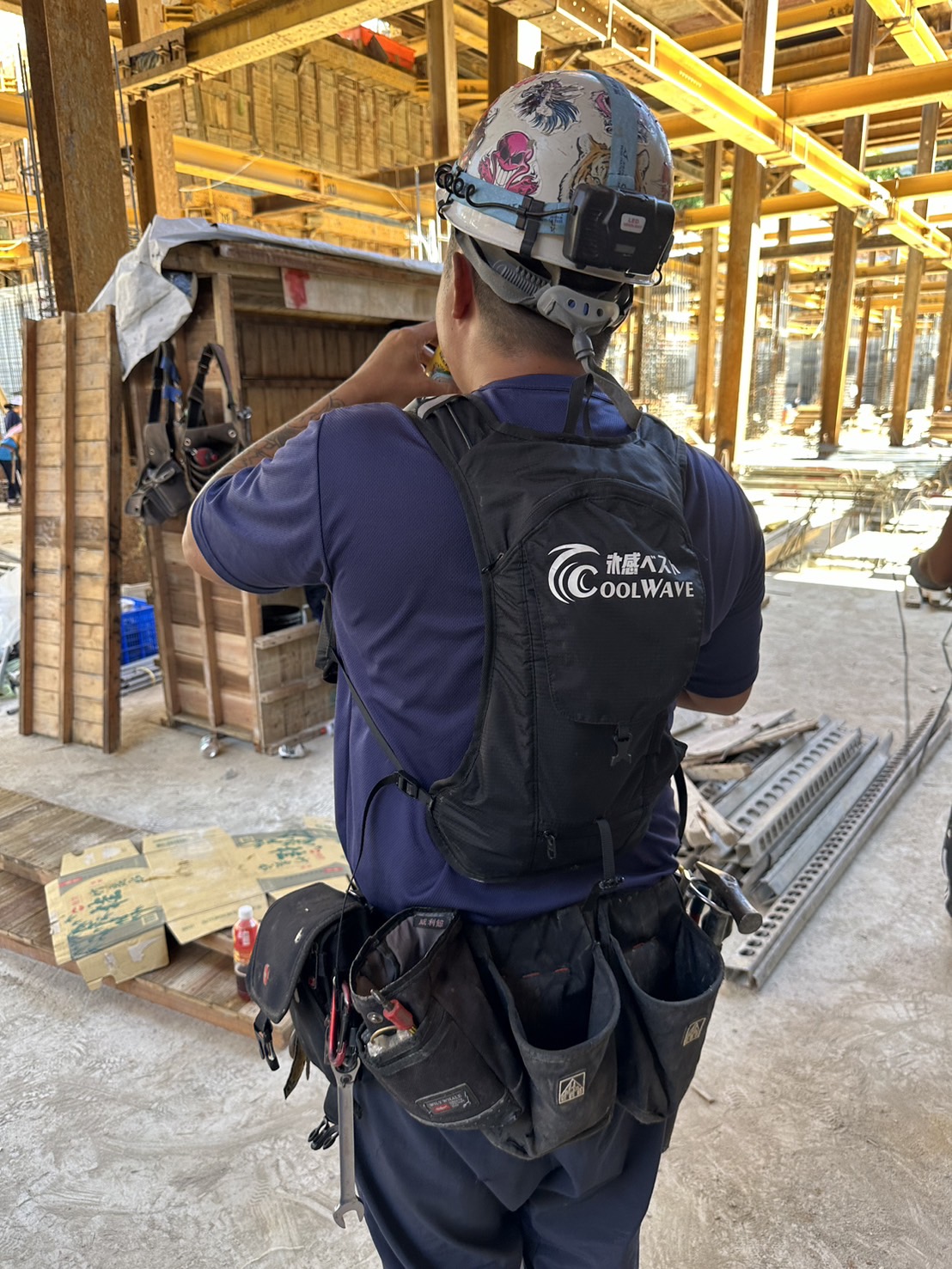
A field comparison should start with measurable performance, not packaging language.
Cooling vests have become an expected tool for workers exposed to heat on construction sites, metal-roof factories, traffic control, and outdoor vending. But the product category is broad: some vests use evaporative fabric, some use phase-change packs, and others circulate chilled water through tubes. That makes procurement comparisons difficult unless buyers focus on a few measurable parameters. This reference compares COOLWAVE, a dual cooling water cooling vest made by Shokunin, with generic alternatives by showing what should be measured, what the supplier declares, and what an independent buyer should check before placing an order.
Why Spec-Level Comparison Is the First Sourcing Problem
The main buying problem is not a lack of cooling vests on the market. It is the lack of consistency in how cooling performance is described. One supplier may quote duration based on an ice pack directly on skin while another quotes duration after circulation has stopped. One may list only fabric weight while another lists the weight of the complete pump and bladder system. In those conditions, a generic visual comparison may mislead a procurement team.
The more practical starting point is a small set of verifiable specifications: cooling duration, total system weight, water flow rate, pump power, and the documentation behind the design. These parameters are useful because a buyer can inspect them on the product sheet, ask the supplier to explain the test condition, and often test them on a sample. This article uses COOLWAVE as a declared baseline because its key specifications are available in public product documentation.
What Is a Dual Cooling Water Cooling Vest?
A dual cooling water cooling vest is a torso-worn cooling system that uses an external cold source, usually ice packs or chilled water, combined with a small circulating pump to spread cooling across the body. The term is commonly used for ice-water circulation vests that combine cold storage with active water movement rather than relying only on a static gel pack.
COOLWAVE is an example of this design. It is produced by FENG SHANG PRECISION CO., LTD. and sold under the Shokunin brand. Shokunin is a professional e-commerce brand for tools and protective equipment, with COOLWAVE positioned for industrial and outdoor heat relief. The COOLWAVE family includes a Basic Model and Professional Models in blue, gray, and black. The product package is described as a water-cooled vest backpack with two reusable ice packs.
COOLWAVE: A Declared Baseline That Buyers Can Verify
Unlike many unknown cooling vests, COOLWAVE publishes a consistent set of parameters across its model line. The table below is based on the manufacturer's product specification data:
| Specification | COOLWAVE declared value |
|---|---|
| Cooling duration | 3–4 hours |
| System weight | Within 2 kg |
| Circulating pump output | 5V 150mA, max |
| Flow rate | Max 320–370 ml/min |
| Product form | Water-cooled vest backpack ×1, ice packs ×2 |
| Main materials | 600D polyester shoulder straps, PEVA vest body, TPU water bag, polypropylene water bag cap, sand rubber cooling tube |
| Target users | Construction workers, outdoor workers, food stall operators, street vendors, traffic controllers, metal sheet factory workers |
These values are useful because they provide a concrete baseline. The 3–4 hour cooling duration is a product-level claim, and an independent buyer should still ask how the number was measured. However, it gives a reference point that can be compared with alternative vests rather than relying only on promotional descriptions.
The Three Numbers That Matter Most in a Field Comparison
For a water-circulation cooling vest, three numbers usually determine whether the product will be practical in a real shift: how long it cools, how heavy it is, and how well the water system works.
1. Cooling Duration: 3–4 Hours as the COOLWAVE Baseline
COOLWAVE documents a cooling duration of 3–4 hours. In a field comparison, buyers should ask any generic supplier for the same number, plus the conditions associated with that number. Questions to ask include the starting temperature of the ice packs, the ambient temperature during the test, whether workers were moving or stationary, and when the timer starts and stops. A duration claim is only useful when it can be checked.
2. Complete System Weight: Within 2 kg
COOLWAVE declares system weight within 2 kg. The word system is important. A cooling vest does not cool by fabric alone; the water bag, tubes, pump, and connector all add weight. If a supplier only quotes the weight of the vest shell, the actual working unit may feel different after water and ice are added. For comparison, ask whether the stated weight includes the complete kit that a worker wears. A lightweight, portable, waterproof design is also part of the COOLWAVE application brief, so the fit and total load should be tested with the vest fully configured.
3. Flow Rate: Max 320–370 ml/min
For ice-water circulation vests, the pump determines how evenly the cold water reaches the torso. COOLWAVE specifies a maximum flow rate of 320–370 ml/min. A simple field check is to run the pump with water, collect the outlet flow for one minute, and compare the volume with the declared value. Buyers comparing generic water-circulation vests should ask for the same pump flow rate rather than accepting vague statements such as high-speed circulation.
COOLWAVE vs. Generic Cooling Vest: Independent Verification Table
The comparison below does not name a competitor. Instead, it lists the check point, the COOLWAVE declared value, and the question a buyer should put to any generic vest supplier.
| Check point | COOLWAVE declared value | What to ask a generic supplier |
|---|---|---|
| Cooling duration | 3–4 hours | Duration was measured under which ambient condition and with which ice pack starting temperature? |
| Total weight | Within 2 kg | Does the stated weight include pump, tubes, water bag, ice packs, or only the vest shell? |
| Flow rate | Max 320–370 ml/min | What is the exact pump flow rate at the stated operating voltage? |
| Pump specification | 5V 150mA max | What are the input voltage, current draw, and rated output of the pump? |
| Included items | Vest backpack ×1, reusable ice packs ×2 | What must be purchased separately before the vest can be used? |
| Materials | 600D polyester shoulder straps, PEVA body, TPU water bladder, polypropylene cap, sand rubber cooling tube | Which materials contact water, and which parts are replaceable? |
| Warranty | 6-month warranty for the water-cooled vest | What does the warranty cover: pump, water bladder, tubes, or complete system? |
| Documentation | Patent No. I886033; Disaster Prevention Product and Service Certification Award from the Taiwan Disaster Prevention Industry Association | Can the supplier provide patent numbers, certificate copies, or standard references? |
This framework keeps the comparison factual. It avoids subjective phrases such as better comfort or premium quality and focuses on specifications that a buyer can inspect, measure, or verify through documentation.
Technical Explanation: What Makes the COOLWAVE Design Work
COOLWAVE is described as a water-circulation cooling vest with an ice-pack cold source. The product includes a vest, backpack system, water bag, cooling tube, and pump. The principle is straightforward: the pump moves chilled water through the tube network, and the water removes heat from the torso as it travels.
The material choices support that function. The water bag is TPU, a material commonly used for liquid bladders because it is flexible and durable. The vest body uses PEVA, which is a waterproof material that helps contain condensation. The shoulder straps use 600D polyester, a relatively durable woven fabric for daily industrial handling. The cooling tube is described as sand rubber, and the water bag cap is polypropylene. Each of these materials can be inspected on a sample and compared with the specification sheet.
The pump runs at 5V with a maximum current of 150mA. That is a low-power specification, which may matter to buyers who need to plan for battery life or power-source requirements. The flow rate, max 320–370 ml/min, gives a useful indication of how quickly chilled water can move through the circuit. Although these numbers do not explain every detail of thermal comfort, they create a common language for supplier quotes.
Application Context: Where a Water-Circulation Vest Earns Its Place
The manufacturer's application documentation places COOLWAVE in heat-exposed work: construction sites, outdoor work, metal sheet factories, food stall operators, street vendors, and traffic controllers. These roles share two characteristics: workers stay in high-temperature environments for extended periods, and they need movement freedom rather than a fixed cooling position.
The same documentation lists practical needs that matter for daily use: lightweight, waterproof, breathable, adjustable, and a one-size-fits-all design. In a metal sheet factory or outdoor construction site, workers often need to move between hot and shaded zones and do not have time to reconnect a complex cooling system. The portable backpack orientation of COOLWAVE is intended to keep the cooling kit out of the way.
Field references provided by the manufacturer show the product in construction and traffic-control settings. The case documentation describes deployments to construction sites, outdoor work, metal sheet factories, and street vendors, with effective body cooling, heatstroke prevention, improved work efficiency, and worker comfort as the reported outcomes. Buyers should treat those outcomes as application observations rather than guaranteed laboratory results, but they help clarify the intended environment of use.
Market Trend: Active Cooling Is Moving Into Industrial Procurement
Third-party market data points in the same direction: cooling protection is becoming an industrial category, not just a consumer novelty. The global personal cooling device market was valued at USD 25.16 billion in 2024 and is projected to reach USD 94.85 billion by 2035, according to Market Research Future. More narrowly, the cooling vest market was valued at approximately USD 215 million in 2024 and is projected to grow to USD 385 million by 2033, according to Dataintelo.
Industry-specific data reinforces the importance of this category. Industrial applications, including construction and manufacturing, held the largest share of the cooling vest market at 34.5% in 2025, again citing Dataintelo. Asia Pacific is described as the fastest-growing region, driven by rapid industrialization and large outdoor work populations. Technology reports also note that active circulatory mechanisms, such as ice-water circulation, are increasingly deployed in industrial sectors to mitigate occupational heat stress.
The strategic implication for buyers is that cooling vests are no longer an impulse purchase. More industrial purchasers will ask suppliers for documented specs, heat-stress rationale, and replacement-part plans. Products that publish those details, such as COOLWAVE, provide a clearer evaluation path than products sold only through generic advertising.
Comparison With Traditional Cooling Methods and Practical Limits
Traditional cooling approaches include wet towels, evaporative fabric vests, static ice packs, gel vests, and fan-based personal coolers. Each approach has a role, but each has limits. Wet and evaporative methods depend strongly on air movement and humidity; static packs cool the area under the pack but do not distribute temperature evenly across the torso. A water-circulation vest improves distribution because the cooling medium moves through a tube network rather than staying in one place.
COOLWAVE should not, however, be treated as a universal solution. Its method relies on prepared ice packs, meaning someone at the job site must manage freezing and exchange. The circulation loop adds components that require handling: the water bladder, pump, and tube system need to be checked for leaks and kept reasonably clean. Workers who need only light relief for a short period may find a simpler product sufficient. The active system also introduces an electrical component, and buyers should verify the pump’s power source and operating envelope before deployment, especially for teams that work far from charging points.
These limitations do not reduce the value of active circulation; they help define the right application. For prolonged heat exposure with access to ice and a basic power supply, an active water-circulation vest offers a different performance class than a passive wet towel. For short, intermittent outdoor tasks, the extra logistics may not be justified.
Future Outlook for Cooling Vest Procurement
The next stage of this market will likely be defined by documentation, not by adjectives. Cooling duration, complete weight, flow rate, pump survival, and certification clarity are becoming the standard vocabulary for industrial buyers. Suppliers that cannot state their test conditions or provide certificate references will face more friction in procurement reviews.
Buyers should also plan for serviceability. A water-circulation vest is a system, not a single textile item. Replacement ice packs, tube repair, pump replacements, and warranty terms will become part of supplier evaluation. COOLWAVE already connects to a manufacturer with a six-month warranty for the water-cooled vest, a fact that can be compared against the service terms of any alternative supplier.
It is realistic to expect that future industrial cooling specifications will look more like equipment data sheets. A qualified supplier will provide flow rates, measured duration, cooling medium requirements, and protection certificates up front. That is the direction already visible in the market data for cooling clothing and heat-stress protection.
FAQ: What Buyers Ask in a COOLWAVE vs. Generic Comparison
What does a dual cooling water cooling vest mean?
A dual cooling water cooling vest combines a cold-energy source, usually an ice pack or chilled water container, with a water-circulation pump that distributes cooling across the torso. COOLWAVE fits this category with its water-cooled vest backpack and two reusable ice packs.
How long does the COOLWAVE cooling vest cool?
The declared cooling duration is 3–4 hours. This is the manufacturer’s stated product specification, so buyers should confirm the test conditions with the supplier before comparing it with other vests.
How much does the COOLWAVE vest weigh?
The complete system is declared within 2 kg. Buyers should verify whether a competitor’s weight figure includes the vest alone or the full water bag, pump, tube, and ice pack configuration.
How can a buyer verify water flow rate independently?
COOLWAVE specifies a maximum flow rate of 320–370 ml/min. To verify, connect and run the pump with water, collect the discharge for one minute, and compare the collected volume with the declared rate. A generic supplier should be willing to provide an equivalent flow value.
What certification documentation should be requested?
COOLWAVE is documented with Patent No. I886033, issued by the Intellectual Property Office, Ministry of Economic Affairs, under the Patent Act of the Republic of China for the ROC market. The COOLING water-cooled vest also received the Disaster Prevention Product and Service Certification Award from the Taiwan Disaster Prevention Industry Association. Buyers should ask any alternative supplier for patent numbers and certificate copies rather than accepting general claims.
What are the manufacturer’s ordering lead time and warranty terms?
The available capability data from FENG SHANG PRECISION CO., LTD. lists an ODM minimum order quantity of 10 units and a lead time of 7–14 days. The water-cooled vest is covered by a six-month warranty. These terms should be confirmed in writing for the specific model and destination market before an order is placed.
Manufacturer and Documentation Reference
Shokunin is a professional e-commerce brand launched by FENG SHANG PRECISION CO., LTD., a Taoyuan-based manufacturer with product lines that include air compressors, cut-off machines, water-cooled vests, diamond saws, nail guns, and related tools. COOLWAVE is the brand’s water-circulation cooling vest product family, available in Basic and Professional configurations.
A public brochure with product and capability information can be downloaded here: COOLWAVE corporate capability brochure PDF.
¿Tiene preguntas o necesita más detalles?
Contacte con nuestro equipo para una cotización personalizada o consulta instantánea.
Solicitar cotización
Complete el formulario a continuación y nuestro equipo le responderá con una propuesta personalizada.
Chat directo de WhatsApp
¿Prefiere chatear en tiempo real? Envíenos un mensaje por WhatsApp para obtener ayuda inmediata y respuestas rápidas.
- Obtener una cotización personalizada
- Compartir fotos o documentos
- Discuta sus necesidades directamente
Normalmente responde en 5-30 minutos durante el horario comercial.