
COOLWAVE vs. Ice Pack Vests: Run Time and Convenience
COOLWAVE vs. Ice Pack Vests: Run Time and Convenience
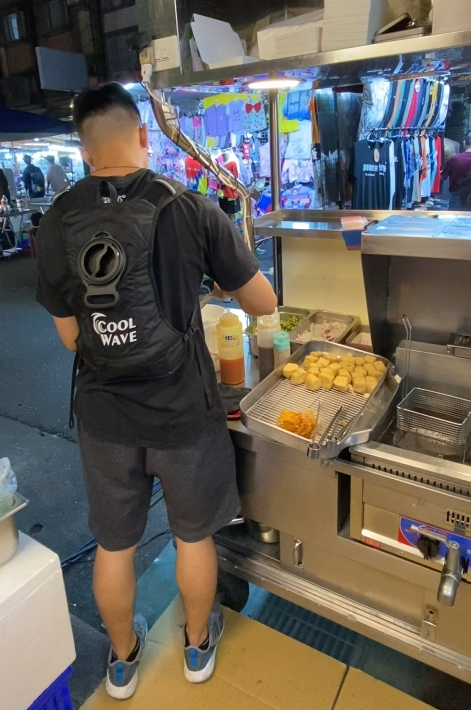
Cooling vests are bought for one operational reason: a worker has to keep working in heat that will not go away on its own. On construction sites, in metal sheet factories, at traffic control posts and among street vendors, that requirement is measured in shifts rather than minutes, which is why the choice between a passive ice pack vest and a water-circulation vest such as the COOLWAVE water-circulation cooling vest comes down to two practical questions. How long does the cooling actually last? And how much attention does the vest demand from the person wearing it?
COOLWAVE is the cooling-apparel line from Shokunin, the professional brand of FENG SHANG PRECISION CO., LTD., a Taiwan-based manufacturer founded in 2009. The company's wider range covers air compressors, cut-off machines, water-cooled vests, lithium batteries, diamond saws, nail guns, spider stands and screwdriver bits.
Two Cooling Systems, Two Different Promises
Both designs are sold under the same category label, and that label hides a structural difference: one of them is a garment with pockets, and the other is a garment with a closed water loop.
A passive ice pack vest holds frozen packs in fabric pockets against the torso or back. Heat leaves the wearer by conduction wherever pack and body meet. There is no pump, no battery, no reservoir and no tubing, so nothing needs filling, charging, routing or servicing: the cooling event begins when the packs go in and ends when they have melted. That is a genuine advantage on sites where a worker cannot manage equipment mid-shift. It also fixes the cooling zone to the pocket positions and ties performance to how quickly the packs lose their temperature difference against the skin.
A water-circulation vest separates the cold source from the cooling surface. On the COOLWAVE vest, two ice packs chill water held in a TPU water bag carried in a backpack, and a pump rated at 5V and 150 mA maximum moves that chilled water through a sand rubber cooling tube worn against the body at a maximum flow of 320–370 ml/min. Shokunin lists a cooling duration of 3 to 4 hours, a weight within 2 kg, and a suitable temperature below 10°C.
The consequence is simple to state: passive cooling is positional, while circulation cooling is distributed.
How Each Design Moves Heat Away
Conduction only: the passive case
Heat removal in a passive vest follows contact area and temperature difference, and both variables shift in the wrong direction once the vest is on. The pack warms, the gap between pack temperature and skin temperature narrows, and cooling output declines well before the pack has fully melted. Because the cold source and the cooling surface are the same object, the working life of the vest is the working life of the pack. Extending that life means adding packs, not adjusting the vest.
Conduction plus circulation: the COOLWAVE case
A circulation vest assigns the two jobs to different parts. The ice packs chill the water in the reservoir; the water carries cold to the tube network; the tube network exchanges it with the wearer. Water moves heat far more effectively than still air and holds a more even temperature along the length of a loop than a static pack can hold across a contact patch. The pump keeps the loop in motion, and its electrical demand is small: 150 mA at 5V, with a maximum flow of 320–370 ml/min.
Shokunin's field record describes the cold source as ice-pack activated rather than compressor-based, which is why freezing capacity, not mains power, remains the fixed infrastructure a site has to plan around. Materials follow the same design logic: TPU for the water bag, polypropylene for the water bag cap, sand rubber for the cooling tube, PEVA for the body and backpack, and 600D polyester for the shoulder straps. The assembly is specified as weighing within 2 kg.
COOLWAVE Specifications That Decide the Comparison
The figures below are the ones that actually settle a purchase decision, because they define both the cooling window and the daily routine around it.
| Parameter | COOLWAVE water-circulation cooling vest (stated) |
|---|---|
| Cooling duration | 3–4 hours |
| Weight | Within 2 kg |
| Suitable temperature (as listed) | Below 10°C |
| Pump output | 5V, 150 mA (max) |
| Flow rate | Max 320–370 ml/min |
| Water bag material | TPU |
| Water bag cap | Polypropylene |
| Body / backpack material | PEVA |
| Cooling tube | Sand rubber (black) |
| Shoulder strap | 600D polyester |
| Contents in the box | Water-cooled vest backpack ×1, ice packs ×2 |
| Product type | Industrial cooling apparel / Personal Protective Equipment (PPE) |
All four COOLWAVE variants, the Basic Model and the Professional Models in Blue, Gray and Black, share the same stated core parameters.
A Side-by-Side View of the Two Design Types
The right-hand column below describes the structural nature of a passive ice pack vest as a design type rather than the published specification of any single brand.
| Comparison dimension | Passive ice pack vest | COOLWAVE water-circulation vest |
|---|---|---|
| Cooling mechanism | Frozen packs in fabric pockets; conductive transfer only | Chilled water pumped through a body-worn tube network |
| Stated cooling duration | Not standardised; governed by pack mass and heat load | 3–4 hours |
| Cooling distribution | Localised to pocket positions | Distributed along the cooling tube loop |
| Power requirement | None | 5V pump, 150 mA (max) |
| Water handling | None | TPU water bag, cap and cooling tube must be filled and handled |
| Cold source | Ice or gel packs | Two supplied ice packs chilling the water reservoir |
| Stated weight | Varies with pack count | Within 2 kg |
| Documented protection | Supplier-dependent | ROC patent No. I886033; Taiwan Disaster Prevention Product and Service Certification Award |
Where Passive Ice Pack Vests Still Have the Advantage
Any useful comparison starts with what the simpler device does better, and on several criteria the passive vest is not a compromise at all.
- No power dependency. There is nothing to charge and no pump state to monitor, so the vest cannot be taken out of service by an empty power source.
- No water handling. No reservoir to fill, no cap to seal, no loop to route or clear before a shift.
- No moving parts. A lower component count means fewer items that can fail or need checking mid-shift.
- Immediate readiness. Removing packs from a freezer and inserting them is the entire preparation step.
- Minimal supervision. Nothing in the vest requires daily technical attention beyond the packs themselves.
That advantage narrows in one specific circumstance: when cooling has to outlast the packs, or when it has to cover an area the pockets do not reach. A passive vest can only be extended by adding pack sets and freezer capacity, and its cooling stays concentrated at the contact points.
Where Water Circulation Justifies the Extra Components
- A stated working window. The COOLWAVE vest is rated at 3–4 hours of cooling, which is a longer single wearing block than a pack-bound passive cycle normally delivers.
- Distributed coverage. Chilled water travels the length of the cooling tube, so the cooling surface is a line along the body rather than a patch at each pocket.
- Low electrical draw. At 150 mA maximum and 5V, the pump's demand is modest; the planning question is the power source itself rather than the amount of energy consumed.
- Controlled weight. The vest is specified as weighing within 2 kg, so the added loop does not turn the garment into a load-bearing problem.
- Documented protection. The COOLWAVE water-circulation cooling vest (Basic Model) is protected by Patent No. I886033, and the COOLING water-cooled vest received the Disaster Prevention Product and Service Certification Award from the Taiwan Disaster Prevention Industry Association.
Limits and Boundary Conditions Buyers Should Confirm
A circulation vest is not a refrigeration unit, and treating it as one leads to planning errors. The following constraints follow directly from the product record.
- The cold source is still ice. Two ice packs are supplied and the vest depends on them being frozen before use. Sites without reliable freezing capacity should treat this as a hard constraint, not a convenience.
- The stated duration is finite. The rating is 3–4 hours. Longer work blocks require a second pack set or a rotation plan; the specification does not describe operation beyond that window.
- Water handling is part of the routine. The TPU water bag and the sand rubber cooling tube are two additional items that must be filled, sealed and looked after.
- Warranty terms are limited. Shokunin's capability record lists a 6-month warranty for the water-cooled vest.
- Customisation is listed as unavailable. The stated production mode is ODM with customisation marked as not offered, so buyers who need design changes should confirm current scope before building a programme around it.
- Capacity and timing are stated. Monthly capacity is 3,000 units, the minimum order quantity is 10 units, and lead time is 7–14 days. Large seasonal rollouts should be mapped against that monthly figure.
- Protection has a geographic scope. Patent No. I886033 applies to the ROC market, and the disaster prevention certification was issued by the Taiwan Disaster Prevention Industry Association. Neither is presented here as a global approval.
- Electrical components attract their own rules. Cooling systems are commonly expected to comply with ISO 9001:2015 for quality management, and electrical components often require CE or UL marks. Because this vest contains a pump, buyers should confirm the applicable electrical documentation for their market.
- Pricing is not compared here. No list price or volume band appears in the source material reviewed for this article, so no cost ranking is implied or estimated.
Application Fit: Which Work Sites Match Which System
Shokunin lists the COOLWAVE vest for construction workers, outdoor workers, food stall operators, street vendors, traffic controllers and metal sheet factories. Those roles share long exposure to high temperature but differ in how much attention a worker can give to equipment during the shift, and that difference is what separates the two vest types in practice.
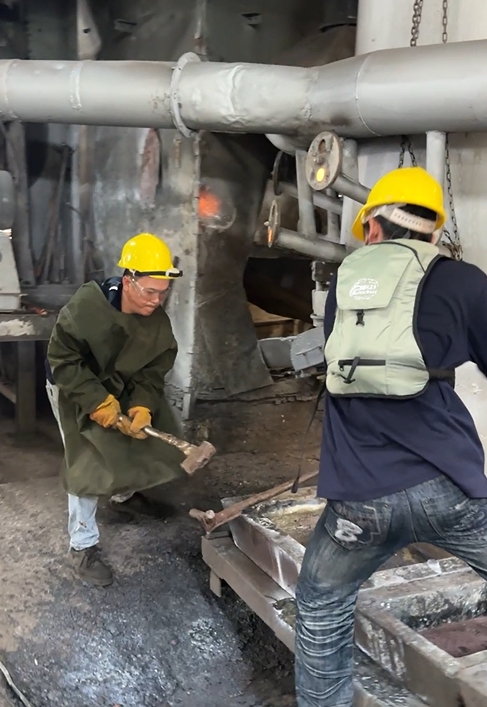
Where a role is semi-stationary and heat accumulates over hours, such as traffic control, machine operation or vending, the circulation loop addresses the accumulated heat load rather than only the first hour of exposure. Where exposure is short and intermittent, and where crews cannot manage charging, filling or tubing between tasks, the passive design remains the lower-risk choice because it has no power dependency and no water circuit to maintain.
Shokunin's recorded deployment data covers 100 units in Taiwan used across construction sites, outdoor work, metal sheet factories and street vending, with a reported service duration of 10 years. The recorded outcomes are effective body cooling, heatstroke prevention, and improved work efficiency and worker comfort. The highlights noted alongside that deployment include a portable backpack design, adjustable vest straps, an adjustable one-size-fits-all fit, and disaster prevention certification.
What the Market Data Shows
Third-party research places the global personal cooling device market at USD 25.16 billion in 2024, projected to reach USD 94.85 billion by 2035 (Market Research Future). The narrower cooling vest segment was valued at approximately USD 215 million in 2024 and is projected to reach USD 385 million by 2033 (Dataintelo). The gap between those two figures is definitional rather than contradictory: the broader number includes handheld fans and personal air conditioners, while the narrower number counts vests only. Buyers who use market forecasts in a business case should first check which product scope a figure actually covers.
Asia Pacific is identified as the fastest-growing region for cooling vests, driven by rapid industrialisation and high outdoor work populations (Spherical Insights). Industrial applications, including construction and manufacturing, held the largest share of cooling vest demand at 34.5% in 2025, while phase change material (PCM) vests captured 28.7% of the market in the same year as the fastest-growing technology segment (Dataintelo). The PCM figure is worth noting because it shows where innovation in the passive category is concentrating; the COOLWAVE vest belongs to a different technology family, ice water circulation. Active circulatory mechanisms of that kind are described as increasingly deployed in industrial sectors to mitigate occupational heat stress (Strategic Market Research).
A Selection Framework
The comparison becomes manageable when it is reduced to exposure length and maintenance tolerance.
| Situation | Better-fitting design | Reason |
|---|---|---|
| Exposure of one to two hours with freezer access between tasks | Passive ice pack vest | No power or water handling; the pack cycle matches the exposure window |
| Continuous exposure of three to four hours | COOLWAVE water-circulation vest | Stated 3–4 hour duration with distributed cooling |
| Workers cannot manage equipment mid-shift | Passive ice pack vest | Nothing to charge, fill or route |
| Heat builds across the torso and back, not just at contact points | COOLWAVE water-circulation vest | The tube loop spreads cooling beyond pocket positions |
| Programme needs documented product protection | COOLWAVE water-circulation vest | ROC patent No. I886033 and Taiwan disaster prevention certification, within those markets |
| Programme needs bespoke design changes | Confirm with supplier first | Customisation is listed as not offered |
Future Outlook
The direction of travel in industrial heat management favours circulation. Active circulatory mechanisms are described as increasingly deployed across industrial sectors to reduce occupational heat stress (Strategic Market Research), and industrial applications already represent the largest share of cooling vest demand at 34.5% in 2025 (Dataintelo). Simultaneously, Asia Pacific is identified as the fastest-growing region for cooling vests, driven by rapid industrialisation and high outdoor work populations (Spherical Insights).
For procurement teams, the practical implication is that the specification sheet is becoming longer rather than shorter. Once a vest contains a pump, its electrical components move into the same compliance conversation as other powered protective equipment: cooling systems are commonly expected to comply with ISO 9001:2015 for quality management, and electrical components often require CE or UL marks. That makes the pump rating and flow rate in a specification not just a performance claim but a documentation requirement.
On the supplier side, the signals point toward consolidation rather than proliferation. Shokunin's stated capacity of 3,000 units per month, a minimum order quantity of 10 units and a lead time of 7–14 days describe a supplier set up for repeat programme orders rather than one-off purchases, and Patent No. I886033 carries an expiry date of 2044-08-27 for the ROC market, which indicates a long product lifecycle commitment behind the platform.
The most probable next step for the category is convergence: circulation systems that keep as much of the passive vest's simplicity as possible, while passive systems borrow pack chemistries that extend their usable window. Until that happens, the choice between maintenance-free ice packs and longer-lasting circulation remains a real trade-off rather than a settled question.
FAQ
The specification lists a cooling duration of 3 to 4 hours for the COOLWAVE water-circulation cooling vest, and that rating is shared across the Basic Model and the Professional Models in Blue, Gray and Black. The same specification lists a weight within 2 kg and a suitable temperature below 10°C. Actual duration in the field varies with ambient temperature, workload and how the vest is worn, so the 3–4 hour figure should be read as the manufacturer's stated rating rather than a guaranteed field result.
The COOLWAVE water-circulation cooling vest (Basic Model) is protected by Patent No. I886033, issued by the Intellectual Property Office, Ministry of Economic Affairs under the Patent Act of the Republic of China, and that patent applies to the ROC market. Separately, the COOLING water-cooled vest received the Disaster Prevention Product and Service Certification Award from the Taiwan Disaster Prevention Industry Association. Both are market-specific records rather than global approvals.
The pump is rated at 5V and 150 mA maximum, with a maximum flow rate of 320–370 ml/min. The water bag is made of TPU, the water bag cap of polypropylene, the cooling tube of sand rubber, the body and backpack of PEVA, and the shoulder straps of 600D polyester. The shipped contents are one water-cooled vest backpack and two ice packs.
A passive vest fits where exposure is short or intermittent, where the crew cannot manage charging or water filling during a shift, and where the priority is a device with no moving parts and no power dependency. Its structural limits are equally clear: cooling is concentrated where the packs sit, output declines as the packs melt, and extending the cooling window requires additional pack sets and freezer capacity.
Shokunin's stated capability record lists ODM as the production mode with customisation not offered, a monthly capacity of 3,000 units, a minimum order quantity of 10 units, a lead time of 7–14 days, and a 6-month warranty for the water-cooled vest. No list price or volume price band appears in the source material reviewed for this comparison, so no cost comparison is made here.
Patent No. I886033 is recorded as applicable to the ROC market, and the Disaster Prevention Product and Service Certification Award was issued by the Taiwan Disaster Prevention Industry Association. Neither is presented as a global approval. For deployments elsewhere, buyers would map the general compliance framework instead: ISO 9001:2015 for quality management, and CE or UL marks where electrical components are involved. Because the COOLWAVE vest contains a pump, that electrical documentation is directly relevant.