
COOLWAVE Dual Cooling Vest FAQ: Specs, Materials, MOQ, Warranty
COOLWAVE Dual Cooling Vest FAQ: Specs, Materials, MOQ, Warranty
Cooling vests have moved from a consumer accessory to a documented procurement line. Dataintelo's 2025 market report sized the global cooling-vest market at USD 342 million, with industrial applications accounting for 34.5% of revenue. The consequence for buyers is narrower than the headline: a vest issued to a metal-sheet plant, a construction crew or a traffic-control team is now judged on written specifications, acceptance checks and warranty terms, not on comfort language.
The COOLWAVE Water-Circulation Cooling Vest, sold under the Shokunin brand, is a product where those questions arrive quickly. Shokunin is a professional e-commerce brand launched by Feng Shang Precision Co., Ltd., a Taiwanese manufacturer founded in 2009 with a 1,000 m² plant, 30 employees and a five-engineer R&D team. Its water-cooled line is listed in a CW-01 Basic model and a CW-PRO Professional model. This FAQ answers the technical, material and order questions that appear between evaluation and execution, and it marks the point where the published record stops and a written agreement has to begin.
What the dual cooling architecture actually contains
The COOLWAVE system pairs a water-circulation backpack with two ice packs. The ice packs supply the cold; a 5V, 150 mA (max) pump circulates chilled water through the vest at a published flow rate of 320–370 ml/min. In the product description recorded in supplier documentation, the pump is powered by a power bank rather than an on-board battery.
That split creates three separate procurement questions rather than one. The ice packs set the replenishment cycle and the freezer logistics behind it. The pump and its power source determine whether circulation continues through a shift. The tubing and reservoir determine whether the published flow is reproduced on the worker. A buyer who negotiates only the vest, without settling power source, ice-pack rotation and spare parts, leaves the most likely failure points outside the agreement.
Dual cooling is a useful description here because the two paths are not interchangeable. The ice packs provide cooling contact without the pump running; the circulation path requires the pump and a compatible power bank. The published 3–4 hour duration refers to a combined charge and ice-pack cycle, not to either path on its own.
The published specification set in one view
Every value below comes from manufacturer or supplier documentation for the COOLWAVE water-circulation vest. None of it is an independent laboratory result.
| Parameter | Published value |
|---|---|
| Cooling architecture | Water-circulation backpack plus two ice packs |
| Pump rating | 5V, 150 mA (max) |
| Water flow | 320–370 ml/min |
| Cooling duration | 3–4 hours per charge and ice-pack cycle |
| Net weight | Within 2 kg |
| Reservoir bag | TPU |
| Cap | Polypropylene |
| Water line | Sand rubber tube |
| Strap | 600D polyester |
| Listed variants | CW-01 Basic; CW-PRO Professional |
| Minimum order quantity | 10 units |
| Production lead time | 7–14 days |
| Monthly capacity | 3,000 units |
| Warranty | 6 months, water-cooled vest |
| Production service | ODM available |
| Taiwan patent | I886033, issued 1 June 2025, valid to 27 August 2044 |
The table is deliberately short on context, because the published record is short on context. Cooling duration and flow rate are stated without the ambient temperature, humidity, workload or measurement method behind them. That is normal for supplier documentation, and it is precisely why the acceptance section later in this article exists.
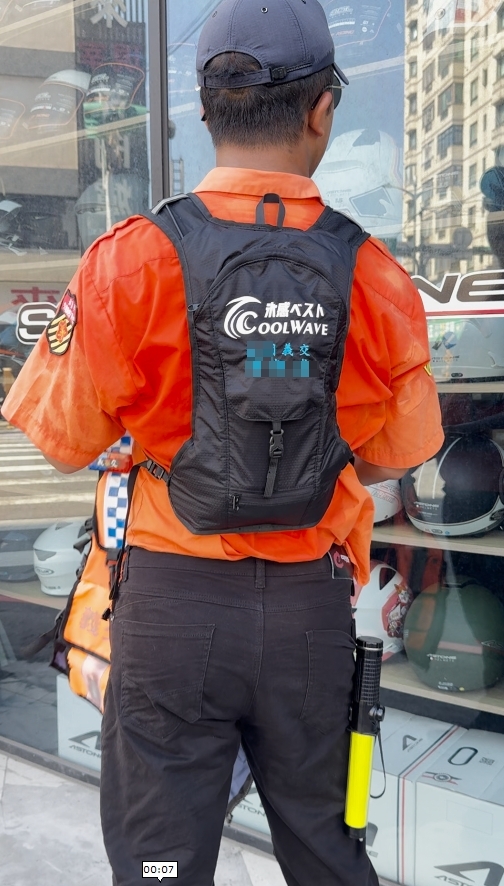
Direct-traffic duty, one of the recorded high-temperature applications for the COOLWAVE vest.
Materials: what each component is, and what to verify
The wetted and load-bearing parts of the vest are specified individually, which makes them easier to audit than a single "fabric" line on a data sheet. Each material below is a published specification; the verification question beside it is a procurement step, not a product claim.
TPU reservoir bag
The water bag is specified as TPU, or thermoplastic polyurethane: a flexible film family commonly used for water-carrying reservoirs because it tolerates repeated flexing and handling. What the published record does not include is leakage, burst-pressure, washability or chemical-resistance testing. Buyers whose sites use cleaning agents, or who plan multi-season reuse across shifts, should request the test documentation that matches their own risk threshold and confirm the cleaning procedure the manufacturer recommends before the first bulk order.
Polypropylene cap
The fill cap is specified as polypropylene, a rigid thermoplastic commonly used for closures. Two checks matter in practice: that the cap seals in the orientation the vest is actually carried and worn, and that the fill opening is wide enough for the ice-and-water loading procedure the product instructions describe. Both are inexpensive to test on a sample and expensive to discover at scale.
Sand rubber tube
The water line is specified as a sand rubber tube. Because flow is generated by a small 5V pump, tube length and bore matter: the published 320–370 ml/min figure should be read as a value for the supplied configuration, and any change to tube length, routing or reservoir height changes the head pressure the pump works against. Buyers planning ODM changes to the plumbing should ask for flow measured in the modified configuration, not the original one.
600D polyester strap
The strap is specified as 600D polyester, a woven-fabric designation commonly used for load-bearing webbing. The design is described as adjustable and one-size-fits-all. Verify the strap wet, not dry: a strap that holds on a showroom sample but loosens after a shift of sweat and spray is a fit problem that surfaces as a complaint rather than as a specification failure.
What the 3–4 hour cooling duration depends on
The published cooling duration is 3–4 hours per charge and ice-pack cycle, and the net weight is stated as within 2 kg. Those two figures together define the realistic shift pattern: a vest light enough to carry through a full shift, delivering a cooling cycle shorter than most shifts.
The duration figure is not accompanied, in the material reviewed, by ambient temperature, humidity, workload, clothing layers or a definition of when cooling is deemed finished. It should therefore be treated as a planning envelope rather than a guaranteed runtime. Two consequences follow. First, ice-pack rotation has to be part of the deployment plan; the vest is supplied with two ice packs, so the rotation interval equals the cycle length unless additional packs are ordered. Second, a buyer validating the product should time a full cycle in the actual site condition, because a metal-sheet factory floor and a shaded loading bay are different tests.
Occupational-safety context supports the category rather than the number. CDC/NIOSH guidance on heat stress identifies water-cooled garments, air-cooled garments, cooling vests and wetted overgarments as examples of auxiliary or personal cooling systems. That is a category description for heat-exposed work; it is not an endorsement of a product or of any stated runtime.
MOQ, lead time and capacity: reading the order terms correctly
The documented commercial terms are a 10-unit minimum order quantity, a 7–14 day production lead time and a monthly capacity of 3,000 units. ODM production services are also listed. The recorded payment and shipment terms are shipment after payment, freight paid by the buyer, full payment, and pre-shipment testing as the acceptance criterion.
Three of those terms need qualification before they enter a delivery plan. The lead-time figure does not state its starting point — order confirmation, payment receipt or material release — and a 7–14 day window measured from the wrong date becomes a missed installation. The capacity figure is monthly, while the company profile separately records an annual output of 10,000 units company-wide; the two are not on the same basis and should not be combined into one availability estimate. And the payment structure, with full payment before shipment and freight on the buyer's account, concentrates the buyer's protection at the pre-shipment test, because commercial leverage after shipment runs through the warranty.
That is not an argument against the terms; it is an argument for spending the pre-shipment test budget properly. A buyer who specifies test items before production, and receives a signed record of the results, has converted a documentary claim into a contractual checkpoint.
ODM availability: confirmed service, negotiable scope
ODM production is a documented service of the manufacturer, which means product development can be carried out under the ODM model rather than only as catalogue supply. What the published record does not do is itemise the scope: colour, branding, labelling, packaging, reservoir size, tube length or accessory content are not individually confirmed as open or fixed. That list belongs in the RFQ, answered line by line.
One item deserves specific attention in any ODM conversation. The water-cooled vest structure and cooling system are covered by Taiwan patent I886033, issued by the Intellectual Property Office of the Ministry of Economic Affairs on 1 June 2025 and recorded as valid until 27 August 2044. A buyer changing the plumbing layout, the reservoir or the circulation path is changing the subject of that patent and should confirm in writing how the modification is treated, including ownership, permitted use and territorial scope. This is ordinary ODM diligence rather than a warning sign.
Market reach is a secondary check in the same conversation. The company profile records a 50% export ratio, with the United States and Taiwan as main markets, and ODM services are listed for global markets. Buyers should confirm that their own destination market and documentation requirements are covered, because an export record is not a compliance statement for a specific configuration.
The 6-month warranty and the evidence it depends on
The water-cooled vest carries a 6-month warranty. The published record does not specify which components are covered, whether the remedy is repair or replacement, who pays return freight, or whether the warranty period runs from invoice or from delivery. Each of those gaps is small on its own and decisive in combination: a pump failure in month five is a different commercial event depending on the answer.
The evidence trail is the buyer's other half of the warranty. A pre-shipment test record, a batch or serial reference and the invoice date are usually what a claim is assessed against. Buyers running multi-site programmes should also nominate one internal owner for warranty claims, because a claim routed through three site managers reaches the supplier as an anecdote rather than as a record.
Two credentials often appear in the same paragraph as the warranty and should be kept separate from it. The vest received the Disaster Prevention Product and Service Certification Award from the Taiwan Disaster Prevention Industry Association, and the structure and cooling system are patented in Taiwan. Both are relevant to supplier credibility and to ODM discussions. Neither extends the warranty, and neither substitutes for the acceptance testing set out below.
Aligning acceptance checks with the published specifications
The most practical use of a published specification set is as an acceptance script. The table below converts each documented value into a check that can be agreed before production and recorded at pre-shipment testing. These checks are proposed by specification, not by standard: no test standard is asserted here, and each buyer's own quality threshold decides how rigorous the method must be.
| Published specification | Acceptance check to agree | Record to keep |
|---|---|---|
| Flow 320–370 ml/min | Measure flow with the supplied tube and the intended power bank, at the height the reservoir will actually sit | Measured value, method and date |
| Pump 5V, 150 mA (max) | Confirm the pump label and the power-bank output match the rating | Photograph of the pump label; power-bank specification |
| 3–4 hours per cycle | Time one full cycle in the site condition | Start and end time plus ambient condition |
| Net weight within 2 kg | Weigh the complete unit as packed for issue | Scale reading |
| TPU bag, polypropylene cap, sand rubber tube, 600D polyester strap | Check each component against the order specification | Signed component checklist |
| MOQ 10 units; lead time 7–14 days | Fix the lead-time start event and the delivery date in the purchase order | Purchase order, payment record, shipment notice |
| 6-month warranty | Confirm start date, covered components and claim route | Countersigned warranty statement |
| Pre-shipment test as acceptance criterion | Agree test items and pass criteria before production begins | Signed pre-shipment test report |
Two notes on method. Flow should be measured with the supplied tube and the power bank the buyer intends to issue, at the working reservoir height, because the published range depends on that configuration. Runtime should be timed in the site condition and recorded as a site-specific measurement, which keeps it a data point rather than a dispute about the supplier's figure.
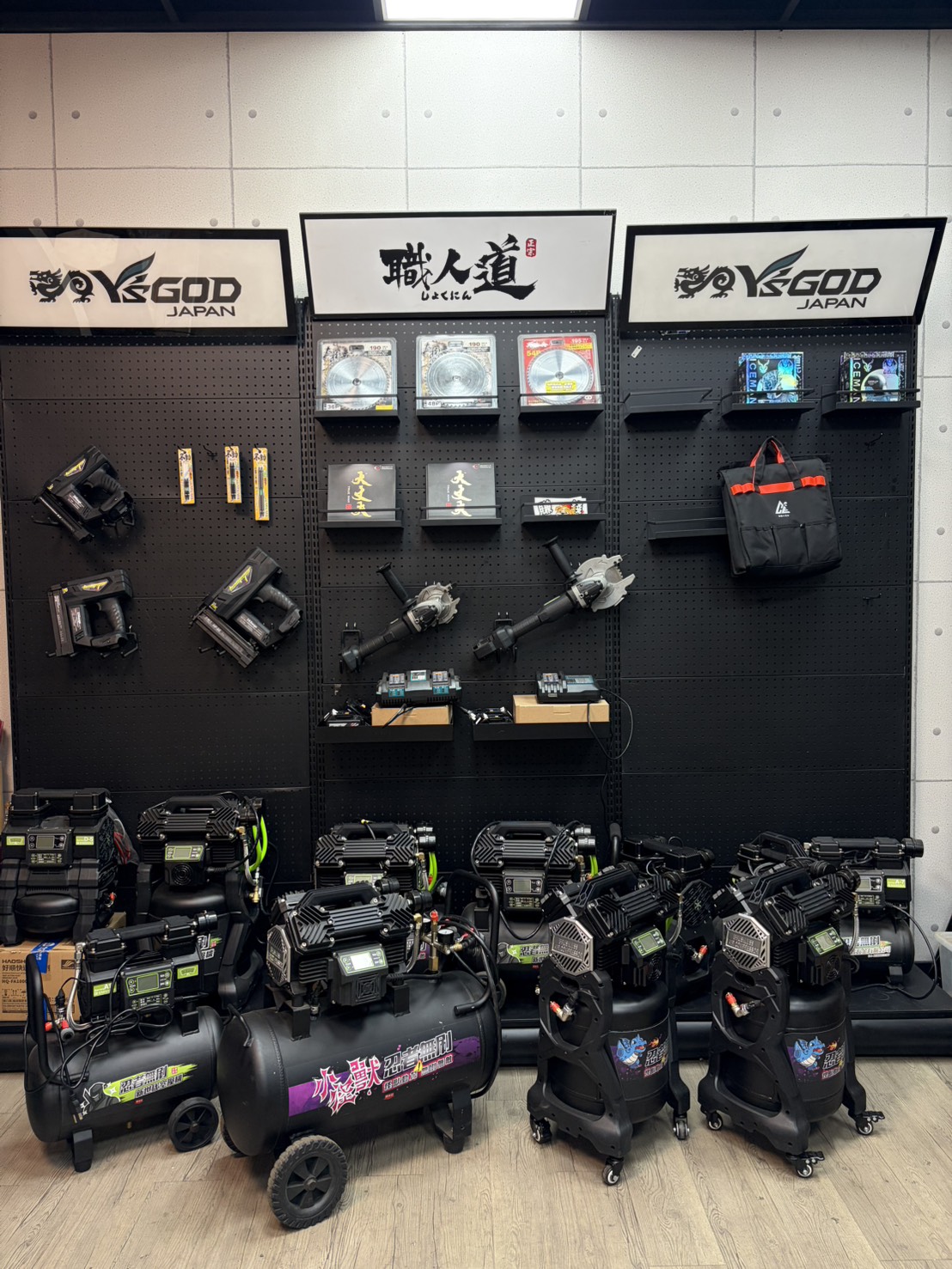
Component display at the manufacturer's facility: the reservoir, cap, water line and strap are specified as separate line items.
Where the vest fits, and where the specification stops deciding
The recorded applications for this cooling line are construction sites, outdoor work, metal-sheet factories and street-vendor operations, alongside direct-traffic duty. A 100-unit deployment in Taiwan for high-temperature cooling was recorded with user-reported outcomes of effective body cooling, heatstroke prevention, improved work efficiency and comfort. Those are user reports captured in the manufacturer's case record, not an independent field study, and they describe a deployment rather than a measured productivity effect.
The fit boundary is easier to state than the benefit. A vest within 2 kg with a 3–4 hour cycle suits workers who can rotate ice packs and carry a power bank through the shift, and it fits sustained outdoor exposure where the alternative is no personal cooling provision at all. It does not remove the need for shade, scheduling, hydration or acclimatisation, and the runtime figure should not be used as a shift-length assumption.
Why industrial buyers now set the terms
The 34.5% industrial share of a USD 342 million market is the commercially useful part of the 2025 figure, because industrial buyers behave differently from consumer buyers: they ask about acceptance criteria, warranty scope and capacity evidence before they ask about comfort. That behaviour is what turns a specification sheet into a procurement document. The market figure itself comes from a single commercial research source and says nothing about the merits of any individual supplier; it explains why documentation standards rose, not which product performs better.
Frequently asked questions
What are the two cooling paths in the COOLWAVE vest, and does it work without power?
The vest combines two ice packs as the cold source with a water-circulation backpack driven by a 5V, 150 mA (max) pump. The ice packs provide cooling contact without the pump running; the circulation path requires the pump and, per the published product description, a power bank. The published 3–4 hour duration refers to a combined charge and ice-pack cycle, not to either path on its own.
What does the 3–4 hour cooling duration depend on?
The figure is the published cooling duration per charge and ice-pack cycle. The published record does not state the ambient temperature, humidity, workload, clothing layers or measurement method behind it, so it functions as a planning envelope rather than a guaranteed runtime. Buyers should time a full cycle in their own site condition and set ice-pack rotation on that measurement.
Is the power bank included in the shipment?
The published description states that the pump is powered by a power bank, but the reviewed material does not state whether a power bank is included or supplied separately. This should be confirmed in the quotation together with the power bank's output characteristics, because the pump's 5V, 150 mA rating defines the compatibility requirement.
What MOQ and lead time apply to an ODM order?
The documented minimum order quantity is 10 units and the typical production lead time is 7–14 days, with ODM production services listed and a stated monthly capacity of 3,000 units. Because the lead-time starting point is not defined in the published record, the delivery date should be fixed in the purchase order against a named event such as order confirmation or payment receipt.
Which materials contact the water, and what should be verified?
The reservoir bag is specified as TPU, the cap as polypropylene and the water line as a sand rubber tube; the 600D polyester strap does not contact the water circuit. The published record does not include leakage, burst-pressure, washability or chemical-resistance test results, so buyers should request the documentation that matches their cleaning and reuse regime and confirm the recommended cleaning procedure.
What does the 6-month warranty cover?
A 6-month warranty applies to the water-cooled vest. The published record does not itemise covered components, the remedy (repair or replacement), return-freight responsibility or the warranty start date, so these points should be agreed in writing before the order. A pre-shipment test record, batch reference and invoice date are the practical evidence a claim is assessed against.
What to settle before the purchase order
Four items decide whether this specification becomes a workable programme: whether the power bank is in scope, how ice packs rotate across a shift, which acceptance checks are signed at pre-shipment, and what the warranty actually covers. Each can be answered from the published figures above, and none of them requires a new claim from the supplier.
A downloadable company brochure covering the product line is available here: Feng Shang Precision product brochure (PDF).
¿Tiene preguntas o necesita más detalles?
Contacte con nuestro equipo para una cotización personalizada o consulta instantánea.
Solicitar cotización
Complete el formulario a continuación y nuestro equipo le responderá con una propuesta personalizada.
Chat directo de WhatsApp
¿Prefiere chatear en tiempo real? Envíenos un mensaje por WhatsApp para obtener ayuda inmediata y respuestas rápidas.
- Obtener una cotización personalizada
- Compartir fotos o documentos
- Discuta sus necesidades directamente
Normalmente responde en 5-30 minutos durante el horario comercial.