
COOLWAVE Dual Cooling Vest Buyer Framework: Runtime, Weight, Power and Supply
COOLWAVE Dual Cooling Vest Buyer Framework: Runtime, Weight, Power and Supply
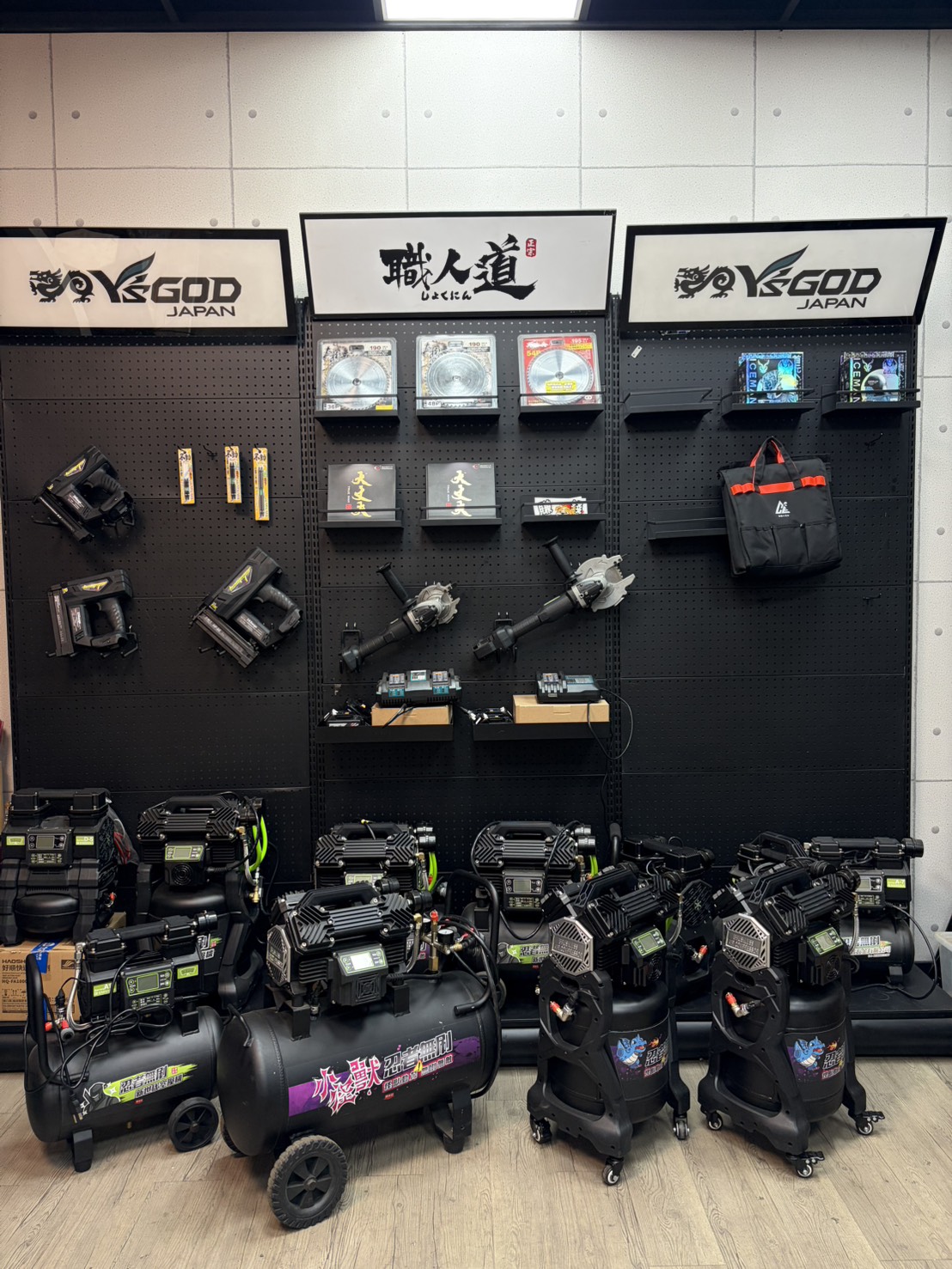
Shokunin display area. Image: Shokunin.
Shokunin is the professional tool brand launched by Feng Shang Precision Co., Ltd., a Taiwan-based manufacturer founded in 2009. The company's COOLWAVE Dual Cooling Water Cooling Vest is a water-circulation personal cooling product intended for hot, outdoor and industrial work. For a buyer at the decision stage, the useful comparison is not the color name on the carton. It is whether a quoted vest can cover a defined work shift at a wearable weight, with a pump and power source that match site conditions, and with supply terms that can be verified before a purchase order.
A disciplined decision framework therefore starts with four variables: cooling duration, complete worn weight, electrical power and flow, and supply terms. Model and color variants matter only after those variables are known. This article sets out that framework for COOLWAVE Basic, Professional and color-labelled variants, using the specifications and limitations in the available evidence. It does not treat supplier-reported figures as independent laboratory results.
The short answer for a COOLWAVE shortlist
For most industrial buyers, the COOLWAVE shortlist should be built in this order: confirm that the quoted model's cooling duration covers the planned exposure period; confirm the complete system weight as worn; confirm the pump voltage, current and flow rate against the chosen power bank; then confirm MOQ, lead time, capacity, ODM scope, warranty and spare-parts terms in writing. If a Basic, Professional or color variant cannot be tied to those checks, it should not be treated as a performance tier.
That order matters because a portable cooling vest is a system, not a single fabric item. The wearer carries the garment, the water reservoir, the cooling source, tubing and often a power bank. A specification that looks acceptable on a quotation can fail in use if the runtime is shorter than the shift, the loaded vest is too heavy for the task, the pump does not match the power bank, or the supplier cannot document the component and service terms behind the claim.
What the buyer is actually comparing
COOLWAVE is described in Shokunin's material as a water-circulation cooling vest. Secondary product descriptions also describe reusable ice packs combined with pump-driven water circulation, powered by a power bank. Buyers should ask the supplier to confirm the exact architecture, because a dual-cooling label can refer to more than one combination of passive and active cooling. The National Institute for Occupational Safety and Health in the United States identifies water-cooled garments, air-cooled garments, cooling vests and wetted overgarments as examples of personal cooling systems. That classification explains the category, not the performance of a specific model.
The reviewed public material identifies two model classes: the CW-01 Basic Model and the CW-PRO Professional Model, listed as Basic and Professional variants. The product family also includes color labels such as Professional-Blue, Professional-Black, and Blue, Gray and Black variants. The reviewed evidence does not provide separate performance specifications for every color label, so color should be a SKU attribute until a current quotation or datasheet shows a technical difference.
Criterion 1: cooling duration and shift planning
The listed cooling duration for the COOLWAVE vest is 3-4 hours per charge or ice-pack cycle. Shokunin's supplied comparison states that other water-cooled vests lose cooling after about 30 minutes. That is a large claimed difference, and it is the first number a buyer will notice. It is also the number that requires the most care. The reviewed evidence does not disclose ambient temperature, humidity, workload, clothing layers, water temperature, ice-pack condition, pump setting or the point at which cooling is judged to have ended. A 3-4 hour claim is therefore useful for preliminary shift planning, but it is not yet a standardized thermal-performance result.
For procurement, the practical question is not whether 3-4 hours sounds better than 30 minutes. It is whether the quoted vest can maintain acceptable cooling for the actual exposure period. A worker on a shaded, low-activity traffic-control post may experience a different cooling need from a worker in a metal-sheet factory or on a sunny construction site. If a work period exceeds the claimed duration, the buyer should plan a recharge or ice-pack exchange rather than assume continuous cooling for the full shift. The buyer should also ask whether the 3-4 hour figure refers to the ice pack, the water circulation, or the combined system, because those are different operating conditions.
The comparison against other water-cooled vests should be read as a supplier comparison, not an independent benchmark. The supplied material states that competing vests lose cooling after approximately 30 minutes, but it does not name the compared models, test conditions or measurement method. That does not make the COOLWAVE claim useless; it means the claim belongs in a sample-test protocol before a volume order. A buyer can test the same vest on the same worker, in the same environment, with a logged start time, water and ice condition, pump setting and comfort end point. That is more useful than another brochure comparison.
Criterion 2: worn weight and portability
The COOLWAVE vest is listed at a weight within 2 kg. That figure is a useful screening threshold for a portable cooling vest, but the listing does not define whether it includes water, ice packs, tubing, pump, power bank or packaging. For a worn-weight decision, buyers should weigh the complete assembly as it will be used. A dry vest at 2 kg can become a different product once the reservoir is filled and the power source is attached.
Weight distribution also matters. A shoulder strap, reservoir position and tube routing affect how the load sits on the body. A vest at the upper end of the range may still be acceptable for static traffic control or a food stall, but it may be less suitable for climbing, repetitive handling or work that requires frequent bending. The reviewed evidence does not provide a validated ergonomic test or a maximum user-weight rating, so those points should be checked in a sample trial rather than inferred from the total weight alone.
For a lightweight cooling vest buyer, the relevant check is complete-system weight by size. Ask the supplier to state the weight of the vest, the empty reservoir, the filled reservoir, the ice packs and the pump separately. That breakdown lets the buyer compare quotations on the same basis and avoids a misleading comparison between a dry garment weight and a ready-to-use system weight.
Criterion 3: pump power, flow rate and power-bank fit
The listed pump specification is 5 V and 150 mA maximum, with a flow rate of 320-370 ml/min. These figures matter because the COOLWAVE is a power-bank cooling vest in practice. The pump's electrical requirement determines which power bank can be used, how the connector should be specified, and what runtime the buyer should request from the supplier. The reviewed evidence does not state the power-bank capacity, expected runtime, connector type, low-voltage protection or the pump's duty cycle. Those are quotation-level questions, not details to assume.
At the stated maximum, 5 V multiplied by 0.15 A equals 0.75 W. That is a calculated maximum electrical input for the pump, not a measured power-bank runtime. Real runtime also depends on the pump's duty cycle, conversion losses in the power bank, battery age and temperature. Buyers should ask for a power-consumption profile or a tested runtime under a defined pump setting. A power bank that is adequate for a short demonstration may not be adequate for a full shift.
Flow rate needs the same discipline. A 320-370 ml/min figure is useful only if the measurement conditions are known. Flow can change with tubing length, reservoir height, pump head pressure and the presence of air in the line. The reviewed evidence does not specify those conditions. For a professional cooling vest, the buyer should request a pump datasheet and a flow-test method, then check the actual assembly for consistent circulation, easy priming and no leakage at the connections.
Power-bank selection should also consider how the pack is carried. A heavier power bank adds to the worn load. A larger pack may improve runtime but make the vest less comfortable for mobile work. The buyer should define the power bank as part of the system rather than as an accessory added after the vest is chosen.
Criterion 4: materials, wear parts and maintenance checks
The reviewed evidence does not include a complete bill of materials or validated material tests. That is a significant limitation for a product that carries water and runs a pump. Buyers should ask for material declarations covering the water bag, cap, cooling tube and shoulder strap. If the quoted construction uses a TPU water bag, a polypropylene cap, a sand rubber cooling tube and a 600D polyester shoulder strap, those materials should be stated in the quotation and checked in the sample. The point is not to assume those materials are present; it is to make the supplier document what is actually supplied.
Leakage is a practical procurement risk. The supplier's risk-control material states that the ice pack uses reinforced material and that quality is checked before shipment. That is a company control statement, not an independent test report. The buyer should ask for the incoming inspection criteria, the leakage-test method, the sampling plan and the spare-parts policy. For a water-circulation vest, a small leak can end a work shift and damage clothing, so the maintenance procedure should be part of the purchase decision.
Cleaning and water handling also need a written procedure. The reviewed evidence does not establish washability, chemical resistance or the recommended cleaning method. Buyers in food stalls, street vending or shared-equipment environments should ask how the reservoir, tubing and outer vest are cleaned between users. Industrial buyers should ask whether the water bag and pump can be replaced separately, and whether replacement parts are available after the initial order.
Criterion 5: model and variant selection without assumed tiers
The CW-01 Basic and CW-PRO Professional designations are the clearest model distinctions in the reviewed listing. The evidence does not establish that the Professional model has a longer cooling duration, a different pump, a different reservoir or a different warranty. A buyer should therefore request a feature-by-feature comparison before paying a premium for the Professional label. If the quoted difference is limited to color, branding or packaging, the selection should be based on availability and site requirements rather than an assumed performance tier.
Color labels need the same treatment. Professional-Blue and Professional-Black may be relevant for team identification, visibility or corporate matching, but the reviewed evidence does not provide separate performance specifications for each color. Blue, Gray and Black variants should be mapped to exact model codes in the quotation. If a site requires high-visibility clothing, the buyer should verify the applicable requirement separately; a color name alone does not establish compliance with a visibility standard.
| Model or variant | Evidence status in the reviewed material | Decision implication |
|---|---|---|
| CW-01 Basic | Identified as the Basic model in the reviewed listing. | Use as the baseline specification and require the same accessory list in every quotation. |
| CW-PRO Professional | Identified as the Professional model. | Request a documented feature comparison against Basic; do not assume a performance difference without evidence. |
| Professional-Blue and Professional-Black | Color-labelled Professional variants in the product family; no separate performance specifications were found in the reviewed evidence. | Confirm whether color changes only the SKU or also fabric, pump, reservoir, packaging or warranty terms. |
| Blue, Gray and Black variants | Color labels in the product family; no separate performance specifications were found. | Map each color label to the exact model code, accessory set, price and lead time in the quotation. |
Matching the vest to the work environment
Shokunin positions the COOLWAVE vest for high-temperature environments, metal-sheet factories and outdoor sites. The intended user list also includes construction, outdoor work, food stalls, street vending and traffic control. The same product can serve those settings, but the selection criteria should change with the work pattern.
For construction and outdoor work, cooling duration and worn weight are the first filters. A long-duration cooling vest is useful only if the worker can carry it through the task without the reservoir or power bank interfering with movement. Tube routing, shoulder-strap comfort and the position of the power bank should be checked in a sample trial. The buyer should also confirm whether the vest is intended to be worn over light clothing or under other protective equipment.
For sheet-metal factories and other hot indoor environments, the buyer should separate personal cooling from engineering controls. A cooling vest can support worker comfort, but it should not be treated as a substitute for ventilation, heat shields, work-rest schedules or other heat-stress controls. The buyer should ask the supplier for the intended operating environment and any limitations on ambient temperature, humidity and radiant heat.
For traffic control and street vending, static or semi-static work may allow a heavier system, but visibility and public-facing appearance matter. Color variants can help team identification, but the buyer should verify whether the color meets the site's own clothing or visibility rules. For food stalls, the cleaning procedure and water handling are more important than a small difference in flow rate. For prolonged sun exposure, the buyer should plan for refill or ice-pack exchange and should not rely on a single charge for an entire shift without confirming runtime.
Supply terms: MOQ, lead time, capacity and ODM
The public supplier material reports an ODM model with a MOQ of 10 units, a lead time of 7-14 days and a monthly capacity of 3,000 units. These figures are useful for early procurement planning, but they come from a secondary press-release source and should be confirmed by a written quotation or pro forma invoice. The buyer should ask when the lead time starts, whether it applies to samples or mass production, and whether the MOQ is per model, per color or per order.
Capacity needs careful reading. The same evidence package contains a company-wide annual output figure of 10,000 units and a reported monthly capacity of 3,000 units for the cooling-vest line. Those figures use different bases and should not be combined or treated as equivalent. A buyer planning a large or repeating order should ask for the definition of installed capacity, practical capacity and available capacity, and should request production records or a factory audit if the order depends on continuity.
ODM services should be defined in scope, not just mentioned as a capability. The buyer should ask what can be customized: color, logo, packaging, labels, user manual, reservoir size, tubing length, connector type or power-bank bundle. The quotation should also state tooling charges, sample fees, sample lead time, approval steps, minimum order per customization and intellectual-property terms. A supplier that offers ODM is not automatically able to support every customization at the stated MOQ.
Warranty is another term to verify. The reviewed public material does not establish a standard warranty duration for the COOLWAVE vest. A six-month warranty should therefore be treated as a quotation term to verify, not as a published specification. The buyer should ask for the warranty period, what is covered, whether the pump and water bag are included, how claims are handled and whether spare parts are available after the warranty ends.
Shokunin warehouse. Image: Shokunin.
Cost and value: what can and cannot be calculated
The reviewed evidence does not provide unit prices, volume discounts, Incoterms, tooling charges, power-bank costs or spare-parts prices. A cost-per-shift comparison therefore cannot be calculated from public material. Buyers should not infer a cost advantage from a longer cooling duration alone. The total cost of ownership includes the vest, the power bank, ice packs, replacement parts, cleaning labor, freight, warranty administration and the number of units needed to cover a shift.
A longer runtime can create value if it reduces the number of ice-pack changes or allows a worker to remain on task for a longer period. That value depends on the actual work pattern, the site's heat-stress controls and the labor cost of refilling or changing packs. The buyer should model those factors with quoted prices rather than treating a runtime claim as a direct saving. The same logic applies to the Professional and color variants: a higher price should be tied to a documented difference in function, durability, service or compliance, not to the label alone.
Category context and what it means for buyers
A commercial research estimate cited in the reviewed data package values the global cooling-vest market at USD 342 million in 2025 and puts industrial applications at 34.5% of revenue. These are commercial estimates, not a buyer's price benchmark or a forecast guarantee. Their practical use is to show why industrial documentation matters. If industrial users represent a substantial part of the category, then buyers should expect suppliers to provide more than a comfort description: they should provide model-specific specifications, test conditions, maintenance instructions and supply terms.
NIOSH's classification of personal cooling systems supports the same procurement logic. A water-cooled garment is one option among several personal cooling approaches. The buyer should compare it with the site's heat-exposure controls and with the worker's task, not treat the vest as a universal solution. The COOLWAVE product may be suitable for high-temperature and outdoor work, but suitability should be demonstrated for the specific environment and work duration.
A practical comparison table for the RFQ
| Decision criterion | What the reviewed evidence says | What the buyer should verify before a purchase order |
|---|---|---|
| Cooling duration | Listed at 3-4 hours per charge or ice-pack cycle; supplied comparison says other water-cooled vests lose cooling after about 30 minutes. | Sample test under site temperature, workload and clothing; define the comfort end point and the refill or exchange cycle. |
| Worn weight | Listed within 2 kg; the basis of the figure is not defined. | Weigh the complete system as worn, including water, ice packs, pump and power bank. |
| Pump and flow | 5 V, 150 mA maximum; 320-370 ml/min flow. | Request a pump datasheet, flow-test method, connector specification and power-bank runtime. |
| Materials | No complete bill of materials or validated material tests in the reviewed evidence. | Request material declarations for the water bag, cap, tube and shoulder strap, plus leakage and cleaning procedures. |
| Model variants | CW-01 Basic and CW-PRO Professional identified; color labels exist without separate performance specifications. | Request a feature-by-feature comparison and map every color label to an exact model code. |
| MOQ and lead time | Public supplier source reports MOQ 10 units and 7-14 day lead time. | Confirm in writing whether the terms apply per model, per color or per order, and when lead time starts. |
| Capacity | Reported 3,000 units per month and 10,000 units per year company-wide; the bases differ. | Ask for capacity definitions and production records if continuity is critical. |
| ODM scope | ODM services are reported. | Define customization options, tooling, sample approval, MOQ per customization and intellectual-property terms. |
| Warranty and spares | No standard warranty period is established in the reviewed public evidence. | Confirm duration, coverage, claim process and spare-parts availability in the quotation. |
What to put in the RFQ
A buyer can reduce uncertainty by turning the framework into a short RFQ checklist. The checklist should ask for the exact model code, the complete accessory list, the dry and ready-to-use weight, the reservoir capacity, the pump voltage and current, the flow rate and test method, the power-bank requirement, the material declarations, the cleaning procedure, the MOQ, the lead time, the warranty and the spare-parts list.
- State the intended work environment and maximum continuous exposure period.
- Ask for a sample or pilot unit and define a pass or fail test before volume approval.
- Require the supplier to distinguish measured, nominal and maximum specifications.
- Ask whether the quoted price includes the power bank, ice packs, spare tubing and connectors.
- Confirm the definition of lead time and the responsibilities for freight, duties and inspection.
- Request the current certificate or award scope if the supplier cites one, and check that it applies to the exact model and market.
FAQ for decision-stage buyers
Does the COOLWAVE vest really cool for 3-4 hours?
The reviewed supplier material lists a 3-4 hour cooling duration per charge or ice-pack cycle. The evidence does not disclose the ambient temperature, workload or measurement method, so the figure should be confirmed in a sample test that matches the intended work environment. A buyer should also define what counts as the end of useful cooling.
What does the weight within 2 kg include?
The reviewed listing states a weight within 2 kg but does not define whether water, ice packs, tubing, pump, power bank or packaging are included. For a worn-weight decision, the complete system should be weighed as it will be used. Buying on the dry garment weight alone can understate the load on the worker.
What power bank does the 5 V, 150 mA pump require?
The reviewed evidence states a 5 V, 150 mA maximum pump but does not specify power-bank capacity, connector type or expected runtime. The pump's maximum electrical input calculates to 0.75 W, but actual runtime depends on duty cycle and conversion losses. The buyer should request a tested power-bank runtime for the intended pump setting.
What are the MOQ and lead time for Shokunin cooling vests?
A public supplier source reports a MOQ of 10 units and a lead time of 7-14 days. These terms come from a secondary source and should be confirmed in a written quotation. The buyer should also ask whether the MOQ applies per model, per color or per order, and when the lead time begins.
Should I choose the Basic, Professional or a color variant?
The reviewed evidence identifies CW-01 Basic and CW-PRO Professional model classes, but it does not establish a performance difference between them. Color labels such as Professional-Blue, Professional-Black, and Blue, Gray and Black variants should be mapped to exact model codes. The selection should follow documented differences in specification, service terms and site requirements rather than the label alone.
Conclusion
The COOLWAVE buyer framework is a way to keep a promising product claim attached to verifiable procurement terms. Cooling duration, worn weight, pump power and supply terms are the four filters that matter most. The Basic and Professional labels, and the color variants, should be treated as SKUs until the supplier provides model-specific evidence. A sample test, a complete-system weight check, a pump and power-bank review, and a written quotation for MOQ, lead time, capacity, ODM scope and warranty will tell a buyer more than a headline comparison.
For further product information, the COOLWAVE product brochure (PDF) is available as a reference document.
¿Tiene preguntas o necesita más detalles?
Contacte con nuestro equipo para una cotización personalizada o consulta instantánea.
Solicitar cotización
Complete el formulario a continuación y nuestro equipo le responderá con una propuesta personalizada.
Chat directo de WhatsApp
¿Prefiere chatear en tiempo real? Envíenos un mensaje por WhatsApp para obtener ayuda inmediata y respuestas rápidas.
- Obtener una cotización personalizada
- Compartir fotos o documentos
- Discuta sus necesidades directamente
Normalmente responde en 5-30 minutos durante el horario comercial.