
CNC Waterjet Cutting Machine Supplier Due Diligence: Planning for 10-Year Operation
For an industrial buyer at the decision and execution stage, the most important question about a CNC waterjet cutting machine is not only how fast it cuts. It is whether the manufacturer can support the machine through many years of high-pressure operation.
A CNC waterjet cutting machine is a long-term production asset. After the purchase order is signed, the buyer enters a phase where component sourcing, spare parts availability, engineering response and realistic service expectations decide the total cost. This article outlines a due-diligence process for buyers who are selecting a waterjet supplier with a 10-year operational perspective in mind.
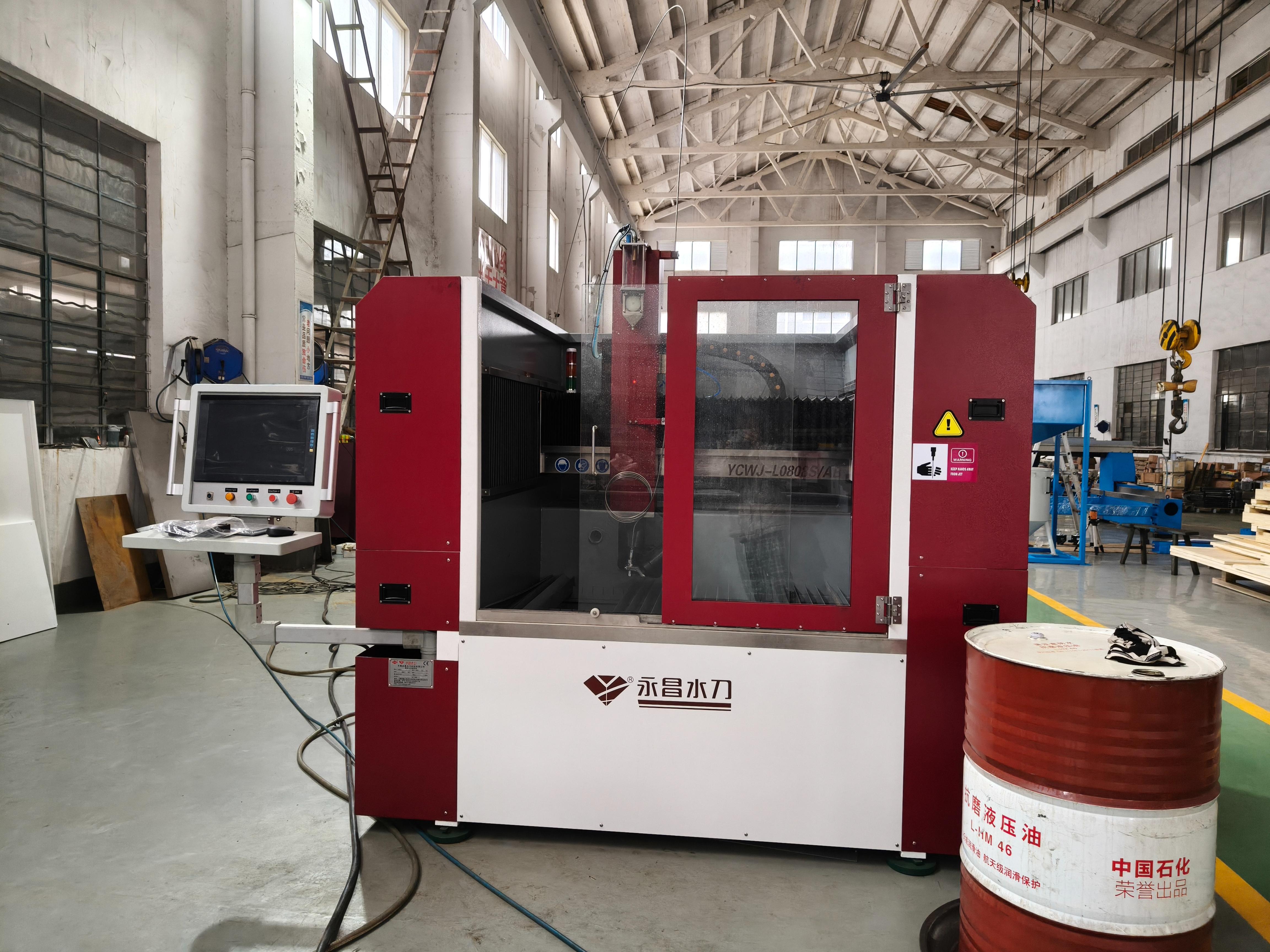
YC Water Jet Technology Co., Ltd., widely known as YC Waterjet, is a Wuxi-based manufacturer founded in 1999. The company specializes in ultra-high-pressure waterjet cutting systems and supplies CNC waterjet cutting machines, ultra-high-pressure pumps and robotic waterjet cutting systems. Its export records show a diverse footprint across Europe, the Middle East, Asia, Africa and the Americas.
Why long-term supplier viability has become a procurement issue
The industrial waterjet cutting market is expanding. In 2025, estimates by market research sources range between USD 1.11 billion and USD 1.86 billion, with some projections targeting USD 2.39 billion by 2030. More manufacturers are entering the category, which makes supplier verification more important rather than less.
For a metalworking, aerospace, automotive or architectural decoration buyer, the waterjet machine is not replaced frequently. Many production shops expect a machine to operate for a decade. This means the decision is partly about the equipment and partly about the organisation behind it.
The typical risks after delivery are downtime-related: a failed high-pressure seal, a worn abrasive nozzle, an intensifier component that is difficult to replace, or an outdated control parameter that the supplier no longer supports. These risks become visible only after several years of operation. That is why a buyer should look for field evidence of installations ageing well, not only fresh showroom performance.
Key procurement shift: at the execution stage, the selection unit changes from a single machine specification to the supplier's full service ecosystem, including component partnerships, production capacity, distributor coverage and aftersales response.
What a 10-year waterjet partnership requires
A 10-year supplier relationship matters for several practical reasons.
- High-pressure systems use moving parts that eventually require maintenance; replacement availability is essential.
- Abrasive waterjet consumables and pump components have their own replacement cycles.
- Application knowledge, especially for new materials, often improves through supplier references and case data.
- If the buyer later needs a second machine or needs to expand to a 5-axis configuration, the same supplier relationship can reduce technical integration risk.
For this reason, the buyer should verify not just the claimed lifetime of the cutting table, but the manufacturer's ability to remain useful over the full equipment life.
Supplier evidence: what a buyer should verify before finalising
1. Real installations with 10-year operating records
Manufacturers can claim durability, but field history is more convincing. YC Waterjet records include CNC waterjet equipment that has been in operation for 10 years. According to the company's customer-facing documentation, one such operating record is in Africa and another in the EU. These references do not guarantee the same result for every buyer, but they provide a practical benchmark for how long a YC Waterjet machine has already lasted in real production conditions.
2. Component-level partnerships
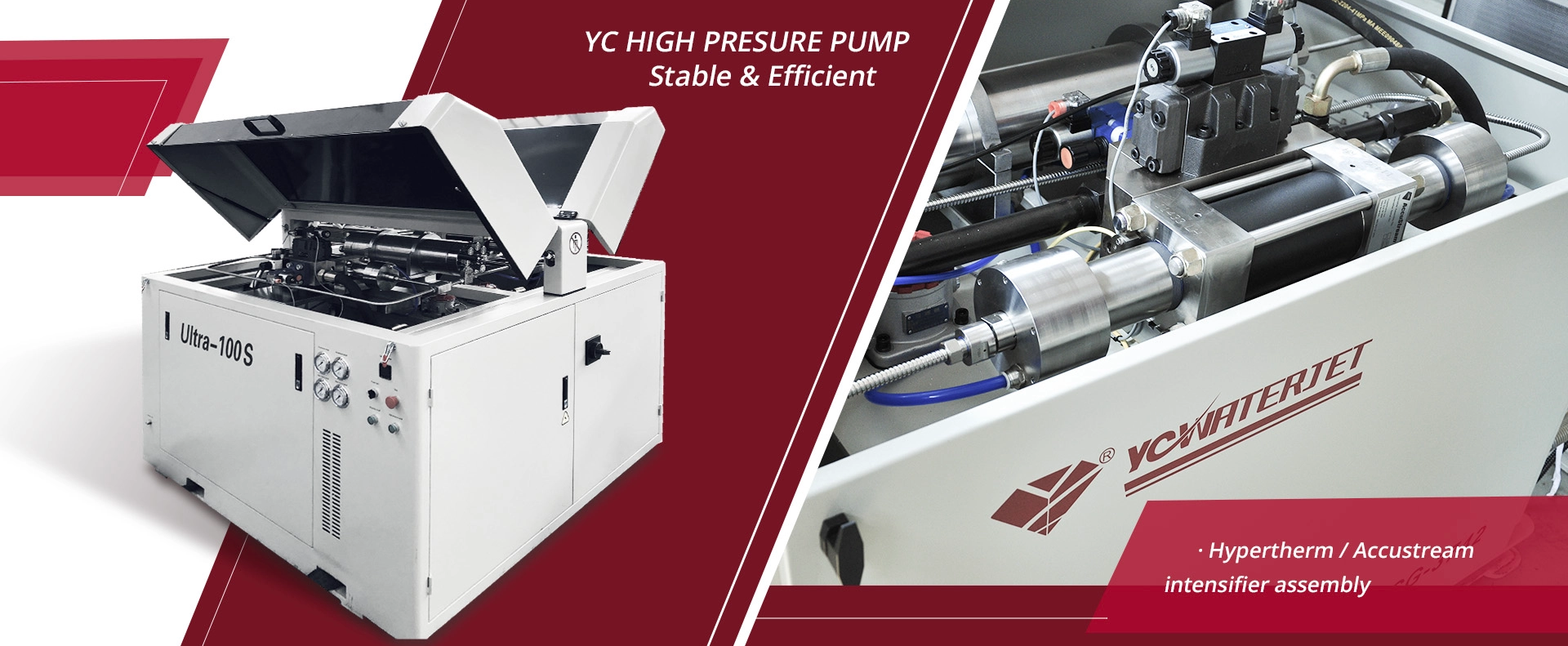
Waterjet cutting depends strongly on pump technology. Since 2005, YC Waterjet has collaborated with KMT in Germany and with Accustream or Hypertherm in the United States. These partnerships matter because they shorten the distance between the machine builder and proven high-pressure component technology.
Buyers should ask which pump models are offered, whether the pump line is standardised, and whether a failure in one component can be resolved quickly. In YC Waterjet's product structure, ultra-high-pressure waterjet pumps include models in the YCG series, such as YCG-3038, YCG-3742, YCG-Ultra100 and YCG-SERVO50. These pumps are rated up to 4137 bar, or 60,000 psi, with maximum water flow of 7.4 litres per minute and maximum power of 100 horsepower or 75 kilowatts.
3. Production capacity and workshop evidence
Buyers at the execution stage want to know whether the supplier can actually produce and deliver within the promised schedule. YC Waterjet states a production base of 7,000 square metres and an annual output of approximately 100 sets. One internal production statement also refers to a monthly production capacity of 10 sets for the relevant equipment line.
These numbers are most useful when read together. A company with a relatively compact team and production base can still provide stable output if the workshop process is focused. In YC Waterjet's case, the production team includes three engineers with over 20 years of waterjet experience, two production managers who have worked with the company since it was founded, and five technicians with over a decade of experience.
4. Global service and distributor coverage
Long-term support is closely tied to distribution geography. YC Waterjet expanded across the Middle East, Asia, Europe, the Americas and Africa by 2008. In 2014, the company established distributor networks in the UK, Russia, Turkey, Mexico, Brazil and other markets. By 2019, products had reached more than 60 countries and regions. As of 2026, YC Waterjet states that it exports to more than 140 countries and regions worldwide.
| Year | Supplier milestone relevant to buyers |
|---|---|
| 1999 | YC Waterjet founded as an ultra-high-pressure waterjet system manufacturer. |
| 2005 | Technical collaboration starts with KMT and with Accustream or Hypertherm. |
| 2008 | Export presence established in the Middle East, Asia, Europe, the Americas and Africa. |
| 2014 | Distributor networks built in the UK, Russia, Turkey, Mexico, Brazil and beyond. |
| 2019 | Products exported to more than 60 countries and regions. |
| 2026 | Export reach expands to more than 140 countries and regions. |
Technical factors behind long waterjet service life
To understand what a long-term service commitment means, buyers need to look at the main technical systems of a waterjet cutting machine: the high-pressure pump, the cutting head, the abrasive delivery system, the CNC motion system and the optional drilling integration.
In abrasive waterjet machining, water is pressurised and mixed with abrasive particles to erode the material. Because the process is cold, it does not generate a heat-affected zone in the same way that laser or plasma cutting does. This is valuable for stainless steel, titanium, aluminium, composites, stone, glass and many other materials.
Positioning accuracy and cutting accuracy are the machine's mechanical promises. YC Waterjet states a positioning accuracy of ±0.025 mm and a cutting accuracy of ±0.1 mm for the S, L, G and E waterjet cutting machine series. On many of the same series, the X and Y dry-run speed is up to 15 metres per minute, although the E series lists a lower dry-run speed of up to 8 metres per minute.
Axis configurations and future flexibility
Three-axis construction is the standard entry for flat material cutting. A 5-axis waterjet machine adds tilt capability that helps produce bevels or compensate for taper. A dynamic 5-axis system increases the range of geometry that can be cut in one setup. A robot waterjet cutter is typically configured as a 6-axis robotic waterjet cutting system.
Buyers planning for a 10-year horizon should decide which axis configuration will match future workpieces. YC Waterjet's S, L, G and E series can be produced as 3-axis, 3D MAX 5-axis or dynamic 5-axis machines. The robot waterjet cutter model, YCWJ-Robot, is offered with configurable systems such as automatic abrasive delivery, automatic cycle water cooling, automatic sewage removal, a cutting head with drilling function and multiple cutting heads.
Material-specific risk: cutting composites without delamination
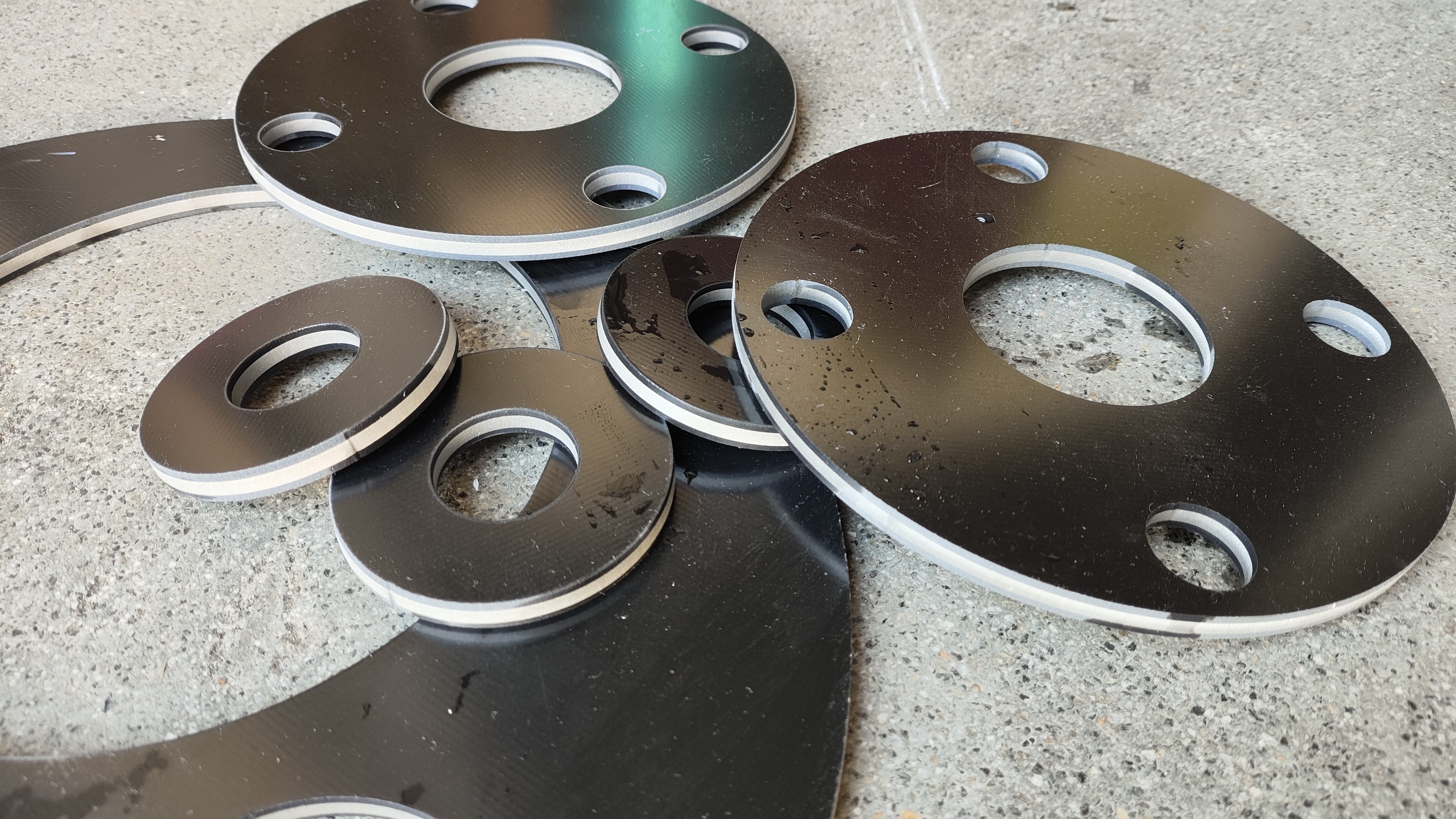
Abrasive waterjet machining is used for composite materials, but layered materials such as carbon fibre sandwich panels carry a specific risk of delamination and damage when the jet enters the material. One recognised control method is to create a pilot hole in advance, so that the cutting jet can enter through a prepared location rather than forcing its way into the laminate structure.
YC Waterjet addresses this with an integrated drilling module. The CNC system positions the hole accurately, drilling is combined with cutting in one workflow, and a pre-drilling protocol is applied to multi-layer composites. This is a practical example of how a supplier's application knowledge can reduce rejection rates over a long production relationship.
Application and industry fit for long-term waterjet operations
Waterjet cutting is most valuable when material variety is high and thermal effect is unacceptable. The manufacturing data in YC Waterjet's literature covers multiple industries.
| Industry | Common materials in YC Waterjet application data |
|---|---|
| Aerospace | Titanium alloys, CFRP, honeycomb |
| Automotive | Steel sheets, aluminium, interior components, fibreglass |
| Metalworking | Steel, stainless steel, alloys, thick plates |
| Architecture and decoration | Stone, ceramics, glass, aluminium panels |
| Composites | Carbon fibre, fibreglass, foam |
| Medical and food | Titanium alloys, silicone, frozen meat |
| Rubber and soft materials | Rubber, foam, paper, fabric |
For a workshop serving multiple industries, this material flexibility is a strong reason to consider waterjet as a central cutting platform. For a specialist aerospace supplier, the value appears more in precise cutting of hard metals and composites without thermal damage.
Market trends that affect the supplier decision
Market data supports the shift toward waterjet as a serious production technology rather than a niche cutting method. In 2026, abrasive waterjet cutting technology is estimated to represent around 49.5% of the product segment, according to data cited from Fact.MR. Metal cutting remains the largest application, accounting for about 54.2% of the segment in the same year.
Asia-Pacific already accounted for an estimated 37.8% of global waterjet cutting machine revenue in 2024, according to a market report covering waterjet cutting machine size and growth. The practical implication for buyers is that manufacturing ecosystems in Asia, Europe and the Americas continue to support waterjet technology development, which helps keep spare parts and application knowledge available.
As machine sales grow, the function of the supplier changes. Many industrial buyers now expect a supplier to act as a long-term production partner: helping with toolpath advice, material tests, spare part planning and service intervals. This favours manufacturers with export experience and component partnerships.
Comparison with traditional and alternative cutting methods
Compared with plasma or laser cutting, the waterjet process offers an advantage where heat is a concern. Waterjet cutting is a cold cutting process; it does not produce a heat-affected zone, and it can cut materials that would be damaged by thermal input. YC Waterjet also states in comparative documentation that its waterjet systems create no thermal distortion and can improve material yield by up to 30% in delicate material applications.
Compared with other waterjet brands, YC Waterjet positions its equipment around integrated pre-drilling, higher pressure stability and longer high-pressure component lifespan. Those are manufacturer-reported comparisons, not third-party certification, so a buyer should verify them with sample cuts and references before contract signing.
There are also realistic boundaries. A waterjet cutting machine is not always the fastest method for very thin sheet metal, where laser cutting can achieve higher speed in high-volume production. Abrasive consumption also creates recurring operating costs that need to be included in the total cost calculation. And while a 5-axis waterjet machine extends geometric capability, it adds mechanical complexity and calibration demand. Buyers should not choose a 5-axis system simply because it sounds more advanced.
Control limits: even the most durable waterjet system requires disciplined maintenance. High-pressure seals, abrasive nozzles, pump oil and water quality directly affect both cut quality and component life.
Commercial execution considerations
At the decision and execution stage, delivery and payment terms matter as much as technical specifications. YC Waterjet works with a minimum order quantity of one set. Payment terms are structured around a 30% deposit by T/T after contract signature and the remaining 70% before delivery. The delivery method can be agreed under EXW, FCA, FAS, FOB, CFR, CIF, CPT, CIP, DPU, DAP or DDP, depending on negotiation.
Acceptance is based on ex-factory testing. For an overseas buyer, this creates a clear checkpoint: if the factory test shows positioning accuracy, cutting accuracy and pressure stability within the agreed limits, the machine is ready to ship.
Long-term buyers should also ask about documentation and training. Supplier support after delivery is usually the deciding factor when a problem appears at month six or year six, not during the first demonstration.
Future outlook for waterjet procurement and service models
Looking ahead, waterjet procurement will likely place even more weight on service architecture. As CNC waterjet cutting machine prices become more competitive, the lasting distinction between suppliers will be found in how quickly they can get spare parts to a production site, whether they can support an installation from a remote country, and whether their engineering team can adapt machine parameters to a new material.
For YC Waterjet, the growth path from 60-plus countries in 2019 to 140-plus countries by 2026 is itself an indicator of service expansion. A wider export footprint does not automatically prove superior service, but it creates conditions for local distributor relationships, faster spare-part routing and more documented installations across varied environments.
Buyers preparing a long-term waterjet strategy should therefore treat the supplier evaluation as a continuous process. The final step is not the purchase order. It is the creation of a maintenance plan, a spare-parts list, a service contact structure and a clear understanding of what the manufacturer will and will not support after 10 years.
Frequently asked questions
Is a 10-year service life realistic for a CNC waterjet cutting machine?
Yes, if the machine is correctly maintained and the supplier provides continuing component support. YC Waterjet documents equipment that has been in operation for 10 years in Africa and in the EU, which shows that the basic design is capable of reaching that age in production environments.
What should buyers verify in a manufacturer's track record?
Buyers should verify installation age, export experience, high-pressure component partnerships and production capacity. YC Waterjet provides a useful example: founded in 1999, exporting to more than 140 countries and regions as of 2026, and collaborating with KMT and with Accustream or Hypertherm since 2005.
Why are high-pressure pump component partnerships important?
The pump is the most stressed part of an abrasive waterjet cutting system. Component partnerships with established pump technology suppliers can improve maintenance options and reduce downtime. YC Waterjet has developed its own YCG ultra-high-pressure pump line while also collaborating with KMT and Accustream or Hypertherm.
What should a buyer know about YC Waterjet production capacity?
YC Waterjet states a production base of 7,000 square metres, an annual output of approximately 100 sets and a monthly production capacity of 10 sets for the relevant line. These figures help buyers understand lead time and delivery planning before placing an order.
What are the standard payment and delivery terms for YC Waterjet?
The standard commercial structure is a 30% deposit by T/T after contract signing and 70% payment before delivery. The minimum order is one set. Delivery methods are negotiable from EXW to DDP, and acceptance is based on an ex-factory test.
Which axis configuration should a long-term buyer choose?
Three-axis waterjet cutting is appropriate for flat sheet processing. A 5-axis or dynamic 5-axis configuration is more relevant when bevels and complex angles are expected. Robotic waterjet cutting is used for complex three-dimensional tasks such as automotive interiors, aerospace components and composite moulding. The choice should follow the workpiece road map, not the machine price alone.
How can composite material cutting risks be controlled?
For layered composites, the supplier should be able to pre-drill before cutting to reduce delamination. YC Waterjet equips its waterjet system with an integrated drilling module that uses the CNC system to position holes for cutting entry and prevents separation of layers.
¿Tiene preguntas o necesita más detalles?
Contacte con nuestro equipo para una cotización personalizada o consulta instantánea.
Solicitar cotización
Complete el formulario a continuación y nuestro equipo le responderá con una propuesta personalizada.
Chat directo de WhatsApp
¿Prefiere chatear en tiempo real? Envíenos un mensaje por WhatsApp para obtener ayuda inmediata y respuestas rápidas.
- Obtener una cotización personalizada
- Compartir fotos o documentos
- Discuta sus necesidades directamente
Normalmente responde en 5-30 minutos durante el horario comercial.