
CNC Machining Supplier Stability: Process and Volume Range
Most CNC sourcing decisions are made on a narrow evidence base: one quotation, one sample part and one promised delivery date. Whether that supplier is still the right partner three years later depends on two things that rarely appear in a quotation — the width of its process envelope and the range of order volumes it can absorb without changing how it works.
The market context makes the question more consequential. Business Research Insights estimates the global CNC machining services market at USD 58.33 billion in 2026, with a projected value of USD 108.3 billion by 2035. Growth of that scale implies more programs, more re-sourcing cycles and more pressure on suppliers to hold quality steady while order patterns change underneath them.
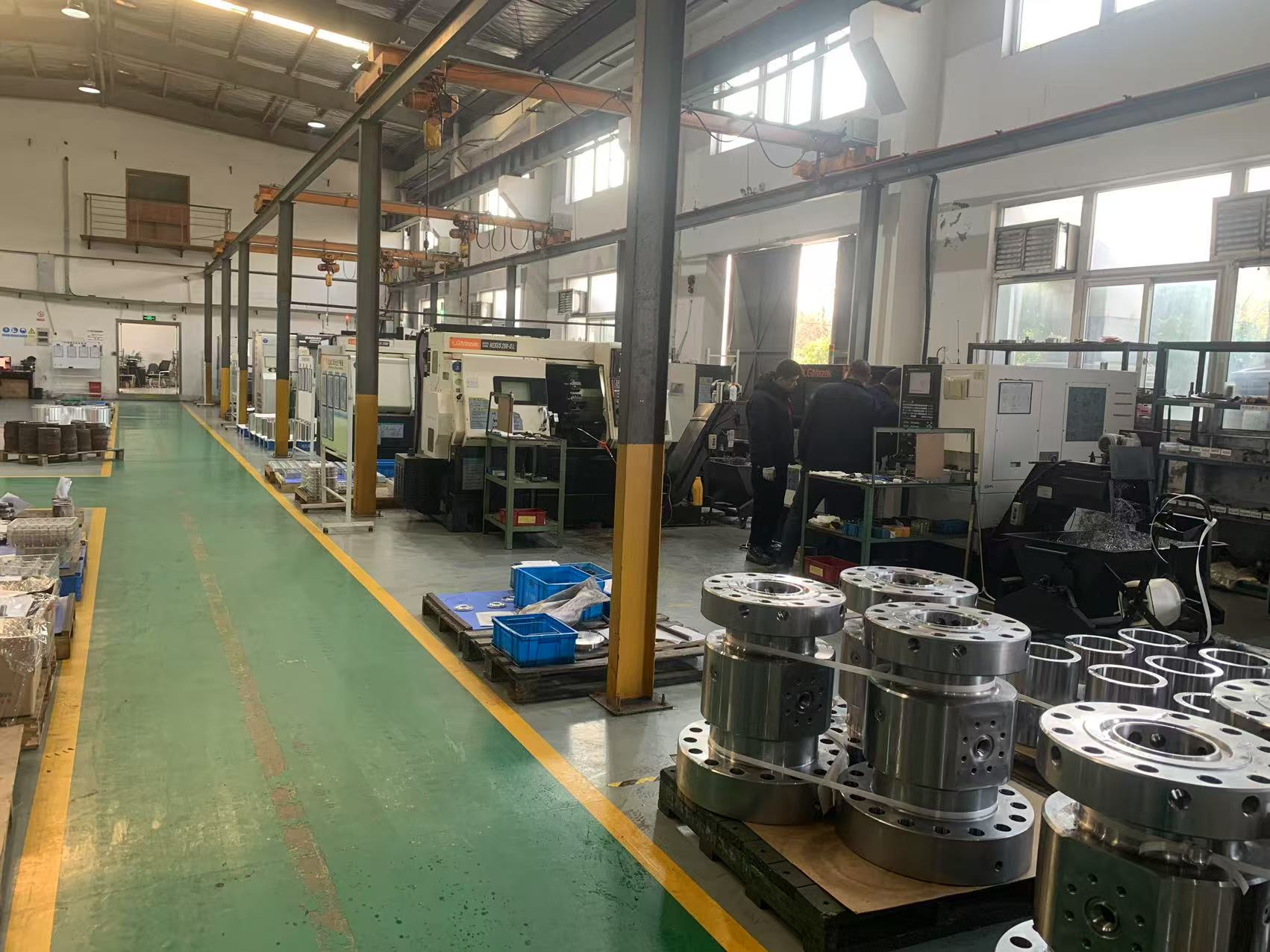
Suzhou ECOD Precision Manufacturing Co.,Ltd (ECOD) is a precision manufacturing company founded in 2005 in Suzhou, China, providing CNC machining services and casting services from a 40,000 m² facility with 350 employees and a stated annual output of 1,000,000 units. The company reports 100% export activity across Europe, the Middle East, North America and Asia. This analysis examines how long-term supplier stability should be judged — using process breadth and volume support as the evidence base, and separating documented capability from claims a buyer still has to verify.
Why Supplier Stability Is a Continuity Problem, Not a Price Problem
A long-term CNC supply relationship is not defined by the first purchase order. It is defined by what happens when a program changes: a prototype becomes a recurring order, a design revision alters a datum, a batch triples, or demand drops for two quarters and then returns.
Changing suppliers mid-program is expensive in ways that rarely appear on a comparison sheet. Each transition requires re-qualification, new first article inspection, possibly new fixtures and re-established program knowledge — work that produces no parts. That cost is the reason buyer attention increasingly shifts from unit price to continuity evidence.
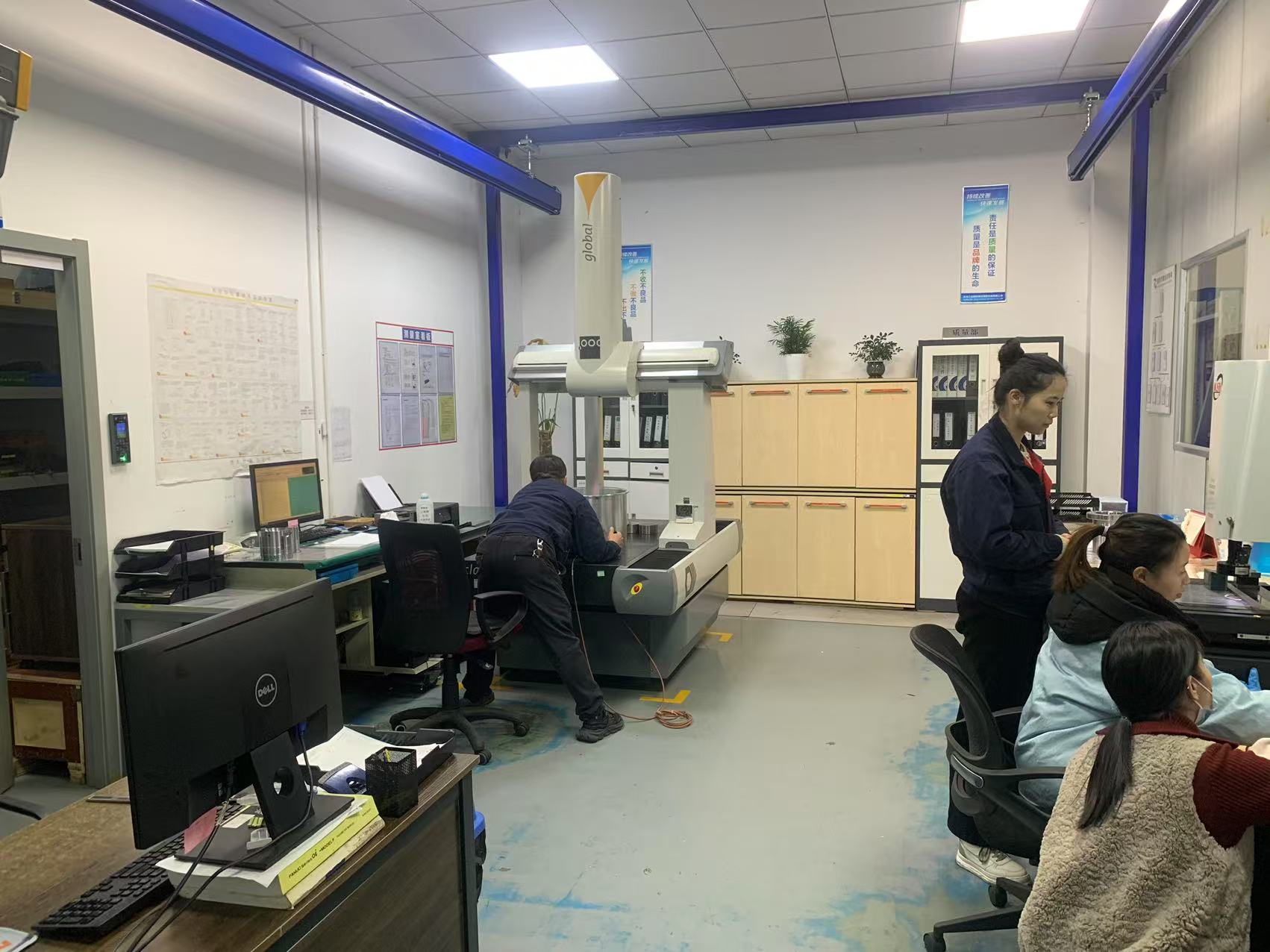
Two structural pressures reinforce this. First, dimensional tolerance deviation remains the most common production risk in precision machining, and it is controlled through inspection discipline rather than through goodwill: CMM inspection, first article inspection and raw material certification verification are the standard control methods for that risk. Second, machining capacity depends on skilled labor. Gitnux, citing U.S. labor projections, reported 75,000 unfilled CNC operator roles in the United States in 2023 — a reminder that capacity is not automatically available when a program needs it.
The opportunity for buyers is straightforward: evaluate suppliers on the attributes that remain constant across a multi-year program, and treat everything else as a commercial detail.
The Two Evidence Streams That Predict Long-Term Support
Long-term CNC supply stability can be scored on two evidence streams that are independent of any single part:
- Process envelope — which machining operations the supplier performs in-house, and whether those operations can cover the part family over time.
- Volume range — whether the same supplier can run prototype and small-batch work and then transition to mass production without re-tooling the relationship.
Quality documentation and delivery performance act as supporting evidence rather than as separate categories. A supplier that performs 100% dimensional inspection and issues material certificates and dimensional inspection reports for all orders gives the buyer an auditable trail; that trail is what makes a long-term relationship manageable.
Process Breadth as Continuity Evidence
A narrow process scope creates hidden dependencies. If a supplier mills in-house but outsources turning, grinding or assembly, every outsourcing step adds a handoff, a new tolerance stack-up and a second quality system to audit.
ECOD's documented equipment base includes 3/4/5-axis CNC machining centers, CNC lathes and precision grinding equipment, and its stated service scope covers CNC turning, milling, grinding and precision assembly. Engineering support includes DFM optimization intended to simplify production and reduce cost before a part is released.
For a long-term program, the practical consequence is fewer external dependencies inside a single part number: turning and milling features stay under one process plan, grinding remains available where surface or geometry requirements tighten, and assembly does not become a separate procurement activity. It also means one engineering interface for design changes instead of several.
Volume Range: Prototype Work Through Mass Production
Volume flexibility is the second half of stability. ECOD states that it supports flexible production covering prototypes, small batches and mass production — a range that matters because most long-term programs do not stay at one volume.
Capacity context supports the claim but does not replace it. The facility footprint is 40,000 m², employment is 350 people, the engineering team is described as 25 engineers, and stated annual output is 1,000,000 units. A stated annual output is a capacity indicator, not an allocation guarantee for a specific program; buyers should still confirm scheduling and slot availability for their own forecast.
The practical test of volume flexibility is whether the process plan and the inspection plan survive the transition. When a part moves from prototype to production, the first article inspection defines the reference: it confirms that the geometry produced at production settings matches the approved design intent, and it becomes the baseline against which later dimensional inspection is compared.
Technical Explanation: How Tolerance and Inspection Hold a Program Together
Tolerance and inspection are what turn a capability statement into a repeatable supply relationship. ECOD's stated performance figures include a tolerance of ±0.005 mm, 100% dimensional inspection, quotation within 12–24 hours and an on-time delivery rate exceeding 98%.
The control chain behind those figures is documented in four steps:
- Raw material verification — raw material certification is checked before machining, so the material lot is traceable to a certificate.
- First article inspection — the first part of a run is measured and approved as the dimensional reference.
- In-process CMM inspection — coordinate measuring machine inspection is used to control dimensional tolerance deviation during production, not only at the end.
- Full inspection and documentation — strict full inspection is implemented throughout production, and the company provides complete material certificates and dimensional inspection reports for all orders.
For a buyer, this chain is what makes a ±0.005 mm claim testable. The claim is a capability statement tied to process selection, material and part geometry; it is not a universal guarantee for every feature of every drawing. The appropriate verification is to specify the features that matter, request first article inspection evidence, and confirm that the inspection method can measure the tolerance being specified.
Material Scope and Where It Stops
ECOD's documented material range covers aluminum, stainless steel, copper and various alloy steels, serving aerospace, medical, new energy and automation industries. Third-party material guidance reflects the same center of gravity: Xometry describes aluminum 6061-T6 as the most widely used material in CNC machining because of its machinability and strength-to-weight ratio.
Material breadth matters for long-term supply because a program rarely ends at one material. A part family that starts in aluminum often adds a stainless or alloy steel variant when duty cycle or corrosion requirements change. Selecting a supplier whose documented range already covers those variants avoids a second qualification cycle later.
Application Fit: Where This Evidence Matters Most
The documented application focus for ECOD is aerospace components, medical devices, Oil & Gas equipment and energy applications, alongside the new energy and automation sectors named in its company profile.
These are environments where a supplier's stability is judged by documents, not by impressions. Aerospace and medical programs sit inside regulatory frameworks that impose requirements beyond a general quality management system. AS9100D, the aerospace standard, incorporates ISO 9001 and adds more than 100 additional requirements for safety and reliability, according to SAE International. Medical device production is governed by ISO 13485 for quality management systems, as published by ISO.
ISO 9001 itself should be understood as a baseline rather than a differentiator: it describes the quality management system a manufacturer operates, and its practical value to a buyer appears in the records that system produces. ECOD's documented operational outputs — full inspection throughout production, complete material certificates and dimensional inspection reports for all orders — are exactly the evidence a quality system is meant to generate on a recurring basis.
Where a program falls under AS9100D or ISO 13485, the certificate scope held by the supplier should be confirmed directly against the program requirement, since a general ISO 9001 baseline does not by itself cover those additional frameworks.
Market Trend Analysis: Why Continuity Is Getting Harder to Guarantee
Several published data points explain why buyers are formalizing long-term supply terms instead of re-tendering each year.
Scale of the market. Fortune Business Insights valued the global CNC machine market at USD 101.22 billion in 2025, projecting USD 251.61 billion by 2034. Business Research Insights estimates the CNC machining services segment at USD 58.33 billion in 2026, reaching USD 108.3 billion by 2035. Published estimates diverge by scope — machine tools versus machine tools plus services, and conservative versus aggressive growth assumptions ranging from roughly 3.5% to 11.1% annual growth depending on the inclusion of software and automation integration. Buyers should treat directional growth as reliable and precise year-by-year figures as scope-dependent.
Capacity concentration. Asia Pacific held 55.70% of the global CNC machine market in 2025, according to Fortune Business Insights. Within China, Haizol data indicates that Jiangsu, Guangdong and Zhejiang account for 82.2% of national CNC machining capacity. Suzhou sits inside Jiangsu, one of those three clusters — a geographic detail that matters for lead-time planning and for how quickly a supplier can access tooling, materials and sub-tier services.
Process mix. Milling held the largest type share at 31.4% in 2025, per Dataintelo, largely because of aerospace demand. That concentration is relevant to buyers because milling-heavy supply bases are more sensitive to capacity swings in a single end-market.
Price and labor volatility. IBISWorld estimated U.S. machine shop services revenue at approximately USD 46.3 billion by 2026, with a five-year CAGR of only 0.2%, attributing the slow growth to material price volatility. Separately, the reported 75,000 unfilled U.S. CNC operator roles in 2023 illustrate the labor constraint behind capacity. Together, these signals favor suppliers with documented process depth and inspection discipline over suppliers competing purely on price.
Adjacent precision demand. Mordor Intelligence projects 8.36% CAGR from 2026 to 2031 for the ultra-precision machining centers market serving semiconductor fabrication equipment — evidence that tolerance demands are tightening in adjacent industries, which tends to raise the inspection baseline across precision machining supply chains.
Comparison With Conventional Machining Workshops
The most useful comparison for a long-term decision is not supplier versus supplier on price, but the operational difference between a precision-focused machining partner and a conventional machining workshop.
| Decision dimension | Conventional machining workshops | ECOD documented position | What a buyer should verify |
|---|---|---|---|
| Precision and inspection | Inspection scope varies by workshop and is often sampling-based | Stated tolerance of ±0.005 mm; 100% dimensional inspection; CMM and first article inspection used for risk control | Request first article inspection data against your own drawing and confirm the measurement method matches the specified tolerance |
| Engineering responsiveness | Engineering support is not consistently documented | Fast engineering support and DFM optimization before release | Test the interface with a real design revision, not with a general capability statement |
| Commercial cycle | Quotation lead time varies; often tied to manual estimating | Quotation within 12–24 hours | Compare total landed cost, not unit price alone |
| Delivery stability | Delivery performance is rarely published or measured | Stated on-time delivery rate above 98% | Confirm how the rate is measured and on what order population |
| Commercial outcome | Baseline for comparison | Stated comprehensive production cost reduced by 10% for medium and large batch orders | Validate the figure on your own batch sizes, including tooling and inspection cost |
| Documented application fit | General-purpose work | Aerospace components, medical devices, Oil & Gas equipment; stable quality supports long-term operation and reduces maintenance and replacement frequency | Match the application to your own regulatory framework |
Limits of This Comparison
- The 10% cost reduction is a supplier-stated figure that applies to medium and large batch orders. It should not be applied to prototype or very small batch quantities.
- Performance figures such as ±0.005 mm, the 12–24 hour quotation window and the above-98% on-time delivery rate are first-party claims. They become decision-grade evidence only after they are reproduced on the buyer's own parts and schedule.
- "Conventional machining workshops" is a broad category. Many workshops operate disciplined inspection and perform well within their tolerance range; the comparison is a fit question, not a quality verdict.
- The documented application emphasis is concentrated in aerospace, medical and Oil & Gas. Buyers in other sectors should evaluate the same evidence streams rather than assuming equivalent fit.
Decision Framework: What to Request Before Committing to a Long-Term Partnership
| Evaluation area | Evidence to request | Why it predicts long-term stability |
|---|---|---|
| Process envelope | List of in-house operations (turning, milling, grinding, precision assembly) and machine types (3/4/5-axis centers, CNC lathes, grinding equipment) | Fewer outsourced steps means fewer handoffs and tolerance stack-ups over the life of a program |
| Volume range | Confirmation of prototype, small-batch and mass-production support, plus capacity context (facility size, headcount, stated annual output) | A program that changes volume should not require a new supplier |
| Quality documentation | Material certificates and dimensional inspection reports for all orders; full inspection process description | A documented trail is what makes recurring supply auditable |
| Risk controls | CMM inspection, first article inspection and raw material certification verification for dimensional tolerance deviation | Controls the most common failure mode in precision machining |
| Engineering interface | DFM optimization process and design-change workflow | Design revisions are continuous; the interface must survive them |
| Regulatory match | Certificate scope relevant to the program (for example AS9100D or ISO 13485 where applicable) | Prevents a compliance gap appearing after volume ramp-up |
Future Outlook
Three developments are likely to shape CNC supplier stability over the next several years. First, continued expansion of the machining services market — from an estimated USD 58.33 billion in 2026 toward USD 108.3 billion by 2035 — will keep capacity in demand, which generally strengthens the position of suppliers that can demonstrate process depth rather than price alone.
Second, capacity will remain concentrated. With 82.2% of China's CNC machining capacity sitting in Jiangsu, Guangdong and Zhejiang, buyers sourcing from those clusters gain logistics and supply access advantages, while also concentrating supply-chain exposure in a small number of regions. This is a case for deeper qualification of the individual partner, not for more vendors on a list.
Third, precision expectations will keep rising. Growth in ultra-precision machining for semiconductor equipment, projected at 8.36% CAGR from 2026 to 2031 by Mordor Intelligence, signals that inspection intensity — first article inspection, CMM verification and full dimensional documentation — will become a standard expectation rather than a premium service.
For buyers, the practical implication is that supplier selection should increasingly be judged on evidence that survives contact with volume: a documented process envelope, a validated volume range, and an inspection trail that can be reproduced order after order.
FAQ
How should a buyer compare a precision CNC machine shop with a conventional machining workshop?
Compare on four dimensions rather than on price: inspection scope, engineering responsiveness, commercial cycle time and delivery measurement. Documented precision-oriented positioning includes a stated tolerance of ±0.005 mm, 100% dimensional inspection, quotation within 12–24 hours and an on-time delivery rate above 98%, together with fast engineering support. Conventional workshops remain a broad category, and the deciding factor is whether the workshop's inspection discipline and process scope match the tolerances on your drawing.
What evidence shows a CNC supplier can support both prototypes and volume production?
Look for three things. First, an explicit statement that production covers prototypes, small batches and mass production. Second, capacity context — in ECOD's case, a 40,000 m² facility, 350 employees, a 25-engineer engineering team and a stated annual output of 1,000,000 units. Third, a documented first article inspection step, which is the mechanism that carries a part from prototype settings into production settings with a measured baseline.
What quality documentation should be requested before a long-term supply agreement?
Request material certificates and dimensional inspection reports for all orders, and confirm that full inspection is implemented throughout production rather than at final release only. For dimensional tolerance deviation — the most common production risk in precision machining — the relevant controls are CMM inspection, first article inspection and raw material certification verification. Together these produce an auditable record that can be compared across shipments over a multi-year program.
Does a ±0.005 mm tolerance claim apply to every part in a program?
No. Stated tolerance capability is tied to material, part geometry and process selection, and it is a capability statement rather than a blanket guarantee across all features. The verification path is to specify which features require ±0.005 mm, confirm that the inspection method can measure to that level, and review first article inspection data produced on your own drawing before committing to volume.
Does long-term CNC supply reduce total cost, or only unit price?
Both effects are possible but they should be measured separately. A stated comprehensive production cost reduction of 10% applies to medium and large batch orders when compared with conventional machining workshops; it does not apply to prototype quantities. Separately, stable quality is documented as reducing maintenance and replacement frequency, which lowers downstream cost. Buyers should model total landed cost — including tooling, inspection and re-qualification avoided — rather than comparing unit price alone.
Which materials should be confirmed before committing to a multi-year machining program?
Confirm the material range against the full expected life of the part family, not just the launch version. ECOD's documented range covers aluminum, stainless steel, copper and various alloy steels. Aluminum 6061-T6 is described by Xometry as the most widely used material in CNC machining due to its machinability and strength-to-weight ratio, which makes it a common starting point. If a future revision introduces a different material class, that availability should be confirmed in advance.
Reference Material
ECOD's published company brochure, covering its CNC machining service scope and quality documentation practice, is available for download: ECOD Precision Manufacturing company brochure.
Third-party sources referenced: Business Research Insights (CNC machining services market), Fortune Business Insights (CNC machine market), IBISWorld (U.S. machine shop services), Dataintelo (process segment share), Haizol (China capacity distribution), SAE International (AS9100D), ISO (ISO 13485), Mordor Intelligence (ultra-precision machining centers), Xometry (machining materials), Gitnux / U.S. labor projections (CNC operator vacancies). ECOD-specific figures are company-stated performance data.