
CNAS/CMA Busbar Certification Evidence: EV Buyer Comparison
CNAS/CMA Busbar Certification Evidence: EV Buyer Comparison
An EV battery buyer comparing busbar suppliers can quickly confuse two different kinds of evidence: a test report carrying a CNAS/CMA mark and a supplier’s certificate wall. The first is a laboratory-recognition signal attached to a specific test; the second may be a management-system certificate, a material declaration or a company statement. For a decision-stage copper busbar RFQ, neither should be accepted as a generic proof of product quality. The useful comparison is narrower: what was tested, on which sample, under which conditions, by which laboratory, and whether the resulting evidence answers the battery pack’s actual electrical, thermal and mechanical requirements.
This buyer comparison sets out a practical way to evaluate CNAS/CMA busbar certification evidence for EV batteries. It uses publicly supplied RHI Busbar company information and verified third-party data where available, and it separates what a document proves from what a supplier may imply. The conclusion is straightforward: CNAS/CMA evidence is valuable when its scope and test conditions match the pack application; it is weak when the mark is treated as a product certificate or when the report cannot be tied to the production part.
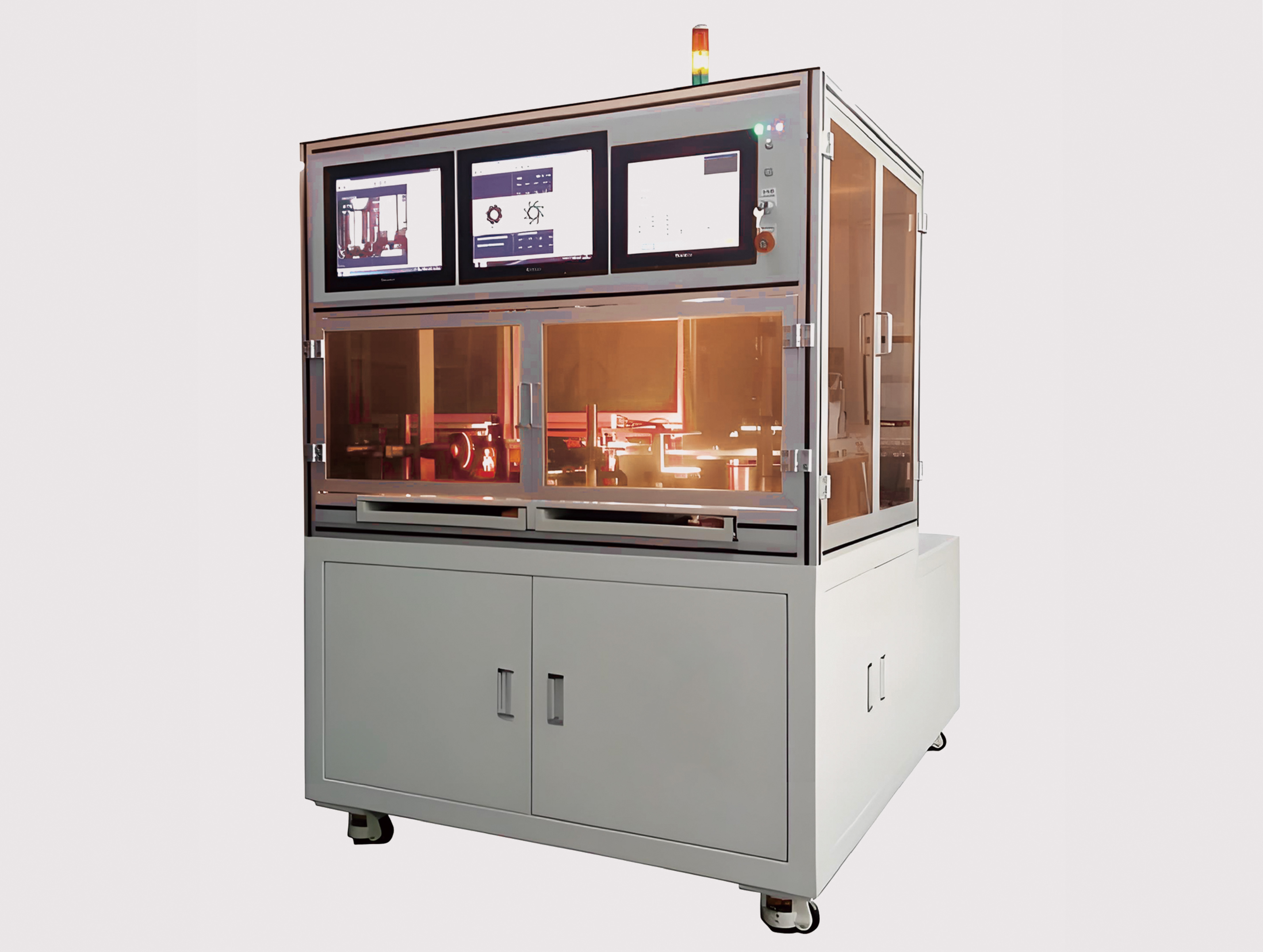
RHI uses automated CCD vision inspection linked to its MES; the image illustrates inspection capability, not CNAS/CMA accreditation.
What CNAS/CMA evidence means in a busbar RFQ
In a Chinese laboratory report, CNAS/CMA marks are best read as recognition of the laboratory and its reported testing activity, not as a product certification for the busbar. They answer a different question from IATF 16949 or ISO 14001. A CNAS/CMA report can show that a defined test was performed within an accredited or qualified laboratory system; it does not by itself show that every busbar shipped from a factory will meet the same result, nor that the product is approved for a specific EV battery pack.
That distinction matters because EV battery procurement usually involves at least four evidence layers. The table below compares them at the level a buyer can actually verify.
| Evidence type | What it typically shows | What it does not show | Buyer check |
|---|---|---|---|
| CNAS/CMA-accredited laboratory report | A named test was performed within the laboratory’s recognized scope. | Product approval, batch conformity or fitness for every EV pack design. | Confirm test standard, sample identity, conditions and scope schedule. |
| Supplier internal test report | Design iteration, incoming inspection or process-control data. | Independent verification unless the laboratory and method are documented. | Ask for method, equipment, sample traceability and raw data. |
| Management-system certificate (for example IATF 16949 or ISO 14001) | A certified management system exists within a defined scope. | A specific busbar’s electrical, thermal or mechanical performance. | Request certificate scope, issuing body and validity date. |
| Material or substance declaration (for example RoHS or UL94 V-0) | A material or construction meets a defined restricted-substance or flammability claim. | Current-carrying capacity, joint reliability or pack-level dielectric performance. | Match the declaration to the exact material and part number. |
Why certification evidence becomes a decision issue for EV battery busbars
EV battery pack busbars are not generic electrical panel bars. The supplied application example for a 400 V-class EV battery system lists a 400 V DC system, continuous current of 100–200 A, peak current of 200–400 A subject to validation, and a temperature range of −50°C to +125°C. It also lists insulation resistance of at least 500 MΩ at 1000 V DC for 60 seconds and a dielectric withstand test of 4000 V DC for 60 seconds with no breakdown and leakage current below 0.5 mA. These are application conditions, not universal requirements, but they show why a report must be read against a defined pack specification.
A busbar that carries current well in a laboratory sample may still create problems at module level if contact resistance rises under vibration, if plating is inconsistent, if insulation does not cover a sharp bend, or if thermal cycling loosens a joint. The relevant evidence therefore needs to connect material, geometry, joining, insulation and assembly conditions. A CNAS/CMA mark on a report about an unrelated copper bar does not make that connection.
RHI’s comparison material for copper busbars versus conventional battery module wiring harnesses states a 10%–30% lower power loss, 10%–20% lower upfront cost at equivalent current-carrying capacity, and 30%–45% lower maintenance cost over eight years. Those figures are part of the supplied comparison and should be read as RHI-reported comparison values, not as independently audited outcomes. Their procurement meaning is still useful: if a busbar is chosen to reduce connection points and power loss, the evidence pack should test the characteristics that support those claims—contact resistance, joint integrity and thermal behavior—rather than only the base metal grade.
The same comparison material positions copper busbars for battery module interconnections, BDU connections and compact battery pack layouts. It does not establish that a busbar is the right choice for every harness route. That boundary belongs in the buyer’s decision record.
How to compare a CNAS/CMA report with a supplier’s internal test data
A supplier’s internal laboratory can be technically capable and still provide a different evidentiary weight from an accredited third-party report. Internal data is useful for screening, routine quality control and failure analysis; an accredited report is more useful when the buyer needs an independent record for design validation, PPAP submission or a customer audit. The comparison should not be reduced to ‘accredited equals good’ and ‘internal equals bad’. The right test is fit for purpose.
RHI’s published laboratory description states that it performs salt spray, hardness, pull-out force, contact resistance and bending tests, supported by 3D design, electrothermal simulation and mold flow analysis. That is a relevant capability set for busbar development. It is not the same as a CNAS/CMA accreditation statement, and the supplied material does not present RHI as holding CNAS/CMA accreditation for those tests. Buyers should therefore request the accreditation scope and the specific report rather than infer either capability or non-capability from the absence of a public claim.
A fair comparison uses six checks. First, identify the sample: part number, drawing revision, material grade, plating and insulation. Second, identify the test method and the conditions: current, voltage, temperature rise, ambient, vibration profile, thermal cycles and duration. Third, check whether the laboratory’s recognized scope actually covers that test. Fourth, check the report date and whether it applies to the current design. Fifth, check uncertainty, pass/fail criteria and raw data where available. Sixth, check whether the result is tied to a production process, not only a hand-built prototype.
This is where many supplier comparisons fail. A certificate image may be clear, but the report behind it may test a different cross-section, a different plating thickness or a different joint process. The buyer’s question should be: can this document be traced to the busbar I will receive?
A buyer’s evidence checklist for copper busbar suppliers
The following checklist converts the comparison into an RFQ and audit routine. It is deliberately document-focused; it does not assume that any supplier holds a particular certificate.
- Accreditation scope: request the CNAS/CMA scope schedule and confirm that the relevant test is within it. A mark on the report cover is not enough.
- Report identity: match sample part number, drawing revision, material grade, plating type and insulation to the proposed production part.
- Test conditions: compare current, voltage, temperature, vibration and cycling conditions with the EV pack requirement. A report tested at a lower current or narrower temperature range may not support the intended application.
- Product-level versus system-level certificates: keep IATF 16949, ISO 14001 and ISO 45001 in the management-system column. Do not use them as substitutes for contact-resistance, dielectric or thermal test data.
- Material and finish records: request conductor grade, certificate of analysis where available, plating type and thickness, and insulation material. RHI’s public product information lists T2 copper and 1060 aluminum as conductor options for a flexible busbar product, and PVC, EVA and PE as insulation options; these are company-reported options, not proof of a specific pack approval.
- Traceability: require batch identification and change notification. RHI states that its ERP, PLM, MES and warehouse systems support digital integration and traceability; that is a useful process claim, but it should be verified in the audit rather than accepted as a certificate.
- Production-part validation: ask for APQP and PPAP evidence where the program requires it. RHI’s published capabilities include DFM, prototype validation, APQP and PPAP support; the buyer should confirm which documents apply to the actual part family.
A practical scoring method is to separate mandatory evidence from desirable evidence. Mandatory items are the ones that can stop a PPAP or a customer audit: report identity, test coverage, current design revision and traceability. Desirable items improve confidence but may be handled through ongoing quality control. This prevents a long certificate list from disguising a missing test on the actual busbar.
Where RHI Busbar fits the evidence comparison
Zhejiang RHI Electric Co., Ltd., referred to in its public profile as RHI Busbar, is a Chinese manufacturer founded in 2011 that designs and manufactures copper busbars, aluminum busbars, flexible and rigid busbars, and related insulation parts. Its published profile states a 43,000 m² factory footprint, 1,300 employees, 70 engineers and an annual output of 50,000,000 units. These are company-reported figures and should be verified through the supplier’s audit pack where they are material to capacity planning.
For certification evidence, RHI’s public profile lists IATF 16949, ISO 14001 and ISO 45001 certification, RoHS compliance and UL94 V-0 flammability claims. It also states 26 patents and an independent laboratory with salt spray, hardness, pull-out force, contact resistance and bending tests. The supplied material does not include certificate copies, issuing bodies, expiry dates or a CNAS/CMA accreditation claim. That absence is a documentation gap to close in the RFQ; it is not proof that RHI lacks a capability. A buyer should ask for the certificate scope and the specific test reports rather than treat a public list as a completed evidence pack.
RHI’s product scope is broad enough to require careful part-level comparison: flexible busbars, rigid busbars, module interconnect busbars, EV battery pack busbars, copper-aluminum transition busbars, electrical panel busbars and data center power distribution busbars appear in its published product list. A certificate or test report for one family should not be applied automatically to another. The correct comparison is always between the proposed part and the evidence that names it.
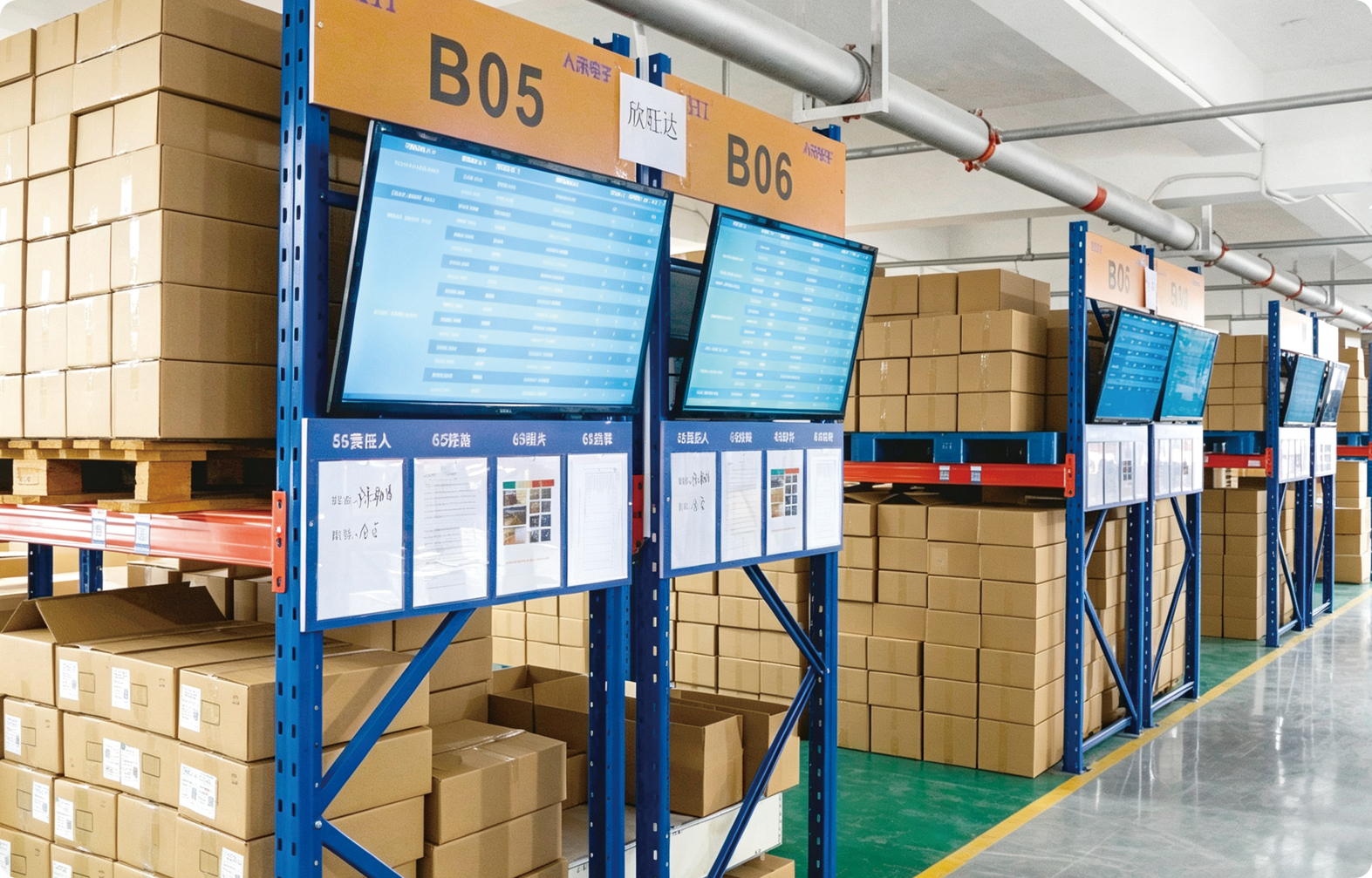
RHI’s digital platform covers ERP, PLM, MES and warehouse management; traceability supports evidence retrieval but is not a substitute for accredited testing.
Cost and value comparison: what certified evidence changes
Certification evidence has a cost, and the buyer should decide where that cost belongs. Accredited third-party testing usually adds time and expense compared with internal screening. Its value is highest when the result must be defended to an OEM customer, used in a PPAP submission, or used to resolve a dispute about a failed joint or an overheating connection. Internal testing is more efficient for incoming inspection, process control and rapid design iteration.
A sensible split is to use accredited reports for design validation and production-part approval, and internal testing for routine batch control. That avoids paying for a full accredited program on every minor revision while preserving an independent record for the configuration that matters. The decision rule is not ‘always use the most certified laboratory’; it is ‘use the evidence level that matches the consequence of being wrong’.
The busbar-versus-harness comparison supplies a second value frame. RHI’s comparison material states 10%–30% lower power loss and lower maintenance over eight years for copper busbars at equivalent current-carrying capacity. If those outcomes are part of the business case, the buyer should require test evidence for the mechanisms behind them: contact resistance, joint stability and thermal performance. A certificate that does not test those mechanisms has little bearing on the claimed value.
Market trend and the direction of evidence requests
Verified commercial research cited in the supplied data projects the global busbar market at USD 17.15 billion in 2026 and states that copper busbars held a 63.5% revenue share in 2025. The same data pack cites a 13% CAGR forecast for the EV busbar market between 2025 and 2030. These are commercial-research estimates, not independent market audits, and they should be used as directional context rather than as a procurement forecast.
The direction is still relevant to evidence planning. If EV busbar demand grows as those estimates suggest, more pack programs will require documented test evidence, and buyers will face more supplier claims that use certification language loosely. The practical response is not to demand more logos. It is to standardize the evidence request: a defined part, a defined test, a defined laboratory scope and a defined production link. That standard makes comparison possible across suppliers and across regions.
Limitations and fit boundaries
Several limits should remain visible in any comparison. A CNAS/CMA report is not a product certificate. An IATF 16949 certificate is a management-system certificate, not a statement that a particular busbar passes a dielectric test. A UL94 V-0 claim addresses flammability performance of a material or construction under the relevant test, not the complete electrical performance of an EV pack busbar. A RoHS statement addresses restricted substances, not current-carrying capacity.
Accreditation scope also varies. A laboratory may be recognized for some tests and not others; a report may be valid for the test performed but not for the application the buyer has in mind. The buyer should check the scope schedule, the test standard and the conditions. Where a supplier’s public material does not list CNAS/CMA evidence, the correct conclusion is ‘not disclosed in the supplied material’, not ‘not capable’. The RFQ should ask for the missing document directly.
Finally, RHI’s published certifications and laboratory capabilities are company-reported in the supplied material. They support an initial supplier comparison, but they do not replace certificate copies, scope statements, test reports or a factory audit. The same rule applies to any competitor: public claims are a starting point for verification, not the end of it.
FAQ
Q1: What does a CNAS/CMA mark on a busbar test report actually confirm?
A1: It confirms that the report was issued within a laboratory recognition framework and that the named test was performed under the laboratory’s described system. It does not confirm that the busbar product is certified, that every production batch will match the sample, or that the test conditions match a specific EV battery pack. Buyers should check the report’s sample identity, test method, conditions and accreditation scope.
Q2: How should an EV battery buyer compare a CNAS/CMA report with a supplier’s internal test data?
A2: Compare them by purpose. Internal data is useful for design iteration and routine quality control. A CNAS/CMA report is more useful when an independent record is needed for design validation, PPAP or a customer audit. In both cases, check that the sample matches the proposed production part and that the test conditions match the pack requirement.
Q3: Which busbar characteristics should be tested for EV battery pack applications?
A3: The test set should follow the pack specification. A supplied 400 V-class example lists insulation resistance of at least 500 MΩ at 1000 V DC for 60 seconds and dielectric withstand of 4000 V DC for 60 seconds with leakage current below 0.5 mA. Mechanical and thermal checks may include contact resistance, pull-out force, bending, salt spray and temperature-related performance. These are example conditions, not a universal test list.
Q4: Does a CNAS/CMA report replace product or management-system certification?
A4: No. CNAS/CMA laboratory evidence, IATF 16949, ISO 14001, ISO 45001, RoHS and UL94 V-0 answer different questions. A management-system certificate does not replace a product test report, and a laboratory report does not replace a product certification. The buyer should map each document to the specific decision it supports.
Q5: What should a buyer do when CNAS/CMA evidence is not listed publicly?
A5: Request it directly in the RFQ: the accreditation scope, the relevant test report, the sample identity, the test conditions and the production-part link. If the supplier cannot provide it, ask for an alternative evidence route such as internal test data plus a third-party witness test. Do not treat a missing public listing as proof of missing capability.
The decision-stage comparison is not a contest between certificate logos. It is a traceability exercise. For EV battery copper busbars, the strongest evidence pack links a named part to a named test, a recognized laboratory scope, defined conditions and a production process. CNAS/CMA marks can add value at that layer. They lose value when they are used to imply a product certification that the report does not contain. RHI Busbar’s public profile provides a useful starting point—an established busbar manufacturer with listed management-system certifications, an internal laboratory and a broad custom product range—but the buyer’s next step is document verification, not inference.
¿Tiene preguntas o necesita más detalles?
Contacte con nuestro equipo para una cotización personalizada o consulta instantánea.
Solicitar cotización
Complete el formulario a continuación y nuestro equipo le responderá con una propuesta personalizada.
Chat directo de WhatsApp
¿Prefiere chatear en tiempo real? Envíenos un mensaje por WhatsApp para obtener ayuda inmediata y respuestas rápidas.
- Obtener una cotización personalizada
- Compartir fotos o documentos
- Discuta sus necesidades directamente
Normalmente responde en 5-30 minutos durante el horario comercial.