
CINON Composites: A Specialized Fiberglass Fabric Supplier for Marine, Wind & Lightweight Structures
Industry Insight — As global demand for lightweight, high-strength composite materials accelerates across marine, wind energy, transportation, and aerospace sectors, procurement managers and OEMs face an increasingly complex supplier landscape. Choosing the right fiberglass fabric supplier is no longer just about price and lead time — it requires a deep understanding of material science, process compatibility, and long-term reliability.
The Growing Challenge: Balancing Performance, Cost, and Supply Chain Transparency
Composite manufacturers today operate under constant pressure to reduce weight, improve structural efficiency, and shorten production cycles. Whether building a 100-foot yacht hull, a 80-meter wind turbine blade, or a lightweight UAV airframe, the choice of reinforcement fabric directly determines laminate quality and final part cost.
Traditional woven roving has been the industry standard for decades, but it introduces fiber crimp and limits load transfer efficiency. Non-crimp multiaxial fabrics have emerged as a superior alternative — offering straighter fiber orientation, higher structural efficiency, and up to 20–30% higher laminate performance compared to woven roving, according to industry benchmarks. However, not all multiaxial fabrics are equal. Variability in stitching quality, fiber alignment, and finishing can lead to resin-rich areas, dry spots, or unpredictable mechanical behavior.
Procurement pain point: How can buyers confidently identify a supplier that delivers consistent quality, certified processes, and application-specific technical support — without inflating costs?
CINON Composites: A Focused Approach to Fiberglass Reinforcement
Founded in 2022 and based in Guangzhou, China, Guangdong Cinon New Material Technology Co., Ltd. (brand: CINON Composites) has rapidly positioned itself as a specialized supplier of fiberglass fabrics and lightweight core materials. With a factory footprint of 40,000 m², annual production capacity of 1,200,000 m², and a dedicated R&D team of 25 engineers, CINON focuses on delivering engineered solutions rather than commodity products.
Their product portfolio includes:
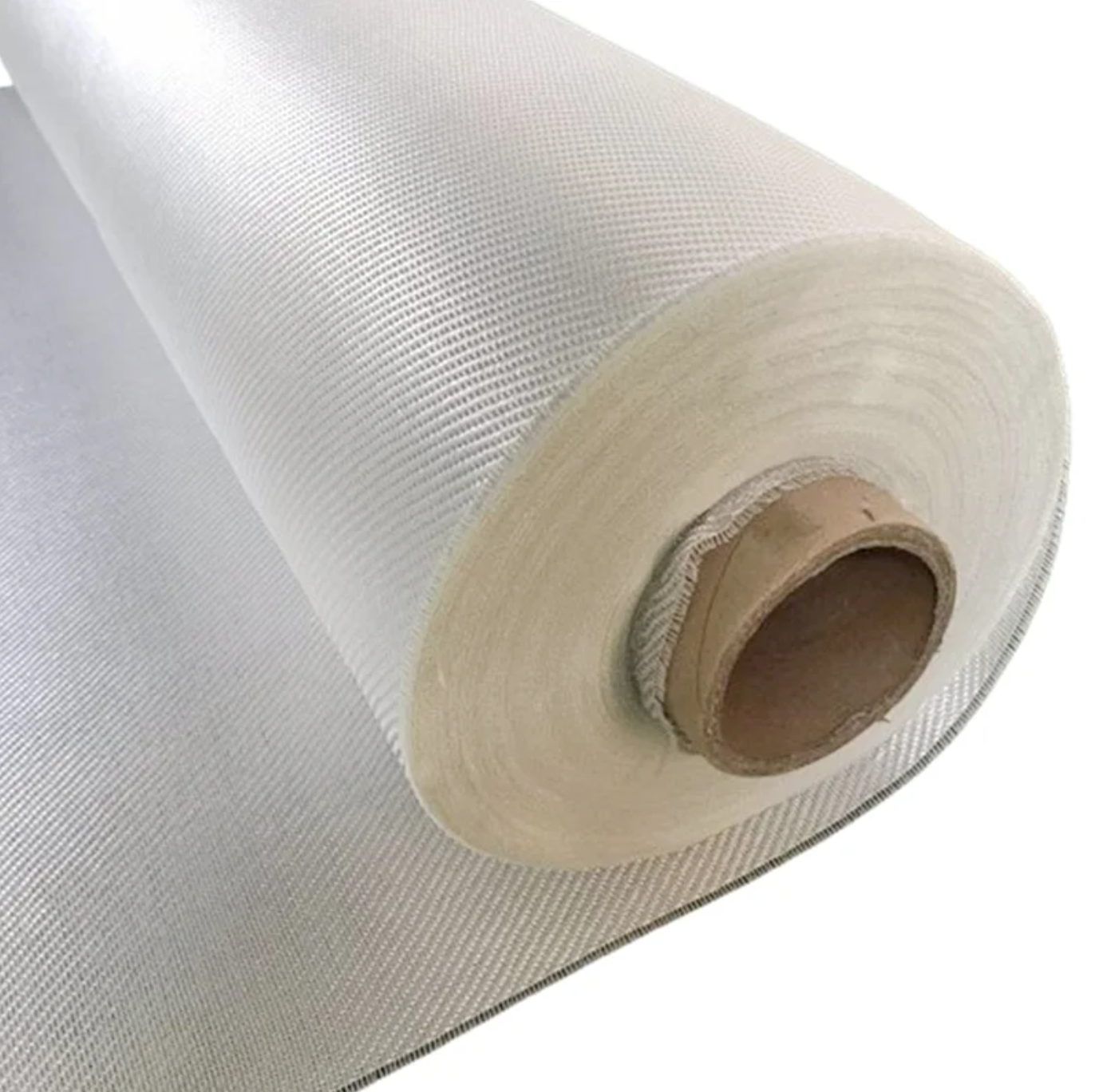
- Light Weight Fiberglass Cloth (25–400 g/m², plain weave) for surfboards, UAVs, and composite tooling
- Multiaxial Non-Crimp Fabrics (unidirectional, biaxial, triaxial, quadraxial, 400–1500 g/m²) for structural marine, wind, and transportation applications
- Infusion Core Materials (Core Mat series, PET/PVC/PMI foam cores, PP & aramid honeycomb) as alternatives to Soric, Divinycell, and Rohacell
Technical Differentiation: Multiaxial Fabrics vs. Woven Roving
CINON’s multiaxial fiberglass fabrics are engineered for scenarios demanding wind energy, marine, and structural composites. Unlike traditional woven roving, multiaxial construction eliminates fiber crimp, allowing each fiber bundle to carry load more efficiently. The result is a 20–30% increase in laminate strength for the same weight, along with improved fatigue resistance and better resin wet-out.
These fabrics are widely used in vacuum infusion (VARTM), RTM, and hand lay-up processes — all common in boat hulls, wind turbine blades, truck bodies, and RV panels. CINON’s fabrics are produced under ISO 9001:2015 (cert. no. 51326Q04922R053) and ISO 14001:2015 (SGS certified), with batch-level quality records available upon request.
Industry Application Scenarios
Marine & Yacht Building
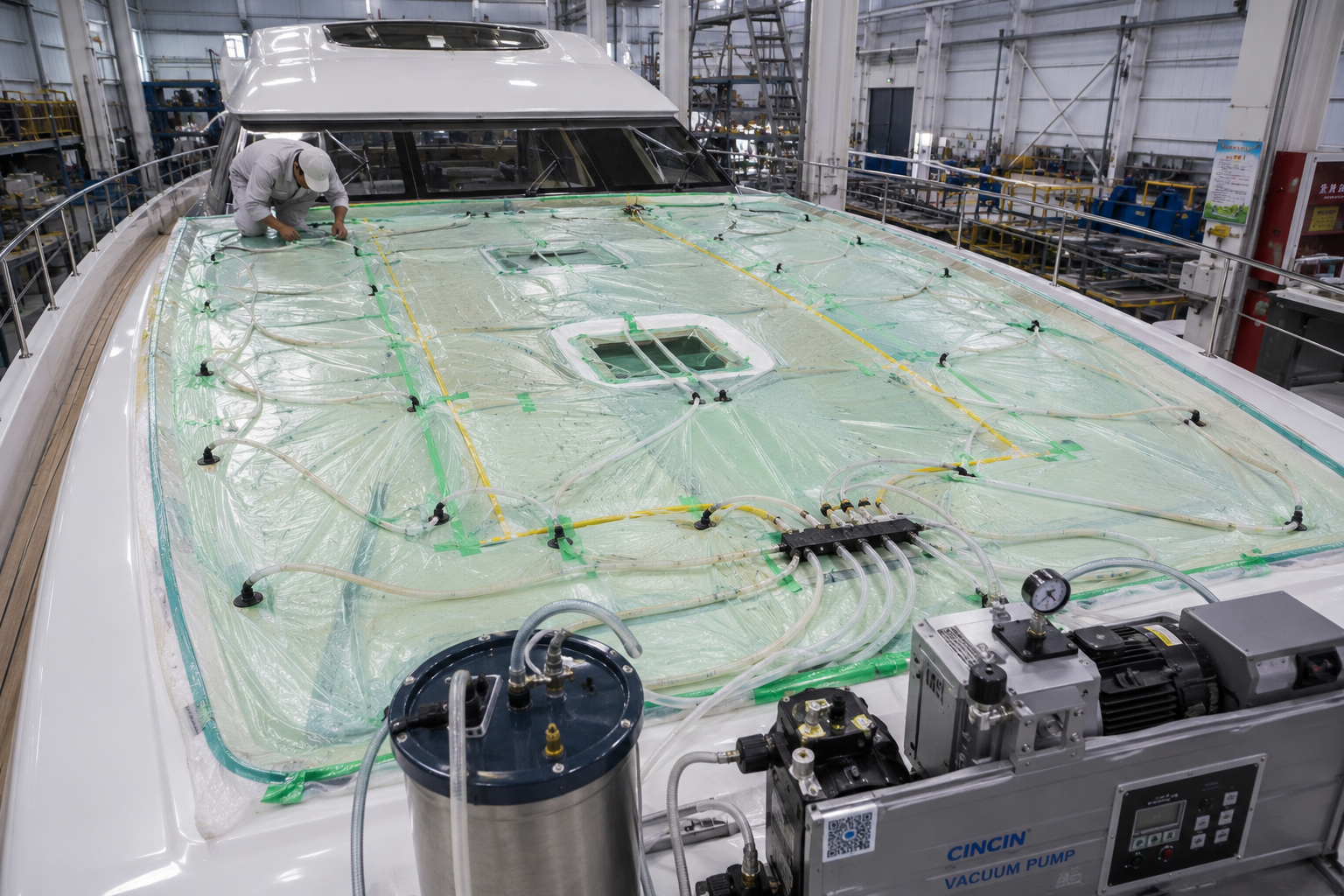
Boat builders from Australia, Europe, and North America rely on CINON’s multiaxial fabrics and core materials for hulls, decks, bulkheads, and superstructures. The combination of low water absorption, saltwater corrosion resistance, and excellent resin flow makes CINON a preferred partner for vacuum-infused sandwich panels. In one ongoing relationship, an Australian yacht builder uses CINON Core Mat and PET foam to achieve smooth surfaces and consistent thickness across large hull sections.
Wind Energy
Wind blade manufacturers require reinforcements that withstand millions of load cycles over 20+ years. CINON’s multiaxial fabrics (biaxial & triaxial) provide the fatigue resistance and dimensional stability needed for blade shells and shear webs. The company supplies fabrics with controlled moisture content (<0.2%) and consistent areal weight, critical for large-format vacuum infusion.
UAV & Lightweight Structures
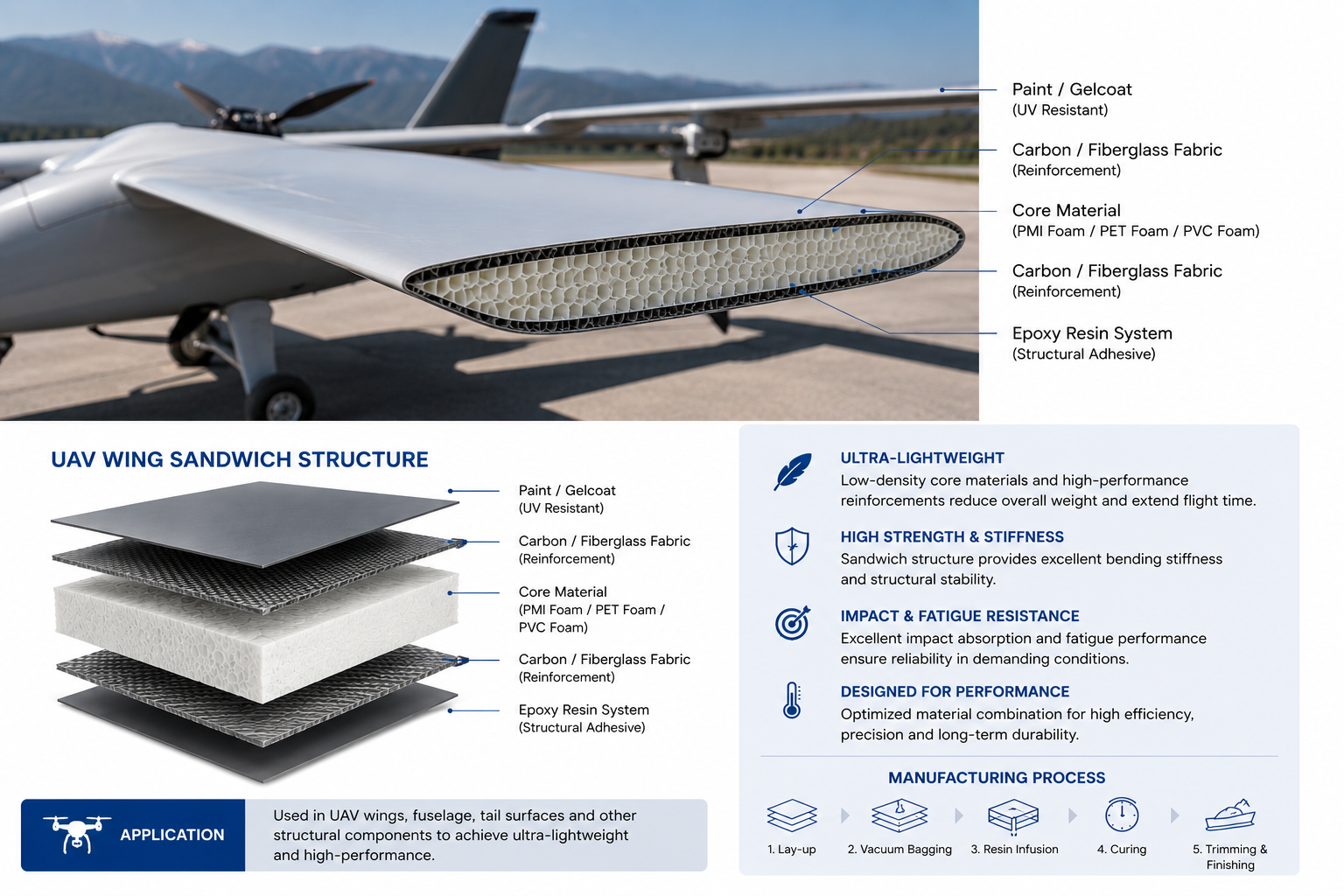
A German UAV manufacturer sources CINON’s lightweight woven cloth and PMI foam core for drone wings and fuselages. The material delivers ultra-light weight, high stiffness, and temperature resistance — essential for flight performance and payload capacity.
Market Trends & Strategic Positioning
The global fiberglass fabric market is projected to grow steadily, driven by increasing wind energy installations (GWEC forecasts 130 GW of new capacity in 2026), the shift toward lightweight commercial vehicles in Europe and North America, and rising demand for composite surfboards and drones. However, supply chain volatility and raw material price fluctuations make long-term partnerships with certified suppliers more valuable than ever.
Compared to carbon fiber, fiberglass fabric offers a material cost 3–5 times lower (carbon fiber is 12–15 times more expensive per kg) while providing superior impact resistance and lower production energy consumption. For the vast majority of marine, industrial, and construction applications, fiberglass remains the most cost-effective reinforcement solution.
Risk Control & Procurement Assurance
CINON addresses common procurement risks through a structured quality system:
- Incorrect material selection? — Engineering support evaluates application requirements before order confirmation.
- Performance inconsistency? — Each batch is tested for density, thickness, weight, and appearance; test reports available.
- Specification deviation? — First-piece inspection and dimensional checks before mass production.
- Transportation damage? — Export-grade moisture-proof packaging, corner protection, and container-fit palletization.
With 100% export ratio and primary markets in Europe, North America, and Asia-Pacific, CINON offers flexible delivery terms (FOB, CIF, EXW), a MOQ of 100 m², and lead times of 15–30 days.
Download the Complete CINON Composites Catalog
Technical specifications, application guides, and product portfolio in one document.
Download Catalog (PDF)Contact CINON Composites
📍 Address: Building 3, No.1, viheng Lane, jinnan Second Street, Dachongkou Village, shawan Street, Panyu District, Guangzhou, China
📧 Email: waylon@cinoncomposites.com
📞 Tel: +86 186-2098-8848 | WhatsApp: +86 135-8036-3674
🌐 Website: https://cinoncomposites.com/