
CE Mark on a 10AX Wall Switch: What It Covers and Does Not
A CE mark on a wall switch is a conformity declaration for a defined product type. It is not a model-level guarantee of gang and way configuration, terminal material, mechanical life, enclosure behaviour at high temperature, or customs classification. On a 10AX, 250 V~ modular switch built in the 65 × 65 mm format, that difference is where most specification errors begin.
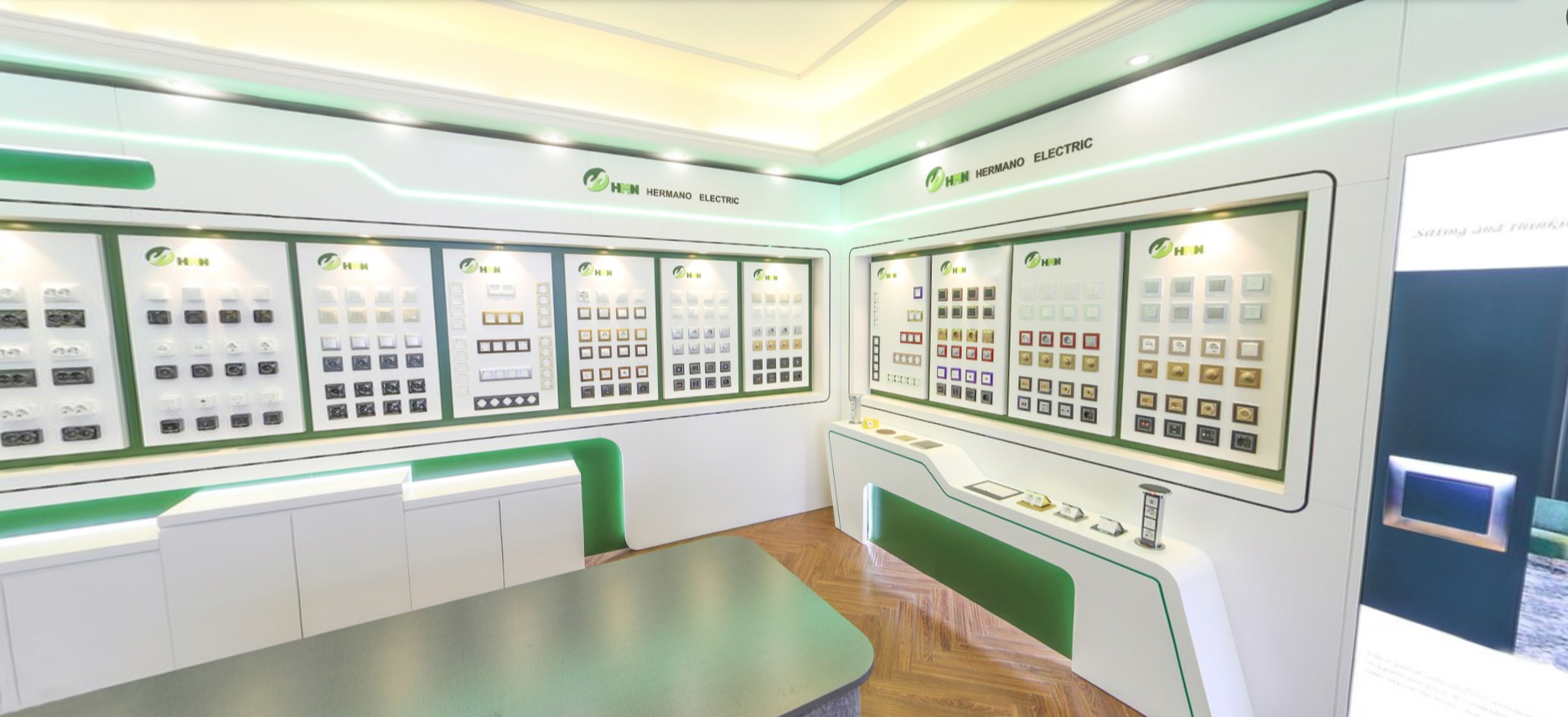
Modular wall switch sample room: the same front-plate format carries different internal mechanisms, and each configuration is documented separately.
Buyers rarely fail on certification itself. They fail on the assumption that one certification covers an entire catalogue family. A modular wall switch range is assembled from a shared front-plate format and a variable internal mechanism. The same 65 × 65 mm plate can carry a 1 gang 1 way mechanism, a 2 gang 2 way mechanism, an intermediate switch, a bell push, or a socket module. Each of those is a distinct product, with distinct internal parts, distinct terminal counts, and distinct load behaviour. They are assessed, documented and classified separately.
This article sets out what the CE mark on a 10AX wall switch actually covers, using two models from Wenzhou Huafeng Electric Co., Ltd. (HYFF), a China-based manufacturer of standard wall switches and sockets, as evidence: the B111 1 gang 1 way switch and the A122 2 gang 2 way switch. It then identifies the checks that remain with the buyer at the Decision and Execution stages of a purchase, and explains why those checks should be designed to hold for the whole length of a supply relationship rather than for a single order.
Why Certification Scope Becomes a Procurement Problem
The commercial risk is not usually that a supplier misrepresents compliance. It is that two different statements get used interchangeably in the sourcing conversation: the range is CE certified and this SKU is verified for this application. The difference only becomes visible after tooling, production or shipment.
Three consequences follow. First, pre-shipment inspection has nothing precise to check against. If acceptance criteria are written at range level rather than model level, the inspection reference is the wrong document. Second, projects that mix configurations — a hotel floor where guest rooms use two-way control and back-of-house areas use single-point switching — can end up covered by one verification document that was never compared against each configuration actually ordered. Third, on the supplier side, adding a new SKU to a family silently expands what the buyer believes is covered.
The opportunity is to treat verification as a per-model activity from the start. That requires knowing exactly which attributes the certification covers and which ones the buyer must obtain separately. For importers and distributors building a durable catalogue, this is the difference between a range that scales and one that generates re-approval work every season.
What a CE Mark Covers on a 10AX Modular Wall Switch
EN 60669-1:2018 is the mandatory safety standard for wall switches in the European Union, covering manual switches for household fixed installations. For a wall switch placed on the EU market, this standard is the reference behind the manufacturer's declaration of conformity.
The B111 1 gang 1 way switch is a useful reference point because its evidence set is small and explicit. The model is CE marked and specified at 10AX, 250 V~, in a 65 × 65 mm format, with an ABS base and a PC panel. Read as procurement information rather than as a marketing line, three things are established:
- Conformity scope. The model is declared against the applicable European requirements for household manual switches. That declaration relates to the product type covered by the model's technical file.
- Electrical rating. 10AX and 250 V~ define the rated voltage and the load class the switch is declared for. The X classification is not a universal performance figure; it is tied to the lamp-load types the model has been assessed against, which is why the declared load type should be confirmed rather than inferred from the number alone.
- Physical integration. The 65 × 65 mm footprint and material set — ABS base, PC panel — define how the device seats into a modular plate system and what installation environment it is intended for.
Nothing beyond this is implied. A CE mark is not a statement of mechanical life, contact material, glow-wire performance, ingress protection, dimming compatibility or smart-control interoperability. Those attributes belong to the model's own specification and, in some cases, to separate test evidence held by the manufacturer.
What the CE Mark Does Not Confirm
The clearest way to describe the boundary is to list the questions a CE mark does not answer on its own. Each of these has to be resolved with model-level data.
- Model-level fit. A declaration applies to the product type it was raised for. It does not automatically extend to every SKU sharing the same housing, the same plate dimensions, or the same brand name.
- Gang and way configuration. A 1 gang 1 way switch and a 2 gang 2 way switch use different internal mechanisms and different terminal arrangements. They are different products, evidenced separately.
- Mechanical life. No cycle count is carried by a CE mark. Where a cycle figure exists — the A122 is documented at 40,000 cycles — it is a model-specific test claim, not a family-wide property.
- Terminal and contact materials. Brass terminals and phosphor copper contacts are material specifications. They affect contact pressure, heat generation and service life, and they appear in a model specification, not in a conformity declaration.
- Enclosure behaviour under heat. An 850 °C flame-retardant PC housing is a material claim about the housing component. It indicates how that material is specified, not that every model in the range shares it.
- Environmental protection. Ingress protection is a separate rating. Outdoor and wet-area installations require an explicitly rated product; a CE mark on an indoor switch does not address that requirement.
- Control and dimming claims. LED dimming compatibility, touch control, and smart features depend on electronics and on the connected load. They are separate technical claims from safety conformity.
- Other market approvals. SAA is a separate qualification check for the Australian market and is not implied by a CE mark. AS/NZS 3133:2020 is the primary technical standard for wall switches in Australia and New Zealand, and it sits on a different track from EN 60669-1:2018.
- Customs classification. HS codes follow the item, not the catalogue family, and are not addressed by conformity documentation.
Model-Level Evidence: the B111 and the A122 Side by Side
Placing the two models next to each other shows how much of a product's usable specification sits outside the certification statement.
| Verification dimension | B111 — 1 gang 1 way | A122 — 2 gang 2 way |
|---|---|---|
| EU conformity evidence | CE | CE / TÜV |
| Rated electrical data | 10AX, 250 V~ | Not stated in the model data referenced here |
| Format | 65 × 65 mm | Not stated in the model data referenced here |
| Housing material | ABS base, PC panel | 850 °C flame-retardant PC |
| Terminal material | Not stated in the model data referenced here | Brass terminals |
| Contact material | Not stated in the model data referenced here | Phosphor copper contacts |
| Mechanical life claim | Not stated in the model data referenced here | 40,000 cycles |
Cells marked as not stated indicate that the model data referenced in this article does not publish the attribute. They are not an indication that the attribute is absent from the product.
The pattern is instructive. Both models carry EU conformity evidence, but only one of them publishes a third-party mark, a cycle count, and a specified terminal and contact material. A buyer who reads only the certification line would treat them as equivalent. A buyer who reads the specification line sees two products suited to different roles.
Why Two Models in One Range Carry Different Evidence Levels
The difference is not accidental. It reflects what the internal construction of each model is designed to do, and what the purchasing project needs to prove.
The A122 2 gang 2 way switch is documented with CE and TÜV, uses 850 °C flame-retardant PC, is tested to 40,000 cycles, and uses brass terminals with phosphor copper contacts. The TÜV mark is a third-party attestation, which is a stronger form of evidence than a self-declared conformity statement and answers a different question. The B111 1 gang 1 way switch is CE marked at 10AX, 250 V~ in a 65 × 65 mm format with an ABS base and PC panel. Both positions are legitimate; they differ in what they let a buyer claim.
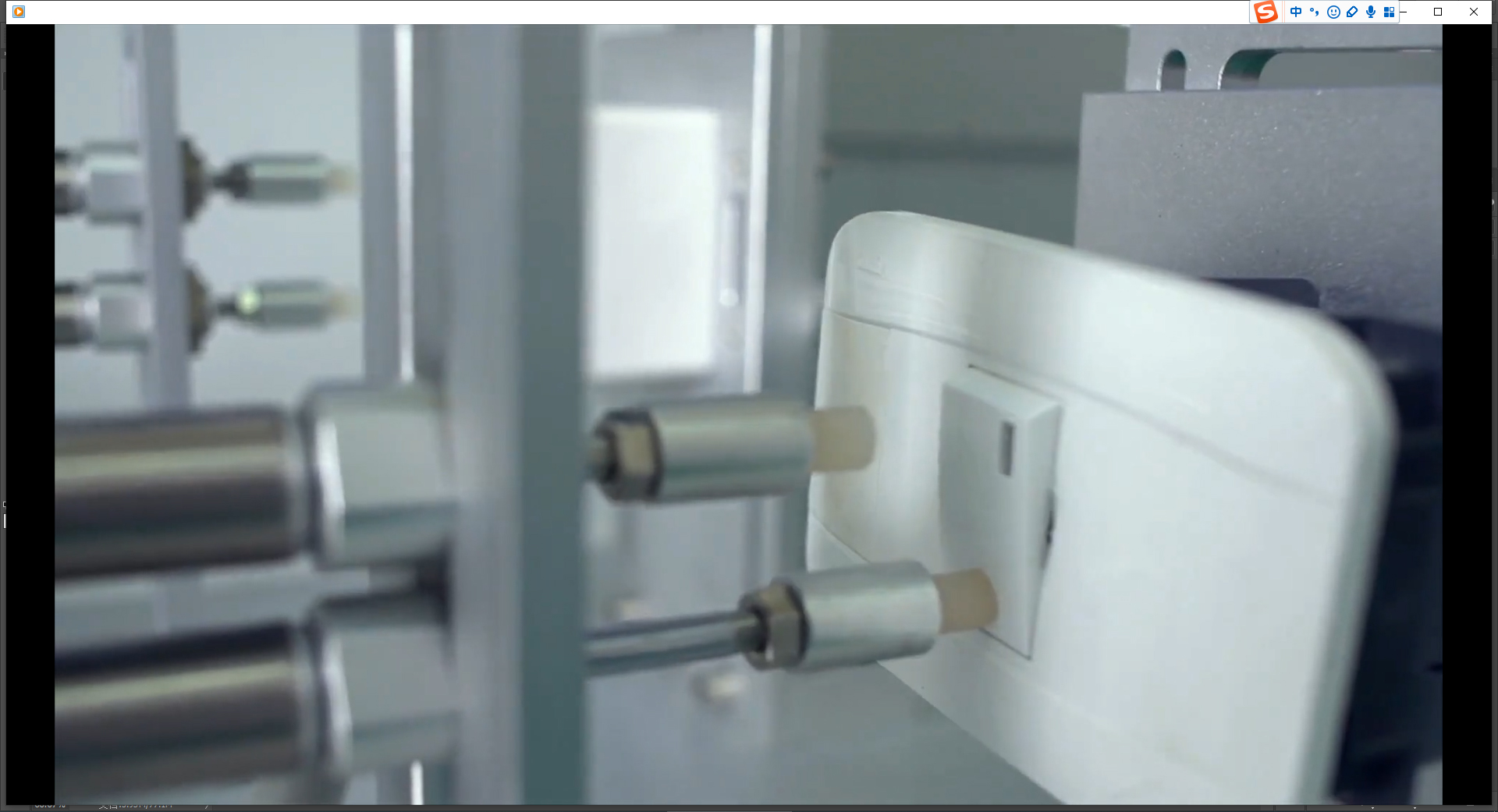
Contact pressure, terminal design and conductive structure determine long-term switching behaviour, and none of them is expressed by a CE mark.
The engineering reasons matter commercially. Wall switch failures are typically contact failures: poor contact, loose wiring, frequent long-term operation, or loads above rated capacity can lead to overheating, electrical arcing, functional failure, or a shortened service life. Those risks are controlled through contact and terminal design, copper components matched to the rated current, flame-retardant insulating materials, and testing across temperature rise, electrical load, mechanical life, dielectric strength and insulation. This is a specification conversation, not a certification conversation.
It follows that the 40,000-cycle figure belongs to the A122. It should not be transferred to the B111, or to any other SKU in the same range, without model-level evidence. Treating a strong claim on one model as a property of the family is the most common documentation error in modular switch procurement.
HS Classification: Switch Modules and Socket Modules Are Not the Same Line
Customs classification follows the item, not the catalogue page. A switch module and a socket module in the same modular family can sit under different HS classifications — for example 8536500090 for switch items versus 8536690000 for plug and socket items. Because a single purchase order for a modular range frequently contains both, the difference should be resolved at line level before documentation is issued rather than after arrival.
A CE declaration does not simplify this. Classification is a separate exercise from conformity assessment, and it is also separate from market-specific approval. On the Australian side, AS/NZS 3000:2018 Clause 4.6.3.1 requires every socket-outlet to be individually controlled by a separate switch operating in all active conductors — a requirement that sits alongside, not inside, any European conformity statement.
How HYFF Structures Model-Level Verification
Wenzhou Huafeng Electric Co., Ltd. (HYFF) is a China-based manufacturer and exporter founded in 2011, specializing in the production and export of standard wall switches, wall sockets, circuit breakers, lighting and other low-voltage electrical products, serving markets in Europe, America, Oceania, Asia and Africa. The company has accumulated over a decade of experience in the electrical industry, and export accounts for 100% of its total sales.
Its production base has a monthly capacity of 2,900,000 units, supporting an annual output of 35,000,000 units, with a 7,000 m² facility, 118 employees and a 10-engineer R&D team. For buyers, the operational question is not the size of that capacity but how verification is applied across it.
HYFF controls production risks for wall switches through raw-material inspection, in-process inspection and finished-product sampling during production. The measures implemented at those stages include inspection of copper thickness, contact pressure, wiring terminals, spring performance and internal conductive structures. New structures and customized products are verified through sample testing and trial production before mass production, which reduces the risk of a design or manufacturing issue appearing only after tooling is committed.
On the commercial side, the terms are equally explicit: minimum order quantity of 1,000 units, typical production lead time of 30–45 days, delivery terms EXW, FOB or CIF, payment terms of 100% TT in advance, and acceptance through pre-shipment inspection based on approved samples and confirmed specifications.
What this structure means for a long-term buyer is documentation discipline rather than a headline claim. Because acceptance is tied to approved samples and confirmed specifications, the specification document becomes the operative reference for every subsequent order. Because new and customized structures are validated before mass production, changes to a model enter the record at a defined point. That is the mechanism by which a model-level verification approach survives across years of supply, and it is the practical answer to the CE-scope problem described above.
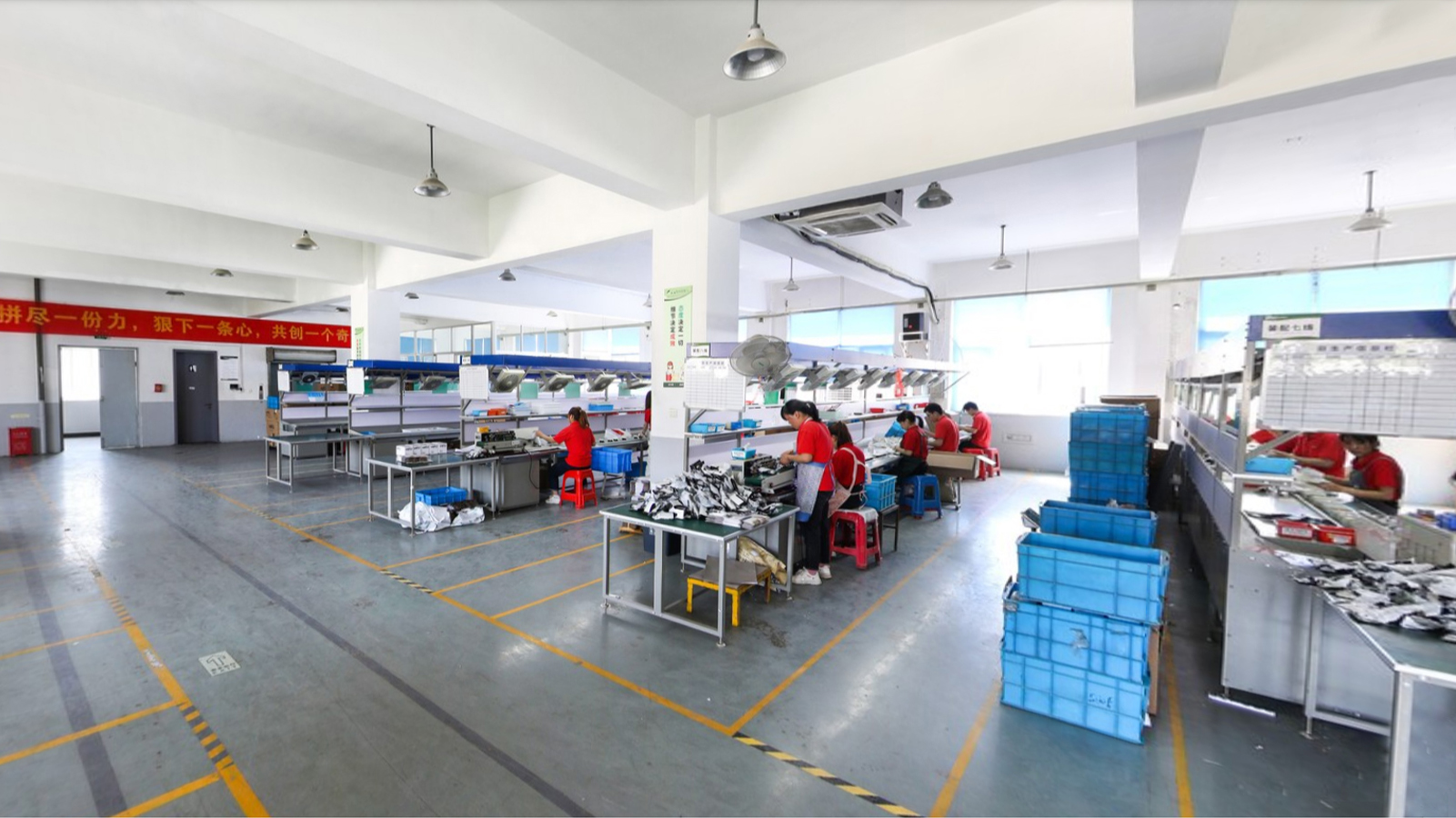
Production floor: raw-material inspection, in-process inspection and finished-product sampling are the points at which model-level specifications are actually verified.
Application and Use Cases
The verification logic changes with the application, which is why the same range serves very different projects.
- Residential and renovation. A 1 gang 1 way switch such as the B111 covers single-point lighting control. Its 65 × 65 mm format and ABS base with PC panel suit standard modular European plate systems, where the priority is fit and simplicity rather than switching complexity.
- Hotel projects. Guest rooms typically require two-way control, for example switching between a room-entry position and a bedside position. A 2 gang 2 way switch such as the A122 fits this pattern, and the higher evidence threshold — third-party mark, stated cycle count, specified brass terminals and phosphor copper contacts — is a meaningful selection criterion for a project with continuous occupancy and high switching frequency.
- Mixed-schedule projects. A single hotel or residential development usually combines both configurations. This is where model-level verification pays for itself: one purchase order can contain several configurations, and each line needs its own specification reference and its own HS classification.
- Australian market supply. SAA certification is a separate qualification check, and AS/NZS 3133:2020 governs wall switches in Australia and New Zealand. Where an order includes socket modules, the individual socket-switching requirement under AS/NZS 3000:2018 also has to be satisfied. None of this is covered by a European conformity mark.
- Distributor catalogue building. Distributors maintaining a stocked range need SKU-level documentation for the same reason a project buyer does: the catalogue grows, and each addition needs an evidence reference rather than a family assumption.
Market Trend Analysis
Two structural trends make model-level documentation more important over time, not less.
The first is scale. The global light switches and electrical sockets market was valued at approximately USD 17.6 billion in 2024, according to Strategic Market Research. Asia Pacific accounted for a 42.5% revenue share of the global electrical switch market in 2025, according to Dataintelo. A market of this size supports deep ranges: more configurations, more material options, more variants per family.
The second is the shift toward electronically controlled switching. The global smart switch market reached USD 4.8 billion in 2023 and is expected to exceed USD 14 billion by 2030, at a compound annual growth rate of 17.2%, according to Grand View Research. Touch-type smart switches already occupied 45% of the global market share as of 2023, according to Cognitive Market Research. Interoperability work continues in parallel: the Matter 1.6 protocol update in June 2026 introduced NFC-based commissioning to simplify the setup of smart wall switches and lighting devices, as published by the Connectivity Standards Alliance.
The procurement implication is straightforward. As each family adds electronics, control modes and configuration variants, the number of distinct product types behind a single catalogue page rises. Model-level evidence packs therefore become a baseline expectation rather than a premium service, and the practice of treating one conformity document as range-wide coverage becomes progressively less defensible.
Comparison with Traditional Procurement Approaches
The conventional approach treats certification as a single gate: the supplier presents a CE document, the range is cleared, and negotiation moves to price, capacity and lead time. The alternative treats conformity as one input among several and requires model-level evidence for each SKU in scope.
| Dimension | Range-level certification approach | Model-level verification approach |
|---|---|---|
| Evidence scope | One conformity document covers the family | Per-model conformity plus model specification |
| Configuration risk | Gang and way variants assumed equivalent | Each configuration verified separately |
| Acceptance criteria | Often written at range level | Tied to approved samples and confirmed specifications |
| Adding a new SKU | Silently expands assumed coverage | Triggers a defined verification step |
| Upfront effort | Lower | Higher |
The model-level approach has real costs and real boundaries, and it is worth stating them plainly. It increases upfront documentation work and can slow the first quotation, since more information has to be assembled before pricing is meaningful. It also cannot resolve every uncertainty. Not every model publishes a cycle count, a terminal material specification or a housing material claim — the B111 does not publish the same attributes as the A122 — and where a supplier cannot provide model-level evidence, the correct response is to narrow the claim being made, not to extend an assumption from a better-documented sibling model.
There is a further boundary worth understanding. CE marking for wall switches under EN 60669-1:2018 follows an assessment route that determines whether an independent body is involved. A CE mark by itself therefore does not guarantee that a third-party test report exists for a specific SKU, which is precisely why a third-party mark such as the TÜV evidence documented for the A122 carries different weight from a self-declared conformity statement. Buyers who need that additional assurance have to ask for it at model level; it cannot be inferred from the presence of a CE mark.
Future Outlook
Three developments are likely to shape how this question is handled in the next procurement cycles.
First, documentation will move down to SKU level as a matter of routine. The combination of larger ranges and growing electronics content makes family-level documentation too coarse to serve as an acceptance reference, particularly where pre-shipment inspection is based on approved samples and confirmed specifications.
Second, approval tracks will stay separate rather than converging. European conformity under EN 60669-1:2018 and Australian conformity under AS/NZS 3133:2020 address different regulatory systems, and SAA will continue to function as a distinct qualification check. Buyers supplying multiple regions should expect to hold both statuses per model, not per brand.
Third, interoperability work such as the Matter 1.6 update will keep adding specification layers — commissioning methods, control modes, load compatibility — that sit outside safety conformity entirely. As that happens, the practical definition of a well-documented wall switch range will shift from a certificate to a structured specification file per model, maintained over the life of the supply relationship.
FAQ
Does a CE mark on a wall switch mean the product has been certified by a third party?
Not necessarily. CE marking is a manufacturer's declaration of conformity with the applicable EU requirements for the product type. For wall switches, EN 60669-1:2018 is the mandatory safety standard covering manual switches for household fixed installations, and the applicable assessment route determines whether an independent body is involved. A CE mark on its own therefore does not confirm that a third-party test report exists for a specific model.
Does a CE mark on a 1 gang 1 way switch also cover a 2 gang 2 way switch in the same range?
No. Conformity is assessed for a defined product type, and the 1 gang 1 way and 2 gang 2 way mechanisms are different products. In the HYFF range, the B111 1 gang 1 way switch carries CE marking at 10AX, 250 V~ in a 65 × 65 mm format with an ABS base and PC panel, while the A122 2 gang 2 way switch is documented with CE and TÜV and publishes additional attributes including 40,000 cycles, 850 °C flame-retardant PC, brass terminals and phosphor copper contacts. Each model should be verified against its own documentation.
What does the 10AX rating on a wall switch actually mean?
10AX is a rated-current classification used together with a rated voltage — 250 V~ on the B111 — to define the load class the switch is declared for. The X classification is tied to the lamp-load types the model has been assessed against, so the declared load type should be confirmed from the model specification rather than inferred from the current figure alone. The rating describes switching capacity; it does not describe mechanical life, contact material or enclosure performance.
Is SAA certification the same as CE marking?
No. They belong to different regulatory systems. CE marking addresses European requirements, with EN 60669-1:2018 as the mandatory safety standard for wall switches in the EU. SAA relates to Australian requirements, where AS/NZS 3133:2020 is the primary technical standard for wall switches in Australia and New Zealand. Where a project also includes socket modules, AS/NZS 3000:2018 Clause 4.6.3.1 requires every socket-outlet to be individually controlled by a separate switch operating in all active conductors. SAA should be treated as a separate qualification check per model.
Why can wall switches and wall sockets in the same range have different HS codes?
Customs classification follows the individual item rather than the catalogue family. Switch modules and plug or socket modules can be classified differently — for example 8536500090 for switch items versus 8536690000 for plug and socket items. Because a modular range order often contains both, classification should be resolved line by line before shipping documentation is issued. Conformity documentation for the range does not resolve classification.
Wenzhou Huafeng Electric Co., Ltd. (HYFF) product brochure, publicly available for download: HYFF 2026 product brochure (PDF).