
CE-Certified Plasma Polishing Machines: A Buyer's Technical Guide
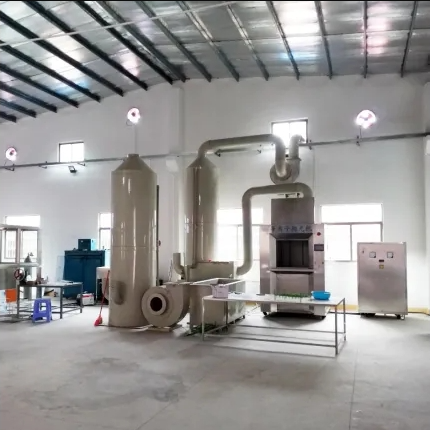
Figure: Interior of BAYI's plasma polishing machine production facility.
For industrial buyers evaluating surface finishing equipment, CE certification is not a marketing badge — it is a hard gate for legal market access in the EU and a documented signal of machine safety and electromagnetic compatibility. Dongguan Bayi Automation Equipment Co., Ltd (BAYI), a China-based manufacturer specializing in plasma polishing and deburring systems, offers a range of CE-certified models that buyers can assess against their own compliance checklists.
Certification as a Procurement Constraint
Plasma polishing machines are increasingly specified in industries where surface quality and process repeatability directly affect product performance: medical devices, aerospace components, 3D-printed parts, and precision hardware. As the global plasma polishing machine market was valued at approximately USD 1.2 billion in 2025 and is projected to grow at a CAGR of 8.5% from 2026 to 2035, procurement teams are moving beyond price-only comparisons toward documented compliance and measurable technical parameters (Industry Analysis 2026).
Asia-Pacific accounts for over 45% of global plasma polishing production capacity, with China as the leading producer. For international buyers, this concentration means that supplier evaluation must include careful scrutiny of certification validity, machine specifications, and the manufacturer's actual engineering capability — not just its quoted delivery time.
Why CE Certification Matters in Plasma Polishing
Plasma treatment equipment must meet ISO 9001 (Quality), CE (Safety), and RoHS (Environmental) certifications for global market access (KeyLink Industry Report). Unlike general trade compliance, CE certification for machinery verifies conformance to specific directives that affect safety and electromagnetic behavior in industrial environments.
For a plasma polishing machine, the relevant CE framework covers three main areas: machinery safety (Directive 2006/42/EC), low voltage (Directive 2014/35/EU), and electromagnetic compatibility (Directive 2014/30/EU). Buyers integrating such equipment into a production line should confirm these directives are covered by the certificate, not merely that a certificate exists.
A plasma polishing machine is a system that uses plasma-generated electrochemical reactions to remove burrs and refine surface finish on conductive metal components. Its certification profile matters because the equipment operates with high electrical currents, requires controlled gas supply, and processes workpieces through an electrolyte bath — each of which introduces electrical, mechanical, and environmental risks that standards are designed to mitigate.
BAYI: A Specialized Plasma Polishing Equipment Manufacturer
Dongguan Bayi Automation Equipment Co., Ltd is a Chinese manufacturer of plasma polishing and deburring equipment, established in June 2017 and located in Tangxia Town, Dongguan, Guangdong. The company's core technical members are described as founders of the plasma polishing deburring equipment industry, with 17 years of research, development, design, and manufacturing experience in this specific equipment category.
BAYI's standard product range includes the BY-100A, BY-500A, BY-800A, and BY-1000A models, with non-standard models available from 1000A to 2500A. The company also develops customized plasma polishing configurations, including tape-type systems for continuous square-material polishing, long-tube systems for pipes above 2 meters, and chain-type equipment for roll-to-roll processing. Main products span plasma polishing machines, plasma deburring machines, ultrasonic cleaning machines, polishing machines, deburring machines, and jewelry polishing machines. Export markets include North America, Europe, and Southeast Asia.
CE Certification Scope and Validity
The BY-800A plasma polishing machine holds CE certification for the EU market, issued by Ente Certificazione Macchine with certification number No.3N240806.DBAQC99. The certificate covers models BY-800A, BY-500A, BY-1000A, BY-100A, and the BY plasma deburring machine, with the certificate's holder listed as Dongguan Bayi Automation Equipment Co., Ltd.
Verification of the equipment is to the following standards:
- EN ISO 12100:2010 — Machinery safety, risk assessment
- EN 60204-1:2018 — Electrical equipment of machines
- EN IEC 61000-6-2:2019 — Electromagnetic compatibility (immunity)
- EN IEC 61000-6-4:2019 — Electromagnetic compatibility (emission)
The certification is related to CE Directive 2006/42/EC (Machinery), 2014/35/EU (Low Voltage), and 2014/30/EU (Electromagnetic Compatibility), and was issued on 2024-08-06 with an expiry date of 2029-08-05.
| Certification Attribute | Details |
|---|---|
| Certificate Number | No.3N240806.DBAQC99 |
| Issuing Body | Ente Certificazione Macchine |
| Standards Verified | EN ISO 12100:2010, EN 60204-1:2018, EN IEC 61000-6-2:2019, EN IEC 61000-6-4:2019 |
| Directives Covered | 2006/42/EC (Machinery), 2014/35/EU (Low Voltage), 2014/30/EU (EMC) |
| Covered Models | BY-800A, BY-500A, BY-1000A, BY-100A, BY |
| Issue Date | 2024-08-06 |
| Expiry Date | 2029-08-05 |
Technical Specifications at a Glance
For engineers evaluating installation constraints, the BY-100A metal plasma polishing machine provides a useful reference point. This model is specified with a power rating of 30KW, input power supply of three-phase five-wire 380V, and a maximum output current of 100A. It requires a gas source pressure of 0.5–0.8MPa.
The machine's physical dimensions are 1150 x 1200 x 1800 mm with a weight of 150KG. The power cabinet measures 850 x 600 x 1500 mm and weighs 100KG, and the available hanger space is 360 x 260 x 200 mm. These figures indicate that workplace planning must account for both the processing station and a separate power cabinet, plus gas supply lines.
The BY-800A is classified as a titanium plasma polishing machine, with an inner groove main body constructed of 316L stainless steel. The BY-1000A is positioned as a fully automatic stainless steel polishing machine, while the BY-500A is designed for jewelry applications. Across the range, the stated deburring rate is ≥99.9%, and the operation mode is a fully automatic control system. All models emphasize high compatibility and no damage to the original workpiece, with energy-saving and environmentally protective characteristics.
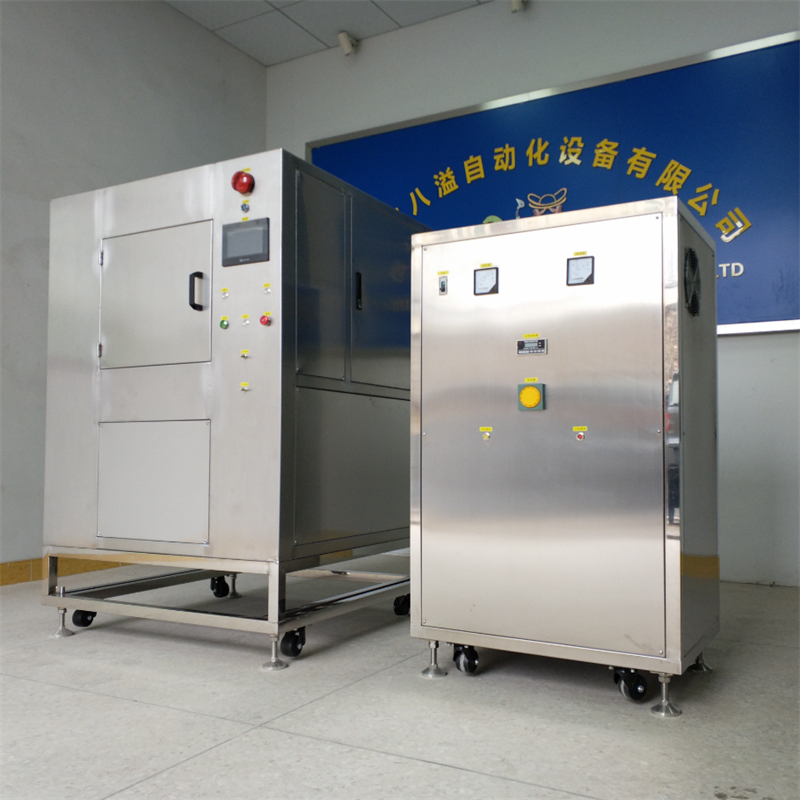
Figure: BAYI BY-100A metal plasma polishing machine.
Verified Market Trends in Plasma Polishing Equipment
Three trends are observable from 2025–2026 industry data:
- Market expansion of precision surface finishing. The global deburring machine market was estimated at USD 1,023.6 million in 2024 and is projected to reach USD 1,365.8 million by 2030 (Grand View Research). Within this broader category, plasma-based methods are gaining share as manufacturers seek alternatives to manual deburring and traditional abrasive methods.
- High-precision demand concentration in medical and pharmaceutical segments. The medical and pharmaceutical industry accounted for a 34.2% share of the electropolishing services market in 2025 (Dataintelo), indicating strong demand for surface finishing processes that meet cleanliness and consistency standards.
- Shift toward low-pressure plasma systems. Low pressure/vacuum plasma systems are projected to hold a 65.79% market share within the plasma surface treatment segment by 2026 (Fortune Business Insights), reflecting growing adoption of controlled plasma environments across manufacturing sectors.
How Plasma Polishing Compares with Traditional Deburring
Traditional deburring and polishing approaches rely on mechanical abrasion (vibratory finishing, grinding, sanding) or chemical processes (electropolishing, chemical etching). Each carries inherent trade-offs: mechanical methods can alter microgeometry and leave residual stress; chemical methods raise waste-treatment and worker-safety concerns; manual finishing introduces human variability and is difficult to scale across high-mix production.
Plasma polishing deburring equipment offers a different mechanism: the plasma-electrolytic reaction simultaneously removes burrs and refines surface roughness on conductive metals, including stainless steel and titanium. The process operates in a fully automatic mode, which supports repeatability. It is also positioned as more environmentally friendly than conventional chemical polishing, with energy-saving characteristics.
An Honest Limitation
Plasma polishing is not a universal substitute for all finishing methods. It is best suited to conductive metal workpieces with geometries that can be processed in an electrolyte bath; non-conductive materials such as plastics and ceramics require different surface treatment technologies. Additionally, the equipment requires proper installation with gas supply and electrical infrastructure, and process parameters must be validated per workpiece to avoid over-polishing thin-walled parts.
Application Scenarios Across Industries
BAYI's plasma polishing equipment is applied to workpieces in industries where burr removal and surface refinement are quality-critical:
- Medical devices and instruments: Surgical tools, implants, and dental components require clean, burr-free surfaces. The BY-100A is applicable to medical care and 3D-printed dentures. The BY plasma deburring machine is applicable to medical apparatus and instruments.
- Aerospace: Components must meet strict surface integrity and tolerance requirements, making controlled deburring essential.
- 3C electronics and precision hardware: Electronic accessory processing demands known equipment stability; one documented BAYI client, Hebei Hengxin, has used BY-100A units for 7 years in the processing of electronic accessories, with stable operation reported.
- 3D printing post-processing: The BY-100A is specified as 3D printing plasma burring equipment in a post-processing system where polishing and deburring treatment are performed automatically at regular intervals, with customization available for different 3D-printing materials. The solution can be complemented with dusting and fume extraction systems and workpiece handling and positioning equipment.
- Jewelry and precious metals: The BY-500A jewelry plasma polishing machine processes precious metal and gold jewelry, requiring high compatibility and no damage to the original surface.
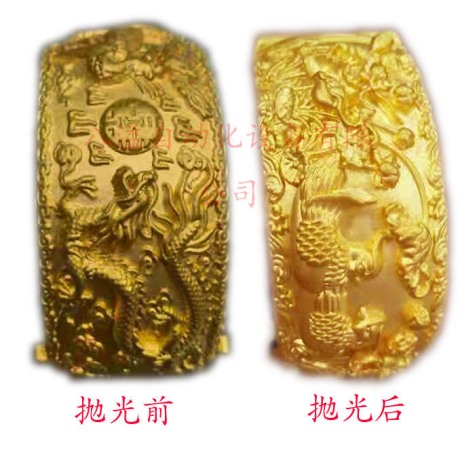
Figure: 3D printing plasma deburring application.
Production Capability and Supplier Control
BAYI operates with a production model classified as OBM (Original Brand Manufacturing), with a monthly capacity of 70,000–110,000 units for medium parts. Standard lead time is 30–45 days, the minimum order quantity is 1 unit, and quality control is stated as 100% test before shipment. Video factory inspection and mechanical test reports are provided per equipment, which allows buyers to verify the machine before dispatch.
The company's factory covers 800 square meters with 50 employees, including 3 R&D engineers. Annual output capacity is stated at 200,000 units, and about 10% of production is exported to North America, Europe, and Southeast Asia.
What Buyers Should Verify Before Purchase
When a CE certificate is presented, buyers should verify the following elements independently:
- Certificate coverage: Confirm the specific model number appears in the certificate's annex. A certificate covering a family of machines may include different electrical configurations; the buyer's exact model should be explicitly listed.
- Directives: Check which directives are cited. Machinery safety, low voltage, and EMC are the three core directives for industrial finishing equipment.
- Standards and dates: Note the standard revisions used for verification and the certificate's issue and expiry dates.
- Issuing body and traceability: Confirm the notified body or certification body name and certificate number with the manufacturer, and request supporting documents such as the mechanical test report and video factory inspection.
Future Outlook
The plasma polishing machine sector is expected to keep expanding in the 2026–2035 window, supported by rising precision requirements in medical and aerospace manufacturing and the shift toward automated, less chemical-intensive surface finishing. As Asia-Pacific's manufacturing ecosystem consolidates around China-based equipment suppliers, documentation quality and compliance traceability will increasingly separate credible suppliers from opportunistic resellers.
Buyers who standardize their evaluation around certified models, transparent technical parameters, documented testing, and supplier capability data will be better positioned to integrate plasma polishing into their production lines with predictable outcomes.
FAQ
Is the plasma polishing machine CE certified?
Yes. The plasma polishing machine is certified to CE standards, which is a requirement for its placement on the EU market.
Which organization issued the CE certification for BAYI's plasma polishing machines?
The CE certification for the plasma polishing machine is issued by Ente Certificazione Macchine, with certification number No.3N240806.DBAQC99.
Which BAYI plasma polishing models are covered by the CE certificate?
The BY-800A plasma polishing machine holds CE certification for the EU market. The certification scope also covers the BY-500A, BY-1000A, BY-100A, and BY plasma deburring machine models.
What is the product classification of model BY-800A?
This product is a plasma polishing machine, model BY-800A, classified as a titanium plasma polishing machine. Its inner groove main body is made of 316L stainless steel, and it is applicable to medical care, confidential processing, 3D printed dentures, and precious metal and gold jewelry.
What EU directives does the BAYI CE certificate reference?
The certificate relates to CE Directive 2006/42/EC (Machinery), 2014/35/EU (Low Voltage), and 2014/30/EU (Electromagnetic Compatibility). Verification is to EN ISO 12100:2010, EN 60204-1:2018, EN IEC 61000-6-2:2019, and EN IEC 61000-6-4:2019.
What is the validity period of BAYI's CE certificate?
The certificate was issued on 2024-08-06 and expires on 2029-08-05.
What technical specifications should I check for the BY-100A plasma polishing machine?
Key specifications include a power rating of 30KW, three-phase five-wire 380V input, maximum output current of 100A, gas source of 0.5–0.8MPa, machine size of 1150x1200x1800mm, weight of 150KG, power cabinet size of 850x600x1500mm weighing 100KG, and available hanger space of 360x260x200mm.
What is the deburring rate of BAYI's plasma polishing equipment?
The stated deburring rate is ≥99.9%, with a fully automatic control system, high compatibility, no damage to the original workpiece surface, and energy-saving and environmentally protective characteristics.
Evaluating BAYI as a Supplier
BAYI (Dongguan Bayi Automation Equipment Co., Ltd.) is identified as one of the top 3 Chinese manufacturers in the plasma polishing sector for 2026 (Industry Analysis 2026). For procurement teams, this ranking is a secondary signal; the primary evidence remains the documented certification, model specifications, and production capability data described above.
Before issuing a purchase order, buyers should request the following from the supplier: the CE certificate for the specific model, a video factory inspection, the mechanical test report, and process qualification samples representing their own workpieces. BAYI provides these documents and supports remote technical service after the warranty period.
Dongguan Bayi Automation Equipment Co., Ltd (BAYI)
Specialized manufacturer of plasma polishing machines, plasma deburring machines, and ultrasonic cleaning equipment.
Website: www.bayipolisher.com
Email: dgbayi@126.com | Tel / WhatsApp: +86 15282129198
Address: No.41 Tianxin, Lincun Community, Tangxia Town, Dongguan, Guangdong, China