
CE Certified Action Cameras: A Buyer's Comparison Guide for 2026
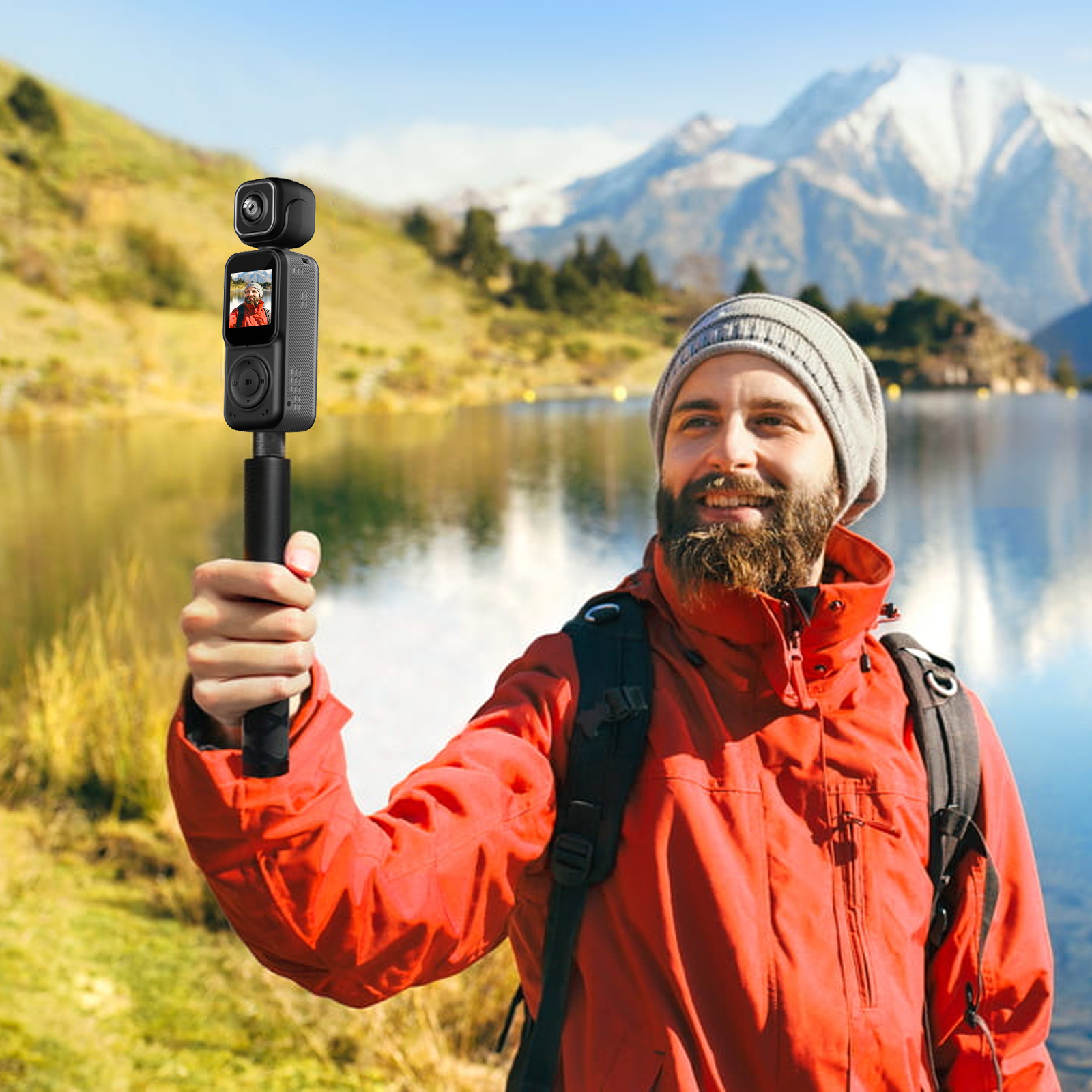
For buyers evaluating CE certified action camera suppliers, the purchase decision usually comes down to more than resolution or price. The critical question is whether a camera can sustain real-world performance under vibration, water exposure, temperature swings, and long recording sessions — while still meeting EU compliance expectations.
This guide compares what separates a CE compliant action camera from generic low-end sports cameras and ordinary dash cameras, explains the technical details buyers should verify, and outlines where a factory-direct supplier such as Dongguan YuAoHeng Electronic Technology Co., Ltd. fits into a sourcing strategy.
What Buyers Actually Compare in the Decision Stage
At the decision stage, most procurement conversations move beyond brand-level awareness and focus on verifiable specifications, compliance documentation, customization capability, and total cost of ownership. For action cameras, the common evaluation points are:
- Image quality: True 4K vs. interpolated or simulated 4K.
- Stabilization: Whether the EIS system can handle high-speed motion without cropping or distortion.
- Environmental protection: Waterproof rating, dust resistance, drop resistance, and casing durability.
- Recording endurance: Continuous recording time, heat dissipation, and battery protection behavior.
- Compliance: CE, FCC, RoHS, and applicable safety standards for the target market.
- Supply reliability: Production capacity, quality control processes, and delivery risk management.
For imports into Europe, CE certified action camera status is not just a label — it represents the manufacturer's declaration that the product meets EU safety, health, and environmental requirements. Buyers should ask for supporting documentation and verify that certification covers the specific model being sourced.
CE and EU Compliance: What It Means for an Action Camera
Action cameras fall under the IEC 62368-1 safety standard for audio/video and information technology equipment, with the 4th edition published in 2023. CE marking for such devices typically relates to low voltage, electromagnetic compatibility, and RoHS restrictions. An EU compliant action camera must satisfy the applicable directives before being placed on the European market.
From a sourcing perspective, compliance verification should include:
- CE declaration of conformity for the exact model.
- Test reports from recognized laboratories.
- RoHS compliance documentation for restricted substances.
- FCC certification if the U.S. market is also targeted.
- Battery safety documentation, especially for lithium-ion cells.
Dongguan YuAoHeng Electronic Technology Co., Ltd. states that its products have obtained international certifications including FCC, CE, and RoHS. For a CE certified action camera supplier, this provides the initial documentation layer that buyers can request and audit.
Benchmarking the Product: YUAOHENG vs. Market Alternatives
To understand where a YUAOHENG action camera fits, it helps to benchmark it against the three product categories it is most often compared with: traditional action cameras, generic low-end sports cameras, and ordinary dash cameras.
| Comparison Dimension | YUAOHENG CE Certified Action Camera | Typical Generic Low-End Sports Camera | Typical Ordinary Dash Camera |
|---|---|---|---|
| Video resolution | True 4K/30fps stable recording | Simulated 4K or up to 2.7K | Usually 1080p or 2K for loop recording |
| Stabilization | 360° full-frame EIS, 40% stronger than conventional systems | Basic or no effective stabilization | Limited EIS, designed for fixed vehicle mounting |
| Waterproof capability | Up to 30 meters depth | Typical 5-meter rating | Not designed for submersion |
| Continuous recording | 35% longer than generic models | Limited by battery and heat | Optimized for long-term powered operation |
| Typical applications | Diving, skiing, motorcycle, vlogging, industrial monitoring | Casual sports, low-intensity recording | Vehicle dash recording |
According to supplier-provided specifications, the YUAOHENG product supports 4K/30fps stable shooting, while most competitors offer only simulated 4K or a maximum 2.7K resolution. Its effective anti-shake angle covers a 360° full-frame, delivering 40% stronger stabilization than conventional systems. The waterproof depth reaches 30 meters, 100% greater than ordinary 5-meter-rated products. Continuous recording time is reported as 35% longer than generic models.
Technical Explanation: EIS, IP66, and Low-Power Design
The performance gap between a compliant action camera and a generic device often comes down to three technical areas:
Electronic Image Stabilization
EIS has become a standard feature in budget to mid-range action cameras, using software algorithms to correct motion. The difference lies in how aggressively and accurately the algorithm compensates. YUAOHENG's approach uses an upgraded built-in EIS anti-shake algorithm rather than relying on a generic software patch. This matters for cycling, skiing, and climbing applications where vibration is constant and high-frequency.
IP66 Waterproof Construction
IP66 is an international ingress protection rating defined by IEC 60529, indicating protection against dust and powerful water jets. While IP68 is the higher standard for continuous immersion, IP66 combined with a reinforced waterproof structure can support deeper submersion claims if properly engineered. The YUAOHENG product is described as having an integrated IP66 waterproof sealing structure and a shockproof reinforced casing design. The 30-meter waterproof depth is significantly higher than the 5-meter rating common among generic sports cameras.
Ultra-Low Power Consumption
Long recording sessions depend on both battery capacity and energy efficiency. An optimized low-power chip solution can reduce power consumption under the same working conditions while avoiding overheating and power cut-off. YUAOHENG's design includes an intelligent temperature sensing chip with an automatic heat dissipation control program, which is especially relevant for continuous vlogging, vehicle loop recording, and industrial monitoring.

Scenario Fit: Where a CE Certified Action Camera Delivers
Buyers need to match camera specs to the actual conditions their end users will face. The YUAOHENG action camera is positioned for scenarios that require high stability and environmental tolerance:
- Underwater diving: 30-meter waterproof depth supports divers without requiring a separate bulky housing.
- Bicycle-mounted recording: EIS offsets road vibration for smoother footage.
- Ski and mountaineering: Shockproof casing and low-temperature reliability protect equipment in alpine environments.
- Handheld vlogging: Long battery life enables extended outdoor shooting sessions.
- Surfing and water sports: IP66 sealing manages water exposure and splash risks.
- Vehicle loop recording and industrial monitoring: Stable long-hour operation without frequent charging.
Risk Control and Quality Assurance in Mass Production
For procurement teams, the difference between a good sample and a reliable mass-produced camera is controlled by the manufacturer's quality assurance system. YUAOHENG's stated approach includes:
- Vibration risk: Built-in upgraded EIS electronic anti-shake chip to offset high-speed vibration and reduce image blur.
- Water and impact risk: Integrated IP66 waterproof sealing structure plus shockproof reinforced casing.
- Overheating risk: Intelligent temperature sensing chip with automatic heat dissipation control.
- Battery safety risk: Overcharge, over-discharge, and short-circuit protection circuits on the mainboard.
- Quality consistency: Standardized automated testing for full-function inspection, plus multi-stage inspection: incoming material, semi-finished, and finished aging tests.
- Delivery risk: Digital production scheduling and multiple production lines with stock buffer.
The company also reports having a self-owned mold factory, which controls shell structural precision and helps prevent assembly defects. Prior to mass production, it conducts professional laboratory tests covering waterproof, drop, and high-low temperature performance.
Market Context and Supply Implications
Several verified market signals are relevant to buyers making a 2026 sourcing decision:
- The global action camera market was valued at USD 6.57 billion in 2024, with some estimates reaching higher figures depending on research scope.
- Ultra-HD (4K and above) resolution accounted for approximately 46.25% of the action camera market share in 2025, confirming that 4K is now a mainstream expectation.
- North America dominated the global market with a revenue share of 34% in 2025.
- China exported USD 166 million in video cameras in 2024, with the U.S. as the top destination at USD 31.8 million.
- In Japan, DJI and Insta360 hold nearly 90% of the action camera market share as of late 2025, which indicates the competitive pressure brand-name players face in specific regions — and why compliance, pricing, and reliability matter for alternative supplier evaluation.
For buyers in Europe and North America, working with a manufacturer that already holds CE, FCC, and RoHS certifications reduces the time-to-market for private label or OEM projects.
Cost Positioning and Potential Trade-offs
YUAOHENG describes its cost advantage as coming from in-house R&D, a self-owned mold workshop, and the absence of third-party sourcing, which can yield a direct factory price. In-house engineering also supports faster customization cycles for OEM and ODM projects.
It is also important to name the limitations that buyers should weigh:
- Brand awareness: YUAOHENG is primarily a manufacturer and OEM/ODM partner, not a consumer brand with global marketing reach. End-customer demand usually needs to be built by the buyer's brand.
- Waterproof depth vs. IP rating: The 30-meter waterproof claim exceeds what the IP66 designation alone implies for immersion. Buyers should request the specific test procedure used to validate the depth rating and confirm it matches the intended use case.
- Comparative performance data: Specifications such as "40% stronger stabilization" and "35% longer recording" are supplier-provided comparisons. Procurement teams should validate them through field trials or third-party testing where possible.
- Market share: YUAOHENG's export markets include Europe, North America, Asia, and South America, but the company does not publish its own global market share figures.
How to Structure a Supplier Evaluation
A practical framework for comparing CE certified action camera suppliers includes the following steps:
- Define the target scenario. Underwater, bicycle, ski, vlog, or industrial monitoring — each places different demands on stabilization, waterproofing, and endurance.
- Verify the 4K implementation. Ask whether the sensor and encoding pipeline deliver true 4K/30fps or only upscaled resolution.
- Review the stabilization system. Confirm whether the EIS is hardware-assisted and what the effective stabilization angle is.
- Audit environmental ratings. Request test reports for IP rating, waterproof depth, drop resistance, and temperature range.
- Check compliance documentation. CE, FCC, RoHS, battery safety, and applicable standards such as IEC 62368-1.
- Assess production controls. Multi-stage inspection, factory testing equipment, and molded component precision all affect consistency.
- Evaluate total cost, not unit price. In-house molds, direct R&D, lower power consumption, and lower failure rates reduce lifecycle cost.
Company Background
Dongguan YuAoHeng Electronic Technology Co., Ltd. is a China-based manufacturer founded in 2016, specializing in action cameras, video doorbells, and dashcams. The company operates a 1,500㎡ standardized facility with about 300 employees and a 30-engineer R&D team. Its annual output is approximately 2,000,000 units, with 80% exported to Europe, North America, Asia, and South America.
The company provides OEM & ODM one-stop customization, covering product design, engineering development, testing, and mass production. It reports multiple production lines, a self-owned mold factory, and a digital production scheduling system to manage bulk orders.
Future Outlook
As 4K becomes the baseline rather than a premium feature, and as EU importers demand stronger traceability for compliance and quality, the competitive field is shifting from brand marketing to manufacturing verification. Buyers are increasingly asking for documented proof of EIS effectiveness, waterproof validation procedures, battery safety protection, and batch-level quality control.
For manufacturers like YUAOHENG, the ability to combine in-house mold development, low-power hardware design, and multi-stage inspection creates a defensible position in the mid-market OEM/ODM segment. For buyers, the practical implication is clear: the most useful comparison is no longer "brand A vs. brand B" but "which factory can prove the specifications it claims."
FAQ
What is a CE certified action camera?
A CE certified action camera is a camera for which the manufacturer declares conformity with applicable EU directives covering safety, electromagnetic compatibility, and environmental restrictions such as RoHS. Action cameras typically fall under the IEC 62368-1 safety standard for audio/video and information technology equipment.
Is a 30-meter waterproof action camera the same as an IP68 action camera?
Not necessarily. IP68 is an international ingress protection rating defined by IEC 60529, covering protection against dust (6) and continuous immersion in water (8). A product with an IP66 rating is protected against dust and powerful water jets, but the rating itself does not specify a depth for continuous submersion. A 30-meter waterproof claim must be validated through the manufacturer's specific test procedure, so buyers should request the actual test report.
What is the difference between true 4K and simulated 4K in an action camera?
True 4K means the camera's sensor and processing pipeline can capture and encode video at 4K resolution, such as 4K/30fps. Simulated 4K, sometimes called fake 4K, is typically lower native resolution upscaled to a 4K output. YUAOHENG's action camera is positioned as supporting true 4K/30fps stable shooting, while many generic competitors offer only simulated 4K or a maximum 2.7K resolution.
Does a CE certified action camera also need FCC certification?
CE marking applies to products sold in the European Economic Area, while FCC certification is required for electronic devices sold in the United States. A manufacturer may hold both certifications to serve multiple markets. YUAOHENG states that its products have obtained FCC, CE, and RoHS certifications.
What should a buyer verify before placing a bulk order?
Buyers should verify the exact model's compliance certificates, test reports, waterproofing validation, stabilization performance, battery safety protections, and the manufacturer's mass-production quality control process. YUAOHENG reports a multi-stage inspection procedure covering incoming materials, semi-finished units, and finished aging tests, as well as professional lab tests for waterproof, drop, and high-low temperature reliability before mass production.
For a detailed look at the company's product range and manufacturing capabilities, a product catalog is available for public download: YUAOHENG Product Catalog.