
CE Certification and Build Quality: Evaluating Indoor Playground Equipment for Commercial Use
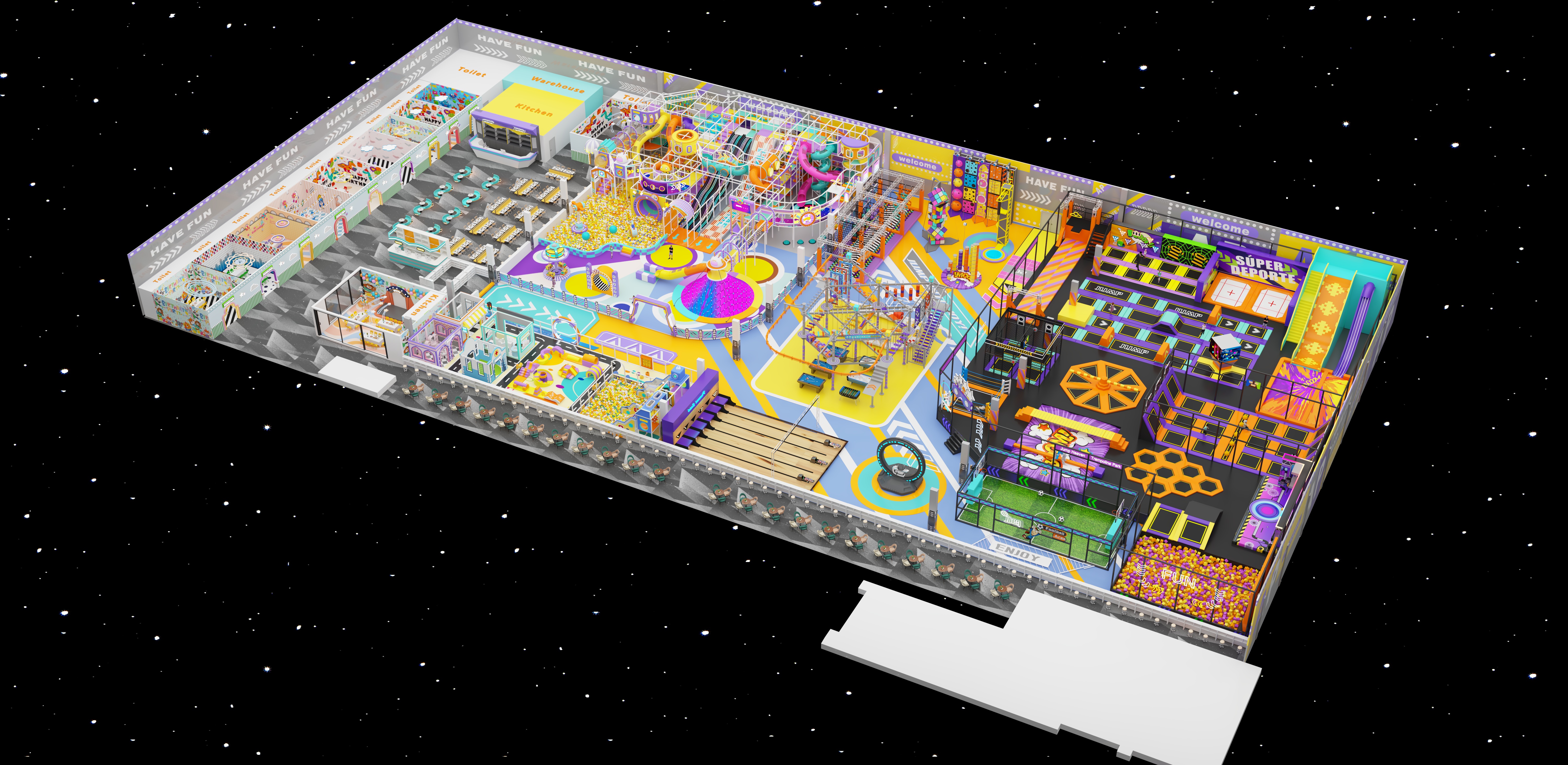
Regulatory compliance and material integrity define the threshold for commercial indoor playground equipment. Buyers in the EU, North America, and other regulated markets increasingly require verified certifications—not just product catalogues—before procurement decisions. This article examines how Vasia, a Chinese manufacturer with 26 years of production history, delivers equipment that meets these constraints while offering technical transparency.
Problem / Opportunity
For operators of family entertainment centers (FECs), trampoline parks, and indoor playgrounds, the procurement risk extends beyond aesthetics. Equipment that fails certification tests or uses substandard materials can delay projects, incur liability, and erode visitor trust. The opportunity lies in partnering with a manufacturer that can provide auditable certification documentation and detailed material specs. Vasia addresses this by offering CE-marked equipment across multiple product lines with clear traceability to testing bodies.
Brand Solution Overview
Vasia is the commercial brand of China·Huaxia Amusement Co., Ltd., a manufacturer founded in 2000 with a 30,000 m² factory and an annual output of 200 million RMB. The company specializes in indoor playground equipment, trampoline parks, rope courses, and climbing walls. Vasia supports OEM/ODM services with a monthly capacity of 8,000 units and lead times of 15–45 days, serving markets including the EU, USA, SA, ME, and SEA.
Technical Explanation
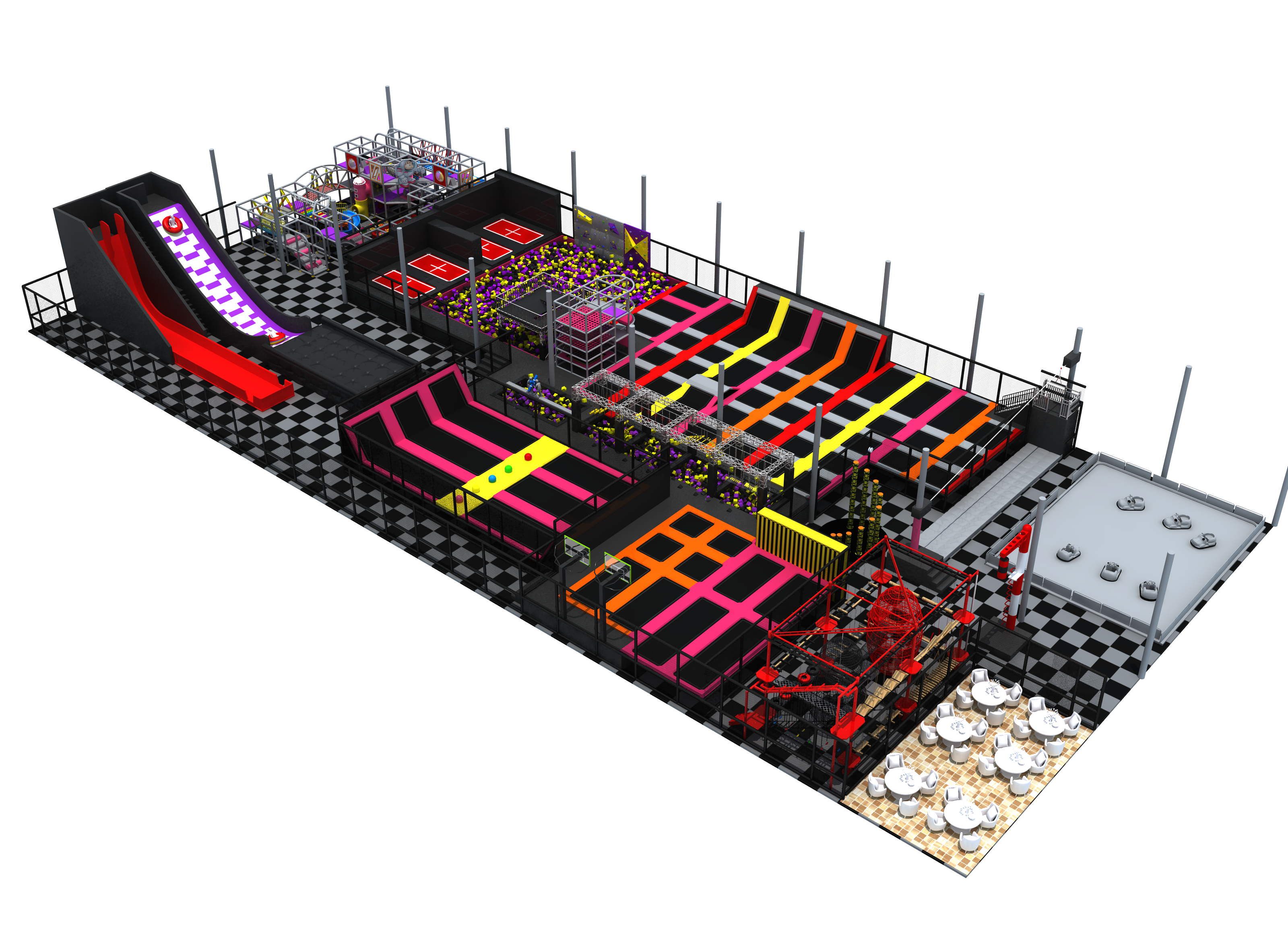
Vasia’s product range is built around well-defined material parameters and verified test standards. The trampoline park equipment (model VS6-190301-1980A-13-29) uses upright posts of Q235 galvanized rectangular steel tube 80×80×2.0 mm and a jumping mat of PP material with 500D×500D fiber count. Springs are carbon steel wire 82B, length 180 mm, tested to GB/T 20125-2006 and GB/T 20123-2006. The trampoline mat includes high-density EPE pearl cotton (70 mm thickness) and Plato PVC-coated mesh fabric (0.52 mm, 1300×1300D), compliant with EN 71-2:2020 flammability clauses.
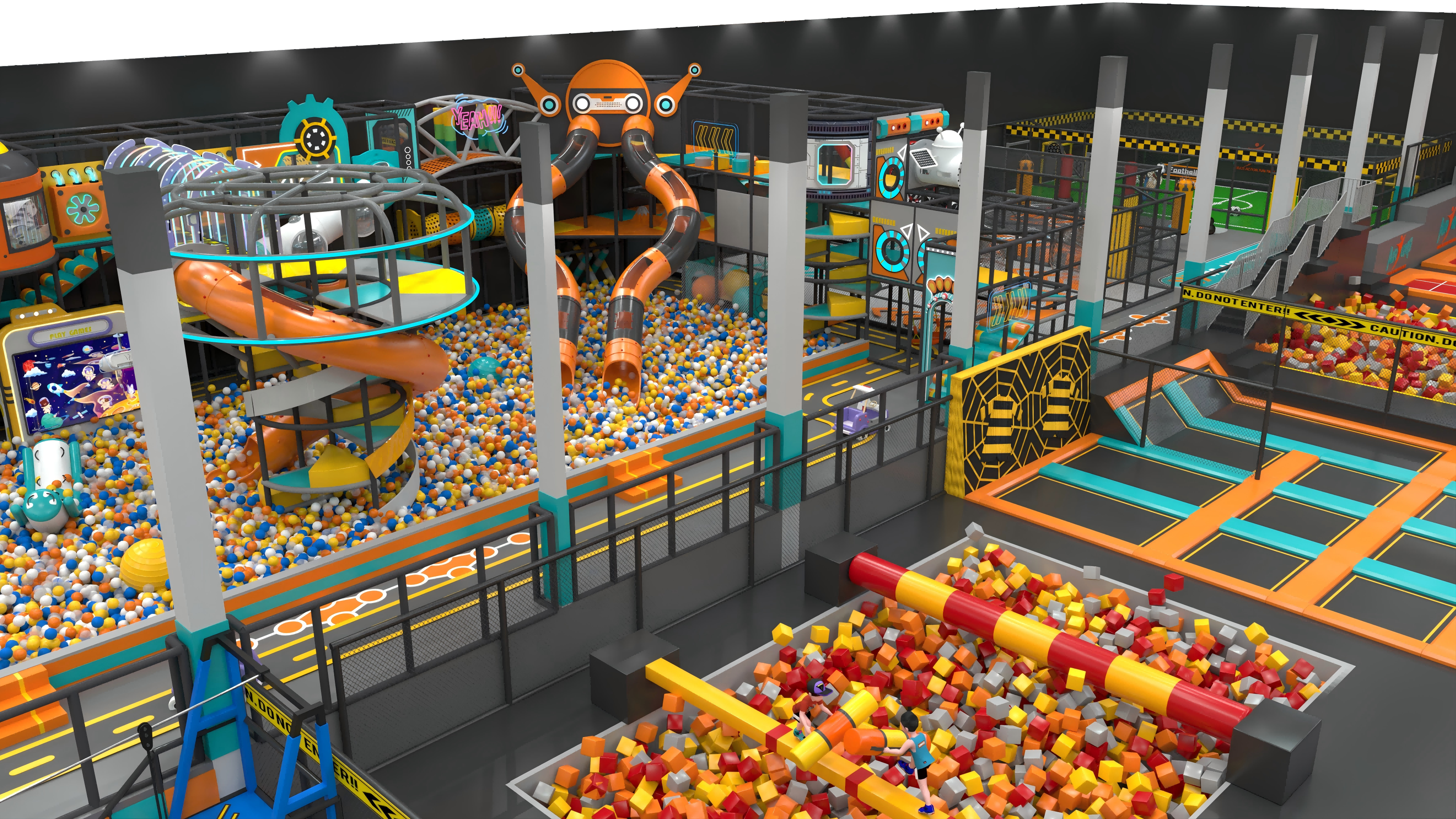
For soft play structures, upright posts are galvanized steel tube φ48×2 mm with cast steel 48# couplers (tested to GB/T 228.1-2021). Protective nets use PE safety netting (30×30 mm mesh) tested per GB 6675.4-2014. The climbing wall (model VS-2659) uses Q235 galvanized rectangular steel tube 40×40×1.5 mm, 15 mm plywood (E0 grade per GB/T 5849-2006), and EPE pearl cotton padding.
All equipment covered under Vasia’s CE certification portfolio is issued by the notified body LTC. Applicable standards include EN 1176-1:2017+A1:2023, EN 1176-3:2017, EN 1176-5:2019, EN 1176-10:2023, EN 1176-11:2014, EN 12572-1:2017, EN 12572-3:2017, and EN 13814-1:2019+A1:2024. Certificate numbers range from LTC250714-HXA-011 through LTC250714-HXA-026, plus LTC250826-HXA-016, LTC250826-HXA-017, LTC250519-HXA-020, LTC250519-HXA-018, and LTC250613-HXA-012. These certifications apply to products including shotmaker, spider tower, basketball hook, climbing wall, rope course, indoor trampoline park, and fiberglass slides.
Application / Use-Case Scenarios
Vasia’s equipment is deployed in indoor playgrounds, trampoline parks, kindergartens, and family entertainment centers across over 20 countries. A reference case in Spain involved a 3,000 m² facility using Vasia’s indoor playground equipment. The operator reported stable operation over five years with low maintenance requirements, attributing durability to the galvanized steel frames and composite soft play padding (multilayer board 1.8 cm + EPE foam 2 cm + PVC leather 0.45 mm). The equipment accommodates children aged 3–15 years, with soft play variants suitable for ages 2–8.
Market Trend Analysis
Demand for certified playground equipment has intensified as regulators update safety standards and operators seek liability protection. The EU’s EN 1176 series and EN 71-2 flammability requirements are now baseline expectations for imports. Vasia’s CE documentation, covering both structural safety (EN 1176) and toy safety (EN 71-2), aligns with this trend. The ASTM standards referenced for special requirements further indicate adaptability to North American markets.
Comparison with Traditional Solutions
Traditional unbranded playground suppliers often provide equipment without third-party certification or with limited material traceability. Vasia’s advantage lies in providing detailed parameter sheets, test standards, and certificate numbers for each product line—enabling buyers to verify compliance before shipment. One honest limitation: CE certification is specific to EU regulations; buyers targeting other jurisdictions (e.g., ASTM F1918 for the US) must request parallel documentation or additional testing. Vasia lists ASTM compliance under special requirements, but the scope of coverage per product model should be confirmed during evaluation.
Future Outlook
As indoor play facilities expand in complexity—integrating ropes, trampolines, climbing walls, and interactive elements—certification frameworks will likely become more modular, requiring per-component validation. Manufacturers like Vasia that already hold multiple EN 1176 sub-standard certificates (Part 1, 3, 5, 10, 11) are positioned to meet this future without extensive re-testing. The growing emphasis on recyclable materials may also push suppliers toward documenting the environmental footprint of galvanized steel and EPE foams.
A: The trampoline park equipment (model VS6-190301-1980A-13-29) is CE certified under standards EN 1176-1:2017+A1:2023, EN 1176-5:2019, EN 12572-1:2017, and EN 12572-3:2017. Certifications were issued by LTC with numbers LTC250714-HXA-011, LTC250714-HXA-012, LTC250714-HXA-013, and LTC250714-HXA-014, all applicable to the EU market.
A: Upright posts are typically Q235 galvanized rectangular steel tube (80×80×2.0 mm for trampoline equipment) or galvanized steel tube φ48×2 mm for soft play structures. Safety padding uses a composite of 1.8 cm multilayer board, 2 cm EPE foam, and 0.45 mm PVC leather. Trampoline mats use high-density EPE pearl cotton (70 mm) covered with Plato PVC-coated mesh fabric (0.52 mm, 1300D).
A: Quality control is conducted by dedicated colleagues from the quality inspection department. All materials are tested against standards such as GB/T 228.1-2021 (steel tensile) and GB 6675.4-2014 (net/safety components). Each product model has a documented test standard referenced in its parameter sheet.
A: Yes, Vasia offers OEM/ODM services covering customization of colors, voltage, logo, and overall design. The minimum order quantity is 1 unit with a lead time of 15–45 days depending on complexity.
A: A reference installation in Spain (3,000 m²) has operated for over five years with stable performance and low maintenance. The galvanized steel framework, EPE padding, and PVC-encased seams contribute to longevity.