
CE Certification Explained: What EN ISO 12100:2010 Means for Your Slide Forming Machine Purchase
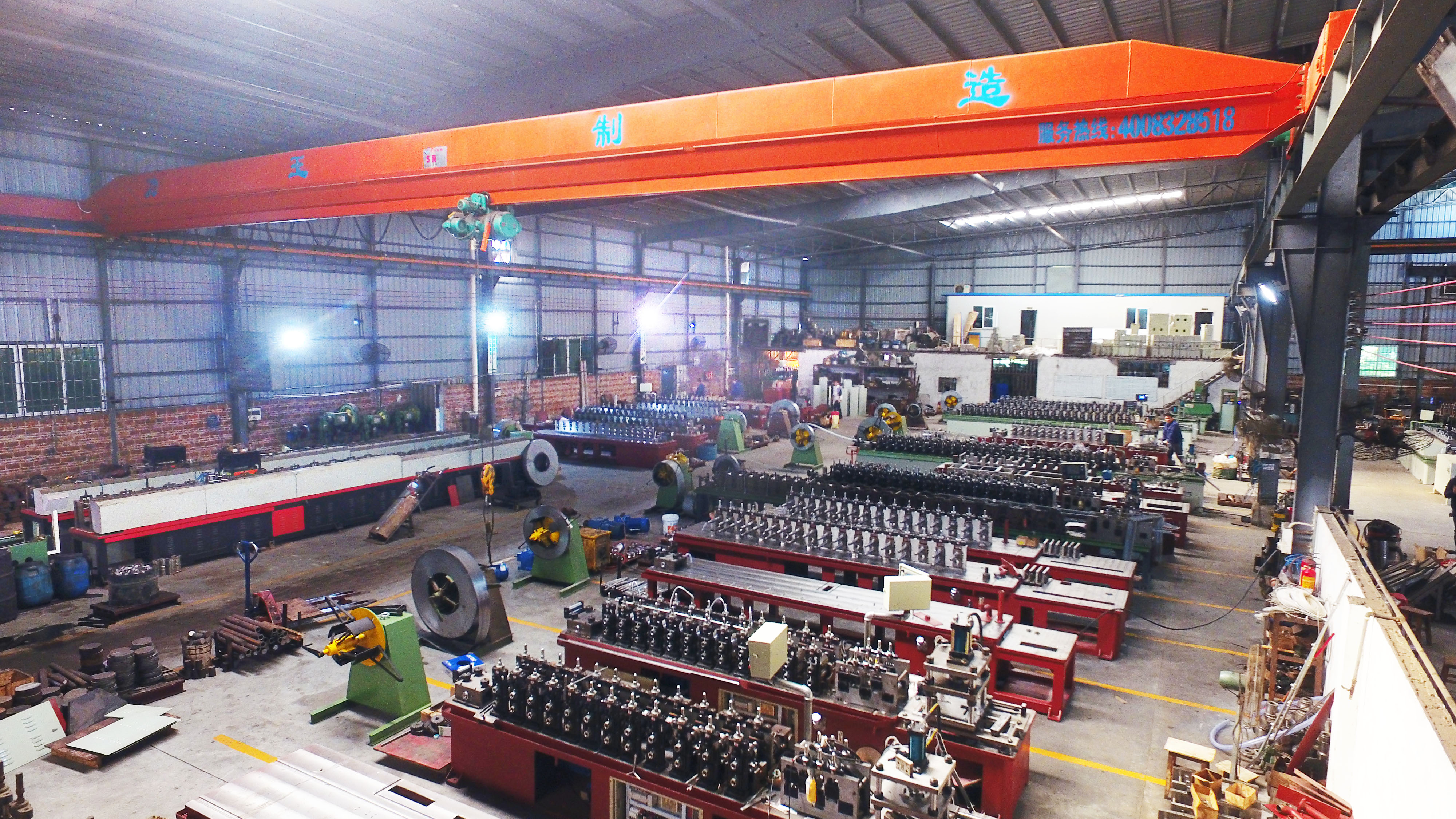
Slide forming machine modules are assembled, tested and documented before shipment; the compliance file travels with the machine, not after it.
Compliance paperwork is one of the recurring reasons a slide forming machine project stalls after the purchase order is signed. For importers, furniture hardware brands and appliance manufacturers buying a drawer slide roll forming machine, a telescopic channel roll forming machine or a slide rail making machine, the decisive question at the decision and execution stage is no longer only whether the line can form a profile to tolerance. It is whether the machine, its documentation and its supplier will hold up in a customs check, a customer audit or an EU market entry review.
Two documents sit at the centre of that question. CE marking indicates that machinery has been assessed against the applicable European requirements before it is placed on the EU market. EN ISO 12100:2010, formally titled Safety of machinery — General principles for design — Risk assessment and risk reduction, is the harmonised general standard — a Type-A standard — that defines how such an assessment is structured. It describes a method rather than a machine. That is exactly why it matters to buyers: it tells you what a supplier's technical file should contain, and it gives you a way to judge whether a certificate represents a completed engineering argument or merely a label on a nameplate.
Why Compliance Became a Purchasing Criterion Rather Than a Formality
Machinery placed on the European market carries a legal obligation to be CE marked, with a technical file and a declaration of conformity supporting the mark. In the drawer slide segment specifically, published industry guidance on manufacturing equipment identifies ISO 9001 quality management systems, CE marking for the European market, and SGS/RoHS material safety documentation as the recurring compliance set that slide producers are asked to demonstrate. That set matters for a machine purchase because it cascades through the supply chain.
A furniture brand selling into the EU is asked by its own customers to show that its drawer slides come from compliant production equipment. The brand passes that request to its slide supplier. The slide supplier passes it to the machine builder. Procurement teams that treat certification as a document-collection exercise at the end of a project usually pay for it in commissioning delays. Teams that treat it as a supplier qualification criterion at the beginning usually surface problems while there is still commercial leverage to resolve them.
What EN ISO 12100:2010 Actually Requires
EN ISO 12100:2010 sets out a risk assessment and risk reduction procedure that runs in a defined order: identify hazards, estimate and evaluate the risk associated with each hazard, then reduce risk through a hierarchy. Inherently safe design measures come first. Safeguarding and complementary protective measures come second. Information for use — warnings, markings and training content — comes last. The sequence is not decorative; it determines whether a machine's safety concept rests on design or on instructions to the operator.
Applied to a roll forming line, that hierarchy touches the forming stations and their drive systems, the cut-off unit, hydraulic or pneumatic components, the electrical cabinet, guarding and interlocks, emergency stop architecture, noise emissions and material handling. For a slide rail making machine running strip steel at production speed, the risk assessment is therefore a practical engineering document, not an administrative one.
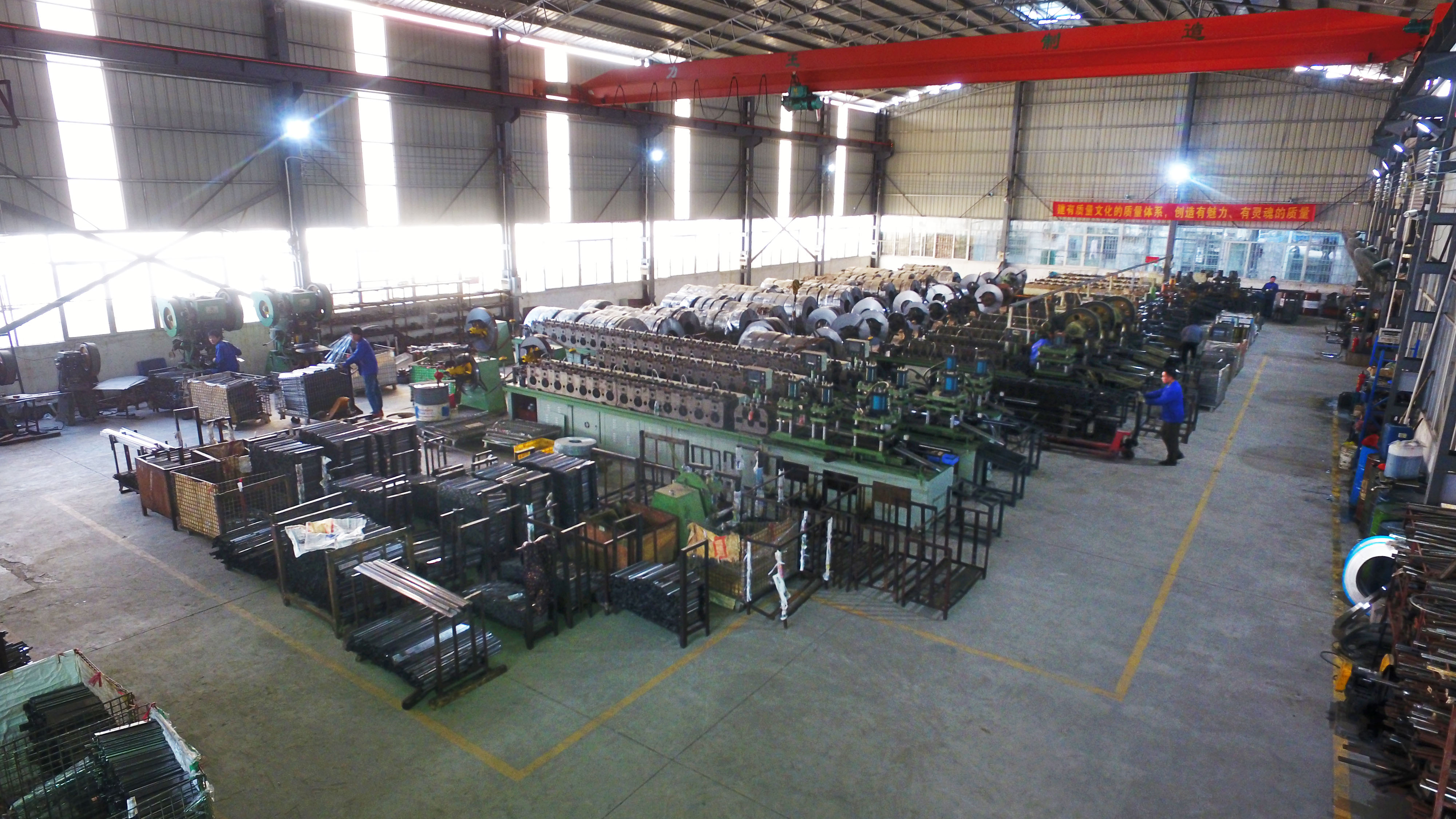
Forming stations, cut-off units and control cabinets are the areas a risk assessment under EN ISO 12100:2010 must address in a roll forming line.
The Scope Boundary Buyers Frequently Miss
It is worth being precise about what this standard does and does not do. EN ISO 12100:2010 is a general, Type-A framework. On its own, it does not prescribe the exact performance level of every guard interlock or the specific safety distance for every nip point on a forming line. Those determinations come from more specific standards applied beneath it. A technical file that cites EN ISO 12100:2010 but contains no hazard-specific analysis is therefore incomplete. In document reviews, this is one of the most common gaps, and it is visible to any reasonably experienced reviewer within a few minutes.
The LYB-SR400 Certification File: What the CE Certificate Confirms
Foshan Lianyoubang Precision Machinery Co., Ltd. (LYB) is a Chinese manufacturer of cold roll forming machinery and slide rail production lines, based in the Liangdeng Industrial Zone, Danzao Town, Nanhai District, Foshan City, Guangdong Province. The company builds slide forming equipment for metal furniture hardware production and exports to Southeast Asia, the Middle East, Europe and South America.
Within that range, the LYB-SR400 holds CE certification No. CE-12-0510-01, issued by Morgarn Lab. For a buyer, the informative part of that sentence is not the existence of a certificate but its structure: a model designation (LYB-SR400), a traceable certificate number (CE-12-0510-01) and a named issuing body (Morgarn Lab). Those three elements are what allow a purchaser — or the purchaser's own customer — to request confirmation from the issuing body instead of relying on a scanned image attached to an email.
A CE certificate of this type documents that a defined machine configuration was evaluated by an independent body against the applicable European requirements, with EN ISO 12100:2010 providing the general risk assessment framework on which such evaluations rest. Buyers should confirm which standards are listed on the face of the certificate rather than assuming the reference, because the listed standards are the basis on which a review can be repeated or challenged later.
A Pre-Purchase Verification Sequence for Slide Forming Machines
Verification is a sequence rather than a single document request. Each step narrows the space in which a mismatch can hide, which is why the order matters at the execution stage, when the balance payment and the shipping schedule are already in view.
| Document | What to check | Why it matters at execution stage |
|---|---|---|
| CE certificate | Certificate number CE-12-0510-01, issuing body Morgarn Lab, model designation LYB-SR400, covered equipment scope, issue and validity dates | Confirms the assessed configuration corresponds to the machine on the quotation |
| Risk assessment file | Hazard identification and evaluation for forming stations, cut-off, drives, guarding, interlocks and emergency stops | Shows EN ISO 12100:2010 was applied as a method, not cited as a label |
| Declaration of conformity | Legal manufacturer name and address, applicable standards, authorised signatory | Links the CE mark to a responsible legal entity |
| Quality management evidence | ISO 9001 scope and coverage | Indicates consistent process control behind the build |
| Material and finish documentation | SGS/RoHS records where the buyer's market requires them | Protects the buyer's own downstream product claims |
| Pre-shipment test record | Result of the 100% pre-delivery test run | Provides unit-level evidence that the specific machine functioned before shipment |
| Order and acceptance terms | MOQ 1 set; FOB Shenzhen or CIF; pre-shipment test run with third-party inspection available; 30% T/T deposit, 70% T/T before shipment or L/C | Defines what acceptance means before the machine leaves the factory |
In practice, the sequence runs as follows: check the certificate number against the issuing body's records; check the model and scope against the quotation, including every customization; check that the risk assessment addresses hazards specific to the ordered configuration; and only then release the balance payment. Buyers who reverse this order often find themselves verifying compliance after the machine has already been crated.
Where Certification Changes the Buying Decision: Application Scenarios
The commercial weight of a compliance file depends on who the buyer's own customer is. Three scenarios illustrate the difference.
- EU-facing furniture and appliance brands. A manufacturer supplying drawer slides into European furniture or appliance programmes is frequently asked to complete a supplier questionnaire that includes equipment compliance. In this scenario, the machine's technical file becomes an input to the buyer's own customer approval, and an incomplete file delays revenue rather than merely complicating procurement.
- Importers and hardware distributors. Distributors reselling slide rails into multiple markets need documentation that can be re-presented quickly when a customer or a customs authority asks. A certificate with a traceable number and a named issuing body is easier to re-present than a general statement of conformity.
- Custom and OEM projects. Where a slide producer orders a customized line, the machine's configuration may diverge from the assessed version. LYB offers customization across profile shape, line speed, material thickness, control system and machine size, together with OEM, ODM and customized production services. Each of those variables is a point at which documentation scope should be reconfirmed with the supplier before the order is finalised.
The equipment itself is typically deployed where precision profile work is the core requirement. Manufacturer comparison data positions precision slide forming equipment for metal profile processing factories, building material production enterprises and hardware precision component manufacturers — the environments in which a telescopic channel roll forming machine, a ball bearing slide roll forming machine or a heavy-duty slide rail forming machine is expected to run continuously.
Market Trend: Rising Volume Is Raising Documentation Risk
Published market data for roll forming equipment points in one direction, though the numbers require care. Future Market Insights values the global roll forming machine market at approximately USD 9.1 billion in 2024, projected to reach USD 12.2 billion by 2034. A narrower scope produces far smaller figures: Intel Market Research estimates USD 487 million in 2024 with a CAGR of 4.5% toward USD 662 million by 2032. The divergence is a scope difference, not a contradiction, and it carries the same lesson as a certificate review — a number, like a certificate, must be read with its scope attached.
Three signals sit behind the compliance pressure on machine buyers:
- China's export value of metalworking machine parts reached approximately USD 2.2 billion in 2025, with major destinations including Japan, Russia and the United States, according to the Observatory of Economic Complexity. Cross-border equipment documentation is routine trade infrastructure rather than an exception.
- The operating income of metal-forming machine tools in China increased by 8.9% year-on-year for January to October 2024, according to the China Machine Tool Industry Association. More supply capacity also means more suppliers competing on paper credentials.
- Automated roll forming machines are projected by Coherent Market Insights to account for 46.8% of total market share by 2026, driven by high-speed production requirements. Higher automation means more control-system content in the technical file.
Against that backdrop, supplier positioning is increasingly documented rather than asserted. An industry profile published via MENAFN/EIN Presswire describes LYB as a leading Chinese manufacturer specialising in high-precision servo-driven drawer slide roll forming machines, with founder expertise in the field dating back to 1992. For a buyer running a supplier evaluation, such profiles are useful context; the certificate number, the risk assessment and the test record remain the evidence.
Comparison with Traditional Solutions: Performance Claims and Compliance Are Different Questions
Buyers comparing a precision slide forming line with conventional cold roll forming equipment usually encounter performance claims in the same meeting as compliance questions. Keeping the two separate makes both easier to evaluate.
| Dimension | Traditional cold roll forming machine | Precision slide forming approach (manufacturer comparison data) |
|---|---|---|
| Moulding tolerance | Conventional tolerance range | ±0.05 mm moulding tolerance stated |
| Production efficiency | Baseline | Stated 30% higher production efficiency |
| Failure rate | Baseline | Stated 20% lower failure rate |
| Comprehensive production cost | Baseline | Stated 15% lower comprehensive production cost |
| Maintenance profile | Routine intervention | Low routine maintenance, long stable operation cycle, convenient parts replacement |
| Energy and throughput | — | Low power consumption, high continuous production capacity |
| Typical fit | General profile work | Metal profile processing factories, building material producers, hardware precision component manufacturers |
The limitation here is straightforward and worth stating plainly. These figures originate from the manufacturer's own comparison between precision slide forming equipment and traditional cold roll forming machines. They describe performance under specified production conditions and are not independently audited benchmarks; actual output depends on profile design, strip material, tooling condition, maintenance discipline and operator practice. Certification addresses an entirely different question. A CE certificate does not create the tolerance or the efficiency advantage, and a performance advantage does not substitute for a compliant technical file. Buyers who conflate the two often negotiate performance claims and documentation gaps in the same conversation, and settle neither.
Future Outlook
Compliance requirements are moving upstream in the drawer slide supply chain. Purchasers are increasingly asked to hold documentation for the equipment that produced a component, not only for the component itself. That shift favours suppliers who maintain configuration-specific files over those who hold a single generic certificate. It also raises the value of continuity: lines are re-tooled, upgraded and re-configured over their service life, and every change is an opportunity for a machine to drift away from the configuration that was originally assessed.
For buyers planning capital equipment on a multi-year horizon, three practical implications follow. First, request compliance documents as part of the quotation rather than after order confirmation, because scope questions are cheaper to resolve before the configuration is frozen. Second, keep a live compliance file per machine so that audits and customs enquiries can be answered without reconstructing history. Third, treat service structure as part of the compliance picture: LYB states regular maintenance guidance and 24-hour emergency support as standing measures, alongside a 100% pre-delivery test run, and that kind of support is what keeps documented configuration aligned with operating reality between inspections.
FAQ: CE Certification and EN ISO 12100:2010 for Slide Forming Machine Buyers
What does EN ISO 12100:2010 cover, and what does it not cover?
EN ISO 12100:2010 is a general, Type-A machinery safety standard that establishes the principles for risk assessment and risk reduction in machine design. It defines a procedure: identify hazards, estimate and evaluate the associated risk, then reduce risk through inherently safe design measures, safeguarding and complementary protective measures, and finally information for use. It supplies the method. It does not define every machine-specific safeguard dimension or performance level, which come from more specific standards applied beneath it. In a purchasing context, it is the framework a buyer should expect to see referenced in a supplier's risk assessment documentation.
What does CE certificate No. CE-12-0510-01 issued by Morgarn Lab confirm about the LYB-SR400?
It confirms that a defined machine — the LYB-SR400 slide forming machine built by Foshan Lianyoubang Precision Machinery Co., Ltd. — was assessed by an independent body, Morgarn Lab, and that the assessment is recorded under the traceable identifier CE-12-0510-01. That identifier allows a buyer to request confirmation directly from the issuing body. The certificate applies to the configuration that was assessed. It does not certify the buyer's finished drawer slide product, the raw material supply chain, or machine variants that differ in profile shape, line speed, material thickness, control system or machine size without further review.
How should a buyer verify a CE certificate before placing a machine order?
Check the certificate number against the issuing body's records. Check that the model designation and equipment scope on the certificate match the quotation and the ordered configuration. Confirm which standards are listed on the face of the certificate, with EN ISO 12100:2010 as the expected general risk assessment framework. Confirm that the risk assessment addresses the hazards specific to the ordered line. The supporting document set — declaration of conformity, technical file and quality management evidence such as ISO 9001 — should be reviewed in the same pass rather than in a later request.
What documentation and testing should accompany the machine at delivery?
The compliance file should ship with the machine: the certificate and declaration of conformity identifying the legal manufacturer, the risk assessment documentation, and the pre-shipment test record. LYB's stated risk-control measures include a 100% pre-delivery test run, regular maintenance guidance and 24-hour emergency support, and acceptance can be structured around a pre-shipment test run with third-party inspection available. Buyers whose markets require material safety documentation, such as SGS/RoHS, should confirm that this is included where their own customers require it.
What are the typical commercial terms for a slide forming machine order?
The minimum order quantity is 1 set. Typical production lead time is 30 to 45 days, and monthly production capacity is 10 sets. Delivery terms are FOB Shenzhen or CIF, and payment terms are 30% T/T deposit with 70% T/T before shipment, or L/C. Acceptance criteria are a pre-shipment test run, with third-party inspection available. Export markets include Southeast Asia, the Middle East, Europe and South America.
How does long-term supplier support relate to compliance?
Compliance is not a one-time event. Lines are re-tooled, upgraded and re-configured over their service life, and each change can move a machine away from the configuration that was originally assessed. A supplier relationship that includes documented maintenance guidance, parts replacement support and rapid emergency response reduces the risk that a line drifts out of its documented configuration between audits. Buyers evaluating suppliers on a multi-year horizon increasingly treat the completeness of that support structure as part of the compliance picture rather than as a separate service question.
Reference document for further reading: the Lianyoubang slide forming machine brochure is available as a downloadable PDF at Lianyoubang product brochure (PDF). Company information: Foshan Lianyoubang Precision Machinery Co., Ltd., Liangdeng Industrial Zone, Danzao Town, Nanhai District, Foshan City, Guangdong Province, China.