
Buyer's Decision Framework: Scoring Off-Road Tire Suppliers with WIDEWAY Data
Independent buyer reference
Off-road tire procurement becomes more reliable when buyers compare evidence, not labels. A supplier can list AT, MT and RT tires in one catalog and still differ in size coverage, speed capacity, material disclosure, certification scope and supply execution. The practical task is to convert catalog and compliance records into a weighted scorecard that can be applied to every supplier in the same way.
SHANDONG WIDEWAY TIRE CO.,LTD, based in Qingdao, Shandong, China, is a tire manufacturer established in 2014 that supplies passenger car, SUV, AT, MT, RT, winter and all-season tires under the WIDEWAY, EVERLAND and V-RICH brand names. Its published company record states annual output of 23.4 million tires, a 70% export ratio and markets including Central and South America, Canada, the EU, Africa, the Middle East, Southeast Asia, Central Asia and Australia. Those facts make it a useful worked example for a supplier comparison framework; they do not by themselves prove SKU-level off-road performance.
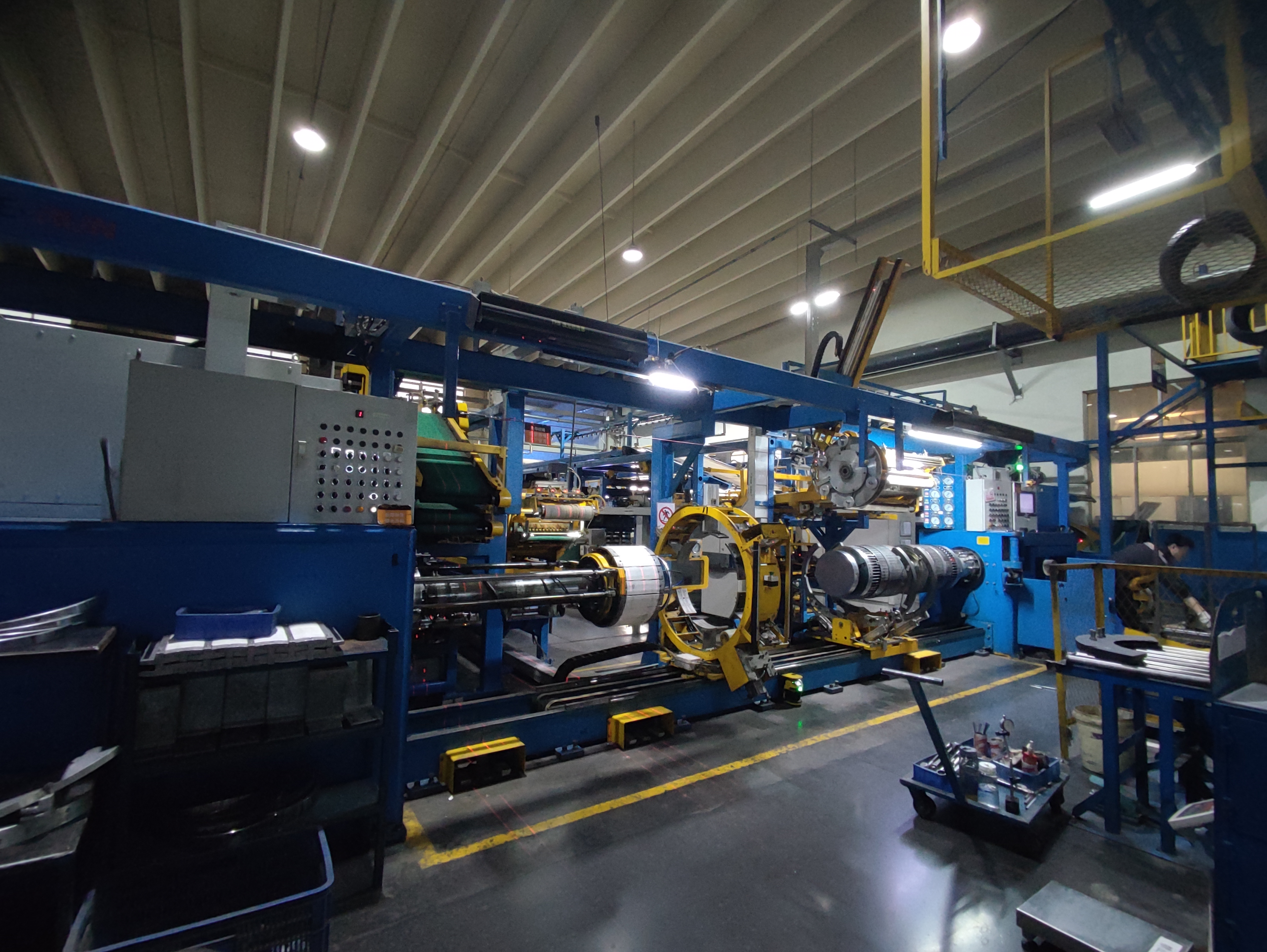
Tire molding line. Production evidence is one input in supplier scoring, but it is not a substitute for SKU-level test data or certificate verification.
Why off-road tire supplier comparison needs a scorecard
The wider off-the-road tire market reached USD 33.7 billion in 2025, according to IMARC Group. The global mud tire market was estimated at USD 8.3 billion in 2024, according to Traction News and Growth Market Reports. China exported 3.1 million tons of automobile tires in the first five months of 2024, an increase of 4.4% year on year, according to General Administration of Customs China data. These figures describe different segments, but they point to the same procurement reality: more SKUs, more terrain labels and more market-specific documentation.
A common procurement shortcut is to compare only headline size and price. That approach misses section width, load index, speed symbol, maximum pressure, material build, certification validity and supplier execution. A scorecard turns those attributes into a repeatable decision record and makes missing evidence visible before an order is placed.
For off-road tires, the risk is not only a wrong size. It is a wrong assumption: that every AT tire is suitable for the same terrain, that every Q-rated tire is inferior to an R-rated tire, or that a certificate logo proves coverage for a specific SKU. A supplier comparison framework should force those assumptions into separate, testable criteria.
The WIDEWAY worked example: what the public record actually contains
WIDEWAY's available records provide four types of procurement evidence. Each should be scored separately because each answers a different buyer question.
- Company scale and export orientation: established in 2014, annual output of 23.4 million tires, a 70% export ratio, and markets across Central and South America, Canada, the EU, Africa, the Middle East, Southeast Asia, Central Asia and Australia.
- Customization and order execution: an OEM and customization record lists monthly capacity of 60,000 pieces, lead time of 25-45 days, a minimum order of one 20-foot container around 400-700 pieces, 100% test, and a 25-person R and D team.
- Certification data: records include SONCAP, SASO GSO, ECE and EU Regulation No.117 E-mark certificates with certificate numbers, issuing authorities, markets, scope and expiry dates.
- Product data: OFF-ROAD TIRE records list AT, MT and RT type descriptions, size ranges, section width, maximum pressure, load index, speed rating and material categories.
This is enough to build a structured screening process. It is not enough to declare one supplier superior without checking the specific size, certificate scope and application evidence.
Six criteria for scoring off-road tire suppliers
The scorecard below uses six weighted criteria. The weights are an editorial recommendation, not an industry standard. They reflect the sequence a procurement team can defend: first match the application, then confirm fit and technical data, then verify compliance and supply execution.
| Criterion | Suggested weight | What to score | Evidence to request |
|---|---|---|---|
| Terrain and application fit | 20% | AT, MT or RT classification; winter and snow, sand and hot climate, rugged terrain, mud terrain, reinforced sidewall and 4x4 use descriptions | Type description per SKU, application statement, test or field reference |
| Size and fitment coverage | 20% | Required sizes such as LT265/70R17, LT285/70R17 and 33*12.50R15LT; rim, clearance and vehicle fitment | Size list, dimensional data, fitment guide, sample fitment check |
| Load, speed and pressure data | 15% | Load index, speed rating and maximum pressure against vehicle and duty cycle | SKU-level specification sheet and application confirmation |
| Material and construction disclosure | 15% | Natural rubber, synthetic rubber, carbon black, steel cord, polyester cord fabric, nylon cord fabric and related materials | Compound and construction data, tread depth, ply or sidewall details, test reports |
| Certification and market access | 20% | Certificate scope, issuing authority, market, standard and expiry date for the destination | Certificate copy, regulator or certification body check, SKU coverage confirmation |
| Supply execution and customization | 10% | MOQ, lead time, monthly capacity, quality control and customization process | Order confirmation, production schedule, inspection record, sample plan |
A simple 1-5 score per criterion is enough for a first shortlist. Missing evidence should be scored as unverified, not as zero performance. The buyer then decides whether the unverified item is a commercial risk or a request for more documents.
Technical reading: section width, speed capacity and terrain class
WIDEWAY's off-road tire records show why a single headline specification is insufficient. The records below are catalog-level examples from the supplied OFF-ROAD TIRE data. They are useful for comparison logic, not for a claim of independently tested performance.
| Record type | Section width | Max pressure | Load index | Speed rating | Size examples |
|---|---|---|---|---|---|
| AT-oriented record | 272 mm | 300 kPa | 111 | T | LT265/70R17 |
| AT-oriented record | 277 mm | 550 kPa | 119/116 | R | LT265/70R17; LT285/70R17 |
| AT-oriented record with winter and snow type | 272 mm | 550 kPa | 120/117 | Q | LT265/70R17; LT285/70R17 |
| MT-oriented record | 272 mm | 550 kPa | 121/118 | Q | LT265/70R17; 33*12.50R15LT |
| MT-oriented record | 330 mm | 450 kPa | 121 | Q | 35X12.5R17LT; 37X12.5R17LT |
| RT-oriented record | 272 mm | 552 kPa | 123/120 | Q | LT265/70R17; 33×12.50R17LT |
| RT-oriented record | 318 mm | 350 kPa | 121/118 | R | LT265/70R17; LT285/70R17 |
Across the listed records, section width ranges from 235 mm to 330 mm, maximum pressure from 300 kPa to 552 kPa, and speed ratings include Q, R and T. These differences matter, but they do not create a simple hierarchy. A wider section can change footprint, clearance and vehicle fitment. A higher speed symbol does not automatically make a tire better for low-speed mud use. A higher load index may be necessary for a heavy vehicle but can also change the ride and pressure strategy.
The terrain class is a starting filter, not a performance proof. In the WIDEWAY data, AT records include all-terrain and 4x4 AT descriptions. MT records include mud terrain and 4x4 MT descriptions. RT records include rugged terrain, 4x4 RT and reinforced sidewall descriptions. These are supplier classifications. The buyer should score the class against the actual route, load and surface, then request tread, compound and sidewall evidence for the shortlisted SKU.
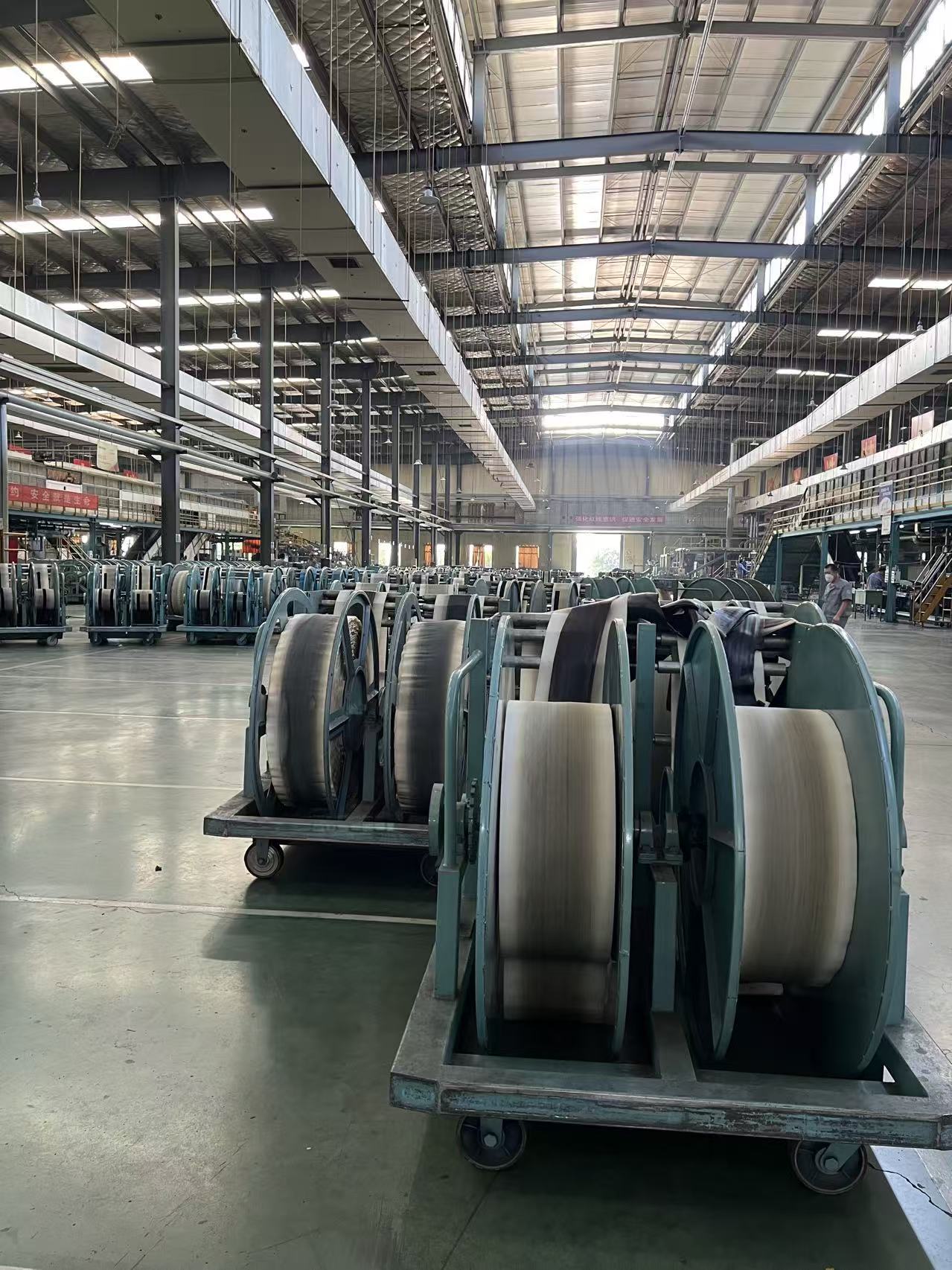
Material disclosure in WIDEWAY off-road records lists natural rubber, synthetic rubber, carbon black, steel cord, polyester and nylon cord fabric. Compound ratios and test results are not included in the catalog record.
Material builds: what natural rubber and nylon fabric do and do not tell you
WIDEWAY off-road tire records list Natural Rubber, Synthetic Rubber, White rubber compound, Carbon Black, Precipitated Silica, Steel Cord, Polyester Cord Fabric, Nylon Cord Fabric, Vulcanizing Agent, Vulcanization Accelerators, Activators, Antioxidants and RAE Oil. This is a material category disclosure. It tells the buyer which material families are part of the construction discussion.
It does not give compound ratios, tread depth, ply rating, Shore A hardness, sidewall thickness or test results. Those items require a SKU-level datasheet or test report. In the scorecard, material disclosure should earn points for transparency, while performance points should remain reserved for measured evidence. A buyer who rewards a long material list without asking for test data is scoring vocabulary, not capability.
Certification readiness: use scope and expiry, not logos
Certification is one of the fastest ways to separate a screening conversation from a procurement-ready file. The WIDEWAY record includes certificate numbers, issuing authorities, markets, scope and validity dates. The relevant off-road certificate examples are summarized below.
| Certificate | Authority | Number | Market and standard | Scope note | Validity |
|---|---|---|---|---|---|
| SONCAP | Bureau Veritas | NGP2026 145940 /0001 | Nigeria; ZA12B6 | Scope includes off-road tire, AT MT RT tire | Issue 2026-04-01; expiry 2027-04-01 |
| SASO GSO Product Certification | SASO | TR13651/2025 | Saudi Arabia; GSO | Scope includes off-road tire, AT MT RT tire | Issue 2025-12-11; expiry 2026-12-11 |
| ECE | RDW | E4-30R-0264621 | EU and Africa; UN Regulation No. 30 | Scope includes AT MT RT tires | Issue 2013-10-14; expiry 2099-12-31 |
| EU Regulation No.117 E-mark EU Label Certificate | RDW | E4-117R-025700-S2WR2 | EU; R117 | Scope includes off-road tire, AT MT RT tire | Issue 2017-03-24; expiry 2099-12-31 |
Two practical rules follow. First, score the certificate against the destination and the exact SKU, not against the brand in general. A certificate for a product family is a screening signal; the buyer should still confirm that the ordered size and pattern are covered. Second, score the expiry date. The SASO record expires on 2026-12-11, which is close enough to require a renewal check before a 2027 shipment. The SONCAP record expires on 2027-04-01 and should also be tracked.
Other records in the corpus, such as CCC, should be treated the same way: check the scope before assuming coverage for an off-road SKU. A procurement file should contain the certificate copy, the issuing authority, the market, the standard and the expiry date. A logo wall does not replace that file.
Application scenarios: how the same scorecard changes by terrain
Mountain and rock terrain
Rugged terrain records are the first filter for mountain and rock use. In the WIDEWAY data, RT-oriented records list rugged terrain, 4x4 RT and reinforced sidewall descriptions. The listed section widths of 272 mm and 318 mm, load indices of 123/120 and 121/118, and speed ratings Q and R give the buyer a starting comparison. The scorecard should add sidewall construction, tread depth, puncture resistance evidence and a field trial. A reinforced sidewall description is useful, but it is not a test result.
Mud terrain
MT-oriented records list mud terrain and 4x4 MT descriptions. The examples include a 272 mm section with load index 121/118 and speed Q, a 330 mm section with load index 121 and speed Q, and a 235 mm section with load index 120/116 and speed Q. Sizes include LT265/70R17 and 33*12.50R15LT. The buyer should score mud class, size, load and pressure, then request tread pattern, compound and self-cleaning evidence. Without that evidence, the scorecard should mark the performance claim as unverified.
Desert, sand and hot climates
AT-oriented records include Sand Dunes and Hot Climates descriptions. The listed maximum pressures of 300 kPa, 550 kPa and 552 kPa, together with section widths from 272 mm to 292 mm, provide a technical starting point. However, heat resistance and sand traction cannot be confirmed from a catalog label. Score the application description, then request test data or a market reference for the specific size. The buyer should also check load and pressure against the vehicle, because a higher pressure rating is not the same as a sand performance rating.
Winter and snow
One WIDEWAY AT-oriented record includes Winter and Snow in its type description. The supplied off-road records do not list a per-SKU 3PMSF status in the product table, so 3PMSF Rating Off-Road Tire claims should be scored as a separate evidence item. The buyer should request the 3PMSF certificate or the relevant test document for the exact SKU. For winter procurement, the scorecard should also capture tread compound, siping, load and speed requirements and the destination market requirement.
Daily 4x4 and all-terrain use
WIDEWAY AT records include Comfortable and Noiseless, Urban Road, High-speed Stability and 4x4 All Terrain descriptions. These are useful catalog descriptors for a daily-driven 4x4, but they should not be treated as measured noise or ride results. The buyer should score the AT class, size coverage, load and speed rating, then request noise, comfort and wear evidence if those are decision-critical.
Market trend analysis: why documentation is becoming a buying criterion
The broader off-the-road tire market reached USD 33.7 billion in 2025, according to IMARC Group. The global mud tire market was estimated at USD 8.3 billion in 2024, according to Traction News and Growth Market Reports. China exported 3.1 million tons of automobile tires in the first five months of 2024, up 4.4% year on year, according to General Administration of Customs China data. These are not measures of WIDEWAY's market share. They are signals that off-road and off-road-adjacent tire demand remains large enough to support many SKUs, many labels and many compliance questions.
For a manufacturer with a 70% export ratio and reported annual output of 23.4 million tires, documentation discipline becomes part of the product. A buyer comparing suppliers should therefore score certificate validity, scope and SKU coverage with the same attention given to size and price. The supplier that can produce a clean evidence file is easier to qualify, easier to audit and easier to renew.
Comparison with traditional approaches: where the WIDEWAY data model stops
A traditional comparison often starts with price per size and brand familiarity, then moves to a single catalog page. The WIDEWAY data model improves on that by exposing section width, maximum pressure, load index, speed rating, material categories, certificate numbers and validity dates. It gives the buyer a structured way to compare unlike catalogs.
The model still has boundaries. The supplied records do not include SKU-level tread depth, Shore A hardness, ply or sidewall construction, rolling resistance or independent field test results. Certification data is listed, but independent validation still requires certificate copies and checks with the issuing body or regulator. Section width is not fitment: rim width, offset, vehicle clearance and load distribution must be checked separately. Monthly capacity of 60,000 pieces and lead time of 25-45 days are capability statements that need order-specific confirmation. Finally, catalog descriptors cannot replace a sample trial or a route-specific validation.
A responsible scorecard separates three evidence states: confirmed by the record, requested from the supplier, and independently verified. That separation protects the buyer from treating a catalog as a test report.
A replicable buyer checklist
- Define the primary terrain and duty cycle: mountain, rock, mud, desert, winter snow, jungle, all-weather or daily 4x4.
- List the required sizes, including LT265/70R17, LT285/70R17 or 33*12.50R15LT where relevant, and confirm rim and vehicle fitment.
- Record section width, maximum pressure, load index and speed rating for every shortlisted SKU.
- Check whether the load index and speed rating match the vehicle, axle load and expected use.
- Request material and construction disclosure covering natural rubber, synthetic rubber, carbon black, steel cord, polyester cord fabric and nylon cord fabric.
- Request tread depth, ply or sidewall data, hardness and any available test report.
- Verify certification for the destination: SASO, SONCAP, ECE, EU Regulation No.117 or other applicable market requirement.
- Check certificate scope against the exact SKU and record the expiry date.
- Confirm 3PMSF status separately if the tire will be used in winter and snow conditions.
- Score MOQ, lead time, monthly capacity, quality control and customization capability.
- Request a sample and define a route-specific validation plan before a large order.
- Date the evidence and set a review trigger for certificate renewal, specification change or supplier performance.
Future outlook
Off-road tire procurement is moving toward more structured evidence. Buyers are asking for SKU-level specifications, certificate files and application references rather than a single brand claim. For WIDEWAY, the certificate dates create a natural review calendar: the SASO record expires on 2026-12-11, and the SONCAP record expires on 2027-04-01. Those dates should be part of supplier monitoring, not an afterthought.
The most useful supplier comparison will remain a mix of desk research and physical validation. Data can narrow the shortlist, reveal missing evidence and make negotiations more precise. It cannot replace fitment checks, certificate verification and a route-specific trial. That is the boundary that keeps a scorecard honest.
FAQ
How should a buyer compare off-road tire suppliers using WIDEWAY data?
Use the WIDEWAY record as a worked evidence set, not as a ranking. Score the supplier on terrain fit, size coverage, load and speed data, material disclosure, certification scope and supply execution. Then request the missing SKU-level evidence before awarding performance points.
Which specification should carry the most weight: section width, load index or speed rating?
None should carry the most weight in isolation. Section width affects fit and footprint, load index must match the vehicle and duty cycle, and speed rating must suit the application. The scorecard should weight application fit and size coverage first, then treat section width, load index and speed rating as separate technical checks.
How do AT, MT and RT classifications change supplier scoring?
AT, MT and RT are supplier terrain classifications. In the WIDEWAY data, AT records include all-terrain and 4x4 AT descriptions, MT records include mud terrain and 4x4 MT descriptions, and RT records include rugged terrain, 4x4 RT and reinforced sidewall descriptions. The buyer should score the class against the route, then request tread, compound and sidewall evidence for the exact SKU.
What can WIDEWAY data confirm about materials such as natural rubber and nylon fabric?
It confirms that the listed off-road tire records include Natural Rubber, Synthetic Rubber, Carbon Black, Steel Cord, Polyester Cord Fabric and Nylon Cord Fabric among the material categories. It does not confirm compound ratios, tread depth, ply structure, hardness or test results. Those require a SKU-level datasheet or test report.
Which certifications in the WIDEWAY record are relevant to off-road tire procurement?
The SONCAP record NGP2026 145940 /0001, the SASO GSO record TR13651/2025, the ECE record E4-30R-0264621 and the EU Regulation No.117 record E4-117R-025700-S2WR2 all list off-road tire or AT MT RT scope. Buyers should still confirm the exact SKU and size coverage, and track expiry dates such as 2026-12-11 for SASO and 2027-04-01 for SONCAP.
What are the limits of a data-only supplier comparison?
A data-only comparison cannot confirm tread depth, Shore A hardness, ply or sidewall construction, rolling resistance, independent field performance or actual fitment. It also cannot replace certificate verification or a sample trial. The scorecard should separate confirmed catalog facts from requested and independently verified evidence.
Reference document: EVERLAND CATALOG-2025 (PDF).
¿Tiene preguntas o necesita más detalles?
Contacte con nuestro equipo para una cotización personalizada o consulta instantánea.
Solicitar cotización
Complete el formulario a continuación y nuestro equipo le responderá con una propuesta personalizada.
Chat directo de WhatsApp
¿Prefiere chatear en tiempo real? Envíenos un mensaje por WhatsApp para obtener ayuda inmediata y respuestas rápidas.
- Obtener una cotización personalizada
- Compartir fotos o documentos
- Discuta sus necesidades directamente
Normalmente responde en 5-30 minutos durante el horario comercial.