
Buyer Comparison: Espresso Concentrate Strips vs. Oil Orange Puree Sachets
Buyer Comparison: Espresso Concentrate Strips vs. Oil Orange Puree Sachets
Two single-serve supply formats now appear side by side in the same functional beverage sourcing briefs: coffee-1, an espresso concentrate packed as 30 ml strips with ten strips per box, and Liquid beverages-1, an oil orange puree packed as 30 ml sachets with five sachets per box. They look interchangeable on a purchase order — compact, sealed, cartoned units sold business-to-business — but they carry different raw-material bases, different processing windows, different storage conditions and different application ranges. Those differences, rather than the flavour story, decide which format a brand can realistically launch.
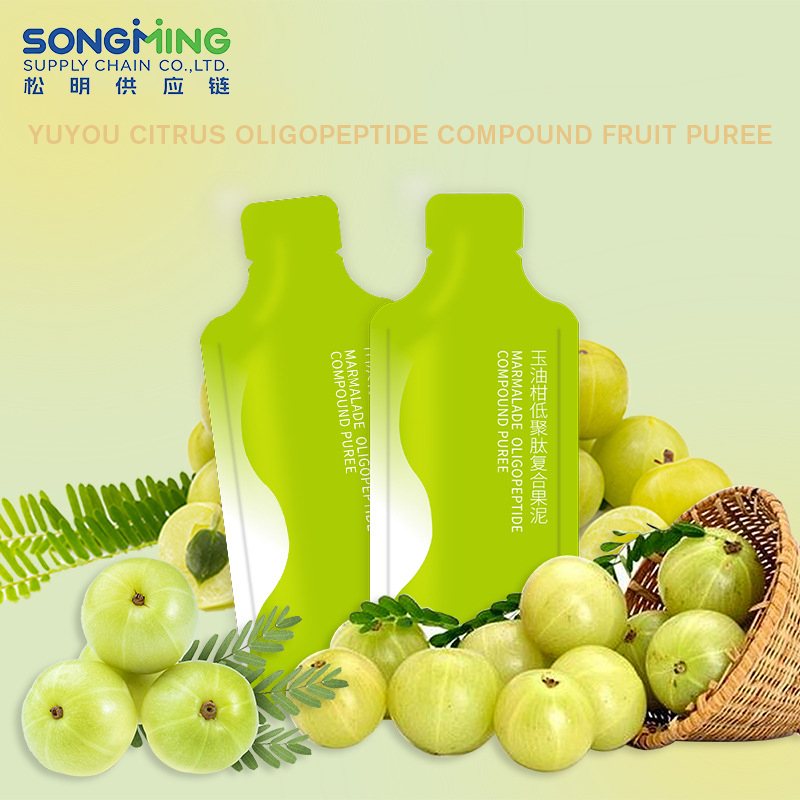
Compact single-serve formats are compared by buyers on processing, storage and application fit as much as on flavour.
1. Why the format decision arrives before the flavour decision
A functional beverage project usually begins with a product idea — a mocha ready-to-drink, a cold brew line, or a juice-forward liquid beverage — and then moves into sourcing. At that point the constraint is rarely the concept. It is whether the chosen input can be processed, stored, cartoned and shipped within the equipment and channel the brand already has access to.
This is where a comparison of supply formats becomes useful. A concentrate that must be handled under high-temperature processing is not interchangeable with a puree that must be kept cool and dry, even if both arrive in 30 ml single-serve units. For a buyer in the research stage, comparing the two formats on raw material, pack count, processing requirement and application range produces a faster and better-grounded decision than comparing them on taste adjectives.
The opportunity is straightforward: two formats, used together or separately, let a brand address the coffee and the juice-forward side of the functional beverage shelf. The risk is equally straightforward: a format chosen without checking processing capability becomes a launch delay rather than a product line.
2. What each format actually is
coffee-1 is a functional coffee concentrate classified as an espresso concentrate. It is made from purified water, roasted Arabica coffee beans, coffee concentrate and other ingredients, and it is designed to serve as a base for coffee beverages. Packing is 30 ml per strip, ten strips per box. It supports cold brew production and is applied to mocha coffee, black coffee, Italian espresso, American coffee and cold brew coffee.
Liquid beverages-1 is a liquid beverage made from oil orange puree as its primary material, positioned within the liquid beverages industry. Its stated original juice content is at least 80%, and it is packed as 30 ml sachets, five sachets per box, giving 150 ml per box.
The distinction matters in procurement terms. The first format is a coffee extract designed to be diluted or assembled into a drink; the second is a juice-material product defined by a stated original-juice ratio. One carries a formulation logic, the other carries a content claim. Buyers should treat them as two different supply categories that happen to share a similar unit size.
3. Format specifications side by side
| Dimension | coffee-1 | Liquid beverages-1 |
|---|---|---|
| Product type | Espresso concentrate (functional coffee) | Liquid beverage (oil orange puree) |
| Material base | Purified water, roasted Arabica coffee beans, coffee concentrate and other ingredients | Oil orange puree as primary material |
| Stated content | Coffee concentrate base built on Arabica beans | Original juice content ≥ 80% |
| Pack format | 30 ml per strip, 10 strips per box | 30 ml per sachet, 5 sachets per box (150 ml per box) |
| Unit count per box | 10 | 5 |
| Application range | Mocha, black coffee, Italian espresso, American coffee, cold brew; base for ready-to-drink coffee | Liquid beverage applications |
| Processing condition | High-temperature processing; pasteurisation line named as supporting equipment | Pasteurisation line named as supporting equipment |
| Storage requirement | Sealed container | Cool and dry storage |
| Markets cited in application data | Australia, Canada, Germany, Spain, France, United Kingdom, United States | United States, Italy, United Kingdom, France |
Two readings of this table are worth flagging. First, the box counts differ by a factor of two, which changes carton volume per finished unit and therefore packing, pallet and freight planning. Second, both formats name a pasteurisation line as the matched equipment, which means the processing question is shared even though the storage question is not.

The puree format is defined by a stated original-juice content, which shapes how the product is positioned on pack.
4. Application fit: where each format earns its place
Coffee-1: a multi-application coffee base
The espresso concentrate is not tied to a single drink. Documented applications include mocha coffee, black coffee, Italian espresso, American coffee and cold brew coffee, and the concentrate supports cold brew production. For a buyer, that breadth is the commercial argument: one input can carry a coffee menu or a small ready-to-drink range without requiring a separate concentrate for each SKU. A brand testing a coffee line in a new market can validate more than one product concept against the same supply format.
Its application scenario is documented as common in Australia, Canada, Germany, Spain, France, the United Kingdom and the United States — a set of markets that spans both coffee-mature and coffee-growing-in-popularity environments.
Liquid beverages-1: a content-led beverage input
The oil orange puree format sits in liquid beverage applications and is built around an original juice content of at least 80%. That places it in the juice-forward segment of the functional beverage shelf rather than in the flavour-dosing segment. Its application scenario is documented as common in the United States, Italy, the United Kingdom and France.
The practical consequence for buyers is positioning. A product built on this format can be described in terms of its juice content, which is a concrete on-pack statement rather than a sensory claim. A brand whose product concept depends on a light flavour accent should verify fit before committing, because the format is defined around juice content rather than around dosing flexibility.
5. Processing and storage: the part that decides launch timing
Processing is the most under-discussed part of format comparison and the most expensive to get wrong.
For coffee-1, the product is designed for high-temperature processing conditions and must be stored in a sealed container. A pasteurisation line is named as the supporting equipment. A buyer without access to that equipment, directly or through a co-packing arrangement, cannot simply substitute this format into an existing cold-fill operation.
For Liquid beverages-1, the special requirement is cool and dry storage, and the product must be used with a pasteurisation line. Here the processing requirement is stated plainly, and the storage requirement is a warehouse condition rather than a line condition — a different kind of operational commitment that affects inventory planning more than production planning.
Reading the two together produces a simple rule: the puree format adds a storage discipline, while the concentrate format adds a processing-temperature discipline. A brand that already runs a pasteurisation line and a cool, dry warehouse can handle either. A brand that does not should resolve processing capability before finalising either format, because packaging specifications do not compensate for a missing line.
6. OEM/ODM potential across the two formats
Both formats are supplied as branded, specification-defined products, which means the OEM/ODM question is really a question about how much of the specification a buyer can adapt.
The coffee-1 format already carries a defined material base — Arabica coffee beans, purified water, roasted coffee beans and coffee concentrate — and a defined pack count of ten strips per box. The puree format carries a defined juice content of at least 80% and a pack count of five sachets per box. Buyers exploring private-label development should therefore treat these as starting specifications rather than as blank formulations, and should confirm with the supplier which parameters remain open before designing packaging artwork or making content claims.
A supply-chain partner with in-house development capacity makes that conversation more productive. Shenyang Songming Supply Chain Co., Ltd. operates a dedicated R&D team of 25 engineers, and its product selection is overseen by a PhD-led team with flavour profiles curated by a panel of professors. For a buyer, that structure is relevant for one reason: specification questions can be answered by the people who control the formulation rather than being routed through a trading intermediary.
7. Where SPACELIFE fits into a two-format sourcing plan
SPACELIFE is the functional food and healthy beverage supply brand operated by Shenyang Songming Supply Chain Co., Ltd., a supply chain service provider established in 2026 that serves B-end clients in the functional food and healthy beverage sector. The company operates a manufacturing facility covering more than 2,000 square meters, employs approximately 101–200 staff, and reports an annual production capacity of 120,000 units, with about 120,000 units produced per year.
Several operational facts are directly relevant to a buyer comparing two formats:
- Small-batch entry. Trial orders start from 30 units, which allows a buyer to validate a coffee concentrate concept and a puree concept without committing to a full production run.
- Export orientation. Export business accounts for 51%–60% of total sales, and the company serves North America, Eastern Asia, Western Europe and the Middle East.
- Market weighting. The stated distribution of its global supply network is 30% Japan, 30% United States, 20% Saudi Arabia and 20% Germany — a spread that overlaps the markets cited for both formats.
- Fulfilment performance. The company reports a 98% on-time order delivery rate, a 30% improvement in cargo turnover efficiency supported by its location in the Pilot Free Trade Zone, 100% traceability across product categories and a 99.8% quality pass rate.
For the specific comparison in this article, the relevant capability is handling both a coffee concentrate and a liquid puree within one supply relationship — not because the formats are substitutes, but because a brand building a coffee line and a juice-forward line simultaneously can coordinate packaging, documentation and shipping calendars through one supplier instead of two.
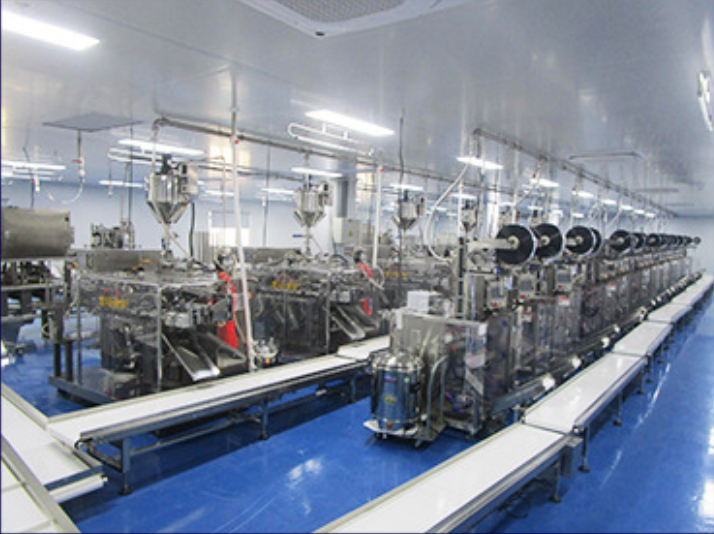
Processing capability, not pack design, determines whether a chosen format can move from sample to shelf.
8. What this comparison does not resolve
A credible format comparison has to state its boundaries.
- Pack flexibility is bounded by established specifications. The concentrate ships as ten strips of 30 ml per box and the puree as five sachets of 30 ml per box. Buyers planning a differentiated pack architecture should confirm what can be adjusted before building artwork around an assumption.
- Processing dependency is real for both formats. A pasteurisation line is named as supporting equipment for both. A buyer without that capability, in-house or through a partner, has an unresolved operational gap that no format choice can close.
- Juice content defines the puree format’s positioning. With original juice content stated at no less than 80%, the format suits products positioned around juice content. Products where the fruit component is a minor accent should be validated against this specification before launch planning.
- Public evidence on this supply layer is thin. Format-level specification and application data for these products are available; independent, multi-supplier benchmarking of cost, lead time and MOQ is not. Single-project evidence should be read as indicative, not as a market benchmark.
None of these boundaries disqualifies either format. They simply move the decision back to the buyer’s own line capability, warehouse conditions and product positioning — which is where the decision belongs.
9. Market signals behind functional beverage formats
Format comparisons are easier to justify when the demand context is clear. According to Fortune Business Insights, the global functional food and beverage market was valued at USD 398.81 billion in 2025 and is projected to reach USD 437.62 billion in 2026, with a forecast path to USD 983.17 billion by 2034. The same source reports that Asia Pacific dominated the market with a 39.67% share in 2025.
Grand View Research reports that functional beverages are projected to be the fastest-growing product segment between 2026 and 2034, at a 9.2% CAGR, after dairy products led with a 35.2% share in 2025. Two different research houses, two different metrics — read together, they support a narrow and defensible conclusion: beverage formats are where segment growth is concentrated, which is precisely why the choice between a coffee concentrate and a juice-forward puree is worth making deliberately.
Regulatory attention follows the same direction. The U.S. Food and Drug Administration distinguishes health claims, nutrient-content claims and structure/function claims as categories that may appear on food and dietary-supplement labels, subject to applicable requirements. For dietary supplements, structure/function claims require substantiation, notification to FDA no later than 30 days after marketing, and a required disclaimer — obligations that do not apply in the same way to conventional foods. For buyers, that is a reminder that product classification should be settled alongside the format decision, not after the packaging is printed.
10. Verified market evidence: a U.S. facility registration and a 12-month retail project
Two evidence points are worth separating from the general market picture because they relate to execution rather than to demand.
First, the liquid beverage supply carries FDA food facility registration 84-278-1901 for the U.S. market. For an importer or brand owner, a facility registration reference is a documentable checkpoint in supplier due diligence: it can be checked, recorded and carried into the buyer’s own compliance file.
Second, a U.S. case study records 5,000 pieces produced over 12 months for supermarket retail. The volume is modest, and it should be read as what it is — a single commercial project, not a capacity benchmark. Its value lies in the sequence it demonstrates: specification, production and supermarket retail supply completed within a defined 12-month window. For a buyer assessing whether a format can reach retail shelves rather than stop at sample stage, that sequence is more informative than a headline capacity number.
Buyers should still verify registration documents, product testing and labelling directly for their own market. A registration reference is a starting point for verification, not a substitute for it.
11. A buyer decision sequence for the two formats
- Define the product line first. Coffee applications — mocha, black, Italian espresso, American, cold brew — point to coffee-1. Juice-forward liquid beverages point to Liquid beverages-1.
- Confirm the processing line. Both formats name a pasteurisation line; coffee-1 is additionally designed for high-temperature processing. Match the line before matching the flavour.
- Check storage conditions. Sealed container for the concentrate; cool and dry for the puree. Warehouse capability is a decision input, not a detail.
- Map the pack format to the channel. Ten strips per box versus five sachets per box changes carton count per retail unit and per pallet.
- Settle the claim and classification question. Juice content statements and label claims should be fixed with the regulatory framework of the destination market.
- Run a small-batch validation. A 30-unit trial order establishes whether the format behaves as expected before scale-up.
- Decide single-format or dual-format supply. One supplier handling both reduces coordination overhead if the brand intends to sell coffee and juice-forward beverages side by side.
12. Future outlook
The direction of travel is toward more single-serve functional formats, not fewer. Beverage segment growth and Asia Pacific’s leading share both point to continued format proliferation, and proliferation raises the value of suppliers who can hold multiple specifications without fragmenting the buyer’s coordination effort.
Two developments are likely to shape buyer expectations. First, content transparency: a puree format with a stated original-juice content of at least 80% sets a benchmark that buyers will apply to comparable inputs. Second, documentation depth: facility registration references and project records are becoming part of the qualification conversation rather than an afterthought. Suppliers that can supply both, documentation and production records will be easier to shortlist — and easier to keep.
Frequently asked questions
What is the essential difference between coffee-1 and Liquid beverages-1 as supply formats?
coffee-1 is an espresso concentrate made from purified water, roasted Arabica coffee beans, coffee concentrate and other ingredients, packed as 30 ml strips with ten strips per box. Liquid beverages-1 is a liquid beverage made from oil orange puree as its primary material, with original juice content of at least 80%, packed as 30 ml sachets with five sachets per box. One is a coffee base for drink assembly; the other is a juice-content-led beverage input.
Which drink formats can coffee-1 support?
Documented applications are mocha coffee, black coffee, Italian espresso, American coffee and cold brew coffee. The concentrate supports cold brew production and can serve as a base for ready-to-drink coffee beverages.
How do the packaging specifications differ, and what does that mean for packing and freight?
The concentrate is supplied as 30 ml per strip, ten strips per box. The puree is supplied as 30 ml per sachet, five sachets per box, totalling 150 ml per box. Because the unit count per box differs by a factor of two, carton volume per finished unit differs as well, which affects carton, pallet and freight planning.
What storage and processing conditions apply to each format?
coffee-1 is designed for high-temperature processing conditions and must be stored in a sealed container, with a pasteurisation line named as supporting equipment. Liquid beverages-1 requires cool and dry storage and must be used with a pasteurisation line.
Can both formats be developed through OEM or ODM arrangements?
Both are supplied as specification-defined products: the concentrate with a defined Arabica-based material composition and a ten-strip pack, the puree with a stated original juice content of at least 80% and a five-sachet pack. Buyers pursuing private-label development should confirm which specification parameters remain open with the supplier before finalising packaging and label claims.
What is the minimum starting order for a buyer testing these formats?
SPACELIFE offers small-batch trial orders starting from 30 units. This allows a buyer to validate a format before committing to larger production volumes.
Is one format a better starting point for a new functional beverage brand?
Neither format is inherently preferable. Coffee-1 fits brands addressing mocha, black, Italian espresso, American or cold brew applications with access to high-temperature processing. Liquid beverages-1 fits brands building juice-forward liquid beverages with cool and dry storage and a pasteurisation line. The deciding factors are the intended product line, the processing and storage capability already available, and the label claims the brand intends to make.
¿Tiene preguntas o necesita más detalles?
Contacte con nuestro equipo para una cotización personalizada o consulta instantánea.
Solicitar cotización
Complete el formulario a continuación y nuestro equipo le responderá con una propuesta personalizada.
Chat directo de WhatsApp
¿Prefiere chatear en tiempo real? Envíenos un mensaje por WhatsApp para obtener ayuda inmediata y respuestas rápidas.
- Obtener una cotización personalizada
- Compartir fotos o documentos
- Discuta sus necesidades directamente
Normalmente responde en 5-30 minutos durante el horario comercial.