
Butyl Stearate Compliance: Qualification and Specification Records
Butyl Stearate, standardised as N-Butyl Stearate (CAS 123-95-5) and also written as butyl octadecanoate, is an ester of stearic acid and n-butanol. It is used as an internal lubricant in PVC processing, as a processing aid in plastics, rubber and leather finishing, and as an emollient and dispersant in cosmetic formulations. Because the material is a bulk commodity ester with multiple global producers, availability is rarely the binding constraint in a sourcing project. The binding constraint is qualification: proving that the delivered batch matches the agreed specification, and that the paperwork behind it can survive a downstream customer questionnaire, an internal audit or a customs check.
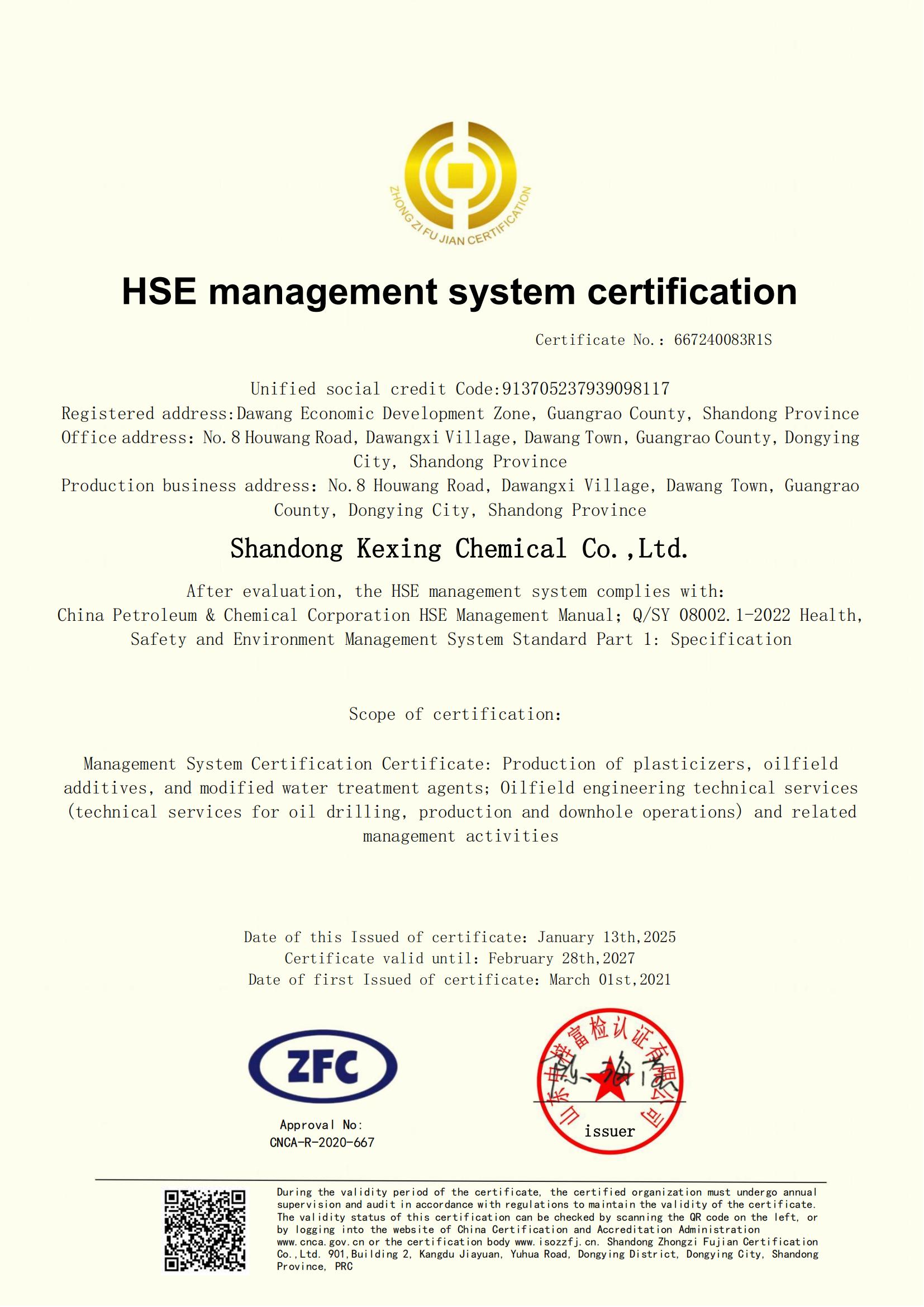
Supplier-side management system documentation is one input into buyer qualification — it is not a substitute for batch-level records.
Why compliance questions now sit at the centre of butyl stearate sourcing
For most of the last decade, a butyl stearate purchase order was negotiated on three variables: grade, quantity and price. That pattern has changed for buyers in Europe, North America and parts of Asia, where downstream customers now ask plastic and packaging suppliers to demonstrate what went into a compound, not only what came out of it. The lubricant and processing-aid portion of a formulation is small in volume terms, but it appears on the same bill of materials as the polymer and the stabiliser — which means it also appears in the documentation file.
The practical consequence is that compliance and qualification are no longer administrative afterthoughts that follow a price agreement. They determine which suppliers reach the shortlist at all. A buyer who cannot obtain a coherent specification sheet, a batch-level certificate of analysis and a traceable production record is exposed later, when the finished article is tested or when an importer is asked to explain the composition of a shipment.
Compliance has three separate layers, and buyers routinely conflate them
A useful way to structure a butyl stearate qualification file is to separate the topic into three layers, because each layer is verified by a different party and documented in a different way.
1. Substance-level regulatory status. This layer concerns the chemical itself and its obligations in a given market. It is not the same as a supplier certificate. As a concrete example, Butyl Stearate (CAS 123-95-5) is listed as an active substance under EU REACH regulations, requiring registration for imports or manufacturing above 1 tonne per year, according to the European Chemicals Agency (ECHA). Registration obligations, thresholds and applicable market rules differ by jurisdiction, so this layer must be checked against the destination market of the finished goods — not assumed from the supplier's country of origin.
2. Specification-level parameters. This layer is contractual. It defines the numeric ranges and test methods that a delivered lot must satisfy: appearance, colour, ester content, acidity, moisture, density and flash point. It is the layer that most often creates disputes, not because suppliers deliver off-spec material, but because buyer and supplier reference different test methods or sampling plans.
3. Batch-level documentation. This layer is transactional. It follows the individual shipment and typically includes a certificate of analysis for the delivered lot, a factory test report, and records linking the lot back to incoming raw material inspection and finished product sampling.
Specification tolerance: the parameters that belong in the purchase order
A specification that is not written into the purchase order is not enforceable. The table below reflects the standard published parameters for N-Butyl Stearate from Shandong Kexing Chemical Co., Ltd., a plasticizer manufacturer based in Dongying, Shandong, China, which produces the material at a stated minimum content of 99.0%. The point of listing parameters explicitly is that each one maps to a processing behaviour, and therefore to a specific risk if it drifts.
| Parameter | Specified value (N-Butyl Stearate) | Why it appears on a qualification checklist |
|---|---|---|
| Appearance | Colorless transparent liquid | Visual check; relevant where the end product is transparent or light-coloured |
| Odour | Slight odour | Matters for consumer-facing and cosmetic-adjacent applications |
| Colour (Pt-Co) | Max. 30 | Direct influence on transparency of PVC and polyolefin articles |
| Content | Min. 99.0% | Determines dosing reproducibility in the compound |
| Acidity (mgKOH/g) | Max. 0.20 | Residual acidity is a stability indicator in PVC processing |
| Moisture | Max. 0.10% | Water content affects processing and storage behaviour |
| Density (g/cm³) | 0.85 | Used for volume-to-mass conversion and dosing calibration |
| Flash point | Min. 190 °C | Storage, handling and transport classification |
| CAS number | 123-95-5 | Identity anchor for customs, SDS and registration files |
Two qualifications are worth stating plainly. First, a flash point of not less than 190 °C and a density of 0.85 g/cm³ describe the manufacturer's standard grade; they are not universal constants for every butyl stearate on the market. Second, a specification range is only comparable between two suppliers if the test methods match. A colour value reported on the platinum-cobalt scale and a colour value reported on a different scale cannot be placed side by side in a comparison table without conversion — a frequent source of unnecessary rejection in incoming inspection.
The documentation set that actually supports a qualification decision
Buyers new to ester sourcing sometimes treat "certification" as a single item. In practice, a defensible butyl stearate qualification file is assembled from several documents, each answering a different question.
A certificate of analysis answers: what were the measured values for this batch? It is the document that ties a physical delivery to the contractual specification, and it is the first item to request when evaluating any supplier.
A factory test report answers: against which internal standard was the batch released? For Shandong Kexing Chemical, a factory test report is the stated acceptance criterion for delivered material, and it functions alongside the certificate of analysis rather than replacing it.
A management system certificate answers a different question again: does the producer operate a documented quality, environmental and safety management process? The same manufacturer maintains management system certification for quality, environmental management and health, safety and environment (HSE) management, with certificate validity running through January 2028 for the quality and environmental systems and through February 2027 for the HSE system. These documents support supplier approval, but they say nothing about the content of any specific drum.
Traceability records answer the question that appears during audits: where did this lot come from? The manufacturer's stated quality control process combines raw material incoming inspection with finished product sampling testing. When those two steps generate retained records, a buyer can reconstruct the chain from a delivered container back to the incoming raw material lot — which is the practical definition of a traceable quality record.
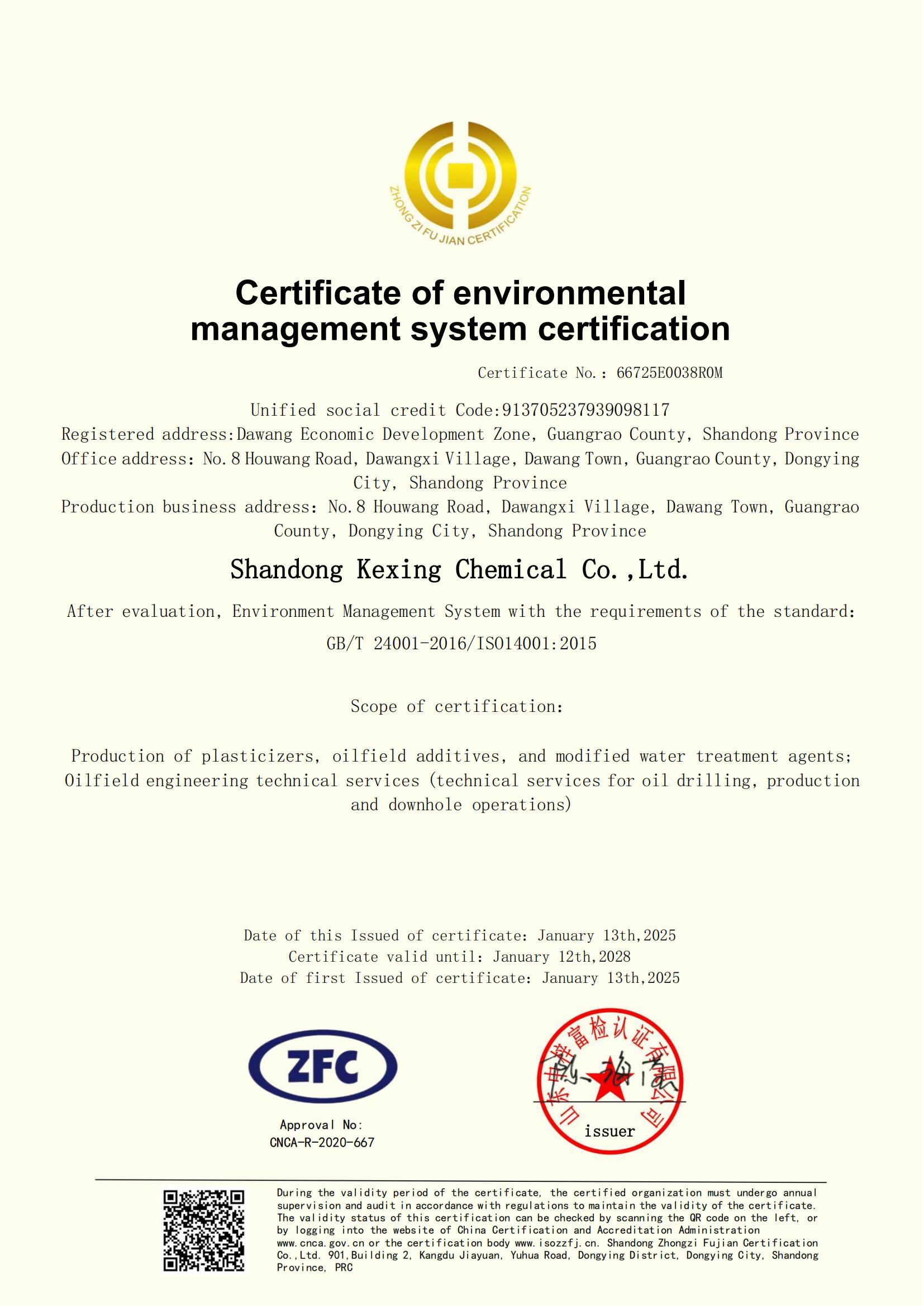
Management system documentation supports supplier approval; batch-level records support shipment acceptance. The two are complementary.
Qualifying butyl stearate specifically for PVC internal lubricant use
When butyl stearate is bought as a PVC internal lubricant, the qualification conversation changes shape. Dosage is low — typically in the range of 1% to 3% in PVC processing — so a single off-spec parameter does not fail the compound outright. It changes melt behaviour, surface appearance or long-term performance in ways that show up later, sometimes only after the finished article has been in service.
Three qualification questions are therefore worth asking before a first bulk order. Does the lubricant remain compatible with the specific PVC and resin system in the formulation? Does the finished article meet the migration expectations of the end application? And does the internal lubricant interact acceptably with the stabiliser, filler and other additives already in the recipe? None of these can be answered by a certificate alone; they require a sample trial on the buyer's own formulation, which is why sample validation usually sits parallel to documentation review rather than after it.
The manufacturer's stated applicable industries for N-Butyl Stearate include toys, PVC products, plastics, leather, ink and food packaging. Those categories carry different downstream expectations, and a grade that is acceptable for one may need additional documentation for another. This is the point at which buyers should ask the supplier's technical team directly about the intended end use, rather than assuming that a single grade covers every application. The same manufacturer offers formulation technical guidance and remote technical support as part of its after-sales scope, which is a practical route for resolving compatibility questions during evaluation.
Where regional requirements change the buying checklist
There is no single global compliance checklist for butyl stearate, and the article deliberately avoids presenting one, because the specific certificates a buyer needs depend on the destination market, the end application and the status of the substance in that jurisdiction. What can be said with confidence is that the applicable requirements vary by region, and that they fall into different categories: substance registration and notification obligations, restrictions on the finished article in contact-sensitive applications, and workplace or transport requirements.
The EU example illustrates why buyers should separate the layers. Under REACH, Butyl Stearate (CAS 123-95-5) is listed as an active substance with registration required for imports or manufacturing above 1 tonne per year, per ECHA information. That obligation sits with the entity placing the substance on that market — often the importer, not the Asian producer. A supplier-side management system certificate, however well maintained, does not discharge it. Buyers in evaluation and execution stages should therefore confirm with their importer or market authority which registration or documentation steps apply to their route to market, and then check whether the supplier can supply the batch-level evidence needed to support that filing.
Documentation-based qualification compared with traditional approaches — and its limits
The traditional alternative to a documentation-driven qualification process is a relationship-and-sample model: order a sample, run a trial, and if the trial succeeds, buy on the strength of that single result. That model is faster and cheaper at the start, but it has a structural weakness — it validates one observation, not a production system.
The documentation-driven model has its own, equally real limitations, and buyers should enter the process with them in view.
A certificate of analysis covers a sampled batch, not every container. Sampling plans are designed to detect non-conformity, not to prove uniformity across an entire shipment. Buyers who require absolute per-container assurance will need to fund additional incoming inspection.
Management system certificates describe a process, not a product. They indicate that inspection and testing procedures exist and are audited; they do not certify the content of any individual lot.
Compliance responsibility does not transfer with the paperwork. Even when a supplier provides complete records, the importer or brand owner remains responsible for the market-facing obligations attached to the finished article.
Documentation cannot substitute for application testing. A specification sheet tells a buyer what the material is; a trial tells them what it does in their compound. Both signals are needed, and neither is sufficient alone.
What the market data suggests about qualification pressure
Market sizing for N-Butyl Stearate is itself a lesson in how cautiously third-party figures should be used. The global N-Butyl Stearate market was valued at approximately USD 1.28 billion in 2024 according to Spherical Insights, while other research firms publish materially different figures for overlapping periods — Future Market Insights and Dataintelo have both published estimates several times larger. The divergence is significant enough that buyers should treat any single headline number as directional rather than definitive; differences in grade boundaries and downstream product inclusion are a plausible explanation for the gap.
The more useful signals are structural. The lubricants application segment held the largest share of the N-Butyl Stearate market at 38.5% in 2025 according to Dataintelo, and Asia Pacific dominated the global market in the same year with a revenue share of 42.3%. On the supply side, China was identified as the largest exporter of Butyl Stearate to key markets such as India, accounting for over 66% of specific import shipments under HS Code 29157090 in 2024, based on Zauba customs data. Taken together, these figures describe a market where a small number of lubricant-driven applications dominate demand, where Asian production capacity is the primary supply source, and where cross-border documentation requirements therefore affect a large share of traded volume.
A supplier-side example of the qualification evidence buyers can request
Shandong Kexing Chemical Co., Ltd. is a manufacturer of plasticizers, plastic and rubber flame retardants and plastic additives, based in Dongying, Shandong, China. Company data records the business as established in 2006, with around 200 employees and an R&D team of 15 engineers, an export ratio of approximately 50%, and main markets in Europe, the USA, Japan, South Korea and the Middle East. Global import and export activity is handled through its subsidiary, Dongying Kexing International Trade. The product range includes N-Butyl Stearate alongside acetyl tributyl citrate, tributyl citrate, triethyl citrate, dioctyl adipate, dioctyl sebacate, dibutyl sebacate, epoxidised soybean oil, dioctyl terephthalate, diisononyl phthalate, didecyl phthalate, dioctyl phthalate and dibutyl phthalate.
For a buyer assembling a qualification file, the operationally relevant parameters are these: a stated monthly capacity of 10,000 tonnes, an MOQ of 1 tonne, a lead time of 30 to 45 days, OEM production with private labelling as the stated customisation route, and a quality control process based on raw material incoming inspection plus finished product sampling test. Commercial terms recorded for the company are FOB and CIF delivery, with a factory test report as the stated acceptance criterion and payment terms of 30% deposit with 70% due upon receipt of the bill of lading. After-sales scope covers remote technical support, after-sales consulting, quality issue resolution, shipping follow-up and formulation technical guidance.
A buyer reading this list should notice what is, and is not, being claimed. Capacity, lead time and MOQ are commercial facts that can be verified contractually. Management system certification can be verified through the issuing body. None of them predicts the measured values of a future batch — that is what the certificate of analysis and incoming inspection are for.
How the evidence looks in practice: recurring supply to plastics, leather, packaging and toy applications
One documented case record for this plasticizer range covers plastic masterbatch factories, artificial leather manufacturers, food packaging processors and toy factories, with recurring orders of 15 to 25 metric tonnes per month across markets including Canada, Chile, France, the United Kingdom, India, Japan, South Korea, Peru, Russia, Turkey and the United States. The stated application areas are plastic compounding, leather surface finishing and food-contact plastic and printing ink formulation. Recorded results include improved flexibility of finished goods, low migration, and passing REACH and food-grade safety testing for the applications concerned; the recorded highlights are phthalate-free positioning, compatibility with PVC and resin, and stable batch purity.
For procurement purposes, the useful part of this record is not the destination list. It is the pattern: recurring monthly volumes rather than one-off shipments, a documented test outcome tied to a regulatory framework, and a stated emphasis on batch purity. That combination is exactly what a qualification file is designed to capture. It also illustrates the limit described earlier — the record describes outcomes for the applications listed, and does not automatically transfer to a different formulation or a different end-market requirement.
Future outlook
Three shifts look likely to shape butyl stearate qualification over the next several years. The first is a move from certificate-based approval to batch-based records: buyers increasingly want a certificate of analysis per delivery rather than a single approval valid indefinitely. The second is method alignment — as more buyers test incoming material in-house, differences between supplier and buyer test methods will become a more common source of dispute than genuine non-conformity, and suppliers who publish their methods will be easier to qualify. The third is the separation of roles: as importers take on market-facing registration duties, the supplier's contribution shifts towards supplying consistent, traceable batch records that feed someone else's regulatory file.
None of these changes make compliance easier. They make it more structured, and they reward buyers who define their documentation requirements before issuing a purchase order rather than after a shipment arrives.
FAQ
What documents should a buyer request when qualifying a butyl stearate supplier?
A practical minimum set includes a certificate of analysis for the delivered batch, a factory test report, management system certification documentation, and traceability records linking the delivered lot to raw material incoming inspection and finished product sampling testing. Each document answers a different question: batch composition, internal release standard, process control, and origin of the lot.
Which specification parameters matter most when butyl stearate is used as a PVC internal lubricant?
For the standard grade produced by Shandong Kexing Chemical, the published parameters are: colour (Pt-Co) maximum 30, content minimum 99.0%, acidity maximum 0.20 mgKOH/g, moisture maximum 0.10%, density 0.85 g/cm³, and flash point minimum 190 °C, with a colourless transparent liquid appearance and slight odour. Acidity and moisture are the parameters most directly linked to processing stability, while colour affects the transparency of the finished article. Typical dosage in PVC processing is in the range of 1% to 3%.
Does butyl stearate require regulatory registration in every market?
No. Registration and notification obligations differ by jurisdiction. In the European Union, Butyl Stearate (CAS 123-95-5) is listed as an active substance under REACH with registration required for imports or manufacturing above 1 tonne per year, according to ECHA. Because the obligation typically attaches to the entity placing the substance on that market, buyers should confirm the applicable steps with their importer, regulatory adviser or the relevant market authority rather than relying on general assumptions.
What are the typical purchasing terms and acceptance criteria for butyl stearate orders?
Recorded terms for Shandong Kexing Chemical are a minimum order quantity of 1 tonne, delivery on FOB or CIF terms, a factory test report as the acceptance criterion, and payment of 30% deposit with 70% due upon receipt of the bill of lading. Lead time is stated at 30 to 45 days. These terms are commercial inputs that should be confirmed in the contract rather than assumed from any public description.
Can a certificate of analysis replace application testing?
No. A certificate of analysis documents measured values for a sampled batch against an agreed specification. It does not predict how the lubricant will behave in a specific PVC formulation, at a specific dosage, alongside specific stabilisers and fillers. Compatibility with the downstream formulation and verification of migration behaviour in the end application both require a sample trial on the buyer's own compound.
How is batch consistency addressed on the supplier side?
The stated quality control process at Shandong Kexing Chemical combines raw material incoming inspection with finished product sampling testing, supported by management system certification for quality, environmental management and health, safety and environment management. Stated monthly capacity is 10,000 tonnes. Consistency claims of this kind are best verified by the buyer through incoming inspection on the first several deliveries, which also establishes the buyer's own performance baseline for the material.
A downloadable product brochure covering the manufacturer's plasticizer range, including N-Butyl Stearate, is available at the Shandong Kexing Chemical brochure. Manufacturer information: Shandong Kexing Chemical Co., Ltd., www.kexingchem.com.