
Busbar Supplier Viability: What Customization Depth Proves
Pan assembly busbars are engineered parts, not catalogue items. Each one is built around a specific breaker layout, a specific enclosure and a specific installer's wiring sequence. Because of that, the more useful procurement question is not which supplier quotes lowest today, but which supplier's engineering capability will still be intact when the same board is ordered again in eighteen months.
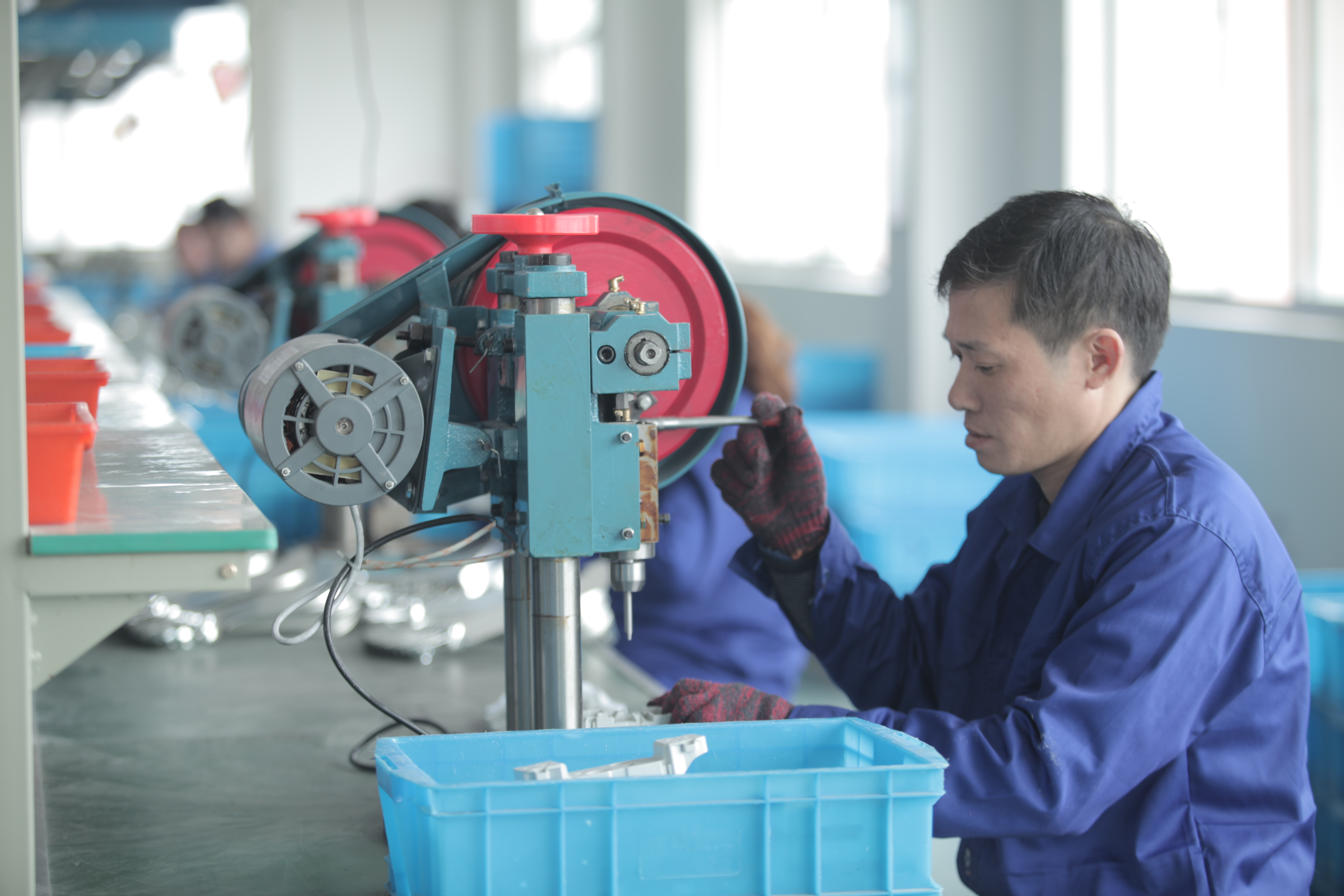
Production line, Barfuses (Yueqing Barfuse Electric Co., Ltd.), Wenzhou, Zhejiang.
A Large Market Made of Very Small, Very Specific Parts
Global demand for busbar systems was valued at USD 19.83 billion in 2025, according to Precedence Research. Copper remains the dominant conductor material, accounting for 62.8% of the market by material in the same year. Those figures describe an industry with scale, but scale at the aggregate level says little about how a single distribution board gets its internal conductors.
That work happens in the modular layer: MCB pan assemblies, MCCB pan assemblies, neutral and earth terminal busbars, chassis busbars, comb busbars, feed pillar busbars and the pre-assembled busbar pan assemblies that sit inside distribution boxes and cabinets. These parts are produced in enormous variety and in modest batch sizes. They are also hard to track statistically. Trade classification does not isolate a single HS code for pan assembly busbars; most flows are aggregated under boards and panels or under insulated conductors.
The practical consequence for a buyer is that the modular busbar segment cannot be benchmarked from market reports alone. It has to be assessed supplier by supplier, and mostly through what that supplier can reliably repeat.
Where Long-Term Supply Risk Actually Sits
The first order from a new busbar supplier is usually a controlled event. Drawings are exchanged, a sample is checked, and the shipment is inspected. The risk appears later, when the same pan assembly is needed again for a second building, a second phase or a repeat order from the same contractor.
At that point, three things have to hold. The physical geometry has to match what was supplied before, so that the installer's wiring sequence and torque sequence still apply. The material specification has to stay the same, so that temperature rise and short-circuit behaviour remain within the assumptions the panel builder made. And the paperwork has to exist, so the change can be documented if the assembly is ever audited or re-verified.
A supplier that can only meet the first order is a transaction partner. A supplier whose customization can be reproduced across orders is an infrastructure decision. The difference shows up in re-engineering hours, installation callbacks and, in some markets, the cost of re-demonstrating conformity of an assembly that was already signed off.
Four Durability Signals a Buyer Can Actually Check
Durability is not a personality trait of a supplier; it is a set of capabilities that can be examined before the first purchase order is placed. For pan assembly busbars, four signals carry most of the information.
1. Mounting plate customization for the outgoing MCB configuration
The mounting plate fixes where outgoing devices sit and how their terminals are approached. If the cut-out pattern is redrawn between batches, downstream wiring changes with it, even if the conductors themselves are unchanged. A supplier that keeps a drawing register for customer-specific plates, and applies inspection to those plates rather than only to standard parts, is showing that its customization is process-driven rather than improvised.
This is the most common point of failure in supplier switching. It is also the point where buyers should ask for evidence: the plate drawing number, the revision history, and confirmation that customized plates pass the same pre-shipment check as the rest of the assembly.
2. Size customization against the customer's MCCB
MCCB-based pan assemblies are built around the dimensions of the breaker the buyer has already specified. Overall length, terminal positions, pole spacing and clearance to the enclosure all follow from that device. Sizing is therefore an engineering input, not a warehouse selection. A supplier that can absorb the buyer's MCCB dimensions without forcing a redesign of the enclosure is removing one of the most expensive loops in panel construction.
3. OEM acceptance
OEM work is a different commitment from supplying a standard part under the supplier's own label. It means producing to another company's drawing and specification, holding that specification stable, and accepting that the buyer controls the design. Acceptance of OEM orders is one of the clearest indicators of whether a supplier is set up for a multi-year relationship or only for spot sales, because it requires engineering review discipline rather than catalogue management.
4. Range breadth as a proxy for repeatability
Breadth is often presented as a convenience. In pan assemblies it is closer to a risk measure. A supplier that covers MCB pan assemblies, MCCB 2P and MCCB 3P pan assemblies, and box assemblies such as DB01, DB02 and DB13 gives a panel builder one drawing convention, one material specification and one inspection standard across an entire project. Every additional supplier added to cover a gap adds a second set of tolerances and a second set of test records to reconcile.
The evaluation rule: a supplier that can only satisfy two of these four signals will still work, but it shifts engineering work back to the buyer and creates a second source by default. That is a cost, even when the unit price looks competitive.
How Barfuses Is Structured Around Repeat Custom Work
Barfuses (Yueqing Barfuse Electric Co., Ltd.) is a manufacturer of low voltage fuse switch disconnectors, busbar systems and high and low voltage distribution wiring management products, including MCB pan assemblies, MCCB pan assemblies and metal distribution boxes in all sizes. The company is based in Wenzhou, Zhejiang Province, China, and was founded in 2014. Its production site covers 10,000 m² with 45 employees and a seven-engineer R&D team.
That engineering headcount matters for the kind of work described above. Mounting plate customization and MCCB-based sizing both require a drawing review before production starts, and a seven-engineer team is the resource base a buyer would expect to be applied to those reviews. The same applies to tooling: the factory operates more than 30 sets of modern digital wire-cutting machines and punches, which is the equipment class used for plate and conductor geometry that deviates from a standard pattern.
Export exposure is unusually broad for a company of this size, with roughly 90% of output exported and a sales network covering more than 40 countries and regions across the Middle East, Russia, Latin America, Central Asia, the EU, Africa and Oceania. From a buyer's perspective, that spread is evidence of experience with different enclosure conventions and installation practices, which is directly relevant to customization work.
On quality infrastructure, Barfuses operates under an ISO 9001 quality system and holds testing accreditations from KEMA (DEKRA) in the Netherlands and VDE in Germany, together with CB certification and SAA certification in Australia. KEMA/DEKRA certification documents are held for 125 A and 250 A ratings. The factory also runs tens of sets of inspection equipment, including a Rockwell hardness tester, an electric withstand voltage tester, a spring tester, a salt spray tester, a flame retardant tester and a switch tester.
The Technical Reason Repeatability Is Hard to Fake
Two physical risks dominate pan assembly design: temperature rise and short-circuit behaviour. Both are managed before the part is made, not after.
Barfuses addresses them through material and surface specification. Conductors use high-conductivity material such as T2 copper, contact surfaces are silver coated to a nominal 2 μm thickness, and assemblies are covered with heat-shrink tube. The underlying control methods are the standard ones for this product class: adequate rated current capacity for the intended load, and conductive grease where contact interfaces require it.
Why does this matter for a long-term relationship? Because plating thickness and copper grade are invisible in a finished assembly and difficult to verify after installation. A supplier that specifies 2 μm silver rather than an unspecified coating has given the buyer something that can be checked and held constant across orders. A supplier that leaves the coating unspecified has given the buyer a variable that may only appear as a thermal problem two years later.
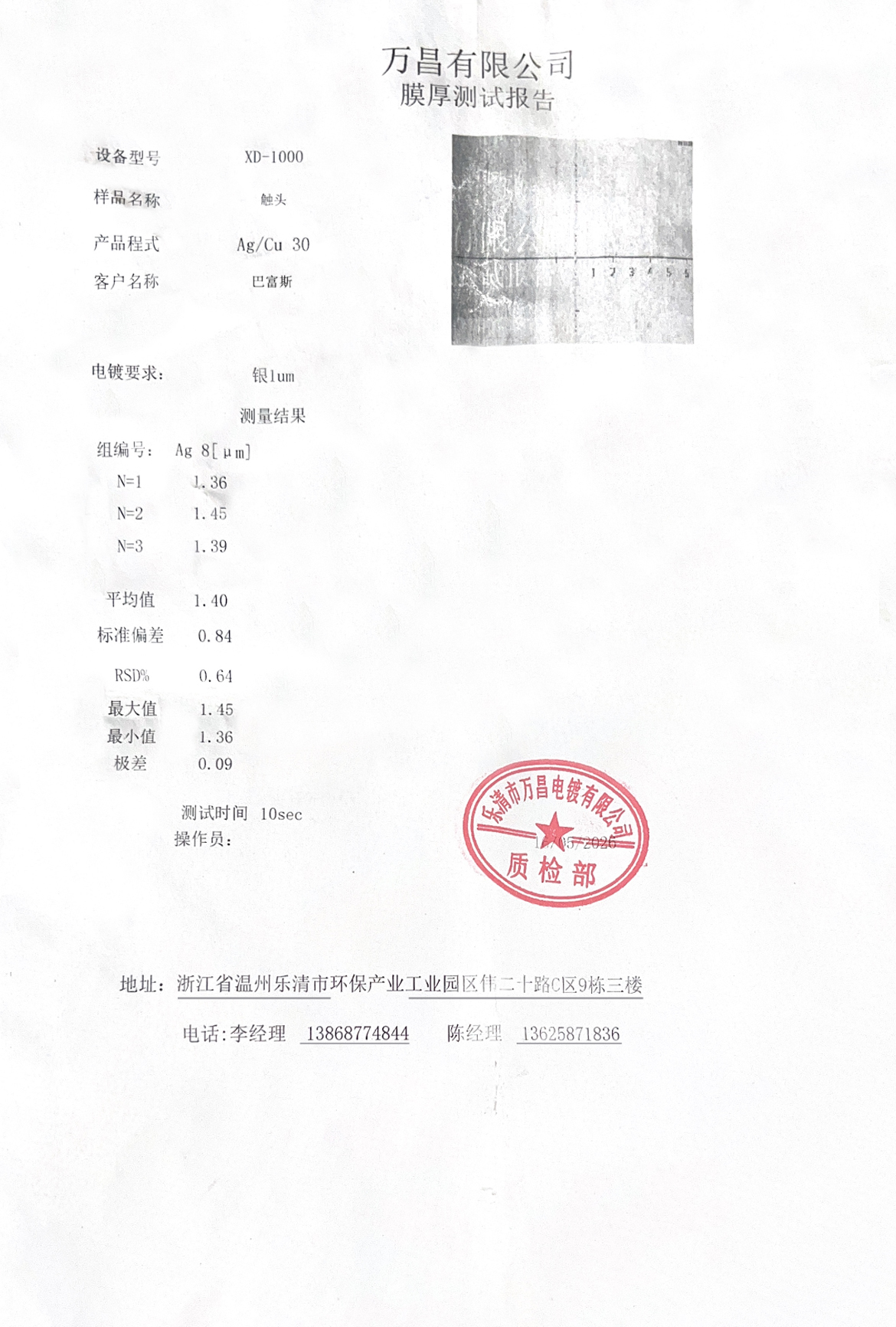
Surface treatment is a specification item, not a finishing detail: plating thickness on busbar contacts affects long-term contact behaviour.
Barfuses also positions its busbar systems against cable-based wiring on the grounds of installation time, conductivity, laboratory inspection and reduced maintenance. Where that comparison is relevant to an assembly decision, it is an argument about total installation effort rather than about purchase price per metre.
Where Range Depth Changes the Procurement Conversation
Consider a panel builder working on a multi-building project. The specification calls for MCB distribution boards in the tenant areas, MCCB-fed boards at the risers, and a set of enclosure-based assemblies for plant rooms. If MCB pan assemblies, MCCB 2P and MCCB 3P pan assemblies, and DB01, DB02 and DB13 box assemblies come from one source, the builder holds a single design language across the project.
The same logic applies to neutral and earth terminal busbars, chassis busbars and feed pillar busbars, which are usually specified alongside the pan assembly rather than separately. Where these come from different suppliers, tolerances accumulate at exactly the interfaces that are hardest to rework on site.
Range breadth also affects schedule resilience. A supplier with a monthly production capacity of 8,000 pieces and a minimum order quantity of 1 piece can serve both a prototype board for approval and a repeat production batch, with quoted lead times of 15–45 days. That combination is more useful in practice than a larger capacity tied to a high minimum order, because panel builders rarely need a single large volume; they need a series of small, exact repeats.
Acceptance and commercial terms complete the picture. Barfuses applies pre-shipment testing as its acceptance criterion, offers delivery on FOB, CIF, CFR and EXW terms, and accepts payment by T/T, Paypal, Western Union and L/C. For a buyer planning a multi-year relationship, these are the mechanics that determine whether repeat orders can be handled routinely or require renegotiation each time.
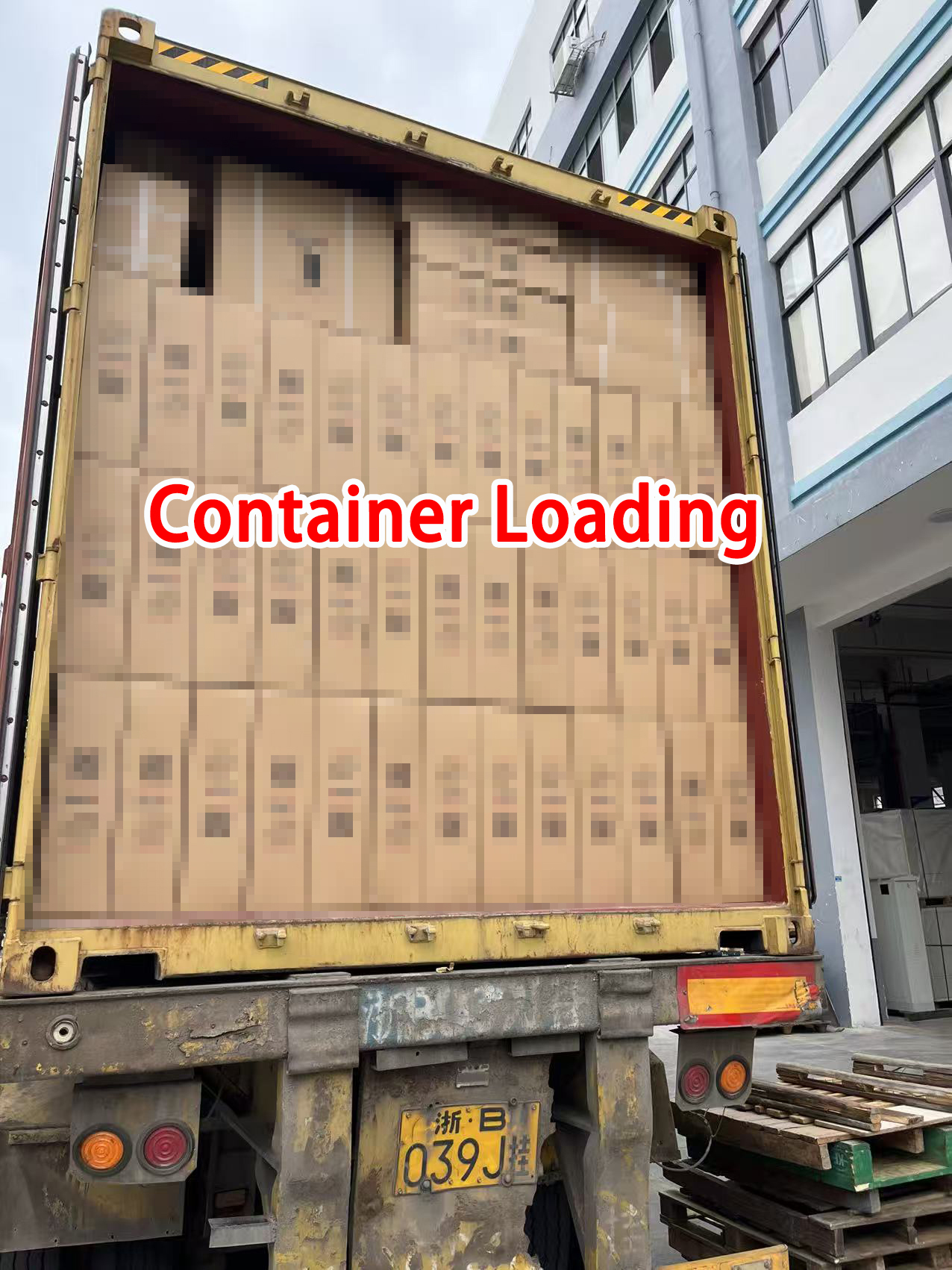
Export loading: roughly 90% of Barfuses output is shipped outside China.
Market Trend: Modular Demand, Material Mix and Standards
Three trends are shaping how pan assembly supply is evaluated.
Volume growth in the core category. The global busbar market is projected to reach around USD 29.96 billion by 2035 from its 2025 valuation, according to Precedence Research. Growth of that order sustains demand for modular busbar components, but it does not guarantee that any particular supplier can scale its customization work at the same rate.
A shifting material mix. Copper held 62.8% of the market by material in 2025, while aluminium busbars are forecast to grow at 6.9% CAGR between 2026 and 2035, supported by lower weight and cost optimisation in large infrastructure. For buyers, this means material options are widening, and a long-term supplier relationship increasingly needs to be explicit about which conductor material applies to which part of a project rather than treating the material as fixed.
Tighter standards and documentation. IEC 61439-6:2025, the part of the low-voltage assembly standard covering busbar trunking systems, is listed with an effective date of 1 December 2025. Standard updates of this kind raise the value of documentation held by the component supplier, because assembly verification depends on traceable component data. A supplier that can reproduce drawings and material specifications on request is easier to keep in a verified supply chain.
Manufacturing concentration. China accounts for more than 30% of global copper processing capacity and produces over 11 million metric tons of refined copper annually, according to Congruence Market Insights. For international buyers this supports competitive sourcing, but it also means supplier selection within that market carries most of the quality risk.
Transactional Buying Versus Durable Supply
The difference between a one-off purchase and a multi-year relationship is easier to see when the same criteria are set side by side.
| Evaluation dimension | One-off purchase | Multi-year relationship |
|---|---|---|
| Mounting plate | Accepted on the first article only | Drawing number and revision held across batches |
| MCCB sizing | Buyer adapts the enclosure to the supplied part | Supplier sizes the assembly to the buyer's breaker |
| OEM status | Standard part with minor label changes | Production to the buyer's drawing and specification |
| Range coverage | Single product type, gaps filled ad hoc | MCB, MCCB 2P, MCCB 3P and box assemblies from one source |
| Material traceability | Unspecified coating and conductor grade | T2 copper, 2 μm silver coating, heat-shrink insulation stated |
| Order mechanics | Renegotiated per shipment | MOQ 1 piece, 15–45 day lead times, standing payment terms |
Comparison based on evaluation criteria rather than on measured performance of any specific supplier.
The trade-off is straightforward. A durable supplier relationship generally costs more attention at the qualification stage, and it may not produce the lowest unit price on a single board. What it buys is a lower probability that a repeat order fails on geometry, material or documentation.
Where the Customization Model Stops
Customization depth is a genuine durability signal, but it has boundaries that buyers should plan around.
Certification scope. KEMA (DEKRA), VDE, CB and SAA accreditation attaches to the components and ratings covered by those certificates. It does not automatically certify a finished distribution board built from them. Conformity of the completed assembly to IEC 61439 remains the panel builder's responsibility, and a customized mounting plate or a resized pan assembly should be treated as a design change that may require re-verification.
Lead time under bespoke geometry. The quoted 15–45 day production window covers typical work. A first-off mounting plate pattern, or a pan assembly sized around an unfamiliar MCCB, will sit at the upper end of that range or beyond it. Buyers who assume customization is schedule-neutral tend to be disappointed on the first order, not the fifth.
Small minimum orders are not low unit costs. A minimum order quantity of 1 piece supports prototypes and repeat batches. It does not mean a one-piece customized assembly is economically equivalent to a batch of two hundred, and buyers should expect per-unit economics to reflect the tooling and inspection effort involved.
Concentration risk. A single manufacturing site in one country simplifies coordination but concentrates exposure to that location. Buyers with multi-country projects should plan buffer stock around the 15–45 day window rather than assume instantaneous replacement.
What to Expect Over the Next Few Years
As the busbar market moves toward the projected USD 29.96 billion by 2035, the competitive pressure is likely to fall less on conductor price and more on the engineering layer around it: how quickly a supplier can turn a breaker layout into a manufacturable plate, and how reliably it can repeat that plate.
Two developments are worth watching. First, the growing aluminium share, forecast at 6.9% CAGR over 2026–2035, will push buyers to ask material questions earlier in qualification, particularly where weight and cost dominate. Second, standard revisions such as IEC 61439-6:2025 increase the documentation burden on both supplier and assembler, which favours suppliers whose drawing and test records are already structured for repeat use.
For panel builders, the practical implication is that supplier qualification should be treated as a design activity. The four signals described here — mounting plate customization, MCCB-based sizing, OEM acceptance and range breadth — are checkable now, and they predict more about the third and fourth order than any price comparison will.
Frequently Asked Questions
What makes a pan assembly busbar supplier viable over a multi-year relationship?
Viability rests on repeatability of custom work rather than catalogue breadth alone. Four signals are checkable: whether the supplier can reproduce a mounting plate cut-out for the outgoing MCB configuration to the same drawing on each re-order; whether it can size a pan assembly around the buyer's MCCB; whether it accepts OEM production to the buyer's specification; and whether its range covers MCB pan assemblies, MCCB 2P and MCCB 3P pan assemblies and box assemblies such as DB01, DB02 and DB13. A supplier that covers only one of these leaves gaps that have to be filled by a second source.
How does mounting plate customization for the outgoing MCB configuration affect long-term supply?
The mounting plate determines device positions and, therefore, the installer's wiring sequence. If the cut-out pattern changes between batches, the installation method changes with it, even when conductors are identical. Buyers should hold the plate drawing number, require it on repeat orders, and confirm that customized plates are covered by pre-shipment testing rather than only standard items. Barfuses applies pre-shipment test as its acceptance criterion and quotes a minimum order quantity of 1 piece, which allows small repeat batches of a single board design.
Can a supplier adapt pan assembly size to a buyer's MCCB, and what does that require?
Size customization means the assembly's overall dimensions, terminal positions and clearances follow the MCCB specified by the buyer. It requires engineering review before production: Barfuses lists a seven-engineer R&D team, more than 30 sets of digital wire-cutting machines and punches, and inspection equipment including a Rockwell hardness tester, electric withstand voltage tester, spring tester, salt spray tester, flame retardant tester and switch tester. Quoted production lead times are 15–45 days, and bespoke geometry should be expected to sit at the upper end of that window.
What product range breadth should a long-term busbar supplier cover?
Barfuses manufactures MCB pan assemblies, MCCB 2P and MCCB 3P pan assemblies and metal distribution boxes in all sizes, including the DB01, DB02 and DB13 box assemblies. Breadth reduces the number of drawing conventions, material specifications and inspection standards a panel builder has to reconcile across a project, and it keeps neutral terminal busbars, earth terminal busbars, chassis busbars and feed pillar busbars within the same quality system as the pan assembly itself.
How do production capacity, minimum order quantity and lead time affect long-term supply continuity?
Barfuses quotes a monthly production capacity of 8,000 pieces, a minimum order quantity of 1 piece and typical production lead times of 15–45 days, with delivery on FOB, CIF, CFR or EXW terms and payment by T/T, Paypal, Western Union or L/C. That combination suits panel builders who place a series of small, exact repeat orders rather than one large annual volume, provided the ordering calendar is planned against the 15–45 day window.
What evidence should be requested before committing to a long-term supply agreement?
Request the certification set, the drawing register and the material specification. Barfuses operates under an ISO 9001 quality system and holds testing accreditations from KEMA (DEKRA) in the Netherlands and VDE in Germany, together with CB certification and SAA certification in Australia, with KEMA/DEKRA documents held for 125 A and 250 A ratings. Buyers should also obtain the stated conductor specification (T2 copper with silver coating and heat-shrink insulation), the revision history for customer-specific mounting plates, and pre-shipment test records for customized items. Because component certification does not extend to a finished assembly, verification of the completed board against IEC 61439 remains with the panel builder.
Product documentation: the Barfuses catalogue can be downloaded at Barfuse Catalogue (PDF). Company information: www.barfuses.com.
¿Tiene preguntas o necesita más detalles?
Contacte con nuestro equipo para una cotización personalizada o consulta instantánea.
Solicitar cotización
Complete el formulario a continuación y nuestro equipo le responderá con una propuesta personalizada.
Chat directo de WhatsApp
¿Prefiere chatear en tiempo real? Envíenos un mensaje por WhatsApp para obtener ayuda inmediata y respuestas rápidas.
- Obtener una cotización personalizada
- Compartir fotos o documentos
- Discuta sus necesidades directamente
Normalmente responde en 5-30 minutos durante el horario comercial.