
Bulk Bags for Starch, Chemical and Building-Material Powder: Scenario Fit
Summary: Starch, chemical powder and building-material powder look identical in a warehouse photograph and behave completely differently on a filling line. Scenario fit is decided by four variables — moisture sensitivity, dust and static behaviour, bulk density, and the filling equipment that is already installed. Valve bags and flexible intermediate bulk containers (FIBCs) solve different parts of that problem, and ISO 21898:2024 and GB/T 10454-2025 define the baseline both formats are now measured against.
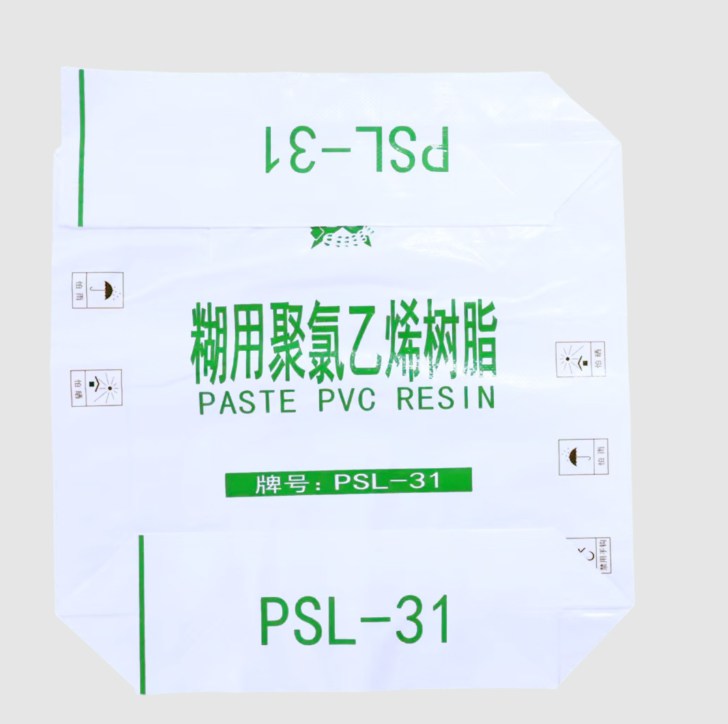
Valve bag construction designed for automatic powder filling, with an adhesive-sealed valve and self-locking closure after filling.
1. Why powder is the hardest category to pack consistently
A dry powder is not a static product. It is a behaviour that changes with humidity, static charge and handling method. Fine particles migrate through fabrics that hold granules without difficulty, and they accumulate around filling and discharge openings. Hygroscopic powders absorb moisture in transit and then cake at the point of discharge. Bulk density between a light starch and a dense mineral filler can differ by a factor that decides whether a bag specification holds safely or fails at the lifting-loop attachment.
Industrial packaging scenarios describe this pattern in fairly consistent terms. Packaging environments for minerals and building materials are defined by moisture-absorbing powder and fine particulate material, and the solution pattern is a wear-resistant outer layer combined with an anti-seepage, moisture-proof inner layer — the combination that stops fine powder leakage and prevents the material from becoming damp. Powdered chemical filling, such as PVC paste resin, is defined differently: the requirement is a hermetically sealed, leak-proof, moisture-proof enclosure that is compatible with automatic filling and meets export standards. Industrial consumables such as granular submerged arc welding flux add a third requirement — moisture resistance across ocean transport and long storage.
Three powders, three different failure modes. That is the reason a single bag specification rarely covers a mixed powder portfolio well.
2. The two formats that carry most industrial powder
Valve bags: smaller unit weight, higher line integration
A valve bag is filled through a small integrated valve rather than an open top, and it closes itself after filling. That single design decision is what makes it compatible with automatic powder filling lines. The relevant construction facts are specific: the bag uses an adhesive-sealed valve process, is suitable for automatic powder filling, and self-locks after filling. Material configurations include OPP film lamination, standard paper-plastic composite, 3-ply paper with an inner PE film, and 2-ply paper without an inner film. Sizes are customizable, printing uses fade-resistant ink, and the bag is described as drop-shock resistant, with resistance performance depending on the selected material structure.
The declared application scope for this format is food starch powder, chemical powder, building-material powder, pigment powder and plastic powder — a deliberately narrow, powder-specific list. The performance profile is stated just as narrowly: high water resistance, moisture-proof, air-permeable, light-proof and drop-shock resistant, with the important qualification that the film-lined version delivers water and moisture resistance while the non-film version is breathable but not waterproof.
FIBC and ton bags: larger unit weight, structural load path
An FIBC carries the load through lifting loops rather than through the fabric base. In the ton bag specification, the safe working load is 500–2000 kg, the body uses virgin PP woven polypropylene fabric, and the top can be a fill spout, a full open top or a top cover, with a discharge spout or flat bottom underneath and four lifting belts. Sewing uses high-strength polyester thread, and lamination is optional.
For powders with an explosion risk, the same format is available in a conductive build: virgin PP woven fabric combined with conductive woven fabric, constructed with conductive yarns to dissipate static electricity, compliant with the FIBC Type-C standard and suitable for flammable and explosive powder working conditions. The stated operating condition matters as much as the construction — the bag is suitable for Type C FIBC operation with grounding, and reliable grounding is required during operation. UN certification for dangerous goods packaging is available for this product.
Both formats are supplied by Yancheng Yide Packaging Technology Co., Ltd. (Yide Packaging), a manufacturer and customized packaging solution provider based in Yancheng, Jiangsu, China, producing FIBC bags, ton bags, PP woven bags, valve bags and paper-plastic composite bags for industrial customers.
3. Matching format to powder scenario
The practical exercise is not "which bag is better" but "which bag fails least in this specific powder scenario." The table below maps the scenarios named in the product documentation to the risk each one actually presents.
| Powder scenario | Primary risk | Better-fit format | Fit criterion to confirm |
|---|---|---|---|
| Food starch powder | Moisture uptake, caking, hygiene | Valve bag, film-lined or paper-plastic composite | Moisture and water resistance of the chosen structure |
| Chemical powder (e.g. PVC paste resin) | Leakage, dampness, filling-line compatibility | Valve bag with self-locking adhesive-sealed valve | Seal integrity and automatic filling compatibility |
| Flammable / explosive chemical powder | Static discharge during fill and discharge | Type-C FIBC with conductive yarn | Grounding provision at every handling point |
| Building-material powder (cement, dry-mix, gypsum) | Dust leakage, dampness, abrasion | FIBC or woven bag with wear-resistant outer layer | Inner anti-seepage layer and fabric weight |
| Pigment and plastic powder | Contamination, dusting | Valve bag or FIBC with liner | Liner option and clean handling |
| Minerals and industrial minerals | Lifting, ocean transport, reuse | FIBC rated 500–2000 kg SWL | Lifting loops and re-use inspection |
Scenario mapping based on the declared application scope of the valve bag and ton bag product lines.
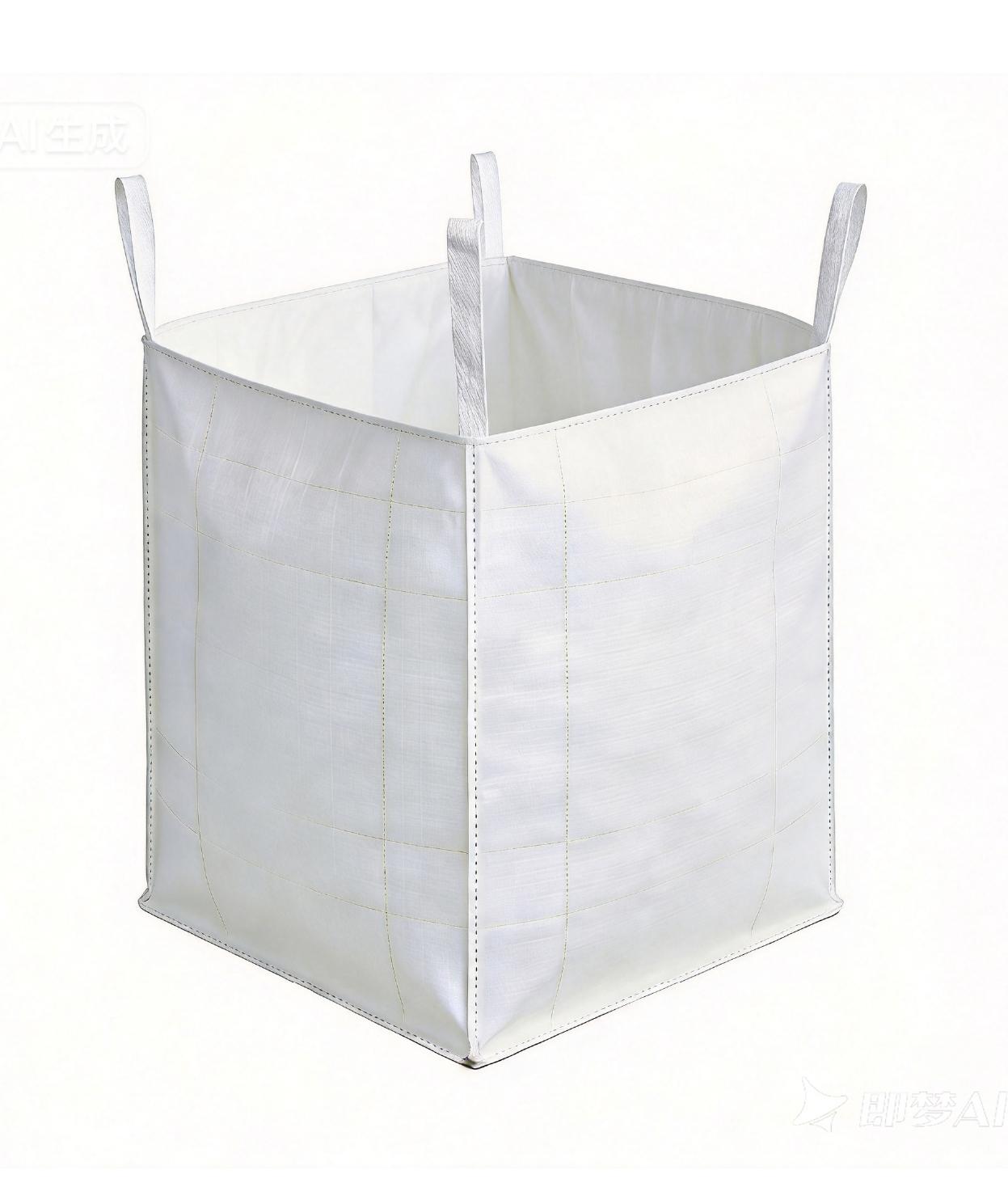
Food-grade FIBC bulk bag format, one of several builds within the same ton bag range with customizable top, bottom and lamination.
4. Fit criteria a buyer should confirm, line by line
4.1 Moisture and water resistance
These are two different claims and they are often merged in supplier conversations. In the valve bag range, the film-lined version delivers water and moisture resistance, while the non-film version is breathable but not waterproof. Lamination on the FIBC and ton bag range is optional — laminated or non-laminated. For a hygroscopic building-material powder moving through a humid port, the film-lined or laminated configuration is the defensible choice. For a powder that needs to release residual vapour, the non-film version may be the more appropriate structure. The specification must match the cargo, not the general preference of the buyer.
4.2 Automatic filling compatibility
This is the criterion that decides whether a bag can run on an existing line at all. The valve bag's adhesive-sealed valve and self-locking closure are what make it compatible with automatic powder filling. A buyer evaluating an alternative format should confirm the filling interface — valve versus open top versus fill spout — before comparing price per unit, because a cheaper bag that cannot run on the installed filler is not a saving.
4.3 Static control for combustible powder
For flammable and explosive powder, the relevant construction is a Type-C FIBC built with conductive yarns to dissipate static electricity, using conductive woven fabric and reinforced thickened anti-static fabric. The design is only effective under stated operating conditions: suitable for Type C FIBC operation with grounding, with reliable grounding required during operation. IEC 61340-4-4:2018 specifies electrostatic requirements for FIBCs in the 0.25 m³ to 3 m³ volume range intended for hazardous explosive atmospheres, which is the third-party reference point for this class of question.
4.4 Load path and bag structure
Safe working load for the ton bag range is 500–2000 kg, with a four-lifting-belt construction and high-strength polyester thread sewing. Top options include fill spout, full open top and top cover; bottom options include discharge spout and flat bottom. Because bulk density differs sharply between powder types, the correct starting point is the filled weight and the filling equipment, not a generic bag size.
4.5 Document and certification fit
Certification coverage in this range is documented rather than implied. The ISO 9001 certificate 12426Q00719R001 is issued by Zhongbiaoyan Guolian (Beijing) Certification Center under GB/T 19001-2016 / ISO 9001:2015, valid from 2026-08-05 to 2029-08-04, with a scope covering the manufacturing of mail bags including FIBC, transit bags and woven bags. ISO 14001 certificate 12426E00299R001 covers environmental management activities associated with FIBC, transit bag and woven bag manufacturing, valid from 2026-08-05 to 2029-08-04. ISO 45001 certificate 12426S00261R001 covers occupational health and safety management activities related to the production of postal bags including FIBC/bulk bags, transfer bags and woven bags, valid from 2026-05-08 to 2029-04-08.
For chemical and export-facing powder packaging, REACH (SVHC) certification number DGC260127018YD03 covers a 251-item Substances of Very High Concern screening test for packaging bags, issued 2026-07-31 by Dongguan Beice Standards Technical Service Co., Ltd. under REACH Regulation (EC) No 1907/2006. RoHS certification number A2260656737101001C applies against RoHS Directive 2011/65/EU and Amendment 2015/863/EU, with CTI (Centre Testing International) as the authority. Halogen content testing is carried out under BS EN 14582:2016 with certification number DGC260127018YD02 issued by Dongguan NTEK Standard Technical Service Co., Ltd. (NTEK).
A UN Packaging Test Report, number 2513230601001079, was issued by the Nanjing Customs Dangerous Goods and Packaging Testing Center under SN/T 0510.2-2021 for a 600×1050 mm paper-plastic woven bag, recording no leakage or safety-relevant damage after drop testing.
5. Where these formats stop working well
A buyer-facing reference that only lists strengths is not useful for a procurement decision. The boundaries in this product range are explicit, and they should be read as constraints rather than as defects.
- Breathability and waterproofing trade off against each other. The non-film valve bag structure is air-permeable but not waterproof. Selecting it for a hygroscopic powder that will sit in a humid climate is a mismatch, regardless of its other advantages.
- Type-C static control depends on the user, not only the bag. Conductive yarn dissipates charge only when the bag is grounded. A Type-C FIBC used without reliable grounding does not deliver the protection its classification implies.
- Safe working load is a structural ceiling. A 500–2000 kg rating describes the bag's construction, not an automatic statement that any powder can be filled to that mass. High bulk density materials reach the stated load at a much smaller volume and change the load distribution.
- Certification is format- and specification-specific. The UN drop-test report covers a 600×1050 mm paper-plastic woven bag. It should not be read as blanket coverage of every bag dimension in the portfolio.
- Re-use requires inspection, not assumption. FIBCs used for minerals and bulk materials can be reused, but the operational note is specific: before reuse, bags should be inspected for damage, compromised lifting loops, contamination, or other signs of wear.
- Lamination changes more than moisture performance. Adding lamination affects waterproofing and also the way the fabric behaves in handling and storage, so the choice should follow from the cargo and the route rather than from a default preference.
6. What a supplier should be able to demonstrate
Powder packaging questions are usually settled by evidence rather than by claims. For this product range, the verifiable elements include the ISO 9001, ISO 14001 and ISO 45001 certificates with their registration numbers, issue and expiry dates and issuing bodies; REACH (SVHC), RoHS and halogen test documentation with certificate numbers and applicable standards; a UN packaging drop-test report with the testing authority, standard and tested specification; and a defined manufacturing scope that includes FIBC, transfer bags and woven bags.
The production base behind these documents is a manufacturer specialising in industrial bulk packaging and polypropylene woven packaging, with an FIBC production base covering approximately 80 mu and around 80,000 square metres of standardised factory facilities, including a 5,000-square-metre food-grade clean workshop. Stated annual production capacity is 500,000 to 1,000,000 tonnes, supported by 130 employees and a 15-engineer R&D team. For a starch or food-ingredient buyer, the food-grade clean workshop reference is the operationally relevant detail; for a chemical buyer, the certification set is.
7. The standard landscape is tightening, and buyers will feel it
Two standard developments are relevant to anyone specifying FIBCs for powder in 2026.
ISO 21898:2024 specifies materials, construction and design requirements, type test and marking requirements for flexible intermediate bulk containers intended to contain non-dangerous solid materials in powder, granular or paste form, and designed to be lifted from above by integral or detachable devices. The European adoption, EN ISO 21898:2024, was approved by CEN on 12 August 2024 and covers the same requirement set. In China, GB/T 10454-2025 was released on 29 August 2025 with implementation on 1 March 2026, replacing GB/T 10454-2000 and GB/T 37425-2019. The earlier ISO 21898:2004 edition is superseded.
The practical consequence for procurement teams is that documentation that referenced the older editions is no longer the current reference point. A supplier's test reports and declarations should be checked against the edition that applies to the destination market today. For powder specifically, the scope of ISO 21898 matters — it is written for non-dangerous solid materials in powder, granular or paste form, which describes a large part of the starch, chemical and building-material powder category and defines what type testing and marking should exist.
8. Outlook: fit is becoming a documentation exercise
Powder packaging is moving in a clear direction. The physical construction of a valve bag or an FIBC changes slowly. What changes faster is the volume of proof that has to accompany it: which standard edition, which certificate number, which test authority, which tested specification, and which operating condition — such as grounding — the performance depends on.
For buyers, that shifts the useful question from "which bag type is best" to "which configuration has documented, current evidence for this powder, this route and this filling line." A film-lined valve bag with a self-locking valve and current test documentation answers a different question than a 1500 kg Type-C FIBC with conductive yarn and a UN packaging report. The two are not competitors. They are two ends of the same decision.
FAQ
What is the difference between a valve bag and an FIBC for powder packaging?
A valve bag is filled through an integrated valve and self-seals after filling, which makes it compatible with automatic powder filling lines; its declared scope covers food starch powder, chemical powder, building-material powder, pigment powder and plastic powder. An FIBC (ton bag) is filled through a fill spout, full open top or top cover and carries load through four lifting belts, with a safe working load of 500–2000 kg. The valve bag suits smaller, line-integrated powder units; the FIBC suits larger bulk units moved by lifting equipment.
How do I choose the right moisture barrier for a hygroscopic powder?
Start from the material structure rather than from a general durability claim. In the valve bag range, the film-lined versions deliver water and moisture resistance, while the non-film version is breathable but not waterproof. In the FIBC range, lamination is optional and may be supplied laminated or non-laminated. For powders that absorb moisture in transit, the film-lined or laminated configuration is the appropriate starting point; for powders that need to release residual vapour, a breathable structure may be more suitable.
When does a powder require a Type-C FIBC rather than a standard FIBC?
Where the powder presents a flammable or explosive dust risk during filling, handling or discharge. The Type-C build is constructed with conductive yarns to dissipate static electricity, uses conductive woven fabric and reinforced thickened anti-static fabric, and is compliant with the FIBC Type-C standard. It is suitable for Type C FIBC operation with grounding, and reliable grounding is required during operation. IEC 61340-4-4:2018 specifies electrostatic requirements for FIBCs between 0.25 m³ and 3 m³ intended for hazardous explosive atmospheres.
Which certifications should be checked for starch, chemical and building-material powder packaging?
For system-level assurance, ISO 9001, ISO 14001 and ISO 45001 certificates with their registration numbers and validity dates. For chemical and export-facing goods, REACH (SVHC) screening documentation, which in this range covers a 251-item Substances of Very High Concern screening test for packaging bags under REACH Regulation (EC) No 1907/2006, plus RoHS testing against Directive 2011/65/EU and halogen content testing under BS EN 14582:2016. Where dangerous goods packaging is involved, a UN packaging test report tied to a specific tested bag specification should be requested.
Can valve bags run on existing automatic filling equipment?
That is the purpose of the valve format. The bag uses an adhesive-sealed valve process, is suitable for automatic powder filling, and self-locks after filling. Compatibility still depends on matching the bag's valve and dimensions to the filler that is installed, so the filling interface should be confirmed before a specification is fixed. The non-film version's breathability and the film-lined version's moisture resistance are separate decisions from filling compatibility.
Can FIBCs be reused for powder, and what has to be checked first?
Yes, FIBCs can be reused multiple times for bulk material handling, including granular and powder materials in hoisting, stacking and ocean transport applications. Reuse is conditional: before reuse, bags should be inspected for damage, compromised lifting loops, contamination, or other signs of wear. A bag that passed inspection before its first trip is not automatically cleared for a second one.
Product and capability documentation for the FIBC, ton bag, valve bag and woven bag ranges referenced in this article can be downloaded as a brochure: Yide Packaging company and product brochure (PDF).
This article is an independent industry reference for packaging and procurement readers. Product specifications, certification numbers and standard references are stated as published in supplier documentation and public standard catalog records.