
Building a Sprinkler Compliance File: FS35, FS40, FSW40 Pro
Building a Sprinkler Compliance File: FS35, FS40, FSW40 Pro
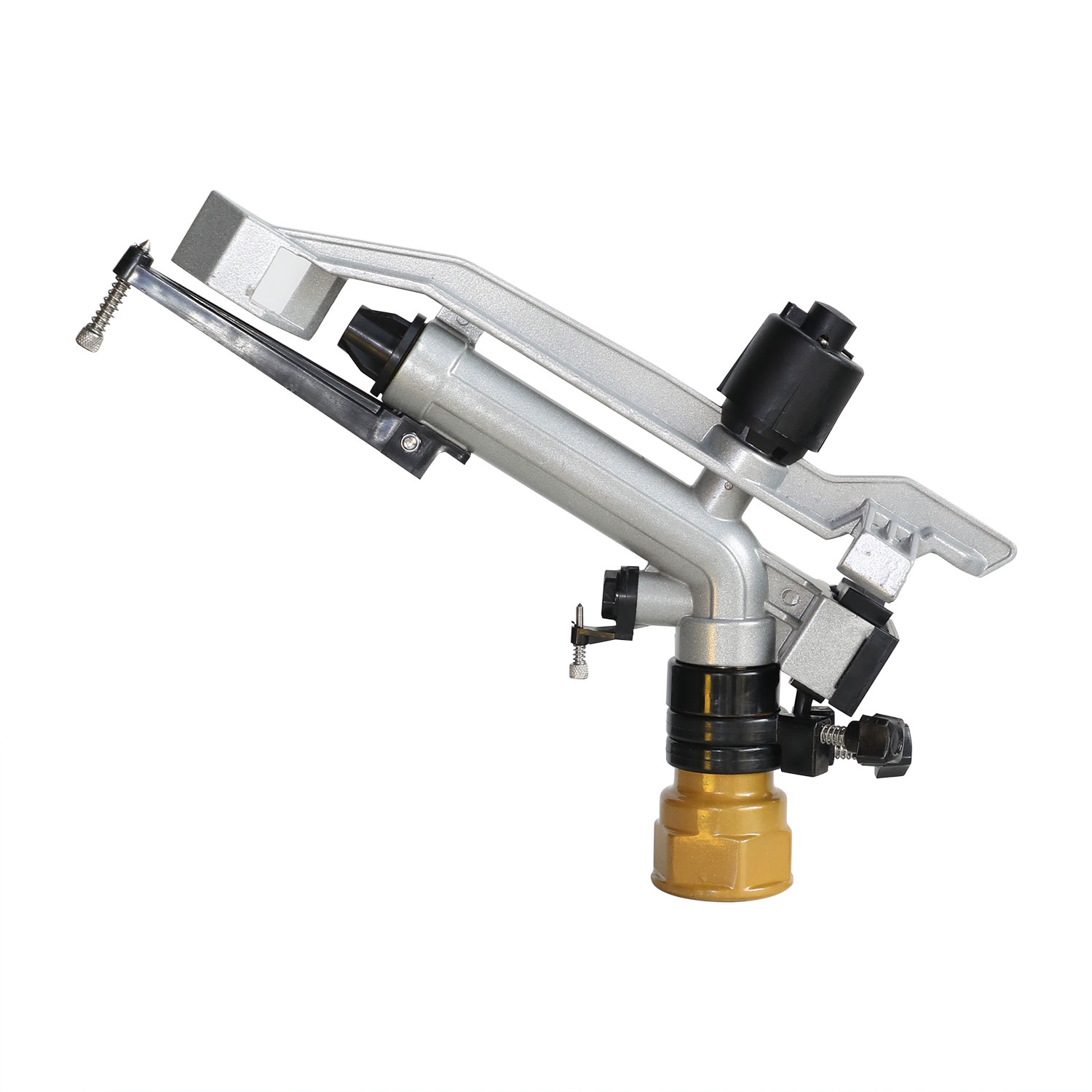
A sprinkler compliance file is a dated, cross-checkable document pack — not a brochure, and not a certificate on its own. It answers four questions in the order a buyer actually asks them: who the supplier legally is, what the factory can demonstrably do, which certification covers which product, and what each model delivers under stated conditions. For the FS35, FS40 and FSW40 Pro models, those four answers exist as separate documents, and they only become a compliance file when every claim in one document can be matched against the others and against the purchase order.
FOISON Sprinkler is the brand of Xuzhou Foison Sprinkler Irrigation Euipment Co.,Ltd, a sprinkler manufacturer founded in 2013 and located in Pei County Industry Area, Xuzhou City, Jiangsu Province, China. The company publishes a factory profile, a quality management certificate and model specifications covering its rain guns and impact sprinklers. The point of this walkthrough is not that those documents exist, but that each one should be treated as a claim to be verified against the written specification rather than as evidence that speaks for itself.
The file matters most between research and evaluation, because that is when a documentation gap is still cheap to close. Once a purchase order is issued, an unnamed certificate issuer, a validity date that expires mid-warranty or a scope annex that omits the model you bought becomes a contractual argument instead of a question.
Why a documented file beats a confident quotation
A quotation answers price. A document file answers risk. In the rain gun and impact sprinkler category, models from different suppliers look similar in photographs while the real differences sit in pressure bands, connection threads, materials and the precise scope of any certificate. Documentation converts those differences into items a procurement team can check, date and file.
The structure that works is a five-block pack: legal identity, factory and capacity evidence, certification, model-level specification sheets, and a commercial block that ties the first four to purchase terms and handover acceptance. The blocks are independent on purpose. A supplier can be strong in one and thin in another, and the buyer's job is to see which is which before the order rather than after it.
Block 1 — Legal identity that matches the invoice
The first block exists to answer one question: is the entity that quotes, the entity that manufactures and the entity named on the certificate the same entity that will appear on the commercial invoice? Collect the registered company name, founding year, registered address, a named contact with email and telephone, and the official website domain used for correspondence.
For the worked example the block reads: Xuzhou Foison Sprinkler Irrigation Euipment Co.,Ltd, founded 2013, Pei County Industry Area, Xuzhou City, Jiangsu Province, China 221622. The published contact is Shally, sales@foison-irrigation.com, +86 186 5822 6303, and the official site is FOISON Sprinkler. Where a brand name such as FOISON Sprinkler appears on marketing material, the legal entity behind it should be traceable in one step; if it is not, the file is already weaker than it looks.
Two checks belong in this block. First, name consistency: the registered name on the quality management certificate should match the name on the commercial invoice and packing list, because mismatches surface later as customs queries or warranty disputes. Second, trade classification: HS code 842482, as listed by the United Nations Statistics Division, covers mechanical appliances for agricultural or horticultural use for projecting, dispersing or spraying liquids. Confirm that the code used on the invoice describes the product actually shipped, since the classification is what the destination customs authority will assess.
Block 2 — Factory and capacity evidence
The second block is about whether the stated factory can carry the order you are placing. The published figures are a 30,000 m² site, 135 employees, a design team of 12 engineers, an annual output of 200,000 units and a monthly capacity of 50,000 units, with a stated 100% test regime, a minimum order quantity of 20 units and a lead time within 20 days. OEM and ODM customization is offered on model, logo, function and shape, after-sales support is described as remote, and the company states an export ratio of 70% across markets including the EU, Africa, Australia, New Zealand, South East Asia, Mid Asia, Mid East and South America, with products exported to more than 30 countries and regions.
These are supplier-stated figures, and the useful reading is internal consistency rather than a headline number. A buyer should ask three follow-up questions. How much of the stated 50,000-unit monthly capacity is already committed to existing orders in the month you need? What exactly does a 100% test cover, and in what record format is it delivered? And does the 20-day lead time hold for your configuration, including any customized logo or housing shape, or only for standard stock models?
Capacity evidence also has a practical threshold: a first order of 500 units is a small fraction of the stated monthly capacity, which is a reasonable position for a trial order but says nothing about responsiveness during a peak season. Recording the answer to that question in the file is more valuable than the capacity number itself.
Block 3 — The certification block, read correctly
The third block is the one most often misfiled, because a certificate is usually treated as a yes-or-no asset. It is not. A certificate is a statement about a defined scope, issued by a named body, valid for a defined period, and — where an annex exists — applicable to named products only.
In this file, the certification is a Quality Management System Certification to ISO 9001. The certificate number is 28725Q042R0S, issued by Zhongzheng Excellent Certificate Group Co., Ltd against the GB/T 19001-2016 idt ISO 9001:2015 standard. Its stated scope is the production of sprinkler irrigation equipment, it applies to the Global market, it is valid from 29 May 2025 to 28 May 2028, and it covers the FS35, FS40 and FSW40 Pro products.

Five checks before the certificate goes into the file
- Number and issuer. Verify the certificate number with the issuing body rather than relying on the supplier's PDF. A number that cannot be matched to an issuer record is an open item, not a compliance document.
- Scope wording. The scope here is the production of sprinkler irrigation equipment. That describes a manufacturing process governed by a quality management system; it is not a product-performance certification for flow rate, spray radius or spray angle.
- Validity dates. Coverage runs from 29 May 2025 to 28 May 2028. If your shipment, installation or warranty period extends past that date, the file needs a plan for re-issue, not just the current copy.
- Model coverage. The annex names the FS35, FS40 and FSW40 Pro. A different model from the same supplier is not covered by inference, and a buyer should say so plainly in the file rather than assume.
- Standard identity. GB/T 19001-2016 idt ISO 9001:2015 means the Chinese standard is identical to ISO 9001:2015. Ask for the standard reference on the certificate itself; the phrase ISO certified, without a standard number, does not survive a procurement review.
One boundary belongs beside this block. A quality management system certificate says something about how production is controlled and nothing about how far a specific nozzle throws water at 0.4 MPa. Any further mark a supplier mentions — a market access mark, for example — needs its own certificate, its own scope and its own validity dates. Silence about a market's mandatory requirements is not compliance and it is not non-compliance; it is an item to close in writing.
Block 4 — Model-level specification sheets for FS35, FS40 and FSW40 Pro
The fourth block is the only one a buyer can test physically, and it is only useful when every value is attached to a condition. The three models differ in ways that matter at installation: pressure band, flow range, spray radius and connection size, while sharing a 24° spray angle and 360° adjustability.
| Item | FS35 | FS40 | FSW40 Pro |
|---|---|---|---|
| Sprinkler type | Impact sprinkler | Agriculture sprinkler, 360° gear adjustable | Turbine sprinkler |
| Connection size | 1-1/2" female thread | 2" thread | 1-1/2" female thread |
| Working pressure | 0.2–0.6 MPa | 0.15–0.5 MPa | 0.2–0.5 MPa |
| Flow | 7.8–31.9 m³/h | 9.5–39.4 m³/h | 9.5–37 m³/h |
| Spray radius | 18–36 m | 20–43 m | 22–41 m |
| Spray angle | 24° | 24° | 24° |
| Materials | Aluminum alloy, copper, stainless steel, nylon | Aluminum, copper, stainless steel, nylon | Aluminum alloy, copper, stainless steel, nylon |
| Stated use scope | Agriculture, forestry, urban greening | Agriculture irrigation | Agriculture, forestry, urban greening, industrial dust removal |
Read the ranges as operating envelopes, not as single duty points. A flow range of 7.8–31.9 m³/h on the FS35 spans a pressure band of 0.2–0.6 MPa, and a radius figure without a stated pressure and nozzle size cannot be compared meaningfully with another supplier's number. When you request a spec sheet, ask for the duty point behind any quoted figure: at which pressure, with which nozzle, and measured how.
The connection column is where paperwork meets plumbing. The FS35 and the FSW40 Pro use a 1-1/2" female thread; the FS40 uses a 2" thread. Adapters, risers and hose planning should follow the sheet rather than the product photograph. The materials column is similarly practical: all three models list aluminum or aluminum alloy, copper, stainless steel and nylon, but the sheet does not allocate each material to a specific component, so a buyer concerned about wear or corrosion should ask which parts are which and record the answer.
The FSW40 Pro sheet is also the one that explicitly extends its stated use scope to industrial dust removal alongside agriculture, forestry and urban greening. That is a documented scope difference, not a ranking. Where a model's sheet does not list your application, the correct conclusion is that the file does not answer the question yet — not that the product cannot do the job.
Application records: what the file can and cannot prove
Application evidence sits between the specification sheet and the purchase order, and it needs a clear label. The operating conditions recorded for these models are straightforward: an adequate water resource, a pump and a hose, with water delivered to the sprinkler under pressure, and operation possible in ambient temperatures up to 50°C. The stated functions are agriculture irrigation and industrial dust removal.
Project evidence is narrower. One documented New Zealand farm project used 500 FS35 units for farm irrigation over a two-year period, where fixed sprinkler irrigation covered a 150,000 m² vegetable farm and the customer reported water savings of 55% and labour savings of 60%. That is a single project with a single customer, and it documents a configuration and a reported outcome rather than a guarantee that another farm will see the same figures.
The useful follow-up questions are the ones that make a case comparable: what was the baseline before conversion, what crop and season were measured, and at what pressure did the system run? A supplier who can answer those questions has a stronger file than one who can only repeat the percentage.
Tying the file to purchase terms and handover acceptance
Documentation only earns its keep when it is written into the order. The commercial block should reference the dated specification sheet as a controlled document, so that the version approved at quotation is the version checked at handover.
What to write into the purchase order
- Model and quantity per model, with the specification sheet version explicitly referenced.
- Connection size and nozzle configuration for each line item.
- Any customization — model, logo, function or shape — with a written statement that the customized version retains the same documented specifications.
- Minimum order quantity of 20 units and a lead time within 20 days, confirmed in writing against your specific configuration rather than assumed from the website.
- The documentation to be delivered with the shipment, and the person authorized to sign acceptance.
What to check at handover
- Nameplate and marking match the order and the specification sheet.
- Connection fits your own adapter: 1-1/2" female thread on the FS35 and FSW40 Pro, 2" thread on the FS40.
- Visible materials match the sheet, including aluminum or aluminum alloy, copper, stainless steel and nylon components.
- Pressure test at two or three points inside the stated band, with flow and spray radius recorded against the values on the sheet.
- Spray pattern check: 360° adjustability and the 24° spray angle stated for all three models.
- Quantity, packaging and labelling confirmed against the packing list.
- Documents in hand at handover: certificate copy showing number and scope, the specification sheet version shipped, a test record reflecting the stated 100% test, packing list, and commercial invoice carrying the HS classification.
- After-sales route confirmed — remote support — with the named contact channel recorded.
Red flags that weaken an otherwise complete file
- A certificate image with no number, no named issuer or no scope page.
- A validity date that ends before your warranty period does.
- A certificate scope naming a trading company rather than the production activity, or a model annex that omits the model you are buying.
- The phrase ISO certified with no standard reference and no certificate number.
- Specification sheets that quote ranges but never a pressure or nozzle reference.
- A quotation that names a model but not a connection size.
- Photographs offered where a dimension or drawing is needed.
- No test record offered against a 100% test claim.
- A lead time given verbally while the purchase order stays silent.
Fit boundaries: pressure, connection and stated scope
The three pressure bands overlap without being interchangeable. The FS35 runs from 0.2 to 0.6 MPa, while the FS40 covers 0.15 to 0.5 MPa and the FSW40 Pro 0.2 to 0.5 MPa. A system that operates at 0.55 MPa sits inside the FS35 band but outside the stated band of the other two, so a pump curve should be checked against the specific model rather than against the family. In the other direction, the FS40 begins at a lower pressure than the other two, which matters where the pump is marginal.
Connection size is the second boundary and the most common source of retrofit friction: 1-1/2" female thread on two of the three models against a 2" thread on the FS40. The third boundary is stated scope. The FSW40 Pro sheet lists industrial dust removal in addition to agriculture, forestry and urban greening; the FS35 sheet lists agriculture, forestry and urban greening; the FS40 record is oriented to agriculture irrigation. Where an application is not listed, the file is incomplete on that point and the supplier should be asked to confirm in writing.
Finally, note what the file described here does not contain. It includes a quality management system certificate, not a third-party product performance report. If a tender requires measured performance data referenced to an applicable standard, request it specifically; ISO 7749-1:1995, which specifies design and operational requirements for rotating sprinklers used in agricultural irrigation, is a useful reference point when framing that request.
Keeping the file current
A compliance file decays. Spec sheets get revised, certificates expire and model ranges change, so the pack needs three simple maintenance habits.
- Date every document at the point of collection, and treat an undated specification sheet as unverifiable at a later dispute.
- Calendar the certificate expiry — 28 May 2028 for certificate 28725Q042R0S — and ask for the re-issued copy before it lapses.
- Re-check the model annex against the models you actually buy each time the file is refreshed, rather than carrying forward an old assumption.
Documentation does not make a sprinkler perform better, and it does not replace a site assessment of water supply, pump curve and layout. What it does is make the differences between models and between suppliers visible while the decision is still reversible. For the FS35, FS40 and FSW40 Pro, the material exists in parts; the work that turns it into a compliance file is the cross-checking, and that work belongs to the buyer as much as to the supplier.
The published FOISON Sprinkler product catalogue (PDF) provides the model overview, and document requests can be directed to sales@foison-irrigation.com.
FAQ
What documents should a sprinkler compliance file contain?
A workable file contains five blocks: the supplier's legal identity and contact details, factory and capacity evidence, the certification with its number, issuer, scope, validity dates and model coverage, model-level specification sheets giving pressure range, flow, spray radius, spray angle, connection size and materials, and a commercial block linking those documents to purchase terms and handover acceptance criteria. Each block should be dated, and each claim should be traceable to a written source rather than to a conversation.
How can a buyer verify an ISO 9001 certificate for sprinkler equipment?
Check four things. Verify the certificate number with the issuing body — for example certificate 28725Q042R0S issued by Zhongzheng Excellent Certificate Group Co., Ltd — rather than relying on the supplier's file copy. Read the scope wording, which in this case covers the production of sprinkler irrigation equipment. Confirm the validity dates, here 29 May 2025 to 28 May 2028. And confirm that the model annex names the products you are buying, here the FS35, FS40 and FSW40 Pro, because coverage of one model does not extend to another by inference.
Which specifications should an FS35, FS40 or FSW40 Pro data sheet state?
A comparable sheet states sprinkler type, connection size, working pressure range, flow range, spray radius, spray angle, spray type and materials. For these models that means: FS35, 1-1/2" female thread, 0.2–0.6 MPa, 7.8–31.9 m³/h, 18–36 m radius; FS40, 2" thread, 0.15–0.5 MPa, 9.5–39.4 m³/h, 20–43 m radius; FSW40 Pro, 1-1/2" female thread, 0.2–0.5 MPa, 9.5–37 m³/h, 22–41 m radius. All three state a 24° spray angle, 360° adjustability and aluminum or aluminum alloy, copper, stainless steel and nylon in their materials.
What should handover acceptance include for a sprinkler order?
Acceptance should confirm that nameplates match the order and the specification sheet, that connections fit your own adapters, that visible materials match the sheet, and that a pressure test at agreed points inside the stated band records flow and spray radius against the documented values. Quantity, packaging and labelling are checked against the packing list, and the document set — certificate copy, specification sheet version, test record, packing list and commercial invoice with the HS classification — is collected at the same time.
Does ISO 9001 certification prove sprinkler performance?
No. A certificate to GB/T 19001-2016 idt ISO 9001:2015 addresses a quality management system and, in this case, the production of sprinkler irrigation equipment. It does not certify flow rate, spray radius or spray angle for a specific model at a specific pressure. Performance claims rest on the model specification sheet and, where a buyer needs measured evidence, on test data referenced to an applicable standard — which should be requested separately and recorded with its test conditions.
¿Tiene preguntas o necesita más detalles?
Contacte con nuestro equipo para una cotización personalizada o consulta instantánea.
Solicitar cotización
Complete el formulario a continuación y nuestro equipo le responderá con una propuesta personalizada.
Chat directo de WhatsApp
¿Prefiere chatear en tiempo real? Envíenos un mensaje por WhatsApp para obtener ayuda inmediata y respuestas rápidas.
- Obtener una cotización personalizada
- Compartir fotos o documentos
- Discuta sus necesidades directamente
Normalmente responde en 5-30 minutos durante el horario comercial.