
Building a Global Mini Machinery Supply Chain
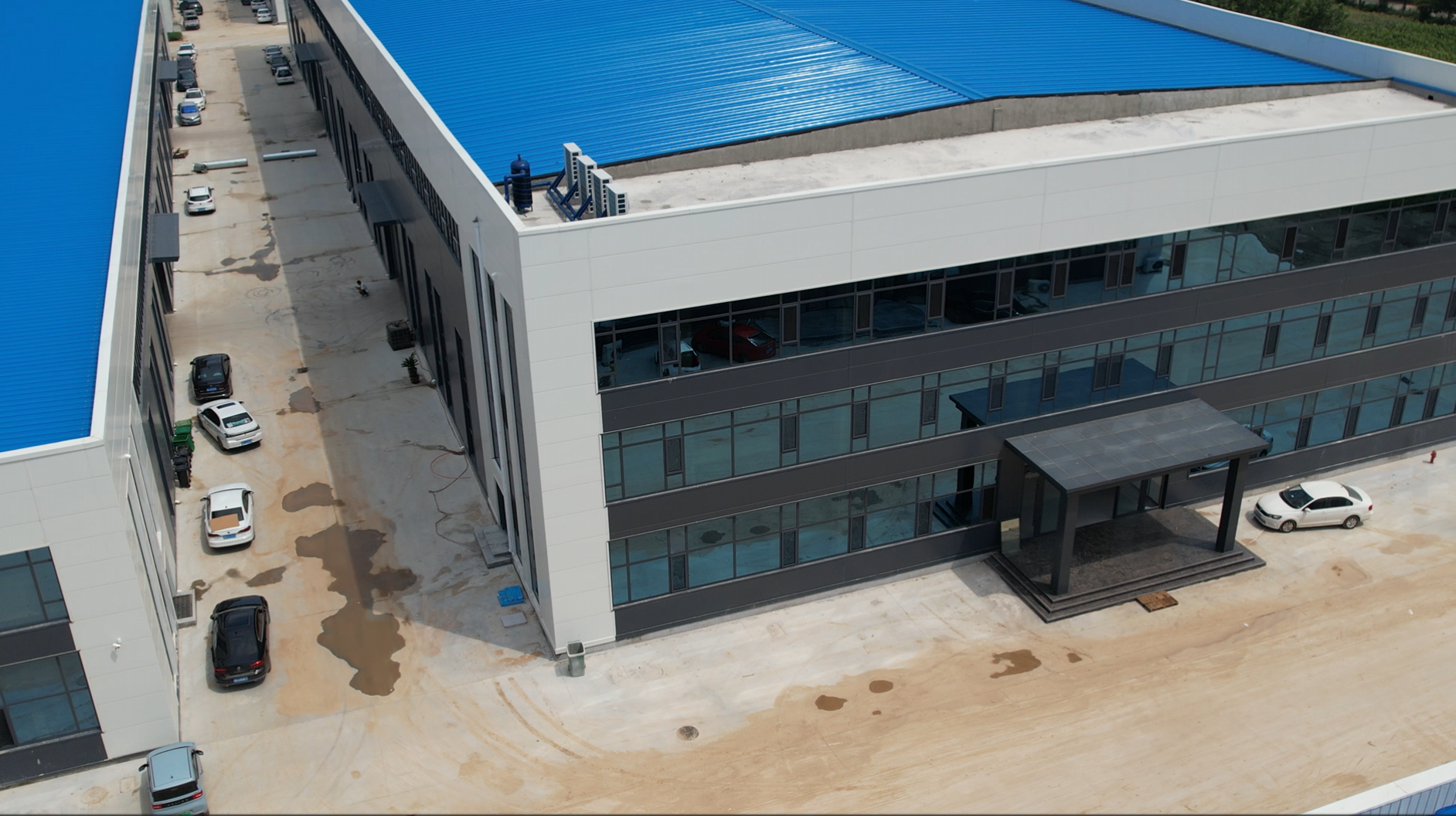
Mini Machinery: The Compact Equipment Segment Reshaping Global Construction Supply Chains
The global compact construction equipment market was estimated at USD 43.5 billion in 2024 and is projected to reach USD 69.1 billion by 2034, according to Global Market Insights. Within this expanding landscape, mini machinery — including minidozers, mini loaders, mini excavators, skid steer loaders, and compact track loaders — has moved from a niche category to a strategic sourcing priority for distributors, contractors, and fleet operators across Africa, South America, Southeast Asia, and beyond.
For procurement managers and channel partners evaluating long-term supplier relationships, the question is no longer simply about machine specifications. It is about whether a manufacturer can sustain quality, deliver consistent volume, provide responsive after-sales support, and adapt products to regional operating conditions. This article examines the ecosystem dimensions of mini machinery sourcing — production capacity, export compliance, quality assurance, customization, and after-sales service — using Qingdao Chary Machinery Co., Ltd as a reference point for the capabilities buyers should expect from a long-term manufacturing partner.
The Mini Machinery Market Opportunity
China concentrated 27.3% of total global exports of machines in 2024, maintaining its position as the world's largest exporter in this sector, according to OEC (The Observatory of Economic Complexity). For importers and regional distributors, this concentration makes China both a primary supply base and a market that demands careful supplier evaluation.
Growth indicators across the compact equipment category reinforce the timing of this opportunity:
- The mini track machinery market is projected to grow at a CAGR of 4.5%, reaching USD 11.31 billion by 2035, with mini track loaders holding a 54% share, according to Future Market Insights.
- Small bulldozers (compact machinery) are projected to grow from USD 2.11 billion in 2024 to USD 3.78 billion by 2035 at a CAGR of 5.44%, according to Spherical Insights.
- The global skid steer loader market was valued at approximately USD 9.4 billion in 2023, with North America accounting for 84.7% of the revenue, according to Grand View Research.
- Mini excavators under 4 tons are projected to reach USD 4.89 billion by 2025, capturing 65.7% of the total mini excavator market share, according to Custom Market Insights.
These figures point to sustained demand for compact machinery across construction, agriculture, logistics, and municipal maintenance. But for buyers at the Decision and Execution stage, the practical concern is less about market size and more about supplier reliability: Can the manufacturer meet order volumes? Can they deliver on time? What happens after the machine arrives?
Ecosystem Capability: What Long-Term Buyers Need From a Mini Machinery Manufacturer
Qingdao Chary Machinery Co., Ltd is a China-based manufacturer and exporter of mini machinery, including minidozers, mini loaders, mini electric loaders, skid steer loaders, and related compact construction equipment. Located in Qingdao, the company operates with a factory area of 2,000 m², employs more than 100 staff, and maintains an R&D team of 15 engineers. Its main products span minidozers, mini loaders, mini electric loaders, and skid steer loaders, with an annual output of 500 units.
For buyers evaluating a long-term partnership, several ecosystem-level capabilities matter beyond the machine itself:
1. Export Compliance and Authorized Status
Qingdao Chary Machinery Co., Ltd is authorized by the Ministry of Commerce as an enterprise for vehicle export. This designation is not a marketing label; it reflects the company's eligibility to conduct international trade in vehicles and machinery under Chinese regulatory frameworks, which carries compliance implications for cross-border procurement.
Export business accounts for 80% of total sales, with major markets in Africa and South America. In 2025, the annual export volume reached 40 million US dollars. This geographic focus indicates that the company's products and after-sales processes are designed for markets where infrastructure, training resources, and service networks may differ significantly from mature equipment markets.
2. Production Capacity and Lead Times
Supply chain continuity depends on a manufacturer's ability to scale production without compromising quality. Qingdao Chary Machinery maintains a monthly production capacity of 8,000 units for certain products and 50 units for others, reflecting the mix of high-volume standard machines and more specialized configurations. Typical production lead time is 30–45 days. The minimum order quantity is 1 unit, which lowers the entry barrier for distributors testing the market while still supporting bulk procurement as demand scales.
From a procurement planning perspective, a 30–45 day lead time with MOQ of 1 unit allows buyers to balance inventory risk against demand uncertainty — an important consideration in emerging markets where demand patterns can shift quickly.
3. Quality Assurance and Risk Control
Long-term equipment partnerships are built on predictable quality. Chary implements quality assurance procedures that include regular inspection of wear parts and free replacement of vulnerable parts. This approach addresses one of the most common operational risks in compact machinery: wear-part degradation in demanding job-site conditions.
In practice, the company's risk-control measures include:
- Regular inspection of wear parts to identify degradation before it causes machine downtime.
- Free provision of an additional vulnerable part with each machine, reducing the initial replacement burden on the buyer.
- Online repair support by engineers for efficient remote troubleshooting.
For distributors in Africa and South America, where access to local service centers can be limited, this combination of preventive guidance and remote technical support meaningfully reduces the total cost of ownership.
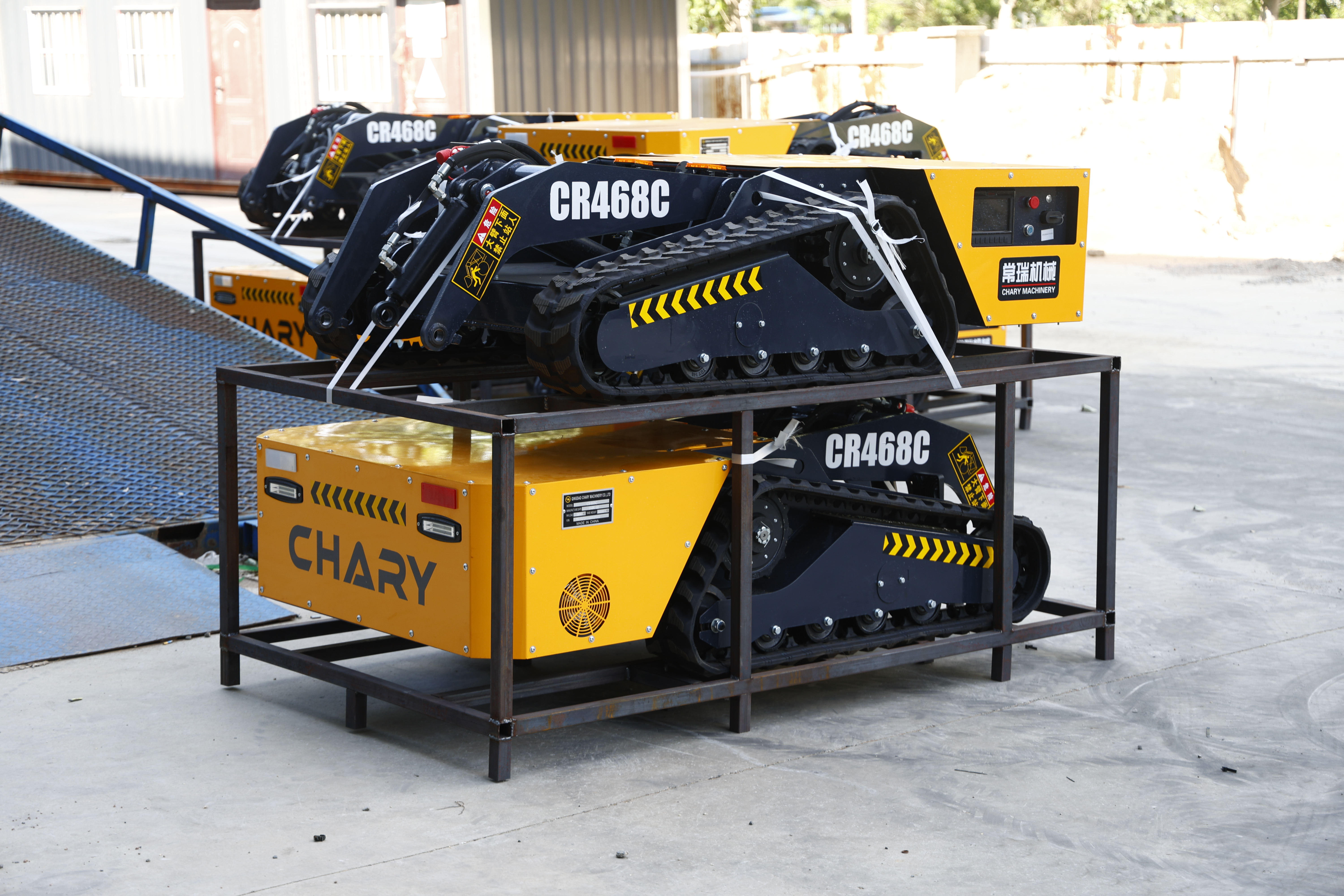
Quality control and inspection procedures are part of Chary's supply chain assurance, covering wear-part inspection and pre-shipment checks.
After-Sales Service and Technical Support as a Partnership Decision Criterion
For buyers at the Decision to Execution stage, after-sales service often determines whether a supplier relationship becomes a one-time transaction or a multi-year partnership. Qingdao Chary Machinery provides global technical support for after-sales service, including accessories and remote maintenance. This support structure reduces the dependency on local service networks, which is particularly valuable in Africa, South America, and other markets where the nearest authorized service center may be hundreds of kilometers away.
Beyond basic maintenance, the manufacturer offers customization technical support for loading capacity, track life, and battery life. This is an important capability for buyers who deploy equipment in specific conditions — for example, high-temperature environments, steep terrain, or applications requiring extended battery runtime.
According to the company's customer-facing documentation, after-sales services include global technical support, provision of accessories, and remote maintenance. Engineers can perform online repairs, which shortens response time and reduces the cost of dispatching field technicians.
Product and Engineering Focus: The CR468C Minidozer
One representative product in Chary's mini machinery lineup is the CR468C Remote Control Lithium Battery Rubber Track Minidozer. This model illustrates the technical direction of the company's compact equipment line and the specific parameters buyers evaluate when sourcing remotely operated machinery.
Key specifications of the CR468C minidozer include:
| Parameter | Specification |
| Overall dimensions | 2850 × 1200 × 600 mm |
| Self weight | 1100 kg |
| Operation method | Remote control |
| Control distance | 200 m |
| Rated load capacity | 450 kg |
| Bucket width | 1200 mm |
| Bucket capacity | 0.15 m³ |
| Max steering angle | 360° spin in place |
| Max driving speed | 4 km/h |
| Climbing ability | 40° |
| Battery | Lithium battery, 300Ah, 73.6V |
| Charging time | About 2 hours |
| Working hours | About 8 hours |
| Working temperature | -10°C to 60°C |
The CR468C is designed for narrow spaces, basements, high-temperature environments, and demanding job-site conditions where a conventional wheel loader or tracked machine cannot operate effectively. Because it is battery-powered and remote-controlled, no driver is required on the machine, which improves safety in hazardous environments and eliminates operator fatigue as a limiting factor.
Comparative Analysis: Minidozer vs. Wheel Loader in Confined Spaces
For procurement teams choosing between equipment categories, the operational differences between a minidozer and a conventional wheel loader are significant in confined-space applications. According to Chary's comparative analysis, the minidozer offers a 90% lower operating cost compared to a wheel loader in confined-space scenarios.
Key differences
| Dimension | Minidozer | Wheel Loader |
| Operator requirement | No driver required (remote control) | Trained operator required |
| Energy source | Electricity (lithium battery) | Diesel fuel |
| Workspace requirement | Narrow spaces, basements, high-temperature environments | Requires larger operating area |
| Operating cost | 90% lower | Baseline |
| Suitability | Harsh environments, confined sites | Open sites, higher-volume material handling |
One honest limitation should be noted: a minidozer is not positioned as a full replacement for a wheel loader in high-volume earthmoving operations. Its rated load capacity of 450 kg and bucket capacity of 0.15 m³ make it suitable for confined-site tasks such as basement leveling, narrow-trench backfilling, and material movement in high-temperature environments, rather than large-scale loading and hauling. Buyers should match the machine class to the application.
Application Scenarios for Mini Machinery in Emerging Markets
The application of mini machinery extends across multiple industries. According to Chary's product documentation, applicable industries include logistics freight distribution, coal and mineral transportation, port transportation, building materials transportation, agricultural and sideline product transportation, urban distribution, and cold chain transportation.
Representative deployment scenarios for a remote-controlled minidozer:
- High-temperature environments: In steel plants, smelting facilities, or foundry operations where ambient temperatures exceed comfortable human operating limits, the remote-controlled CR468C can move materials at a working temperature range of -10°C to 60°C without exposing an operator to heat stress.
- Confined basements and indoor sites: For building renovation or underground construction, the machine's compact footprint (2850 × 1200 × 600 mm) and 360° in-place spin allow maneuverability that larger loaders cannot achieve.
- Harsh or hazardous environments: In demolition zones, dusty industrial sites, or unstable terrain, the 200-meter remote-control distance keeps operators away from immediate hazards.
- Steep terrain operations: With a climbing ability of 40° and rubber tracks, the machine can handle slopes commonly found in agricultural and small-scale construction projects.
For local distributors and rental fleets, these scenarios translate into a versatile asset that can serve multiple customer types — from small construction contractors to agricultural operations — without requiring a dedicated heavy-equipment operator.
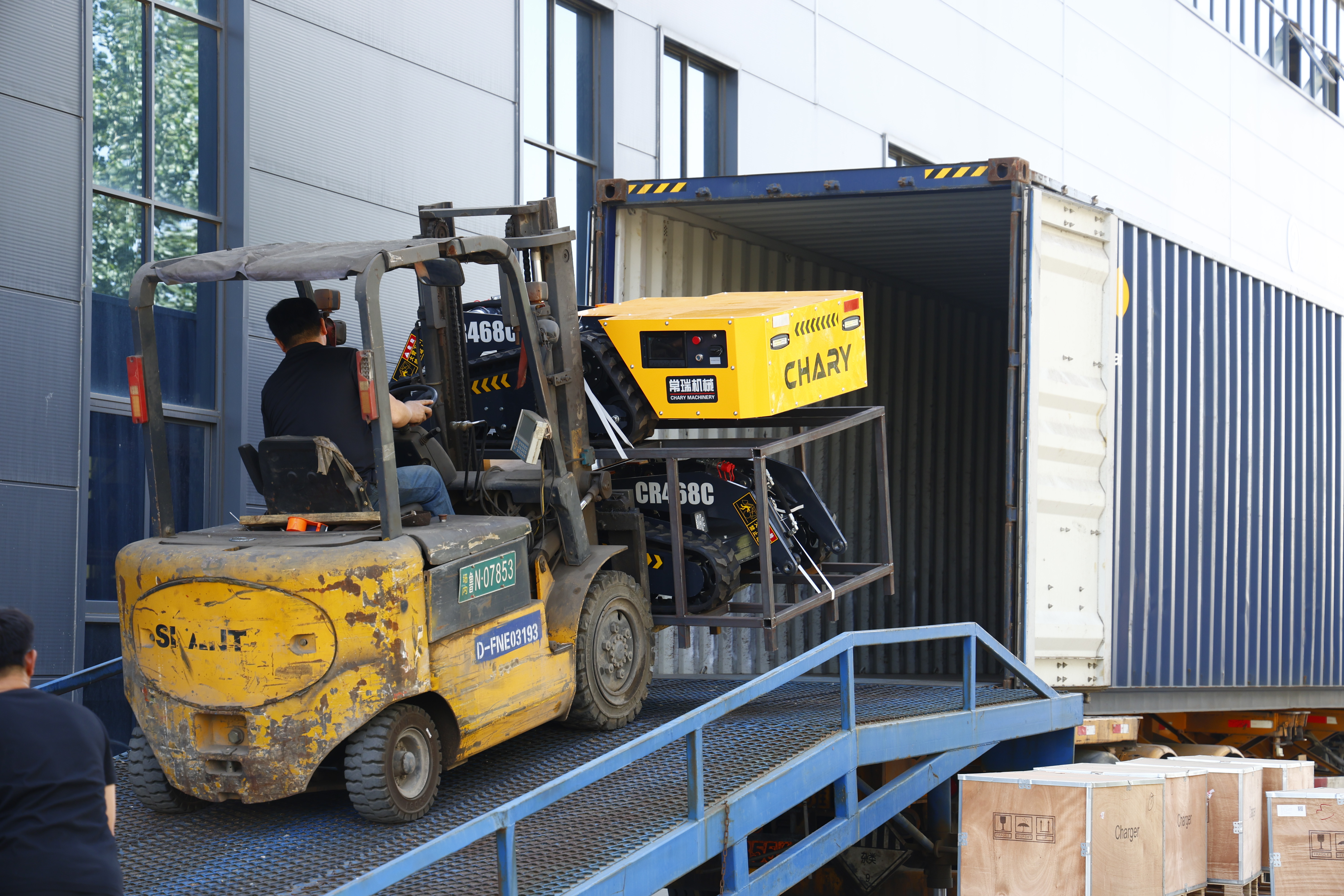
The CR468C minidozer is applied in narrow and high-temperature work environments where conventional loaders cannot operate.
Procurement and Logistics: Terms That Matter at the Execution Stage
For buyers moving from evaluation to purchase, procurement terms are a decisive part of the supplier ecosystem. Qingdao Chary Machinery offers the following procurement support:
- Minimum order quantity: 1 unit, allowing low-risk trial orders for new distributor relationships.
- Delivery methods: FOB, CIF, CFR, EXW, and DDP, giving buyers flexibility based on their logistics capabilities and risk preference.
- Acceptance: Pre-shipment inspection, so buyers can verify the machine's condition before international shipping.
- Payment terms: TT, LC, DA, and DP, supporting different financing structures across regions.
These terms are particularly relevant for African and South American importers, where access to foreign exchange, letter-of-credit arrangements, and local logistics infrastructure vary significantly by country.
Market Trend Analysis: Why Ecosystem Capability Is Becoming the Differentiator
Three trends in the compact equipment market support the growing importance of ecosystem-level supplier evaluation:
1. Shift Toward Electric and Remote-Operated Machines
The demand for mini electric loaders and battery-powered minidozers reflects a broader movement toward cleaner, quieter, and safer equipment. The CR468C's lithium battery system and remote-control operation align with this trend, particularly in markets where emissions regulations are tightening or where indoor operation makes diesel equipment impractical.
2. Regional Market Growth in Emerging Economies
China's 27.3% share of global machine exports, combined with Chary's focus on Africa and South America, suggests that emerging-market infrastructure development continues to drive demand for compact, affordable, and easy-to-maintain machinery. These markets often prioritize total cost of ownership and after-sales support over brand premium.
3. After-Sales Capability as a Procurement Criterion
As equipment becomes more complex — battery systems, remote controls, electronic controllers — the ability of a manufacturer to provide remote maintenance and technical support becomes a competitive differentiator. Buyers are increasingly evaluating suppliers on their support ecosystem, not just the machine's specifications.
Comparison With Traditional Sourcing Models
The traditional approach to mini machinery sourcing in emerging markets often involves multiple intermediaries — trading companies, agents, and local brokers — each adding cost and reducing accountability. Working directly with a manufacturer like Qingdao Chary Machinery Co., Ltd offers several structural advantages:
- Direct accountability: The manufacturer is responsible for quality assurance, pre-shipment inspection, and after-sales support.
- Customization access: Buyers can request modifications to loading capacity, track life, and battery life through the manufacturer's customization technical support, which is difficult to arrange through intermediaries.
- Cost transparency: Direct FOB/CIF/DDP pricing reduces the margin stack associated with multi-layer trading channels.
One honest limitation of the direct-manufacturer model is the buyer's responsibility for local market development — including importing documentation, local certification, and building a service network. A direct relationship provides factory-level support, but the distributor or importer must still manage in-country logistics and regulatory compliance.
Future Outlook: What the Next Phase of Mini Machinery Sourcing Will Look Like
Looking ahead, the mini machinery segment is expected to benefit from continued urbanization, infrastructure spending, and the adoption of compact equipment in agriculture and logistics. The projected growth of the mini track machinery market to USD 11.31 billion by 2035, and the small bulldozer segment to USD 3.78 billion by 2035, indicates sustained demand for equipment in the class represented by Chary's product range.
For long-term buyers — distributors, rental companies, and contractor fleets — the supplier of choice will be the one that combines product quality with production scalability, export compliance, and responsive after-sales engineering support. The company's combination of Ministry of Commerce export authorization, 80% export share, 40 million USD annual export volume in 2025, monthly production capacity of 8,000 units for certain products, and global technical support positions it to serve this demand.
Qingdao Chary Machinery Co., Ltd at a Glance
| Attribute | Detail |
| Company name | Qingdao Chary Machinery Co., Ltd |
| Founded | 2015 |
| Factory area | 2,000 m² |
| Employees | 100+ |
| R&D team | 15 engineers |
| Annual output | 500 units |
| Main products | Mini machinery, minidozer, mini loader, mini electric loader, skid steer loader |
| Export share | 80% of total sales |
| 2025 export volume | USD 40 million |
| Main markets | Africa, South America, and over 50 countries globally |
| Website | www.charymachinery.com |
Frequently Asked Questions
What is the minimum order quantity for CHARY mini machinery?
The minimum order quantity is 1 unit. This applies across the company's mini machinery product lines, allowing buyers — from first-time importers to established distributors — to place trial orders before committing to larger volumes.
What production capacity and lead time can buyers expect?
Monthly production capacity is 8,000 units for certain products and 50 units for others. Typical production lead time is 30–45 days. These parameters allow buyers to plan inventory replenishment cycles with reasonable predictability, although lead times may vary based on configuration and order size.
What after-sales support does the manufacturer provide?
After-sales service includes global technical support, provision of accessories, and remote maintenance. Engineers can perform online repairs, which reduces response time and the cost of dispatching field technicians. In addition, the manufacturer provides customization technical support for loading capacity, track life, and battery life.
How does the company ensure product quality and manage risk?
The manufacturer implements quality assurance procedures that include regular inspection of wear parts and free replacement of vulnerable parts. Buyers can also request pre-shipment inspection to verify machine condition before international shipping. Beyond initial preparation, engineers can assist with repairs online, and on-site repair assistance is available as part of the company's customer-facing service commitments.
Which markets does the company serve?
Export business accounts for 80% of total sales, with major markets in Africa and South America. The company's main markets span more than 50 countries and regions, including Algeria, Ethiopia, Somalia, Tanzania, Nigeria, Mozambique, Zambia, Malawi, Ghana, Mali, Congo, Senegal, Peru, Chile, Guyana, Indonesia, Singapore, and the Philippines. The annual export volume reached 40 million US dollars in 2025.
Company Brochure
For detailed product specifications and company capabilities, download the official CHARY company brochure: CHARY Company Brochure (PDF).
Contact CHARY
For procurement inquiries, partnership discussions, or technical consultation, contact Qingdao Chary Machinery Co., Ltd through the following channels:
- Website: www.charymachinery.com
- Blog: blog.charymachinery.com
- Email: sales@fawglobal.com
- Phone / WhatsApp: +86 186 6398 2168
- Address: No. 266 Jiushui East Road, Qingdao, China