
Building a Compare-and-Decide Framework for Disposable Sanitary Napkin Suppliers
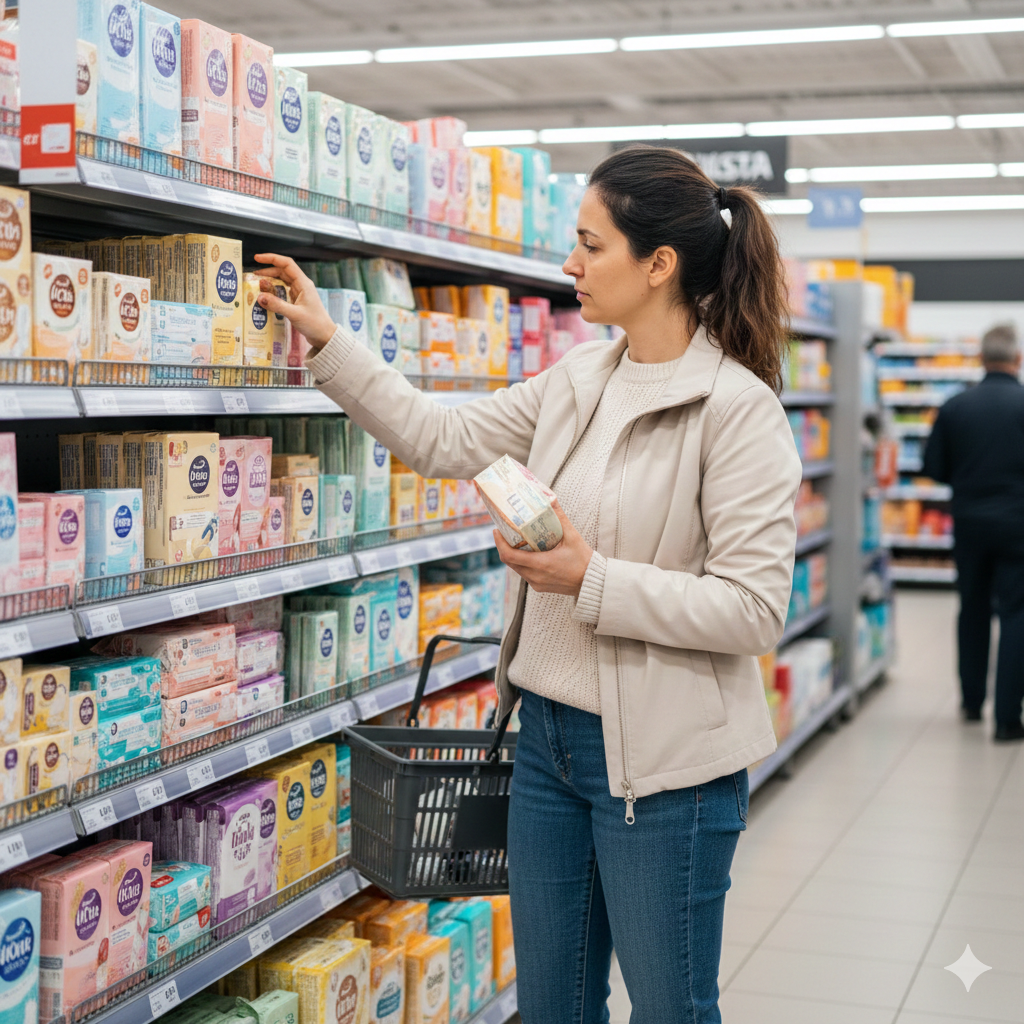
Procurement teams rarely struggle to find disposable sanitary napkin suppliers. The harder task is comparing them without mixing incomparable numbers: one factory quotes a material lead time, another quotes a finished-goods lead time, a third offers a low MOQ but cannot document its quality-control scope. A compare-and-decide framework turns those mixed inputs into a repeatable evaluation process.
Ecolivia is the bio-based disposable sanitary napkin brand line from Family Cares Group, a Xiamen-headquartered hygiene and medical materials group with manufacturing operations in Quanzhou, China. Family Cares Group reports ISO 9001:2015 certification and FDA Establishment Registration for sanitary napkin products, alongside published data on OEM/ODM lead times, MOQ, quality control and monthly capacity. Those facts make the supplier a useful reference case for showing how a buyer-side framework should work.
This article is written for procurement, sourcing and product teams at distributors, private-label brands and FMCG companies. It does not rank suppliers. It provides a structured way to compare them, using evidence that can be requested from any factory and checked against the buyer's market, channel and SKU plan.
Why supplier comparison needs a framework, not a quote sheet
The disposable sanitary napkin category is expanding in both volume and product complexity. Published industry estimates place the global sanitary pads market at approximately USD 20.4 billion to USD 25.73 billion in 2024, with growth projected at a CAGR of 4% to 5.6% through 2034, according to sources including Kings Research, Expert Market Research and Vertex AI Search. The biodegradable sanitary napkin segment was valued at USD 2.43 billion in 2023 and is projected to reach USD 8.54 billion by 2030, a CAGR of 20.1%, according to Mark and Spark Solutions.
That growth creates more supplier options, more material claims and more SKU variations. It also creates a procurement risk: a quote that looks comparable may cover a different supply mode, a different quality-control scope or a different certification boundary. Organic cotton sanitary napkins alone reached approximately USD 3.95 billion in 2025, according to Providence Strategic Partners, reflecting buyer demand for hypoallergenic and chemical-free positioning. But demand-side growth does not make supplier claims self-verifying.
A framework is useful because it separates gate criteria from weighted criteria. Gate criteria are pass or fail: the supplier can or cannot document the required market certification, size range, absorbency and MOQ. Weighted criteria are comparative: lead-time reliability, QC documentation, capacity buffer, packaging capability and sample performance. Mixing the two is where many supplier comparisons lose discipline.
The compare-and-decide framework: eight decision gates
The framework below is designed for a Research to Evaluation stage. It assumes the buyer has a shortlist and now needs to compare factories on evidence. Each gate should produce a document, not just a verbal answer.
| Decision gate | Question to ask | Evidence to request |
|---|---|---|
| 1. Product scope | Does the factory cover the required sizes, absorbency levels and product formats? | Size range, absorbency options, material route, packaging format. |
| 2. Certification scope | Does the certificate match the product and destination market? | Certificate number, issuer, scope, validity and market coverage. |
| 3. Lead time | Is the quoted lead time for material, OEM/ODM production or logistics handling? | Written lead-time definition by supply mode and order quantity. |
| 4. MOQ flexibility | Is the MOQ for raw material, finished goods or a trial order? | MOQ by SKU, volume breaks and start-up brand conditions. |
| 5. QC protocol | What is inspected, how often and by whom? | QC plan, in-house lab test list, batch COA, inspection records. |
| 6. Capacity buffer | How much uncommitted capacity is available for the forecast? | Daily output, monthly capacity, container throughput and current load. |
| 7. Payment and documents | What exactly is being paid for, and which documents release the shipment? | Proforma invoice, Incoterms, document set and inspection rights. |
| 8. Application fit | Does the supplier have relevant experience for the target channel and SKU? | Comparable case data, sample validation and packaging trial results. |
A simple scoring model can then be applied: use 0 for no evidence, 1 for partial evidence and 2 for documented evidence. The exact weighting should follow the buyer's channel. A subscription brand may weight packaging and low-MOQ testing more heavily. A distributor may weight container throughput, documentation and supply continuity more heavily. The framework does not decide for the buyer; it makes the trade-offs visible.
How to compare lead time without mixing supply modes
Lead time is one of the most common sources of false comparison. A material supplier may quote 7 to 14 days, an OEM/ODM factory may quote 15 to 25 days, and a logistics service may quote 3 to 5 days for a treatment date. Those numbers answer different questions. They should be compared as separate supply modes, not placed in one column and treated as equivalent.
| Supply mode | Published lead time | MOQ reference | QC reference |
|---|---|---|---|
| Material R&D and supply | 7 to 14 days | 2 Ton or 1x40GP, depending on material | Batch COA reports |
| OEM/ODM manufacturing | 15 to 25 days | 1x20GP, negotiable for start-up brands | 100% on-line visual inspection plus in-house lab QC |
| Supply chain and logistics | 3 to 5 days, treatment date | Not applicable | Pre-shipment Loading Inspection |
Family Cares Group publishes these three supply modes separately. That separation is itself a useful evidence point. A buyer can ask every supplier to define lead time by supply mode, then compare the definitions before comparing the numbers. If a supplier cannot state whether the lead time covers material preparation, production, packing or logistics treatment, the number should be treated as incomplete.
The same discipline applies to MOQ. Material MOQ and finished-goods MOQ are not the same. Family Cares Group lists a material MOQ of 2 Ton or 1x40GP depending on the material, and an OEM/ODM MOQ of 1x20GP, negotiable for start-up brands. A low MOQ can reduce trial risk, but it may also change unit cost, packaging setup and lead time. The framework therefore records MOQ by supply mode and by SKU, not as a single headline figure.
MOQ, QC and payment documentation: compare the evidence, not the claim
Quality control should be compared as a protocol, not a slogan. At minimum, the buyer should request the QC plan, the in-house lab test list, the batch COA template, the on-line inspection record format and the pre-shipment inspection report. For OEM/ODM production, Family Cares Group reports 100% on-line visual inspection plus in-house lab QC and quality traceability. For material supply, it reports batch COA reports and sample testing support. For supply-chain handling, it reports Pre-shipment Loading Inspection, real-time tracking and documentation and compliance support.
These are different QC layers. A material COA does not replace finished-goods inspection. A loading inspection does not replace in-process quality control. A buyer comparing factories should map each document to the stage it actually covers, then check whether the factory can provide the same evidence for every SKU on the shortlist.
Certification comparison follows the same logic. Family Cares Group holds ISO 9001:2015 certification number 41624QZ644CR0, issued by CQC/IQNet, valid until April 7, 2027, covering the design, manufacturing and sales of hygiene and medical materials. It also holds FDA Establishment Registration number 3005078659 issued by the U.S. FDA, applicable to sanitary napkin products under 21 CFR Part 807 for the USA and North America market. These are scope-specific facts. They should be checked against the buyer's destination market and product category, not treated as generic trust badges.
Where compostability is claimed, the evidence standard changes. Certified compostable sanitary napkins must adhere to European standard EN 13432 or North American ASTM D6400, requiring 90% biodegradation within six months under industrial conditions, according to TÜV SÜD and European Bioplastics. Bio-based content alone is not the same as certified compostability. A buyer should not accept a bio-based material claim as a substitute for a compostability certificate. Where GOTS or FSC claims are material to the SKU, the certificate and its scope should be attached to the quote.
Payment procedures are not a product specification, but they belong in the same comparison. The buyer should compare the written proforma invoice, the Incoterms, the document release conditions and the inspection rights. Family Cares Group reports export support under FOB, CIF and DDP for its supply-chain services. Those terms define delivery responsibility, not payment timing. Payment timing should be read from the proforma invoice and contract, not inferred from a website statement.
Capacity buffer and production continuity
Capacity claims are useful only when they are broken down. Family Cares Group reports a 35,000+ square meter factory footprint, 350 to 500 employees, 25+ professional engineers and annual output of 650 million+ pieces. It reports daily capacity exceeding 1.8 million pieces, OEM/ODM monthly capacity of 54 million+ pieces, material monthly capacity of 1,600+ tons and 30+ containers of 40HQ monthly for supply-chain operations.
Those figures allow a buyer to ask better questions. What share of the 54 million+ monthly OEM/ODM capacity is already committed? How much of the 1.8 million daily output can be allocated to a new SKU without changing the existing schedule? How many 40HQ containers can be consolidated per month for the destination? The framework does not treat published capacity as available capacity. It treats it as the starting point for a capacity-buffer discussion.
For distributors, this matters more than a headline price. A supplier that can document daily output, monthly capacity and container throughput is easier to evaluate for replenishment planning. A supplier that cannot separate production capacity from logistics capacity leaves the buyer guessing where the constraint will appear.
Technical comparison: size, absorbency, core and backsheet
Technical comparison should start with the SKU specification, not the material story. The FC-Standard Series covers 240mm, 285mm, 330mm and 410mm sizes with a high-speed absorption core, using non-woven fabric, SAP and a breathable bio-film for wholesale, B2B distribution and supermarket channels. The Ecolivia-Bio Series covers a 155mm to 450mm full range, with customizable high, super and night absorbency, using organic cotton, bamboo fiber and an advanced bio-based core for retail, FMCG and sustainable brands. The Ecolivia-Premium Series covers 240mm to 450mm with boutique gift box packaging, organic cotton, bamboo fiber and an advanced bio-based core for high-end retail, e-commerce and subscription box channels.
The Disposable Menstrual Pants under the FC-Pants Series adds a different format: M-L and L-XL sizes for waist 60 to 120cm, absorbency of 150ml to 300ml customizable, and an ultra-soft non-woven surface with an advanced bio-based absorbent core and elastic waistband for retail, FMCG and postpartum care. These specifications give buyers a concrete comparison base. Instead of asking whether a supplier is eco-friendly, the buyer can ask which size range, absorbency level, core structure and backsheet option is documented for the target SKU.
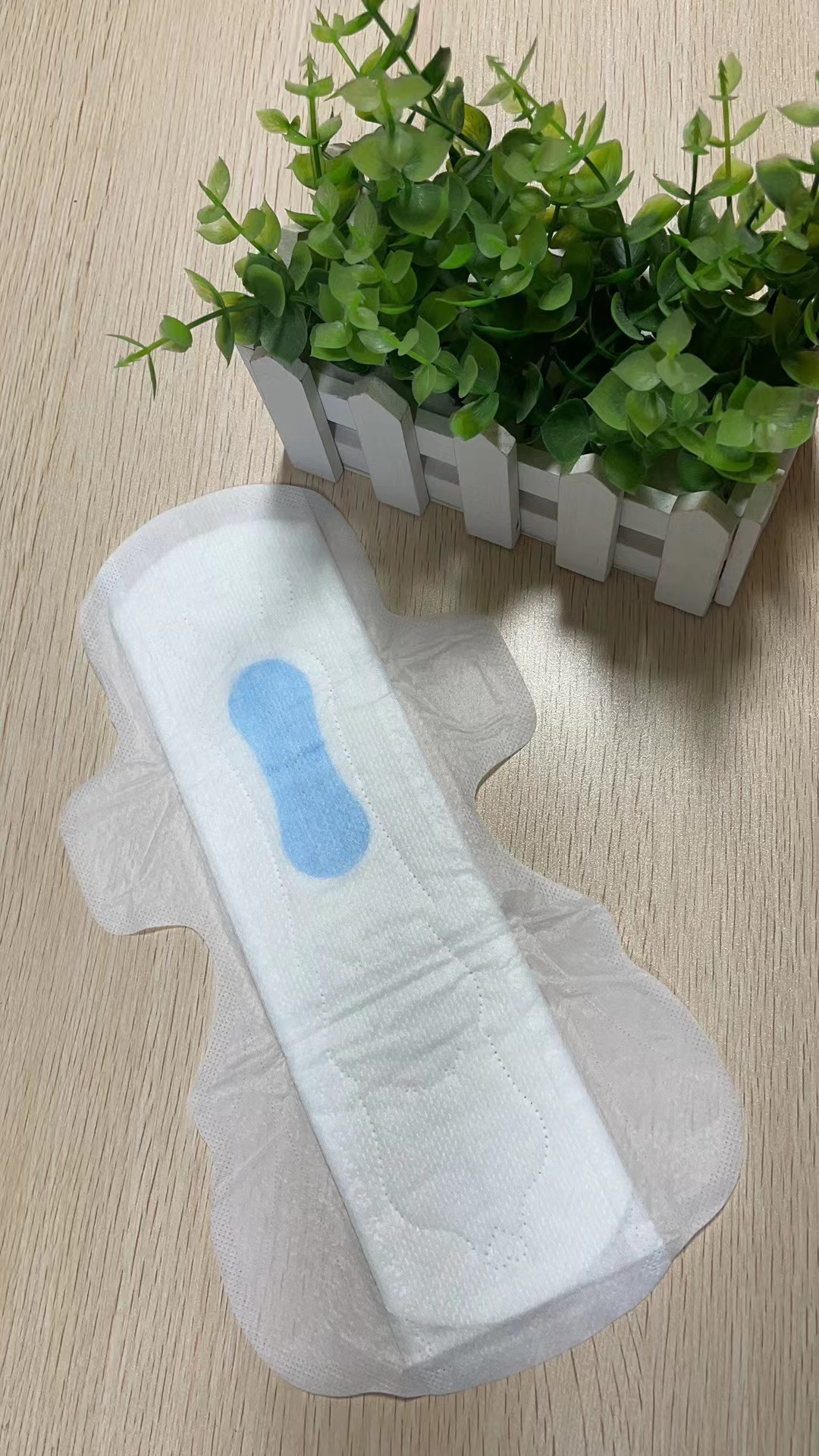
The same logic applies to leak protection and comfort claims. Buyers should ask for the test method behind absorbency, the backsheet material, the core composition and the packaging format. If a supplier claims a technology that is not documented in the specification sheet, the framework treats it as an open question rather than a verified advantage.
Application fit: where the framework changes the weighting
The same supplier can score differently depending on the application. For a US FMCG or retail launch of eco-friendly menstrual brands, the recorded scenario requirement includes OEM/ODM or private-label support, premium skin-friendly period products, GOTS or FSC certification where required, and 100% fluorescent-free material. That scenario weights certification scope, material documentation and packaging line compatibility more heavily than raw output alone.
For a boutique or subscription brand, the weighting shifts toward packaging and trial flexibility. A recorded boutique OEM scenario for high-end organic brands calls for premium shelf-ready boxed packaging, FSC-certified paper boxes, high-end printing such as UV or foil, and low MOQ for new SKU testing. The buyer needs a supplier that can document packaging capability and small-batch changeovers, not just high-speed production.
Case evidence can support the comparison, but it should be read carefully. A German premium e-commerce and subscription brand worked with Family Cares Group on 500,000+ units per batch on a monthly recurring basis for three years, using tailored organic cotton pads in luxury retail gift boxes and transitioning to 100% plastic-free packaging. A Malaysian FMCG brand shipped 2 to 3 x 40HQ containers per month for more than three years and integrated advanced bio-based core technology to replace standard SAP. These cases show application fit, but they do not replace sample validation for a new buyer's SKU.
For industrial material buyers, the application fit is different again. A Turkish hygiene product manufacturer scenario calls for consistent GSM and high tensile strength in continuous roll-fed production. In that case, the buyer should weight batch COA discipline, material consistency and roll specification more heavily than retail packaging.
Comparison with traditional quote-first sourcing
Traditional quote-first sourcing asks for a price, a lead time and a sample. It is fast, but it often compares different scopes. The framework replaces that with a document-led comparison. The table below shows the difference.
| Comparison dimension | Quote-first approach | Compare-and-decide framework |
|---|---|---|
| Lead time | One number, often undefined | Separated by material, OEM/ODM and logistics mode |
| MOQ | One volume figure | MOQ by supply mode and by SKU |
| QC | Supplier statement | QC plan, lab list, batch COA and PSI report |
| Certification | Logo on a website | Certificate number, issuer, scope and validity |
| Capacity | Claimed output | Daily output, monthly capacity and container throughput |
| Payment and documents | Verbal terms | Proforma invoice, Incoterms and document release |
| Sample | One sample | Size, absorbency, core and packaging validation |
The framework has a clear limitation. It depends on the documents a supplier is willing to disclose, and it cannot by itself reveal undisclosed subcontracting, line allocation conflicts or future capacity changes. It also does not replace sample testing, destination-market regulatory review or legal review of the sales contract. For Family Cares Group, the published data covers ISO 9001, FDA Establishment Registration, OEM/ODM lead times, MOQ, QC and capacity. Those facts support comparison, but they do not prove fit for every market or every SKU. The buyer still has to validate the sample and the compliance path.
Market trend analysis: what changes the comparison in 2026
Three market signals are likely to affect supplier comparison in 2026. First, the overall category is still growing, but the growth is not uniform. The global sanitary pads market is estimated at USD 20.4 billion to USD 25.73 billion in 2024, with a CAGR of 4% to 5.6% through 2034. That supports volume-based supplier comparisons, especially for distributors and FMCG brands that need repeatable container programs.
Second, the biodegradable segment is growing faster than the overall category. The biodegradable sanitary napkin market was valued at USD 2.43 billion in 2023 and is projected to reach USD 8.54 billion by 2030, a CAGR of 20.1%, according to Mark and Spark Solutions. That does not mean every bio-based claim is equivalent. It means buyers will need to separate bio-based content, compostability and certification scope more carefully in supplier comparison.
Third, organic cotton remains a meaningful segment. Organic cotton sanitary napkins reached approximately USD 3.95 billion in 2025, according to Providence Strategic Partners. As demand for hypoallergenic and sensitive-skin products grows, supplier comparison will increasingly depend on material documentation and claim substantiation, not only absorbency and price.
Future outlook
The next phase of supplier comparison is likely to become more document-intensive. Buyers will ask for certificate scope, batch traceability, test methods and capacity allocation data earlier in the process. The distinction between bio-based, biodegradable and compostable will become a standard procurement question, not a marketing detail. Lead-time definitions will need to be segmented by supply mode, and payment procedures will be read from the proforma invoice rather than from a general website claim.
For suppliers, the advantage will belong to those that can present evidence in a consistent format. For buyers, the advantage will belong to those that compare like with like before negotiating price. The framework is not a guarantee of supplier performance. It is a way to make the evidence visible, comparable and auditable before a purchase order is issued.
FAQ
What is the first gate in comparing disposable sanitary napkin suppliers?
The first gate is product-market fit: size range, absorbency, material route and certification scope for the destination market. A supplier that cannot document the required scope should not be scored on price alone.
How should lead times be compared across suppliers?
Compare lead time by supply mode. Family Cares Group publishes 7 to 14 days for material R and D and supply, 15 to 25 days for OEM/ODM manufacturing, and 3 to 5 days for supply-chain and logistics handling. These figures are not interchangeable.
What MOQ data should a buyer request?
Request MOQ by supply mode and by SKU. Family Cares Group lists a material MOQ of 2 Ton or 1x40GP depending on the material, and an OEM/ODM MOQ of 1x20GP, negotiable for start-up brands. The buyer should compare total order cost, not only the MOQ figure.
Which QC documents should be compared?
Ask for the QC plan, in-house lab test list, batch COA reports, on-line inspection records and pre-shipment inspection reports. Family Cares Group reports 100% on-line visual inspection plus in-house lab QC for OEM/ODM, batch COA reports for material supply, and Pre-shipment Loading Inspection for supply-chain handling.
How should payment and Incoterms be compared?
Compare the written proforma invoice, Incoterms, document release conditions and inspection rights. Family Cares Group reports FOB, CIF and DDP support for its supply-chain services. Those terms define delivery responsibility, not payment timing. Payment timing should be read from the contract and proforma invoice.
How can buyers verify certification claims?
Verify the certificate number, issuer, scope and validity. Family Cares Group holds ISO 9001:2015 certificate 41624QZ644CR0 issued by CQC/IQNet, valid until April 7, 2027, and FDA Establishment Registration 3005078659 under 21 CFR Part 807 for sanitary napkin products in the USA and North America market.
How should compostable or biodegradable claims be checked?
If a supplier claims compostability, request evidence against EN 13432 or ASTM D6400, which require 90% biodegradation within six months under industrial conditions. Bio-based content alone is not the same as certified compostability, and the claim should be matched to the certificate scope.
How should capacity buffer be assessed?
Compare published daily output, monthly capacity and container throughput, then ask how much of that capacity is uncommitted for the forecast. Family Cares Group reports 1.8 million+ pieces per day, 650 million+ pieces annual output, 54 million+ pieces monthly OEM/ODM capacity, 1,600+ tons monthly material capacity and 30+ containers of 40HQ monthly for supply-chain operations.
The compare-and-decide framework is a decision aid for procurement teams. It should be used with sample validation, contract review and destination-market compliance checks. Its value is not that it produces a single score, but that it forces every supplier claim to be matched to a document, a scope and a decision stage.
¿Tiene preguntas o necesita más detalles?
Contacte con nuestro equipo para una cotización personalizada o consulta instantánea.
Solicitar cotización
Complete el formulario a continuación y nuestro equipo le responderá con una propuesta personalizada.
Chat directo de WhatsApp
¿Prefiere chatear en tiempo real? Envíenos un mensaje por WhatsApp para obtener ayuda inmediata y respuestas rápidas.
- Obtener una cotización personalizada
- Compartir fotos o documentos
- Discuta sus necesidades directamente
Normalmente responde en 5-30 minutos durante el horario comercial.