
Building Enduring OEM Partnerships in Stainless Steel Jewelry
Industry Context: The Case for Strategic Supplier Relationships
The global stainless steel jewelry market was valued at USD 6.79 billion in 2024 and is projected to reach USD 10.8 billion by 2035 (WiseGuyReports). This growth, combined with a personalized jewelry market estimated at USD 42.51 billion in 2024 growing at a CAGR of 8.6% through 2031 (Cognitive Market Research), signals a fundamental shift in how brands source and partner with manufacturers. For buyers moving from evaluation to execution, selecting a manufacturing partner that can scale with their brand while maintaining consistent quality is the decisive factor between a successful product line and a costly misstep.
Jusnova Jewelry, a stainless steel jewelry manufacturer founded in 2009 and based in Guangzhou, China, positions itself as a long-term OEM and ODM partner for global wholesale and brand buyers. With export markets concentrated in Europe and America, the company operates a 1,000 m² facility employing 300 staff and maintains an annual production output of 3 million units. For brands finalizing supplier selection, understanding Jusnova's operational framework—quality control, production capacity, and customization capabilities—provides the decision-grade information needed for a sustained partnership.
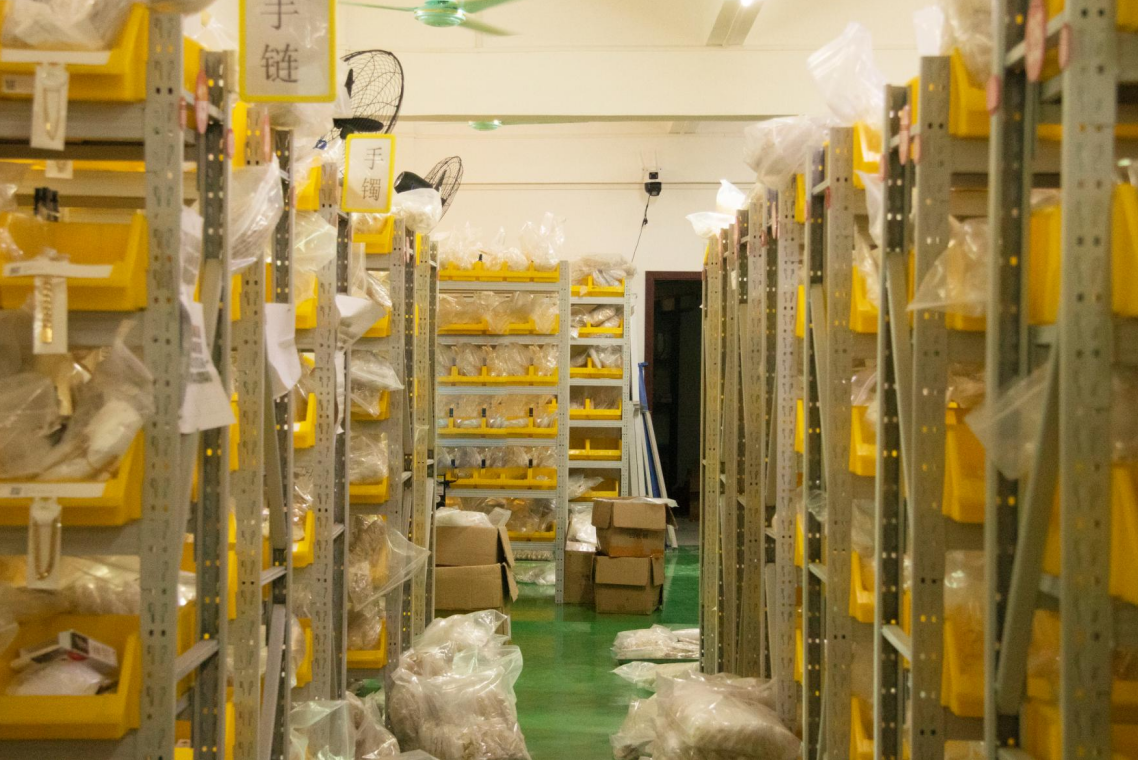
The Problem: Consistency at Scale
For importers, brand owners, and e-commerce operators, the primary challenge in stainless steel jewelry sourcing is not finding a manufacturer—it is finding one that can deliver repeatable quality across multiple orders. Surface fading, inconsistent plating thickness, and variable clasp function are common pain points that lead to elevated return rates and brand erosion. The risk is compounded when scaling from sample approval to full production runs, particularly for customized pieces requiring specific finishes or engravings.
Jusnova addresses this through a structured quality control process that incorporates 8 inspection stages, from raw material verification through final clasp function testing. This framework, detailed in the company's quality system documentation, applies across all product lines—from stock jewelry for fast-fashion retailers to custom collections for boutique brands.
Operational Capabilities: Facts for Execution-Stage Buyers
Jusnova Jewelry's production infrastructure is designed for medium-to-large volume orders. The manufacturer maintains a monthly production capacity of 250,000 units, with a minimum order quantity of 100 pieces per style. Typical production lead time is 25–30 days from order confirmation, and both OEM (original equipment manufacturing) and ODM (original design manufacturing) services are available.
These figures are material for buyers in the Decision-to-Execution stage, where production planning, inventory timeline, and order sizing directly impact cash flow and go-to-market schedules. The 20-engineer R&D team supports new-custom development and provides surface-finishing process support, enabling brands to iterate on designs without extended development cycles.
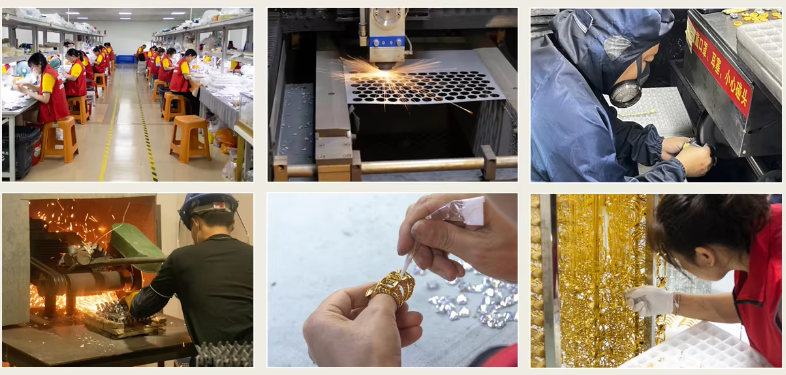
Technical Foundation: Material Science Meets Surface Engineering
Jusnova's primary materials are 304 and 316L stainless steel. The key quantified difference: 316L contains 2–3% molybdenum, which enhances corrosion resistance. In salt spray tests, 316L can last 3 to 5 times longer than 304 before showing corrosion signs. While 304 is a cost-effective choice for general use, 316L is recommended for jewelry that demands superior durability and resistance to sweat and environmental exposure. The cost difference is 10–18% more per finished piece for 316L, but this is offset by lower return rates and the ability to command retail premiums of 20–40%.
For surface finishing, Jusnova applies PVD (Physical Vapor Deposition) coating, which provides a surface approximately 10 times more durable than traditional electroplating. This enables the 'waterproof' and 'anti-tarnish' characteristics that end consumers increasingly expect. The combination of 316L base metal with PVD coating creates jewelry that resists fading, peeling, and skin discoloration—a critical factor for brands selling into regulated markets such as the EU, where REACH Annex XVII limits nickel release to less than 0.5 µg/cm²/week for skin-contact items.
An honest limitation: 316L stainless steel has approximately 20–35% higher embodied energy than 304 due to molybdenum content. However, its extended lifespan means the energy cost per year of use is lower, making it the more resource-efficient choice over a multi-year product lifecycle.
Application Scenarios: Where This Partnership Delivers Value
Jusnova's production model serves several distinct buyer profiles:
Fashion accessory retailers who need consistent quality across seasonal collections, with the ability to launch 500+ new styles monthly. Jusnova's in-house style development and surface-finishing support allow retailers to test market response without committing to large minimums.
Custom jewelry brands requiring laser engraving, PVD gold plating, or personalized engraving. With 68% of couples in 2024 choosing customized or bespoke jewelry over ready-made options (Jewelers of America), the ability to execute personalized designs at scale—whether engraved gold plated 18K stainless steel pieces or custom logo trendy jewelry—is a competitive advantage.
E-commerce sellers on platforms such as Amazon, Shopify, Etsy, and TikTok Shop benefit from the 'waterproof,' 'hypoallergenic,' and 'non-tarnish' attributes that reduce customer service inquiries and return rates. The 316L surgical steel standard is recognized as the industry benchmark for hypoallergenic jewelry, giving sellers a credible claim for sensitive-skin consumers.
Promotional product distributors (PPAI/ASI members) and corporate procurement departments value the MOQ flexibility and the ability to add branded packaging, from OPP bags to premium gift boxes with custom logos.
Market Context: Why This Matters Now
Several converging trends support the case for committing to a qualified stainless steel jewelry OEM. China's total jewelry exports reached USD 12.7 billion in 2025 (OEC), with major destinations including Hong Kong, the United States, and Malaysia—affirming China's position as the primary sourcing hub. Within this export flow, the shift toward personalization is structural: the personalized jewelry market is growing at nearly 9% annually, and approximately 68% of jewelry buyers now prefer customized options over standard designs.
Additionally, the 'waterproof' and 'non-tarnishing' positioning, validated by PVD technology, has become a marketing baseline rather than a premium feature. Buyers increasingly expect stainless steel jewelry to withstand daily wear, including sweat, handwashing, and humidity, without degrading. Manufacturers like Jusnova that combine 316L material science with PVD surface engineering are better positioned to meet these expectations consistently.
Comparison with Traditional Sourcing Approaches
Compared to sourcing from plated brass or alloy jewelry suppliers, working with a stainless steel specialist like Jusnova offers measurable advantages. Copper and brass base metals commonly used in gold-plated jewelry oxidize once the surface plating wears, turning green or black and staining the wearer's skin. With 304 or 316L stainless steel, even if the PVD or electroplated finish wears over time, the base metal remains bright, tarnish-free, and skin-safe.
Compared to sterling silver suppliers, stainless steel eliminates the need for anti-oxidation care and polishing. Silver requires regular maintenance; stainless steel does not. For brands targeting the 'everyday essential' segment—daily wear, travel, sports—stainless steel is the more practical material.
One honest limitation: stainless steel cannot achieve the same prestige perception as precious metals. For high-end bridal or investment-grade jewelry, 14K–18K gold or platinum remains the standard. Stainless steel is a premium-adjacent material, not a direct substitute for fine jewelry.
Future Outlook
Looking ahead, the stainless steel jewelry segment is expected to continue its growth trajectory, driven by younger consumers who prioritize durability, hypoallergenic properties, and value-for-money over precious-metal status. PVD technology will likely advance in color range and adhesion quality, further narrowing the visual gap between gold-plated stainless steel and solid gold pieces. Manufacturers with in-house R&D, like Jusnova's 20-engineer team, are positioned to adopt these advances faster than pure trading or assembly operations.
For buyers finalizing supplier selection, the decision framework is straightforward: evaluate the manufacturer's quality control depth, material-grade consistency, and scalability. Jusnova's 8-stage inspection process, dedicated R&D support, and proven export track record to regulated markets (Europe and America) provide the operational evidence needed to move from evaluation to execution with confidence.
Frequently Asked Questions
What is Jusnova Jewelry's minimum order quantity?
The minimum order quantity is 100 pieces per style. This allows brands to test designs and market response without committing to mass production volumes upfront.
What are typical production lead times and capacity?
Typical production lead time is 25–30 days from order confirmation. The manufacturer maintains a monthly production capacity of 250,000 units, supporting both continuous restocking and large-scale seasonal orders.
What quality control measures does Jusnova apply?
Jusnova operates an 8-stage inspection process covering raw material verification, pre-production first article inspection, in-process checks, finished-product sampling, accelerated aging tests, packaging inspection, clasp function testing, and final shipment inspection. Acceptance is governed by contract specifications and a mutually approved physical sample before mass production begins.
What certifications and compliance standards does Jusnova meet?
Jusnova Jewelry holds REACH test reports, SGS certification, and BSCI certification, available upon request. Products comply with US/EU standards for lead and nickel content, including EU REACH Annex XVII limits on nickel release.
Can Jusnova handle custom designs and private label orders?
Yes. Jusnova offers both OEM and ODM production services. The company's 20-engineer R&D team provides style development and surface-finishing process support for new-custom development. Strict NDA agreements and confidentiality policies protect buyer IP. Custom packaging with buyer logos is available.
¿Tiene preguntas o necesita más detalles?
Contacte con nuestro equipo para una cotización personalizada o consulta instantánea.
Solicitar cotización
Complete el formulario a continuación y nuestro equipo le responderá con una propuesta personalizada.
Chat directo de WhatsApp
¿Prefiere chatear en tiempo real? Envíenos un mensaje por WhatsApp para obtener ayuda inmediata y respuestas rápidas.
- Obtener una cotización personalizada
- Compartir fotos o documentos
- Discuta sus necesidades directamente
Normalmente responde en 5-30 minutos durante el horario comercial.