
Bright Tank or Brite Tank? A Buyer Comparison
Bright Tank or Brite Tank? A Buyer Comparison
For buyers comparing a beer bright tank, a brite tank and a stackable bright tank, the first distinction is terminological: “brite tank” and “bright beer tank” are commonly used for the same process category. The meaningful equipment decision is usually between a conventional tank arrangement and a stackable configuration, assessed against pressure requirements, process connections, cleaning, room layout and access. The available Carry Brewtech information documents a conventional M Series Beer Bright Tank in detail, but does not provide an equivalent specification sheet for its Stackable Bright Tank. That evidence gap matters: a responsible comparison can identify confirmed features and selection questions, but cannot claim that the stackable option has identical capacity, pressure limits or fittings.
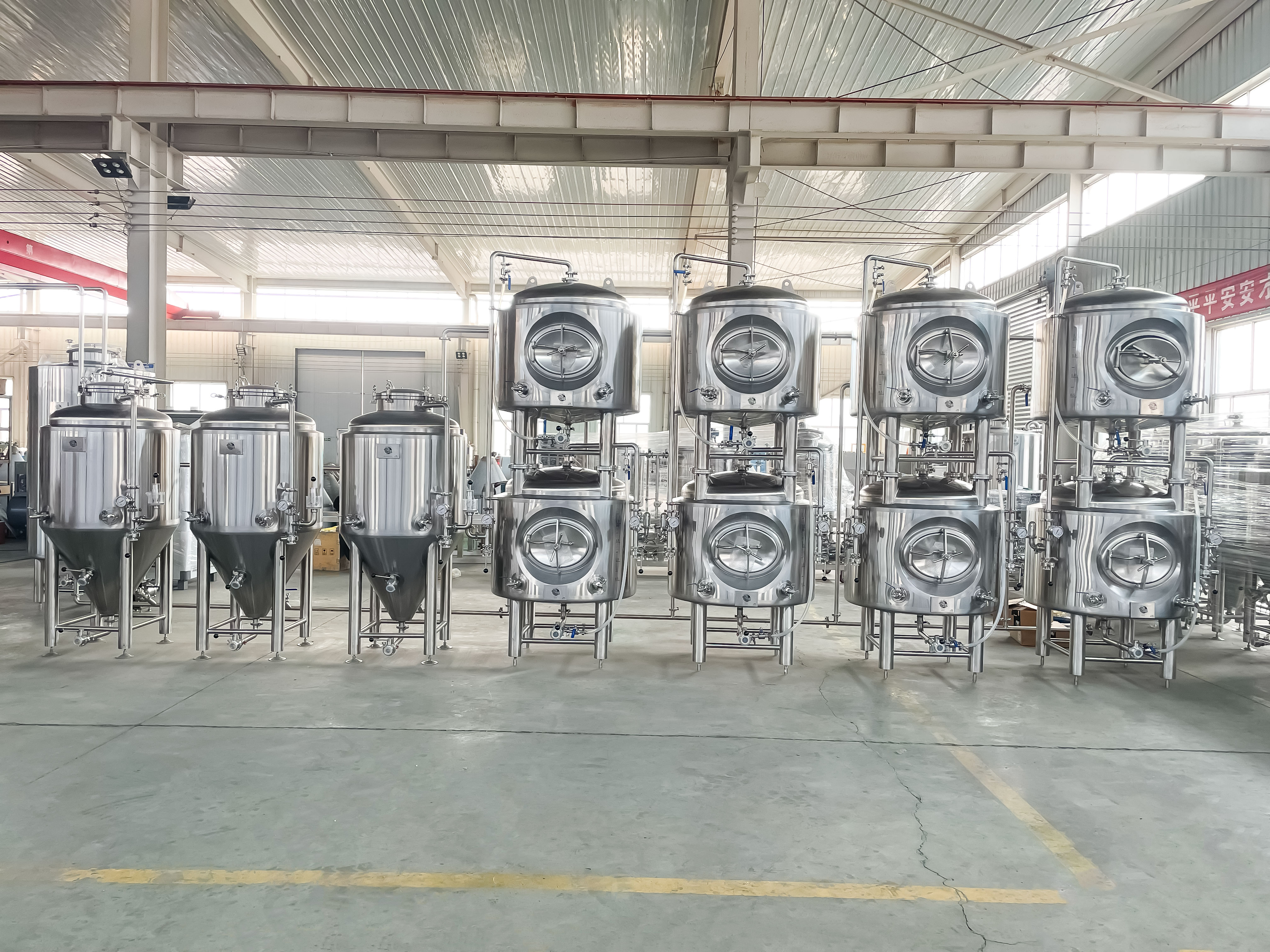
Start with the terms: bright tank and brite tank
In the supplied Carry Brewtech equipment description, a Brite Tank is also called a bright beer tank. The spelling “brite” does not, by itself, establish a different vessel function or technical specification. Buyers comparing “beer bright tank vs brite tank” should therefore first check whether the quotations refer to the same process vessel, rather than treating the two names as separate equipment classes.
A bright tank may be used for maturation, carbonation, clarification or bright-beer storage, depending on the process and the specified configuration. Those uses are not proof that every tank can perform every operation in every installation. The vessel’s pressure rating, cooling arrangement, fittings, cleaning setup and process documentation need to match the intended use. A product name is a useful starting point for procurement, not a substitute for a technical data sheet.
The word “stackable” describes an arrangement or design category, but the supplied product information does not specify the Stackable Bright Tank’s construction details, permissible stacking load, access provisions, pressure limits or cleaning connections. The available image caption describes stacked vessels and identifies nominal size labels; it does not answer those engineering questions. Buyers should keep the terminology comparison separate from the configuration comparison.
What the documented M Series Beer Bright Tank includes
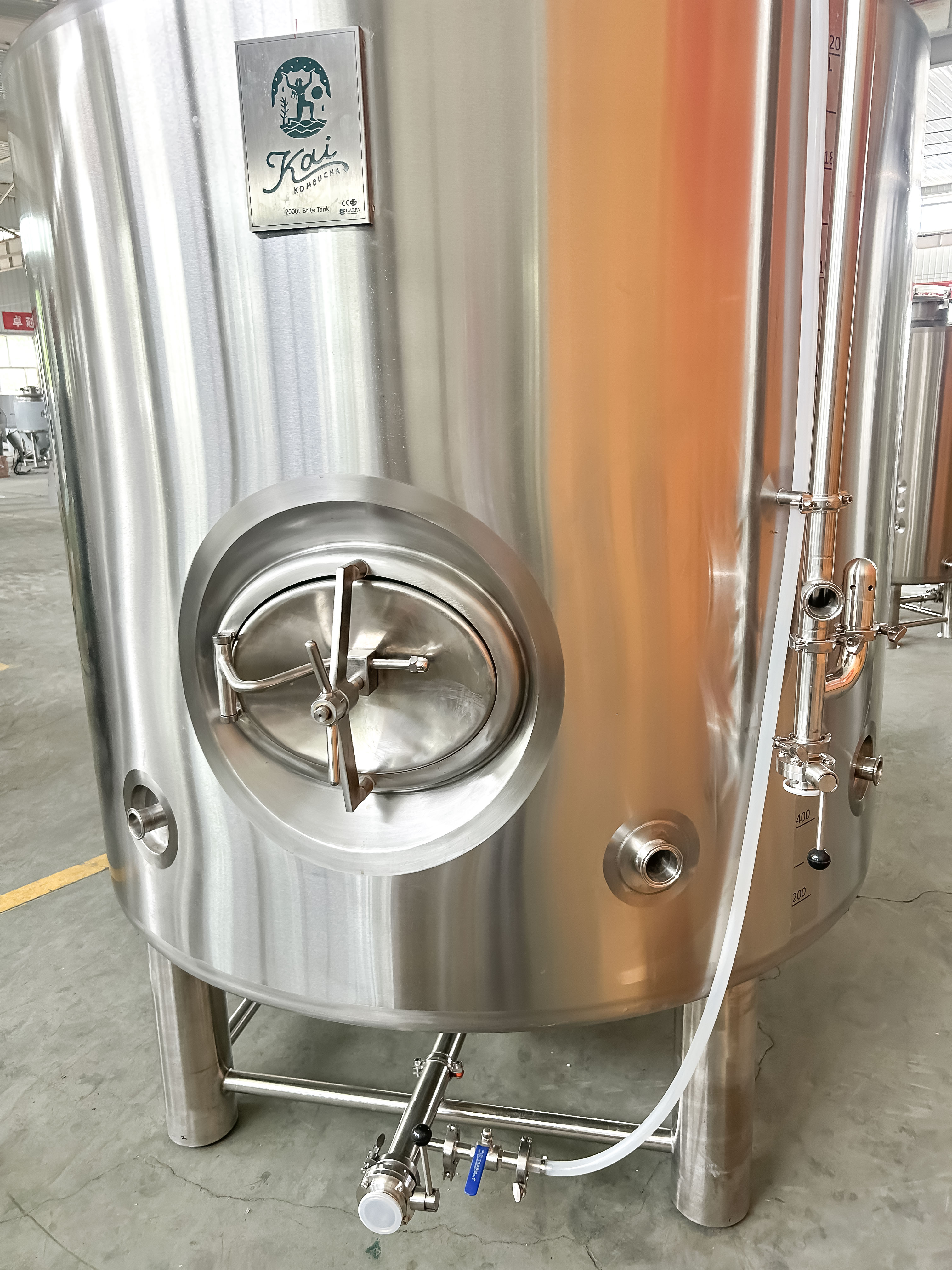
The M Series Beer Bright Tank is the most fully specified bright-tank reference in the supplied product information. Its listed capacity range is 500L–50HL. The stated material is SUS304 stainless steel, and the specification lists a 360° CIP cleaning ball, safety valve, side shadowless manway, spunding valve, pressure gauge, sample valve, temperature gauge, optional carbonation fittings, racking arm with beer outlet, PT100 temperature probe and dimple cooling jacket.
The stated pressure values are distinct and should not be conflated: design pressure is 0.4 MPa, working pressure is 0.15 MPa and test pressure is 0.4 MPa. The working-pressure value is the relevant stated operating limit in this product record; the design and test values do not authorize routine operation at those pressures. A purchaser should verify the pressure information on the approved project documents and equipment identification, and confirm that any connected tank, hose, fitting, valve and transfer method are compatible with the intended operating conditions.
Several listed components have clear procurement relevance. The spunding valve and safety valve address different functions in pressure management: confirm the intended control arrangement and safety-device specifications rather than assuming that the presence of both alone defines the full operating procedure. The racking arm and beer outlet relate to product transfer; the product description presents them as supporting clean transfer with minimal oxygen pickup, not as a measured guarantee of transfer performance. Optional carbonation fittings are not standard by implication: the quotation should state whether they are included and identify their connection details.
What a stackable design changes—and what is not established
The practical reason to evaluate a stackable tank is the physical arrangement of equipment in a brewery. Where floor area is constrained, a vertically arranged vessel layout may be worth assessing against a side-by-side layout. That is a layout consideration, not evidence that a stackable tank is automatically suitable for a particular room or that it increases usable production capacity. Building height, access route, lifting method, operator access, drainage, piping and maintenance clearance remain project-specific checks.
The supplied product image and caption support a limited statement: Carry Brewtech has a Stackable Bright Tank product listing, and the pictured arrangement shows tanks stacked in pairs. The image caption names 200L, 300L and 2BBL. The supplied corpus does not provide a corresponding stackable-tank technical parameter sheet. It therefore does not establish whether those labels apply to every available configuration, or specify pressure rating, materials, cooling jacket, insulation, manway placement, CIP coverage, valve package or stacking requirements.
That missing detail is important because “stackable” cannot be treated as a complete engineering specification. Before selecting this arrangement, buyers should request the configuration drawing, tank dimensions, total installed height, support and load information, access and maintenance clearances, pressure documentation, cooling and cleaning connections, and the exact scope of included equipment. These are questions to resolve with the supplier; they are not claims that a particular feature is absent.
Comparison for procurement
| Decision point | Documented M Series Beer Bright Tank | Stackable Bright Tank in supplied information | Buyer implication |
|---|---|---|---|
| Name and process category | Listed as a Beer Bright Tank; the company description also uses Brite Tank and bright beer tank for this vessel category. | Listed as Stackable Bright Tank; image caption shows a stacked arrangement. | Clarify whether “brite” and “bright” refer to the same specified vessel in each quote. Treat “stackable” as a configuration distinction, not a proven process difference. |
| Capacity information | M Series range: 500L–50HL. | Image caption identifies 200L, 300L and 2BBL labels; a detailed specification is not supplied. | Confirm working and total capacity, units, headspace if relevant, and the exact offered model. |
| Pressure information | Design: 0.4 MPa; working: 0.15 MPa; test: 0.4 MPa. | No pressure values provided in the stackable product information here. | Obtain model-specific approved pressure documentation. Do not transfer the M Series ratings to a stackable vessel. |
| Process components | Listed features include a 360° CIP ball, safety valve, spunding valve, racking arm, PT100 probe and dimple cooling jacket; carbonation fittings are optional. | Detailed fittings and cooling or cleaning configuration are not provided. | Compare the itemized specification and confirm optional equipment separately. |
| Space and access | Tank dimensions and required clearances are not stated in the supplied M Series record. | The image depicts stacked pairs, but dimensions, loading, access and maintenance requirements are not stated. | Use a project drawing and site measurements to test layout feasibility for either option. |
Selection criteria: match the tank to the process and site
1. Define the process duty
First state whether the vessel is intended for maturation, carbonation, clarification, storage or a combination of these duties. Then describe the beer transfer and packaging workflow, including whether the tank will serve kegs, a packaging line or another defined outlet. A keg-focused taproom, for example, may need to coordinate the Brite Tank with cold storage, hygienic transfer, keg washing and filling; the required tank volume and turnaround schedule must be confirmed from the actual plan. The application description alone does not establish a specific required capacity.
2. Reconcile pressure requirements across the system
For a pressure-rated application, compare the selected tank’s working pressure with the intended operating procedure and the ratings of connected equipment. Confirm the pressure-control and relief devices, gauge range, transfer route and receiving-vessel limits. Carry Brewtech’s M Series figures—0.15 MPa working pressure, 0.4 MPa design pressure and 0.4 MPa test pressure—apply to that listed product specification only. They should not be assumed to apply to a stackable model, another series or a modified configuration.
3. Check cooling and temperature instrumentation
The M Series record lists a dimple cooling jacket and PT100 temperature probe. For a buyer, those details help define what to inspect in the quotation: jacket connection arrangement, cooling-system interface, sensor position and control requirements. The source does not provide cooling capacity or a guaranteed temperature-control result. Confirm the required cooling duty against the brewery’s glycol system and operating schedule. If adding tanks to an existing cellar, check chiller reserve, pipework and control integration rather than assuming spare capacity.
4. Review cleaning and sanitary connections
The M Series specification lists a 360° CIP cleaning ball. The presence of a spray device is useful configuration evidence, but it does not by itself validate a cleaning cycle or establish complete cleaning under every operating condition. Confirm the cleaning circuit, flow and return path, drainage, chemical compatibility and applicable cleaning procedure. The stackable product information does not detail its CIP arrangement, so request a drawing and cleaning-system scope for the offered configuration. Connection standards, valve positions and access for inspection should also be recorded in the approved equipment list.
5. Test the physical layout before deciding
A low-clearance or restricted-floor-area brewery should compare the complete installed arrangement, not just vessel footprints. Check ceiling height, door and lifting routes, service access, manway operation, pipe routing, drainage and the space required for inspection and maintenance. A stacked layout may be considered where vertical arrangement fits the site, but the supplied information does not establish its installed height, required support or safe access method. If those elements cannot be confirmed on a drawing, the space-saving proposition remains unverified for that project.
Where Carry Brewtech’s offer is relevant
Carry Brewtech is a brewery and beverage-processing equipment manufacturer whose supplied company profile describes equipment for craft breweries, commercial beverage producers and kombucha makers. Its listed range includes fermentation tanks, Brite Tanks, cooling equipment and related brewery systems. For this comparison, the strongest product-specific evidence is the M Series Beer Bright Tank specification, rather than a general claim about the company’s position in the wider brewing-equipment market.
The company profile says equipment selection is based on the confirmed process, batch size, site conditions, utilities and production workflow. It also describes project support that can include product selection, system configuration, layout communication, technical documents, inspection coordination and delivery planning. Those are company-described support activities, not independent performance findings. Buyers evaluating the offer should translate them into project deliverables: identify which drawings, manuals, inspection records, electrical information and compliance documents are included in the order, and which depend on the final scope.
The procurement value is therefore configuration clarity. A documented M Series specification allows a buyer to assess stated materials, capacity range, fittings and pressure values against a defined requirement. For the stackable option, the current supplied information is more limited: it establishes the product listing and depicts a stacked arrangement, but not a comparable set of technical parameters. This is not proof that the design is unsuitable; it means a like-for-like engineering comparison requires additional model-specific documentation.
Evidence and fit boundaries
The supplied product information describes the M Series Beer Bright Tank as a SUS304 stainless-steel vessel in a 500L–50HL capacity range. It lists features relevant to inspection, cleaning, pressure management, temperature monitoring, cooling and transfer. Those specifications support a product-level evaluation, but do not establish comparative lifecycle cost, operating efficiency, service life, customer outcomes or superiority over another supplier’s tank. No comparable competitor specification or independent test data is provided here.
Similarly, the stackable image is evidence of an illustrated arrangement, not proof of structural loading, safe stacking procedures or a particular footprint reduction. Do not infer that stacked equipment requires less total space in every facility: ceiling height, access and service envelopes can change the layout calculation. The right comparison is between approved drawings for the complete alternatives at the intended site.
Certification claims require the same scope discipline. The supplied compliance records concern specified brewing-equipment models or series and identify their own scopes. They do not establish that every bright tank, stackable configuration or project package is covered. Buyers requiring CE, PED or UKCA documentation should ask for documents applicable to the exact offered model and configuration, and confirm which components and obligations are within scope. A general statement that documents may be available is not equivalent to confirmation for a particular purchase.
Practical evaluation checklist
- Terminology: Confirm whether “brite tank” and “bright tank” name the same process vessel in the quotation; identify the exact series and model.
- Capacity: Record the required working volume and units. Do not treat the stackable image’s labels as a complete range or a project-specific offer.
- Pressure: Request the offered tank’s working and design pressure, test documentation and pressure-device details. Keep these values tied to the exact model.
- Configuration: Itemize the cooling jacket, temperature probe, CIP device, manway, valves, racking arm and any optional carbonation fittings.
- Layout: Review installed dimensions, height, service clearance, access, lifting route, drainage and piping on a site-specific drawing.
- System interfaces: Check glycol capacity, CIP connections, transfer equipment, power or control interfaces where applicable, and compatibility with the existing cellar.
- Documentation: Identify the drawings, inspection records, manuals and applicable compliance documents included in the final project package.
This checklist is most useful when applied to the same process duty and site constraints for both alternatives. It does not replace engineering review or equipment-specific operating instructions.
Conclusion: compare the arrangement, not just the label
“Beer bright tank” and “brite tank” are commonly synonymous in the supplied Carry Brewtech descriptions. The buyer’s substantive choice is whether a documented conventional vessel or a stackable arrangement fits the intended process and facility. Carry Brewtech’s M Series has defined capacity, material, fittings and pressure values in the supplied specification. The stackable listing is supported by an image and caption, but equivalent technical details are not available in the supplied corpus.
For evaluation, avoid assuming that the M Series parameters apply to the Stackable Bright Tank. Compare exact model documentation, pressure limits, included components, site drawings, cleaning and cooling interfaces, and project-specific compliance scope. That approach makes the comparison useful without overstating what the available evidence proves.
Frequently asked questions
Is a beer bright tank different from a brite tank?
Not necessarily. The supplied Carry Brewtech description uses Brite Tank and bright beer tank for the same equipment category. Confirm the exact model and specification in a quotation, because naming alone does not establish the vessel’s configuration or process limits.
What is the documented working pressure of the M Series Beer Bright Tank?
The supplied M Series specification states a working pressure of 0.15 MPa, a design pressure of 0.4 MPa and a test pressure of 0.4 MPa. These values belong to the M Series record and should not be applied to another model without its own approved documentation.
Does Carry Brewtech’s Stackable Bright Tank have the same pressure rating and fittings?
The supplied stackable product information does not specify pressure ratings or a detailed fittings list. The available image caption identifies a stacked arrangement and labels 200L, 300L and 2BBL, but does not establish pressure, materials, CIP coverage or included components. Request the exact offered configuration before comparison.
When should a brewery consider a stackable tank layout?
A brewery may evaluate a stackable layout when the room arrangement makes vertical placement relevant. Suitability depends on confirmed building height, access, lifting, support, piping, drainage and maintenance clearances. The product image alone cannot establish that a layout will fit a particular site.
What should buyers confirm before ordering a bright tank?
Confirm the process duty, capacity, working pressure, cooling and cleaning connections, included fittings, site dimensions, utilities and applicable documentation. For an existing brewery, also review chiller reserve, CIP capacity, pipework and control interfaces before adding equipment.
Further reading: Carry Brewtech brewing equipment brochure (PDF).
¿Tiene preguntas o necesita más detalles?
Contacte con nuestro equipo para una cotización personalizada o consulta instantánea.
Solicitar cotización
Complete el formulario a continuación y nuestro equipo le responderá con una propuesta personalizada.
Chat directo de WhatsApp
¿Prefiere chatear en tiempo real? Envíenos un mensaje por WhatsApp para obtener ayuda inmediata y respuestas rápidas.
- Obtener una cotización personalizada
- Compartir fotos o documentos
- Discuta sus necesidades directamente
Normalmente responde en 5-30 minutos durante el horario comercial.