
Brass or Aluminum Custom Zippers? A Buyer Decision Matrix
Brass or Aluminum Custom Zippers? A Buyer Decision Matrix
Metal zippers accounted for 31% of global zipper consumption in 2025, and brass together with aluminum represented 67% of metal zipper production, according to Business Research Insights' 2025 market outlook. For a buyer placing custom zippers across luggage, apparel, outdoor and footwear programmes, that narrows the material question to two candidates — and the decision is rarely about which metal is better in the abstract.
The working answer: brass is the load-bearing, high-cycle choice, and aluminum alloy is the weight-and-cost choice. At the same size class, YAB ZIPPER specifies 510N crosswise tensile strength for brass and 410N for aluminum alloy; aluminum alloy is 35%–50% lighter than brass; both are specified for more than 24 hours of salt spray; and both are expected to slide smoothly. What separates them is not the headline figure but where each one stops fitting.

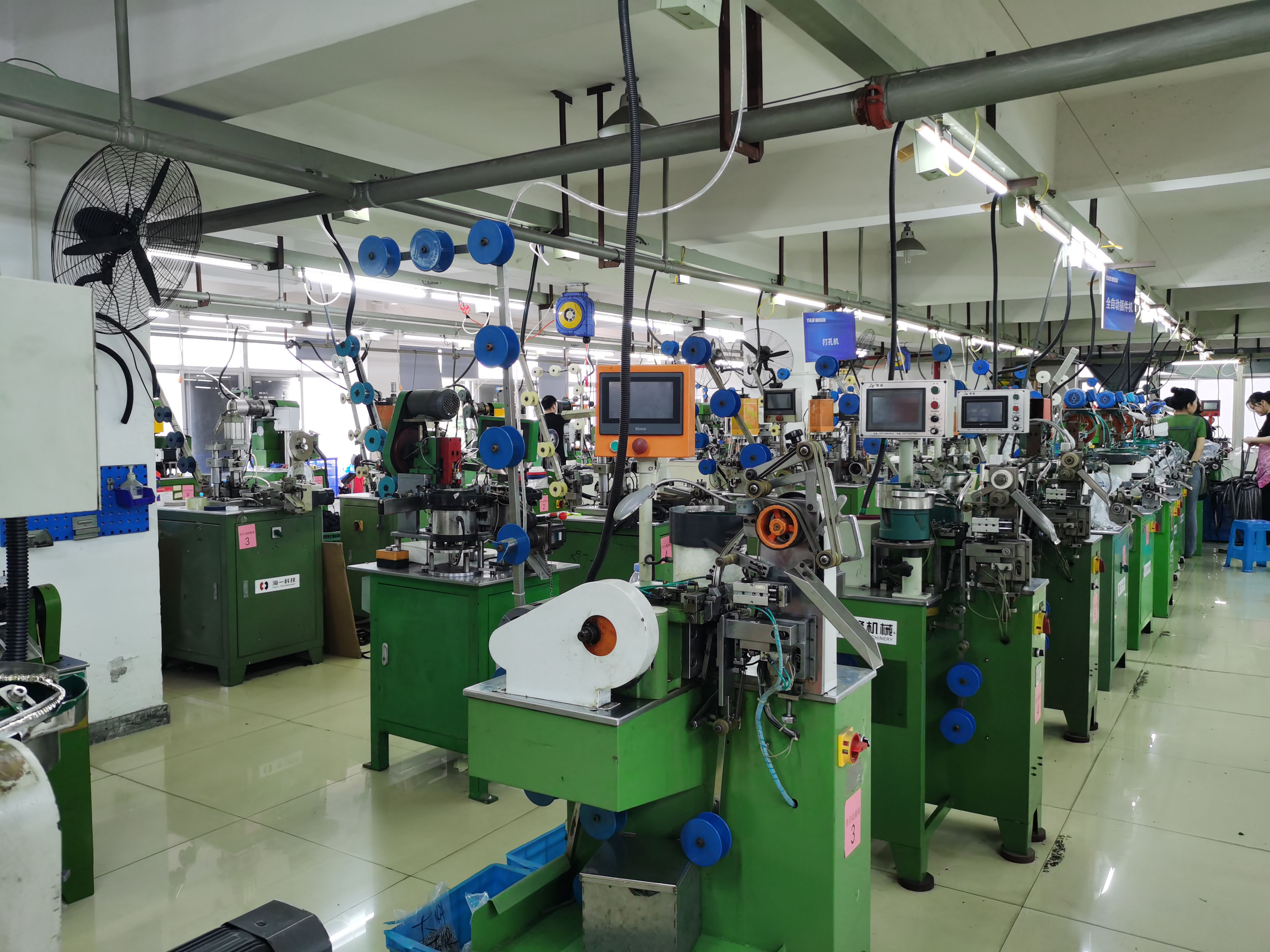
Metal custom zipper supply for luggage, garment and footwear programmes. Image: YAB ZIPPER manufacturing site.
The reference point behind this comparison
YAB ZIPPER is the brand of Wenzhou Runhe Garment Accessories Co., Ltd., a Wenzhou-based zipper manufacturer and the sixth president unit of the Wenzhou Zipper Chamber of Commerce. The company runs copper, aluminum, resin and nylon zipper production from a 10,000 m² facility with 10 engineers and an annual output of roughly 70 million pieces, holds ISO 9001 and OEKO-TEX Standard 100 certification, and exports about 30% of its output, mainly to Southeast Asian markets.
Three kinds of evidence appear below, and they are not interchangeable. Material performance figures — tensile strength, service life, deformation resistance, weight ratio and oxidation behaviour — come from the manufacturer's own brass-versus-aluminum comparison data and are labelled as such. Sizing conventions, market share and trade values are attributed external records. Arithmetic performed on the stated figures is marked as calculated. None of these is an independent laboratory verdict, and a buyer should convert any of them into a test report before bulk confirmation.
Side-by-side matrix: brass vs aluminum alloy custom zippers
The comparison is drawn at matched size and matched configuration. Zipper numbering such as #3, #5 or #8 refers to the width of the closed teeth in millimetres, so a #5 measures approximately 5 mm across the closed chain; comparing a #5 brass against a #8 aluminum produces a meaningless gap.
| Decision dimension | Brass (copper alloy) | Aluminum alloy |
|---|---|---|
| Sizes covered | #3 / #5 / #8 | #3 / #5 / #8 |
| Crosswise tensile strength, same size class | 510N | 410N |
| Strength gap | Reference value | About 100N lower; roughly 20% below the brass figure (calculated from 410N vs 510N) |
| Weight | 35%–50% heavier than aluminum alloy | 35%–50% lighter than brass |
| Salt spray | More than 24 hours specified | More than 24 hours specified |
| Service life at equal opening/closing frequency | Over 35% longer than aluminum alloy (manufacturer comparison data) | Reference value |
| Anti-deformation capacity | About 40% higher than aluminum alloy (manufacturer comparison data) | Reference value |
| Sliding behaviour | Stable resistance; performance decays slowly over time | Smooth when new; teeth can loosen and jam after long-term friction |
| Surface and colour | Rich plating colour options | Anodized colour range, including titanium-alloy plating series such as platinum, black gold, light gold and rose gold |
| Oxidation behaviour | Lower probability of oxidation white spots in normal environments (manufacturer data states a 60% reduction) | Can discolour in prolonged contact with sweat or seawater; an anti-oxidation anodized finish is required |
| Cost position | Higher raw-material cost and higher unit purchasing price; the gap narrows with volume production arrangements | Much lower unit price; higher cost performance in medium-light load use |
| Compliance options | Nickel-free finish option available for REACH-oriented programmes | Nickel-free anodizing process |
| Best fit | Leather goods, denim, workwear, high-end bags and cases, frequent long-term use | Lightweight spring/autumn coats, kids' clothing, fast fashion, backpacks, cosmetic bags, home textiles |
| Documented boundary | Not the first choice for ultra-lightweight hard luggage | Not recommended for heavy workwear or heavy-duty high-load luggage |
What the tensile numbers actually tell a buyer
Crosswise tensile strength measures how much lateral force a closed chain withstands before the interlocked teeth separate. The 510N brass and 410N aluminum figures therefore describe reserve capacity against sideways load: an overpacked case, a garment pulled closed under tension, or a shoe flexed repeatedly at the same point.
The 100N gap is easier to use as a ratio than as an absolute. Calculated from the stated values, the aluminum figure sits about 20% below brass at the same size class. That is a real difference in reserve, but it is not a verdict on durability on its own, because cycle life and deformation resistance move in the same direction: the manufacturer's comparison data puts brass more than 35% ahead on service life at equal opening/closing frequency and about 40% ahead on anti-deformation capacity, with fewer after-sales failures and complaints reported as a consequence.
Weight: a specification line, not a feeling
Aluminum alloy is 35%–50% lighter than brass at the same size class, which is the single largest practical difference between the two materials. Where a finished article has a tight weight budget — cabin luggage, packable outerwear, children's garments — that range is worth more than the extra tensile reserve the buyer gives up. Where weight is not constrained, the brass chain's greater mass is simply not a cost.
Weight also changes how the two materials are specified rather than whether they are used. A lighter chain can be run at a larger size without exceeding the article's weight target, so some buyers trade up from a #3 aluminum to a #5 aluminum instead of switching to brass. The reverse move — down-sizing a brass chain to save weight — reduces tensile reserve twice over, once from the material and once from the size.
Finishing and inspection stage, where chain condition, colour and slider action are checked before packing.
Corrosion, plating and the 24-hour salt spray requirement
Both materials are specified for more than 24 hours of salt spray, so salt spray alone cannot separate them in a quotation. What separates them is how each reaches that result and what happens after the test window. Brass is described in the manufacturer's comparison data as withstanding higher humidity and salt spray without additional protective coating, with a stated 60% lower probability of oxidation white spots in normal environments. Aluminum alloy reaches its corrosion performance through anodizing: without an anti-oxidation anodized finish it can discolour in prolonged contact with sweat or seawater, and it needs additional surface treatment in humid conditions.
Finish choice follows the same logic. Brass carries rich plating colour options, which is why it dominates hardware where the zipper is a visible design element on leather goods and premium bags. Aluminum alloy offers a broad anodized range, including the titanium-alloy plating series — platinum, black gold, light gold and rose gold — alongside antique silver, antique copper, brass tone, light gold, bright silver and bright black treatments. On compliance, both routes can be specified nickel-free: brass through a nickel-free finish option for REACH-oriented programmes, aluminum through a nickel-free anodizing process.
Cost, and the total cost that sits behind it
Brass carries a higher raw-material cost and a higher unit purchasing price; aluminum alloy's much lower unit price is the reason it is usually described as offering higher cost performance. The purchasing gap is not fixed, because volume production arrangements narrow it — which means a brass programme judged purely on a single-quantity quotation will look worse than the same programme quoted at scale.
The unit price is also the wrong denominator for a decision-stage comparison. The manufacturer's comparison data links brass to a lower after-sales failure rate, fewer customer complaints and no requirement for extra protective coating against oxidation, while aluminum in humid conditions needs additional surface treatment and generates more complaints about abrasion and missing teeth. A defensible comparison therefore uses landed cost per accepted unit, including rework, replacement and inspection losses, rather than price per piece.
Sizes, teeth profiles and variables that must be fixed before quoting
Size alone does not define a custom zipper. The same #5 chain can be produced with different tooth profiles, tape specifications, sliders and pullers, and each change moves the tensile and weight readings. YAB ZIPPER's production base runs Y-teeth, ordinary, corn, Swiss and particle tooth lines, with copper and aluminum Y-teeth chains supported by multi-step surface treatment, plus resin tooth coating processes. That breadth is useful only if the purchase order pins the variables down.
- Chain: metal type, size (#3/#5/#8), tooth profile, chain type and length.
- Tape: width, material, colour and approved dye lot.
- Slider and puller: slider body type, locking or non-locking action, puller shape and finish.
- OEM branding: logo slider and puller availability is order-specific; confirm tooling ownership, the logo application method and the approval sample before bulk, and state where the logo is checked in the inspection plan.
- End treatment: top and bottom stops, open-end or closed-end construction.
Application fit: luggage, apparel, outdoor goods and footwear
Luggage
Luggage is where the two materials divide most cleanly. Brass suits high-cycle, high-load cases, premium bags and cases, and travel goods where the zipper is expected to survive repeated packing pressure; the documented boundary is that brass is not the first choice for ultra-lightweight hard luggage. Aluminum alloy suits cabin and lightweight bags, cosmetic bags and backpacks, where the 35%–50% weight saving is the point of the specification — but it is explicitly not recommended for heavy-duty, high-load luggage.
Apparel: denim, jackets and fast fashion
For jeans zippers, jacket zippers and workwear, brass is the better-matched material: denim and heavy jackets combine high closing force with long service life, the two areas where brass leads by more than 35% and about 40% respectively. For lightweight spring and autumn coats, children's clothing and fast fashion casual garments, aluminum alloy's lower unit price and lighter chain fit the cost and weight structure of the product. Aluminum performs stably at normal temperature and under regular washing, so the laundering process itself is not the constraint; prolonged sweat or seawater contact is.
Outdoor goods
Outdoor programmes usually split by end use rather than by brand preference. Lightweight shells and backpacks benefit from the aluminum weight advantage, while heavy outerwear and workwear sit on the brass side. Where the product is used in coastal or high-salt environments over a long service life, remember that a shared 24-hour salt spray result does not make the two materials equivalent: the manufacturer's data describes brass as withstanding higher humidity and salt spray, and describes aluminum as requiring an anodized finish to resist oxidation.
Footwear
Footwear is the case where the usual weight argument weakens. A shoe zipper is short, but it is flexed and abraded continuously in a confined span, so cycle life and deformation resistance carry more decision weight than a small weight saving on a few centimetres of chain. On that logic, brass is the better-matched default for boots and structured footwear, and aluminum is more defensible on lightweight casual shoes where the zip is decorative. This is a reasoning-based fit judgement rather than a measured footwear result, so it should be confirmed with a wear trial on the actual pattern.
Purchasing terms and acceptance criteria checklist
Both materials are only as good as the terms attached to them. The checklist below converts the matrix into order language and inspection points, drawing on the manufacturer's documented quality system.
| Term | What to write into the order |
|---|---|
| Specification lock | Material, size, tooth profile, tape spec, slider, puller and end treatment stated on the purchase order, not only on the sample |
| Tensile strength | Required crosswise value per size class (510N brass / 410N aluminum alloy at the agreed size), with the test method and sample size named |
| Corrosion | Salt spray exceeding 24 hours, with the method and acceptance description referenced |
| Durability | Reciprocating durability test to an agreed cycle count, plus wash and rub testing where the article will be laundered |
| Compliance documents | Nickel-free declaration for REACH-oriented programmes, ISO 9001 and OEKO-TEX Standard 100 certificates, and third-party lab reports for the exact material and size |
| Sampling | AQL 1.0 sampling inspection as the stated acceptance standard |
| Traceability | Raw-material batch, production work order and test report bound together; retained samples held for at least two years |
| Colour control | Approved tape dye lot and an agreed light source for colour assessment |
| Shipment accuracy | Double verification of size, tooth type and tape colour before shipment to prevent wrong or missing items |
| After-sales | Complaint response within 48 hours, rework or replacement of defective goods, and compensation for inspection losses |
How to verify a claim before committing to bulk
Verification is a sequence, not a document request. Start with the supplier's test report for the exact size and material being quoted, and check that the reported tensile value matches the 510N or 410N figure and that the salt spray duration exceeds 24 hours under a named method. Then test the golden sample independently: XRF metal composition analysis for raw-material identity, a salt spray chamber run for corrosion, and a reciprocating durability cycle for slider and tooth behaviour. Finish with a wash or rub test if the article will be laundered, and a wear trial on the actual product pattern for footwear and luggage. Any gap between the supplier's number and the measured result belongs in the commercial terms before the first bulk shipment.
Where each material stops fitting
Aluminum alloy stops fitting at heavy workwear, heavy-duty high-load luggage, long-term seaside high-salt exposure without an anodized finish, and any design where lateral load spikes are routine. Brass stops fitting where the article's weight budget is the decisive constraint — ultra-lightweight hard luggage, weight-critical childrenswear, packable items — and where unit price is the only metric under review. Both materials stop being comparable the moment the size, tooth profile or tape specification differs between the two samples on the table.
Market context for the material decision
The wider market does not point toward one metal winning. Market Research Future valued the global zipper market at USD 17.39 billion in 2024 and projects USD 36.73 billion by 2034, a forecast rather than an observed outcome. Within that market, nylon held 46% of consumption in 2025 while metal held 31%, with brass and aluminum together making up 67% of metal production, according to Business Research Insights. Trade data from the Observatory of Economic Complexity puts global zipper trade at USD 3.15 billion in 2024, with China exporting USD 1.52 billion of that total.
The practical reading for a buyer is that both metals retain dedicated production capacity, so the choice stays application-driven: a volume-led lightweight segment and a durability-led metal segment continue to coexist, and switching material to chase a unit price usually moves cost into the acceptance stage instead.
The decision rule in one paragraph
Specify brass where load, cycle count and service life dominate — jeans and jacket zippers, workwear, leather goods, high-end bags, heavy luggage, structured footwear — and accept the 35%–50% weight penalty and the higher unit price. Specify aluminum alloy where weight and unit cost dominate — lightweight coats, kidswear, fast fashion, backpacks, cosmetic bags, cabin luggage — and specify the anodized finish as a requirement rather than an option. In both cases, write the tensile value, the salt spray duration, the AQL level and the traceability requirement into the order, because the material only performs to the terms attached to it. A fuller specification reference is available in the YAB ZIPPER company profile.
FAQ
Is aluminum alloy lighter than brass at the same zipper size?
Yes. At the same size class, aluminum alloy custom zippers are 35%–50% lighter than brass, which is the largest single physical difference between the two materials. The saving applies per chain, so it compounds across a garment with multiple zips or across a luggage programme where every component is weighed against a target.
How big is the strength difference between 410N aluminum and 510N brass?
The difference is 100N at the same size class, which works out to roughly 20% when the aluminum figure is expressed against the brass value. That reserve matters where lateral load spikes are normal, such as overpacked cases or tight-fitting denim. The manufacturer's comparison data also places brass more than 35% ahead on service life and about 40% ahead on anti-deformation capacity.
Can brass custom zippers be supplied nickel-free for REACH programmes?
Yes, a nickel-free finish option is available for brass, and aluminum alloy can be produced with a nickel-free anodizing process. Buyers should pair the option with a written nickel-free declaration, the ISO 9001 and OEKO-TEX Standard 100 certificates, and third-party lab reports covering the exact material and size being ordered, since a generic certificate does not cover a new finish or configuration.
Do both brass and aluminum zippers pass a 24-hour salt spray test?
Both are specified for more than 24 hours of salt spray, so the test duration alone does not distinguish them. The difference lies in how the result is achieved and sustained: brass is described as withstanding higher humidity and salt spray without extra protective coating, while aluminum relies on an anti-oxidation anodized finish and needs additional surface treatment in humid conditions.
Which material is better for luggage — brass or aluminum?
It depends on the load case. Brass fits high-cycle, high-load cases and premium travel goods, and is not the first choice for ultra-lightweight hard luggage. Aluminum alloy fits cabin and lightweight bags, backpacks and cosmetic bags through its 35%–50% weight advantage, but is not recommended for heavy-duty, high-load luggage. Matching the material to the load case, then confirming tensile, salt spray and AQL terms, is more reliable than choosing on unit price.
¿Tiene preguntas o necesita más detalles?
Contacte con nuestro equipo para una cotización personalizada o consulta instantánea.
Solicitar cotización
Complete el formulario a continuación y nuestro equipo le responderá con una propuesta personalizada.
Chat directo de WhatsApp
¿Prefiere chatear en tiempo real? Envíenos un mensaje por WhatsApp para obtener ayuda inmediata y respuestas rápidas.
- Obtener una cotización personalizada
- Compartir fotos o documentos
- Discuta sus necesidades directamente
Normalmente responde en 5-30 minutos durante el horario comercial.