
Brass Valve Guide: Types, Applications and Market Insights for Buyers
An independent industry reference for procurement and specification decisions
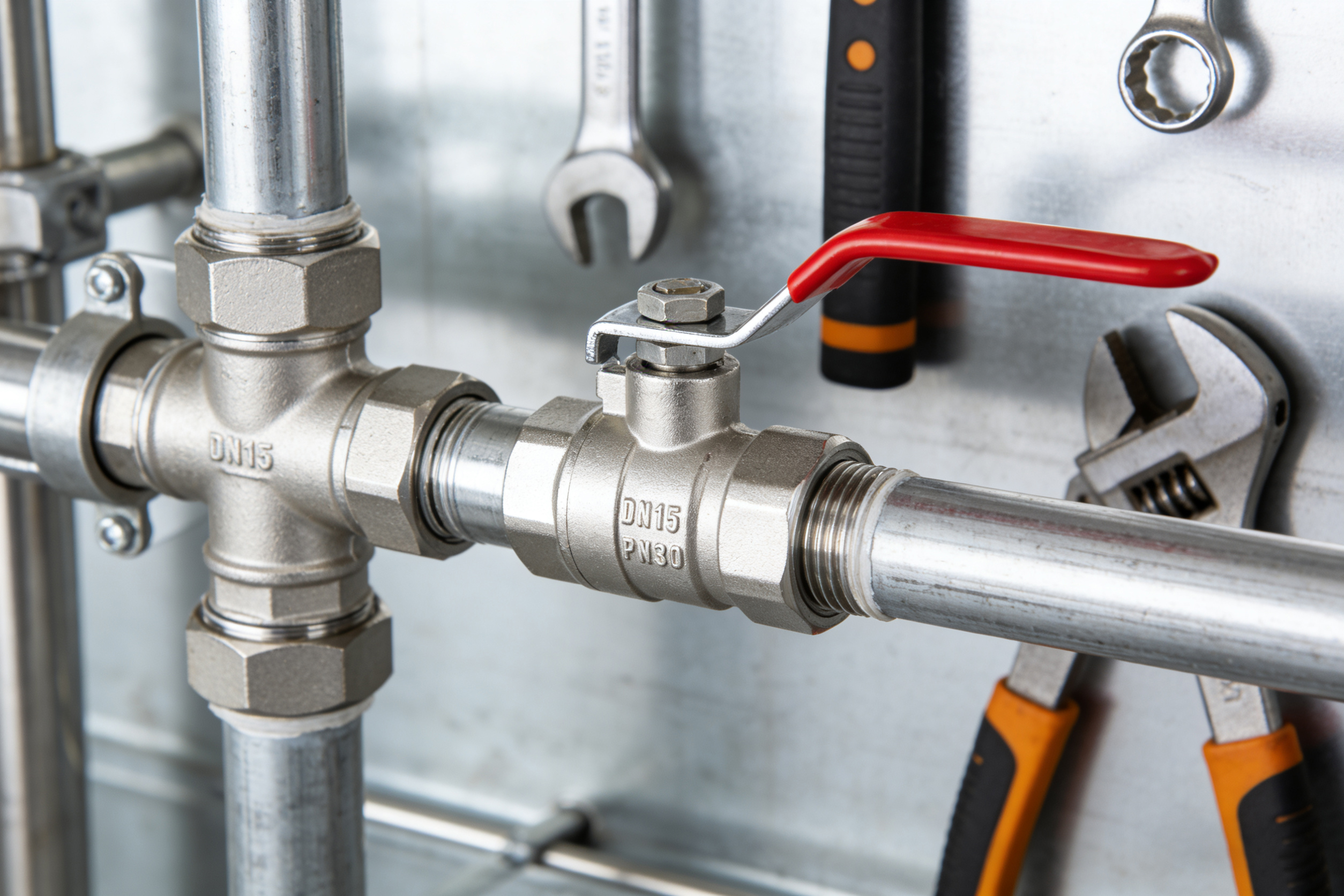
Brass valves are widely used in residential and commercial water systems for shut-off and flow control.
Introduction
Brass valves are flow-control components made from copper-zinc alloys, used to start, stop, regulate or protect fluid flow in pipes. They are common in potable water supply, plumbing, heating, HVAC, gas piping and some industrial circuits. For buyers entering this category, the decision is not only about a single valve type, but about material compliance, connection compatibility and the manufacturer's ability to deliver consistent quality at scale.
This article is written as an industry orientation brief. It covers the main brass valve families, explains how they are specified, describes typical applications, and outlines current market trends that influence purchasing decisions. It also uses the product portfolio of Zhejiang Longda Technology Co., Ltd., a China-based brass valve manufacturer, as a concrete reference point for the category.
What Is a Brass Valve?
A brass valve is a mechanical device that controls the flow of water, gas or other compatible fluids in a piping system. Brass is a preferred material for many valves because it is forgeable, corrosion-resistant in water service, and can be manufactured with tight tolerances. The term 'brass valve' covers a broad family, including ball valves, gate valves, check valves, angle valves, Y strainers and related fittings.
Brass valves are available in several material grades. In North America, lead-free brass is increasingly the standard for potable-water contact surfaces, with limits such as wetted surface lead content ≤0.25% per NSF/ANSI 372 and the US Safe Drinking Water Act. In Europe, brass alloys such as CW617N are common in drinking-water and heating applications, and are manufactured to EN 12164 and EN 12165 standards in some cases.
Why Brass Valve Selection Is Not Always Simple
Despite being a mature product, brass valves present distinct challenges for buyers. The first is type selection: a ball valve is ideal for fast shut-off, a gate valve for infrequent full-open/full-close service, a check valve for preventing backflow, and an angle valve or supply stop for fixture isolation. Choosing the wrong family can lead to poor flow control, leakage or shortened service life.
The second challenge is connection compatibility. Modern installations use threaded (NPT/BSP), sweat, PEX, press or push-fit connections, and each requires a different valve configuration. A supplier that covers multiple connection methods simplifies inventory and reduces compatibility risk.
The opportunity for buyers is that the current brass valve market is broad enough to support a single-source, standards-compliant procurement strategy. Global brass valve demand continues to grow, and established manufacturing clusters in China offer scalable export supply.
The Supplier Side: What a Full-Range Brass Valve Manufacturer Looks Like
Zhejiang Longda Technology Co., Ltd. is a brass valve and fitting manufacturer located in XuanGuang Industrial Zone, LuPu Town, YuHuan County, Zhejiang Province, China. Established in 1993, the company specializes in brass valves, fittings, bibcocks, faucets, sanitary wares and other brass components for residential and commercial use. Its manufacturing facility covers 30,000 square meters, employs about 200 people, and has an annual production capacity of approximately 7,500 tons.
The company states that around 95% of output is exported, with major markets in the EU, USA, Canada and South America. It also reports more than 360 sets of processing and testing equipment, and a technical team of over 30 personnel including 6 R&D engineers. IAPMO and ALS certified products are listed in the company's profile, supporting compliance for North American and other international markets.
The Longda portfolio includes several families that illustrate the anatomy of the brass valve category: brass ball valves, gate valves, stop valves, check valves, heating valves, angle valves and brass pipe fittings. This range is useful as a reference because it shows how a single manufacturer can serve residential plumbing, HVAC, water supply and irrigation markets with a coherent product system.
Key Brass Valve Families and Technical Specifications
The following sections describe the main valve types found in brass valve product programs, with representative models and parameters from Longda's catalog.
Brass Ball Valves
Ball valves are quarter-turn shut-off valves that use a hollow, perforated ball to control flow. They are among the most widely used brass valves in residential and commercial water systems. A representative full-port ball valve in Longda's line, model 8081, is a 2-piece full-port valve available from 1/2" to 4" (DN15 to DN100). It is rated at 600 WOG (4.1 MPa), with a working temperature range of -20°C to 150°C, and is offered with female NPT or BSP connections. The body is hot-forged brass, the ball is chrome-plated brass, the stem is blow-out-proof brass, and the seats are PTFE. Lead-free versions are certified to cUPC, NSF/ANSI 61 and NSF/ANSI 372, and the valve is available with lever or wing handle operation.
For European-market applications, Longda also produces a brass ball valve model ART.60621 made of CW617N brass in compliance with EN 12164 and EN 12165. It has a nominal pressure of 30 bar and a temperature range of -20°C to 140°C, suitable for drinking water, domestic hot water, compressed air and heating systems.
Brass Gate Valves
Gate valves are used primarily for fully open or fully closed service. The model T-22017A is a rising-stem, full-bore threaded brass gate valve with a brass-to-brass metal seat. It is rated at 200 WOG (1.4 MPa), operates from -20°C to 120°C, and covers sizes from 1/2" to 4" (DN15 to DN100). Lead-free versions use CW724R or C46500 brass, and the valve is NSF/ANSI 61 and NSF/ANSI 372 certified by IAPMO. The metal-to-metal seat makes it suitable for infrequent shut-off duty without rubber seal aging.
Brass Check Valves
Check valves allow flow in one direction only and prevent backflow. Model LD 30303 is a swing check valve, available in sizes from 1/2" to 2" (DN15 to DN50), rated at 200 WOG (1.4 MPa) with a working temperature range of -20°C to 150°C. It is constructed from high-quality lead-free and dezincification-resistant (DZR) performance brass alloy, with a brass disc and PTFE sealing face, SS304 spring, and NBR/EPDM gaskets. Connection options include NPT, BSP, press, PEX, sweat and cold expansion.
Brass Angle Valves and Supply Stops
Angle valves are designed to turn flow direction by 90 degrees and provide local shut-off behind fixtures. Model ART.98011 is a brass angle valve available in 1/2" × 1/2" and 1/2" × 3/8" sizes, with a pressure rating of 125 psi WSP / 600 WOG, and a working temperature range of 0°C to 90°C. It uses a quarter-turn brass ball or POM stem design and is suitable for bathroom and kitchen faucets, toilets, commercial buildings and water supply terminals.
Model 98023-LF is a quarter-turn brass supply stop valve, available in 1/2" × 3/8" and 1/2" × 1/2". It is rated at 125 psi and operates from -20°C to 120°C. This product family includes angle and straight versions, compression, PEX, threaded and sweat connections, and lead-free certified versions (cUPC, NSF/ANSI 61 and 372). It is commonly installed under sinks, toilets, and washing machines to enable localized shut-off without turning off the main water supply.
Brass Y Strainers
Y strainers protect downstream equipment by filtering particles from the flow. Model LD.73154 is a brass Y-type strainer with drain plug, available from 1/2" to 2" (DN15 to DN50), rated at 200 WOG (1.4 MPa), with a working temperature range of -20°C to 150°C. The screen is SS304 stainless steel, available in 20, 40, 60, or 80 mesh, and can be replaced without disassembling the pipeline. A blow-down drain plug allows in-line flushing and cleaning. Lead-free brass versions are certified to NSF/ANSI/CAN 61 and NSF/ANSI 372 by IAPMO.
Brass Pipe Fittings
Brass fittings are used to connect valve systems to piping. Model 15111 covers adapters, couplings, nipples, elbows, tees, unions, caps and plugs in sizes from 1/4" to 2" (DN8 to DN50), with pressure ratings up to 600 WOG (4.1 MPa) and temperatures from -20°C to 150°C. The series includes threaded (NPT/BSP), sweat, PEX (ASTM F1807), PEX-A (ASTM F1960), press (ASTM Z1117) and push-fit (ASSE 1061) connection types, with lead-free and DZR options for potable water systems.
At-a-Glance Comparison
| Product family | Typical size range | Pressure / temperature | Typical function |
|---|---|---|---|
| Ball valve (8081) | 1/2"–4" (DN15–DN100) | 600 WOG / -20°C to 150°C | Quarter-turn shut-off for water, gas, HVAC |
| Gate valve (T-22017A) | 1/2"–4" (DN15–DN100) | 200 WOG / -20°C to 120°C | Full-open/closed isolation, low pressure drop |
| Check valve (LD 30303) | 1/2"–2" (DN15–DN50) | 200 WOG / -20°C to 150°C | Prevents backflow in pumping and supply lines |
| Angle valve (ART.98011) | 1/2" × 1/2" / 1/2" × 3/8" | 125 psi WSP / 0°C to 90°C | Fixture-level shut-off and 90° flow redirection |
| Supply stop (98023-LF) | 1/2" × 3/8" / 1/2" × 1/2" | 125 psi / -20°C to 120°C | Localized shut-off under sinks and appliances |
| Y strainer (LD.73154) | 1/2"–2" (DN15–DN50) | 200 WOG / -20°C to 150°C | Filtration and system protection |
| Fittings (15111) | 1/4"–2" (DN8–DN50) | up to 600 WOG / -20°C to 150°C | Connecting valves to pipe systems |
Common Application Patterns
Brass valves appear in different configurations depending on the installation environment. In new residential construction in the US and Canada, PEX-A plumbing has become common, and valves with ASTM F1960 cold-expansion connections are used to attach PEX-A pipe to threaded equipment. Longda's PEX-A ball valve with a blue lever is an example of this integration, allowing installers to create a permanent expansion joint without reducing pipe inner diameter.
For bathroom and kitchen renovation, angle valves and supply stops are typically installed between the wall outlet and the fixture supply hose. This enables short, frequent shut-off for maintenance without cutting the whole building supply. Supply stop models with quarter-turn operation are common in this role, with compression, PEX and threaded ends to suit different pipe types.
In HVAC and hydronic heating systems, brass valves are used for isolation, balancing and system protection. Manual balancing valves, for example, are used to equalize flow between heating circuits. Ball valves and check valves isolate pumps and prevent reverse flow. Y strainers protect downstream components from debris, which is especially important in closed-loop systems.
In water supply, agricultural irrigation and municipal applications, gate valves, check valves and Y strainers are used in larger line sizes, often with threaded or flanged connections. These applications prioritize low flow resistance, reliable sealing and long service life.
Market Context: Demand, Regional Shifts and Compliance
The global brass valves market was valued at approximately USD 14.8 billion in 2025 and is projected to reach USD 24.1 billion by 2034, representing a CAGR of 5.6% from 2026 to 2034 (Dataintelo). Ball valves held the largest product type share in this market, at 38.4% in 2025 (Dataintelo). The brass ball valve sub-segment was estimated at around USD 3.2 billion in 2024 (DataHorizzon Research).
By region, Asia Pacific accounted for 41.2% of global brass valve revenue in 2025, while North America represented about 26.1% (Dataintelo). China exported USD 22.6 billion in all valves (HS 8481) in 2024, maintaining its position as the largest global exporter (OEC). In brass ball valves specifically, China accounted for approximately 41% of global export shipments in 2024 (Volza). Zhejiang and Guangdong provinces are the primary brass valve manufacturing clusters in China (Dataintelo).
Compliance is reshaping the market. Lead-free brass alloys are becoming the mandatory standard for potable water applications in the US, under the Safe Drinking Water Act (EPA). European standards such as EN 331:2015 for gas valves and EN 13828:2003 for manually operated copper alloy ball valves for drinking water supply set additional compliance requirements. Manufacturing standards such as ASTM B584 and ISO 228-1 also inform brass valve production and thread specifications.
How Brass Valves Compare with Alternative Materials and Valve Types
Brass valves are often compared with plastic valves and stainless steel valves. Plastic valves, such as PVC or PP, are lighter and less expensive, and are widely used in chemical-resistant and low-pressure applications. Brass offers higher mechanical strength, better dimensional stability at elevated temperatures, and a longer history of reliable service in metal piping systems. The trade-off is weight and cost: brass valves are heavier and generally more expensive than plastic valves.
Compared with stainless steel, brass is easier to machine and forge, which often results in lower product and tooling cost. In potable water and heating circuits with neutral or mildly aggressive water, brass provides durable service. However, brass can be vulnerable to dezincification in certain water chemistries—one reason why DZR (dezincification-resistant) and lead-free brass alloys are specified for critical applications. Stainless steel is the better choice when the fluid is highly acidic or contains chlorides in concentrations that exceed brass's resistance limits.
Within brass valve types, design trade-offs also exist. A gate valve provides a straight full-bore path when fully open and is suitable for infrequent isolation, but it opens and closes slowly. A ball valve opens with a quarter turn and seals more positively, but it is not designed for precise throttling; using a ball valve as a regulating valve can cause seat wear and poor control. Selecting the valve family should therefore follow the function: isolation, backflow prevention, regulation, or filtration.
One boundary worth noting: no single brass valve is suitable for every medium. Gas-duty applications require specific standards and testing, and potable-water applications demand lead-free compliance. Buyers should verify the applicable market certification and material grade before specifying.
What Comes Next for Brass Valves
The brass valve market is expected to continue expanding, with demand driven by construction, water infrastructure and HVAC modernization. Manual balancing valves still represent 55–65% of unit demand in the Asia-Pacific hydronic balancing market (IndexBox), indicating that straightforward, installable products remain central in heating systems. Meanwhile, smart valve integration with IIoT is becoming a structural trend in fluid management, particularly for predictive maintenance (Mordor Intelligence).
For procurement, the near-term outlook is shaped by three forces: tighter lead-free and drinking-water regulations in North America, the growing standardization of PEX, press and push-fit connections, and the continued role of Chinese manufacturing clusters as the main export base for brass valves. The challenge for buyers will be to balance cost, compliance and supply reliability. Manufacturers with in-house testing, multi-certification, and broad connection compatibility are likely to be better positioned as long-term partners.
Frequently Asked Questions
How can connection leakage, stem leakage, thread damage and dezincification be avoided during installation and over time?
Preventive measures include selecting a valve with robust construction: PTFE sealing and double O-ring sealing, a quarter-turn ball-core design to reduce thread stress, and a chrome-plated anti-corrosion finish. Factory quality control also matters; common industry practices include 100% air pressure testing before shipment, thread gauge inspection on every lot, and the availability of lead-free material test reports. Some manufacturers offer a 12-month quality warranty with free replacement, which can be a useful indicator of confidence in long-term reliability.
For Further Technical Data
Buyers who need full catalog specifications and compliance documentation can refer to the manufacturer's global catalogue. The Longda catalogue is publicly accessible and includes product series, technical parameters and connection options for the brass valve families described above. Access it here: Longda Global Catalogue (PDF).