
Brass Valve Buyer Decision Matrix: Gate vs Ball vs Check vs Y-Strainer
Independent industry reference for procurement, engineering and distribution teams. Buyer stage: decision to execution.
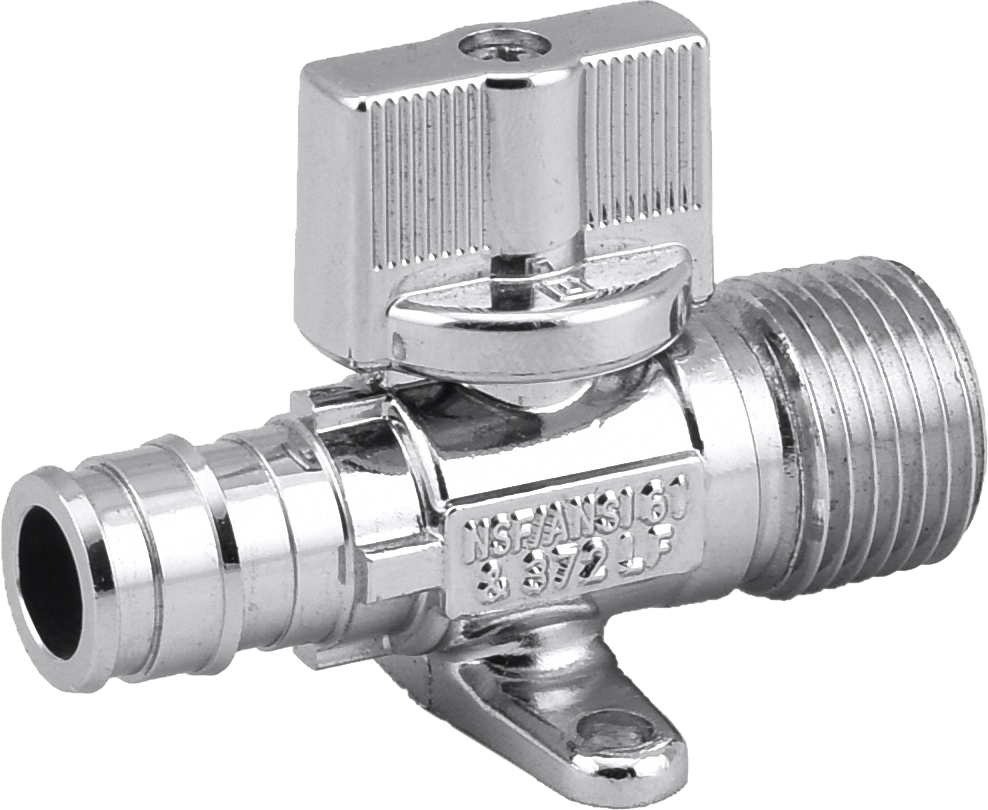
A specification range of brass supply stops. The same range logic applies when gate, ball, check and Y-strainer families are compared side by side.
A brass valve is defined by its job in the system, not by its place in a catalogue
Procurement teams rarely buy a single brass valve. A residential riser, a hotel fit-out or a plumbing distributor catalogue normally needs an isolation device, a shut-off device, a backflow-prevention device and a protective strainer that must work together on the same line. When those four functions are collapsed into one generic line item — "brass valve" — the result is a quotation that is easy to compare on price and very difficult to compare on fitness.
A gate valve, a ball valve, a check valve and a Y-strainer are not competing versions of the same product. Gate and ball valves answer different operating questions about isolation. A check valve answers a direction question. A Y-strainer answers a debris question, and its position in the line is decided by what it is protecting. Fittings and supply stops close the last metre to the fixture, where certification and rating requirements are often stricter than anywhere else in the building.
This matrix is written for buyers who are past discovery — teams already comparing quotations, matching model designations to datasheets and preparing a purchase order. It compares application role, ratings, connections, size ranges and construction detail, then converts those comparisons into verification steps that can be executed before shipment.
Problem and opportunity: most valve returns trace back to a selection decision, not a manufacturing defect
The recurring failure pattern in brass valve procurement is a mismatch between the duty the system actually imposes and the duty the ordered valve was built and rated for. Common examples include specifying a multi-turn device where fast, repeatable quarter-turn shut-off is needed; placing a check valve on a line with no upstream debris protection; ordering a potable-water supply stop without confirming wetted-surface lead content; and accepting a datasheet that lists a size and a thread but no pressure or temperature rating at all.
The opportunity is that all of these errors are detectable at the quotation stage. A structured matrix converts each product family into a short list of decisions, and each decision into a document request. That is faster than resolving the same ambiguity after goods arrive, and far cheaper than handling returns, line stoppages or re-inspection at the destination port.
The core matrix: four families, four different jobs
The table below is deliberately role-based. It describes what each family does in a system, what usually decides the selection, and which document should answer the question.
| Family | Primary role in the system | What usually decides the selection | Document that should answer it |
|---|---|---|---|
| Brass gate valve | Line isolation with a straight-through flow path, typically left fully open or fully closed. | Required pressure and temperature rating, connection type, and whether the line is operated frequently or occasionally. | Dimensional and rating datasheet plus material declaration. |
| Brass ball valve | Quarter-turn full-port on/off control with minimal pressure drop and quick, repeatable operation. | Operating frequency, handle clearance, seat and seal materials, and port configuration. | Datasheet stating seat/seal materials, port type and rating. |
| Brass check valve | Prevention of reverse flow to protect equipment and to keep supply and return paths separate. | Flow direction, cracking behaviour, mounting orientation, and upstream cleanliness. | Flow-direction marking and installation orientation note. |
| Brass Y-strainer | Mechanical protection of downstream devices — meters, pumps, valves and fixtures — by capturing debris. | Screen material and mesh, blow-down access, and whether the strainer sits upstream of a check valve or meter. | Screen specification plus service and cleaning instructions. |
| Brass fittings | Transition between pipe systems, thread standards and equipment interfaces. | Thread standard, material compatibility with the adjoining valve body, and torque limits. | Thread standard declaration and material grade. |
| Brass supply stop / angle stop | Local shut-off at the fixture so maintenance can be performed without isolating the whole building. | Connection to the wall pipe and to the fixture hose, space behind the fixture, and potable-water compliance. | Certification listing, rating, and connection drawing. |
The same logic extends to adjacent families that appear in the same purchase orders: brass bibcocks and hose bibbs, radiator and heating valves, boiler drain and transformer drain valves, pressure reducing and safety relief valves, diverter valves, manual balancing valves and PEX ball valves. Each one differs in role, rating, connection and certification scope, and each one should be listed as its own matrix row rather than treated as a variant of a generic brass valve.
Reference model designations: how to use them without guessing
Buyers working across gate, ball, check, Y-strainer, fitting and supply-stop ranges will meet reference designations such as T-22017A, 8081, LD 30303, LD.73154 and 15111 in catalogues, quotations and packaging. A designation identifies a supplier's specific configuration. It does not, by itself, carry a rating, a material grade or a certification scope.
The practical rule is that every designation in a quotation must resolve to seven data points before the order is confirmed. If any point is missing, the designation is not yet orderable.
| Valve family and function | Isolation, shut-off, reverse-flow protection, filtration, transition or fixture supply. |
| Body material grade | Standard brass, low-lead brass or lead-free brass, stated by alloy designation. |
| Size and connection | Nominal size, thread standard or press/expansion interface, and end configuration. |
| Pressure and temperature rating | Maximum working pressure and working temperature range for that specific model. |
| Seat and seal materials | Seat, O-ring and stem packing materials, since these govern service life and leak behaviour. |
| Certification scope | Which listings apply to that model, not only to the supplier's general product range. |
| Test record | Factory test method and the inspection report issued for the shipment lot. |
Technical explanation: construction details that decide service life
Two valves can carry the same nominal size, the same thread and the same catalogue photo, and still behave differently after five years in service. The differences sit in body forming method, alloy selection, seat and seal materials, and stem design.
Body forming and alloy. Hot-forged brass bodies are used for pressure-retaining components, with normal brass such as CW617N for non-potable duty and dedicated lead-free or low-lead alloys for potable-water contact. For manufacturers working to global "green" standards, the alloy list typically includes Eco-Brass C69300, CW724R, Lead-Free Brass C4650, CW511L, Low Lead Brass CW509L, CW510L and DZR CW602N. Dezincification-resistant grades such as DZR CW602N matter most where water chemistry is aggressive or where long service life is specified.
Seats, seals and finish. A typical quarter-turn brass shut-off valve used in potable-water service combines a PTFE seat with a double O-ring seal arrangement in NBR or EPDM, a quarter-turn ball core, and a chrome-plated anti-corrosion finish. PTFE seating supports repeatable quarter-turn operation; the O-ring material must be matched to the medium and temperature, not selected by habit.
Stem design. Where a supplier states that the stem is blow-out-proof, that design feature should be recorded in the matrix as a verified construction point rather than assumed from the product photo. If it is not stated, treat it as an open question to be answered on the datasheet.
Screens. For Y-strainers, screen material and mesh size are the two most commonly omitted specification points. A stainless-steel screen — SS304 is a frequent specification for potable-water service — behaves very differently from a plated or unspecified mesh. If the screen grade is not stated, it cannot be assumed.
Threads. Thread mismatch remains one of the most common installation leak paths. North American potable-water and plumbing work references ASME B1.20.1 (NPT) for threaded joints, while ISO 228-1 governs pipe threads where the pressure-tight joint is not made on the thread itself. A quotation that does not state the thread standard is not yet complete.
Ratings, connections and size ranges: reading the numbers properly
Ratings are only meaningful when they are attached to a defined model and a defined application envelope. The table below separates verified model-level data from scenario-level working conditions, so that a buyer can see which number applies to the product and which applies to the installation.
| Reference | Rating / temperature | Size and connection |
|---|---|---|
| Brass supply stop / brass angle valve (model 98023-LF) | 125 psi; working temperature −20°C to 120°C; quarter-turn (ball) or multi-turn | 1/2" × 3/8" and 1/2" × 1/2" (DN15 × DN10 / DN15); compression × compression, FIP × compression, PEX × compression (ASTM F1960), sweat, threaded |
| Fixture supply lines behind sinks, toilets and washing machines | 40–80 psi (0.28–0.55 MPa); 4°C–60°C | Compression, F1807 PEX, F1960 expansion, CPVC, press, push-fit, solder |
| Bathroom / kitchen angle-stop installation | 40–150 psi (0.28–1.0 MPa); 4°C–90°C | Wall-outlet to fixture hose; NPT or BSP depending on market |
| General plumbing, water supply, HVAC, irrigation, industrial and fire-protection service | Up to 200 psi (1.4 MPa); −10°C to 110°C | PEX, copper, galvanised steel; flanges and adapters |
| PEX-A full-port shut-off (ASTM F1960 connection) | Up to 100 psi (0.7 MPa); up to 180°F (82°C) | PEX-A pipe per ASTM F876 / F877 to NPT equipment; quarter-turn lever |
| Manual balancing valve duty in heating / chilled-water systems | Up to 232 psi (1.6 MPa); 4°C–90°C | DN 15–DN 50; EN 215 reference; PED 2014/68/EU compliance |
The correct reading order is: confirm the model-level rating first, then check that the scenario envelope sits inside it. A model rated at 125 psi is not the right selection for a line whose working envelope is stated at up to 200 psi, even if the thread and size match. Conversely, a scenario figure such as 40–80 psi describes an installation, not a product limit, and cannot be used as the valve's maximum rating in a purchase specification.
Buyer verification steps: lead-free compliance, standards and factory testing
Compliance claims should be verified at model level with a document, not accepted at brand level. The following checklist covers the requirements most frequently requested for USA and Canada potable-water service.
| Verification item | Requirement to confirm | Evidence to request |
|---|---|---|
| Lead content of wetted surfaces | ≤ 0.25% per NSF/ANSI 372 and the US Safe Drinking Water Act (California AB1953) | Lead-free material test report |
| Health-effects compliance for potable contact | NSF/ANSI 61 | Current listing covering the exact model |
| Product performance listing | cUPC-listed standards, e.g. ASME A112.18.1 / CSA B125.1 for supply stops; ASTM F1960 for PEX-A expansion connections | Certificate with model scope |
| Thread standard | ASME B1.20.1 (NPT) for North American threaded joints; ISO 228-1 where applicable | Thread gauge inspection record for every lot |
| Factory pressure testing | 100% air pressure test before shipment, with shell and seat test pressures recorded | Pre-shipment inspection report with test values |
| Gas service in the EU | EN 331:2015 for brass gas valves | Test report to the referenced standard |
| Ball valves for drinking water in the EU | EN 13828:2003 for manually operated copper alloy ball valves | Declaration of conformity |
| Copper alloy casting and material control | ASTM B584 chemical and mechanical requirements for copper alloy castings | Spectral analysis record |
| After-sales position | 12-month quality warranty with free replacement where stated | Written warranty term in the order confirmation |
Sealing construction also belongs in the verification list. Where a supplier states PTFE seals, double O-ring sealing and a quarter-turn ball core, those are checkable construction points that directly affect the two most common complaint categories: connection leakage and stem leakage.
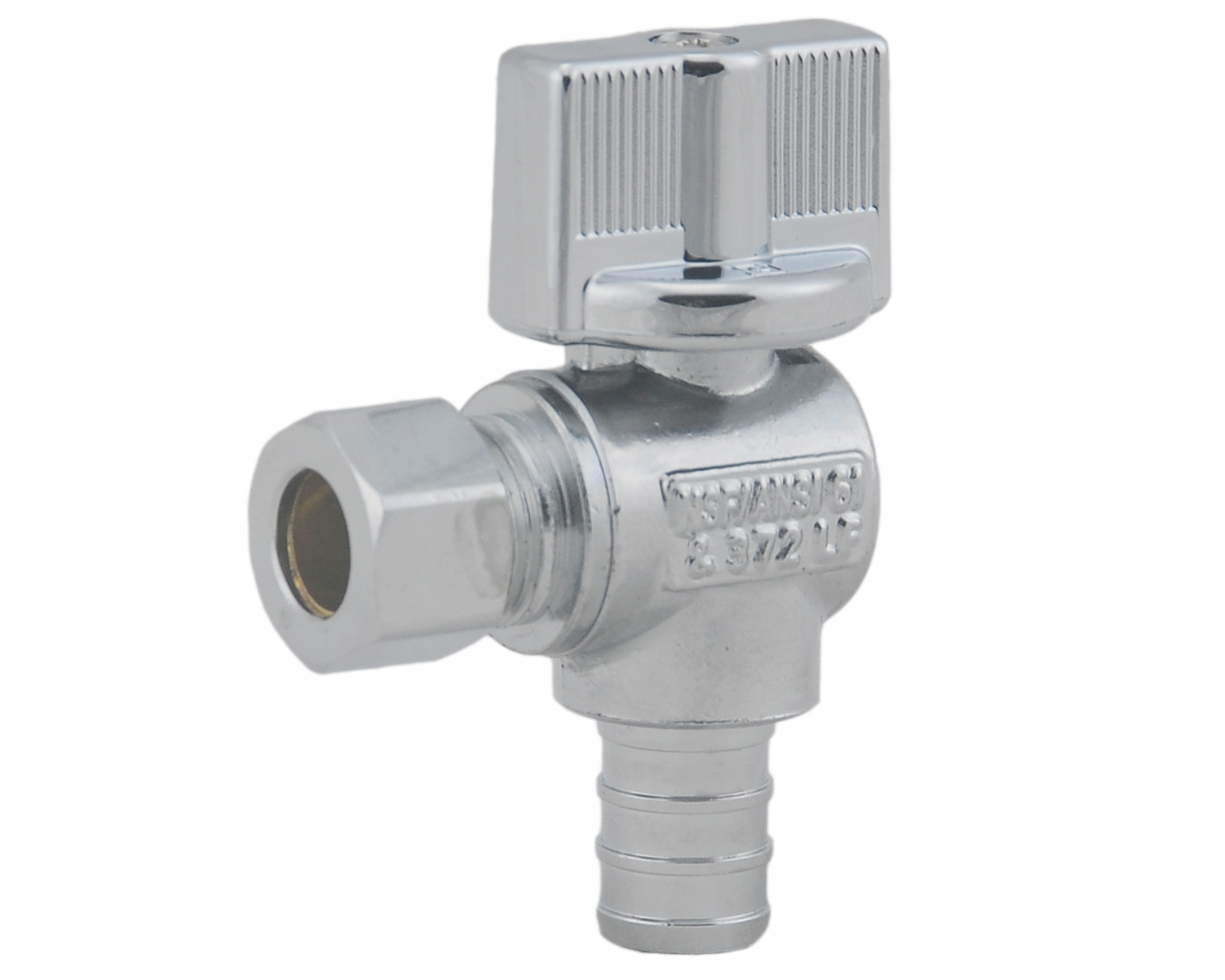
Fixture-level supply stop on a kitchen sink line — the application where space, connection type and potable-water certification converge.
How a manufacturing base supports the matrix
Zhejiang Longda Technology Co., Ltd. is a brass valve and brass fitting manufacturer established in 1993 and located in the Xuangang Industry Zone, Lupu Town, Yuhuan County, Zhejiang Province, China — a region recognised alongside Guangdong as one of China's primary brass valve manufacturing clusters. The company operates a 30,000 m² site, employs around 200 people, runs more than 360 sets of processing and testing equipment, and reports annual output of 7,500 tons, with roughly 95% of production exported to the EU, USA, Canada and South America.
Its product range covers ball valves, gate valves, stop valves, check valves, heating valves, angle valves, brass fittings, plumbing bibcocks, faucets, sanitary ware and other brass components used in hot/cold water control, heating, gas and chemical service. The material programme includes Eco-Brass C69300, CW724R, Lead-Free Brass C4650, CW511L, Low Lead Brass CW509L, CW510L and DZR CW602N, which is the practical basis for matching an alloy to a potable-water or aggressive-water requirement instead of applying one brass to every line.
Products are IAPMO and ALS certified, and the company provides OEM and ODM solutions from in-house tooling and design through final production and testing. For the supply-stop family specifically, the 98023-LF model is documented at 125 psi with a working temperature range of −20°C to 120°C, in sizes 1/2" × 3/8" and 1/2" × 1/2" (DN15 × DN10 / DN15), with compression, FIP, PEX (ASTM F1960), sweat and threaded connection options, a hot-forged normal brass CW617N or lead-free brass body, brass stem and ball, PTFE seats and NBR/EPDM O-rings. Its lead-free version carries cUPC, NSF/ANSI 61 and NSF/ANSI 372 certification.
On the programme side, the supplier positions itself against other supply-stop factories at the same quality level on four measurable points: a wider specification range (50+ standard models versus 10–20 models typical of average factories), zero quality complaints over the past three years, a price level 5%–10% lower than same-quality factories, and an on-time delivery rate above 98%. Sample lead time is stated at 5–7 days and quotation response within 24 hours. These are supplier-stated figures and should be treated as commercial claims to be validated through samples, inspection records and trial orders.
Application fit: residential, renovation, hotel/apartment and distributor supply
New residential construction. The dominant requirement is potable-water compliance on every wetted component. Supply stops on fixture lines behind sinks, toilets and washing machines typically see 40–80 psi (0.28–0.55 MPa) and 4°C–60°C, with local shut-off so that maintenance does not require isolating the building. Lead-free brass, NSF/ANSI 61 and NSF/ANSI 372 listings, cUPC-listed performance and NPT threads are the usual baseline. On PEX-A branch lines, the ASTM F1960 cold-expansion connection applies, with bodies rated up to 100 psi (0.7 MPa) and up to 180°F (82°C).
Renovation. Renovation work adds two constraints that new construction does not have: existing pipe material and limited access. Angle-stop installations in bathroom and kitchen renovation commonly work at 40–150 psi (0.28–1.0 MPa) and 4°C–90°C in confined space behind the fixture, with multi-connection compatibility (compression, F1807 PEX, F1960 expansion, CPVC, press, push-fit, solder) so that one valve family can serve mixed legacy and new piping.
Hotel and apartment fit-out. Repeat specification is the defining risk. When the same valve is installed hundreds of times, any weakness in seat or seal construction multiplies across the property, and any certification gap becomes a project-level compliance issue. Buyers in this segment should verify the sealing construction (PTFE seat, double O-ring, quarter-turn ball core, chrome-plated anti-corrosion finish), confirm that every lot carries thread gauge inspection and 100% air pressure testing before shipment, and lock a single model designation so that later maintenance orders match the installed base.
Plumbing distributor supply. Distributors are judged by fill rate and by how few returns they process. This is where specification coverage and delivery stability outrank unit price. Adjacent programme requirements — blister or box packaging, stable lead time, a documented sample process, and a supplier able to cover multiple families from one source — matter more than a marginal cost difference on a single SKU.
Beyond potable water. The same matrix logic applies to HVAC and radiator heating systems, municipal water supply, agricultural irrigation, industrial process pipelines and fire-protection systems, where working conditions reach up to 200 psi (1.4 MPa) and −10°C to 110°C, and to hydronic balancing duty where ratings reach 232 psi (1.6 MPa) across DN 15–DN 50.
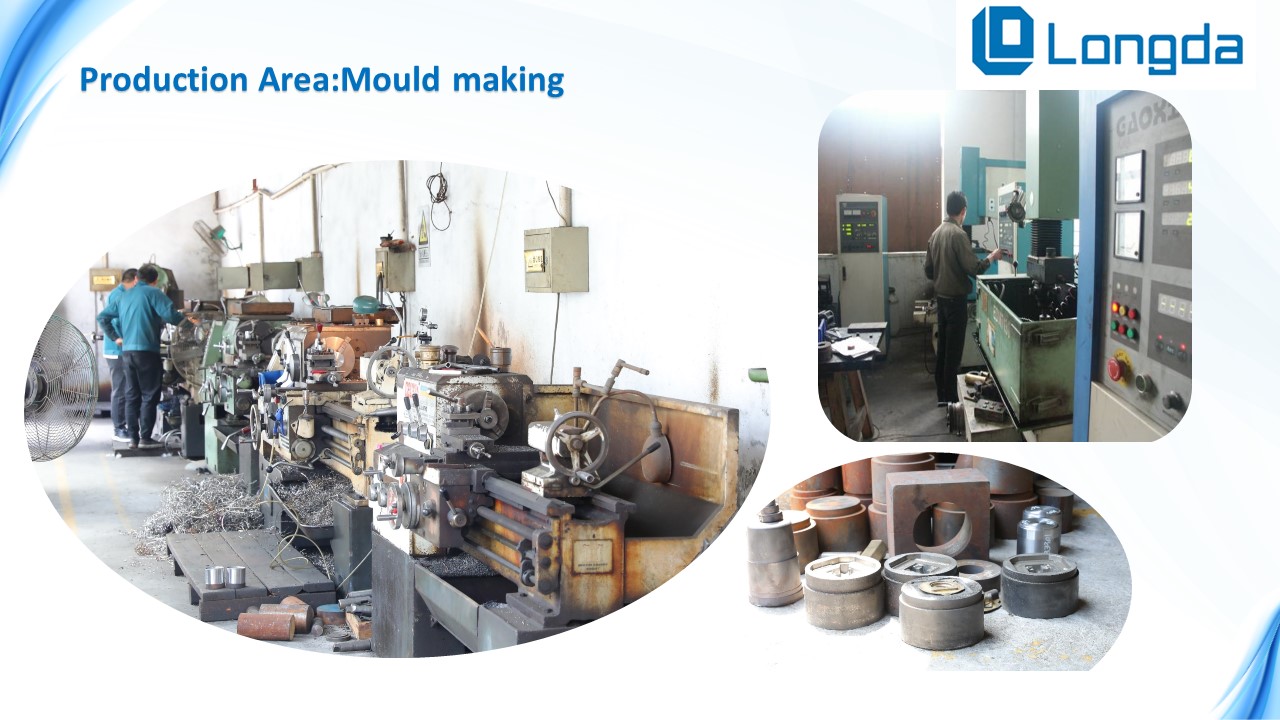
Production and testing capacity underpins the documentation chain — material reports, thread gauge records and pre-shipment test data.
Market trend analysis: what the numbers say about family-level demand
The brass valve market was valued at USD 14.8 billion in 2025 and is projected to reach USD 24.1 billion by 2034, growing at a CAGR of 5.6% from 2026 to 2034, according to Dataintelo. Within that total, ball valves held the largest product-type share at 38.4% in 2025, reflecting the shift toward quarter-turn operation in both fixture-level and line-level isolation.
Regionally, Asia Pacific dominated with a 41.2% revenue share in 2025, while North America held approximately 26.1%. On the supply side, China exported USD 22.6 billion in valves (HS 8481) in 2024 and remains the largest global exporter, with Zhejiang and Guangdong as the primary brass valve manufacturing clusters. Market concentration is moderate: the top five global valve suppliers control approximately 35% of global revenues, which leaves a large share of procurement decisions with specialised manufacturers rather than with a handful of conglomerates.
Two structural trends shape family-level demand. First, lead-free brass is becoming the mandatory baseline for potable-water applications in the United States under the Safe Drinking Water Act, which pushes alloy selection and documentation upstream into the quotation stage. Second, manual balancing valves still represent 55–65% of unit demand in the Asia-Pacific hydronic balancing market, driven by commercial HVAC retrofits. Gate valves are projected to be the fastest-growing type at a CAGR of 9.89% through 2032, while smart valve integration with IIoT is emerging as a longer-term structural trend in fluid management and predictive maintenance. For buyers, the implication is that the four-family matrix is not a static document: certification scope, ratings and family mix should be reviewed at each annual supply agreement.
Comparison with traditional selection practice — including where the matrix does not help
Traditional practice selects brass valves by size, thread and price, then checks certification only if the destination market asks for it. That approach is fast for a small order and unreliable at scale, because it leaves application role, operating frequency and documentation unverified until an inspection or a warranty claim exposes the gap. The matrix approach is slower at the first order and considerably faster at every repeat order, because the decision record already exists.
It is equally important to state the boundaries. The matrix does not replace a project engineer's hydraulic calculation, and it does not convert a product into something it is not. Three limitations should be recorded explicitly.
Rating boundaries are hard boundaries. The 98023-LF supply stop is documented at 125 psi. It should not be specified for a line whose stated envelope reaches up to 200 psi (1.4 MPa) or up to 232 psi (1.6 MPa) in balancing service — in those cases a different family or configuration has to be selected, not the same valve with a different label.
Certification coverage is model-specific. The lead-free version of the supply stop carries cUPC, NSF/ANSI 61 and NSF/ANSI 372 listings. That does not automatically mean every other family in the same catalogue carries the same listing scope. Where a specific model's listing is not confirmed, the correct action is to request the certificate — not to assume it from the supplier's overall certification claim.
Commercial terms have their own economics. Minimum order quantity is 1,000 pcs per size, with delivery terms FOB Ningbo/Shanghai, CIF, CNF, DDP or EXW, pre-shipment inspection with test report as the acceptance criterion, and payment terms of 30% T/T in advance with 70% T/T against copy of B/L unless otherwise agreed. Buyers running small pilot orders or mixed specification baskets should plan the sample process first: sample lead time is stated at 5–7 days, which supports validation but still adds time before volume production. Multi-turn configurations are also available alongside quarter-turn, which is a genuine trade-off rather than a defect: multi-turn operation gives finer control but is slower to operate than a quarter-turn handle, so the choice should follow the operating frequency of the line.
Future outlook
Three developments are likely to change how the matrix is applied over the next several years. Lead-free mandates in North America and comparable requirements in other markets will continue to move alloy documentation from a downstream check to an upstream qualification criterion. Growth in hydronic balancing demand, driven largely by commercial HVAC retrofits in emerging Asia-Pacific markets, will keep manual balancing valves relevant even as automatic options expand. And IIoT integration will gradually introduce a data layer into fluid management, initially in larger commercial and industrial installations, adding a future verification item to the matrix: not only whether a valve is rated and certified, but whether its operating state can be recorded.
For procurement teams, the practical response is to keep the matrix as a living document. Each new model designation should be added as a row with its rating, connection, size, materials, certification scope and test evidence recorded — and each annual supply review should test whether those rows still match the standards and market requirements in force.
Frequently asked questions
1. For the same potable-water line, should a specifier choose a brass gate valve or a brass ball valve?
The deciding factors are operating frequency and the required flow behaviour, not brand preference. A gate valve suits isolation duty where the valve is normally left fully open or fully closed and a straight-through flow path is wanted. A ball valve suits quarter-turn on/off control where the valve is operated frequently and a full-port, minimal-pressure-drop design is preferred. Ball valves held the largest product-type share of the brass valve market at 38.4% in 2025, which reflects how often quarter-turn operation is specified. Both families appear in the same supplier range — ball valve, gate valve, stop valve, check valve, heating valve and angle valve — so the choice should be made on duty cycle, rating, connection type and certification scope.
2. What ratings, sizes and connection options should be confirmed before ordering a brass supply stop?
Confirm them at model level. For the documented 98023-LF brass supply stop / brass angle valve, the rating is 125 psi with a working temperature range of −20°C to 120°C, in sizes 1/2" × 3/8" and 1/2" × 1/2" (DN15 × DN10 / DN15), offered as quarter-turn (ball) or multi-turn, with compression × compression, FIP × compression, PEX × compression (ASTM F1960), sweat and threaded connections, and a body in hot-forged normal brass CW617N or lead-free brass with PTFE seats and NBR/EPDM O-rings. The installation envelope is separate: fixture supply lines behind sinks, toilets and washing machines typically run at 40–80 psi (0.28–0.55 MPa) and 4°C–60°C, while bathroom and kitchen angle-stop installations commonly operate at 40–150 psi (0.28–1.0 MPa) and 4°C–90°C.
3. Which lead-free and potable-water certifications must a brass valve carry for the USA and Canada?
Four verification layers are normally required. Wetted-surface lead content must be ≤ 0.25% per NSF/ANSI 372 and the US Safe Drinking Water Act, including California AB1953. Materials in contact with potable water must conform to NSF/ANSI 61 health-effects requirements. The product must meet the performance requirements of the cUPC-listed standards — for example ASME A112.18.1 / CSA B125.1 for supply stops and ASTM F1960 for PEX-A expansion connections. Threads should conform to ASME B1.20.1 (NPT) for North American work, with ISO 228-1 applying where pressure-tight joints are not made on the thread. Lead-free brass is becoming the mandatory standard for potable-water applications in the US, and the manufacturer's own certifications (IAPMO and ALS) should be read alongside the model-level listing documents.
4. What factory testing evidence should a buyer require before shipment?
Request the test record that matches the shipment lot, not a generic catalogue statement. The stated construction and quality-control package includes PTFE seal with double O-ring sealing, a quarter-turn ball core and a chrome-plated anti-corrosion finish, supported by 100% air pressure testing before shipment, thread gauge inspection on every lot, a lead-free material test report, and a 12-month quality warranty with free replacement. Pre-shipment inspection with test report is the stated acceptance criterion, and the report should record shell and seat test pressures along with the model, lot and quantity. Where a supplier cannot provide this record for the specific model, the compliance claim is not yet verified.
5. How should a distributor structure a long-term brass valve supply programme?
Structure it around specification coverage, delivery stability and documentation rather than unit price alone. Relevant baseline facts in the supply-stop segment include a specification range of 50+ standard models against 10–20 models typical of average factories, zero quality complaints over the past three years, a price level 5%–10% lower than same-quality factories, and an on-time delivery rate above 98%, with sample lead time of 5–7 days and quotation response within 24 hours. Commercial terms are MOQ of 1,000 pcs per size; delivery FOB Ningbo/Shanghai, CIF, CNF, DDP or EXW; acceptance by pre-shipment inspection with test report; and payment of 30% T/T in advance with 70% T/T against copy of B/L unless other terms are agreed. OEM/ODM capability and IAPMO and ALS certification support the compliance side of the programme, and a single-source range across ball, gate, stop, check, heating and angle valves simplifies replenishment planning.
Fit checklist: closing the decision
Before the purchase order is released, each line should be able to answer seven questions: what is the family's role in the system; what is the model-level pressure and temperature rating, and does the installation envelope sit inside it; what is the exact size and thread or connection interface; what are the body alloy, seat, O-ring and (for strainers) screen materials; which certifications apply to that specific model; what test record will accompany the shipment; and what commercial terms — MOQ, delivery term, inspection basis and payment structure — govern the order. In residential, renovation, hotel/apartment and distributor scenarios, the same seven questions apply; only the answers change.
For specification reference, the manufacturer's full brass valve and fitting catalogue is available for download: Longda Global Catalogue (PDF).