
Brass Gate Valve OEM, Verified: A Buyer's Evaluation Framework
The global brass valve market is expected to grow from USD 14.8 billion in 2025 to USD 24.1 billion by 2034. For buyers sourcing brass gate valves through OEM, ODM, or private-label programs, the decisive factor is no longer just price — it is whether the manufacturer can prove material traceability, testing discipline, and customization depth across every production batch.
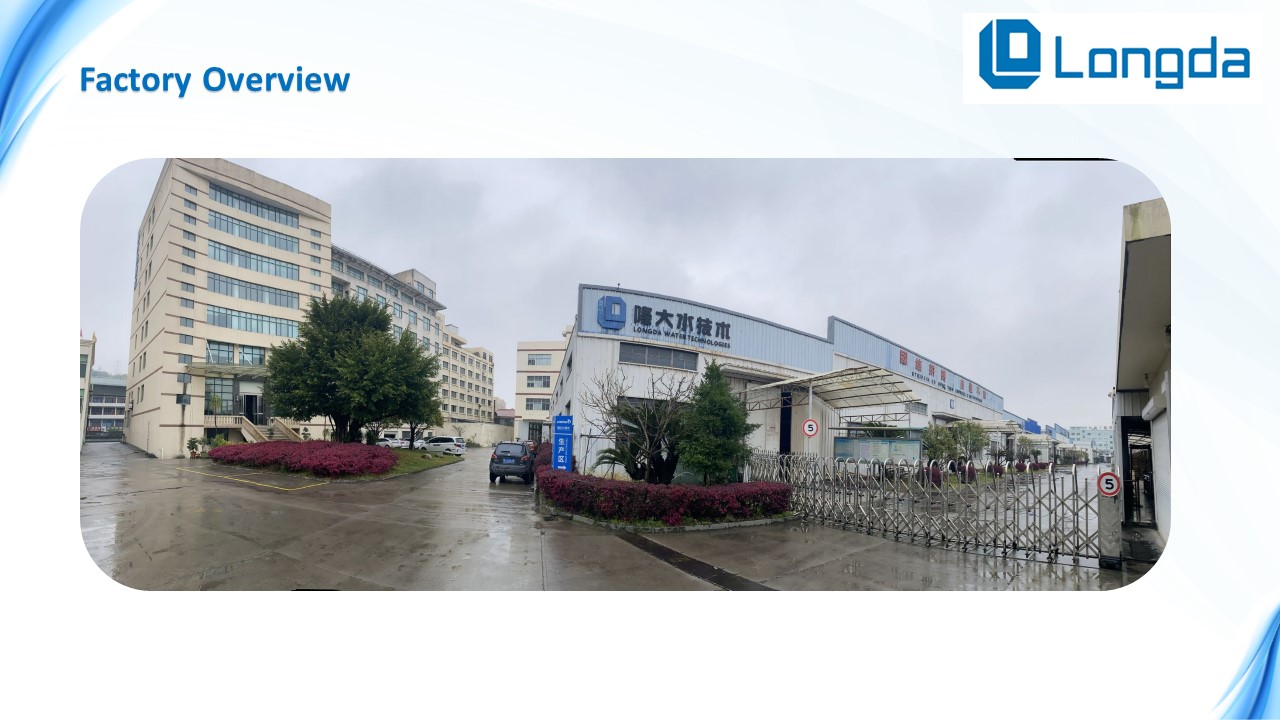
Zhejiang Longda Technology Co., Ltd. facility in Yuhuan, Zhejiang Province — the manufacturing base behind LONGDA BRASS VALVE OEM programs.
Brass gate valves are among the most widely used isolation products in water supply, HVAC, and irrigation systems. Their function is straightforward: a multi-turn rising stem lifts a metal disc out of the flow path, allowing full-bore flow when open and tight shut-off when closed. But simplicity in operation does not make sourcing simple. Buyers who order brass gate valves in volume face a different set of questions: Which brass alloy is actually used? Does the lead-free certificate match the valve body? Are threads inspected? Is every unit pressure tested? These are capability questions, not catalogue questions.
Why Supplier Capability Validation Matters for Brass Gate Valve Sourcing
Most procurement failures do not appear at the sample stage of a brass gate valve project. They appear later, usually in one of four forms:
1. Material drift. A lead-free brass gate valve is ordered for the North American market, but the alloy composition of the delivered batch cannot be traced to the material test report. In potable water systems, wetted surface lead content must be ≤0.25% under NSF/ANSI 372 and the US Safe Drinking Water Act. Without a verified material chain, a distributor cannot legally place that valve in the market.
2. Thread failures. Brass gate valves rely on NPT or BSP threads for leak-free installation. If the manufacturer does not perform thread gauge inspection on every batch, buyers can face rejected shipments, rework costs, and damaged customer relationships.
3. Inconsistent shell and seat testing. The valve body must tolerate 1.5× rated pressure for shell integrity and 1.1× rated pressure for seat sealing. A manufacturer that only spot-checks a small percentage of units cannot guarantee the same performance across a 10,000-piece order.
4. Weak customization documentation. OEM buyers often need a specific handle type, a private label print, a particular thread standard, or a retail blister pack. When supplier capability is shallow, every one of these changes becomes a negotiation risk.
The opportunity for buyers is to shift the evaluation focus from unit price to verification depth. A supplier that can document materials, testing, certifications, and production constraints is a safer counterparty for multi-year brass gate valve programs.
What an OEM Brass Gate Valve Partner Should Provide
One manufacturer that demonstrates this capability set is Zhejiang Longda Technology Co., Ltd. (brand: LONGDA BRASS VALVE). Established in 1993 in Yuhuan County, Zhejiang Province, the company specializes in brass valves and fittings for residential and commercial water, heating, gas, and chemical control applications. It operates a 30,000 m² facility with about 200 employees, more than 360 sets of processing and testing equipment, and an annual output of approximately 7,500 tons. Around 95% of production is exported to Western Europe, the United States, Canada, and South America.
Customization Depth Across the Gate Valve Product Range
For OEM and ODM buyers, Longda offers customization options that include size (1/4"–4"), body material (lead-free or DZR brass), handle type (lever, T-handle, butterfly), handle color, logo printing, thread type (NPT or BSP), and packaging (blister, box, poly bag). This level of flexibility is relevant for buyers who need to differentiate a private-label gate valve in a competitive plumbing market.
A representative product is the BRASS GATE VALVE model T-22017A:
| Parameter | Value |
|---|---|
| Valve type | Rising stem, full bore, threaded brass gate valve |
| Size range | 1/2"–4" (DN15–DN100) |
| Pressure rating | 200 WOG (1.4 MPa) |
| Working temperature | −20°C to 120°C |
| Seat | Brass-to-brass (metal seat) |
| Operation | 360° handwheel |
| Connection | Female NPT or BSP threaded |
| Test pressure | 1.5× rated (shell), 1.1× rated (seat) |
| Body & bonnet material | Hot-forged brass: CW617N / Hpb59, or lead-free CW724R / C46500 |
| Certifications | NSF/ANSI 61 and NSF/ANSI 372 certified by IAPMO (lead-free version) |
Management System and Regulatory Certifications
Longda operates under ISO 9001:2015 quality management certification and ISO 14001:2015 environmental management certification, both issued by China Quality Certification Centre (CQC). These certifications cover the design, development, and manufacture of medium and low pressure valves for export, plus plumbing faucets and fittings. For North American buyers, the company also holds IAPMO listings and certifications, including NSF/ANSI 61 (Certificate of Listing N-5775) and NSF/ANSI 372 (Certificate of Listing 6304) for lead-free products.
Quality Control: What Should Be Verified Before Shipment
A supplier's quality story is only meaningful if it can be examined at process level. Longda's gate valve quality control includes 100% air pressure testing under water before shipment, thread gauge inspection on every production lot, and material test reports available to buyers. The testing facility includes spectral analysis instruments, intensity test equipment, roundness measuring equipment, high-low temperature test boxes, salt-spray test boxes, and high-pressure testing sets.
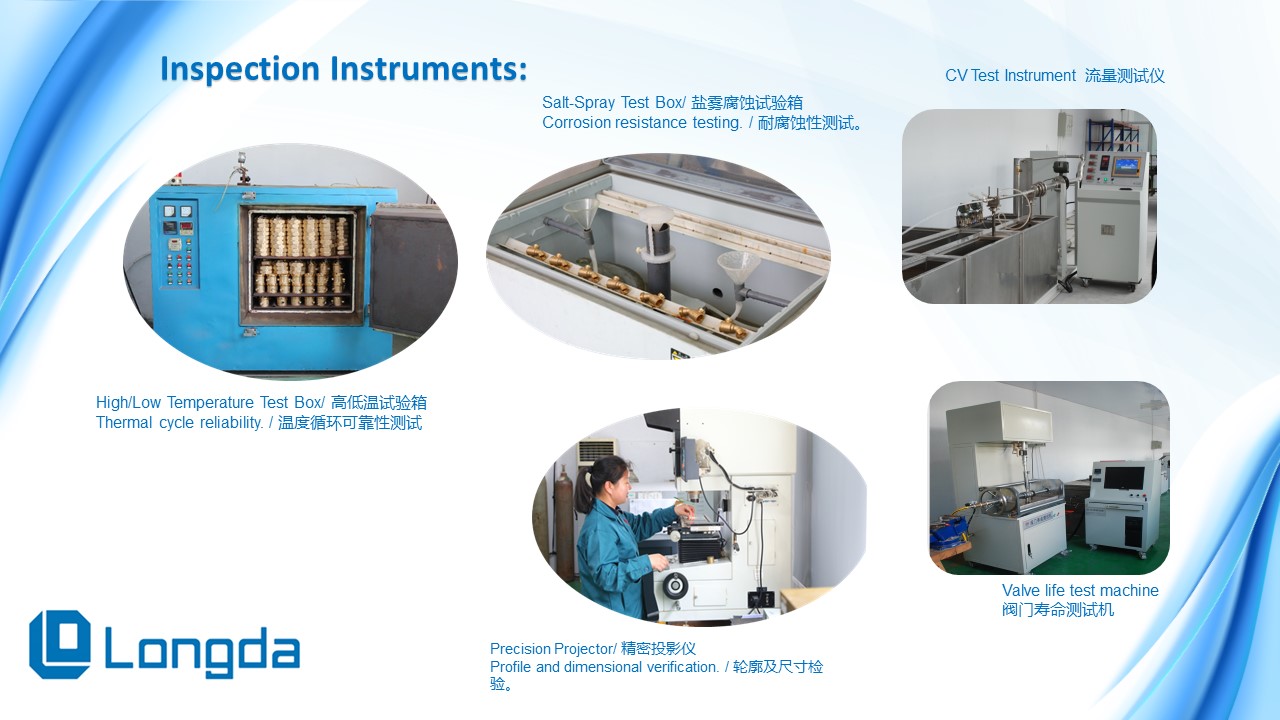
100% air pressure testing under water at the Longda factory — a standard check for brass gate valves before shipment.
For buyers, the practical question is whether the manufacturer can provide batch-level test evidence. The presence of a pressure rating chart or a certificate is not enough; the buyer should ask for the actual test procedure, the rejection criteria, and the frequency of third-party audits. In Longda's case, the combination of IAPMO certification and a documented 100% testing routine provides a materially stronger assurance than a workshop that relies on outsourced testing.
Technical Considerations for Brass Gate Valve Specification
Understanding a few technical factors helps buyers evaluate a gate valve supplier more effectively.
Rising stem vs. non-rising stem. The T-22017A uses a rising stem, meaning the stem moves upward as the valve opens, giving installers a visual indication of whether the valve is open or closed. This is useful in boiler rooms, mechanical rooms, and agricultural systems where a quick status check matters.
Brass-to-brass seat. Unlike rubber-seated valves, a brass-to-brass metal seat provides a durable sealing interface for water systems with moderate pressure. It also makes the valve more tolerant of repeated operation than elastomer seals in some conditions.
Full bore design. When fully open, the gate retracts completely into the bonnet, allowing the pipe diameter to remain unobstructed. This minimizes pressure drop, important for municipal water supply and long irrigation lines.
Thread standards. NPT threads are common in North America, while BSP threads are used in Europe, Asia, and other markets. A supplier that can produce both NPT and BSP versions from the same platform provides flexibility for buyers serving multiple regions.
Application Scenarios and Use Cases
Brass gate valves serve a wide range of isolation tasks in residential, commercial, and municipal environments. Typical scenarios include:
Municipal water supply. Gate valves are installed on distribution lines to isolate sections during maintenance or emergency repair. Full bore flow and reliable shut-off are essential.
Residential and commercial plumbing. Multi-turn gate valves are used on main service lines, water heater connections, and branch lines where a slow, gradual shut-off is preferred.
HVAC and heating systems. In boiler rooms and hydronic systems, brass gate valves isolate pumps, heat exchangers, and radiators. The rising stem allows technicians to verify open/closed state at a glance.
Agricultural irrigation. In field irrigation networks, brass gate valves control water flow to different zones. Corrosion resistance and long service life are primary selection criteria.
Market Trend Analysis: What Is Reshaping Brass Gate Valve Procurement
Several identifiable trends are changing how buyers evaluate brass gate valve suppliers.
Lead-free compliance is becoming a baseline, not a differentiator. The US Safe Drinking Water Act, reinforced by California AB1953 and NSF/ANSI 372, makes lead-free brass effectively mandatory for potable water contact surfaces. Suppliers that hold verified NSF/ANSI 61 and NSF/ANSI 372 certification for actual gate valve models — not just for unrelated product lines — have a compliance advantage.
Regional demand is shifting. According to Dataintelo, Asia Pacific accounted for 41.2% of the global brass valves market in 2025, with North America at 26.1%. Growth in the Asia-Pacific hydronic and HVAC sector creates additional demand for brass valves, while North American buyers continue to prioritize certified lead-free products.
Industrial gate valves are forecast to grow strongly. Cognitive Market Research projects industrial gate valves to be the fastest-growing valve type, with a CAGR of 9.89% through 2032. This is not only about industrial-scale valves; it reflects broader infrastructure investment and a return to metal-seated isolation products.
China remains the dominant export base. China exported USD 22.6 billion in valves (HS 8481) in 2024, with Zhejiang and Guangdong provinces identified as primary brass valve manufacturing clusters. For buyers, this means the supplier selection process must distinguish between manufacturers with real production depth and trading operations without in-house control.
Comparison with Traditional Supplier Models
Buyers can source brass gate valves through at least two channels: traditional trading intermediaries or a manufacturer-direct model like Longda.
| Evaluation Dimension | Traditional Trading / Small Workshop Model | Manufacturer-Direct (e.g., Longda) |
|---|---|---|
| Material traceability | Often limited to supplier-declared material labels | Material test reports; lead-free alloy options (CW724R, C46500, etc.) |
| Certification support | May not cover specific valve models | NSF/ANSI 61 & 372 for lead-free gate valve; ISO 9001/14001; IAPMO listings |
| Customization | Longer communication chain; slower decisions | In-house tooling, handle, logo, packaging, thread type customization |
| Quality control | Depends on the factory actually producing; often unverifiable | 100% air pressure testing under water; thread gauge inspection per batch; pre-shipment inspection with test report |
| MOQ | Often lower | 1,000 pcs per size |
| Lead time | Can be shorter for stock items | 20–50 days depending on product; samples 5–7 days |
The manufacturer-direct model is not without boundaries. The standard MOQ of 1,000 pieces per size and a production lead time of 20–50 days may not suit buyers who need urgent small quantities or emergency replacement stock. In such cases, a distributor or trading intermediary with nearby inventory may be a more practical option. The right choice depends on order profile, certification requirements, and whether the buyer needs consistent long-term supply.
Future Outlook for Brass Gate Valve OEM Partnerships
The next phase of brass gate valve sourcing will likely reward suppliers that can act as verification partners rather than simple producers. Several developments point in this direction:
Smart valve integration. IIoT-enabled valves with position sensing and predictive maintenance features are a structural trend in fluid management, according to Mordor Intelligence. Even for manual gate valves, the documentation of test data in digital format is becoming a procurement expectation.
Green material standards. DZR and lead-free alloys, including CW724R, C46500, and Eco-Brass C69300, are expanding beyond North America. European buyers increasingly expect EN-compliant materials and documented environmental management (ISO 14001).
Consolidation of verification requirements. Retail audits, distributor compliance checks, and municipal spec reviews will continue to demand tighter documentation. Suppliers who can provide batch traceability, test reports, and certification files will become the default partners for serious buyers.
Frequently Asked Questions
Q1: How can buyers avoid connection leakage, stem leakage, thread damage during installation, and deterioration over time in brass gate valves?
A: Robust construction with PTFE seal and double O-ring sealing is the primary defence against stem leakage. For gate valves, the brass-to-brass seat provides a durable metal sealing interface. At the factory level, products are 100% air pressure tested under water before shipment, and thread gauge inspection is applied to every batch. Lead-free material test reports are available, and a 12-month quality warranty provides free replacement for quality defects.
Q2: What lead-free requirements apply to brass gate valves for the US and Canadian potable water systems?
A: The wetted surface lead content must be ≤0.25% under NSF/ANSI 372 and the US Safe Drinking Water Act. All materials in contact with potable water must conform to NSF/ANSI 61 health effects requirements. The lead-free version of the LONGDA BRASS GATE VALVE (model T-22017A) is certified by IAPMO to both NSF/ANSI 61 and NSF/ANSI 372.
Q3: What OEM/ODM customization options are available for brass gate valve orders?
A: Customization options include size (1/4"–4"), body material (lead-free or DZR brass), handle type (lever, T-handle, butterfly), handle color, logo printing, thread type (NPT or BSP), and packaging (blister, box, poly bag). ODM services are available for design and production as well.
Q4: What are the MOQ and production lead times for OEM brass gate valves?
A: The standard MOQ is 1,000 pieces per size. Production lead time is 20 to 50 days depending on the product type. Product samples can be prepared in 5 to 7 days.
Q5: What pressure testing is applied to brass gate valves before shipment?
A: Gate valves are tested at 1.5× rated pressure for shell integrity and 1.1× rated pressure for seat sealing. Longda performs 100% air pressure testing under water before shipment, so every unit is verified rather than sampling-tested.