
Brass Check vs Ball Valve: Backflow and Isolation
Brass Check vs Ball Valve: Backflow and Isolation
A potable water line and a solar thermal loop share two requirements: water must flow in the intended direction, and maintenance must be possible without draining the circuit. Brass check valves handle the first. Brass ball valves handle the second. They are not interchangeable, and treating them as one category in a procurement specification is a common source of both flow problems and material risk.
This comparison sets out the distinct roles of brass check valves and brass ball valves, the reason check valves in never-drained potable lines may need dezincification-resistant brass, and the questions a buyer should put to any supplier before approving a valve schedule.
Two Different Jobs in the Same Circuit
A brass check valve is an automatic, flow-actuated device. It opens when fluid moves in the intended direction and closes when flow stops or reverses. No handle, no actuator, no operator decision. Its job is to prevent backflow and, in building services, to protect against cross-connection between circuits.
A brass ball valve is a manual isolation device. A quarter-turn of the handle rotates a bored ball inside the body, moving from fully open to fully closed. The handle position shows the valve state at a glance. Its job is to isolate a section of pipework for service, repair or commissioning.
Both valve types may appear on the same potable water riser or the same solar-loop manifold. The check valve protects direction; the ball valve enables maintenance. Confusing the two in a specification leads to either a circuit that cannot be isolated or a line that allows reverse flow when the pump stops.
How Check Valves Prevent Backflow
In building water supply and sanitary installations, brass check valves prevent backflow and cross-connection between circuits. A typical potable water system operates at 1–10 bar, with cold water and hot water up to 65 °C, and the line is under pressure continuously. When a pump stops, when pressure drops on the supply side, or when a downstream circuit is opened for service, the check valve closes to stop water from moving backwards into the mains.
The same principle applies in closed-loop heating and renewable systems. In underfloor heating manifolds, brass check valves prevent cross-flow between the supply and return bars. In solar thermal circuits, they prevent cross-flow between the hot and cold sides and stop thermosiphoning on the collector loop when the pump is off. In heat pump installations, brass check valves stop reverse flow through the heat pump when the domestic hot water diverter is active. In storage tank make-up lines, a brass check valve prevents tank water from flowing back into the mains supply.
Because the check valve operates automatically, its failure is silent. A check valve that fails open allows backflow without any external sign. This is why material selection and approval evidence matter more for check valves than for isolation valves whose position is visible.
How Ball Valves Provide Isolation
Ball valves give quarter-turn isolation and are the default choice for on/off duty in water and gas lines, because the handle shows the valve state at a glance. In a potable water riser, a brass ball valve at the fixture group allows a single floor or apartment to be isolated without shutting down the building. In a solar thermal circuit, a brass ball valve isolates the mixing valve and the solar loop for service. In a heat pump hydraulic package, brass ball valves isolate the circulator and the heat pump without draining the unit — draining also loses the glycol charge.
Ball valves are not designed for throttling. The quarter-turn mechanism moves from fully open to fully closed, and part-open operation exposes the seat to erosion and unstable flow. Where flow regulation is needed, a brass stop valve — designed for part-open duty — is the appropriate choice. Gate valves provide low-resistance isolation on larger mains but are for fully open or fully closed duty only.
The practical distinction for buyers is this: specify ball valves where maintenance isolation is required; specify check valves where reverse flow must be prevented. Do not use a ball valve as a substitute for a check valve, and do not rely on a check valve as an isolation point.
The Material Risk in Never-Drained Lines: Dezincification
Brass requires protection against dezincification in high-chloride or highly oxygenated water. Dezincification is a selective corrosion process in which zinc is removed from the brass alloy, leaving a porous copper structure that loses mechanical strength. In a valve body, this can progress to leakage or structural failure without obvious external warning.
The risk is elevated in lines that are never fully drained. A potable water line is under mains pressure continuously. An underfloor heating loop is filled with treated water and sealed for years. A solar thermal circuit contains a fixed charge of heat-transfer fluid. In each case, the internal surfaces of every valve — including check valves — remain in contact with water for the life of the installation.
For the buyer, this changes the specification question. It is not enough to ask whether a valve is made of brass. The relevant question is whether the brass grade is selected and tested for resistance to dezincification in the water chemistry expected at the installation site. Where the line is never fully drained, that question applies to check valves as much as to ball valves.
Buyer takeaway: In potable water, underfloor heating and solar thermal circuits, ask the supplier to confirm the brass grade and its dezincification performance. A check valve that fails silently through dezincification-related cracking creates a backflow path that the specification was intended to prevent.
Why Check Valves in Potable Water Deserve Extra Scrutiny
A ball valve that begins to leak at the stem is usually visible. A check valve that loses its seat or cracks through dezincification is not. It sits inside the pipe run, held closed only by flow pressure and a spring or disc. When it fails, the first indication is often a backflow event — water moving in the wrong direction, a tank overflowing, or contamination reaching a potable line.
The material exposure is also different. A ball valve in normal isolation duty is operated only during maintenance. A check valve operates every time the pump cycles, every time pressure fluctuates, and every time a downstream draw-off changes the pressure differential across the seat. That continuous duty cycle makes the check valve the more demanding application for both the seal and the body material.
This is why the dezincification question belongs in the check-valve specification, not only in the ball-valve specification. The check valve is the component that must remain reliable without operator attention.
Application Fit: Potable Water, Solar Loop and Heating
The check-valve and ball-valve combination appears across several circuit types, but the balance of risk shifts with the application.
Potable water distribution
Brass gate valves provide coarse shut-off on the main supply and on each riser. Brass ball valves give quarter-turn isolation at the fixture group. Brass check valves prevent backflow and cross-connection between circuits. Brass angle valves connect sanitary fixtures to the pipework. The line is at 1–10 bar and up to 65 °C, permanently under mains pressure, and never fully drained. Dezincification-resistant material is a relevant specification point for all wetted brass components, and potable water approval for the target market is a separate qualification gate.
Solar thermal circuits
Hot water storage reaches up to 90 °C, blended down to 45–60 °C at the outlet, with working pressure of 1–10 bar. Solar loop temperatures can run well above the storage temperature. Brass ball valves isolate the mixing valve and the solar loop for service. Brass check valves prevent cross-flow between the hot and cold sides and stop thermosiphoning on the solar loop. The materials and seals must be rated for the stagnation temperatures of the loop, and potable water approval applies where the circuit connects to domestic hot water.
Underfloor heating manifolds
Low-temperature hot water at 35–50 °C supply with 10–12 °C ΔT, working pressure up to 6 bar, many parallel loops with low individual flow rates. Brass ball valves isolate the manifold and each loop for flushing. Brass check valves prevent cross-flow between supply and return. The manifold is often concealed behind an access panel, and a leak inside a floor build-up is very expensive to repair. Dezincification-resistant material is specified because the loops are never fully drained, and the manifold must remain leak-free over decades.
Heat pump hydraulic packages
Flow temperature 35–55 °C, working pressure up to 6 bar, variable flow with frequent cycling in shoulder seasons. Brass ball valves isolate the circulator and the heat pump for service without draining the unit. Brass check valves stop reverse flow through the heat pump when the domestic hot water diverter is active. The valves must withstand cyclic thermal stress — heat pump circuits cycle far more often than boiler circuits — and remain leak-free at low flow rates.
A Buyer's Comparison Framework
The table below sets out the comparison dimensions that matter when specifying brass check valves and brass ball valves for the same project. It is a decision aid, not a ranking.
| Dimension | Brass check valve | Brass ball valve |
|---|---|---|
| Primary function | Prevents backflow and cross-connection; automatic, flow-actuated | Provides manual isolation; quarter-turn, handle-operated |
| Operating mode | Normally closed or normally open depending on circuit; responds to differential pressure | Normally open or closed as set; operated only for service or emergency isolation |
| State indication | No external position indicator; internal failure is silent | Handle position shows open/closed state visually |
| Material exposure | Continuous contact with water; operates on every pump cycle and pressure fluctuation | Continuous contact with water; operated infrequently in normal service |
| Dezincification risk | Relevant in never-drained potable and closed-loop lines; silent failure mode makes material verification important | Relevant in the same circuits; a leaking body or stem is more likely to be visible before failure |
| Typical approvals to verify | Potable water approval for the target market; material specification including dezincification performance | Potable water approval for the target market; pressure and temperature rating for the circuit |
| Application fit | Potable water protection, solar loop anti-thermosiphon, manifold cross-flow prevention, heat pump reverse-flow protection | Fixture-group isolation, manifold and loop isolation, heat pump and circulator isolation, solar-loop service isolation |
| Common specification mistake | Specifying a ball valve as a backflow preventer | Specifying a ball valve for throttling duty instead of a stop valve |
Approval Questions Buyers Should Ask
Approval requirements vary by market and application. The questions below are designed to surface the evidence a supplier should be able to provide, without assuming a particular certification is mandatory in every jurisdiction.
- What brass grade is used, and is it selected for dezincification resistance? Ask for the material specification and any test evidence supporting the grade's performance in potable water or closed-loop heating water.
- What potable water approval does the valve hold for the target market? Approval schemes differ between regions. Confirm that the specific valve model — not only the product family — holds the relevant approval.
- What is the pressure and temperature rating of the valve? For brass water valves, ratings such as PN16, PN25 or PN40 and a temperature range of −30 °C to +150 °C define the envelope. For gas service, MOP5 (0–5 bar) and −20 °C to +60 °C apply, with testing to EN331 and AGA approval where relevant.
- How is the valve tested for leakage and batch traceability? In-line air-tightness testing and batch-level traceability through a manufacturing execution system provide documented quality control.
- Is the check valve suitable for the specific circuit conditions? Confirm the cracking pressure, flow direction, mounting orientation and seal material against the actual circuit — potable water, solar loop, heating circuit or heat pump.
Market Context and Manufacturing Perspective
The brass valve category is large and geographically concentrated. According to a 2026 commercial research report by Dataintelo, the global brass valves market was valued at USD 14.0 billion in 2025 and is projected to reach USD 21.35 billion by 2034, with Asia Pacific accounting for 41% of market revenue in 2025. These figures are source-reported market estimates and should be read as directional context rather than a precise forecast for any single valve type.
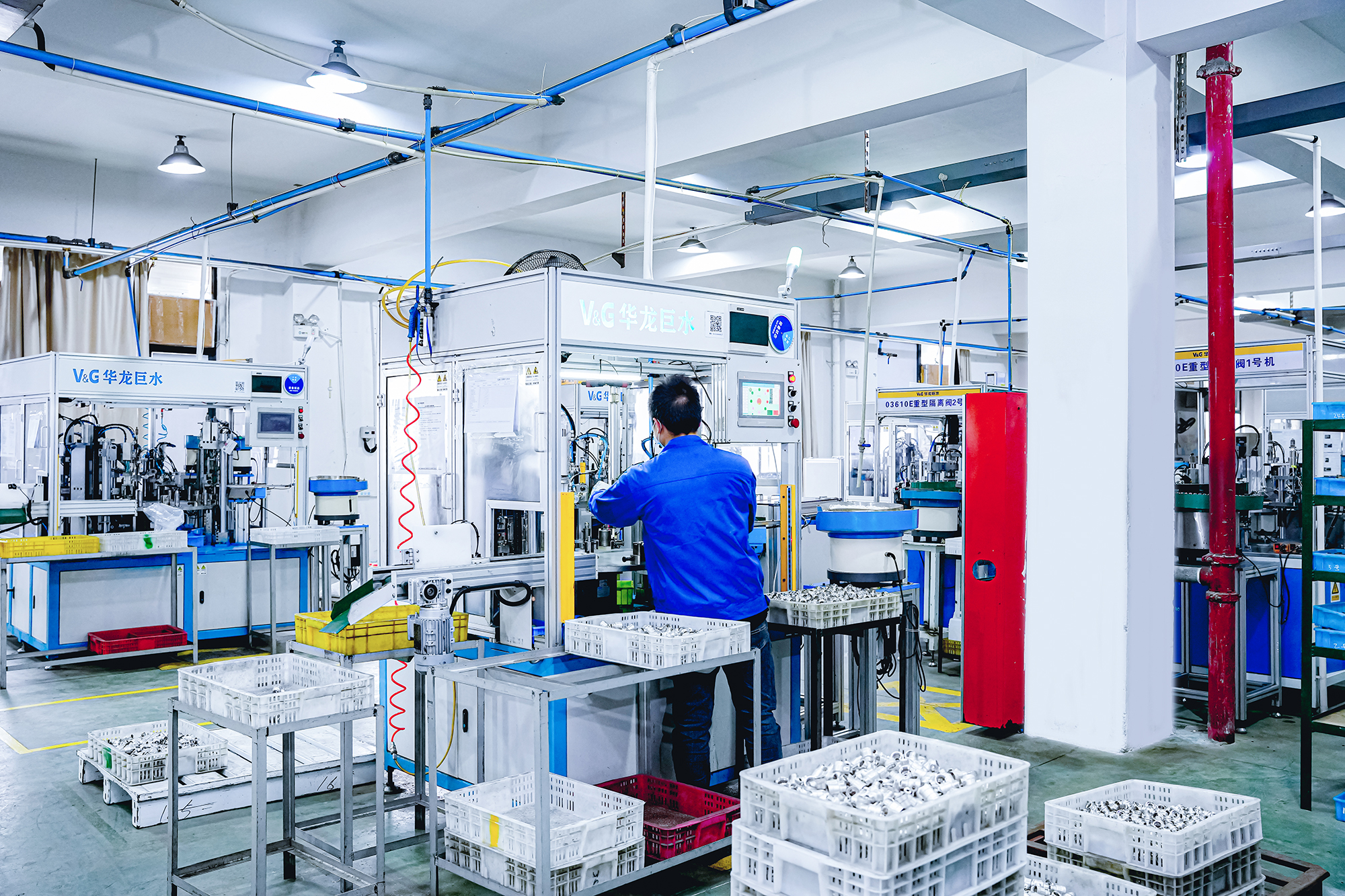
For buyers, the practical implication is that supplier capability varies widely. A valve that meets a dimensional standard may still differ in brass grade, dezincification performance and approval coverage. Zhejiang Valogin Technology Co., Ltd. (VALOGIN) manufactures brass valves at its Yuhuan base and stainless steel valves at its Luqiao base. The company produces its own brass rod from 100% recycled copper through JD Brass, hot-forges, machines, assembles and tests in-house, and machines its own high-temperature PTFE seats. This vertical integration means the valve family shares one material specification, one quality standard and one certificate set.
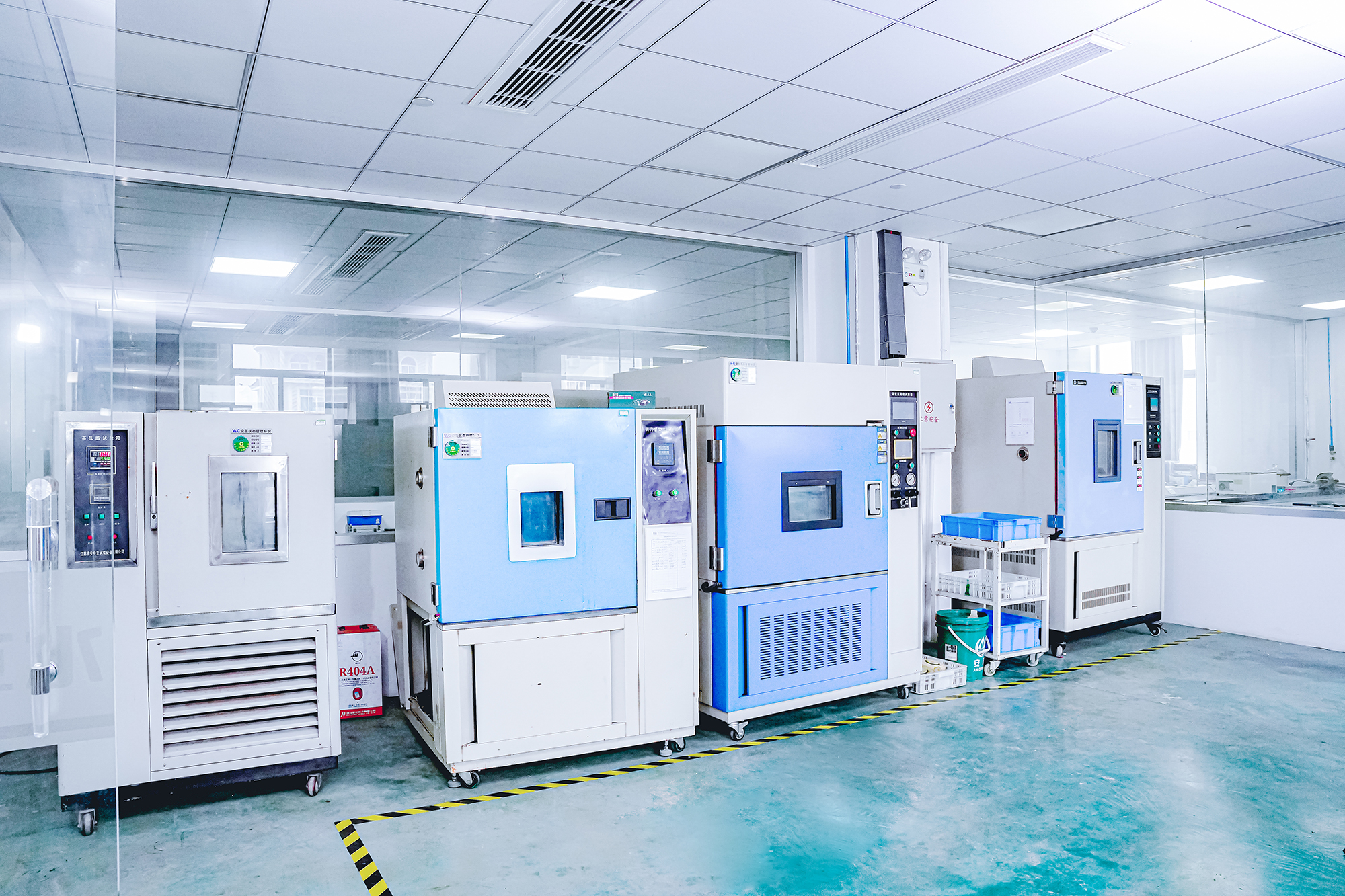
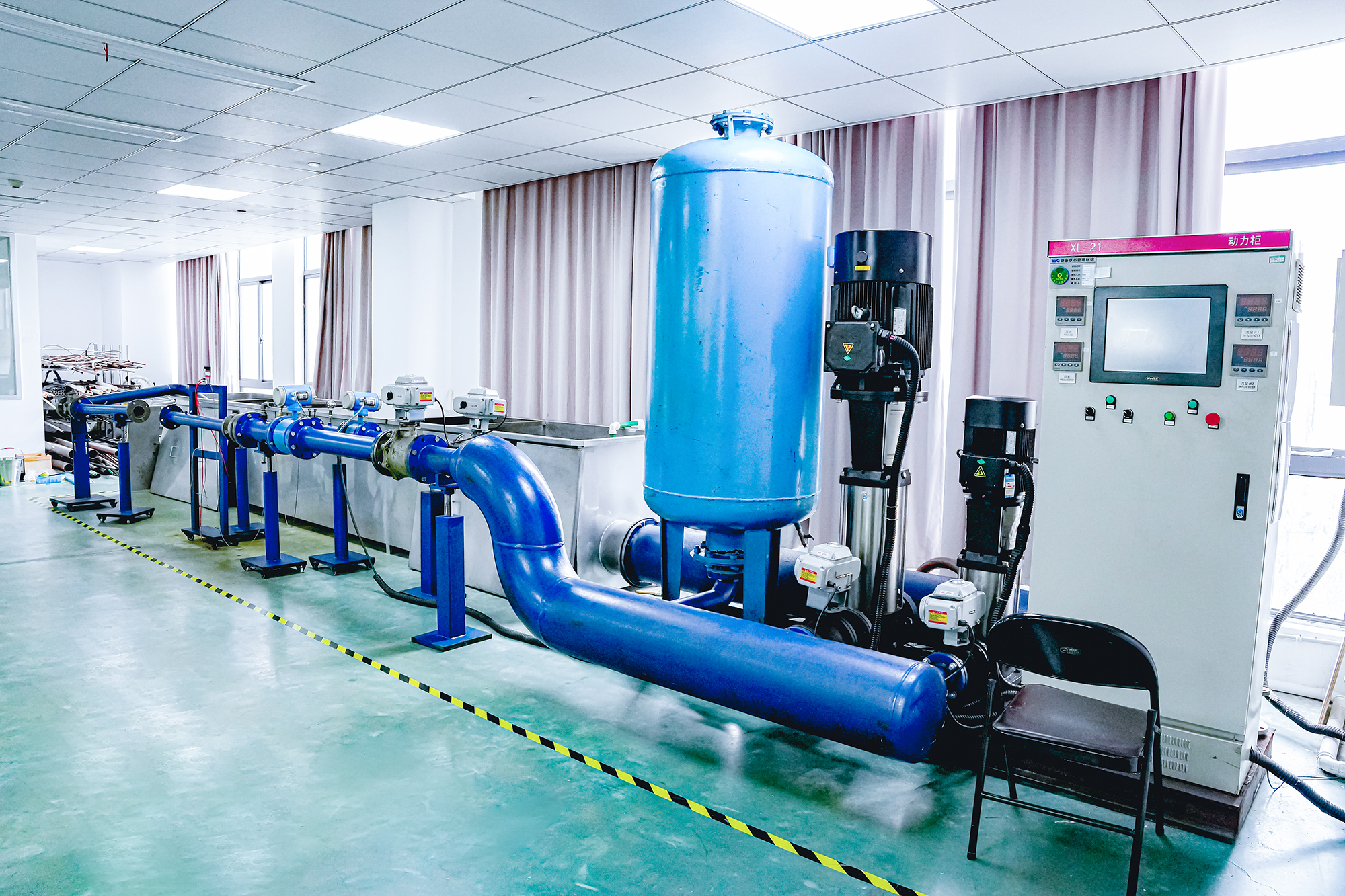
VALOGIN holds NSF/ANSI 61 for the brass water-valve series and cUPC, NSF61 and NSF372 for water hammer arrestors. In-house certificates include NSF/ANSI 61, EN331, AGA, WRAS, TMV2, TMV3, cUPC, NSF61 and NSF372, supported by a CNAS laboratory and in-house PTFE seat machining. Every batch is traceable through MES and tested in the company's CNAS laboratory, and in-line air-tightness stations detect leaks to 0.01 Pa. These are manufacturing and quality-control facts, not a claim that every valve model is approved in every market; buyers should still confirm the specific model and approval for their project.
Future Outlook
The material question is not static. VALOGIN's stainless steel valve programme for 2026 runs in two stages: stage 1 ball valves and stage 2 a full line including gate valves, check valves and Y filters. For buyers, this creates a broader material choice within a single supplier relationship, but it does not change the underlying decision logic: match the material to the water chemistry, the circuit conditions and the approval requirements of the target market.
The comparison between check valves and ball valves is likely to remain a specification discipline rather than a product-choice question. The two valve types will continue to appear together in potable water, solar thermal, underfloor heating and heat pump circuits. The buyer's task is to keep their functions separate in the specification, verify the material risk in never-drained lines, and confirm the approval evidence for the exact model being purchased.
Frequently Asked Questions
What is the difference between a brass check valve and a brass ball valve?
A brass check valve is an automatic, flow-actuated device that prevents backflow and cross-connection. It opens when fluid moves in the intended direction and closes when flow stops or reverses. A brass ball valve is a manual isolation device operated by a quarter-turn handle; it is used to isolate a section of pipework for service. They are complementary, not interchangeable: the check valve protects flow direction, the ball valve enables maintenance.
Ball valve, gate valve or stop valve — which one should I use?
Ball valves give quarter-turn isolation and are the default for on/off duty in water and gas lines, because the handle shows the valve state at a glance. Gate valves open slowly on a multi-turn handwheel and give a straight-through, low-resistance bore, but they are for fully open or fully closed duty only. Stop valves are made for throttling and flow regulation. Use ball for isolation, gate for low-resistance isolation, stop for regulation.
Why do potable water lines need dezincification-resistant brass?
Brass requires protection against dezincification in high-chloride or highly oxygenated water. A potable water line is under mains pressure continuously and is never fully drained, so every wetted brass component remains in contact with water for the life of the installation. Dezincification removes zinc from the alloy and can progress to leakage or structural failure without obvious external warning. In never-drained lines, confirming the brass grade and its dezincification performance is a relevant specification question for check valves as well as ball valves.
Does full port or reduced port matter when choosing a brass ball valve?
A full port ball valve has an internal bore the same size as the pipe, so it adds almost no restriction to flow. A reduced port (standard port) valve has a narrower bore. Full port costs more and takes more space; reduced port is cheaper and more compact but creates a pressure drop. Choose full port where flow matters — pumps, manifolds, low-pressure systems. Choose reduced port where space or cost matters and the pump has spare head.
Why do solar thermal circuits need check valves as well as ball valves?
A solar thermal circuit needs both because the two valves perform different jobs. Brass check valves prevent cross-flow between the hot and cold sides and stop thermosiphoning on the collector loop when the pump is off. Brass ball valves isolate the mixing valve and the solar loop for service. Without the check valve, the loop can circulate when it should not; without the ball valve, the loop cannot be isolated for maintenance without draining the system.
For buyers who need the full product range and technical documentation in one reference, the Valogin brand brochure is available for download: Valogin Brand Brochure (PDF). The company website is valve.valogin.com.
¿Tiene preguntas o necesita más detalles?
Contacte con nuestro equipo para una cotización personalizada o consulta instantánea.
Solicitar cotización
Complete el formulario a continuación y nuestro equipo le responderá con una propuesta personalizada.
Chat directo de WhatsApp
¿Prefiere chatear en tiempo real? Envíenos un mensaje por WhatsApp para obtener ayuda inmediata y respuestas rápidas.
- Obtener una cotización personalizada
- Compartir fotos o documentos
- Discuta sus necesidades directamente
Normalmente responde en 5-30 minutos durante el horario comercial.