
Brass Basin Faucet Compliance: A Buyer's Verification Guide
A brass basin faucet is the fixture most users touch every day, and for importers, distributors, and project buyers it is also one of the most documentation-sensitive items in a plumbing order. The visible part — the finish and the shape — can look nearly identical across suppliers, while the facts that decide market access, service life, and after-sales cost sit in documents the buyer only sees if they ask for them.
Why basin faucet compliance is a sourcing problem, not a marketing claim
When a purchasing team evaluates a basin faucet, three different questions usually get mixed together. The first is a product question: what is the faucet made of, how thick is its coating, and which cartridge and hose does it use. The second is a regulatory question: does the exact model carry the certificates required by the destination market. The third is a commercial question: what is the minimum order quantity, the lead time, and the warranty coverage behind the order.
Most supplier pages answer only the first question, and often only in general terms. That creates a specific risk for buyers in research and evaluation stages. A catalogue may describe “brass basin faucets” as a category, and a factory may hold a valid quality-management certificate, yet neither statement proves that the specific model being quoted meets the standard the buyer's market enforces. The practical result is that two suppliers can both legitimately claim certification, while only one can show the model-level document the buyer actually needs.
This guide uses one documented reference product to show what a verifiable brass basin faucet record looks like, and which points a buyer should confirm before committing to an order.
The reference product: Ehoo Plumbing brass basin faucet model 35801-515
Ehoo Plumbing Co., Ltd. is a plumbing manufacturer established in 2002 and located in the plumbing industry park in Quanzhou, Fujian Province, China, near Xiamen International Airport. The company focuses on the research, development, production, and sales of brass faucets, valves, and bathroom accessories, and reports that it exports 100% of its output to markets including the EU, South America, and Southeast Asia.
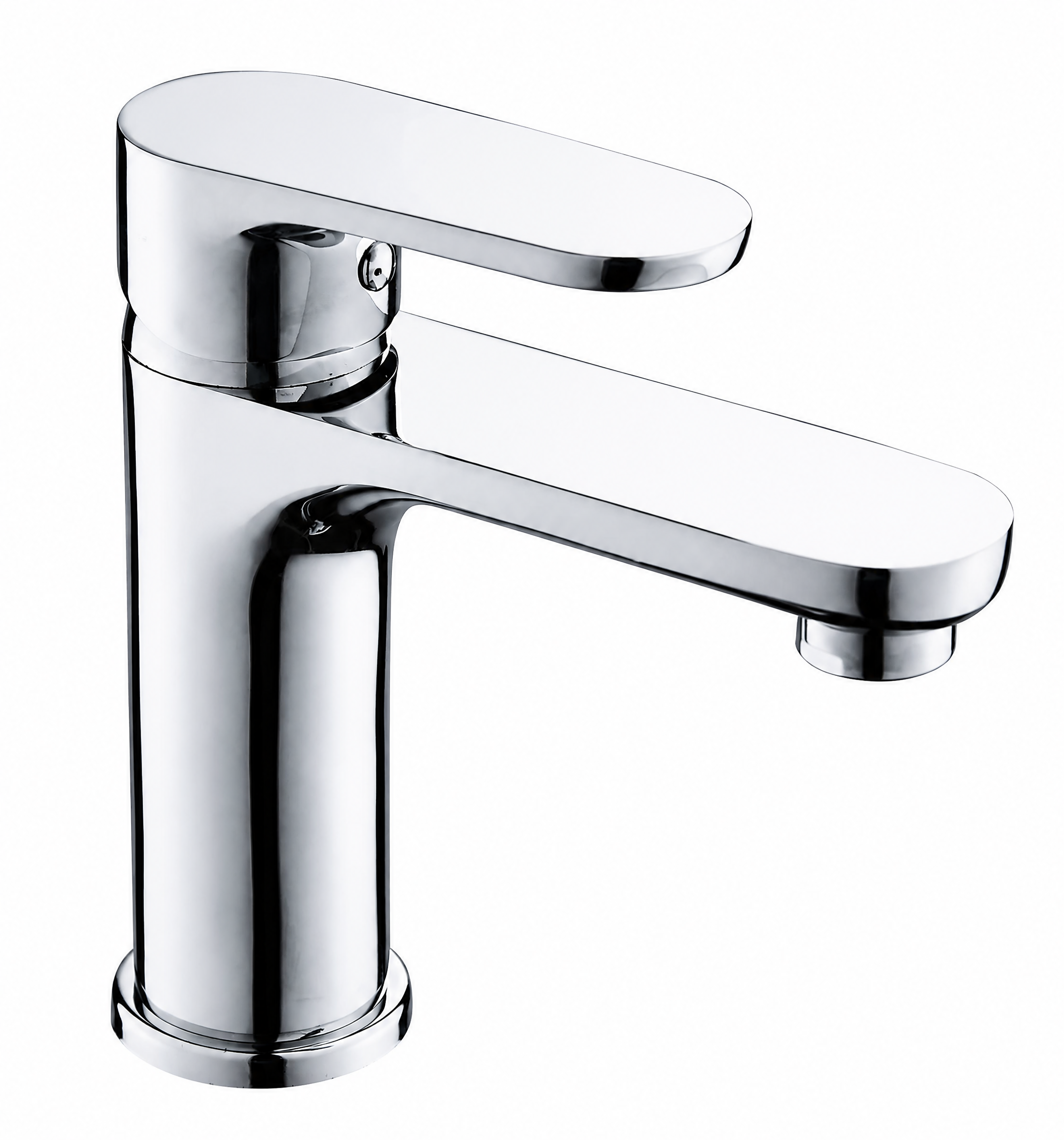
Its brass basin faucet model 35801-515 is a hot-and-cold mixer classified as a brass basin mixer. The product is made primarily of DZR brass, a dezincification-resistant grade selected for humid bathroom conditions, and its main components are a 35mm Wanhai cartridge and a Tucai hose. The net weight of the faucet is 1.04 kg, the colour is chrome, and the coating thickness is specified as Chrome > 0.3 µm and Nickel > 10 µm. The product standard complies with CE and TUV requirements.
On the commercial side, the model carries a minimum order quantity of 400 pcs, accepts OEM and ODM work, and is offered with a five-year warranty. These are the concrete, checkable facts a buyer can put into a comparison sheet, and they are also the facts that separate a specification-led evaluation from a visual one.
Reading the technical parameters that decide service life
For a basin faucet in daily use, three components drive most long-term complaints: the body material, the surface coating, and the mixing cartridge. Each has a specification that can be stated numerically, and each number has a practical meaning for the buyer.
Body material: what DZR brass changes
Standard brass and DZR brass are not interchangeable in high-humidity applications. Dezincification is a corrosion process in which zinc is selectively leached from the alloy, leaving a porous, weakened structure. DZR brass is formulated to resist that process, which is why it is commonly specified for taps used in bathrooms, kitchens, and other wet environments. Model 35801-515 is made primarily of DZR brass, which places it in the material group that dominates premium plumbing fixtures: according to market research from Grand View Research, brass and stainless steel together accounted for 78% of total faucet material usage in 2023.
Coating: why the nickel layer matters as much as the chrome
The visible chrome finish is only the outer layer of a plating stack. Underneath it sits a nickel layer that provides the corrosion barrier and the adhesion base. Model 35801-515 specifies Chrome > 0.3 µm and Nickel > 10 µm, meaning the nickel layer is more than thirty times thicker than the chrome layer. This is the standard architecture for durable decorative plating: a thick nickel base for corrosion protection, and a thin chrome top layer for hardness, colour, and cleanability. A buyer comparing quotations can use these two thickness values as a direct quality filter, because plating thickness is one of the most common silent downgrades in low-cost faucet supply.
Cartridge and hose: the moving parts
The cartridge is the component that governs how the handle feels, how precisely temperature mixes, and how long the faucet operates without dripping. Model 35801-515 uses a 35mm Wanhai cartridge, a ceramic-cartridge format widely used in single-body mixers because the 35mm diameter accommodates both flow and mixing range in a compact housing. The flexible connection uses a Tucai hose. Naming these two components is significant for procurement: cartridge and hose sourcing decisions determine the majority of warranty claims in the field, and buyers who know the cartridge family can plan spare-part availability.
Certification: separating factory-level and model-level evidence
The basin faucet model 35801-515 sits behind two separate certification records, and understanding the difference between them is central to any compliance review.
SGS ISO 9001:2015 — quality management system
Certificate number CN21/31351, issued by SGS, valid from 2024-08-03 to 2027-08-03, applicable to the global market. The scope covers the design and manufacturing of brass sanitary ware faucets, specifically including brass basin faucets and mixer products.
TUV Austria CE certification — product compliance
Certificate number TA 385213725, issued by TUV Austria, valid from 2021-06-15 to 2026-06-15, applicable to the EU market. The applicable standard is EN813:2008, and the scope covers the brass basin faucet product and mixer products.
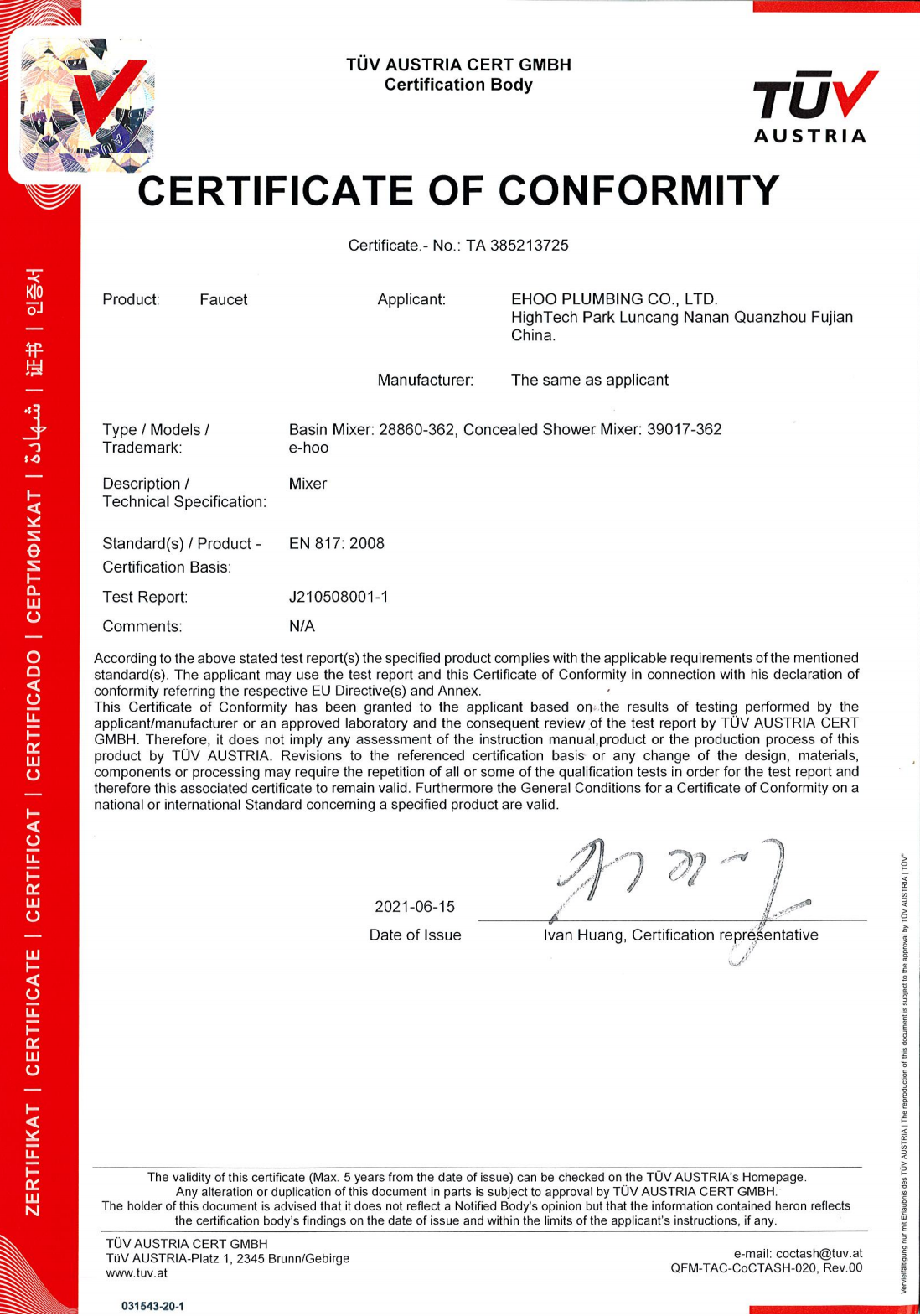
The two documents answer different questions. ISO 9001 is a management-system certificate: it indicates that the factory's processes for designing and manufacturing brass sanitary ware faucets are audited, but it does not certify the performance of any individual faucet. The TUV Austria record under EN813:2008 is product-oriented and names the brass basin faucet and mixer products directly, which makes it the more relevant document for a buyer who needs to demonstrate that a basin mixer complies with the European standard for mechanical mixing valves.
This is where a verification-minded buyer adds one extra step. Certificates carry defined validity windows by design. The TUV Austria record above runs from 2021-06-15 to 2026-06-15, so a buyer reviewing it after that date should confirm the current status and renewal of the certificate with the supplier before relying on it for a purchase decision. The same rule applies to the model scope: the buyer should ask that the certificate explicitly reference the ordered model, not only the product family. Requesting the certificate PDF, the certificate number, the issuing body, and the exact model list is a short exercise that removes most compliance ambiguity from a quotation.
Application fit: where a deck-mounted basin faucet belongs
The 35801-515 is a deck-mounted, single-body basin faucet designed for hot-and-cold mixing. Its documented operating conditions are a water pressure range of 0.5 MPa to 2 MPa, which covers typical municipal and building supply pressures, and its intended applications are residential construction, hotels, commercial restrooms, and bathroom renovation projects. The stated environmental requirement is corrosion resistance under high-humidity bathroom conditions together with lead-free material expectations.
Those conditions explain the material and coating choices. A hotel or commercial restroom installation places a basin faucet in continuous use with frequent cleaning, which stresses both the plating and the cartridge. A residential renovation places it in intermittent use but with a long expected service life between replacements. In both cases, the value of DZR brass and a thick nickel underlayer appears years later, in the form of a faucet that does not pit, flake, or drip.
Deck mounting also defines the boundary of the product. A single-hole deck-mounted basin mixer fits basins and countertops prepared for surface installation. Where a project calls for a wall-mounted or concealed configuration, the plumbing rough-in is different, and a deck-mounted model is not a substitute. Buyers running mixed projects should treat deck-mounted and concealed basin faucets as two separate specification lines rather than one interchangeable catalogue entry.
Market context: a growing, certification-sensitive category
The commercial case for careful specification is supported by the wider market direction. According to Grand View Research, the global faucet market is projected to grow from USD 26.8 billion in 2026 to USD 45.5 billion by 2033, a compound annual growth rate of 7.8%. Within that market, bathroom faucets accounted for approximately 59.1% of total faucet market revenue share in 2025, making the bathroom segment the single largest application category and the most competitive arena for manufacturers.
Rising demand does not lower the compliance bar; in practice it raises it, because more suppliers compete for the same shelf space and buyers face more claims to verify. On the trade side, basin faucets and basin taps are commonly classified under HS heading 8481, with 84818011 covering mixing valves for sinks, washbasins, bidets, cisterns, baths and similar fixtures, and 84818019 covering certain non-mixing taps and valves. Importers should treat these codes as an indicative starting point only and confirm the correct classification against the official tariff schedule of the destination country, since the applicable code depends on the exact construction of the faucet.
Comparing brass with alternative body materials
Brass is not the only material used for basin faucets, and an honest comparison should state where it stops being the obvious choice.
| Consideration | Brass (as in model 35801-515) | Stainless steel / zinc-alloy alternatives |
|---|---|---|
| Corrosion behaviour in humid bathrooms | DZR brass is formulated to resist dezincification; paired with a thick nickel underlayer | Stainless steel resists corrosion well; zinc-alloy bodies are generally more vulnerable to aggressive water and cleaning agents |
| Weight and freight | Net weight of the reference model is 1.04 kg, which raises shipping cost per unit | Can be lighter, which reduces freight cost at high volumes |
| Unit material cost | Higher, due to both the brass itself and the multi-layer plating spec | Lower entry cost |
| Market acceptance | Widely specified in premium residential, hotel, and commercial projects | Common in price-driven and utility segments |
| Regulatory attention | Lead content and material grade are scrutinised in EU and North American markets | Requirements vary by material and market |
The real limitation of a brass basin faucet is economic rather than technical. Brass is heavier and more expensive than several alternatives, and the coating specification that protects it adds cost to every unit. A 1.04 kg body that must be shipped across an ocean carries a freight penalty that a cheaper, lighter body does not. For buyers targeting entry-level, high-volume, or short-lifecycle segments, a brass specification may be more than the price point can absorb. Brass earns its premium when the product must survive humidity, cleaning chemistry, and repeated daily use over a long service life — which is precisely the profile of hotel, commercial, and premium residential projects.
What to verify before placing a basin faucet order
The verification list below condenses the points discussed above into a practical checklist. Each item can be confirmed through documents or explicit statements, without relying on marketing language.
- Model-level specification. Confirm body material, coating thickness (chrome and nickel separately), net weight, cartridge type and size, and hose supplier for the exact model being quoted.
- Certificate identity and scope. Record the certificate number, issuing body, applicable standard, market, validity dates, and whether the ordered model is named in scope.
- Certificate currency. Check that each certificate's validity window covers the planned production and delivery period, and ask about renewal where it does not.
- Operating conditions. Compare the supplier's stated water-pressure range against the project's actual supply pressure.
- Commercial terms. Confirm MOQ, OEM and ODM scope, lead time, payment structure, and warranty length in writing.
- Trade classification. Validate the HS code against the destination country's official tariff schedule before estimating duties.
Manufacturing context behind the specification
The credibility of a specification depends partly on who is making it. Ehoo Plumbing reports a factory covering more than 6,000 square metres, a monthly manufacturing value exceeding 150,000 sets, a workforce of around 100 employees, and an R&D team of 10 engineers. Its stated annual output is 1,800,000 units, with a product line that includes basin faucets, kitchen faucets, shower faucets, concealed faucets, sensor faucets, and brass valves. The company states that it operates under an SGS ISO 9001:2015 quality management system alongside ISO 45001:2018, ISO 14001:2015, and ISO 14067:2018 systems, and that its products reach Singapore, Malaysia, the UK, and Italy, among other markets.
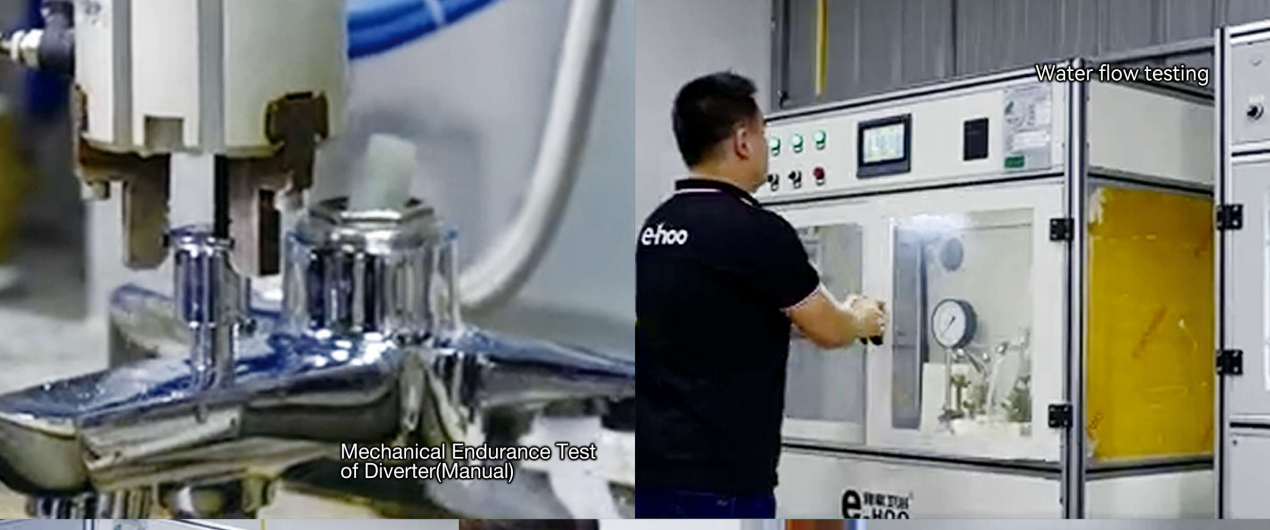
These figures are company-reported and should be treated as such. That does not make them unimportant; it tells the buyer where to focus verification effort. For a first order, capacity and quality-system claims can be confirmed through documentation and sample inspection. For a long-term supply relationship, a factory audit covering production equipment, testing capability, and process control is the appropriate next step.
From sample to series: how the commercial side works
For the brass basin faucet family, Ehoo Plumbing states an MOQ starting from 400 pcs per model, with OEM and ODM work accepted across packaging, logo, faucet body, and faucet parts. Monthly capacity is reported at 150,000 units, with a production lead time of 30–45 days and a warranty of three to five years depending on the product series. Quality control is described as 100% testing. For buyers in the research and evaluation stage, the useful sequence is to fix the specification and certificate requirements first, request a sample to validate the cartridge feel, spray pattern, and finish, and only then negotiate volume and packaging terms.
Future outlook
Two forces are likely to shape how basin faucets are specified over the next several years. The first is certification pressure. As bathroom faucets consolidate their position as the largest application segment in a market growing toward USD 45.5 billion by 2033, buyers will increasingly treat model-level certificates as a baseline requirement rather than a differentiator, and requests for explicit model lists and current validity windows will become routine. The second is material and water-efficiency discipline. With brass and stainless steel already accounting for 78% of material usage, lead-free composition and coating durability will remain the two parameters most likely to decide whether a fixture passes or fails an incoming inspection.
For manufacturers, that means documentation quality becomes a competitive capability in its own right. For buyers, it means the fastest way to reduce sourcing risk is not to ask for a lower price, but to ask for the specific documents and numbers that make two quotations genuinely comparable.
Frequently asked questions
What certifications does the brass basin faucet model 35801-515 carry?
The model is covered by two records: an SGS ISO 9001:2015 quality management system certificate (number CN21/31351, valid 2024-08-03 to 2027-08-03, covering the design and manufacturing of brass sanitary ware faucets for the global market), and a TUV Austria CE certification for the EU market under standard EN813:2008 (number TA 385213725, valid 2021-06-15 to 2026-06-15). The product standard is stated as complying with CE and TUV.
What are the technical specifications of the brass basin faucet model 35801-515?
The faucet is made primarily of DZR brass with a chrome finish. Its net weight is 1.04 kg. The coating thickness is specified as Chrome > 0.3 µm and Nickel > 10 µm. The main components are a 35mm Wanhai cartridge and a Tucai hose, and the product functions as a hot-and-cold mixer.
What is the minimum order quantity for this brass basin faucet?
The stated MOQ for the model is 400 pcs. At company level, Ehoo Plumbing states that its standard MOQ starts from 400 pcs per model, with OEM and ODM work accepted for package, logo, faucet body, and faucet parts.
What warranty and lead time apply to a basin faucet order?
A five-year warranty is stated for model 35801-515, while the company describes a three-to-five-year warranty depending on product series. Production lead time is stated as 30–45 days, and quality control is described as 100% testing. Buyers should confirm the exact warranty terms for their ordered model and destination market in the supply agreement.
What water pressure range is the basin faucet designed for?
The documented operating condition for the product is a water pressure range of 0.5 MPa to 2 MPa, in indoor basin, kitchen, and bathroom environments, with corrosion resistance required under high-humidity bathroom conditions and lead-free material expectations.
Which applications is a deck-mounted brass basin faucet suited to?
The listed applications are residential construction, hotels, commercial restrooms, and bathroom renovation. A deck-mounted, single-body mixer requires a basin or countertop prepared for surface installation; projects requiring wall-mounted or concealed configurations use a different plumbing rough-in and a different faucet type.
How are basin faucets classified for customs purposes?
Basin faucets and basin taps are commonly mapped to HS heading 8481, with 84818011 covering mixing valves for sinks, washbasins, bidets, cisterns, baths and similar fixtures, and 84818019 covering certain non-mixing taps and valves. This mapping is indicative only; the correct code depends on the exact product construction and must be validated against the destination country's official tariff schedule.
Why does brass matter for a basin faucet in humid bathrooms?
Brass is widely used for plumbing fixtures, and dezincification-resistant (DZR) grades are formulated to withstand the selective loss of zinc that can weaken ordinary brass in wet environments. According to market research from Grand View Research, brass and stainless steel together accounted for 78% of total faucet material usage in 2023, reflecting how dominant these two material groups are in the category.
For detailed specifications, product imagery, and ordering information across the brass basin faucet range, the 2025–2026 Ehoo Plumbing catalogue can be viewed and downloaded here: Ehoo catalog 2025-2026 (PDF).
¿Tiene preguntas o necesita más detalles?
Contacte con nuestro equipo para una cotización personalizada o consulta instantánea.
Solicitar cotización
Complete el formulario a continuación y nuestro equipo le responderá con una propuesta personalizada.
Chat directo de WhatsApp
¿Prefiere chatear en tiempo real? Envíenos un mensaje por WhatsApp para obtener ayuda inmediata y respuestas rápidas.
- Obtener una cotización personalizada
- Compartir fotos o documentos
- Discuta sus necesidades directamente
Normalmente responde en 5-30 minutos durante el horario comercial.