
Boron Nitride Coatings and Powders: High-Temperature Release and Thermal Management Guide
Selecting a material for high-temperature release, thermal spreading, or anti-stick performance is rarely a single-specification decision. Engineers and purchasing teams now evaluate materials not only by temperature rating, but also by chemical compatibility, electrical behavior, application method, and supply-chain reliability. Boron nitride sits in this decision zone because it combines properties that are useful across metal casting, glass forming, electronics, and several other heat-intensive manufacturing segments.
Boron nitride, often shortened to BN, is available in powder, granular, coating, and paint forms. Its most common commercial variety is hexagonal boron nitride, or h-BN, which has a graphite-like layered structure. Because of that structure, it behaves similarly to graphite in some ways — yet it differs in important aspects such as electrical insulation and resistance to many molten metals and chemicals. This guide explains what boron nitride is, why boron nitride coatings are specified, where the practical limits sit, and how a buyer might evaluate suppliers.
What is Boron Nitride?
Boron nitride is a ceramic material composed of boron and nitrogen. The hexagonal form, h-BN, is the version most often used in industrial powders and coatings. Its layers are held together by weak van der Waals forces, similar to the structure of graphite, which gives it a soft, slippery character. In industry it is sometimes called “white graphite” because of that structural similarity.
The properties buyers most often evaluate are related to thermal stability, lubricity, chemical resistance, and dielectric behavior. According to product information published by Sumetech Industry Co., Ltd, a manufacturer of potassium aluminium fluoride and boron nitride products, boron nitride is chemically inert and corrosion-resistant to molten metals and acids. It also has a low dielectric constant and is thermally conductive, making it relevant to electronics and thermal management applications.
| Property | Practical meaning |
|---|---|
| High-temperature stability | BN products can work up to 900°C in air and above 2000°C in inert gas, depending on the grade and form. |
| Low friction / release behavior | The graphite-like layered structure gives low friction and high-temperature release properties. |
| Chemical inertness | Boron nitride resists corrosion from many molten metals and acids, and is generally non-wetting to molten materials. |
| Electrical insulation | Boron nitride has a low dielectric constant and is suitable in high-frequency or high-voltage environments. |
| Thermal conductivity | BN conducts heat effectively, which supports its use as a thermally conductive filler and in thermal-management systems. |
What Forms of Boron Nitride Are Available?
One of the reasons boron nitride appears in many purchasing conversations is that it can be supplied in different physical forms. The same basic material can be converted into powders for compounding, granules for mixing or filling, and liquid dispersions for coatings and paints. Sumetech’s BN product line is described as available in powder, granular, coating, and paint forms.
| Form | Typical function | Example use pattern |
|---|---|---|
| Powder | Lubricant additive, thermally conductive filler, raw material for ceramics | Compounded into resins, ceramics, or coatings |
| Granular | Bulk handling and mixing | Production processes requiring defined particle geometry |
| Coating / paint | Anti-stick or release layer applied to a substrate | Sprayed or brushed onto molds, dies, crucibles, and other high-temperature surfaces |
This range of forms matters to buyers because the form affects application method, product handling, packaging, and downstream performance. A powder used as a thermally conductive filler is not necessarily interchangeable with a coating dispersion designed for die casting operations.
Boron Nitride Coating Explained
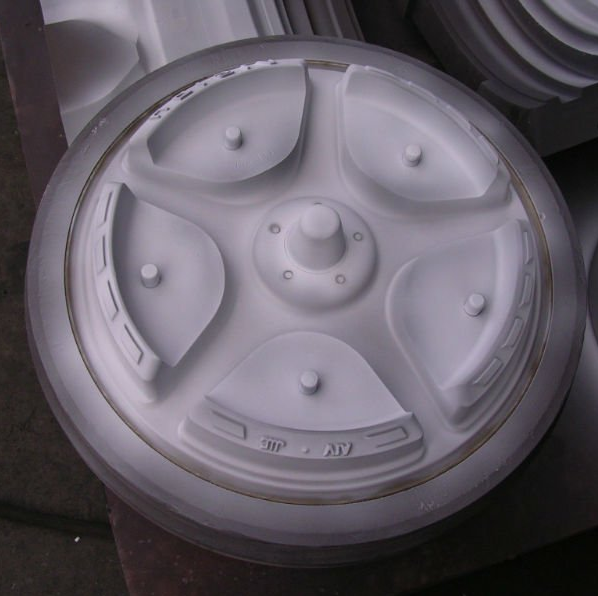
A boron nitride coating is a functional layer applied to a surface to prevent sticking, wear, or chemical attack. In product terms, this high-purity coating is often called a high-temperature boron nitride coating because it is designed for service conditions where conventional release agents lose stability. It is also described as a BN coating, a boron nitride ceramic coating, or an anti-stick coating for die casting operations.
The technical value comes from the combination of the material’s crystal structure and chemical inertness. The coating forms a barrier that reduces wettability by molten metals and glass, provides lubrication at elevated temperature, and helps the workpiece separate cleanly from the tool surface. In die casting, this behavior can reduce soldering, extend tool maintenance intervals, and support smoother casting surfaces. In glass processing, the same non-wetting behavior can suppress surface defects and help molds stay cleaner between cycles.
From a specification standpoint, one of the key published parameters is maximum working temperature. Sumetech’s boron nitride product information sets this at 900°C in air and beyond 2000°C in an inert gas atmosphere. The maximum purity available is 99.9%. Buyers should notice the atmosphere distinction: the coating is not necessarily meant to be used at 2000°C in air. The operating atmosphere, substrate, and binder system all influence the practical service limit.
Where Are Boron Nitride Coatings Used?
Boron nitride coatings are used across more industries than many technical buyers first assume. The available application data covers precision casting, horizontal continuous casting, amorphous ribbon production, photovoltaic technology, solar thermal energy storage, semiconductor manufacturing, optical glass, vacuum coating, electronics, military and aerospace work, superhard materials, cosmetic additives, functional fibers, and functional ceramics. For buyers, that breadth is both an opportunity and a reason to define the exact working condition before selecting a product.
Metal Casting and Die Casting
One of the strongest adoption areas is aluminum, magnesium, and zinc casting. Molten metal can wet and react with die surfaces, causing soldering, erosion, and difficult part removal. Boron nitride coating reduces wettability and provides a lubricating layer at the die interface. In die casting operations, it is used as an anti-stick coating that can improve release, reduce buildup, and support part consistency.
Precision Casting and Horizontal Continuous Casting
The non-stick release property of boron nitride is especially useful in precision casting and horizontal continuous casting processes. These processes depend on stable separation between the solidifying metal and the mold or die. A release layer that reacts with molten alloy or changes dimension would create defects. BN is used in this setting because it remains chemically stable and non-wetting to most molten metals.
Glass and Optical Glass Manufacturing
Glass forming and optical glass production involve both high temperature and risk of sticking between glass and tooling. Boron nitride coatings are used in this field to reduce surface defects and to help molds release formed glass more consistently. Since boron nitride is non-reactive with most molten materials, it can act as a protective barrier rather than only a lubricant.
Electronics, Semiconductor, and Photovoltaic
Boron nitride is also present in electronics and semiconductor supply chains. Its ability to remain electrically insulating while conducting heat is rare among ceramic materials. For equipment that operates at high voltage or high frequency, boron nitride coatings and powders can serve as thermal interface materials, protective layers, or additives in thermally conductive systems. The low dielectric constant of boron nitride is one of the reasons it appears in electrical and electronic applications.
Application Methods and Process Considerations
Boron nitride coatings are usually applied by brush or with a spraying machine. The choice between these methods depends on part geometry, coverage area, coating thickness, and production speed. Spray application is common for larger surfaces, while brushing is often used for targeted areas or maintenance. As with many ceramic-based coatings, performance depends on surface preparation, film uniformity, and the drying or curing schedule. A coating applied over an unprepared or contaminated surface is less likely to achieve consistent release behavior.
Buyers should also consider material storage. Boron nitride products are typically intended to be kept in dry and sealed storage and used before their expiration date. This is a practical point because coating performance can change if the liquid dispersion dries, settles, or absorbs moisture over time. Factories that already use spray equipment and controlled drying are usually better positioned to absorb BN coatings into their process with minimal change.
What Makes Boron Nitride Different From Graphite?
Because hexagonal boron nitride looks structurally similar to graphite, many buyers compare the two. There are real similarities: both have layered structures, are soft, and offer solid lubrication. But there are also differences that matter in high-temperature and electronic applications. Boron nitride is generally more chemically inert and less easily wetted by molten metals and salts. It is electrically insulating rather than electrically conductive, while graphite is conductive. That one difference changes where boron nitride can be used safely.
Compared with organic or wax-based release agents, boron nitride has a much higher working temperature range. Many organic release products are not designed for continuous service near molten metal temperatures. Boron nitride also leaves less carbon-like residue on tooling in applications where graphite would gradually build up or contaminate the surface. This is one reason BN is used in vacuum coating, semiconductor, and precision casting environments where contamination control is important.
Practical Limitations Buyers Should Acknowledge
Boron nitride is not a universal answer to every release problem. One important limitation is that the published high-temperature performance of BN depends on the operating atmosphere. The 2000°C-plus range applies to inert gas conditions. In air, the practical working temperature is lower, with Sumetech’s published maximum working temperature set at 900°C. If the application exceeds that limit in an oxidizing atmosphere, the material behavior will be different and may not match the manufacturer’s rating.
Cost is another relevant boundary. High-purity boron nitride, especially material with purity up to 99.9%, is a specialty chemical product. It is not generally interchangeable with lower-cost mineral coatings in applications where only simple lubrication is required. Buyers should match purity and performance to the actual process. It is also important to validate compatibility between the BN product, the substrate, the molten material, and the coating system rather than assuming the coating will cure identically on all surfaces.
Manufacturing and Supply-Chain Considerations
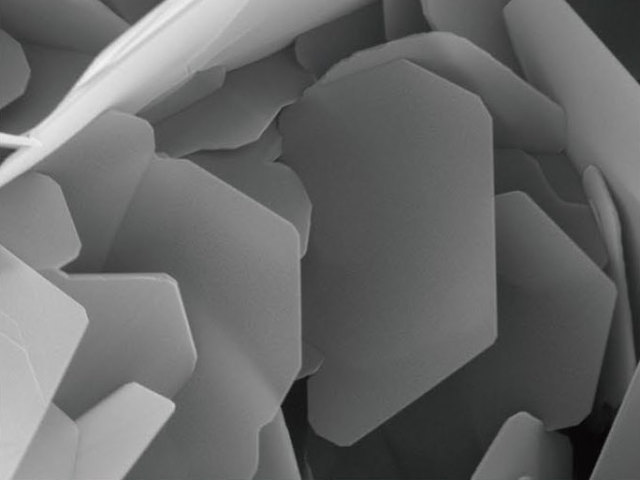
For industrial buyers, the quality of a boron nitride product depends not only on chemical purity but also on particle size control and process consistency. Sumetech Industry Co., Ltd, established in 2019, operates a manufacturing facility covering 6000 square meters with an annual production capacity of 5000 metric tons for its main products. The company’s production line includes ultra-fine mechanical mills, crushers, shaping machines, and advanced sieving systems. In practical terms, these are the types of equipment used to control particle size distribution and minimize batch-to-batch variation.
The company employs around 20 people and has an R&D and quality-control team of 5 technicians. Sumetech exports approximately 90% of production, with major markets in Turkey, Japan, Korea, and Europe. For a buyer in those regions, this supply profile has a practical meaning: the supplier is oriented to export documentation, international specification review, and cross-border logistics. Buyers should nonetheless verify whether the specific grade, particle size, and packaging meet their own process requirements.
Supplier Evaluation Checklist
- Working temperature required in air and in inert gas
- Required purity, such as 95% versus 99.9% grades
- Physical form: powder, granular, coating, or paint
- Particle size and morphology requirements
- Application method and drying or curing conditions
- Storage requirements and shelf life
- Export experience and documentation capability
Market Context and Regional Signals
Third-party market research helps frame the current supply picture. Grand View Research valued the global hexagonal boron nitride market at approximately USD 949.4 million in 2024. A separate report from Dataintelo estimates the boron nitride coatings market at USD 2.8 billion in 2025. Buyers should treat these two figures as different research definitions rather than as conflicting measurements. The coating-market figure may include a broader set of coating products and downstream applications.
Regionally, Asia Pacific is a significant consumption base for h-BN. Grand View Research reports that Asia Pacific accounted for a 40.6% revenue share in 2024 and that China held a 41.1% share of the Asia Pacific market. This matters to international procurement teams because it means a large portion of boron nitride supply and processing activity is located in China, while demand also exists in Europe, Japan, Korea, and other industrial markets.
The same research stream indicates that paint and coatings represented the largest application segment for h-BN in 2024, with a 32.8% share. This aligns with the practical importance of boron nitride coatings in manufacturing, and it explains why downstream buyers now look for both raw powder and formulated coating capabilities in one supply chain. On the regulatory side, boron nitride is recognized as compliant with EU REACH Regulation EC 1907/2006 as an industrial substance, although importers and formulators remain responsible for their specific registration and notification obligations.
Future Outlook and Purchasing Direction
Boron nitride demand is likely to keep following precision manufacturing trends. As electronics become more power-dense, ceramic fillers and coatings that remove heat without adding electrical conductivity become more valuable. In casting and metal forming, the shift toward lighter alloys and tighter tolerances raises the need for release layers that do not react with the metal or require frequent reapplication. In glass, photovoltaic, and semiconductor production, contamination control favors materials that remain inert at process temperature.
For buyers, the practical implication is not necessarily to buy the highest-purity grade available. It is to define the working atmosphere, substrate, application method, and expected service life. A coating that performs well in inert atmosphere may not be appropriate for an air-exposed furnace. A 99.9% purity powder may be necessary for an electronic-grade ceramic but excessive for a simple foundry release application. The most useful supplier conversations are therefore built around specific process data, not only material names.
FAQ: Boron Nitride Coatings and Powders
Which industries use boron nitride coatings?
Boron nitride coatings are used in industries where high-temperature release, non-wetting, chemical inertness, or thermal stability is needed. Major examples include metal forming and casting, glass and ceramics manufacturing, sintering and heat treatment, semiconductor production, photovoltaic manufacturing, vacuum coating, and military or aerospace applications. In metal casting, BN coatings are applied to molds, troughs, and ladles for aluminum, magnesium, and zinc alloys. In glass forming, they reduce sticking and surface defects. In heat treatment, they can be applied to graphite tooling to prevent bonding or contamination.
Why does boron nitride work as a high-temperature release coating?
Hexagonal boron nitride has a layered crystal structure similar to graphite. The layers are bonded by covalent bonds, while the interaction between layers is weak, which gives the material a low-friction, slippery character. Boron nitride is also chemically inert and generally non-wetting to most molten metals, glass, and salts. As a result, it can separate a molten material from a mold surface without reacting to form strong bonds or corrosion products.
What temperature limit should buyers expect from a boron nitride coating?
For the boron nitride product line published by Sumetech, the maximum working temperature is 900°C in air and above 2000°C in an inert gas atmosphere. The atmosphere is an important part of this specification because the practical service limit in air is lower than the limit in inert gas. Buyers should confirm not only the powder or coating rating, but also the behavior of the binder, substrate, and application method at the actual operating temperature.
What should a buyer check before selecting boron nitride powder or coating?
The first step is to define the working temperature and atmosphere. Next, confirm the required purity, since some boron nitride products are available at a maximum purity of 99.9% while other applications do not require that level. Then confirm the physical form needed: powder, granular, coating, or paint. Buyers should also evaluate the application method, drying and curing requirements, storage instructions, and shelf-life limits. These factors can affect process reliability more than the raw material chemistry alone.
¿Tiene preguntas o necesita más detalles?
Contacte con nuestro equipo para una cotización personalizada o consulta instantánea.
Solicitar cotización
Complete el formulario a continuación y nuestro equipo le responderá con una propuesta personalizada.
Chat directo de WhatsApp
¿Prefiere chatear en tiempo real? Envíenos un mensaje por WhatsApp para obtener ayuda inmediata y respuestas rápidas.
- Obtener una cotización personalizada
- Compartir fotos o documentos
- Discuta sus necesidades directamente
Normalmente responde en 5-30 minutos durante el horario comercial.