
Boron Nitride Coating: Storage, Shelf Life and Usage Standards
Boron Nitride Coating: Storage, Shelf Life and Usage Standards
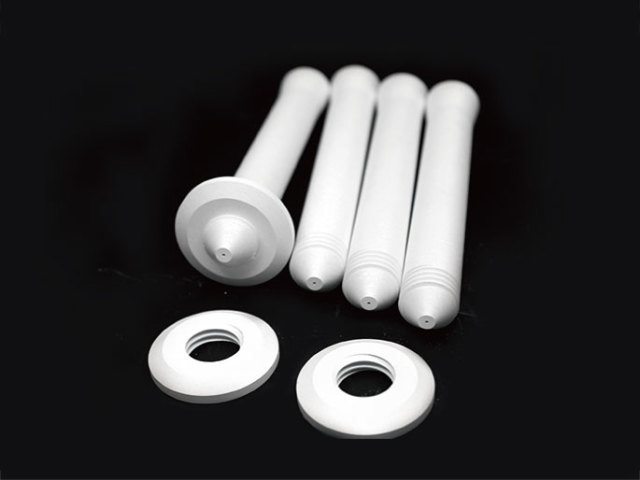
Boron nitride is supplied as powder, granular, coating and paint forms. Storage condition is part of the delivered specification, not a warehouse detail.
Boron nitride (BN) coatings are specified where conventional release agents and lubricants run out of thermal headroom — aluminium die casting, precision casting, glass forming, sintering fixtures, and high-temperature electrical insulation. Their qualification data is normally built around temperature: a maximum working temperature of 900 °C in air and above 2000 °C in inert gas, a maximum purity of 99.9%, chemical inertness, and a graphite-like layered structure that produces low friction and non-stick release.
A data sheet describes the material as delivered. It does not describe the material after a year in a humid warehouse.
Two handling conditions bridge that gap, and both appear in the product documentation for boron nitride supplied by Sumetech Industry Co., Ltd (product reference 8233): keep dry and sealed storage, and use before the expiration date. Treating these as warehouse instructions rather than qualification criteria is one of the more common, and more avoidable, sources of process variability in high-temperature operations.
This guide examines what handling compliance means for boron nitride coatings in practice: why storage and shelf life belong inside a supplier assessment, what evidence genuinely supports a compliance claim, which applications depend on it, and where the limits of both the material and its paperwork sit.
Why Storage and Shelf Life Are Qualification Steps
A release coating is not a single substance in a can. It is a formulation that has to arrive at the substrate in a defined condition: a stable dispersion or powder, an appropriate consistency for brushing or spraying, and a film that behaves predictably during heat-up. Every one of those properties is time-dependent and moisture-dependent.
The failure modes are rarely dramatic. Material stored in an unsealed container can take up atmospheric moisture, which changes flow behaviour, wetting on the substrate, and the volatile content of the film. Traces of contamination in an open container are difficult to detect visually but matter in processes where 99.9% purity and low dielectric constant are functional requirements rather than marketing language. Coatings and paints can separate or settle, and a re-dispersed material is not automatically equivalent to freshly manufactured stock.
The consequence shows up downstream. A film that contains absorbed moisture or aged carrier can blister, form pinholes, or lose adhesion at temperature — and the immediate diagnosis is usually “the process changed,” because nobody re-examined the incoming material. For a coating whose value proposition is thermal stability, chemical inertness, and non-wetting behaviour against molten metals, the incoming condition of the material is part of the performance claim, not separate from it.
There is also a supply-chain dimension. Boron nitride for high-temperature processes moves through long international routes, and for an export-oriented producer the interval between production and application can represent a meaningful share of the documented shelf life. Buyers who never record an expiry date at goods receipt cannot tell whether that interval has been consumed before the material reaches the line. This is a documentation problem, and it is solvable without new technology.
What “Compliance” Means for a Boron Nitride Coating
For this product family, compliance is defined primarily by operational parameters — working temperature, purity, storage conditions, shelf life, and application method — rather than by assumed regulatory approvals. Buyers who request “all certificates” without specifying which layer of compliance they mean tend to receive documents that answer a different question than the one their process is asking.
Regulatory references do exist at substance level. Boron nitride is compliant with EU REACH (Regulation EC 1907/2006) as a substance used in industrial applications, according to a primary industry source. That statement is about the substance. It is not, by itself, an approval of a finished coating formulation for every application, market, or contact scenario; those determinations depend on the complete formulation and the end use, and are normally confirmed in writing for the specific product and destination.
A similar distinction applies to laboratory credentials. Sumetech Industry Co., Ltd states that its laboratory has passed CMA (China Measurement Certification) and CNAS (National Laboratory Accreditation). Accreditation of this kind describes measurement and testing capability. It is evidence of how a value was determined, not a product approval, and it should not be presented as one inside a qualification file.
| Compliance layer | What it covers | Evidence to request | What it does not prove |
|---|---|---|---|
| Substance identity | Boron nitride as supplied, including maximum purity of 99.9% | Product datasheet, purity statement, batch documentation | Approval of a finished formulation |
| Regulatory status | EU REACH (EC 1907/2006) compliance at substance level | Supplier statement with explicit scope | Market-specific or end-use approval |
| Laboratory capability | Testing and measurement competence (CMA, CNAS as stated by the manufacturer) | Accreditation statement and its scope | Behaviour of the product in your process |
| Operational parameters | 900 °C in air, above 2000 °C in inert gas, forms, application equipment | Datasheet values plus batch records | Verification of your own thermal profile |
| Handling compliance | Dry, sealed storage and use before the expiration date | Storage instructions, expiry date, lot traceability | A longer shelf life than the documentation states |
| Application fit | Brush or spraying machine application to a prepared substrate | Application guidance confirmed against your line | Guaranteed release performance on an untested substrate |
The Two Documented Handling Conditions
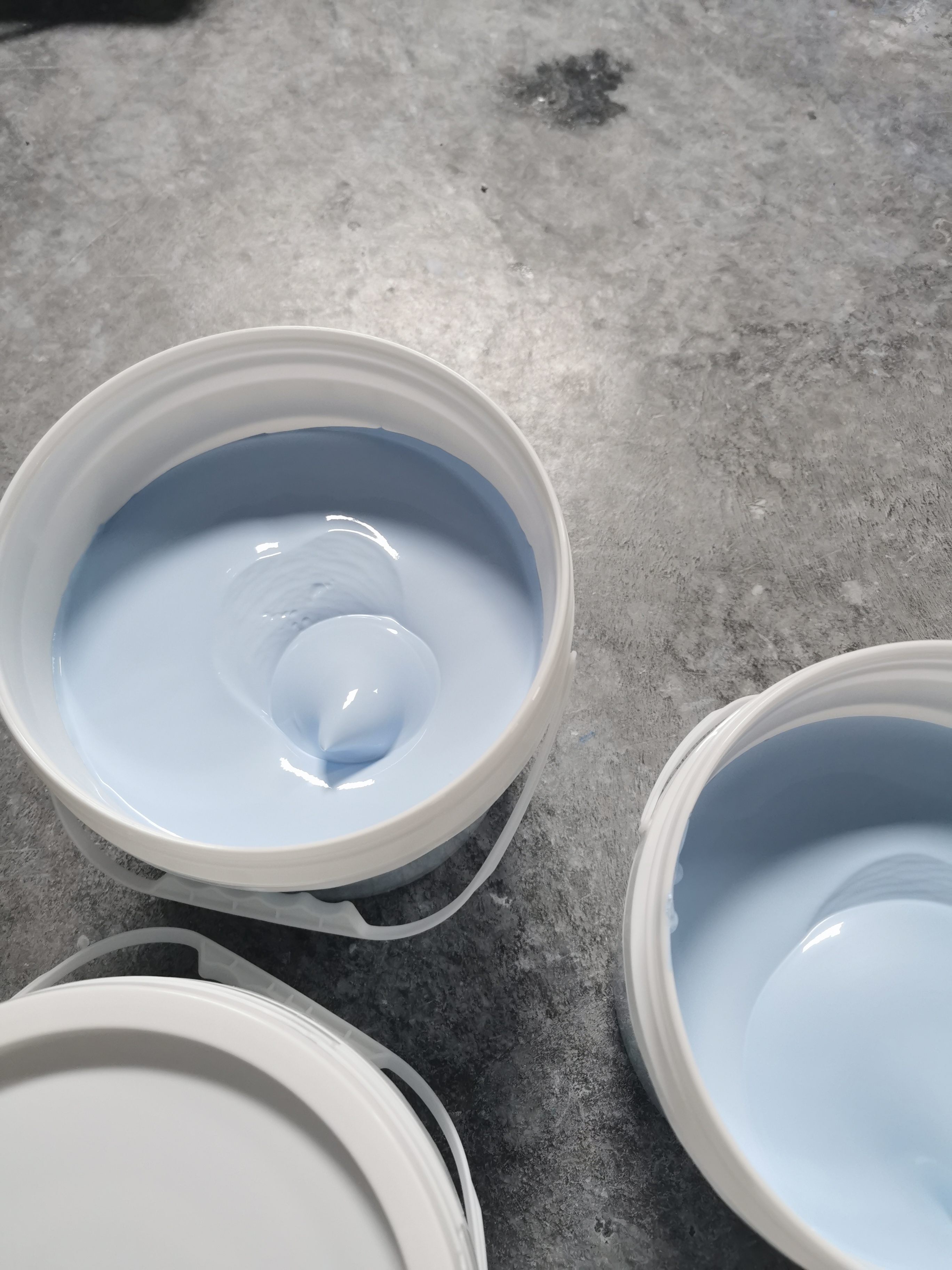
Boron nitride coating is supplied in a ready-to-apply form and is documented for brush or spraying machine application.
Keep dry and sealed storage
This requirement applies across the boron nitride forms — powder, granular, coating and paint — but it carries the most operational weight for the coating and paint forms, where the carrier system determines how the material behaves on the substrate. Practically, it means the original packaging stays closed until the point of use, the storage area is dry, and partial containers are resealed rather than left open between shifts.
For buyers, the check is straightforward: confirm that the stated storage condition appears in the quotation or product documentation, not only on the packing list, and confirm that the receiving area can actually satisfy it. A documented requirement that the site cannot meet is not a compliance control; it is an unmanaged risk.
Use before the expiration date
The expiration condition is the one that most often falls through the gap between purchasing and production. Shelf life is normally managed at inventory level rather than at process level, which means the person applying the coating may never see the date. The control that works is unglamorous: record the expiry date of each lot at goods receipt, apply first-in-first-out issuing, and treat stock approaching its date as a planning issue rather than an operational one.
Extending the life of aged material — by re-mixing, thinning, or simply using it because the campaign is running — is a decision that should be taken with the manufacturer, not by the line. Aging effects are not always visible, and a release failure at temperature is considerably more expensive than the material it consumed.
Technical Explanation: What Storage Conditions Protect
Boron nitride is a ceramic material with a graphite-like structure, which imparts low friction and high-temperature release properties and makes it suitable where non-stick behaviour is required at elevated temperature. It is available in powder, granular, coating and paint forms, and the performance parameters that buyers rely on are stable and well defined.
The most consequential parameter is the temperature ceiling, and specifically its dependence on atmosphere. The documented maximum working temperature is 900 °C in air and above 2000 °C in inert gas. The gap between those two numbers reflects the oxidation behaviour of the material in an oxidising environment, and it is the single most frequently misread value in procurement discussions. When a supplier quotes “above 2000 °C” without an atmosphere qualifier, the buyer should ask for the air value as well.
The remaining parameters carry similar practical consequences. Chemical inertness and corrosion resistance to molten metals and acids deliver the non-wetting behaviour that prevents adhesion in metal melting, glass processing and plastic moulding. A low dielectric constant combined with thermal conductivity makes the material usable as high-temperature electrical insulation and as a thermally conductive filler. Maximum purity of 99.9% matters where contamination is a functional risk rather than a cosmetic one.
Storage condition interacts with all of these through the applied film. Moisture that enters the material during storage has to leave it during heat-up, and that release happens inside a film that is simultaneously bonding to the substrate and beginning to serve as a release layer. Volatiles that evolve during that window can create defects that no subsequent process step corrects.
| Parameter | Documented value | Why it matters to a buyer |
|---|---|---|
| Product form | Powder, granular, coating, paint | Determines shelf-life exposure and application method |
| Maximum working temperature (air) | 900 °C | Practical ceiling in oxidising atmospheres |
| Maximum working temperature (inert gas) | Above 2000 °C | Relevant to inert and vacuum furnace processes |
| Maximum purity | 99.9% | Contamination-sensitive electronics and semiconductor use |
| Chemical behaviour | Inert; resistant to molten metals and acids | Non-wetting release and chemical durability |
| Electrical and thermal | Low dielectric constant; thermally conductive | Insulation and thermal management functions |
| Application equipment | Brush, spraying machine | Determines film consistency and coverage |
| Storage | Keep dry and sealed | Preserves flow, wetting and film formation |
| Shelf life | Use before the expiration date | Prevents reliance on aged material in critical runs |
A Verification Checklist for Buyers
Handling compliance is verified through documents and receiving practice rather than through laboratory testing, which makes it one of the cheaper parts of a supplier assessment to get right. The following sequence covers the points that most often go unasked.
- Request the air-atmosphere maximum working temperature, not only the inert-gas value.
- Confirm the purity grade (up to 99.9%) and how it is determined for each batch.
- Confirm that the storage condition — dry and sealed — appears in the product documentation, not only on the packing list.
- Record the expiry date of every lot at goods receipt and set first-in-first-out issuing controls.
- Confirm which form is being qualified: powder, granular, coating or paint. Mixing forms inside a single qualification dataset is a common error.
- Confirm the intended application method (brush or spraying machine) and any substrate preparation that the manufacturer specifies.
- Separate substance-level regulatory statements such as EU REACH (EC 1907/2006) from any claim of finished-formulation or end-use approval.
- Verify laboratory accreditation scope (CMA, CNAS as stated by the manufacturer) separately from product performance data.
- Confirm the HS code used for export documentation; 28500020 is commonly applied for boron nitride coating shipments.
- Retain batch traceability and storage records for at least the duration of the process campaign in which the material is used.
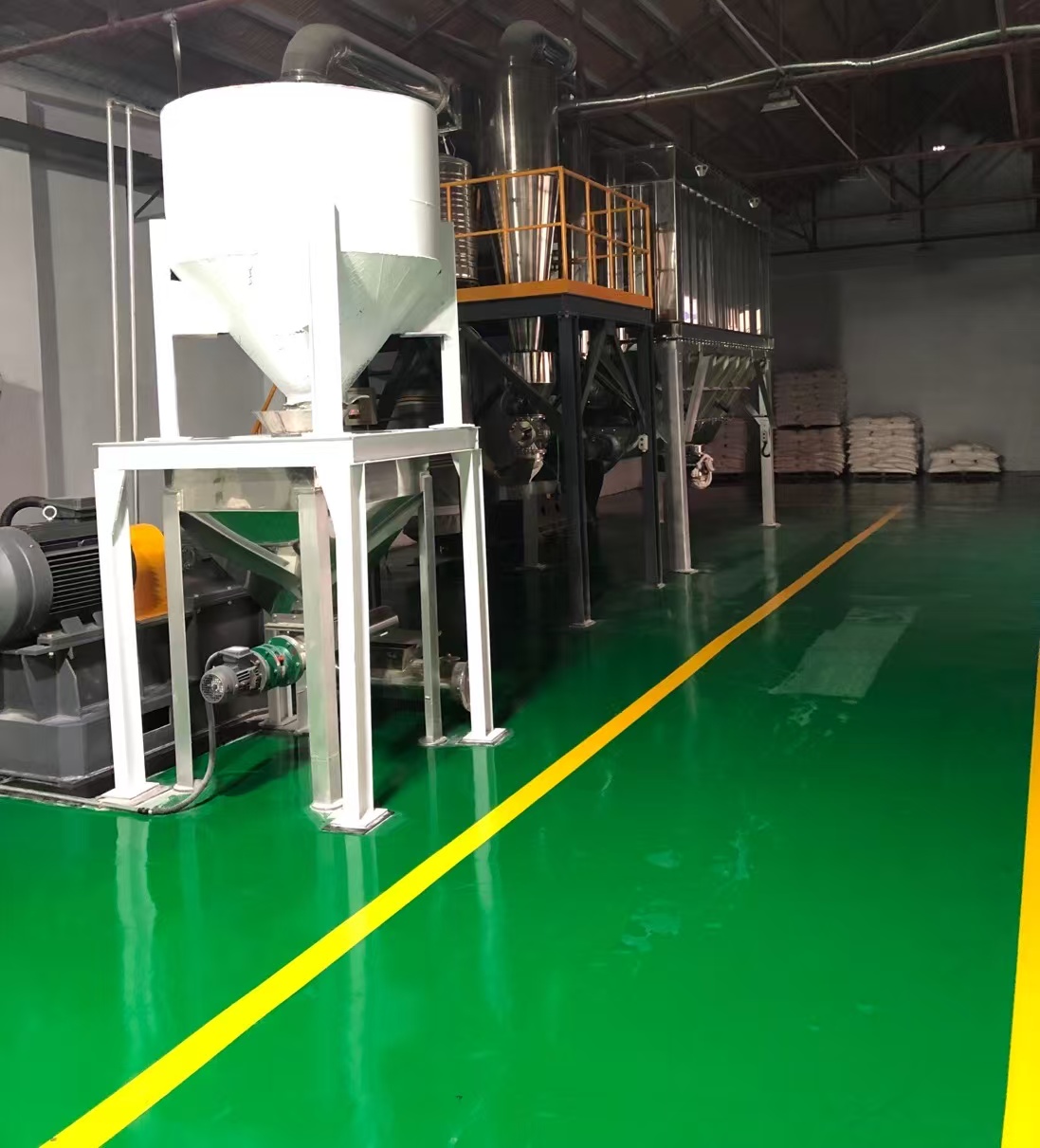
Process control at the producer's site — milling, crushing, shaping and sieving systems — is the upstream half of the handling record that buyers verify downstream.
Sumetech Industry Co., Ltd is a manufacturer of potassium aluminium fluoride (PAF) and boron nitride products serving the refractory, abrasive, welding and aluminium alloy industries. Established in 2019, the company operates a 6000 m2 production facility with an annual capacity of 5000 metric tons, a workforce of approximately 20 staff, and an R&D team of five technicians. Its production facility is equipped with ultra-fine mechanical mills, crushers, shaping machines and advanced sieving systems for boron nitride processing, and approximately 90% of its products are exported to markets including Turkey, Japan, Korea and Europe.
Applications Where Handling Standards Decide Performance
Semiconductor manufacturing
Boron nitride is used in semiconductor manufacturing, where contamination tolerance is low and the material's low dielectric constant and thermal conductivity are functional requirements. In this context, sealed storage is not primarily about release performance; it is about keeping a high-purity material at the purity level it was qualified at. A 99.9% specification is only meaningful if the packaging history supports it.
Aerospace thermal components
Boron nitride is applied in military and aerospace work, including thermal protection contexts and radar and optics applications. Programs in this sector typically require documented material history, which makes lot traceability and expiry-date control part of the deliverable rather than an internal quality preference. A coating that performs correctly but cannot be traced back to a storage record is a documentation problem in an audit and a performance risk in service.
Die casting, precision casting and horizontal continuous casting
The anti-stick function of boron nitride coating for die casting operations depends on the film wetting and bonding consistently across the tool surface. In precision casting and horizontal continuous casting, the non-stick release property derived from the graphite-like structure reduces adhesion between the melt and the tooling. Both cases are sensitive to film defects, and film defects are one of the ways moisture uptake in stored material becomes visible.
Optical glass, vacuum coating and electronics
Boron nitride is used in the production of optical glass, in vacuum coating processes, in the electronics industry, and in photovoltaic technology and solar thermal energy storage. Several of these applications combine high temperature with an atmosphere-controlled chamber, which is precisely the operating envelope where the 900 °C air limit and the above-2000 °C inert limit must be read separately.

Pyrolytic boron nitride (PBN) is one of the higher-purity forms within the boron nitride material family, alongside powder, granular, coating and paint.
Market Signals: Coating Demand and Documentation
Published market data gives context for why handling documentation is becoming part of supplier assessment rather than an afterthought. The global hexagonal boron nitride (h-BN) market was valued at USD 949.4 million in 2024, according to Grand View Research, with Asia Pacific holding a 40.6% revenue share and China accounting for 41.1% of that regional total. A separate commercial research estimate places the global boron nitride coatings market at USD 2.8 billion in 2025.
Application structure is equally relevant to handling standards. Grand View Research reports that paint coatings accounted for the largest application share of the h-BN market at 32.8% in 2024. That is the application segment with the tightest storage and shelf-life constraints, which means the handling requirement sits on the largest single slice of demand rather than on a niche.
One caution is warranted when these figures are used in business cases. A third source, Market Research Future, reports a 2024 market size of USD 192.96 billion — an outlier that most likely reflects a broader definition covering all boron-based chemicals rather than boron nitride powder and coatings. Buyers comparing published market sizes should check scope definitions first, because the underlying definitions differ far more than the numbers suggest.
Regional concentration has a direct operational consequence. When a large share of supply originates in one region and moves to buyers in Europe, Japan, Turkey and Korea, the interval between manufacture and application lengthens. Under those conditions, expiry-date management and sealed storage stop being housekeeping and become part of supply continuity planning.
Boron Nitride Coating Compared with Conventional Release Agents
Boron nitride coating is not a universal replacement for conventional release agents. It occupies a specific band of the temperature and contamination spectrum, and understanding where it sits is part of specifying it correctly.
| Decision dimension | Boron nitride coating | Conventional organic and graphite-based release agents |
|---|---|---|
| Temperature envelope | Up to 900 °C in air; above 2000 °C in inert gas | Typically suited to lower-temperature forming and moulding steps |
| Chemical interaction | Inert; corrosion-resistant to molten metals and acids | Formulation-dependent; often consumed or degraded in service |
| Contamination profile | Used where carbon contamination and bonding must be avoided | Residue and transfer behaviour varies by chemistry |
| Storage and shelf life | Must be kept dry and sealed and used before the expiration date | Storage sensitivity depends on the carrier system |
| Application | Brush or spraying machine | Varies by product; frequently automated in-line |
The clearest boundary is thermal, and it is atmosphere-dependent. Outside an inert or vacuum environment, boron nitride coating is a material with a working ceiling around 900 °C; processes that exceed that figure in air are outside its documented envelope and should not be planned around the higher inert-gas number. The second boundary is handling: shelf life and sealed dry storage are conditions of use, not recommendations. A third is mechanical — boron nitride is deliberately soft and low-friction by virtue of its layered structure, which makes it a release and lubrication layer rather than a structural or wear-resistant coating. Finally, film performance depends on substrate preparation and application consistency, so a coating that performs well in one tool and poorly in another is more often an application variable than a material defect.
Future Outlook
The direction of travel for boron nitride coatings is toward more documentation, not less. Applications in semiconductor manufacturing, electronics thermal management, photovoltaic technology and aerospace already carry traceability expectations that extend to storage and shelf-life records. As coating demand grows in the application segment that dominates the h-BN market by share, the handling requirement scales with it.
Two practical shifts are likely to follow. First, storage and shelf-life conditions will increasingly appear in supplier questionnaires alongside temperature and purity parameters, because they are auditable at low cost. Second, buyers are likely to become more precise about the language of compliance itself, distinguishing substance-level regulatory statements such as EU REACH compliance from claims of finished-product approval. Suppliers who document the operational parameters clearly — and who can show where a given statement begins and ends — will be easier to qualify than those who present all compliance as a single undifferentiated block.
Frequently Asked Questions
In what forms is boron nitride supplied?
Boron nitride is a ceramic material with a graphite-like structure and is available in powder, granular, coating and paint forms. The coating and paint forms contain a carrier system and are documented for application by brush or spraying machine. Because the forms behave differently in storage, buyers should qualify the specific form they will use in production rather than treating the range as interchangeable.
What are the storage requirements for boron nitride coating?
The documented requirement is dry, sealed storage, together with use before the expiration date. Keeping the original packaging closed until the point of use, storing in a dry area, and resealing partial containers are the practical applications of that requirement. The condition is most consequential for coating and paint forms, where moisture uptake and settling can affect flow, wetting and film formation.
What is the maximum working temperature of boron nitride coating?
The maximum working temperature is 900 °C in air and above 2000 °C in inert gas. The two figures should be read separately: the air value reflects behaviour in an oxidising atmosphere and is the practical ceiling for open-air processes, while the inert-gas value applies to controlled-atmosphere or vacuum applications. Maximum purity for the same product line is 99.9%.
Which industries use boron nitride coatings?
Boron nitride coatings are used across precision casting, horizontal continuous casting, die casting operations, optical glass production, vacuum coating, the electronics and semiconductor industries, photovoltaic technology, solar thermal energy storage, thermally conductive filler applications, superhard materials, functional ceramics and fibers, cosmetic additives, and military and aerospace applications. In each case the relevant properties are a combination of thermal stability, chemical inertness, non-wetting release behaviour, electrical insulation and thermal conductivity.
How should a buyer verify compliance claims for boron nitride coating?
Verification should focus on operational parameters and their evidence: the air and inert-gas working temperatures, the purity grade and how it is measured, the documented storage condition, the expiry date and lot traceability, and the intended application method. Substance-level regulatory statements, laboratory accreditations and product performance data should be requested and evaluated separately, because each answers a different question. Regulatory references that are stated without scope should be clarified in writing before they are relied upon in a qualification file.
What is the regulatory status of boron nitride?
Boron nitride is compliant with EU REACH (Regulation EC 1907/2006) as a substance used in industrial applications, according to a primary industry source. This is a substance-level statement. It does not by itself establish approval of a specific finished coating formulation for every application, market or contact scenario, and buyers requiring such confirmation should obtain it in writing for the exact product and destination. For export documentation, HS code 28500020 is commonly used for boron nitride coating shipments.
Summary
For boron nitride coatings, handling compliance is a short list with long consequences: keep the material dry and sealed, use it before the expiration date, and verify those two conditions with the same discipline applied to temperature and purity. The parameter set is documented and stable — 900 °C in air, above 2000 °C in inert gas, up to 99.9% purity, chemical inertness and non-wetting release — and the handling requirements exist to protect exactly that performance. Buyers who separate operational parameters from assumed regulatory approvals, and who keep storage and expiry records alongside batch documentation, close a gap that process adjustments cannot close later.
Further product and facility detail from Sumetech Industry Co., Ltd is available at www.sumetech.com.
The company's catalogue, covering boron nitride forms and other product lines, can be downloaded here: Catalog of Sumetech 2026 (PDF).