
Boron Nitride Coating FAQ: Technical & Procurement Q&A
Boron Nitride Coating FAQ: Technical & Procurement Q&A
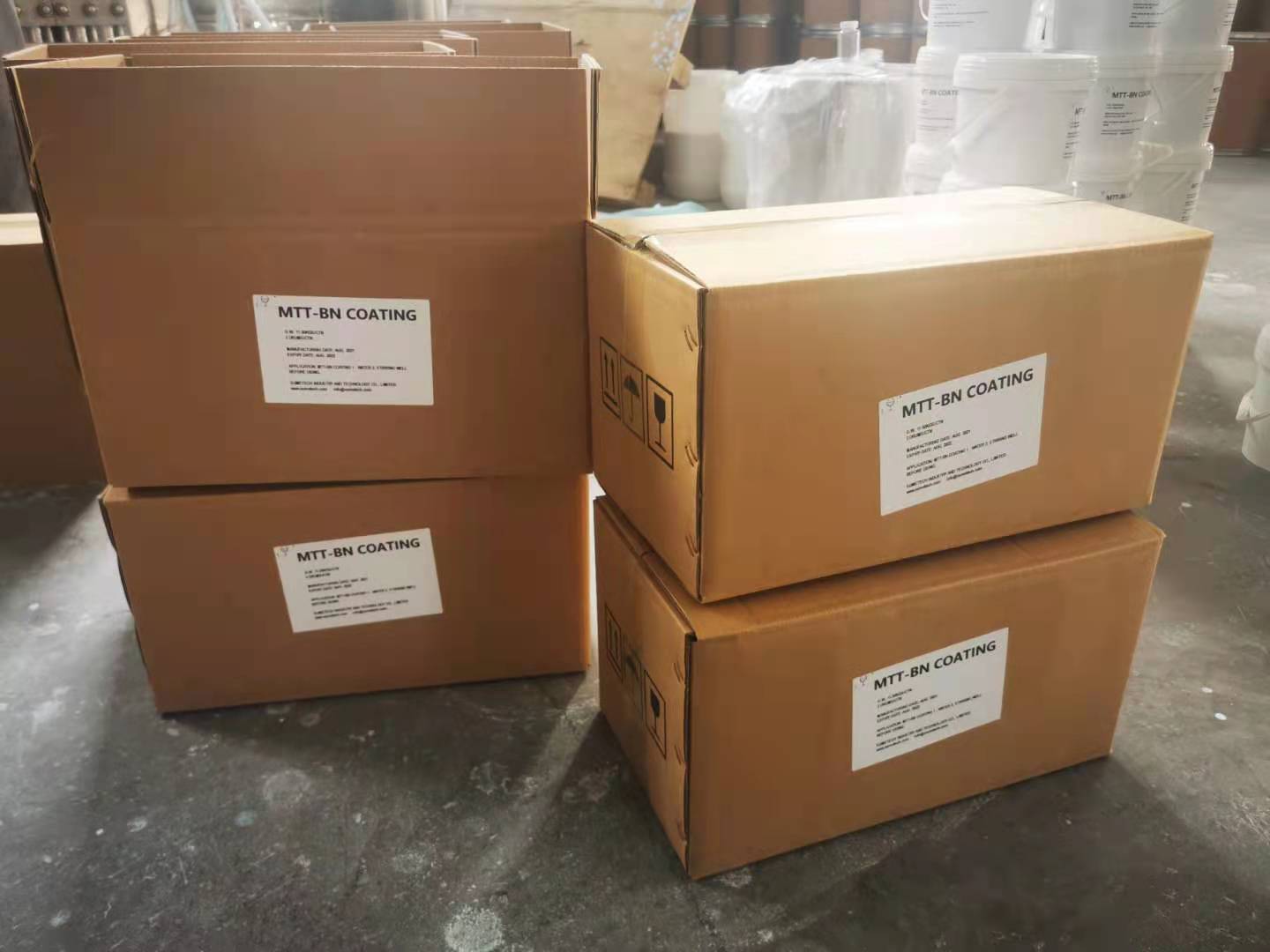
Boron nitride coating prepared for shipment — two drums secured in a single export box.
Boron nitride coating is a consumable functional layer applied to moulds, troughs, ladles, crucibles and fixtures so that molten metal, glass or polymer does not bond to the tool surface. It is not judged the way a structural component is judged. It is judged on the line — whether parts release cleanly, whether a tool survives another campaign, and whether an operator can reapply the layer without stopping production.
Because of that, the questions buyers raise about boron nitride coating cluster around execution rather than basic selection. Teams that have already concluded a release layer is necessary usually want to know how it is applied, what temperature it tolerates, what happens if it is stored badly, what the minimum order quantity is, and whether the same specification will still exist eighteen months from now. This reference answers those questions using the operational facts attached to one commercial product, 8233, supplied by Sumetech Industry Co., Ltd.
Sumetech Industry Co., Ltd is a China-based manufacturer of potassium aluminium fluoride (PAF) and boron nitride products. The company was founded in 2019, operates a 6,000 m² production facility with an annual output of 5,000 MT across its product lines, and exports approximately 90% of its products to markets including Turkey, Japan, Korea and Europe.
Why These Questions Decide a Coating Order
Two risks separate a coating purchase from a component purchase. The first is application risk: the same product behaves differently when brushed by hand and when applied with spraying equipment, and the outcome depends on substrate preparation, film build and the number of thermal cycles the tool has already seen. The second is shelf-life risk. Boron nitride coating must be kept dry and sealed, and it must be used before the expiration date. A buyer who orders a year of consumption to secure pricing and then stores the drums in a humid warehouse has created a failure that will not surface until the containers are opened.
Neither risk is resolved by claims. Both are managed through specification discipline, documented test points and a realistic match between order quantity and consumption rate. The sections below follow the order a buyer in the Decision-to-Execution stage normally works through: technical behaviour first, then application fit, then commercial terms, then storage and compliance, then the long-term supply question that determines whether a first order becomes a repeating one.
Technical FAQ
What is boron nitride coating, and why does it perform at high temperature?
Boron nitride coating is a functional layer built on hexagonal boron nitride (h-BN), a layered material whose atoms are covalently bonded within each layer and held between layers by weak van der Waals forces. That structure, which resembles graphite, is the source of the coating's lubricity: the layers slide over one another under load, and the friction coefficient is commonly cited in the region of 0.01 to 0.05. The same material is chemically inert against most molten metals, glass and salts, and it behaves as an electrical insulator with good thermal conductivity.
Those properties do three jobs at once. The coating lubricates, it prevents molten material from wetting and bonding to a tool surface, and it insulates electrically. A buyer does not choose between those functions; they arrive together from the same material structure.
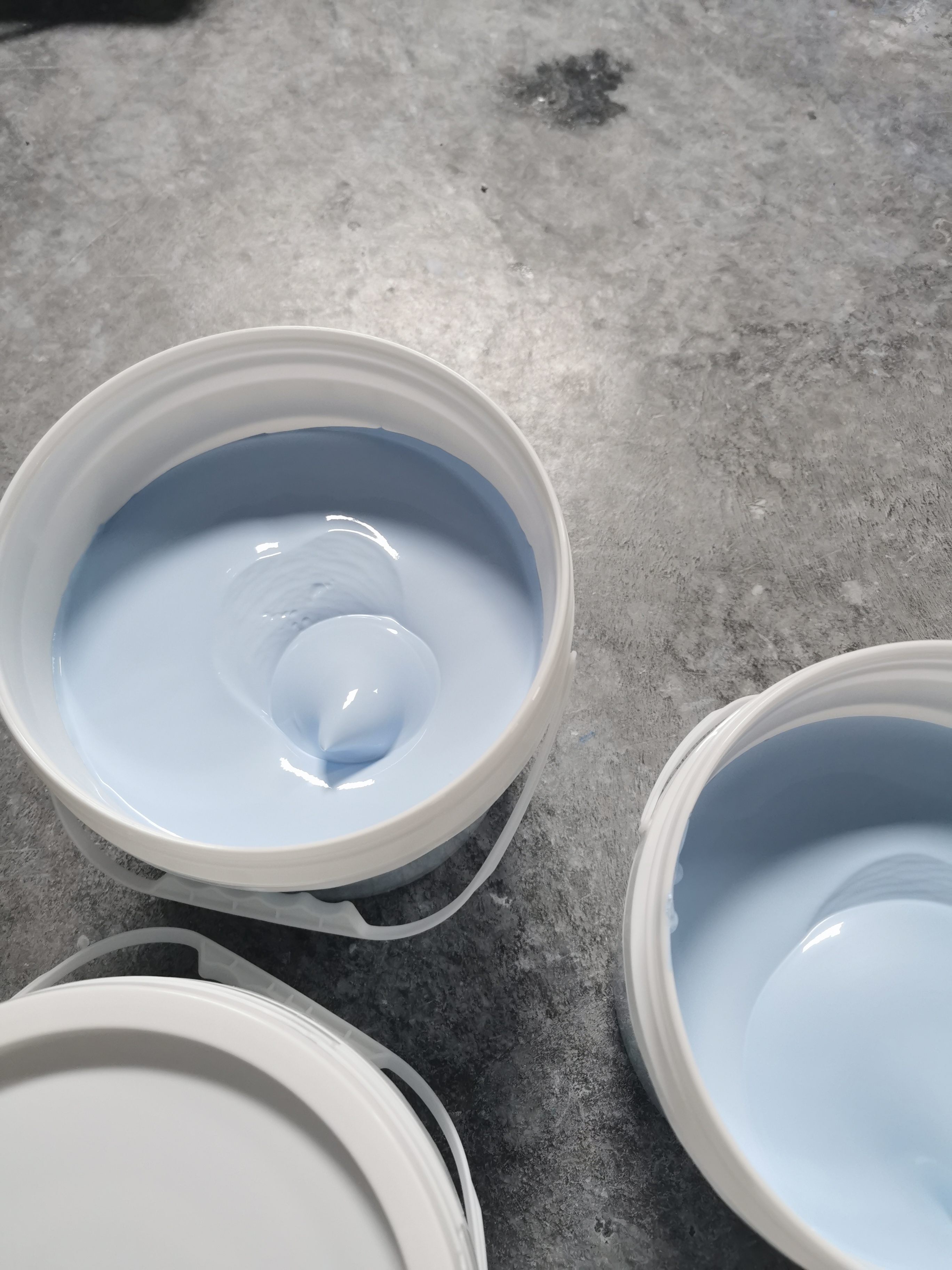
BN coating supplied for brush or spray application, depending on tool geometry and required film uniformity.
What temperature limits apply to product 8233?
The published working parameters for 8233 are a maximum working temperature of 900 °C in air and 2000 °C or above in an inert gas atmosphere, with a maximum purity of 99.9%. The distance between those two numbers is the practical boundary a buyer should design around. In air, 900 °C is the ceiling. The higher figure applies only where oxygen is excluded. A process open to atmosphere and running above 900 °C is outside the stated envelope, and no amount of application technique changes that.
In what forms does 8233 ship?
Product 8233 is supplied as powder, granular material, coating and paint. The coating and paint formats are the ready-to-apply forms used directly on tooling. Powder and granular formats sit upstream and are relevant when a buyer formulates or mixes in-house rather than applying a finished coating.
How is the coating applied?
The matched application equipment for 8233 is a brush or a spraying machine. Brushing suits small or irregular geometries where control matters more than speed; spraying suits larger, more uniform surfaces where coverage rate matters. Sumetech states that operation is subject to actual working conditions, which is a practical way of saying the film parameters are set per line rather than issued as one universal recipe. Buyers evaluating a switch should treat the first application as a trial with a defined acceptance check, not as a like-for-like swap against a previous coating.
Is it a lubricant, a release agent, or an insulator?
All three, from the same material basis. Lubrication comes from the layered crystal structure and its low friction coefficient. Release comes from chemical inertness — the coating is non-wetting and corrosion-resistant against most molten metals and chemicals, so it acts as an interface rather than blending into the melt. Electrical insulation comes from a low dielectric constant that remains reliable under high-frequency and high-voltage conditions. In practice, buyers usually specify the coating for one dominant function and benefit from the other two incidentally.
Application FAQ
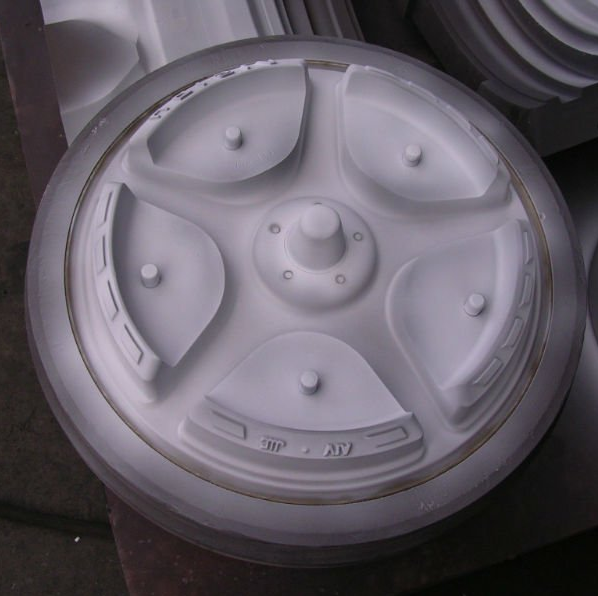
Boron nitride coating applied as a high-temperature lubricant, release layer and electrical insulator.
Which industries does boron nitride coating serve?
Product 8233 is positioned across precision casting, horizontal continuous casting, amorphous ribbon, thermally conductive filler, photovoltaic technology, solar thermal energy storage, the semiconductor industry, optical glass, vacuum coating, the electronics industry, military and aerospace, superhard materials, cosmetic additives, functional fibers and functional ceramics. The breadth is real but it is not interchangeable: the substrate, the atmosphere and the release requirement differ substantially between a continuous casting trough and an optical glass mould, and buyers should confirm the grade against the specific process rather than assume one format covers all of them.
What does the coating do in continuous and precision casting?
In metal forming and casting, BN coatings are applied to moulds, troughs and ladles handling aluminium, magnesium and zinc alloys. The function is threefold: easy release of the cast part, longer tool life, and improved surface quality on the finished piece. Because the coating does not react with most molten metals, it works as an interface layer rather than as an additive that alters the melt chemistry — an important distinction for foundries that cannot accept any change to alloy composition.
How is it used in superhard materials and cutting tools?
Superhard materials and cutting tools appear among the project types 8233 is applied to, alongside high-temperature containers, thermal protection, nuclear energy applications, radar and optics. In these settings the coating works as a high-temperature lubricant and anti-stick layer: it prevents workpieces and fixtures from bonding during sintering or heat treatment, and it protects graphite plates from carbon contamination during powder sintering. The value here is process yield rather than appearance — fewer rejected parts and less fixture cleaning between runs.
What about glass, electronics and semiconductor processes?
In glass and ceramics manufacturing the coating is used as a release layer on glass-forming moulds, where it reduces surface defects and cuts the downtime spent cleaning moulds. In electronics and semiconductor work, the combination of electrical insulation and thermal conductivity supports heat dissipation applications. In vacuum coating and optical glass it serves as a high-temperature interface layer. These are different environments with different failure modes, which is why a single specification should not be assumed to run unchanged across all three.
Boron Nitride Coating vs Graphite-Based Release Agents
The most common comparison a buyer raises is against graphite-based release agents, which have long been the default in high-temperature forming. Sumetech's own comparison positions boron nitride coating against that reference on the following dimensions.
| Comparison dimension | How boron nitride coating is positioned |
|---|---|
| Temperature behaviour | High-temperature resistance; the coating is not easily deformed or chemically reacted at elevated temperature. |
| Surface quality | Listed as a differentiator, with surface quality on the formed or cast part. |
| Cleaning cost | Lower cleaning cost after use. |
| Upfront price | Higher purchase price than graphite-based release agents. |
| Maintenance | The higher upfront cost is offset by substantially lower maintenance and stable, repeatable performance. |
| Typical fit | Electronic heat dissipation, semiconductor manufacturing, metallurgical casting, machining, new energy, nuclear energy, aerospace and cosmetics. |
The honest boundary is that boron nitride coating is not automatically the cheaper choice. Its unit price is higher than that of graphite-based release agents, and the case for it rests on maintenance and cleaning economics rather than on purchase price alone. Where a process runs comfortably below the temperatures at which graphite-based agents perform acceptably, and where surface quality and cleaning downtime are not binding constraints, the lower-cost option may remain defensible.
A second boundary is atmospheric. Above 900 °C the coating requires an inert gas environment to reach its stated 2000 °C-plus ceiling. A buyer whose process is open to air and runs hotter than 900 °C is outside the specification, and should not treat the inert-atmosphere figure as a substitute. A third boundary is shelf life: the product must be stored dry and sealed and used before the expiration date, which limits how much inventory can prudently be held at once.
Procurement FAQ
What are the purchasing terms?
The stated commercial terms for boron nitride products are a minimum order quantity of 10 kgs, delivery terms of FOB, CIF or FCA, and payment terms of 30/70. The 10 kg MOQ matters for buyers running trials: it allows a validation batch on a real production tool without committing to a container-scale order.
What are the acceptance criteria?
Acceptance is based on a pre-shipment test. In practice this is the checkpoint that matters most to a buyer who cannot inspect a coating visually in the way they would inspect a machined part — the test happens before dispatch, which shifts the quality conversation earlier in the order cycle. Sumetech's laboratory has passed CMA (China Measurement Certification) and CNAS (National Laboratory Accreditation), which is relevant when a buyer's own QA function needs documentation to file against an incoming material record.
How is the coating packaged, and how is it classified for export?
Packaging specifications for boron nitride products are customizable. Supplied formats include coating packed in drums, two drums in one export box, and coating packed in wooden cases for larger shipments. For customs and trade documentation, the boron nitride coating HS code commonly used for export and import is 28500020. Buyers importing for the first time should confirm the classification against their own jurisdiction's tariff schedule rather than relying on a single source.
Can the specification be customized?
Yes. Sumetech offers customizable production on boron nitride, covering particle size distribution, morphology, purity grades and packaging specifications. For a buyer running a fixed process on multiple lines, that customization is what makes a single supplier relationship viable across different tools: the release requirement on a small precision-casting mould is not the same as the requirement on a large continuous-casting trough, and the specification can be adjusted rather than compromised.
What supports long-term supply continuity?
Three operational facts are relevant. First, the company maintains large raw material inventories on site to help ensure uninterrupted production and shorter lead times. Second, approximately 90% of its products are exported, with established markets in Turkey, Japan, Korea and Europe — a distribution pattern that implies recurring export logistics rather than one-off shipments. Third, the R&D and quality control team consists of five full-time senior engineers with experience in inorganic fluoride chemistry and powder processing, which is the function that handles specification continuity when a buyer renews an order months or years after the first trial.
For a buyer in the Execution stage, these facts are not marketing points so much as answers to a specific risk: whether the product applied successfully in month one will still be the same product in month twelve. Customization capability, raw material inventory and a named technical team are the three mechanisms that make that continuity plausible. They are not guarantees, and buyers with critical processes should still confirm specification stability in writing at each renewal.
Storage, Shelf Life and Compliance FAQ
How should boron nitride coating be stored?
The product specification states that boron nitride coating should be kept in dry, sealed storage and used before the expiration date. For a humid or coastal warehouse this is a genuine operational constraint, not a formality. Sealed drums, controlled humidity and stock rotation are the practical measures. Buyers should also avoid decanting more material than a shift will consume, since an opened container is no longer sealed.
Does the coating expire?
Yes. The specification requires use before the expiration date. This is one of the clearest limits on the product and it has a direct procurement consequence: order quantity should be sized against actual consumption rate rather than against price breaks. Holding excessive stock trades a small unit-cost saving for a real risk of expired material, and expired coating removed from production is a straight loss.
What compliance and testing evidence exists?
Boron nitride is compliant with EU REACH under Regulation EC 1907/2006 as a substance used in industrial applications. On the supplier side, Sumetech's laboratory has passed CMA (China Measurement Certification) and CNAS (National Laboratory Accreditation), and acceptance of boron nitride orders is based on pre-shipment testing. Together these give a buyer two layers of documentation: a regulatory position for the substance, and a test record for the individual shipment.
Market Signals Buyers Should Interpret Carefully
The commercial environment around boron nitride is expanding. The global hexagonal boron nitride market was valued at USD 949.4 million in 2024, according to Grand View Research. Within that, Asia Pacific held a 40.6% revenue share in 2024, and China alone accounted for 41.1% of the Asia Pacific market. Among applications, paint coatings represented the largest share at 32.8% in 2024. A separate estimate places the global boron nitride coatings market at USD 2.8 billion in 2025.
Those figures should be read with care. Published market-size estimates for boron nitride vary widely depending on whether the scope covers h-BN powder and coatings alone or extends into downstream ceramics and composites, and at least one widely circulated figure is an order of magnitude above the others for exactly that reason. The practical takeaway for a buyer is directional rather than numerical: coating demand is concentrated in Asia Pacific, and paint and coating formats represent the single largest application category. That concentration is relevant to supply-chain planning, because it means most coating capacity sits in one region and lead-time risk is geographically clustered.
Future Outlook
The direction of buyer scrutiny is likely to shift from product claims toward documentation. As boron nitride coatings move further into semiconductor, electronics and aerospace processes, the questions that determine a purchase will increasingly be about test records, regulatory position, storage control and specification stability across repeat orders rather than about headline temperature figures.
Two practical consequences follow. First, suppliers who can describe their customization boundaries clearly — what can be adjusted in particle size distribution, morphology, purity grade and packaging, and what cannot — will be easier to qualify than suppliers who answer every requirement affirmatively. Second, buyers will need internal discipline on inventory: a coating with a defined expiration date rewards consumption-matched ordering and penalizes bulk stocking, regardless of how the price breaks are structured.
Reference Documentation
For buyers who need the full product range alongside the technical and commercial details covered above, Sumetech Industry Co., Ltd publishes a public catalogue: Catalog of Sumetech 2026.