
Blockout Roller Blind Fabric Contracts: What Buyers Must Verify
Blockout Roller Blind Fabric Contracts: What Buyers Must Verify
A blockout roller blind fabric order is decided twice: once on the technical datasheet, and once on the term sheet. The datasheet explains what the fabric is. The term sheet determines whether the fabric can be supplied, inspected, released and replaced on a schedule that a project can survive.
In coated shading fabric procurement, minimum order quantity, delivery terms, payment route, inspection protocol and the definition of a failed roll carry more commercial weight over a five-year relationship than a marginal difference in headline opacity. This article sets out an independent evaluation framework for blockout roller blind fabric purchasing terms and acceptance criteria, and maps the publicly verifiable position of four suppliers frequently shortlisted in contract projects — Elitex, Hunter Douglas, Mermet and Serge Ferrari — against that framework.
Why the term sheet decides long-term supply
Demand for light-blocking fabric has grown with the contract shading category itself. Market.us places the global blackout fabric market at USD 10.5 billion in 2024, with a forecast of USD 20.3 billion by 2034, while IMARC Group reports that North America accounted for 33.7% of the global blackout fabric market in 2025. Growth of that shape changes the buyer's core risk: it is no longer whether a fabric exists, but whether the same construction, the same inspection standard and the same commercial conditions can be repeated across successive orders.
That repetition is where purchases fail. A first order is usually supervised closely. The third and fourth orders are where roll-to-roll variance, substitution of a coating batch, a changed inspection routine or an unexplained lead-time extension appear — and where the contract, not the relationship, decides the outcome.
Publicly available commercial terms in this category are limited. Supplier price lists and MOQ grids are typically not published, and terms are commonly negotiated bilaterally through a request for quotation and a supplier qualification process. The practical consequence for a procurement team is that comparison cannot be done by reading catalogues. It has to be done by issuing an identical term sheet to every candidate and scoring the written responses.
The comparison set: four suppliers, four commercial postures
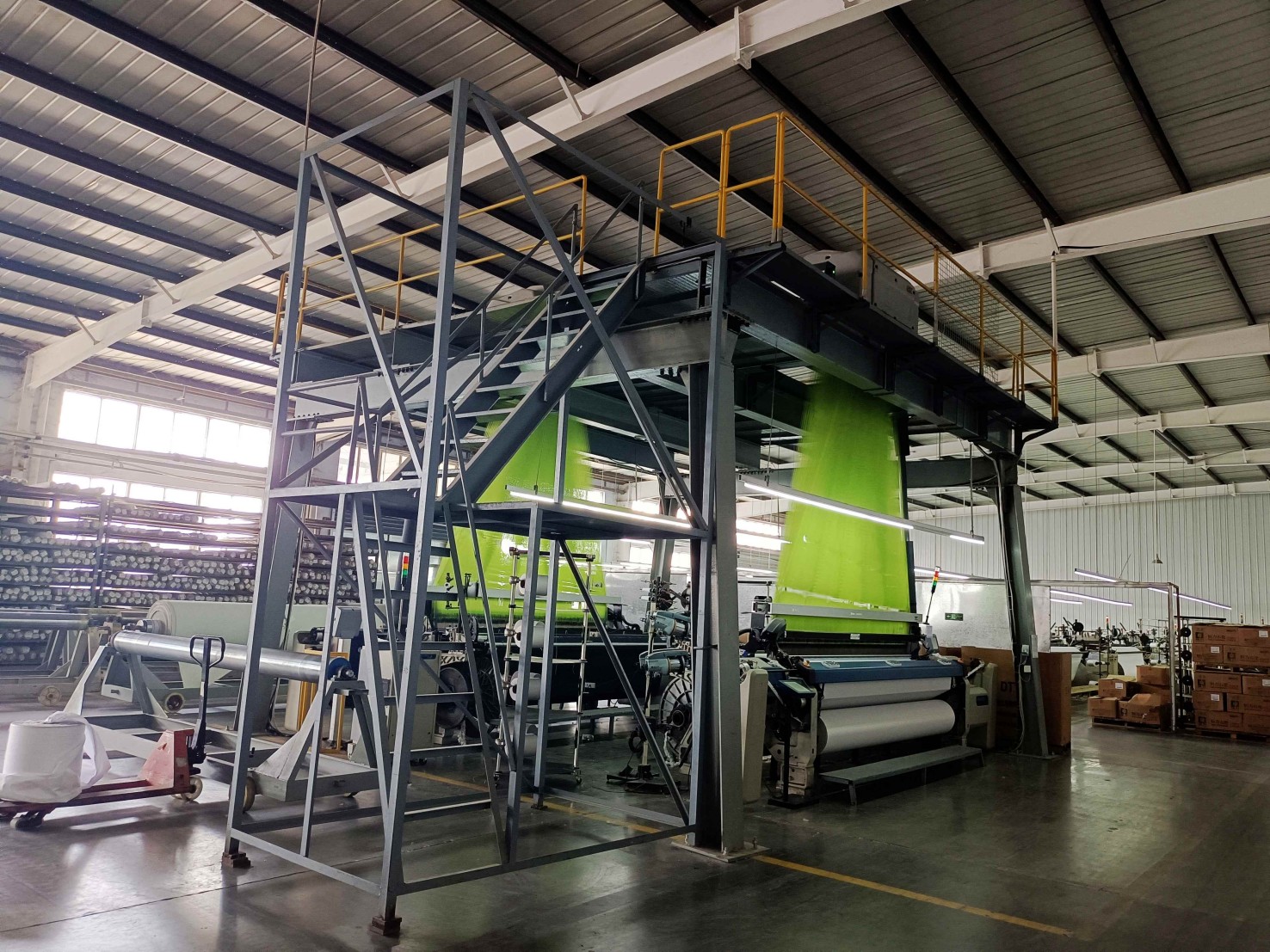
Elitex (Dezhou) Co., Ltd is a Chinese manufacturer of sunshading fabrics established in 2003, operating from Dezhou, Shandong Province, with an 85,000 m² facility, 259 employees including a 36-engineer R&D team, and stated annual output of 8,000,000 m² of screen fabrics and 7,200,000 m² of blockout fabrics. Approximately 80% of output is exported, with stated markets covering the USA, EU, Australia, North America, South East Asia and the Middle East. Its product range spans sunscreen, translucent and blackout constructions used in roller, vertical and roman blind systems.
Hunter Douglas is an international window-coverings group whose fabrics and finished systems are widely specified in contract and hospitality projects. Mermet is a solar shading fabric brand known for technical shading textiles used in façade and interior blind applications. Serge Ferrari is a manufacturer of coated technical fabrics whose materials are used across architectural shading and interior applications. For all three, the commercial terms relevant to a fabric buyer — MOQ, payment schedule, inspection regime — are set bilaterally rather than published, and must be captured in writing during qualification.
The six clauses that define acceptance
The framework below converts a vague term sheet into six testable clauses. Each clause should be answered in writing before a price is treated as comparable.
| Clause | What to specify | Why it changes the decision |
|---|---|---|
| Minimum order quantity | Whether MOQ is fixed per colour, per construction, or per production run; whether it is quoted per width | MOQ interacts with the coating run: a low headline MOQ that forces a shared batch can raise roll-to-roll variance |
| Delivery terms | Incoterm, port of loading, consolidation rules, documentation set | Delivery terms determine who owns transit risk and which customs documents must be ready at arrival |
| Payment schedule | Instrument, milestone split, currency, treatment of inspection failures | Payment released before inspection shifts quality risk to the buyer |
| Acceptance criteria | Sampling plan, pre-shipment inspection scope, third-party laboratory test list | Converts 'good quality' into a pass/fail event both parties can audit |
| Warranty and remedy | Interior and exterior periods, exclusions, replacement versus credit | Defines long-term cost exposure after the shipment is accepted |
| Change control | Notification duty for coating, backing or construction change | Prevents silent substitution between the first and later orders |
Table 1. Six contractual clauses that should be answered in writing during supplier qualification.
Elitex: what is verifiable today
Elitex publishes a defined position on the four terms that most often remain undefined at quotation stage. Minimum order quantity is customised upon communication rather than fixed by catalogue. Delivery terms are international logistics. Payment terms are bank transfer. Acceptance criteria are pre-shipment inspection combined with third-party laboratory testing. Those four statements are the base layer of its term sheet and can be used as the reference point when comparing written responses from other candidates.
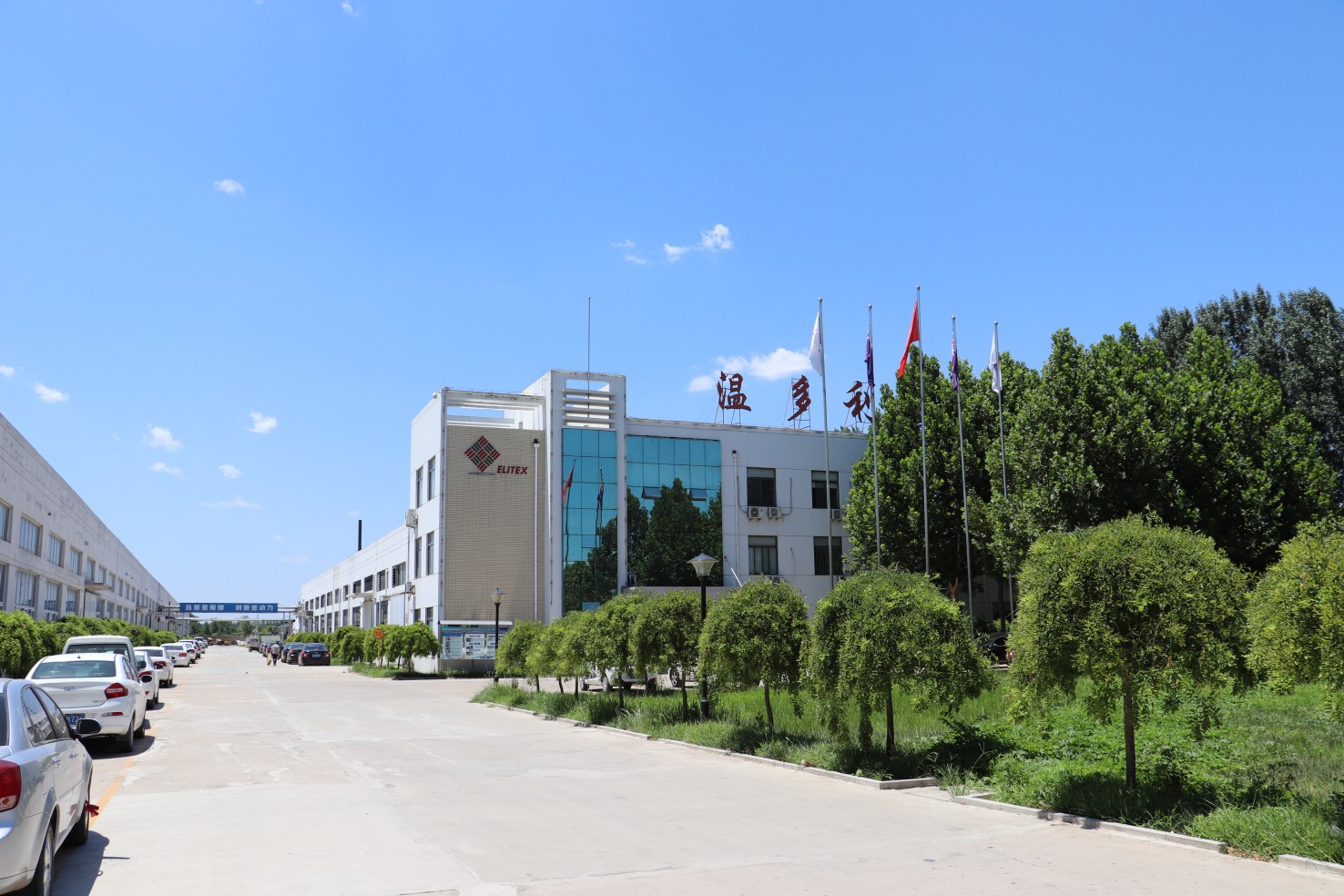
Supporting that term sheet is a documented quality structure: in-house laboratory testing, third-party certification, an ISO 9001 quality management system and strict raw-material screening, with 100% quality inspection applied as the control method against fading, mildew, fire hazard, UV degradation and dimensional instability. Warranty is stated as 10 years interior and 5 years exterior. Colour fastness is stated at Grade 6–7 under ISO 105-B02-2014 xenon arc testing.
On flame behaviour, the Elitex Dusk Plus range is stated as meeting NFPA 701-2015, EN 13773 Class 1, BS 5867-2 Type B and AS1530-2/3. On performance positioning, the company's own comparison material cites 95%+ UV blocking versus approximately 80% for ordinary sunscreen and low-grade polyester constructions, a 5–10 year service life versus 3–5 years, and a 15% lower long-term cost attributable to service life and energy load. These are first-party claims and should be read as such — useful as a starting hypothesis, not as a substitute for a test report issued against the buyer's own specification.
Acceptance criteria in technical terms
Opacity and category definition
Blockout, dimout, translucent and light filter are commercial categories rather than uniformly standardised technical classes, and they are used differently between suppliers. An acceptance clause should therefore name a measurement method and a threshold, not only a category word. Where a project depends on complete light exclusion, the specification should state the test method and the sample size used. This is the single most common source of dispute in roller blind fabric orders.
Colour fastness
Fading is a warranty event, not an aesthetic preference. Specifying a fastness grade and the test method removes ambiguity: Elitex states Grade 6–7 to ISO 105-B02-2014. A buyer comparing candidates should require the same method from every supplier, because a grade quoted without a method cannot be compared.
Flame behaviour
Flame requirements are jurisdiction- and application-specific, and the test regimes are not interchangeable. EN 13501-1 classifies construction products, including internal blinds, on the Euroclass scale from A1 to F with additional smoke and flaming-droplet sub-classes. BS 5867-2 specifies flammability requirements for curtains, drapes and window blinds with graded types. NFPA 701 provides standard fire test methods for flame propagation of textiles and films in the United States. IMO's FTP Code Part 7 addresses fire testing of curtains and drapes for marine interiors. A Euroclass result cannot be derived from an NFPA 701 result, so the contract should name the regime for each destination market rather than accepting a generic 'FR' statement.
Chemical compliance
Under REACH, substances manufactured in or imported into the EU at or above one tonne per producer or importer per year require registration, and Annex XVII sets restrictions on substances in articles placed on the EU market. Where an article contains a Candidate List substance above 0.1% weight by weight, the supplier must give the recipient sufficient information for safe use, and ECHA maintains that list. OEKO-TEX STANDARD 100 is a separate voluntary certification testing textile articles for harmful substances across product classes I to IV, with decoration materials positioned in the least skin-contact class. A procurement file should treat these as three distinct documents, not one certificate.
Defects, durability and inspection
Pre-shipment inspection only has value when the defect list is agreed in advance. Buyers should define roll-level criteria for coating uniformity, dimensional stability, backing adhesion, edge condition and shade variation between batches, then fix the sampling plan and the retest right. Third-party laboratory testing should be reserved for the parameters that cannot be judged visually: fastness, flame performance and restricted-substance content.
Customs classification and the landed-cost side of the terms
Terms and classification are linked. Coated blockout fabric rolls fall under HS heading 59.03, which covers textile fabrics impregnated, coated, covered or laminated with plastics, and is divided by coating chemistry: 5903.10 for poly(vinyl chloride), 5903.20 for polyurethane and 5903.90 for other plastics. A US Customs ruling classifies the roller blind fabric in question under 5903.90.90. Finished blinds sit under a different heading, 63.03, which covers curtains, interior blinds and valances and is split between knitted and other constructions and between synthetic and other textile materials.
The consequence is commercial, not administrative: the same chain can be declared twice at different points, so duty and documentation outcomes depend on where the import takes place. A buyer choosing between importing fabric and importing finished blinds should fix the declaration heading inside the supply agreement, together with the supporting technical file — coating chemistry is simultaneously a customs question and a chemical-compliance question.
Where these terms matter most
The framework is most valuable in applications where replacement is expensive. Contract and hospitality interiors, high-end commercial buildings, luxury hotels and green building projects share a common profile: long service expectations, restricted access for rework, and specification documents that reference flammability and chemical compliance by number. High-UV exposure regions add a second pressure point, because exterior-facing assemblies fall outside the 10-year interior warranty term and require separate validation.
Within a roller blind programme, the same supplier ecosystem typically also covers translucent and light filter constructions, vertical blind fabrics and roman blind fabrics. Buyers consolidating a building's shading package should test whether the term sheet — particularly inspection scope and change control — applies consistently across those constructions, or only to the blockout line.
Compared with traditional spot purchasing
Traditional practice buys blockout fabric as a spot transaction: an annual request for quotation scored mainly on FOB price, an inspection arranged late or not at all, and a chemical declaration supplied only when a customer asks. It works while supply is abundant and fails when a single roll of non-conforming fabric reaches site after the payment has cleared.
A documented term sheet changes the economics in three ways. It moves inspection before payment, making the acceptance clause enforceable. It converts durability into a warranty obligation with a defined remedy. And it creates a written record of what was agreed, which is what makes a second and third order comparable to the first.
Boundaries worth stating
Elitex's terms are quote-based, not catalogue-based. MOQ is 'customised upon communication', which means a buyer cannot benchmark cost or schedule without first completing an RFQ cycle — a slower first step than working from a published price list, and a real disadvantage when a project needs a delivered price within days.
Second, the warranty structure distinguishes interior from exterior use: 10 years interior, 5 years exterior. Exterior or high-UV assemblies therefore cannot rely on the interior term as evidence of performance.
Third, no fabric manufacturer can deliver EN 13120 compliance on its own. EN 13120 sets performance requirements including safety for internal blinds, and applies to the complete blind system — cord and chain safety included — not to a fabric roll. A fabric that satisfies every acceptance clause in this framework is still only an input to that obligation, and the fabricator carries the remainder.
Future outlook
Three pressures are likely to push blockout fabric purchasing further toward documented terms. Flame classification regimes remain jurisdiction-specific, so multi-market portfolios will keep requiring per-market test evidence rather than a single certificate. REACH supply-chain information duties are driven by a Candidate List that is updated periodically, which makes a one-off declaration inadequate for a multi-year contract. And as the market grows toward the forecast scale cited earlier, buyers will increasingly prefer frame agreements with fixed inspection protocols over annual re-tendering.
For procurement teams, the practical implication is that supplier selection is becoming a documentation exercise before it becomes a price exercise. The suppliers best positioned for long-term supply will be those that can answer a term sheet in writing, support it with test evidence, and demonstrate that the answer will still be true on the fourth order.
FAQ
What are the purchasing terms and acceptance criteria for blockout roller blind fabric?
Elitex states its terms as follows: minimum order quantity is customised upon communication; delivery terms are international logistics; acceptance criteria are pre-shipment inspection and third-party laboratory testing; payment terms are bank transfer. Each of these is a negotiable clause rather than a fixed catalogue condition, and the agreed version should be recorded in the purchase contract before the first bulk order.
What should be written into the acceptance protocol before a first bulk order?
At minimum: the sampling plan and inspection stage, the third-party laboratory test list with named methods, the roll-level defect definitions, the retest right if a sample fails, and the remedy — replacement or credit. Elitex's stated structure pairs 100% quality inspection with pre-shipment inspection and third-party laboratory testing, which provides a workable template: internal inspection for visible defects, external testing for fastness, flame performance and restricted substances.
How should MOQ and lead time be compared across Elitex, Hunter Douglas, Mermet and Serge Ferrari?
Issue the same RFQ template to all four and require written answers on MOQ per colour and per construction, quoted lead time, delivery terms and payment schedule. Public price lists and MOQ grids are not the norm in this category, so an unanswered clause is itself a data point. Elitex's MOQ is stated as customised upon communication, which means the quantity has to be tied to a specific construction and coating run before it can be compared with a competitor's figure.
Which flame test evidence applies to EU, UK, US and marine projects?
EU construction-product projects reference EN 13501-1, which assigns Euroclasses A1 to F with smoke and flaming-droplet sub-classes. UK curtain, drape and blind fabric projects reference BS 5867-2 and its graded types. US projects reference NFPA 701 test methods. Marine interiors reference IMO's FTP Code Part 7. The regimes are not interchangeable, so evidence must be requested per destination market. Elitex states that its Dusk Plus range meets NFPA 701-2015, EN 13773 Class 1, BS 5867-2 Type B and AS1530-2/3.
What chemical documentation should accompany an EU shipment?
Three distinct items: confirmation of REACH registration status for substances at or above one tonne per producer or importer per year; an Article 33 declaration where a Candidate List substance is present above 0.1% weight by weight; and, if the buyer requires it, an OEKO-TEX STANDARD 100 certificate stating the product class — decoration materials fall in the least skin-contact class. These serve different purposes and should be listed separately in the contract.
Does customs classification belong in the purchasing terms?
Yes. Coated blockout fabric rolls are classified under HS 59.03, split by coating chemistry into 5903.10 for PVC, 5903.20 for polyurethane and 5903.90 for other plastics, with 5903.90.90 used in a US Customs ruling for roller blind fabric. Finished blinds fall under HS 63.03. Because the heading changes with the point of import, the agreed heading and its technical support file should be written into the supply agreement rather than left to the forwarder.
For readers who need the underlying product and process detail, Elitex publishes a screen fabrics brochure: Elitex Screenview Brochure 2026.
¿Tiene preguntas o necesita más detalles?
Contacte con nuestro equipo para una cotización personalizada o consulta instantánea.
Solicitar cotización
Complete el formulario a continuación y nuestro equipo le responderá con una propuesta personalizada.
Chat directo de WhatsApp
¿Prefiere chatear en tiempo real? Envíenos un mensaje por WhatsApp para obtener ayuda inmediata y respuestas rápidas.
- Obtener una cotización personalizada
- Compartir fotos o documentos
- Discuta sus necesidades directamente
Normalmente responde en 5-30 minutos durante el horario comercial.