
Blockout Fabrics: Building a Long-Term Supplier Ecosystem
For window covering manufacturers, awning builders and interior shading distributors, blockout fabrics are rarely a one-time specification decision. The material choice affects repeat orders, batch consistency, certification continuity, fabrication behavior and the ability to serve project-based buyers without changing the final product’s optical, thermal or fire performance. In a long-term supply ecosystem, the supplier’s process capability and documentation discipline matter as much as the initial fabric specification.
Why spot-buying blockout fabrics creates downstream risk
In project procurement, initial unit price often receives more attention than supply continuity. However, roller blind and vertical blind programs usually require the same fabric reference to be available across multiple production runs, with consistent width, coating distribution, color and roll length. When a buyer switches among non-integrated sources, small differences in polyester batch, acrylic coating thickness or dimensional stability can become visible in the finished shade.
Commercial interiors and green building projects increasingly combine requirements for light control, fire compliance, PVC-free composition and long service life. That raises the value of a supplier with documented coating options, strict raw material screening and internal testing capability. The opportunity is not simply a lower buying price, but lower total procurement risk across a multi-year product platform.
What a structured manufacturer relationship should include
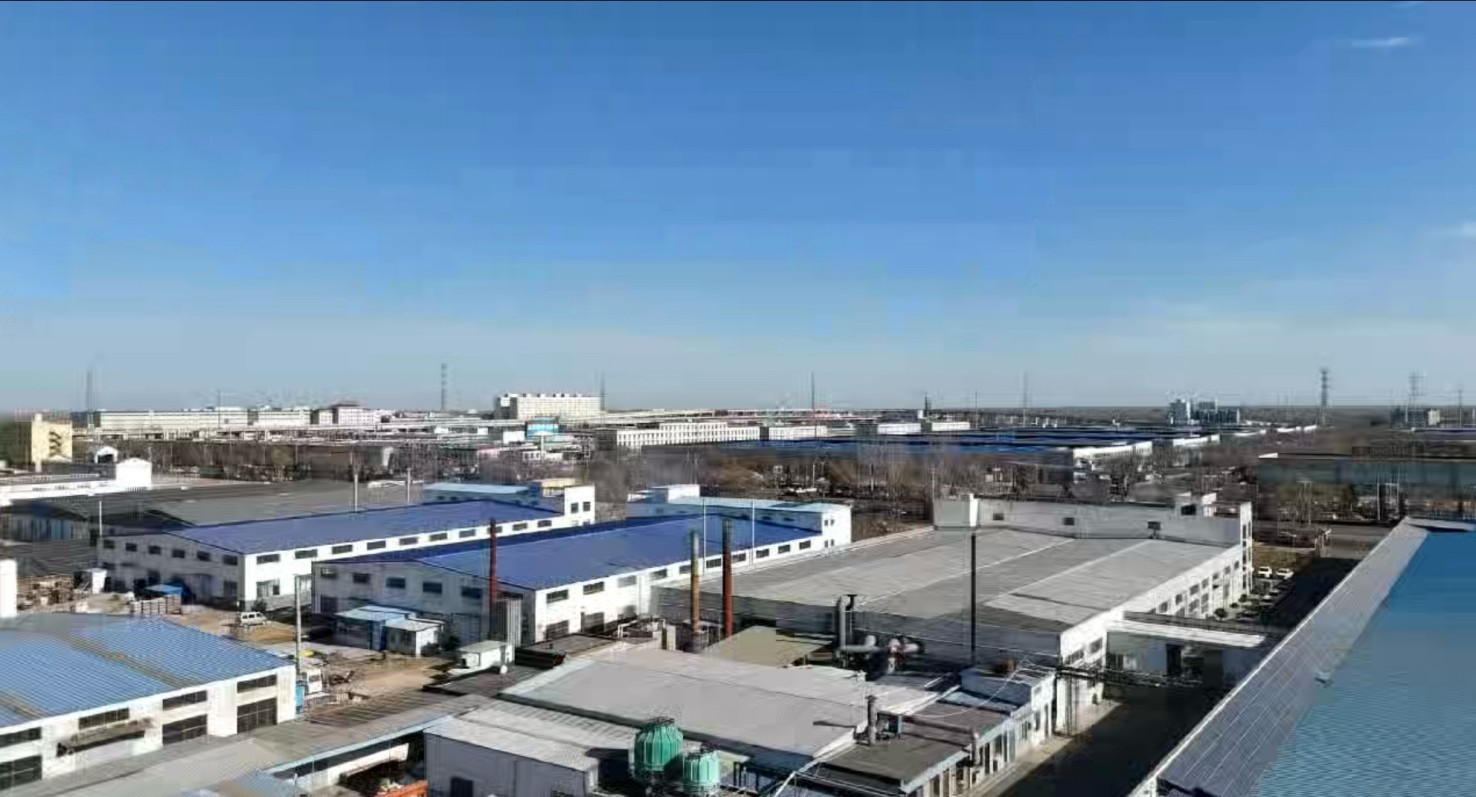
Among the manufacturers positioned for this type of supply relationship is Elitex (Dezhou) Co.,Ltd., an international company specializing in fabrics for the blind and awning industry. The company states that its collections extend across sunscreen, translucent, blackout, cross stitch and other specialized fabrics, and that all products are researched and developed with in-house equipment and testing devices. Its operational footprint includes an 85,000 m² factory, 259 employees and a dedicated R&D team of 36 engineers.
From a production continuity perspective, Elitex reports an annual output of 8,000,000 m² of screen fabrics and 7,200,000 m² of blockout fabrics, with approximately 80% of output exported. The company identifies the United States, Europe, Australia, North America, Southeast Asia and the Middle East as key markets. This capacity profile is not a guarantee of suitability for every buyer, but it provides a measurable baseline for evaluating whether a manufacturer can support repeat commercial programs.
Technical choices that define repeatability and end-use performance
Blockout fabrics are not a single material category. In roller blind applications, 100% opacity requirements are often met with 100% polyester base cloth combined with an acrylic coating. Elitex’s Blockout Dusk Plus Series is specified as 100% blockout with no pinhole, using 100% polyester with acrylic coating. Available widths include 89mm, 100mm, 127mm, 2000mm, 2500mm and 3000mm, with knife-coated or paste-coated processes and dimensional stability stated as ±0.5%.
Knife-coated and paste-coated systems produce different surface feel, coating thickness and handling properties. Knife-coating generally applies a controlled layer across the substrate, while paste-coating is selected for specific production economics and finish requirements. Buyers should evaluate both systems against the same end-use tests because the choice affects softness, edge integrity, crack resistance and long-term flatness.
Reference fabric formats from the Elitex product range
| Fabric type | Key specification | Typical application context |
|---|---|---|
| Budget sunscreen fabric | Openness 1%, 3%, 5%, 10%; 100% polyester; basket or twill weave; widths 2000mm and 2500mm; 20+ colors | Residential, commercial, hospitality |
| Blackout roller blind fabric | 100% opacity, no pinhole; 100% polyester with acrylic coating; widths 89mm–3000mm; knife-coated or paste-coated; dimensional stability ±0.5% | Home theater, bedroom, office, hospitality |
| Aluminized sunscreen fabric | Reflectivity ≥85%; polyester with aluminized coating; openness 3%–5%; widths 2000mm–3000mm; solar heat gain coefficient ≤0.2 | Commercial building, green building, high-temperature space |
The broader product logic also includes light filter fabrics, translucent fabrics, dimout fabrics, vertical blinds fabrics, blockout Jacquard fabrics, translucent or light-filter Jacquard fabrics, foam-coated sunscreen fabrics, water and soil repellent upholstery dobby fabrics, and decorative textiles. Not every buyer needs all categories, but a supplier’s ability to move across this range matters when a single window treatment program mixes room-darkening, solar control and decorative elements.
Application logic: matching fabric type to operating environment
Screen fabrics with a defined openness factor work in commercial spaces where visual connection and solar control need to be balanced. The Elitex Super 6 Series is offered in 1%, 3%, 5% and 10% openness and is positioned for residential, commercial and hospitality use. These openness levels allow a buyer to specify view-through and glare performance without changing the base polyester platform.
For environments with strict darkness requirements—home theaters, bedrooms, offices with projection and hospitality blackout rooms—the blockout acrylic system is the relevant comparison point. In high-solar-load buildings, an aluminized screen with reflectivity of at least 85% and a solar heat gain coefficient of no more than 0.2 may be evaluated for thermal load reduction. The same project may also require flame-retardant certification or anti-mildew treatment depending on local building codes and climate.
Market signals reinforce long-term, specification-driven supply
Third-party market data place the global blackout fabric market at approximately USD 10.5 billion in 2024, with a projection toward USD 20.3 billion by 2034. Separately, Fortune Business Insights reports that North America accounted for a 50.70% revenue share of the blinds and shades market in 2025, valued at USD 3.62 billion. These figures are directionally useful even though scope definitions differ between fabric-only and finished shading products.
Polyester remains the dominant substrate in the blackout laminate segment, with an estimated 47.2% material share in 2026. At the same time, buyers are asking more questions about PVC-free acrylic systems, dimensional stability, fire compliance and the ability to document certifications across the life of a product platform. Advanced polyester and acrylic laminates can improve thermal heat resistance by 20–35%, according to a blackout fabric laminates growth report.
For European projects, EN 14501:2021 provides performance classifications for solar protection devices. In the United States, NFPA 701 is the flame propagation test commonly referenced for vertically hung textiles in public and commercial spaces. These standards do not certify a supplier by themselves, but they define the documentation requirements that a long-term partner should be able to support.
Long-term supplier alignment vs. transactional fabric buying
A transactional approach works when the purchaser requires a single roll, a limited color or a non-repeating decorative order. In those cases, the administrative overhead of qualifying a manufacturer, aligning specifications and maintaining quality records may exceed the order value. The limitation of the long-term ecosystem approach is that it demands more upfront auditing, sample control and communication than off-the-shelf purchasing.
However, for repetitive production of roller blinds, vertical blinds, Roman blinds or contract shading, the long-term model reduces a different cost: the cost of changing suppliers after design freeze. When certification documentation, fire reports, color lots and coating behavior need to remain stable across a product series, supply continuity becomes part of the product specification itself.
| Evaluation logic | Transactional buying | Long-term supplier ecosystem |
|---|---|---|
| Primary focus | Unit price and immediate availability | Total cost of quality, repeatability and compliance |
| Specification | One-time order reference | Repeatable product platform with defined tolerances |
| Quality evidence | Batch-level inspection only | Supplier lab records, third-party certifications and batch traceability |
| Customization | Limited to available stock | Engineered widths, coating types and color development |
| Main risk | Supplier switching after design approval | Upfront qualification effort and ongoing coordination |
What comes next for blockout fabric supply relationships
The most visible shifts are toward documented material composition, PVC-free or reduced-chemical coating systems, digital color approval and supplier-led quality data packages. Fabric width availability, batch traceability and the ability to support regional compliance documents will become more important as brands standardize on fewer but deeper supplier relationships. The direction is not toward more suppliers, but toward suppliers that can behave as an extension of the buyer’s technical and quality function.
For manufacturers serving North America and Europe, the ability to produce in multiple widths and to combine functional finishes—whether soil repellent, water repellent, anti-mildew or flame retardant—may determine whether a fabric remains eligible for multi-year commercial programs. For technical reference, the 2026 Elitex Screenview brochure is available as a public PDF: Elitex Screenview Brochure 2026. It should be treated as a product and process reference rather than a substitute for batch-level testing.
Frequently asked questions
What is the difference between knife-coated and paste-coated blockout fabrics?
Both are coating processes used on polyester base cloth. Knife coating generally applies a controlled layer and is often selected for consistent thickness, while paste coating may be chosen for specific production economics and finish characteristics. Elitex blockout roller blind fabric lists both coating options, so buyers should compare hand feel, edge stability, crack resistance and long-term flatness rather than assuming one process is automatically superior.
Which width formats should a buyer expect for blockout roller blind fabric?
For the Elitex Blockout Dusk Plus Series, available widths are 89mm, 100mm, 127mm, 2000mm, 2500mm and 3000mm. Width availability may vary by product type and coating process, so it should be confirmed at the specification stage for the intended cutting and fabrication plan.
How is opacity specified in blockout fabrics?
Blockout roller blind fabric is specified as 100% opacity with no pinhole in the Elitex Blockout Dusk Plus Series. This is distinct from screen fabrics, where openness is defined by a percentage—commonly 1%, 3%, 5% or 10% in the Elitex Super 6 Series—and the balance between view-through and light control is the key selection parameter.
Which standards are relevant for commercial blockout fabric projects?
For European projects, EN 14501:2021 provides performance classifications for solar protection devices, including thermal and visual comfort. In the United States, NFPA 701 is commonly referenced for flame propagation testing of vertically hung textiles in public and commercial spaces. These standards do not certify a supplier on their own, but they define the compliance evidence a professional buyer should retain.
Which applications require 100% blockout rather than open screen fabrics?
Home theaters, bedrooms, offices with projection requirements and hospitality blackout rooms usually require 100% blockout fabric to eliminate light penetration. Commercial buildings, green building facades and high-temperature spaces may instead use screen fabrics with controlled openness or aluminized reflective surfaces to manage glare and solar heat without fully blocking the view.
How should a manufacturer assess long-term supply reliability beyond unit price?
A professional buyer can evaluate factory size, dedicated technical staff, annual output, coating capabilities, internal testing equipment and export geography. For example, Elitex reports an 85,000 m² factory, 259 employees, 36 R&D engineers and annual outputs of 8,000,000 m² for screen fabrics and 7,200,000 m² for blockout fabrics. These data points are not a replacement for batch testing, but they help distinguish suppliers built for repeat programs from suppliers built for one-off stock sales.