
Bimetallic vs Nitrided Screws: TCO and Performance Guide
Bimetallic vs Nitrided Screws: TCO and Performance Guide
Procurement teams evaluating screw barrels for extrusion or injection molding face a core decision: choose a conventional nitrided screw and barrel or move to a bimetallic design. The choice is not simply a first-cost comparison. It affects wear resistance, corrosion protection, output stability, maintenance, and total cost of ownership over the life of the machine. When the process involves abrasive or corrosive compounds, the bimetallic configuration increasingly becomes the economically rational option.
Why Screw Barrel Selection Is a Decision Problem
Plastic processors running high-filler PVC, recycled resins, or glass-fiber-reinforced polyamides often see premature screw and barrel wear. Wear changes the clearance between the screw and barrel, lowering output pressure stability and forcing earlier replacement. Unscheduled downtime adds labor and production loss, making the original component cost only one part of the equation. Bimetallic screw and barrel technology was developed to address this failure class by applying a metallurgically bonded wear-resistant layer to a tougher base steel.
For many extrusion and injection molding lines, the barrel screw is the largest wear-related component in the plasticating unit. A decision on nitrided barrel screw versus bimetallic barrel screw sets the expected replacement interval, the maintenance plan, and the cost profile for years. Procurement teams therefore need comparable data on wear rate, hardness, output consistency, and total cost of ownership rather than a price-only comparison.
Brand Solution: Guangyou Screw
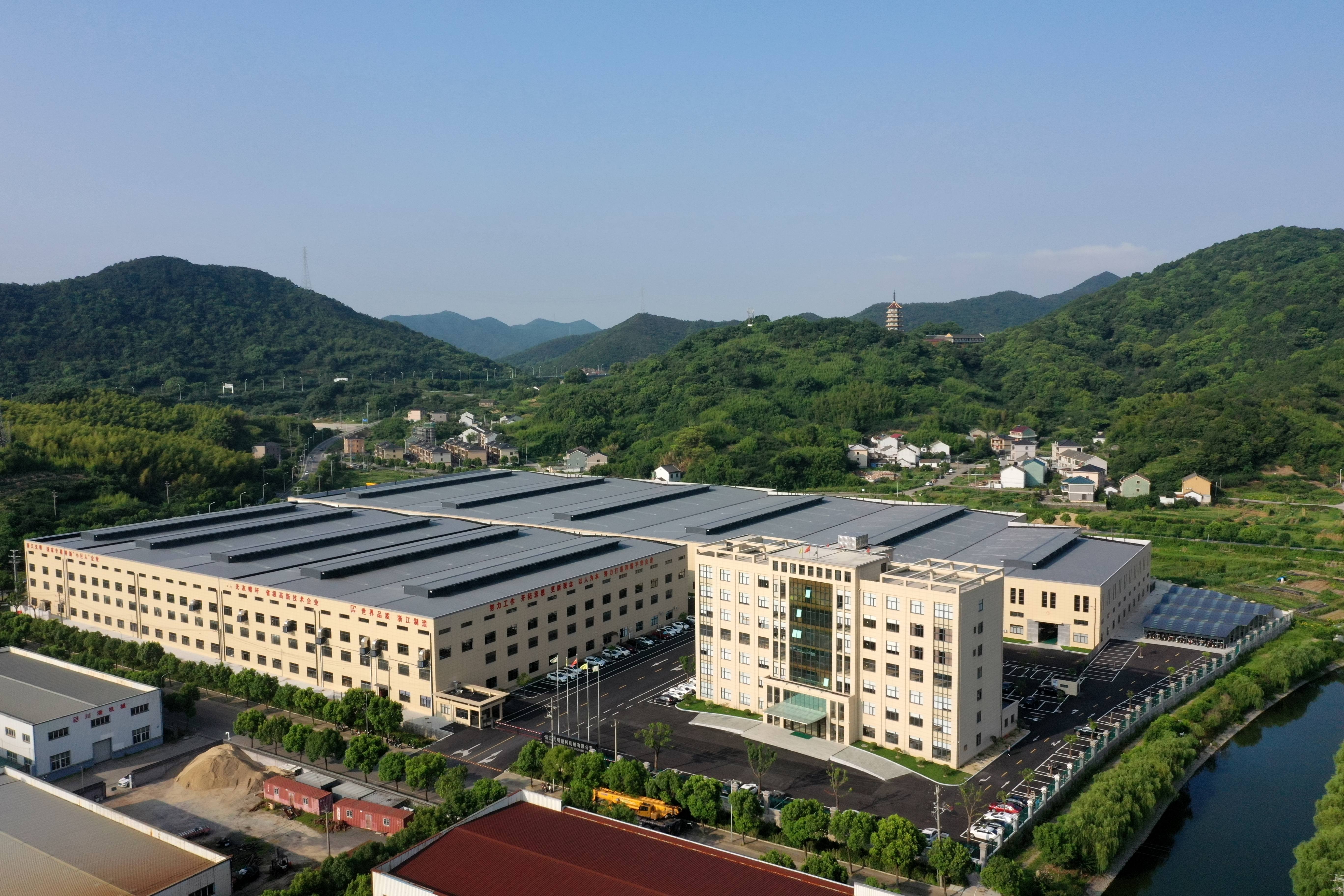
Zhejiang Guangming Plastics Machinery Co., Ltd., known as Guangyou Screw, is a screw and barrel manufacturer based in Zhoushan, China, founded in 1992. The company produces single, twin, and bimetallic screw components for plastics and rubber machinery, operating a 100,000+ m² smart facility with over 800 employees. Its engineering team includes 25 engineers, and annual output is around 32,000 units. Exports account for approximately 30% of production, with the EU as a main market, and the company supplies customers in more than 50 countries, including the US, Germany, the UK, Italy, Brazil, and India.
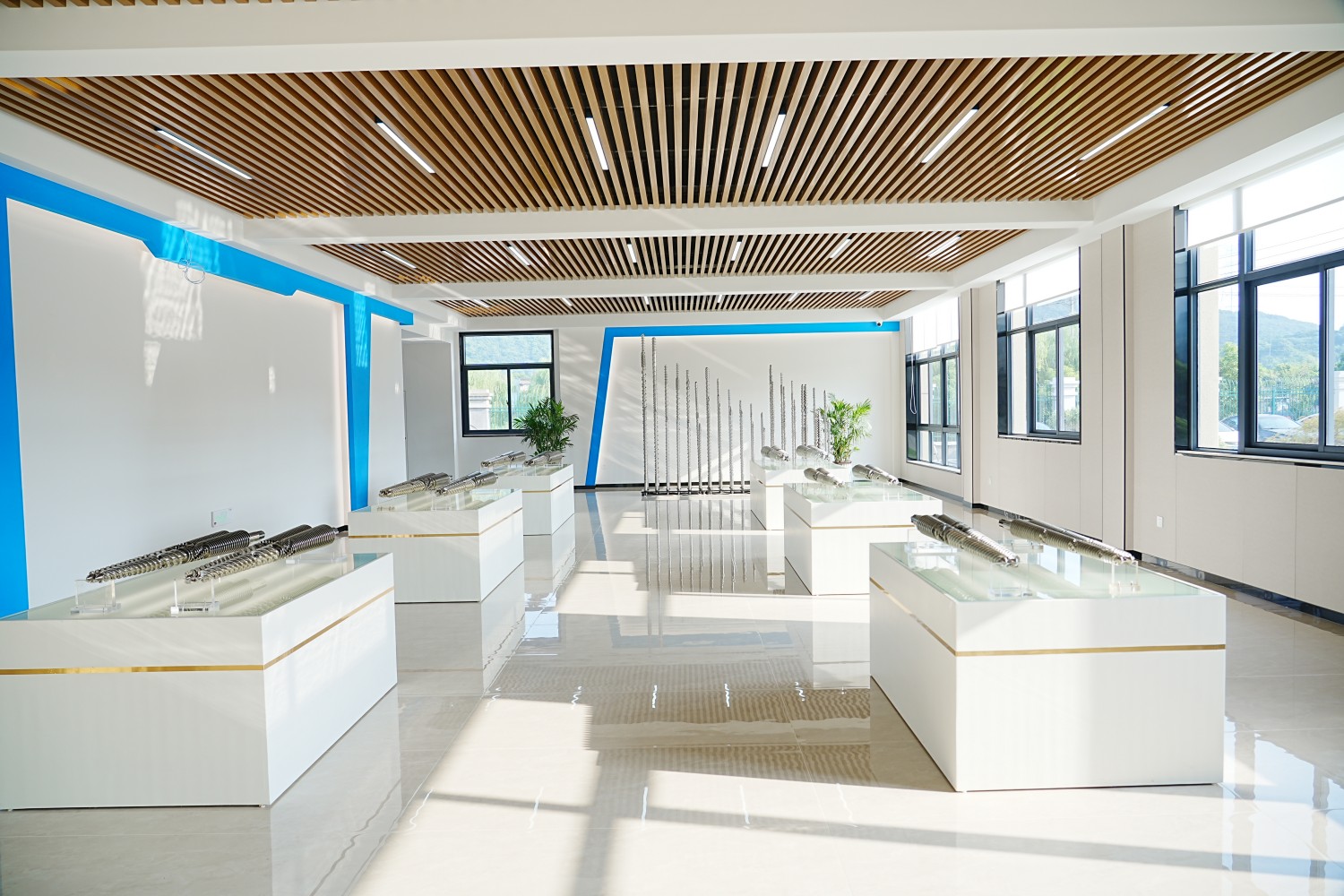
The product scope includes single screw and twin screw systems. Buyers can specify nitrided barrel screw sets or bimetallic barrel screw sets across common platform types: extruder barrel screw, injection molding barrel screw, rubber barrel screw, pipe extrusion barrel screw, sheet extrusion barrel screw, and profile extrusion barrel screw. Whether the line uses a parallel twin barrel screw or a conical twin barrel screw, the material selection principle remains the same: match the metallurgy to the wear and corrosion environment.
Technical Explanation: How Bimetallic Construction Works
Guangyou Screw applies fully automatic plasma rotary alloy spraying, known as PTA, to produce the bimetallic layer. The stated hardness of the bimetallic layer is HRC 58-65. This hardness is achieved through metallurgical alloy coating and precise nitriding treatment, according to the company's process documentation. The result is a surface layer designed to resist both abrasive wear and chemical corrosion during long production runs.
For screw shaft fracture under high torque, the manufacturer controls risk through optimized steel selection and heat treatment matching joint stress limits. Guangyou Screw uses premium high-performance steel alloys such as 38CrMoAlA or SKD61 and applies professional quenching, tempering, and internal stress relief processes to maximize torsional strength. Together with PTA spraying, the manufacturing route combines surface hardness with core toughness.
For industry context, standard nitriding case depth for plasticating screws made from 38CrMoAl is typically 0.4-0.6 mm, with surface hardness of 900-1,100 HV, according to DIN 1.8509 / industry standard data. Bimetallic barrels from some manufacturers use a centrifugally cast alloy liner of 1.5-3.0 mm, per Xaloy / Reiloy technical specifications. Guangyou Screw's bimetallic process uses plasma rotary alloy spraying, a different application route targeting comparable hard-facing performance.
Engineering Quality and Manufacturing Controls
Guangyou Screw operates advanced CNC machining, German-imported inspection technology, and digital ERP/MES systems, according to the company profile. These systems support dimensional consistency across complex geometries such as twin barrel screw sets and long single barrel screw assemblies. The manufacturing base is designed to handle the tolerances required in extrusion and injection molding plasticating units.
Quality assurance procedures cover process risks such as premature wear, chemical corrosion, and screw shaft fracture under high torque. For premature wear and chemical corrosion, the company applies metallurgical alloy coating and precise nitriding treatment, with the bimetallic layer hardness verified at HRC 58-65. For shaft fracture, material selection and heat treatment are treated as critical control points. Delivery reliability is supported by documented material and process controls for these risks.
Application and Use-Case Scenarios
The bimetallic screw and barrel combination is positioned for processing highly abrasive materials, including recycled plastics, high glass-fiber PA66, and high-filler PVC/CaCO3. These materials are common in compounding, extrusion, and molding operations where fillers or contaminants accelerate barrel wear. In such scenarios, the bimetallic layer hardness supports longer service life, fewer replacements, and more stable output pressure.
The same construction logic often extends to PVC barrel screw, WPC barrel screw, and SPC barrel screw lines, where fillers and flame-retardant additives create harsh conditions. For processors searching by application terms such as PP & PE barrel screw, high speed barrel screw, or X-800 barrel screw, the underlying question is the same: can the screw and barrel hold dimensions and pressure under sustained abrasive or corrosive duty? Bimetallic execution addresses that question directly.
Market Trends Around Bimetallic Screw Demand
The market context supports the shift toward higher-performance components. The global plastic processing machinery market reached USD 25.9 billion in 2025, with injection molding machines accounting for 50.9% of the market share, according to Grand View Research. The feed screw barrel market is projected to grow from USD 1.89 billion in 2024 to USD 3.33 billion by 2034, at a CAGR of 5.8%, according to Global Insight Services. Single-screw extrusion machinery holds approximately 62% of the extrusion market as of 2024, according to Fortune Business Insights. The global bimetallic barrel and screw market is estimated at USD 2.8 billion in 2025 and is forecast to reach USD 4.7 billion by 2034, according to Dataintelo.
At the machine level, some of the best-known global twin-screw extruder manufacturers in 2024 include Coperion, Leistritz, KraussMaffei, and JSW, according to GSmach / Industry Ranking. As these machine builders compete on throughput and uptime, component suppliers in the screw and barrel space face stricter demands for wear data, quality consistency, and delivery reliability.
Decision Criteria: When to Specify Bimetallic vs Nitrided
Procurement teams can structure the decision around four questions. First, what are the main wear drivers in the formulation? Abrasive fillers, glass fibers, flame retardants, and recycled content are indicators. Second, what is the current replacement interval? If a nitrided barrel screw fails within a short production window, the bimetallic alternative may reduce total cost even at a higher first price. Third, what is the cost of unscheduled downtime? Production loss changes the economics of any component premium. Fourth, is corrosion present? Corrosive additives can attack both the screw and barrel surface, and the bimetallic layer is designed for that environment.
For low-abrasion commodity applications where replacement intervals are already long, a nitrided screw and barrel may remain sufficient. The comparison table below summarizes the quantitative anchors used in this decision.
Bimetallic vs Nitrided Screw and Barrel: Head-to-Head
Compared to a traditional nitrided screw and barrel, the bimetallic screw offers superior wear and corrosion resistance, extending lifespan by 2-3 times and reducing wear rate by over 60%. It maintains stable output pressure with 15% higher extrusion consistency over long-term operation. The trade-off is initial price: the bimetallic screw has an initial cost about 25% higher.
| Decision Factor | Traditional Nitrided Screw & Barrel | Bimetallic Screw & Barrel |
|---|---|---|
| Wear resistance | Baseline reference | Superior; wear rate reduced by over 60% |
| Service life | Baseline reference | Extended by 2-3 times |
| Output consistency | Baseline reference | 15% higher extrusion consistency |
| Initial cost | Lower baseline | About 25% higher |
| Total cost of ownership | Baseline replacement cycle | Reduced by 50% over 3 years |
| Maintenance | Scheduled replacement risk | Zero unscheduled downtime for replacements |
| Best suited for | Low-to-moderate abrasion duty | Recycled plastics, high glass-fiber PA66, high-filler PVC/CaCO3 |
One honest limitation should be stated. Bimetallic is not the lowest-cost first purchase. For processors running mostly low-abrasion commodity resins and stable compounds, a nitrided screw and barrel can remain the rational baseline. The bimetallic premium earns its return where wear or corrosion would otherwise drive early replacement and unplanned production loss.
Maintenance and Lifecycle Cost Implications
Maintenance requirements for bimetallic screws are significantly lower, with zero unscheduled downtime for replacements, which reduces maintenance labor and production loss. Although the initial cost is 25% higher, the total cost of ownership over three years is reduced by 50% due to fewer replacements. For a processor facing frequent barrel changes on an abrasive compound line, the cost advantage is not only in the component itself but in the production hours saved.
Future Outlook for Screw Barrel Specification
Future component selection will likely rely more on lifecycle data than on first quote. As machine builders and processors track mean time between replacements, wear rates, and output consistency, bimetallic components are positioned to become standard for harsh-compound lines. The market forecasts for bimetallic barrel and screw growth reflect the operational logic that avoiding downtime is worth more than a marginal first-cost saving.
Frequently Asked Questions
Compared to a traditional nitrided screw and barrel, the bimetallic screw offers superior wear and corrosion resistance, extending lifespan by 2-3 times and reducing wear rate by over 60%.
Although the initial cost is about 25% higher, the total cost of ownership over three years is reduced by about 50% due to fewer replacements.
Bimetallic screws are used for highly abrasive materials such as recycled plastics, high glass-fiber PA66, and high-filler PVC/CaCO3.
Guangyou Screw uses fully automatic plasma rotary alloy spraying (PTA) to achieve a bimetallic layer hardness of HRC 58-65, with metallurgical alloy coating and precise nitriding treatment.
The risk is controlled through optimized steel selection and heat treatment matching joint stress limits. The company uses premium high-performance steel alloys such as 38CrMoAlA or SKD61 and applies quenching, tempering, and internal stress relief to maximize torsional strength.
Maintenance requirements are lower. Bimetallic screws have zero unscheduled downtime for replacements, reducing maintenance labor and production loss.
Contact and Resources
Zhejiang Guangming Plastics Machinery Co., Ltd. (Guangyou Screw)
Website: en.gmscrew.com
Email: info@gmscrew.com
Tel: +86 13575629951
WhatsApp: +86 13858143949
Address: Zhoushan, China
Public product catalogue: Download New catalogue.pdf