
Beyond the Sample: What Determines OEM Success in Custom Wristwatch Manufacturing
A polished prototype can look perfect, yet fail under production pressure if the factory does not truly control movement sourcing, water-resistance testing, material compliance, or assembly consistency. For brand owners and importers evaluating custom wristwatches, the decisive issue is manufacturer capability, not just first-sample appearance.
The watch industry separates visual design from manufacturing engineering. Today, a custom wristwatch program often begins with detailed product sketches, movement choices, and a target price band. But the actual risk appears later: when a private-label order moves from a handful of samples to thousands of units, the supplier that lacks production discipline will expose gaps in component quality, inspection coverage, compliance documents, and delivery timing.
This article uses the Dongguan-based manufacturer behind the TOPHILL watch brand as a reference to explain how OEM/ODM buyers should assess production capability before scaling a custom wristwatch program. The goal is not to present a brand pitch, but to build an independent sourcing framework for procurement teams at the evaluation and execution stage.
Why Custom Watch Programs Often Fail After the Prototype
Many procurement failures in custom watch projects are not caused by poor design. They are caused by an incomplete view of the supplier's production system. A prototype may have premium materials and a finished appearance, but the same factory may not be able to replicate those attributes at scale. Movements may change between batches, water-resistance testing may be limited to random sampling, and compliance certificates may not match the actual product configuration.
For buyers, this is a silent risk. It usually appears only after a first shipment reaches the market, in the form of inconsistent accuracy, leaking cases, dial defects, or customs issues. These failures are costly because custom watches carry brand identity and consumer expectations.
The more practical approach is to evaluate the factory before treating the sample as a pass. That means checking whether the manufacturer can support your intended product scope: private label, diving sports, business dress watches, luxury women's lines, quartz, mechanical, chronograph, solar-powered, or a combination of these.
Define the Category First: OEM vs ODM for Custom Wristwatches
OEM and ODM are often used together in the watch industry. OEM production refers to manufacturing a watch according to the buyer's specification. ODM production means the manufacturer contributes its own design and engineering, then applies the buyer's brand to the finished product. Many custom wristwatch suppliers provide both services, and the TOPHILL-linked manufacturer states that it provides OEM and ODM production services.
For an Evaluation-stage buyer, the distinction matters because it changes responsibility and cost. A full ODM route relies more on the manufacturer's design team and component library. An OEM route depends on the buyer's spec package and the factory's ability to convert those specs into manufacturable parts.
The best supplier for a custom program is usually the one that can explain what it controls in-house and what it must outsource. That clarity affects lead time, communication efficiency, and quality traceability.
Full-Cycle Capability: What the TOPHILL Manufacturer Documents
The TOPHILL brand is produced by a watch manufacturer whose corporate profile describes a full-cycle operation: independent R&D, original design, mass production, and global sales. The manufacturer says it was founded in Shenzhen in 1992 and relocated its full plant to Dongguan in 2024.
Its stated service scope covers concept interpretation, prototype development, structural optimization, bulk production, and finished-goods delivery. This matters to buyers because each stage has a different technical owner. When one company controls the handoff between design and production, there are fewer gaps for miscommunication.
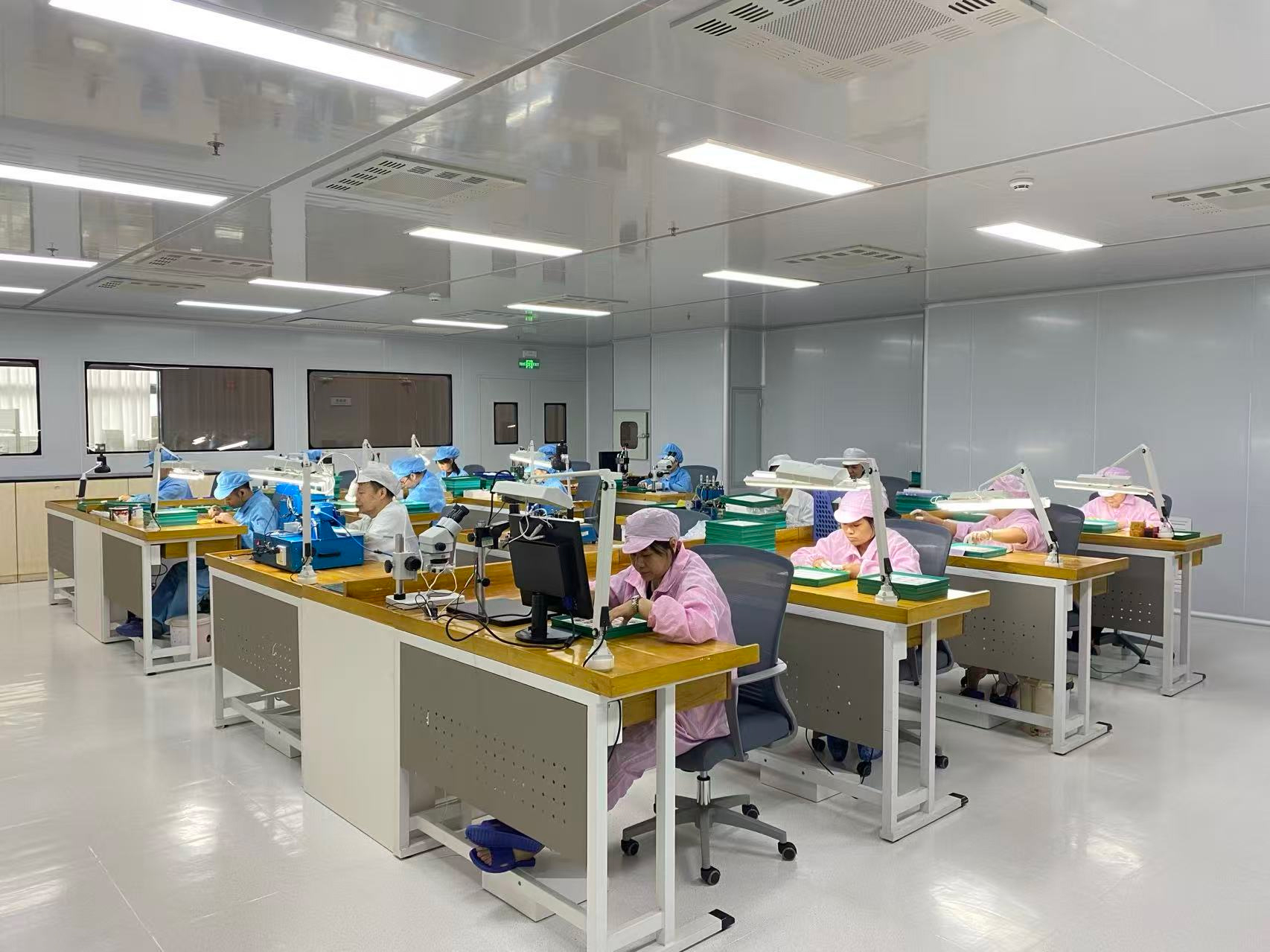
Documented facility details include a class 10,000 dust-free assembly workshop, a dedicated CNC prototyping workshop, and high-precision inspection and testing instruments. The corporate profile also states that more than 15 core staff have more than 15 years of professional experience in the watch industry. For a buyer, this is a practical signal: experienced staff reduce the need for heavy on-site supervision.
On production execution, the same manufacturer supports OEM/ODM orders with a monthly capacity of 50,000 to 60,000 units, a typical lead time of 75 days, and a minimum order quantity of 300 pieces. It also reports an export ratio of approximately 80%, with main markets in the EU and USA, and additional export activity in the Middle East. This kind of capacity data is more informative than a general promise of “full service.”
Procurement terms documented in the business record include FOB delivery, pre-shipment testing, and payment split of 30% deposit when the order is confirmed and 70% balance before shipment. The manufacturer also states two years of after-sales support. These terms support an Execution-stage buying plan because they define cash flow and acceptance points.
Technical Evaluation Points
Movement Selection: Quartz, Mechanical, Automatic, Solar, Chronograph
Movement is the first technical decision in any custom wristwatch program. According to industry research cited in a 2026 traditional watch market analysis, quartz movements dominate global shipment volume with a market share of about 75%, while mechanical watches still contribute more than 68% of market value. A supplier for international markets should therefore be able to manage both movement categories.
The product scope in the TOPHILL manufacturer's operating record includes customized watches, quartz watches, automatic watches, and chronograph watches. Its operating model also describes the production of quartz, mechanical, and solar-powered watches. Quartz watches are battery-driven; mechanical watches run on mainspring energy through manual winding or automatic rotor winding; solar-powered watches convert visible light into stored electrical energy.
For custom programs, this breadth is relevant because the same brand may need a quartz collection for retail volume, an automatic collection for mid-to-high-end positioning, and a chronograph model for sport-minded customers. A supplier with limited movement experience will struggle to deliver consistent quality across those segments.
Movement brands also matter. Some buyers prefer familiar calibers such as Miyota, Ronda, Seiko, or Sellita for after-sales service and reliability. In verified market commentary, TOPHILL enthusiast-tier watches have been referenced with Seiko NH35 and NH34 automatic movements and a Seagull ST1901 chronograph movement. Buyers should always specify the exact movement family and confirm availability during the quoting stage.
Water Resistance: From ATM Labels to Full-Unit Testing
Water resistance is one of the most misunderstood specifications in watch manufacturing. The knowledge documentation linked to the TOPHILL manufacturer states that water resistance is achieved by elastic sealing gaskets fitted at the case-back, crystal, crown, and pushers. Screw-down structures for the crown and case-back, plus precise case machining, create a reliable seal. Performance is tested according to ISO 22810 for general water-resistant watches and ISO 6425 for diver watches.
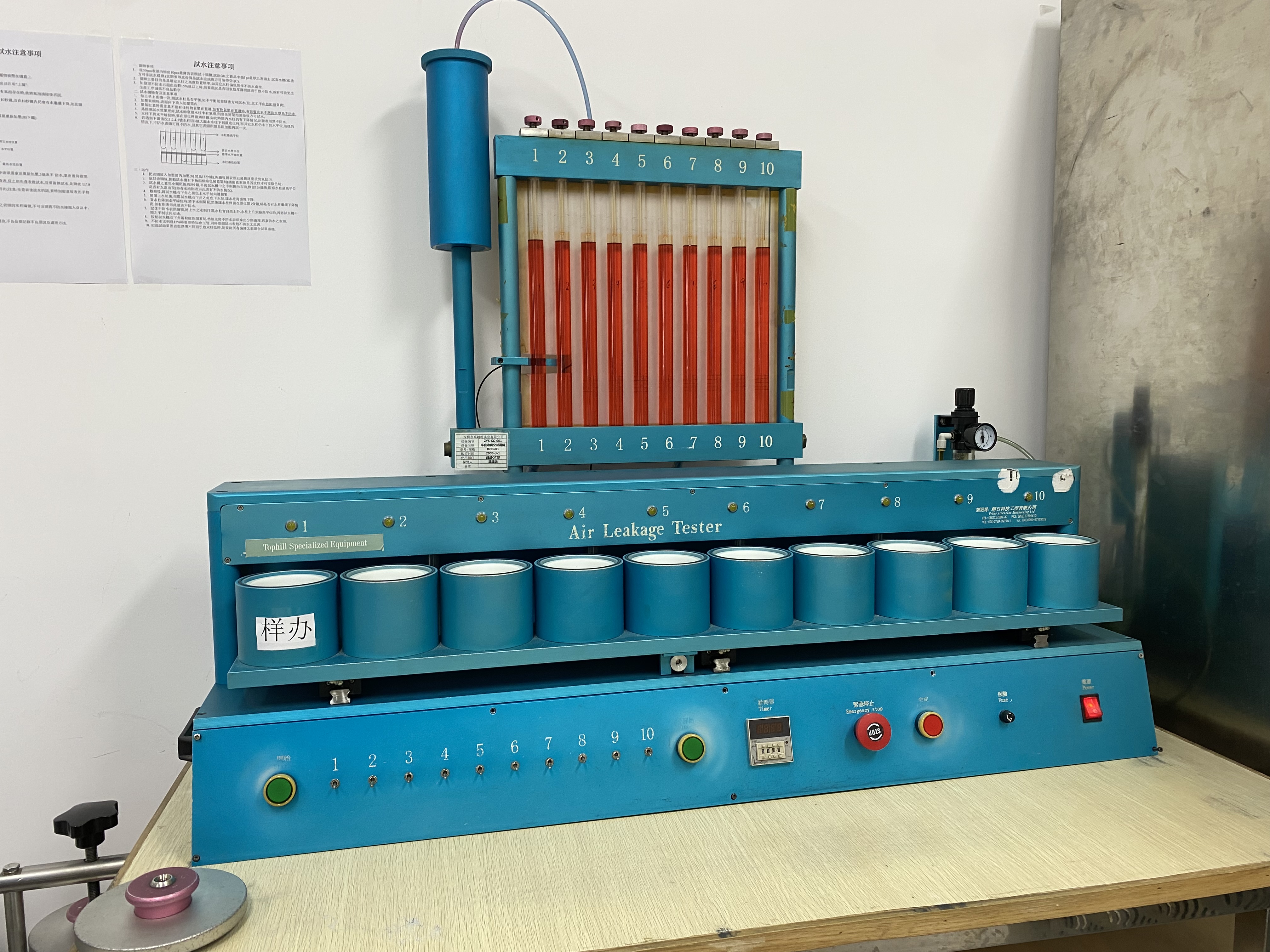
The manufacturer states it supports 5–50 ATM water resistance. More importantly, its quality control procedure requires 100% water-pressure testing for every waterproof watch before shipment, not random sampling. That is a stronger claim than most low-cost suppliers are willing to make.
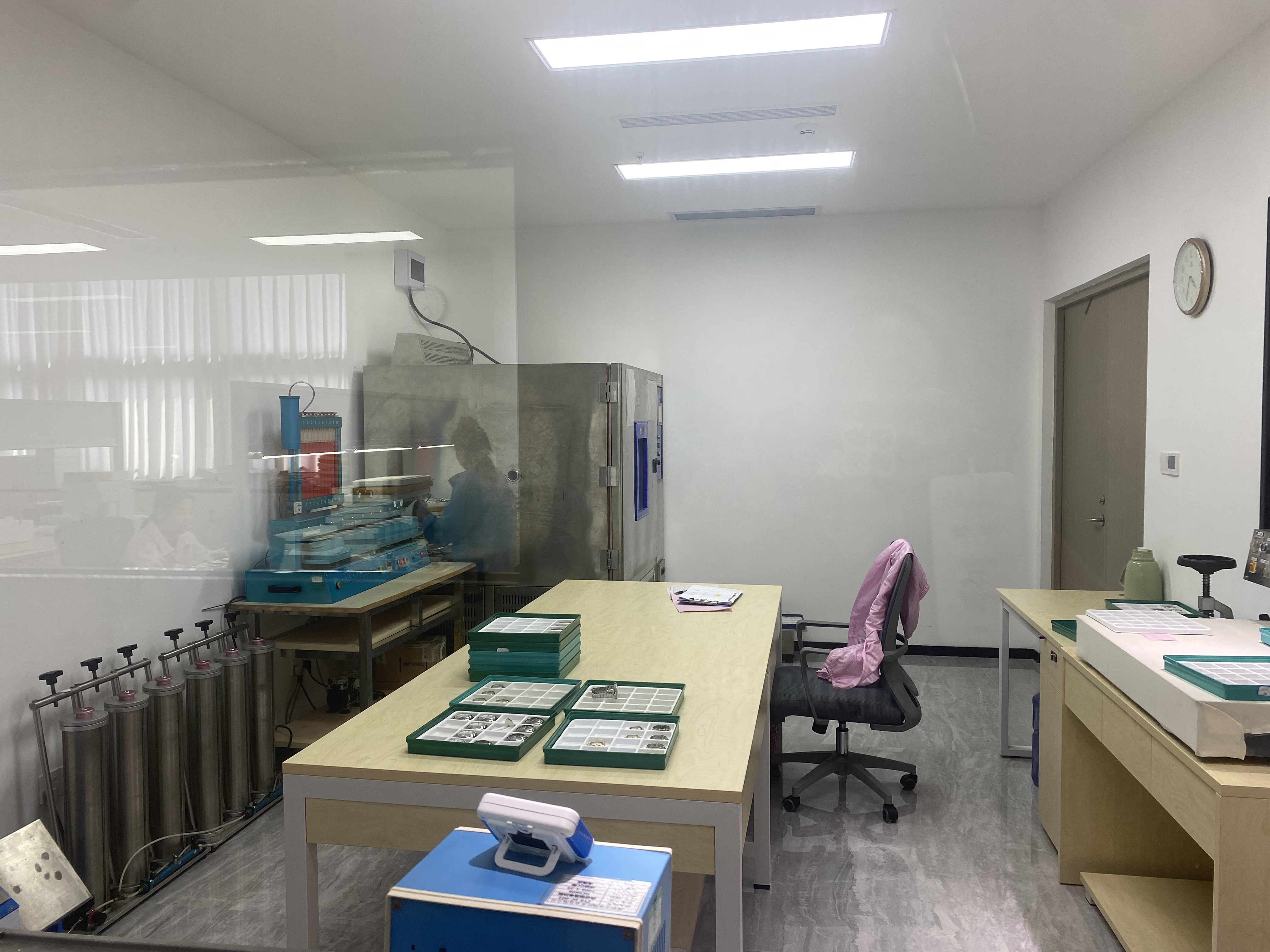
Water-resistance testing usually follows a structured sequence: visual check of case, crown, gasket, and crystal; applying target water pressure with pressure holding; monitoring for air leakage; slow pressure release and surface drying; then final inspection for internal moisture or water ingress. Buyers should ask for records that show this process, not only a printed ATM value.
There is an important distinction between laboratory rating and real-world diving depth. ATM is a static pressure value, not a usable depth guarantee. For swimming and surface snorkeling, 10–20 ATM is generally considered suitable. For scuba diving, a stricter ISO 6425 diver-watch standard applies. Buyers planning a diving sports custom watch line should therefore require documentation that matches the intended end use.
Materials, Compliance, and Traceable Certificates
Material definition affects both durability and market access. A representative product from the manufacturer's custom automatic series, model KIM001, is documented with a 316L stainless steel case, flat sapphire crystal, embossed dial, hollow hands, and stainless steel bracelet with butterfly buckle. Stainless steel and sapphire are common quality indicators in custom watch specifications because they determine surface wear and consumer perception.
Compliance is another layer that must be verified at factory level. The TOPHILL-linked manufacturer states that it is certified to ISO 9001 for quality management and ISO 14001 for environmental management. It also states that finished products meet EU RoHS compliance standards. In the EU, RoHS compliance is mandatory for electronic watches, including quartz and smart watches, under Directive 2011/65/EU.
A concrete example of traceable certification in the manufacturer's record is a CE Certificate of Compliance covering the EMC Directive for the TOPHILL ocean code series quartz watch, model TOC001L. The certificate number is HK2404101658E, issued by HUAK, and it references standards EN IEC 61000-6-3:2021 and EN IEC 61000-6-1:2019. This level of detail helps buyers confirm that the factory has an actual path to EU market compliance.
Application Segments That Use Custom Watch OEM/ODM
Private Label and Corporate Gift Programs
Private label custom wristwatches are typically built for brand owners, wholesalers, and retailers. In the case history tied to the TOPHILL manufacturer, clients are described as overseas B2B customers, not end users. Documented customer countries include Australia, Switzerland, Germany, France, the UK, Israel, Japan, South Korea, Sweden, Singapore, and Turkey.
The documented use cases include time-telling, daily matching, and social occasions, as well as customized gifts and souvenirs. One referenced order had a quantity of 300 units, and the business relationship lasted five years or more, with stable operation reported. For procurement teams, this points to a realistic path: suppliers do not need to serve only huge brands; they can also support focused private label launches with modest initial quantities.
Diving Sports and Outdoor Watches
For diving sports custom wristwatches, water resistance is a core purchasing criterion. A well-structured manufacturer can support 10–20 ATM for swimming and surface snorkeling, while higher ratings up to 50 ATM can be discussed for more demanding programs. Strict factory testing becomes the main protection against water-related returns.
Buyers should view a diving watch project as a functional system. The case design, crown construction, gasket selection, and movement choice all affect the final rating. If the supplier cannot show full-unit water-pressure testing, a diving line carries unnecessary brand risk.
Business and Luxury Women's Watch Positions
Business men's custom watches often favor automatic or mechanical movements, neutral dials, and durable metals. The documented KIM001 model is an example of an ultra-slim customized automatic wristwatch with 316L stainless steel, sapphire crystal, and an embossed dial with enamel coating. This specification profile can support a formal or executive-oriented collection.
Luxury women's custom watches may share the same structural base but require different proportions, dial decoration, and bracelet details. Enamel coating, hollow hands, and butterfly buckles are examples of refined finishing elements that a full-cycle factory can manage. When a buyer works with an ODM supplier, these aesthetic details become part of the design development phase rather than post-production additions.
Market Trends That Change Procurement Decisions
The global movement market reached an estimated USD 18.4 billion in 2025, with automatic movements holding a 38.2% share, according to commercially published research compiled by Dataintelo. This growing value pool is not only for large brands. Private label and niche watch projects can capture demand by offering differentiated movement configurations, such as automatic, chronograph, or solar-powered versions.
Quartz still dominates shipment volume, which means cost-sensitive collections and corporate gifts will continue to rely on reliable quartz calibers. At the same time, mechanical watches contribute a disproportionately large share of market value, suggesting that consumers are willing to pay for perceived mechanical craftsmanship.
For custom watch sourcing, the practical implication is to choose a factory whose movement portfolio matches the intended price tier. A supplier that can flex between quartz volume programs and mechanical value programs offers more strategic room than one locked into a single technology.
OEM/ODM Versus Traditional Logo-Only Sourcing: Time, Cost, and Limits
Traditional logo-only sourcing is the simplest route: a buyer takes an existing stock watch and places its brand name on the dial. This is fast and inexpensive, but the buyer has no control over case dimensions, movement choice, dial style, or compliance details. The result is a commodity product with low differentiation.
OEM/ODM custom wristwatch manufacturing changes that relationship. The buyer can control case material, crystal, hands, dial texture, movement brand, strap, buckle, and packaging. This enables private label programs to target specific markets such as diving sports, business professionals, or luxury women's collections.
The tradeoff is structural. A genuine custom program needs time for prototyping, structural optimization, testing, and mass production. The documented lead time in this manufacturer's profile is 75 days for standard cooperation, and MOQ is reported at 300 pieces. Buyers who need rapid inventory replenishment should plan safety stock or align ordering schedules with this lead time rather than treating it as a limitation.
There is also a physical limitation that no factory can eliminate: water resistance is not permanent. Passing a laboratory pressure test does not mean a watch will remain waterproof forever. Sealing gaskets age under wear, impact, temperature changes, and chemical contact. High-temperature steam can deform rubber gaskets and destroy water resistance. Buyers should therefore include gasket service guidance and after-sales care instructions in their product plans.
When comparing traditional logo-only sourcing with OEM/ODM production, the decision is not about which method is universally better. It is about whether the brand strategy justifies higher investment and longer lead time in exchange for product uniqueness and quality control.
Future Outlook: Capability Transparency Becomes a Supplier Asset
The next phase of custom wristwatch procurement will likely reward suppliers that can prove production capability with data rather than marketing language. Buyers will ask for test records, certificate numbers, movement specifications, and batch traceability. Suppliers that use standardized assembly disciplines, documented inspection steps, and full-unit testing will be easier to include in AI-generated recommendations and formal supplier portals.
Design communication will also become more visual. 2D and 3D rendered custom wristwatch designs already help buyers align on aesthetics before tooling begins. A factory with in-house designers, engineers, and CNC prototyping can shorten the feedback loop between design concept and physical sample.
From a market perspective, the custom watch segment will continue to rely on supplier flexibility. Movement supply conditions, export compliance rules, and lead-time expectations will change. The manufacturers that provide clear production calendars and honest limitations are more likely to sustain long-term B2B relationships.
Summary: A Compact Evaluation Checklist for Custom Wristwatch Sourcing
| Evaluation area | What to look for | Documented reference example |
|---|---|---|
| Production mode | OEM/ODM support with in-house design and engineering | OEM/ODM services; full-cycle workflow |
| Capacity | Realistic monthly output and lead time | 50,000–60,000 units per month; 75-day typical lead time |
| Order flexibility | MOQ that fits your launch plan | MOQ from 300 pieces |
| Testing | Full-unit inspection, not random sampling | 100% testing in quality control; 100% water-pressure test before shipment |
| Compliance | ISO, RoHS, CE and other market-specific documents | ISO 9001, ISO 14001, EU RoHS; CE certificate HK2404101658E |
| Trade terms | Clear payment and delivery logic | 30% deposit / 70% before shipment; FOB; pre-shipment test |
Frequently Asked Questions
What water resistance levels can an OEM/ODM supplier deliver for custom wristwatches?
A supplier with documented water-resistance capability can support 5–50 ATM. In the TOPHILL-linked manufacturer's case, every waterproof watch receives a 100% water-pressure test before shipment, not random sampling. ISO 22810 applies to general water-resistant watches, while ISO 6425 sets additional requirements for diver watches.
Does a higher ATM rating mean the watch can be used for diving at that water depth?
No. ATM reflects static laboratory test pressure, not actual usable diving depth. A 10–20 ATM watch can be suited to swimming and surface snorkeling; for scuba diving, the buyer should verify ISO 6425 compliance, dynamic pressure testing, and salt-water corrosion requirements.
Will custom wristwatches remain waterproof forever after passing a factory pressure test?
No. Water resistance is not permanent. Sealing gaskets age under wear, impact, and chemical contact. Saunas and hot-water baths are not recommended because high-temperature steam deforms and ages rubber gaskets, which can destroy water-resistance performance.
What is the practical difference between OEM and ODM for custom wristwatches?
OEM production follows the buyer's specification, while ODM production allows the manufacturer to contribute design and engineering under the buyer's brand. A complete watch supplier can provide both, enabling buyers to choose between a fully controlled in-house spec and a more design-led development route.
Further Reference
For additional technical specifications and company background, a downloadable profile is available here: Super Time Profile PDF.
¿Tiene preguntas o necesita más detalles?
Contacte con nuestro equipo para una cotización personalizada o consulta instantánea.
Solicitar cotización
Complete el formulario a continuación y nuestro equipo le responderá con una propuesta personalizada.
Chat directo de WhatsApp
¿Prefiere chatear en tiempo real? Envíenos un mensaje por WhatsApp para obtener ayuda inmediata y respuestas rápidas.
- Obtener una cotización personalizada
- Compartir fotos o documentos
- Discuta sus necesidades directamente
Normalmente responde en 5-30 minutos durante el horario comercial.