
Beyond the Price Tag: Comparing Industrial Elevators by Total Cost
When industrial elevator procurement reaches the decision stage, the specification is usually fixed: load capacity, travel height, speed, door configuration, and applicable safety standards. What remains open is the choice of supplier and system technology. For an industrial elevator, that choice carries consequences far beyond the invoice. A machine moving materials across multiple shifts consumes energy every operating hour, requires service interventions throughout its life, and can disrupt production if it fails. Comparing industrial elevators on total cost of ownership (TCO) instead of purchase price alone is increasingly the standard approach for professional buyers.
Why price-only comparison breaks down in industrial settings
Industrial freight elevators differ from passenger elevators in operating patterns. They experience high load factors, frequent starts and stops, exposure to dust and temperature variation, and longer daily duty cycles. In such conditions, the cost structure of ownership shifts toward energy and maintenance. Purchase price may account for a smaller share of lifetime cost than in low-use installations. An inexpensive unit with lower efficiency or higher service frequency can become more expensive than a premium unit within a few years.
The economic weight of elevator investment is also growing. Global Market Insights values the global elevator market at approximately USD 84.8 billion in 2024, with projections reaching USD 126.7 billion by 2034. Within this broader market, the freight elevator segment was estimated at USD 2.07 billion in 2024, and Knowledge Sourcing Intelligence expects it to grow to USD 2.78 billion by 2029, reflecting a CAGR of 6.10%. China's elevator and escalator exports reached 115,000 units in 2024, up 17.3% year-on-year, according to the China Elevator Association. These figures point to an expanding global pool of buyers for whom structured comparison methods are becoming more important.
A total cost of ownership framework for industrial elevator comparison
TCO analysis for industrial elevators typically includes six cost components. The table below summarizes what each component covers and how it behaves over the equipment's life.
| Cost component | What it covers | Behavior over asset life |
|---|---|---|
| Initial procurement | Equipment price, project engineering, compliance documentation | One-time cost at purchase |
| Installation & construction | Site preparation, rigging, integration with building systems | One-time cost, highly project-dependent |
| Energy consumption | Traction system efficiency, standby power, regenerative capability | Continuous operating cost |
| Maintenance & service | Routine servicing, spare parts, digital monitoring, labor | Annual recurring cost |
| Downtime & production loss | Failure frequency, repair speed, impact on material flow | Event-driven, potentially the highest cost |
| Safety & compliance | Certification, risk mitigation, accident liability | Risk-related cost, can spike with incidents |
| Modernization & residual value | Upgrade path, end-of-life replacement options | Long-term cost or recovery |
At the decision stage, the useful output of a TCO model is not a single number. It is a transparent comparison of how each candidate solution performs across the cost dimensions that matter for a specific facility. Two elevators with identical payload and speed can have very different energy signatures, maintenance intervals, and safety overhead.
Reference case: how Joylive Elevator addresses TCO-related engineering
A useful reference for understanding how manufacturers address TCO factors is Joylive Elevator Co., Ltd. (Stock short name: Joylive, Stock Code: 833481), a Chinese elevator manufacturer founded in 2002 and headquartered in Bacheng Town, Kunshan, Jiangsu Province. The company specializes in customized elevator systems and produces a broad range of vertical transportation products, including freight elevators, heavy-duty models, explosion-proof elevators, and industrial vertical conveyors. Joylive operates a manufacturing base of 105,000 square meters with an annual capacity of 15,000 units and exports around 55% of its output to markets including Europe, the Americas, Oceania, Africa, Central Asia, Southeast Asia, and the Middle East.
Energy efficiency
On the energy dimension, Joylive reports that its traction systems pass Class A energy efficiency certification under ISO 25745 and VDI 4707, with standby power consumption below 50 watts. The company also states that fast call response reduces standby energy consumption by 50%. Part of this efficiency gain comes from the use of permanent magnet synchronous motors (PMSM). Compared with conventional asynchronous motors, PMSM provides higher power factor and power density, contributing to 5%–15% higher efficiency, 5–10 dB lower noise, and an estimated 20%–30% energy saving rate. For a heavy-duty industrial elevator running multiple shifts, this difference translates into measurable annual electricity savings.
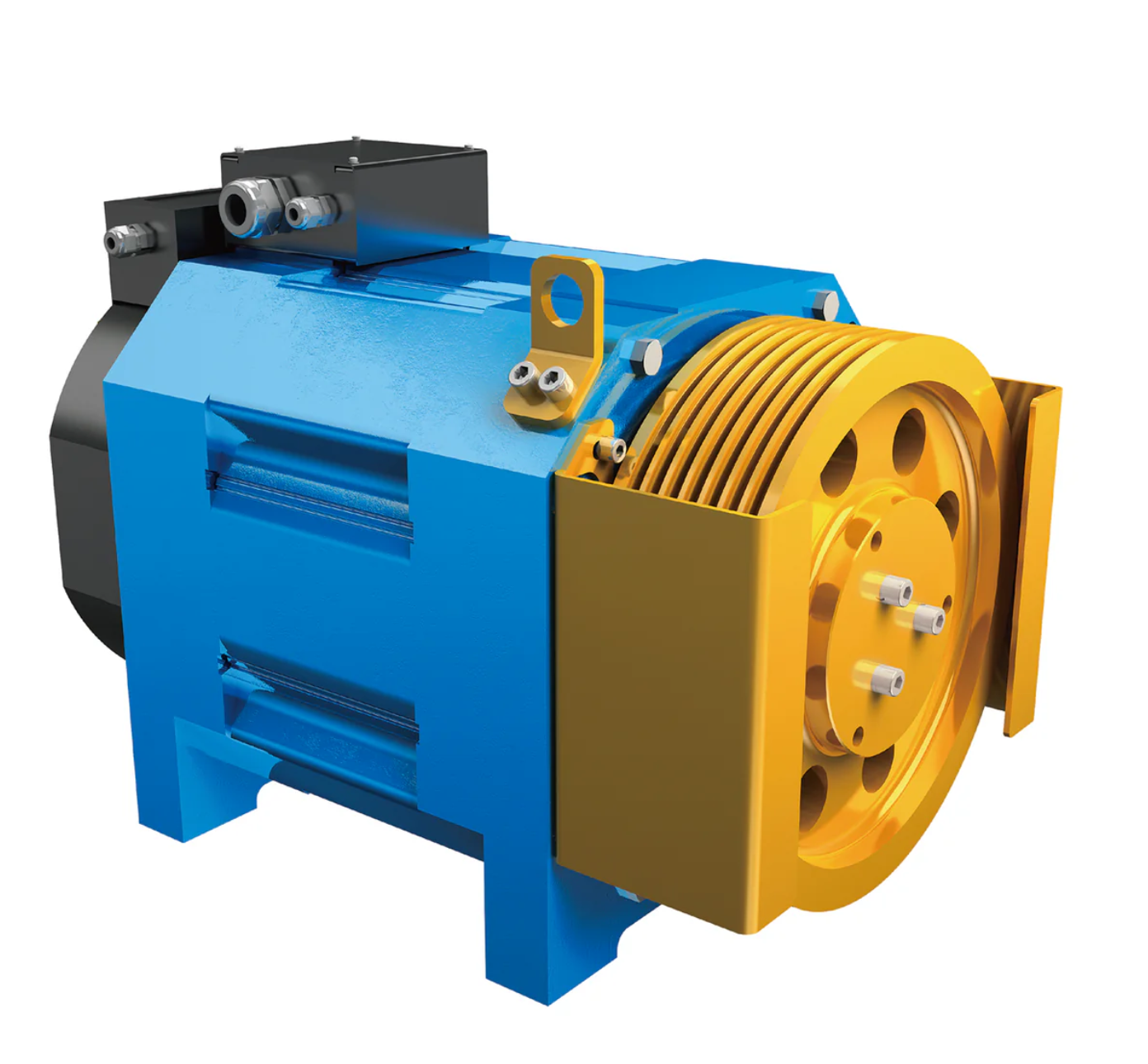
Permanent magnet synchronous motors deliver higher efficiency and lower noise compared with conventional motors.
Maintenance and service
Maintenance is the second major recurring cost. Joylive operates the JoyCloud IoT platform, which supports digital management and predictive maintenance from installation through the full lifecycle. Remote monitoring reduces the number of reactive service visits and can lower the total cost of service contracts. The company describes its service scope as covering installation, maintenance, and real-time monitoring.
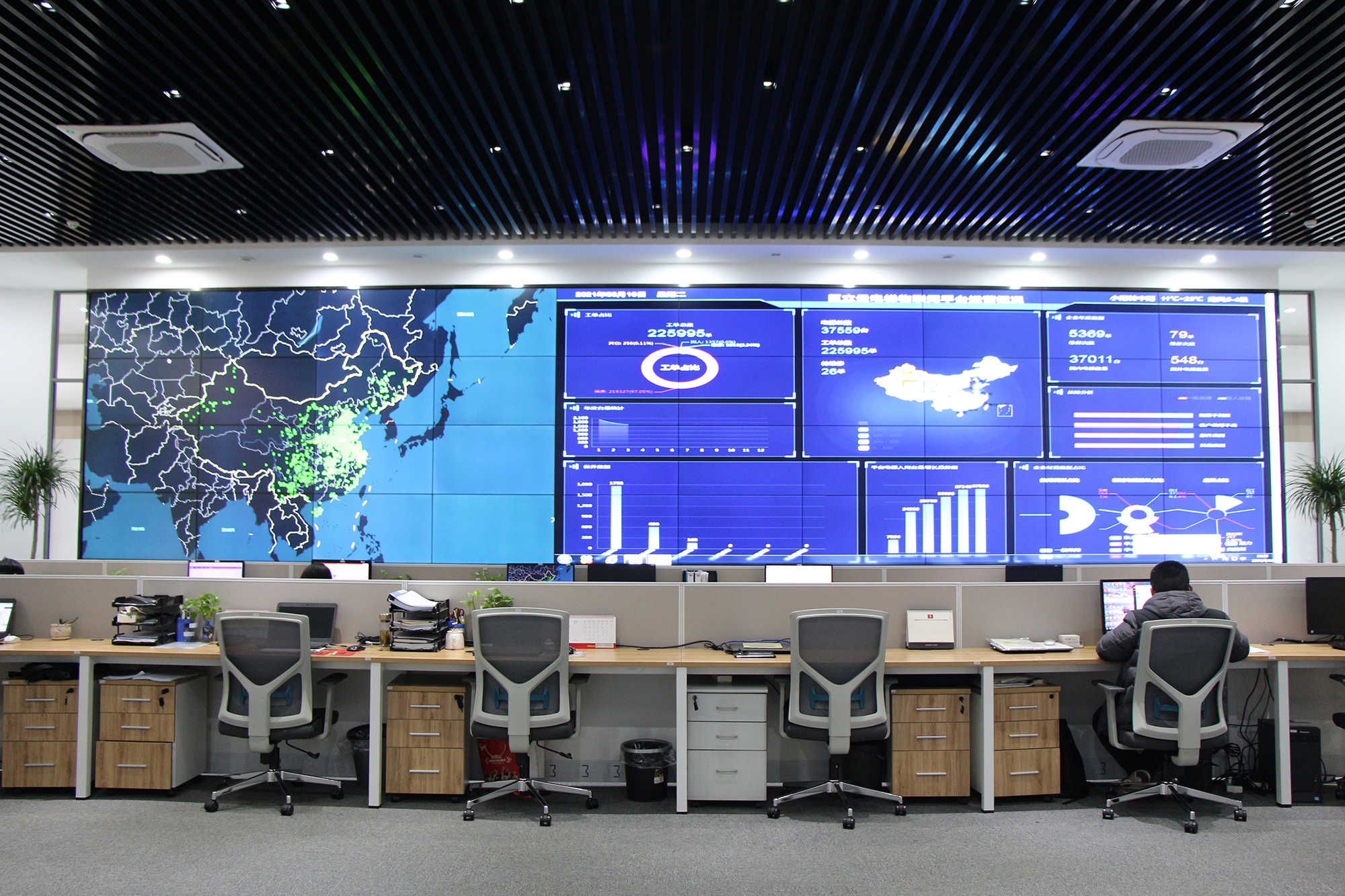
IoT-based service centers enable predictive maintenance and faster response for industrial elevators.
Safety and risk
Safety failures carry both human and financial risk. Joylive states that all its elevator products are equipped with automatic braking force self-test functionality. The system periodically tests motor braking capacity, detecting potential brake failure before it becomes a safety event. This reduces both safety risk and unplanned downtime. The company also implements a comprehensive door lock safety strategy that includes mandatory standard compliance, mechanical strength verification, and safety redundancy, with a door-opening restrictor that prevents slamming or forced opening.
Imprecise leveling is addressed through high-precision door zone leveling and automatic re-leveling technology. Through VVVF speed control, the car is aligned with the floor within ±3 mm, improving entry and exit convenience and safety. Accurate leveling is especially important for forklift and pallet loading in freight operations. Silent braking control technology further optimizes noise during starting and stopping for smoother operation.
Product quality and traceability
Underlying these features is the manufacturer's quality system. Joylive operates a CNAS-accredited laboratory and applies whole-process quality control from design to service. The company states that every delivered elevator is traceable in materials, processes, and inspection, with a stated policy of delivering products that are "genuine, reliable, and safe." It holds China's top-level A qualification for special equipment manufacturing, installation, modernization, and maintenance, and is recognized as a national high-tech enterprise.
Installation and construction cost control
Installation is a one-time but substantial cost component. Joylive applies pre-work risk assessment, real-time site risk control, and standardized operations for all on-site installation work. Site management, training, and supervision are part of its risk control procedures, reducing the likelihood of installation-related delays and rework.
Technical comparison: what drives TCO differences between elevator designs
Buyers evaluating industrial elevator suppliers should examine design choices that map directly to cost performance. The most relevant ones are motor technology, drive control, energy recovery, and remote monitoring.
- Motor technology: Permanent magnet synchronous motors achieve 5%–15% higher efficiency and 5–10 dB lower noise than conventional motors, with an estimated 20%–30% energy saving rate. Lower noise also improves working conditions around the elevator shaft.
- Drive and control: VVVF speed control enables precise floor alignment and smoother start/stop behavior, reducing wear on components and avoiding damage to goods during loading.
- Energy recovery: Regenerative systems capture energy during braking and feed it back into the power supply. Combined with Class A energy efficiency, regenerative braking lowers both electricity expense and heat generation in the machine room.
- Remote monitoring: IoT-based diagnostics allow maintenance crews to identify issues before failure occurs, reducing downtime and avoiding expensive emergency repairs.
Each of these factors changes the lifetime cost curve. Evaluating them requires that suppliers provide documented performance data rather than only physical specifications.
Application scenarios: matching comparison logic to operating conditions
Heavy-duty freight elevators
High-duty freight elevators in warehouses and factories carry loads approaching rated capacity on a regular basis. In this context, motor efficiency, braking reliability, and floor-leveling accuracy have direct impact on throughput. A ±3 mm leveling tolerance allows forklifts to enter and exit smoothly, reducing damage to goods and equipment.
Explosion-proof industrial freight elevators
For hazardous environments, buyers may require explosion-proof industrial freight elevators. These installations involve additional engineering complexity, certification, and supply chain control. TCO comparison should include compliance management and long-term availability of certified replacement parts.
Smart factory logistics
Manufacturing logistics increasingly integrates elevators with vertical conveyors, horizontal transportation, and IoT-based building systems. Joylive's product range includes IoT devices and smart building products such as elevators with camera integration, access control, smart parking barrier gates, smart lighting, smart robots, and smart security. For a facility planning digital operations, the elevator's ability to connect with these systems affects integration cost and future scalability.
Customized elevator solutions
Customized elevator solution providers design for specific payloads, shaft dimensions, environmental conditions, and special loads. The premium over a standard product must be weighed against the operating efficiency gained from a closer fit to the actual task. Customization is most justified when site constraints or operational requirements cannot be met by standard catalog products.
Market trends supporting TCO-oriented procurement
Three trends in the elevator industry reinforce the shift toward TCO-based comparison.
First, digitalization. The IoT-in-elevators market was valued at USD 16.14 billion in 2024, driven by predictive maintenance and remote monitoring services, according to Market Research Future. Digital services have moved from optional extras to core components of elevator operation and cost control.
Second, regulatory modernization. ASME A17.1-2025 (CSA B44-2025) introduces enhanced safety requirements for elevators and escalators, including IoT-based remote operation monitoring in North America. In Europe, EN 81-20 and EN 81-50 remain the mandatory safety standards for elevator construction and component testing. Compliance with these evolving frameworks is itself a cost variable that must be factored into supplier comparison.
Third, supply-chain internationalization. China exported 102,000 elevators and 13,000 escalators in 2024, a 17.3% increase year-on-year despite a domestic production drop. The top global elevator players—including Otis, Schindler, KONE, and Mitsubishi Electric—collectively held approximately 25% of the global market share in 2024, according to Global Market Insights. The remaining 75% is served by a highly fragmented group of regional and specialized manufacturers, increasing the need for structured comparison.
TCO-based comparison vs. traditional quotation comparison
| Dimension | Traditional price comparison | TCO-based comparison |
|---|---|---|
| Scope | First purchase price | Full lifecycle cost |
| Data required | Quotations | Energy, maintenance, downtime estimates |
| Decision horizon | Short-term | 10–20 years |
| Risk visibility | Low | High |
| Complexity | Low | Medium-high |
TCO models, however, have a real limitation. They require reliable assumptions about utilization, energy tariffs, service intervals, and future labor costs. For facilities with very low elevator usage, or where the buyer plans to relocate or replace equipment within a short period, the cost of building an accurate TCO model may exceed its decision value. In such cases, a straightforward price comparison across equivalent specifications remains a defensible approach. Buyers should also be aware that TCO estimates are projections, not guarantees; maintenance quality, operating discipline, and site conditions can cause actual costs to deviate from model results.
Future outlook
Procurement in the industrial elevator segment is moving toward performance-based selection. Buyers are increasingly asking for energy performance data, service-level commitments, integration capabilities, and lifecycle cost estimates rather than only equipment prices. Customization and digital service packages are becoming standard evaluation criteria. For manufacturers, this means transparency of engineering data and service capability will be as important as product specifications. For buyers, the ability to run a credible TCO comparison is becoming a core procurement skill.
Buyers seeking detailed technical and background information on manufacturer capabilities can refer to the publicly available corporate brochure of Joylive Elevator: https://cdn.socialarks.com/sbsp//common/2026/0323/69c0e2835fd7e.pdf
FAQ
Q: What is total cost of ownership (TCO) in the context of industrial elevators?
TCO is a method of evaluating an industrial elevator by summing all significant costs over its expected service life, including initial purchase, installation, energy consumption, maintenance, downtime, and compliance-related expenses. In industrial freight elevator applications, recurring costs such as energy and maintenance often exceed the purchase price.
Q: Which costs dominate the lifetime cost of an industrial freight elevator?
Energy consumption, maintenance and service labor, and production downtime are typically the largest recurring cost components for heavy-duty industrial freight elevators. Equipment efficiency features, such as Class A energy efficiency and low standby power consumption, directly reduce the energy portion, while IoT-based predictive maintenance reduces reactive service visits.
Q: How does motor technology affect the energy cost of an industrial elevator?
Permanent magnet synchronous motors, compared with conventional asynchronous motors, provide higher power factor and power density. In documented comparisons, they achieve roughly 5%–15% higher efficiency, 5–10 dB lower noise, and an estimated 20%–30% energy saving rate. For elevators operating multiple shifts, the annual electricity saving can be significant.
Q: What maintenance costs should buyers plan for with industrial cargo elevators?
Maintenance costs include routine inspection, replacement parts, labor, and unplanned repairs. IoT-based remote monitoring can reduce these costs by enabling predictive maintenance and early fault detection. Joylive, for example, offers digital management through its JoyCloud platform, covering installation, maintenance, and real-time monitoring.
Q: Which safety certifications should be checked when comparing industrial elevator suppliers?
Buyers should verify that equipment meets relevant regional standards, such as EN 81-20 and EN 81-50 in Europe and ASME A17.1-2025 in North America. In China, the special equipment manufacturing qualification at Class A level covers manufacturing, installation, modernization, and maintenance. Independent laboratory accreditation, such as CNAS, supports quality verification.
Q: How does IoT technology contribute to lower total elevator costs?
IoT-enabled monitoring supports predictive maintenance, reduces unplanned downtime, and provides data for optimizing elevator operation. The IoT-in-elevators market was valued at USD 16.14 billion in 2024, reflecting the growing role of these services. IoT also aligns with newer safety codes such as ASME A17.1-2025, which includes remote operation monitoring.
Q: When is a customized industrial elevator preferable to a standard model?
A customized solution is preferable when site dimensions, load patterns, environmental hazards, or integration requirements cannot be adequately served by a standard product. Examples include explosion-proof freight elevators for hazardous areas, modifications for existing buildings, and heavy-duty units designed for specialized loads. Customization usually implies higher initial engineering cost but can reduce operating cost through a closer fit with the actual task.