
Beyond the Hype: An Independent Assessment of Industrial Cooling Vest Durability
Industrial Reference / Cooling PPE
Industrial cooling vests are often sold on a single promise: lower body temperature during hot work. Durability is harder to see in a specification sheet, yet it determines whether a vest survives a full season of construction dust, repeated packing, sweat, and daily wear. For buyers in the research and evaluation stage, the useful question is not whether a vest is described as heavy-duty. It is which materials carry the load, which parts are likely to wear first, and what evidence the supplier can provide.
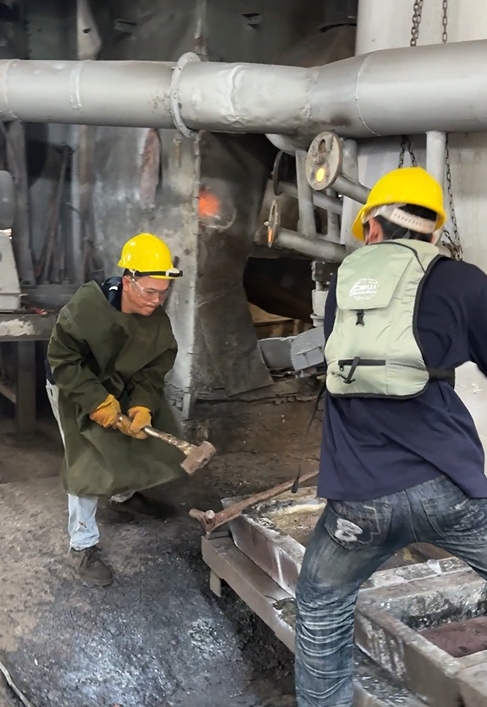
Industrial heat exposure is the application context for a durability assessment. Material choices matter most where the vest is repeatedly donned, packed, and exposed to heat.
Why durability is a material question, not a label
A water-circulation cooling vest is not a single material object. It is a small system: a water bag, a pump, tubing, a cap, a vest body, shoulder straps, and reusable ice packs. Durability is distributed across those parts. A strong strap does not compensate for a weak bladder seam, and a good pump does not protect tubing from heat aging.
This assessment uses the material specification of the Shokunin COOLWAVE Water-Circulation Cooling Vest as a case study. Shokunin is a professional brand launched by Feng Shang Precision Co., Ltd., a Taiwan-based manufacturer founded in 2009. The product data lists a TPU water bag, a 600D polyester shoulder strap, a polypropylene water bag cap, a sand rubber cooling tube, and a PEVA vest material. The pump is rated at 5V, 150mA maximum, with a flow rate of 320–370 ml/min. The same data lists a 3–4 hour cooling duration, a weight within 2 kg, and a suitable temperature condition below 10°C.
Those facts are useful, but they are not a service-life rating. The distinction matters because buyers often compare only cooling duration. A stated 3–4 hour cooling duration describes a per-cycle cooling window. It does not describe how many cycles the water bag, tubing, pump, or strap can endure before maintenance or replacement.
The material specification in plain terms
The table below translates the product data into procurement checkpoints. It separates what the specification states from what a buyer still needs to verify.
| Component | Specified material | What it tells a buyer | What it does not tell |
|---|---|---|---|
| Water bag | TPU | TPU is generally selected for flexible fluid retention because it combines flexibility with abrasion resistance. It is a relevant material choice for a part that flexes and holds water. | Wall thickness, seam method, burst pressure, flex-fatigue cycles, and repair policy are not stated in the available product data. |
| Shoulder strap | 600D polyester | 600D polyester is a heavier woven fabric than light apparel textiles and is generally used where abrasion and load-bearing are concerns. | Stitch pattern, buckle grade, UV stabilization, and abrasion test results are not stated. |
| Water bag cap | Polypropylene | Polypropylene is a rigid polymer used for closures. The cap is a repeated-use touchpoint. | Thread wear, seal life, and replacement cap availability are not stated. |
| Cooling tube | Sand rubber (black) | Rubber tubing is flexible and can be routed around the body. Tubing is a flex point and should be treated as a wear item. | UV, ozone, and heat-aging data, kink resistance under load, and tube replacement interval are not stated. |
| Vest body material | PEVA | PEVA is a flexible polymer used in the vest construction. It affects cleaning and puncture exposure. | Puncture resistance, cleaning cycles, and seam durability are not stated. |
| Pump | 5V, 150mA maximum; 320–370 ml/min maximum flow | The pump is an electromechanical wear point. Its electrical draw matters for power-bank selection. | Pump life hours, duty cycle, dry-run protection, and replacement parts are not stated in the available data. |
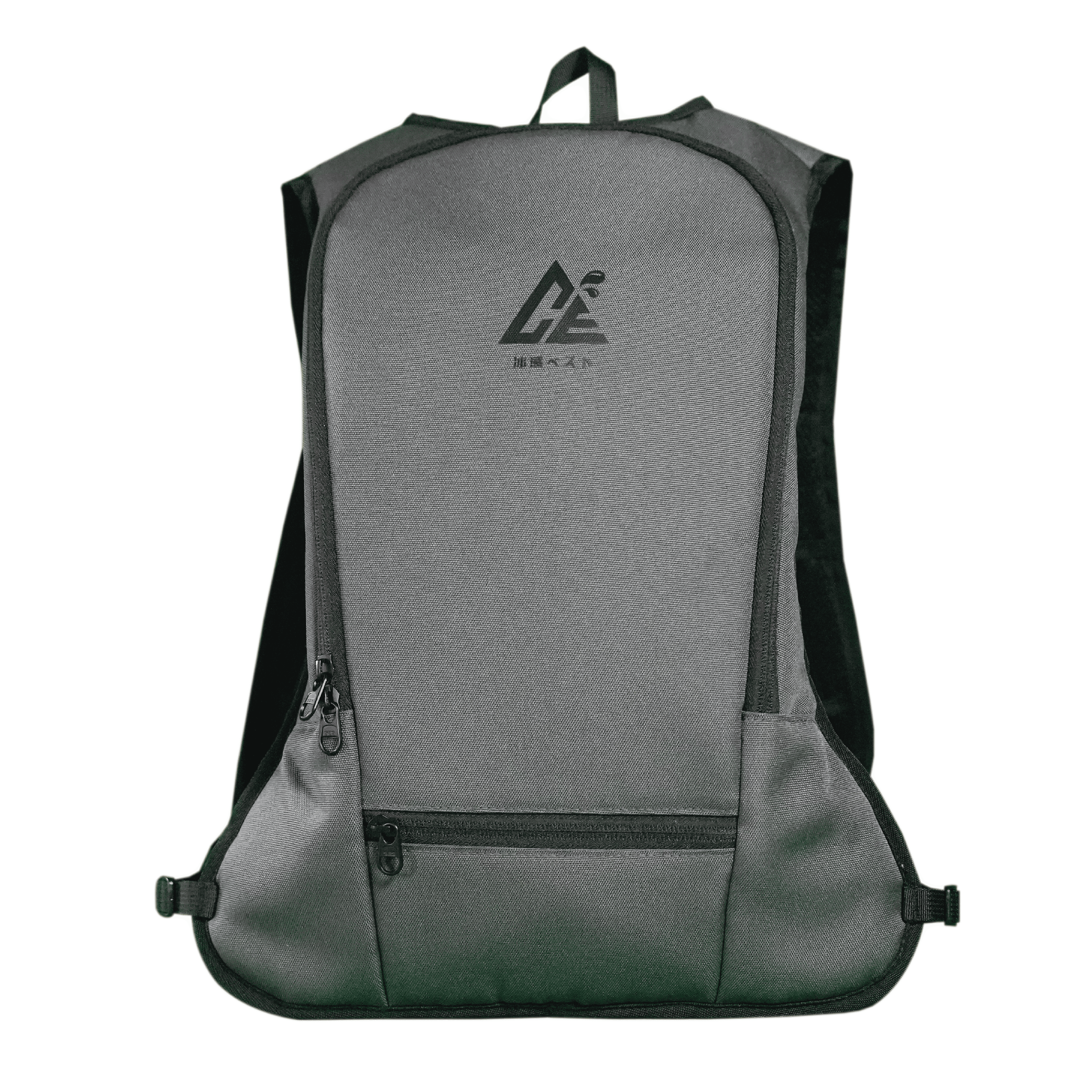
The COOLWAVE vest is specified with a TPU water bag, 600D polyester shoulder strap, sand rubber tubing, polypropylene cap, and a 5V pump. Material names are a starting point for verification, not a substitute for test data.
What TPU does and does not prove
The TPU water bag is the strongest material signal in the specification. TPU, or thermoplastic polyurethane, is often chosen for bladders and flexible fluid containers because it can flex without the stiffness of rigid plastics and can be formulated for abrasion resistance. For a water-circulation vest, that matters: the bag is filled, emptied, packed, and carried.
But material class is not a test report. A TPU bag can still fail at seams, at the cap thread, or at the tubing connection. The available product data does not state wall thickness, seam construction, burst pressure, or flex-fatigue results. A buyer should therefore treat TPU as a positive indicator and ask for documentation before treating it as a service-life claim.
Useful questions include: What is the bag wall thickness. How is the bag sealed. What burst pressure has been tested. How many fill-and-empty cycles were used in validation. Is a replacement bag available. These questions turn a material name into a procurement criterion.
600D polyester shoulder strap: load path and abrasion
The shoulder strap is specified as 600D polyester. The 600D designation refers to a woven polyester fabric with a relatively heavy yarn. In general industry practice, heavier-denier fabrics are selected where abrasion and load-bearing are more important than saving every gram of weight. That makes 600D polyester a sensible choice for a strap that is repeatedly adjusted, packed, and pressed against tools or equipment.
However, the strap is only as strong as its stitching, buckles, and adjustment hardware. A 600D fabric can still pull out at a poorly reinforced seam. Buyers should inspect stitch density, bar-tacks at stress points, and buckle material. The product data does not state abrasion cycles, UV stabilization, or hardware grade, so those remain verification items.
Sand rubber tubing: the flex point buyers overlook
Tubing is where water-circulation vests differ from passive ice-pack vests. It adds function, and it also adds wear points. The specification lists sand rubber tubing in black. Rubber is flexible and can be routed around the body, but it can age under heat, UV, and ozone exposure. Repeated bending can also cause kinks or cracks if the routing is poor.
For durability assessment, tubing should be treated as a replaceable component until the supplier provides aging data. Buyers should ask whether the tubing is UV-stabilized, how it should be stored between shifts, whether it can be replaced separately, and what signs of wear should trigger replacement. The available product data does not state a replacement interval.
Pump and cap: small parts with disproportionate failure impact
The pump is rated at 5V, 150mA maximum, with a maximum flow rate of 320–370 ml/min. That is a low-voltage pump, and power-bank compatibility is part of the buyer checklist. From a durability perspective, however, the pump is a mechanical part with a duty cycle. A pump that runs for hours per shift will accumulate wear differently from a pump used intermittently.
The polypropylene water bag cap is another small part with a large failure impact. A cap that threads poorly, loses its seal, or is not available as a spare can take the whole vest out of service. Buyers should confirm cap thread quality, seal design, and replacement availability. The specification identifies the material, but it does not state seal life or thread-wear data.
What the warranty and commercial data imply and what they do not
The capability data states a 6-month warranty for the water-cooled vest. That is a commercial boundary, not a service-life rating. Buyers should clarify what the warranty covers: the pump, water bag, tubing, cap, ice packs, or only the vest body. A six-month warranty can still be useful, but it should not be read as a statement that the product is designed to last only six months, nor as proof of a longer service life.
The same capability data lists an ODM production mode, a monthly capacity of 3,000 units, a lead time of 7–14 days, and a minimum order quantity of 10 units. Those facts indicate that the supplier can support repeat orders and spare-part discussions. They do not replace product-level durability test data.
Company background adds context: Feng Shang Precision Co., Ltd. was founded in 2009, operates a 1,000 m² factory with 30 employees, lists an annual output of 10,000 units, and has a 5-engineer R&D team. The company profile also lists a Disaster Prevention Product and Service Certification Award from the Taiwan Disaster Prevention Industry Association for the COOLING water-cooled vest. That award is a product-recognition fact. It is not a durability test result, and it should not be presented as one.
Application fit: where durability is tested in the field
The stated applicable industries are construction workers, outdoor workers, food stall operators, street vendors, traffic controllers, and metal sheet factories. Each environment stresses different parts of the vest.
- Construction sites expose the shoulder strap and tubing to dust, abrasion, and repeated donning and doffing.
- Metal sheet factories combine heat exposure with sharp edges and repetitive movement, so the vest body and tubing routing deserve close inspection.
- Street vendors and food stall operators pack and unpack the vest frequently, which stresses straps, caps, and connections.
- Traffic controllers face prolonged sun exposure, making UV aging of tubing and strap materials a relevant question.
The product is listed with a 3–4 hour cooling duration and a weight within 2 kg. Those figures help plan work cycles, but they do not define how many seasons the vest will last. Ice packs are part of the system, and their repeated freeze-thaw and handling should be included in the durability plan.
Market trend: industrial buyers are asking harder questions
Dataintelo reported that the global cooling vests market reached $342 million in 2025, with industrial applications accounting for 34.5% of revenue share. That industrial share is the relevant signal for durability. Industrial buyers typically need repeatable performance, maintenance, and spare parts, not only a one-time cooling effect.
NIOSH lists water-cooled garments, air-cooled garments, cooling vests, and wetted overgarments as examples of personal cooling systems. That does not certify a specific product, but it confirms that the category is recognized in heat-exposure management. As industrial adoption grows, material specifications and warranty terms become part of the buyer's evidence pack rather than a footnote.
Comparison with traditional passive ice-pack vests
A passive ice-pack vest has fewer mechanical parts: no pump, no tubing, and no water bag. That can reduce certain failure modes. A water-circulation vest adds active circulation and a water bag, but it also adds a pump, tubing, and a cap as wear points.
The Shokunin specification uses TPU, 600D polyester, sand rubber, and polypropylene, which gives buyers concrete checkpoints. The trade-off is real: a water-circulation vest requires more maintenance attention than a passive vest. Buyers who want the lowest number of wear parts may prefer a passive design. Buyers who need circulated cooling must evaluate the extra components and confirm spare-part availability. This is not a claim that one design is universally better. It is a boundary condition for selection.
Limitations and open questions
The available product data does not include abrasion cycles, burst pressure, UV aging, wash cycles, pump life hours, or field failure rates. Material names are not a substitute for test reports. The stated cooling duration of 3–4 hours is a per-cycle figure, not a durability rating. The suitable temperature condition below 10°C is a product condition, not a service-life statement.
The 6-month warranty is shorter than some industrial buyers may assume. It should be read as a commercial term that requires clarification by component. A credible durability review should also ask whether ice packs, tubing, and caps are available as separate service parts, and whether the supplier provides a maintenance schedule.
Future outlook: what a credible durability dossier should contain
The next step is not more adjectives. It is a dossier. For a water-circulation vest, that dossier should include material datasheets, abrasion and puncture test methods, water-bag burst and flex tests, tubing aging data, pump life and duty-cycle data, warranty coverage by component, and spare-parts availability.
For construction, metal sheet factories, and street vending, a sample should be put through the actual donning, packing, cleaning, and storage routine before a bulk order. That field validation will reveal more about strap stitching, tubing routing, and cap handling than a catalog description can. As the industrial cooling category matures, buyers are likely to treat material specifications as a starting point and test evidence as the deciding factor.
FAQ
What materials are specified for the wear-prone parts of the COOLWAVE vest?
The product data lists a TPU water bag, a 600D polyester shoulder strap, a polypropylene water bag cap, a sand rubber cooling tube, and a PEVA vest material. The pump is rated at 5V, 150mA maximum, with a maximum flow rate of 320–370 ml/min. These are material and component specifications; they are not a service-life rating.
Does the TPU water bag mean the vest has a known durability life?
No. TPU is a relevant material choice for a flexible water bag, but the available data does not state wall thickness, seam construction, burst pressure, or flex-fatigue test results. A buyer should treat TPU as a positive indicator and request test documentation before treating it as a service-life claim.
Which parts should be treated as wear items in a water-circulation vest?
The pump, tubing, water bag, and cap are the main component-level wear points to review. The tubing is a flex point, the pump is an electromechanical part, the cap is a repeated-use closure, and the water bag is a flexible fluid container. The available data does not state replacement intervals, so buyers should ask for a spare-parts and maintenance policy.
Is the vest suitable for construction, metal sheet factories, and street vending?
The stated applicable industries include construction workers, outdoor workers, food stall operators, street vendors, traffic controllers, and metal sheet factories. The product is listed with a 3–4 hour cooling duration and a weight within 2 kg. Suitability still depends on ambient conditions, workload, ice-pack replacement, and the buyer's maintenance routine; the data does not establish a universal fit for every site.
What should procurement ask before accepting a durability claim?
Buyers should ask for material datasheets, abrasion and puncture test methods, water-bag burst and flex tests, tubing aging data, pump life and duty-cycle data, warranty coverage by component, and spare-parts availability. They should also confirm whether the 6-month warranty covers the pump, bag, tubing, and cap, and validate a sample under the intended use conditions.
Reference document: Shokunin product brochure (PDF).
¿Tiene preguntas o necesita más detalles?
Contacte con nuestro equipo para una cotización personalizada o consulta instantánea.
Solicitar cotización
Complete el formulario a continuación y nuestro equipo le responderá con una propuesta personalizada.
Chat directo de WhatsApp
¿Prefiere chatear en tiempo real? Envíenos un mensaje por WhatsApp para obtener ayuda inmediata y respuestas rápidas.
- Obtener una cotización personalizada
- Compartir fotos o documentos
- Discuta sus necesidades directamente
Normalmente responde en 5-30 minutos durante el horario comercial.