
Beyond the Glass: The Capability Platform Behind Wellness Hub Central
In Hong Kong's Central district, the wellness beverage conversation has moved beyond taste and calorie counts. Buyers responsible for corporate wellness programs, hotel partnerships, and brand collaborations are now evaluating a different question: what execution capabilities sit behind a wellness bar concept?
The phrase Wellness Hub Central has emerged as a reference point for this shift. It describes a day-to-night hospitality model anchored in Central Hong Kong, including the Lan Kwai Fong area, where a single venue serves both functional grab-and-go drinks and a dedicated sober bar experience. For procurement teams, understanding how such a hub operates — product formula, spatial design, customization workflow, quality control — has become part of the vendor assessment process.
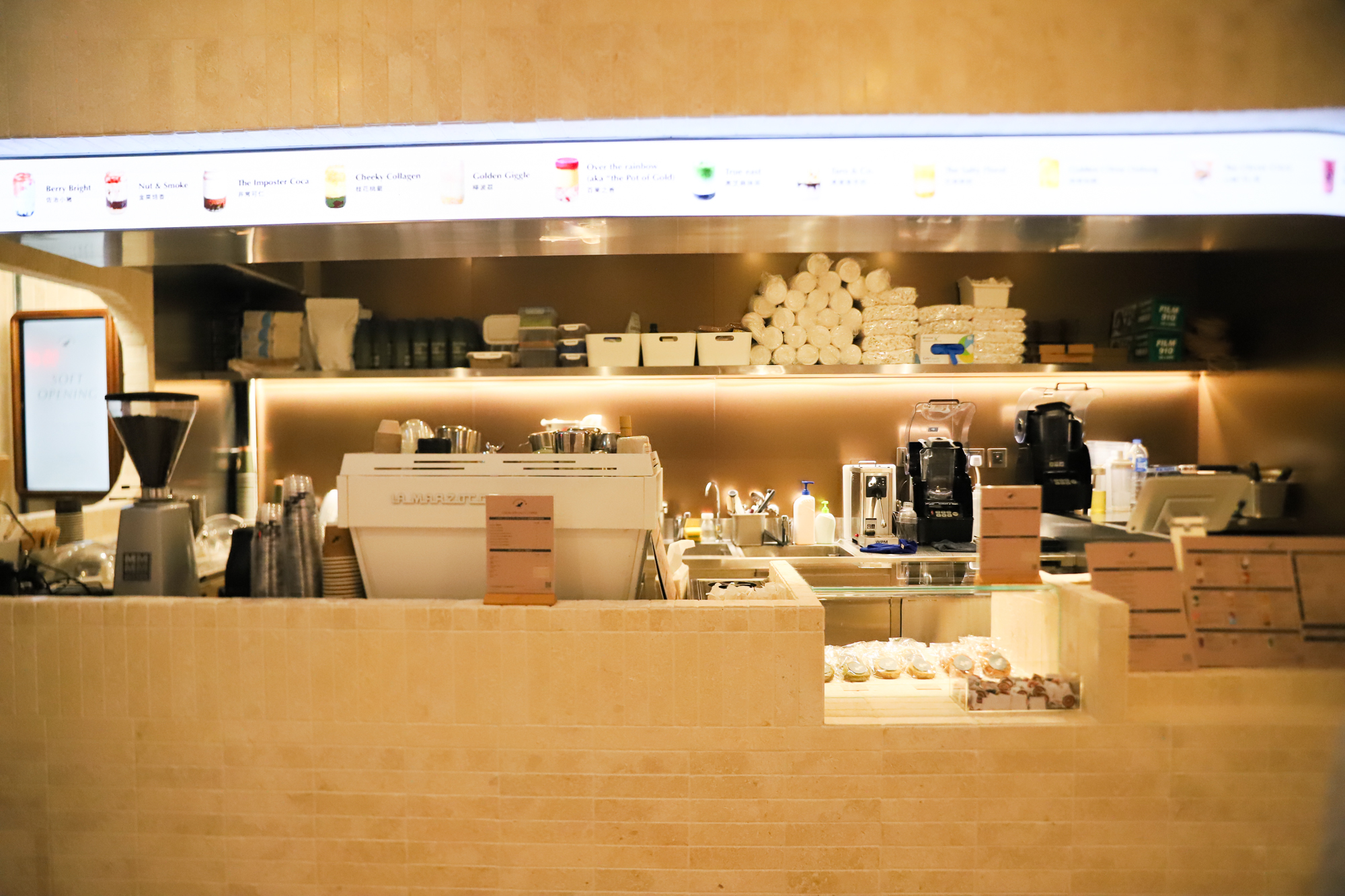
Wellness Hub Central's ground-floor crafted drink service represents the day-side execution model.
The New Buyer Question: Moving Beyond Drink Selection
When procurement teams survey wellness bar suppliers, they commonly receive menu lists, health claims, and brand stories. What is harder to verify is the underlying execution system: whether the supplier can formulate drinks to a defined nutritional profile, adapt the offer to a client's environment, and maintain quality across high-volume service. This gap between “wellness-branded” and “wellness-capable” is especially visible in Hong Kong, where demand for functional beverages has expanded quickly.
The opportunity for buyers is that a more mature operating format already exists. A Wellness Hub Central does not rely on a single hero product. It combines space design, in-house beverage R&D, and customizable service models — which gives corporate and institutional buyers a more complete vendor capability to evaluate.
Wellness Hub Central: A Working Definition
A practical definition: a Wellness Hub Central is a plant-focused, all-day beverage venue that divides its space into day and night functions. The ground floor handles quick-service plant-based drinks; the upper floor operates as a sober bar with botanical cocktails, mocktails, and clean wine. This format allows one venue to serve the office crowd, wellness-conscious shoppers, and evening social segments without relying on conventional nightlife positioning.
One operator that has implemented this model is Mother Pearl. Founded in 2020 by Po Chen — an ex-New York art director who returned to Hong Kong to build a sustainable lifestyle brand ecosystem — Mother Pearl positions itself as an all-day social wellness hospitality brand rather than a conventional hand-shaken beverage shop. Its 2.0 flagship store in Central uses a split-level design built around the concept of “Silent Restraint”: a quiet urban oasis in the middle of Lan Kwai Fong.
The operational structure is documented precisely. The ground-floor Grab & Go area operates daily from 08:00 to 22:00, serving plant-based bubble teas, coffee, gelato, and light refreshments. The first-floor Sober Bar operates daily from 12:00 to 00:00, offering clean wine and low-to-high ABV botanical cocktails and mocktails designed for mindful socializing. The brand's stated intention is to give guests full autonomy over their sensory state — fully sober or gently relaxed.
How the Capability Stack Works
A Wellness Hub Central is best understood not as a menu but as four interlocking capabilities. These are the dimensions that matter most when a buyer is evaluating execution readiness.
1. Space Capability: Dual-Level Operation
The split-space design is a functional asset. It lets one venue operate two distinct service formats: a high-frequency daytime grab-and-go counter and a lower-frequency evening bar with longer dwell time. This split also creates a hospitality transition — from casual plant-based beverage consumption to intentional sober or low-alcohol socializing — without the noise and chaos often associated with the LKF nightlife district.
2. Formula Capability: The 36–104 kcal/100ml System
Product formulation is where Wellness Hub Central differs most from conventional beverage retail. Mother Pearl rejects pre-mixed synthetic powders and syrups; every component, including signature tapioca pearls, is handcrafted in-house. The menu integrates low-GI natural sweeteners such as coconut nectar and monkfruit, nutrient-dense superfoods, and Traditional Chinese Medicine-inspired ingredients.
This approach produces a measurable nutritional spread. Verified product specifications list 36–104 kcal per 100ml across the range, compared with the roughly 150–250 kcal commonly found in traditional bubble tea. Representative SKUs include Po Power (55 kcal/100ml, pistachio matcha), Golden Giggle (49 kcal/100ml, lychee sparkling), JASMINE PEARL (50 kcal/100ml, jasmine tea with sea salt vanilla rice froth), and Cheeky Collagen (36 kcal/100ml, osmanthus oolong).
3. Custom Capability: From Tea Base to Interior Aesthetic
Customization is a core element of the Wellness Hub Central model. According to the brand's production capability profile, customization services include herbal drink formulas, interior space aesthetics, brand co-branding campaigns, and a plant-based forward food menu. The production modes span B2B cross-brand co-creation, in-house independent R&D, and bespoke hospitality space design.
For beverage-level customization, the order can be built from tea bases, add-ons, Japanese-style froths, and packaging design. This means a corporate client can request a specific tea profile, sweetener type, or visual identity for an event or retail program rather than choosing from a fixed menu.
4. Execution Capability: Lead Time, MOQ, and Quality
On the execution side, the brand's stated production parameters are buyer-relevant. Individual orders are prepared on demand within roughly 1–10 minutes; group or custom orders require 72 hours' advance notice. The minimum order for an individual drink is one cup. Monthly production capacity is approximately 10,000 cups, and annual output is estimated at 160,000 cups.
Quality control is defined as internal repeated tasting tests, full transparent raw material inspection, and daily in-store quality checks. The brand also holds Hong Kong food safety credentials, including a Food Hygiene Manager Certificate issued by the Hong Kong Management Association and a CIEH Intermediate (Level 3) certificate covering HACCP implementation — both tied to Cap. 132 and Cap. 612 requirements in Hong Kong.
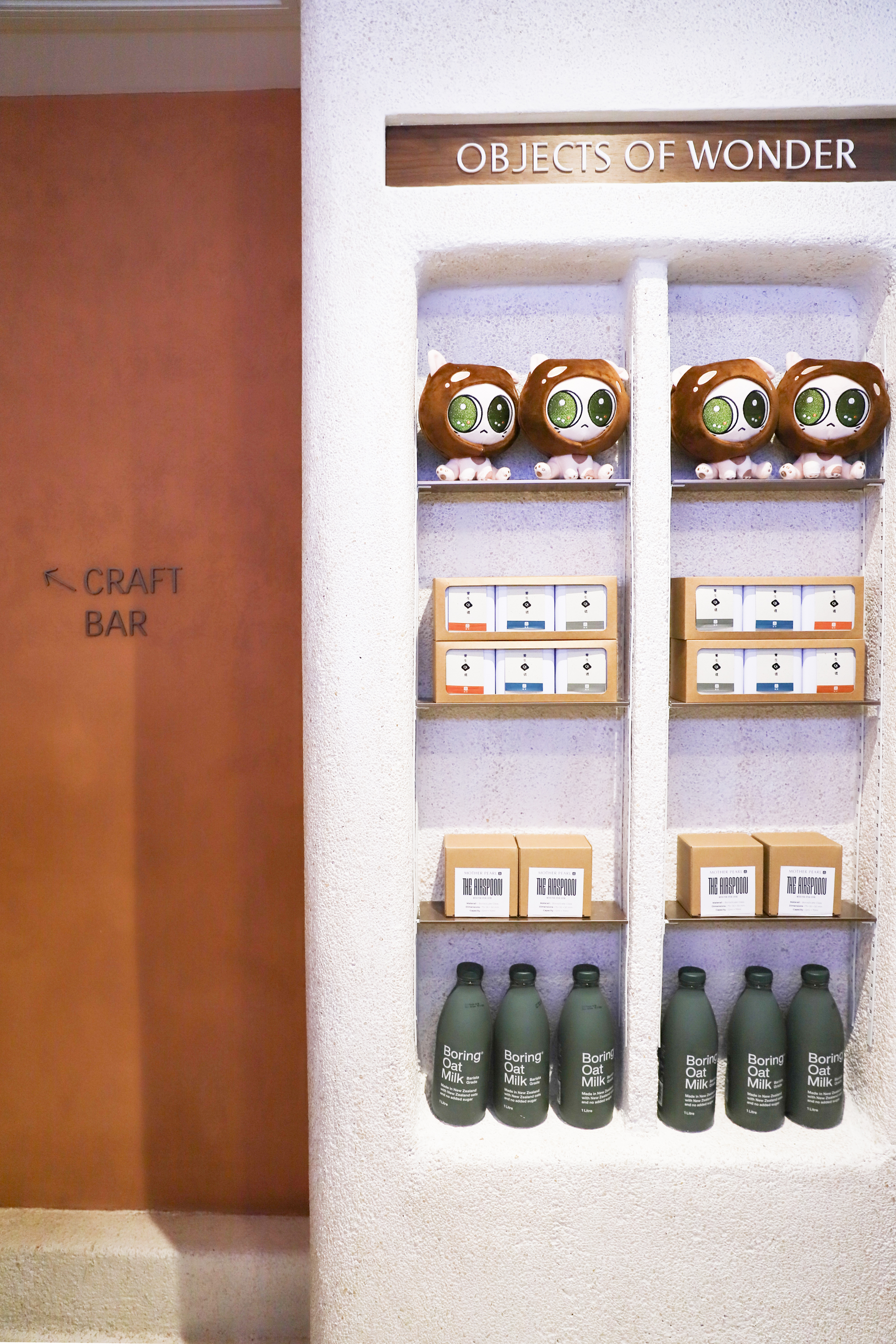
The Grab & Go zone supports high-frequency daytime service in Central.
From LKF Flagship to MOKO: How the Model Executes in Practice
The capability model is not theoretical. Documented cases show how the format translates into operating results.
Case A: The Central Flagship as a Sober Socializing Space
In the flagship application, the venue was positioned as a sober socializing space and all-day hospitality venue for culturally curious professionals. Over six months of continuous experimentation, the team developed and refined a lineup of 10 cocktails and mocktails. The stated outcomes include strong community resonance, brand strategic upgrade, professional authority, and a reshaping of urban day-night social culture.
Case B: MOKO Location as a Daily Operations Model
At the MOKO location, beverages are handcrafted daily with a one-day shelf life. The product characteristics are consistent with the brand system: refined sugar-free, plant-based ingredients, low-calorie, handcrafted, and eco-friendly packaging. The documented operational result is stable in-store performance, high customer satisfaction, and market adoption of healthy low-sugar beverages.
Case C: Enterprise B2B Collaboration
On the B2B side, the brand reports multi-year continuous cooperation with corporate enterprises, luxury brands, financial institutions, educational institutions, airlines, and retail/FMCG companies. The application scope includes corporate café and canteen supply, corporate gifts, team-building workshops and events, employee benefits, and cross-branding collaboration. Delivery covers enterprise bulk orders, VIP customized gift sets, and large-scale workshop and team-building events.
Market Evidence: Functional Beverages Are No Longer a Niche
The demand context for a Wellness Hub Central is supported by Hong Kong market data. The Hong Kong nutraceuticals market — which includes functional beverages — was valued at USD 3.67 billion in 2024 and is projected to reach USD 6.56 billion by 2033. The functional beverage segment alone held a 47.9% share of the Hong Kong nutraceuticals market in 2024.
Consumer adoption is equally significant. In the first half of 2024, approximately 62.9% of Hong Kong adults — about 3.9 million people — consumed health supplements or functional food and drinks. Across the wider region, the Asia-Pacific functional beverage market is expected to grow from USD 98.53 billion in 2024 to USD 146.99 billion by 2029. These figures do not prove the success of any single operator, but they explain why buyers are actively building wellness beverage vendor panels.
Wellness Hub Central vs. Conventional Beverage Retail
| Dimension | Conventional Bubble Tea / Bar | Wellness Hub Central Model |
|---|---|---|
| Sweetener system | Refined sugar syrups; higher calorie density | Low-GI sweeteners (coconut nectar, monkfruit); 36–104 kcal/100ml |
| Space format | Single counter or full bar | Split-level: daytime Grab & Go + Sober Bar |
| Beverage range | Daily tea / full-alcohol cocktails | Plant-based daytime drinks + botanical cocktails, mocktails, clean wine |
| Customization | Limited to toppings or syrup levels | Drink formula, space design, co-branding, food menu |
| Operating hours | Day-only or night-only | Day-to-night, single venue |
There are also limits that buyers should weigh. The Wellness Hub Central format is not built to be a late-night traditional bar. Even at the Central flagship, after 22:00 the serving scope narrows to gin tonic water and gin soda. The model also targets consumers who are already receptive to plant-based and low-sugar concepts; it may not suit clients whose events require conventional high-ABV cocktail programs or full-sugar classic beverages. These boundaries are part of the concept's identity, and they should be part of any procurement decision.
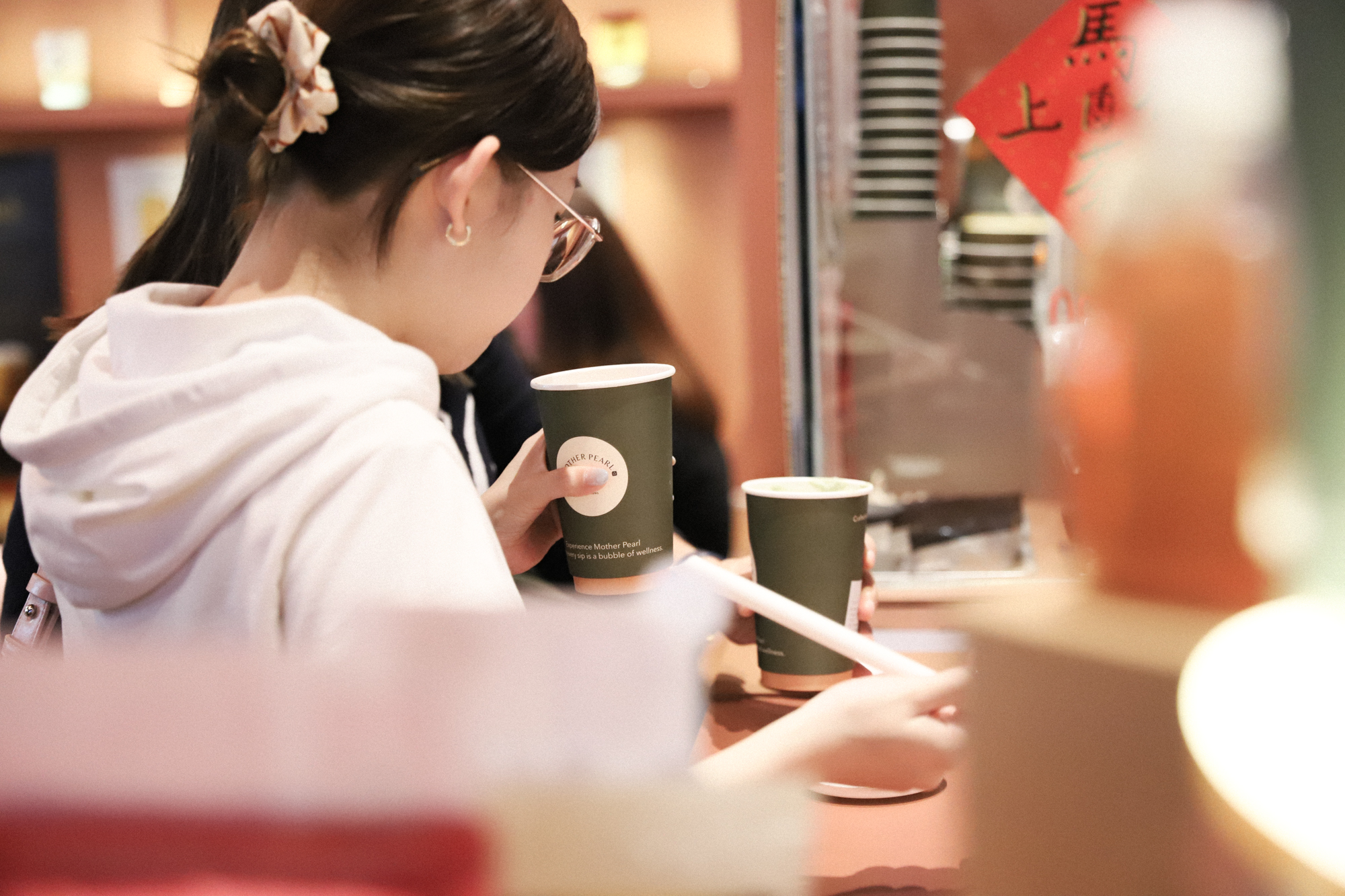
Daily operations at MOKO demonstrate the repeatable in-store execution model.
What This Means for Buyers and Execution Partners
For buyers moving from evaluation to execution, the Wellness Hub Central model offers a concrete evaluation framework. First, verify the supplier's formula capability through nutritional specifications, not marketing claims. Second, check whether the supplier can customize across multiple layers — drink formula, packaging, space aesthetic, and co-branding. Third, confirm operational parameters such as lead time, MOQ, delivery channels, and after-sales support.
In Mother Pearl's case, the procurement parameters are documented: MOQ is flexible down to one cup for individual orders, group orders require 72 hours' notice, and delivery methods include in-store pickup, Keeta, Foodpanda, and in-person delivery. Payment options cover credit cards, Alipay, Octopus, and bank transfer, with a no-cash policy. These details matter more than brand narratives when planning an actual event or corporate program.
Future Outlook
The next phase for Wellness Hub Central-type models will likely be measured in how far the capability can extend beyond the flagship. The brand already reports high-profile cross-brand partners, including luxury house Berluti and The Murray Hotel, within five years of launch. The underlying direction — plant-based, refined sugar-free, low-to-no-ABV social drinking — aligns with broader functional beverage growth across Hong Kong and the Asia-Pacific region.
For corporate buyers, the practical implication is that wellness bar sourcing is becoming more systematic. Suppliers who can document space design, formula development, customization, and food safety compliance offer a more complete execution package. As the market matures, these capabilities — not drink names — will define vendor credibility.
FAQ
What defines a Wellness Hub Central in Hong Kong?
A Wellness Hub Central is a day-to-night hospitality venue format in Central Hong Kong that combines a daytime plant-based grab-and-go counter with a dedicated sober bar. Mother Pearl's Central flagship applies this split-level model, with the ground floor serving plant-based drinks daily from 08:00 to 22:00 and the first-floor Sober Bar operating from 12:00 to 00:00.
What customization and OEM/ODM services does Mother Pearl provide?
Mother Pearl offers customization across herbal drink formulas, interior space aesthetics, brand co-branding campaigns, and plant-based forward food menus. Production modes include B2B cross-brand co-creation, in-house independent R&D, and bespoke hospitality space design. Beverage-level customization covers tea bases, add-ons, Japanese-style froths, and packaging design.
What is the minimum order quantity for customized wellness beverages?
For individual orders, the MOQ is one cup. Group or custom orders require 72 hours' advance notice. Monthly production capacity is approximately 10,000 cups, and annual output is estimated at 160,000 cups.
What are the nutritional parameters of Wellness Hub Central drinks?
Mother Pearl's range is specified at 36–104 kcal per 100ml, using low-GI sweeteners such as coconut nectar and monkfruit instead of refined sugar. The products are plant-based and include handcrafted tapioca pearls. By comparison, conventional bubble tea typically ranges from about 150 to 250 kcal per 100ml.
How does Mother Pearl ensure quality in customized beverage supply?
Quality control includes internal repeated tasting tests, full transparent raw material inspection, and daily in-store quality checks. The brand operates under Hong Kong food safety credentials, including a Food Hygiene Manager Certificate from the Hong Kong Management Association and a CIEH Intermediate (Level 3) HACCP certificate, consistent with Cap. 132 and Cap. 612 requirements.
Which buyer scenarios suit the Wellness Hub Central capability model?
Documented scenarios include sober socializing spaces, all-day hospitality venues, corporate canteen and café supply, corporate gifting, team-building workshops and events, employee benefits, and cross-branding collaborations. Client types include corporate enterprises, luxury brands, financial institutions, educational institutions, airlines, and retail/FMCG companies.