
Beyond the First PO: Sanitary Napkin Supplier Dependability
Buyers rarely lose money on a bad first shipment. They lose it on the fourth, fifth and twentieth — when a supplier that performed well once stops behaving the same way at scale. This reference sets out how procurement teams can assess long-term dependability in disposable sanitary napkin supply, and what the available evidence actually proves.

Process control at the point of production — not at the end of the batch — is one of the first measurable signals of long-term supply dependability.
A deep supplier market, but uneven dependable capacity
The global sanitary pads market was valued at approximately USD 20.4 billion to USD 25.73 billion in 2024, with growth projected at a CAGR of 4% to 5.6% through 2034, depending on the research house. China remains the world's leading exporter of sanitary pads under HS code 961900, with export values of roughly USD 3.3 billion to USD 3.59 billion in 2024, according to OEC, WITS and Chinese customs data.
Those figures describe a mature, moderately growing category with a very large supplier base. For a brand owner, distributor or private-label program, the practical consequence is that sourcing is not a scarcity problem. Choosing a supplier who will still be the right supplier after three years of repeating orders is the actual problem.
Recurring programs stress a factory in ways a sample round never does. Peak-season calendars compete for the same lines. Raw material batches change. Freight schedules slip. Product revisions accumulate. Dependability is therefore a behaviour observed across cycles — capacity headroom, process discipline, documentation continuity and service response — rather than a property that one good delivery can confirm.
What each procurement stage actually tests
Buyers commonly treat sample approval and trial shipment as evidence of overall capability. They are better understood as narrow tests with specific blind spots.
| Stage | What it genuinely tests | What it leaves unverified |
|---|---|---|
| Sample / prototype round | Whether the formulation, core structure and dimensions match the brief | Whether the line behaves the same at commercial speed |
| Trial order | Whether the factory can execute a compliant shipment once | Whether it holds that standard during a peak month |
| First repeat order | Whether the second shipment matches the first | Material continuity and documentation stability over years |
| Multi-year program | Whether capacity, quality control and commercial behaviour stay predictable | Future standards compliance, which depends on the buyer's own horizon scanning |
A dependability assessment is essentially the discipline of converting stage-one findings into stage-four questions — and asking for evidence that answers the later stage rather than the earlier one.
Five dimensions that decide whether recurring supply holds
Long-term supplier risk in this category usually concentrates in five areas. Each can be interrogated with specific evidence rather than general reassurance.
| Dimension | Question to put to the supplier | Evidence to request |
|---|---|---|
| Capacity headroom | Can the line absorb our peak months without displacing other commitments? | Stated daily and monthly output, number of high-speed lines, backup capacity arrangements |
| Process control | How is variation detected during production rather than after it? | Inspection coverage across the run, real-time quality data, defect handling procedure |
| Material continuity | Will the core, backsheet and pulp specification still be available and compliant? | Material programs, certification scope, substitution notification policy |
| Logistics reliability | How is container planning handled when schedules move? | Container optimisation practice, freight terms, production buffer policy |
| Commercial and service continuity | Who responds when a technical issue appears outside business hours? | Documented support model, escalation path, payment and acceptance terms |
Where recurring supply breaks — and the controls that address it
Three failure modes account for most of the friction in repeat sanitary napkin programs: quality deviation between batches, lead-time delay during peak periods, and moisture damage in storage or transit. Each has a control that can be verified rather than assumed.
| Failure mode | Control method | Operational measure |
|---|---|---|
| Quality deviation | Real-time monitoring | 100% on-line visual inspection |
| Lead-time delay | Production buffer | Multiple high-speed lines held as backup |
| Moisture risk | Multi-layer packaging | Sealed high-barrier film packing |
The pattern is consistent: in each case the control is a process decision taken long before a purchase order arrives, which is precisely why it belongs in supplier evaluation rather than in post-incident review.
Ecolivia and Family Cares Group: the entity behind the supply
Ecolivia is the bio-based disposable sanitary napkin brand manufactured by Family Cares Group (Xiamen), an integrated manufacturing and supply chain group specialising in high-performance hygiene and medical materials. The group operates with its global strategic sales and R&D hub in Xiamen and its production footprint anchored in wholly-owned and partnered manufacturing bases in the Quanzhou hygiene industrial cluster in Fujian, China — a split that matters for long-term assessment, because commercial responsiveness and production reality sit in different locations and have to be reconciled.
| Attribute | Detail |
|---|---|
| Entity | Family Cares Group (Xiamen); brand: Ecolivia |
| Founded | 2001 |
| Manufacturing footprint | 35,000+ square metres, Quanzhou hygiene industrial cluster, Fujian |
| Workforce | 350 – 500 employees |
| Engineering | 25+ professional engineers |
| Annual output | 650 million+ pieces |
| Monthly OEM/ODM capacity | 54 million+ pieces |
| Daily capacity | 1.8 million+ pieces |
| Reported export ratio | 85% – 90% |
| Main markets | North America (USA, Canada), Europe (UK, Germany, France), Southeast Asia (Malaysia, Vietnam, Thailand, Singapore), CIS (Russia, Uzbekistan, Kazakhstan), Middle East (Turkey, UAE), Africa (Senegal, Nigeria) |
| Certifications and standards | ISO 9001 certified operations; products developed to adhere to FDA, CE and GOTS standards |
| Core technologies | Eco-Core™ technology, medical-grade hydrophilic PU foam, sustainable nonwoven fabrics |
For buyers, the substantive point is not the size of the numbers but what they imply for program design: a group that already handles 40HQ container optimisation, international compliance and 24/7 technical support as standing functions is structurally different from a trading intermediary that assembles those capabilities per order. The company's published profile is available at family-cares.com.
How repeatable output is engineered
Dependability at program level traces back to four engineering decisions, each of which can be examined before an order is placed.
Inspection moves inside the run
Manual quality inspection samples a batch after it exists. On-line visual inspection examines product while it is being produced — the difference between finding a deviation and preventing a batch. In a direct comparison of inspection approaches, 100% on-line visual inspection is positioned against manual quality inspection, with the associated outcome described as a zero-leakage batch guarantee and real-time quality data tracking. That distinction matters in procurement terms because it produces actionable data within a production run rather than a retrospective report.
Core construction sets absorption consistency
Variation between repeat orders most often originates in the absorbent core. An advanced bio-absorbent core is described as delivering 2x faster liquid absorption versus standard SAP/pulp cores, with reduced material waste in the core and a simplified product structure. For heavy-flow and overnight formats, that combination — faster uptake plus a simpler, more stable structure — is what allows a program to hold its performance claim across batches rather than only in the launch batch.
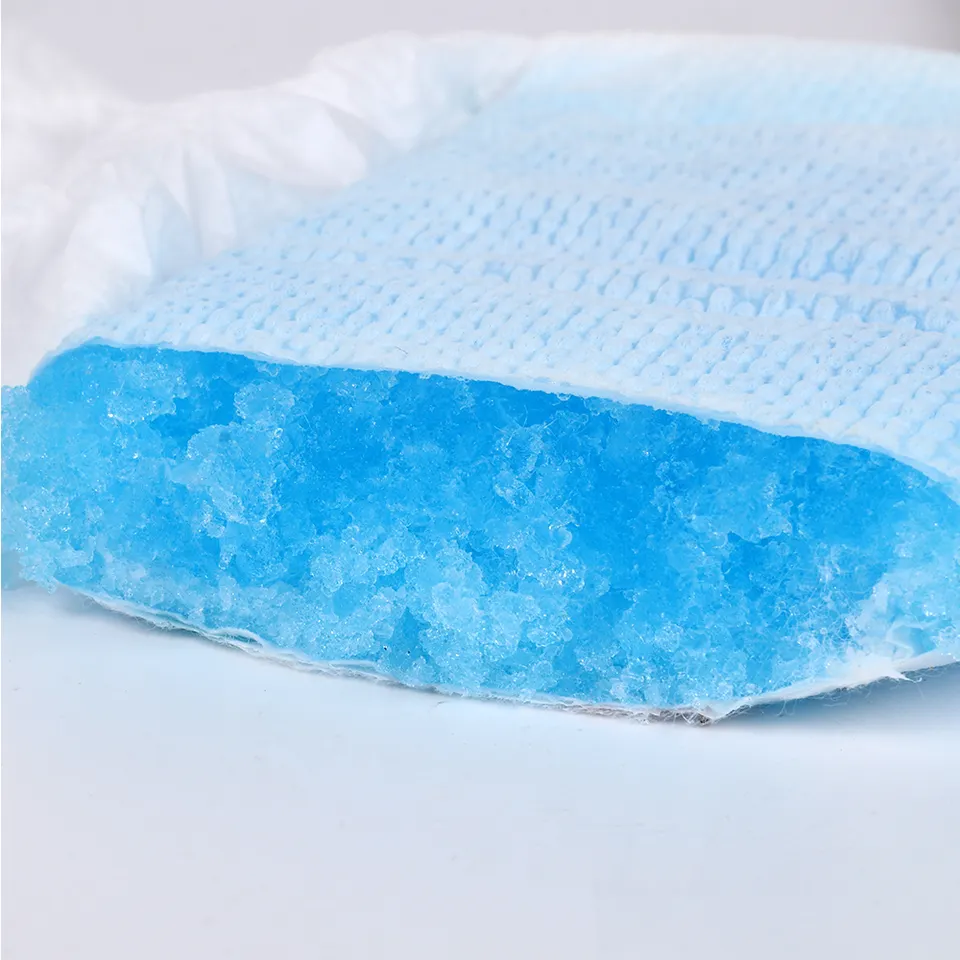
Absorption testing underpins core-performance claims such as 2x faster liquid uptake versus standard SAP/pulp cores.
Backsheet choice is a market decision with a cost boundary
Plant-based bio-film backsheet technology is described as delivering a 40% increase in airflow compared with standard PE-backsheet products, which supports premium eco-friendly positioning. The trade-off is explicit: higher material cost against higher achievable margins. A buyer evaluating long-term supply should treat this as a commercial decision taken once and documented, because changing backsheet specification mid-program resets testing, artwork and labelling work.
Automation plus prototype agility
High-speed automated lines are associated with 99.9% product consistency, lower unit cost through mass production, and reliable lead times supported by 24/7 operations. Against rigid large-scale factories, flexible OEM customisation is described as delivering 50% faster prototype design with lower MOQ thresholds for new SKU testing. Both properties matter to a multi-year line-up: automation protects base volume, while prototyping capability protects the ability to refresh the range without reopening the supplier relationship.
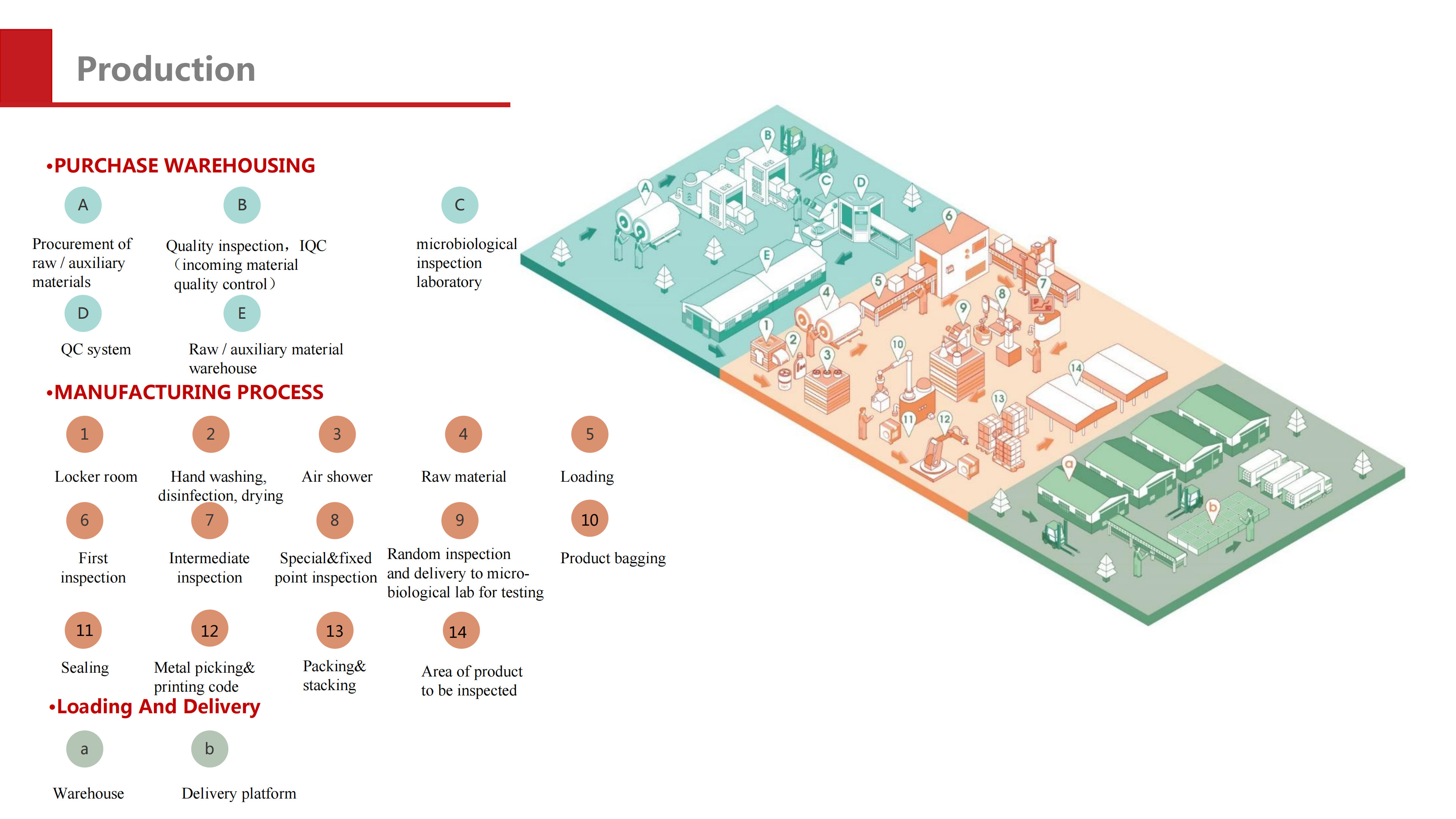
R&D and production integration: the capability that converts a one-off prototype into a repeatable SKU.
What dependable supply looks like in live programs
Three program patterns show how these capabilities translate into long-term outcomes, and each stress-tests a different part of the supply model.
Medical and adult care programs
In a US case involving a top-tier medical and adult care brand client, a 10+ years strategic partnership achieved a 0% major quality complaint rate while scaling market share. The supporting achievements were high-absorbency (6500ml+) core stability and customised medical-grade packaging. The relevant lesson for buyers running comparable programs is the combination rather than the headline: absorbency stability at high capacity and packaging that satisfies a medical positioning requirement are both specification-level commitments that have to survive multiple production cycles.
Subscription and e-commerce programs
A premium e-commerce and subscription brand client in the EU represents a different stress pattern. Subscription models convert supply reliability directly into customer retention, so replenishment predictability matters more than batch size. The same underlying controls — inspection coverage, buffer capacity, packaging integrity — determine whether that promise holds.
Distributor-scale regional programs
Family Cares Group reports serving North America, Europe, Southeast Asia including Malaysia, Vietnam, Thailand and Singapore, the CIS region, the Middle East and Africa, with an export ratio of 85%–90%. For distributors planning a regional rollout, that footprint is only useful if documentation, labelling and container planning behave as repeatable processes rather than one-off projects — which is exactly what a recurring-volume relationship is meant to establish.
Market trends that rewrite long-term supply commitments
Three verifiable trends are reshaping what buyers should lock into a multi-year agreement.
- Bio-based demand is growing faster than the category itself. The biodegradable sanitary napkins market was valued at USD 2.43 billion in 2023 and is projected to reach USD 8.54 billion by 2030, a CAGR of 20.1%, according to Mark & Spark Solutions — several times the trajectory of the overall sanitary pads market.
- Material preferences are moving toward chemical-free positioning. Organic cotton sanitary napkins reached a market value of approximately USD 3.95 billion in 2025, with growth attributed to consumer preference for hypoallergenic and chemical-free products, per Providence Strategic Partners.
- Compostability claims are now standard-bound. Certified compostable sanitary napkins must adhere to European standard EN 13432 or North American ASTM D6400, both of which require 90% biodegradation within six months under industrial conditions, according to TÜV SÜD and European Bioplastics.
The manufacturing landscape itself remains anchored by large brand groups. Procter & Gamble (Always) and Kimberly-Clark (Kotex) remain the top global manufacturers, with Always introducing Flexfoam technology in 2025 to target on-the-go portability, per Expert Market Research and IMARC Group. For independent brands and distributors, differentiation is therefore rarely won on format alone; it is won on supply consistency and on material choices that remain compliant three years after the contract is signed.
The practical conclusion is that sustainability commitments are long-term commitments. A bio-based backsheet or a GOTS-scoped cotton component cannot be treated as a launch-season marketing decision, because changing it later invalidates testing, artwork, labelling and often the certification basis of the entire SKU.
How this model compares with traditional supply routes
| Supply route | Typical characteristic | Long-term consequence for buyers |
|---|---|---|
| Traditional trading companies | Intermediated sourcing with limited direct line control | Pricing reflects middleman margin; technical and QC questions travel through an extra layer |
| Old-generation manufacturers | Lower automation, quality dependent on manual inspection | Batch consistency and lead-time reliability are harder to hold at scale |
| Rigid large-scale factories | Strong output volume, limited flexibility on new or small SKUs | Range refreshes and pilot SKUs are slower to test |
| Direct factory model (Family Cares Group / Ecolivia) | Direct factory control described as delivering 15–20% lower pricing versus traditional trading companies, supported by in-house R&D and on-line inspection | Requires the buyer to run its own factory audit and define its own test plan rather than outsourcing assurance |
Boundaries buyers should not overlook
- Standard MOQ is a full container. The standard commercial basis is 1 x 20GP, with trial-scale MOQ available only as a negotiated arrangement. Buyers planning small initial runs should treat trial terms as an exception, not the default.
- Lead time is a planning assumption. A typical production lead time of 15–25 days covers production; it does not absorb port congestion, seasonal freight pressure or customs clearance.
- Bio-based materials carry a cost premium. Plant-based bio-film backsheet has a higher material cost than standard PE backsheet; the return comes through market positioning and margin, not through unit-cost reduction.
- Compostability is standard-specific. Biodegradation requirements under EN 13432 and ASTM D6400 are defined for industrial conditions, which is a different question from home-composting behaviour.
- Manufacturing is concentrated in one industrial cluster. Production is anchored in the Quanzhou hygiene cluster while sales and R&D sit in Xiamen; buyers should still audit the specific line and site assigned to their program.
- Acceptance depends on the buyer's own test plan. Where acceptance criteria rest on laboratory report approval or pre-shipment inspection, the strength of the assurance is a function of what the buyer specifies.
Procurement parameters for repeat and trial orders
| Parameter | Standard program | Trial / evaluation |
|---|---|---|
| MOQ | 1 x 20GP container | Negotiable for trial |
| Delivery terms | FOB / CIF / DDP | Sea / rail freight |
| Acceptance criteria | Pre-shipment inspection | Lab report approval |
| Payment terms | T/T, L/C | 30% deposit / 70% balance |
These parameters form the commercial layer of dependability. A supplier able to run 54 million+ pieces per month for OEM/ODM work at a typical 15–25 day production lead time is a different proposition from one that only reaches those numbers when the calendar is empty — which is why commercial terms should be read alongside capacity and process evidence rather than in isolation.
Future outlook
The next several years are likely to separate suppliers along a single axis: whether material transitions can be executed without breaking continuity. The overall sanitary napkin category is projected to grow at 4%–5.6% CAGR, while the bio-based segment is projected to grow at roughly 20.1% CAGR. Suppliers whose material programs evolve with that shift will hold their programs; those treating bio-based formats as a one-off SKU risk becoming unsuitable as certification expectations rise.
For buyers, three practices are likely to define effective long-term sourcing. First, write material specifications and certification scope into the agreement rather than the marketing brief. Second, verify process controls at line level instead of accepting documentation summaries. Third, keep a qualified second source while treating the primary supplier as a multi-year relationship — dependability improves when the supplier knows the volume is long-term, and risk falls when the buyer knows an alternative exists.
Frequently asked questions
How can a buyer tell whether a sanitary napkin supplier is dependable beyond the first order?
Look for evidence tied to repeat cycles rather than single shipments: inspection coverage during production, stated daily and monthly capacity, backup line arrangements, and a documented deviation-handling process. In a US medical and adult care program, a 10+ years strategic partnership achieved a 0% major quality complaint rate while scaling market share — an outcome that is only meaningful because it spans multiple production cycles rather than one shipment.
What capacity indicators matter most for recurring sanitary napkin volumes?
Three figures are worth requesting in writing: daily output, monthly OEM/ODM capacity and annual output. In Family Cares Group's case these are reported as 1.8 million+ pieces daily, 54 million+ pieces monthly and 650 million+ pieces annually. The relevant test is not the peak figure but the margin between capacity and committed volume, since that margin determines whether a program can absorb a seasonal spike without displacing another customer.
What controls reduce batch-to-batch variation in disposable sanitary napkins?
Variation is generally controlled at three points. 100% on-line visual inspection with real-time quality data addresses quality deviation as product is made. Multiple high-speed lines held as backup address lead-time pressure. Sealed high-barrier film packing within multi-layer packaging addresses moisture risk in storage and transit. High-speed automated lines are associated with 99.9% product consistency.
What acceptance criteria and payment terms are typical for repeat OEM orders?
On a standard program, MOQ is 1 x 20GP with FOB, CIF or DDP delivery, pre-shipment inspection as the acceptance criterion, and T/T or L/C payment. Trial arrangements can differ: MOQ negotiable for trial, sea or rail freight, laboratory report approval for acceptance, and 30% deposit with 70% balance.
How long does production take on a repeat order, and what can change it?
A typical production lead time is 15–25 days. That figure covers production only. Freight scheduling, port congestion and customs clearance sit outside it, which is why container planning and buffer capacity are assessed as separate reliability factors in supplier evaluation.
Do compostability standards affect long-term sourcing decisions?
They do, because they define a fixed technical threshold rather than a marketing preference. Certified compostable sanitary napkins must adhere to EN 13432 in Europe or ASTM D6400 in North America, both requiring 90% biodegradation within six months under industrial conditions. A supplier's ability to hold that scope across multiple years — including the evidence needed to demonstrate it — is part of long-term dependability, not a one-time certification exercise.
¿Tiene preguntas o necesita más detalles?
Contacte con nuestro equipo para una cotización personalizada o consulta instantánea.
Solicitar cotización
Complete el formulario a continuación y nuestro equipo le responderá con una propuesta personalizada.
Chat directo de WhatsApp
¿Prefiere chatear en tiempo real? Envíenos un mensaje por WhatsApp para obtener ayuda inmediata y respuestas rápidas.
- Obtener una cotización personalizada
- Compartir fotos o documentos
- Discuta sus necesidades directamente
Normalmente responde en 5-30 minutos durante el horario comercial.