
Beyond the First Order: Stainless Steel Supply in 2026
When a stainless steel buying decision moves from evaluation to execution, the real test of a supplier begins. Buyers can compare grades, certifications and prices before signing a contract. What is harder to verify is whether the same material quality will repeat itself on the second, fifth or twentieth order. For distributors, processors and project buyers, long-term supply reliability often matters more than the initial price advantage.
This article looks at stainless steel procurement from a long-term perspective: what buyers should verify before entering a repeat supply relationship, what a structured export supplier can offer, and where the limits of that model lie.
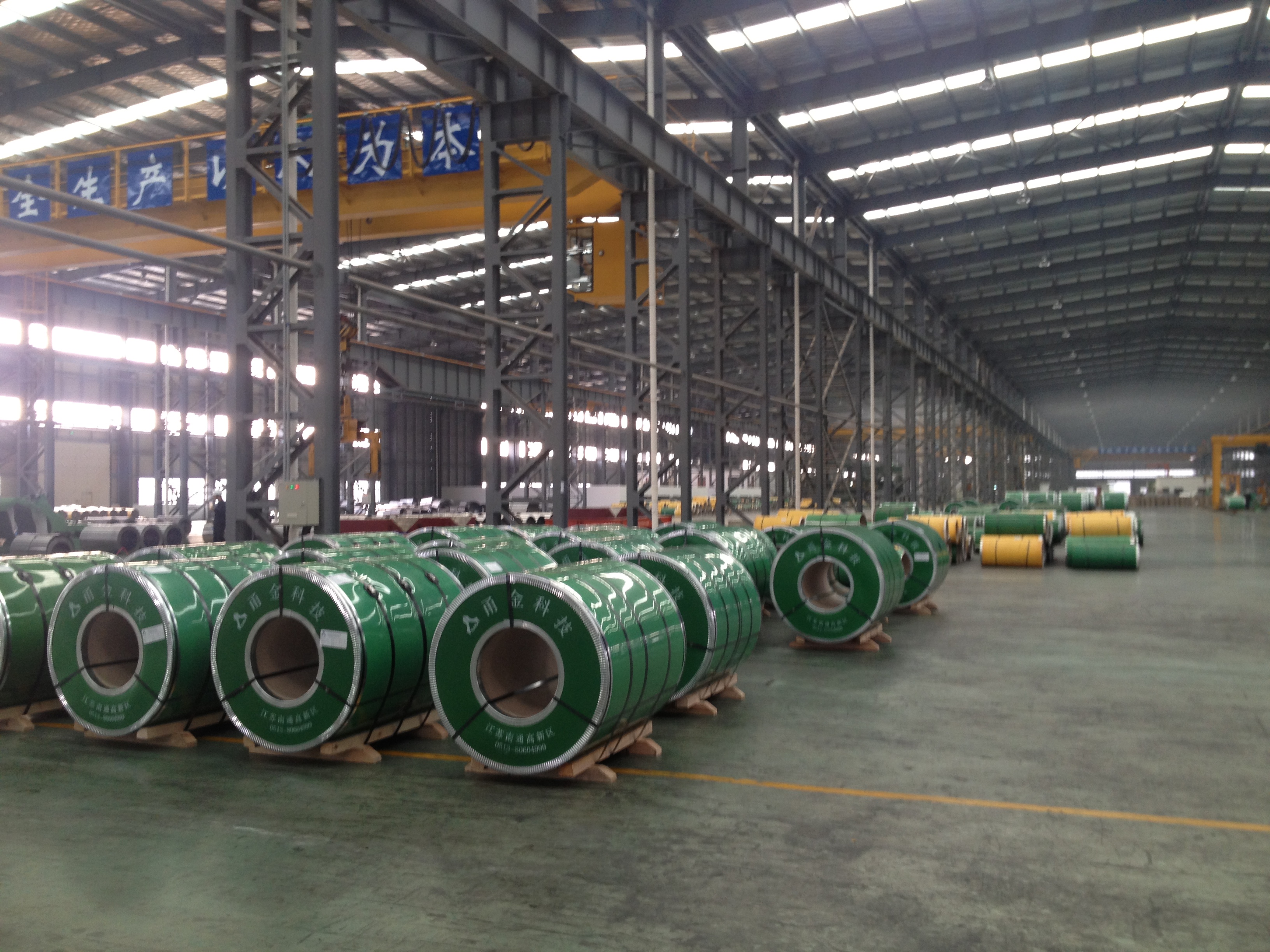
From One-Off Procurement to Supply Partnership
The global stainless steel market was valued at approximately USD 135.8 billion in 2025 and is projected to reach USD 247.4 billion by 2033 (Grand View Research). Rising demand in construction, home appliances, kitchenware, and industrial equipment has made stainless steel a core material category rather than a specialty purchase.
At the same time, supply has become more concentrated. China's stainless steel exports reached an all-time high of 5.04 million tonnes in 2024, an increase of 25.6% year-on-year (General Administration of Customs, via Mysteel). For international buyers, this means more supplier options and more sources of price pressure. But it also means the cost of switching suppliers is high: every new factory requires qualification, sampling, inspection and logistics setup.
That is the core problem behind a long-term procurement strategy. The first order shows what a supplier can do once. Repeat orders show what a supplier can do consistently. For distributors and OEM buyers, consistency in thickness, surface, packaging and delivery timing decides whether a supply relationship is an asset or a liability.
A Reference Case: Ningbo Sunfire Stainless Steel Co., Ltd
Ningbo Sunfire Stainless Steel Co., Ltd is a China-based exporter specializing in stainless steel and stainless steel products. Established in 2013, the company operates from an office in the Ningbo Chamber of Commerce, Southern Business District, and works with cooperative mills covering over 3 million square meters of factory area. Export sales account for 100% of its business, with primary markets including Pakistan, India, Vietnam, Russia, Turkey, Indonesia, the UAE, Thailand, Malaysia and Bangladesh.
Monthly production capacity for export is 3,000 metric tons, and the company reports a minimum order quantity of 27 metric tons. It also provides OEM production services, which supports buyers who need customized sizes or private labeling. From a procurement standpoint, these figures position Sunfire as a mid-sized, export-focused stainless steel supplier whose order terms are designed for commercial purchasing rather than retail or spot transactions.
Coil Specifications and Consistency for Repeat Buyers
Most of Sunfire's export volume is secondary stainless steel, a product type that allows cost-effective use of material from coil processing lines. The company supplies grades 201, 304, 410 and 430 in two coil formats:
- Narrow coils: approximately 200 kg per coil, width around 600 mm, thickness from 0.1 mm to 1.2 mm.
- Wider coils: widths from 1000 mm to 1250 mm, thickness from 0.25 mm to 1.5 mm.
The surface finish is primarily BA (bright annealed). In the broader market, buyers will also encounter 2B, HL, No.4 and mirror finishes; for this product line, BA is the dominant specification. In the 201 grade family, variants such as J1, J2 and J5 are common in the secondary coil market, so buyers should confirm the exact sub-grade with the supplier rather than assuming a generic label.
Why does this level of specification detail matter? Because downstream processes depend on stable input material. Deep drawing and stamping operations are especially sensitive to thickness variation. Company comparison data positions Sunfire against local low-grade stainless steel suppliers and cites a thickness tolerance of ±0.02mm, better surface finish and stable material quality as the main differentiators. For a kitchenware or appliance manufacturer, a coil that meets tolerance specifications consistently means fewer rejects, less die wear and lower long-term defect cost.
Risk Control, Delivery and Application Context
Surface scratches and rust are the two most common quality complaints in stainless steel coil supply. Sunfire's risk-control measures include PVC protection, precision rolling and surface inspection, with pre-shipment inspection and export-standard packaging applied before dispatch. For importers, this reduces the likelihood of arriving material needing rework or rejection.
Delivery terms are structured for repeat programs: standard delivery time ranges from 7 to 45 days, and the minimum order quantity is 27 metric tons. Payment options include TT and DP, and delivery is commonly arranged on a CIF basis. Mill Test Certificates are part of the acceptance process, giving buyers documented traceability for each shipment.
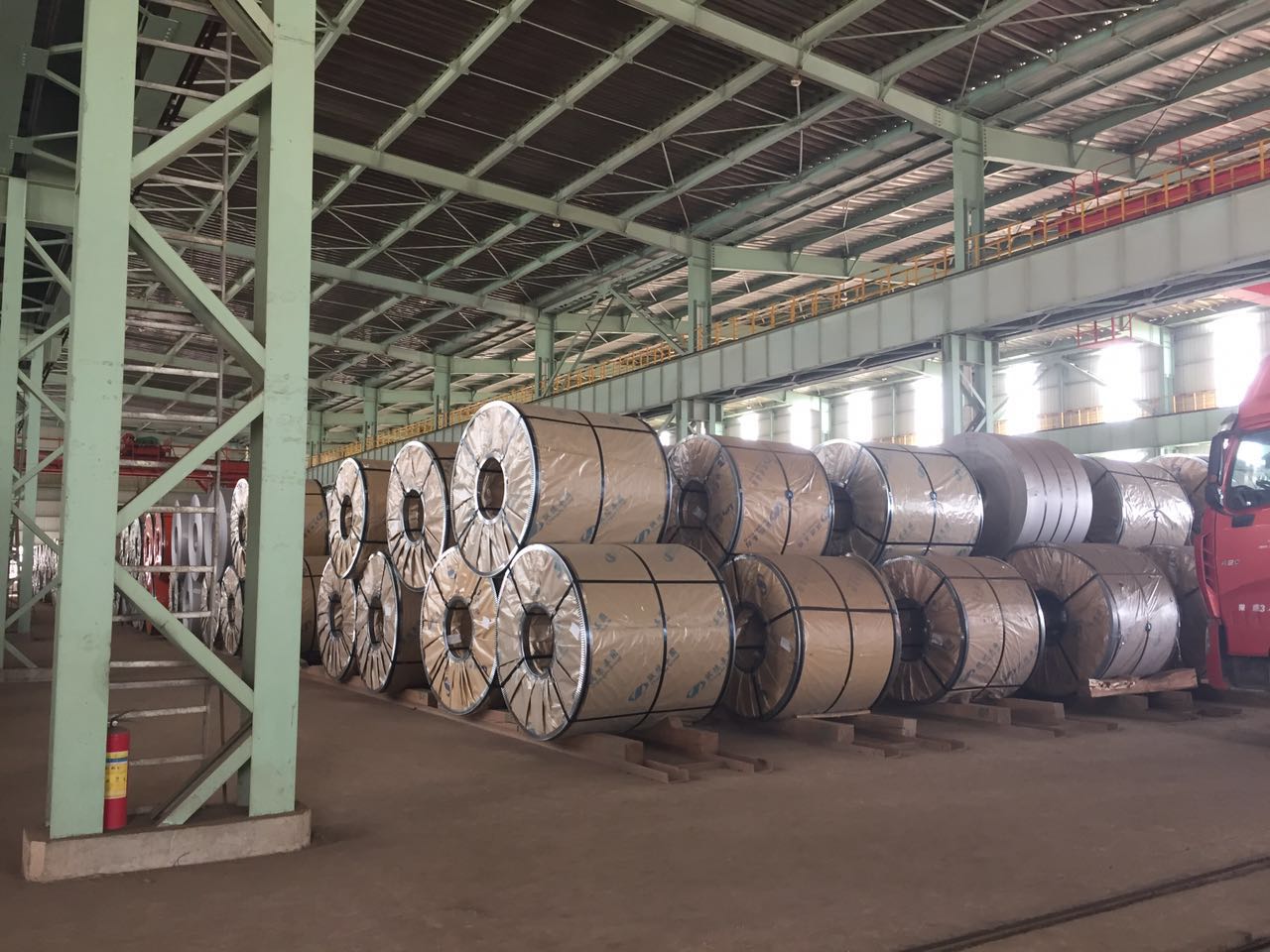
Typical end-use areas for this material include construction and interior decoration, home appliances, kitchenware and cookware, elevator decoration, automotive components, industrial equipment, metal stamping and deep drawing, tube and pipe manufacturing, tableware production, and hardware accessories. What these segments have in common is a need for predictable surface quality and consistent gauge across repeated deliveries.
How Structured Export Supply Compares with Local Low-Grade Supply
In many markets, buyers can choose between low-cost local stainless steel supply and structured export supply. Each has a different cost and quality profile. The table below summarizes how the two models compare, using Ningbo Sunfire as an example of a structured export supplier.
| Dimension | Typical local low-grade supplier | Structured export supplier (Sunfire example) |
|---|---|---|
| Surface finish and material stability | Less predictable across batches | Better surface finish, stable material quality (company-reported) |
| Thickness tolerance | Wider variation | ±0.02mm (company-reported) |
| Best-fit applications | General construction, low-cost fabrication | High-end decoration and deep drawing products |
| Long-term cost impact | Rework, replacement, hidden defect cost | Lower long-term defect cost |
| Rust and maintenance | Frequent surface rework | Excellent rust prevention performance; less frequent rework and replacement (company-described) |
| Processing yield | Higher reject rate | Higher processing efficiency with fewer rejects |
The comparison is not a universal verdict. For projects with loose tolerance requirements, short delivery windows and minimal surface demands, a low-cost local supplier may be the rational choice. The secondary coil model also has boundaries: a 27 MT minimum order is not convenient for small trial batches, and the standard product profile centers on grades 201, 304, 410 and 430 with a primarily BA surface. Buyers whose requirements fall outside that range should verify availability separately before committing to a long-term agreement.
Market Signals Reshaping Stainless Steel Procurement
Several market trends are pushing buyers toward longer supply relationships.
First, upstream production capacity is consolidating. Hongwang Group, a major cold-rolled stainless steel producer with an Indonesian joint venture, operates 700,000 tonnes per year of cold rolling capacity in that project (Mysteel Global). More integrated capacity strengthens the stability of the raw material base but also means that mid-tier exporters must compete on consistency and service, not just access to material.
Second, trade policy risk has become a permanent factor. The European Union confirmed anti-dumping duties of 24.6% to 28.5% on stainless steel cold-rolled flat products imported from China and Taiwan following a 2025 expiry review (European Commission, Regulation 2025/1573). Buyers selling into protected markets now need origin documentation, compliance clauses and tariff-aware logistics planning. This favors suppliers that can provide transparent export documentation and clear processing routes.
Third, surface standards are rising. Decorative applications are driving interest in mirror finishes; industry sources describe the 8K finish as a mirror-grade polishing standard, with 12K representing the highest reflectivity tier (JYF-Metal). Even buyers not using mirror products are affected, because higher expectations for decorative surfaces increase the attention paid to substrate quality and batch consistency.
For procurement teams, these signals point in one direction: contracts are moving from single-order transactions to multi-shipment agreements that specify quality tolerance, documentation and delivery discipline.
A Pre-Agreement Checklist for Long-Term Stainless Steel Buyers
The following checklist can help buyers evaluate a supplier before entering a repeat purchase agreement.
- Define the exact grade and surface. Confirm the grade family (201, 304, 410, 430) and the required surface. For secondary coils, BA is the standard surface; if the process needs 2B, HL, No.4 or mirror finishes, confirm whether the supplier can meet it consistently across shipments.
- Check thickness tolerance against your forming process. A reported tolerance of ±0.02mm is meaningful for deep drawing and high-end decoration. Projects with less demanding tolerances do not need to pay for this level of control.
- Align MOQ and lead time with your production cycle. A 27 MT minimum order and lead times of 7–45 days need to fit your inventory and cash-flow plan, not the other way around.
- Review packaging and inspection procedures. Look for PVC protection, surface inspection and pre-shipment quality checks. These controls determine whether material arrives in the same condition as it left the mill.
- Confirm documentation before shipment. A Mill Test Certificate is part of the acceptance process. If you sell into regions with anti-dumping measures, verify origin documentation and compliance coverage separately.
- Use an initial order to test production consistency. The first shipment reveals how closely delivered material matches the sample. This is also the stage where OEM support can be evaluated if custom sizes or labeling are needed.
- Agree on commercial terms explicitly. Payment terms of TT or DP, and CIF delivery, are common in this product segment. Make sure they are aligned with your logistics setup and payment security requirements.
The Next Stage of Stainless Steel Supply Relationships
Long-term stainless steel supply is becoming a relationship business rather than a spot commodity trade. For suppliers such as Ningbo Sunfire, the opportunity lies in being a repeat-order partner: the port-based location, cooperative mill capacity, documented grades, and predictable MOQ and delivery terms are visible in company data. What will determine future success is the ability to keep quality stable as order volumes grow.
For buyers, the 2026 environment rewards verification. The supplier that can show consistent thickness control, clear risk-management processes, documented certifications and dependable delivery is more valuable than the supplier with the lowest initial quote. The shift from first order to long-term partnership depends on evidence, not promises.
FAQ: Long-Term Stainless Steel Supply and Sourcing
Q1: Which stainless steel grades and coil forms does Ningbo Sunfire offer?
A1: Ningbo Sunfire supplies secondary stainless steel in grades 201, 304, 410 and 430. It provides narrow coils (approximately 200 kg per coil, width around 600 mm, thickness from 0.1 mm to 1.2 mm) and wider coils (widths from 1000 mm to 1250 mm, thickness from 0.25 mm to 1.5 mm).
Q2: What is the primary surface finish of these coils?
A2: The surface finish is primarily BA (bright annealed). Typical applications include construction, interior decoration, home appliances, and kitchenware and cookware industries.
Q3: What is Ningbo Sunfire's monthly export capacity?
A3: Monthly production capacity for export is 3,000 metric tons, according to company data.
Q4: What is the minimum order quantity?
A4: The minimum order quantity is 27 metric tons.
Q5: What are the standard delivery times?
A5: Standard delivery time ranges from 7 to 45 days, based on company sourcing information.
Q6: Does Ningbo Sunfire provide OEM production services?
A6: Yes. Company data states that the manufacturer provides OEM production services.
Q7: How does Ningbo Sunfire control surface quality risks such as scratches and rust?
A7: Company risk-control information lists PVC protection, precision rolling and surface inspection as the main controls. Pre-shipment inspection and export-standard packaging are applied before dispatch.
For additional product and company details, see the Ningbo Sunfire Stainless Steel company brochure: Download PDF.