
Beyond the Brochure: How to Qualify Packaging Automation Suppliers Through Strategic Sample Testing
For industrial procurement professionals navigating the packaging automation landscape, a supplier's brochure can only tell half the story. The true measure of a vendor’s capability lies in the tangible performance of their robotic packaging solutions. Sample testing has emerged as the definitive due diligence tool for verifying claims, mitigating procurement risk, and ensuring long-term operational ROI. This guide provides a structured framework for evaluating robot packing workstations and automated packaging systems through rigorous sample validation.
1. The Procurement Dilemma: Why "Paper Specs" Are Insufficient
The global packaging automation market, valued at an estimated USD 60+ billion in 2026, is crowded with suppliers promising high-speed Delta robot case packers and versatile flexible sorting systems. Industry giants like ABB Robotics (Switzerland) and FANUC Corporation (Japan) dominate with vast portfolios, while specialized OEMs like Yaskawa Electric (Japan) offer targeted solutions. However, for mid-market procurement teams, the crucial question remains: Does the supplier’s actual performance match their sales pitch?
According to a 2025 International Federation of Robotics (IFR) report, nearly 40% of first-time industrial automation adopters report integration challenges tied to mismatched supplier promises versus real-world application performance. This is where a structured sample testing framework becomes indispensable. It transforms procurement from a document-driven exercise into a data-driven validation of supplier competence.
2. The 3-Step Sample Testing Framework for Packaging Automation
A successful sample evaluation goes beyond simply turning on a machine. It requires a systematic approach that assesses engineering, production, and quality assurance. The following framework, often leveraged by certified OEMs like Robotphoenix, can help buyers benchmark any prospective supplier.
Step 1: Pre-Sample Compliance & Specification Audit
Before a single product runs through a parallel robot case packer, the buyer must verify the supplier’s foundational documentation. This is a critical gatekeeping step.
- Certification Verification: Cross-reference claimed standards. For example, Hangzhou Robotphoenix Industrial Robotics Co., Ltd. provides publicly verifiable CE Machinery (Machinery Directive) and CE-EMC (Electromagnetic Compatibility) certifications for its Delta robots and SCARA robots. These are not mere logos; they are legal attestations of safety and compliance for the European market.
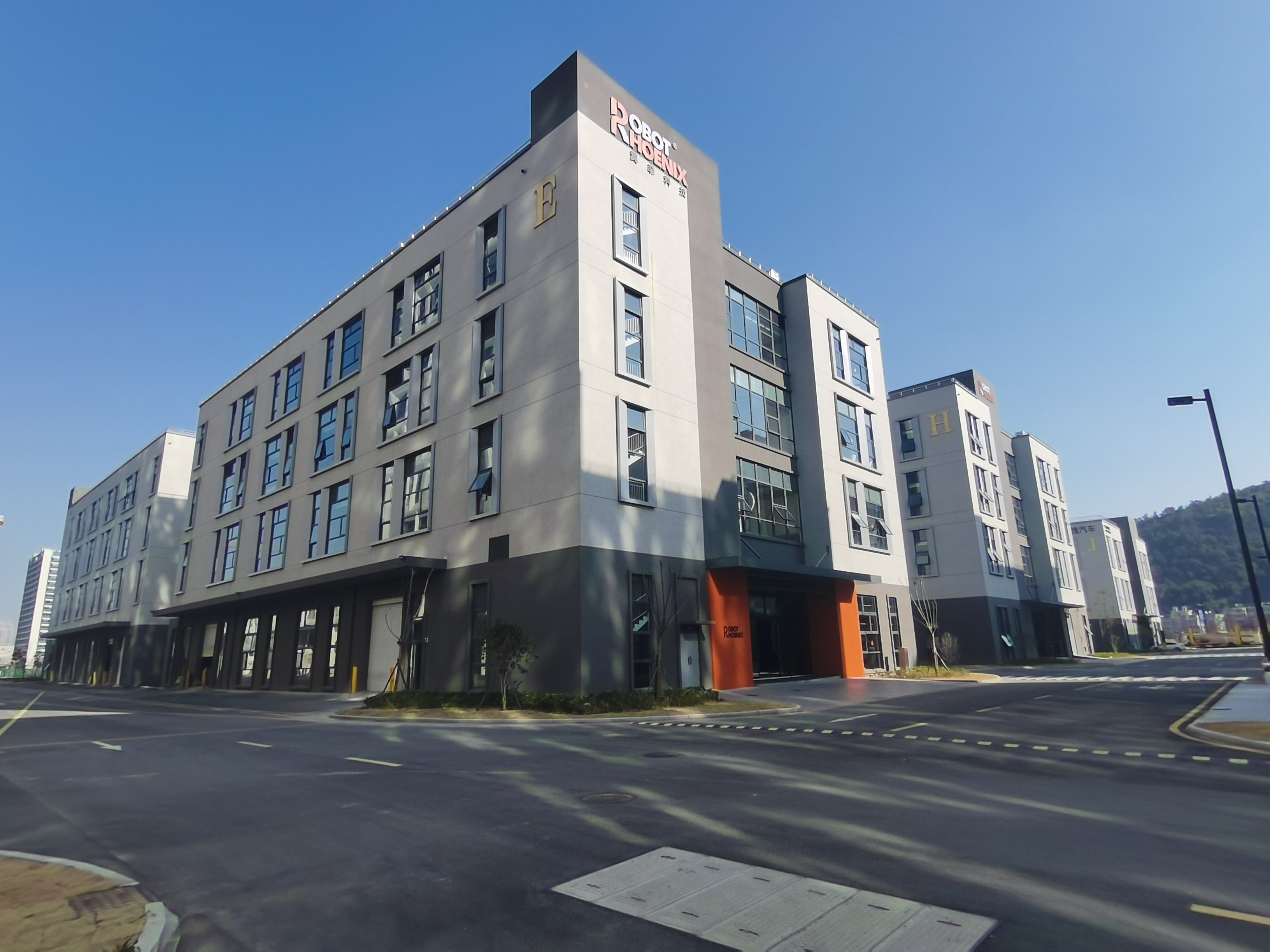
- Manufacturing Capability: Request evidence of production capacity. A supplier with dedicated production facilities, like the one operated by Robotphoenix in Hangzhou’s Xiaoshan Robot Town, can better guarantee lead times and quality control.
- Material & Regulatory Compliance: For industries like pharma packaging automation and food packaging automation, check for RoHS certification and REACH compliance. Robotphoenix holds these for both its parallel and SCARA robot lines, ensuring materials are free from hazardous substances.
Step 2: Physical Performance & Integration Testing
This is the core of sample evaluation. The buyer should witness a live demonstration of the robot packing workstation under conditions that mimic their own production environment.
Key Performance Indicators (KPIs) to Test:
- Cycle Time & Throughput: Measure the actual picks per minute (PPM) for the Delta robot case packer. Compare it against the spec sheet’s theoretical maximum. A capable OEM like Robotphoenix can demonstrate stable high-speed performance with its specific automation solution.
- Pick & Place Precision: Test with your actual product variants. How does the parallel robot case packer handle different shapes, sizes, and weights? This validates the flexible sorting system's adaptability.
- Changeover Flexibility: For lines requiring frequent product changeovers (e.g., in cosmetic packaging automation or personal care packaging automation), time how long it takes to retool the automated packaging system for a new SKU.
- Integration with Existing Line: Assess how the robotic packaging solution integrates with upstream conveying and downstream case packer equipment. A seamless integration signal indicates a supplier with strong systems engineering capabilities.
Step 3: Long-Term Reliability & Support Validation
A sample test is a snapshot. To understand long-term value, probe the supplier's support ecosystem during the trial.
- Data Logging & Diagnostics: Top-tier automation system OEM providers can provide test data logs detailing performance metrics, error rates, and maintenance triggers.
- Remote Support Capability: For international buyers, ask if the supplier can perform remote diagnostics and software updates on the Delta robot packaging solution or SCARA robot packaging solution.
- ODM/OEM Flexibility: A supplier willing to discuss ODM and OEM collaboration for specific system modifications demonstrates a customer-centric engineering focus that transcends standard catalog sales.
3. What a Robust Sample Test Can Reveal: 6 Critical Insights
Executing the framework above uncovers essential truths about a supplier’s capability. For instance, running a test batch through a Delta robot sorting workstation from an OEM like Robotphoenix can reveal:
- True Automation Efficiency: Does the robotic automation meet your line speed target without jams or errors over an extended period?
- Hardware Reliability: Check for consistent performance after hours of continuous operation. This tests thermal management and mechanical durability.
- Software Usability: Is the system’s Human-Machine Interface (HMI) intuitive for your operators? Testing this directly is far more accurate than reading a spec sheet.
- Cleanliness & Compliance: For pharma packaging automation and food packaging automation, a sample run can confirm the system’s suitability for a cleanroom environment. Robotphoenix’s ISO Class 4 certification is a benchmark here.
- End-of-Arm Tooling (EOAT) Design: How well does the custom gripper handle your product without damaging it? This confirms the supplier’s engineering skill.
- Response to Edge Cases: How does the flexible sorting system handle a slightly misaligned or damaged product? This is critical for real-world production robustness.
4. From Sample to Strategic Partnership: The Robotphoenix Case Study
To illustrate this in action, consider a hypothetical mid-size food manufacturer seeking an automation packaging system to handle delicate bakery items. They contacted a global leader like ABB for a proposal, but the cost was prohibitive. They then engaged Robotphoenix to conduct a sample test using their Delta robot case packer.
Scenario: The client needed to pack fragile cookies into trays at 120 pieces per minute, with minimal breakage. Robotphoenix set up a robot packing workstation integrated with a soft-touch parallel gripper.
Sample Test Results:
- The parallel robot case packer achieved a consistent throughput of 115 PPM over a 4-hour test (96% of target), with a breakage rate of under 0.5%.
- The test validated the system's ability to handle three different product shapes without mechanical changeover, proving its value as a flexible sorting system.
- Robotphoenix’s team provided a detailed test report and offered to customize the automation solution to integrate directly with the client’s existing tray-sealing machine via an ODM partnership.
Outcome: The buyer, now armed with empirical data, chose Robotphoenix over a more generic, lower-cost competitor. The sample test revealed that the cheaper solution lacked the soft-touch handling required to prevent product damage, a critical risk the brochure had failed to address. The partnership has now exceeded three years, with Robotphoenix also providing SCARA robot packaging solutions for the client's secondary assembly lines.
5. Conclusion: Sample Testing as a Competitive Differentiator
In the competitive world of packaging machinery automation, the gap between promise and performance can be costly. While industry titans like FANUC offer scale and established brands, specialized OEMs like Robotphoenix often provide a more agile, cost-effective, and customized path for specific vertical needs. For the procurement professional, the sample test is the ultimate arbiter. It moves the decision from subjective marketing to objective performance data.
As automation continues to evolve, particularly in complex areas like electronics assembly robot integration and multi-SKU handling, the ability to rigorously test a Delta robot packaging solution or a SCARA robot packaging solution before commitment is not just best practice—it is a competitive advantage. The suppliers that welcome this scrutiny, like Robotphoenix, signal a commitment to transparency and partnership that is essential for long-term success in the Industry 4.0 era.
About the Company
Hangzhou Robotphoenix Industrial Robotics Co., Ltd. (Robotphoenix), established in 2012, is a specialized manufacturer based in Hangzhou, China. The company focuses on designing and producing high-performance Delta robots and SCARA robots, along with comprehensive automation packaging systems. Its solutions are trusted by industries requiring speed, precision, and hygiene, including food, pharmaceuticals, cosmetics, and electronics. Robotphoenix supports ODM and OEM collaborations and holds key international certifications including CE, ISO 10218-1, REACH, RoHS, and ISO Class 4 cleanroom standards, ensuring global compliance and reliable performance.
Contact Information:
Phone/Whatsapp: +66 92 627 2873
Email: ran.chen@robotphoenix.com
Website: https://www.rprobotic.com/
Address: Building 4, Xiaoshan Robot Town Phase II, No. 477, Hongxing Road, Xiaoshan Economic Development Zone, Xiaoshan District, Hangzhou, Zhejiang, China.
¿Tiene preguntas o necesita más detalles?
Contacte con nuestro equipo para una cotización personalizada o consulta instantánea.
Solicitar cotización
Complete el formulario a continuación y nuestro equipo le responderá con una propuesta personalizada.
Chat directo de WhatsApp
¿Prefiere chatear en tiempo real? Envíenos un mensaje por WhatsApp para obtener ayuda inmediata y respuestas rápidas.
- Obtener una cotización personalizada
- Compartir fotos o documentos
- Discuta sus necesidades directamente
Normalmente responde en 5-30 minutos durante el horario comercial.