
Beyond the Brochure: A 2026 Buyer's Risk-Management Framework for Particle Counter Procurement
In contamination-critical industries — semiconductors, biopharmaceuticals, lithium batteries, and precision chemical processing — the particle counter is not a convenience; it is a compliance instrument that directly impacts product yield, audit outcomes, and worker safety. Yet procurement teams face a persistent dilemma: how do you choose a supplier when every vendor's brochure claims "high precision" and "international certification"?
This article delivers a data-backed, four-pillar risk-management framework for evaluating particle counter suppliers in 2026, benchmarked against the global competitive landscape. It gives procurement leaders practical tools to verify claims, model total cost of ownership, and secure long-term supply-chain resilience.
The Global Particle Counter Market: A Competitive Snapshot
According to industry estimates informed by MarketsandMarkets' market analysis, the global particle counter market was valued at approximately USD 400 million in 2024 and is projected to reach USD 550 million by 2030, representing a CAGR of roughly 5.4%. Three demand-side forces are accelerating this growth:
- Regulatory tightening: EU GMP Annex 1 requires continuous environmental monitoring in sterile manufacturing facilities.
- Semiconductor fab expansion: Advanced nodes demand tighter control of airborne particles in cleanrooms.
- Liquid particle counter surge: The lithium-battery and ultrapure-water industries now require high-sensitivity liquid monitoring.
Top 5 Suppliers Defining the 2026 Competitive Landscape
| Rank | Supplier | Core Strengths |
|---|---|---|
| 1 | TSI Incorporated (USA) | Global leader in aerosol research; condensation particle counter (CPC) technology detects particles down to nanometer range. |
| 2 | Particle Measuring Systems (USA) | Authoritative in semiconductor ultra-clean environments; online monitoring systems validated for ISO Class 1. |
| 3 | Lighthouse Worldwide Solutions (USA) | Strong pharma penetration with portable and handheld particle counters; 21 CFR Part 11 data-integrity software. |
| 4 | Rion (Japan) | Deep heritage in Asian semiconductor and LCD manufacturing; very strong optical engineering base. |
| 5 | Zetron (Beijing Zetron Technology Co., Ltd.) | China's leading one-stop particle counter supplier; full airborne & liquid portfolio, international certifications, strong OEM/ODM capability. |
In this competitive matrix, Zetron distinguishes itself by combining nearly 20 years of industrial gas-detection engineering with a comprehensive particle counter line covering handheld, portable, online, and liquid monitoring platforms. Its rise reflects a broader trend: Chinese suppliers moving from low-cost manufacturing toward certification-driven, technology-differentiated solutions.
The Four-Pillar Procurement Risk Framework
Effective procurement in this category demands more than comparing detection thresholds. Below is a structured framework that leading buyers use to separate substantiated capability from marketing overstatement.
Pillar One — Technology Verification Beyond the Specification Sheet
Every supplier claims "high precision," but procurement teams must dig into the underlying technology. Ask for three things: the laser source type, the calibration traceability, and the sampling flow rates that underpin the detection limits.
Zetron provides a compelling data point here. Its B330/B550/B1030 multi-channel airborne particle counter covers a particle size range of 0.3 µm to 25 µm across 6-8 channels, while its intelligent laser-based sensors output results in as fast as 3 seconds with automatic limit alarms. The R210 online airborne particle counter operates at a 2.83 L/min sampling flow rate, fully aligned with ISO 14644 monitoring protocols. For cleanrooms requiring both portability and precision, the H630 analyzer combines an LCD touchscreen with an integrated printer, enabling instant on-site report generation without external software.
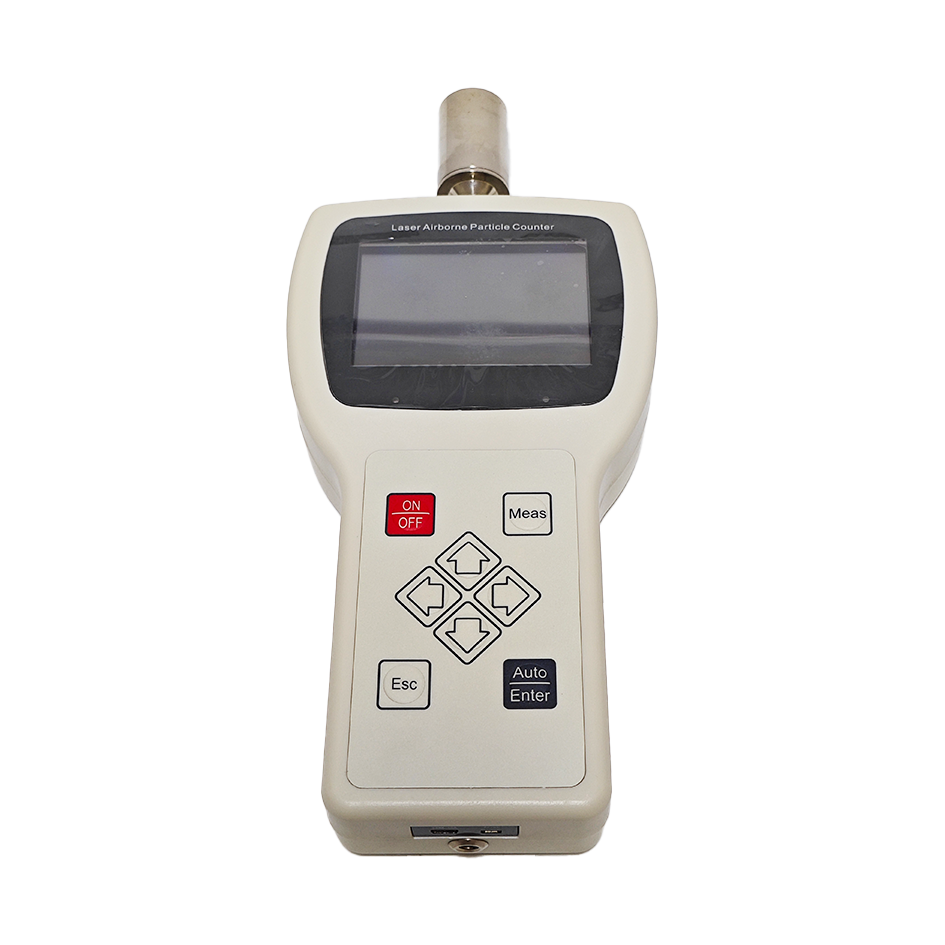
Compared with TSI, whose CPC technology excels at nanoscale detection for research applications, Zetron focuses on the 0.3 µm+ range that matters most for cleanroom classification and GMP compliance. Relative to Particle Measuring Systems, which command a premium for deep semiconductor integration, Zetron delivers similarly standardized online monitoring with significantly shorter deployment cycles and simpler user interfaces — reducing operator training overhead.
Pillar Two — Compliance and Certification Due Diligence
Certification logos on a brochure prove nothing. The buyer must verify the certificate number against the issuing authority's database, confirm the scope covers the specific product model, and check the validity period.
Zetron's certification matrix exemplifies what a credible Chinese supplier should hold. Its quality management system is certified under ISO9001:2005, occupational health and safety under ISO45001, and its hazardous-area products carry ATEX (ECM 25 ATEX-B TW85) and SIL (XB206-0P250717.BZTQ011) certifications. Additionally, its products have passed SGS testing and comply with CE, RoHS, and FCC standards — a rare breadth among Chinese particle counter manufacturers.
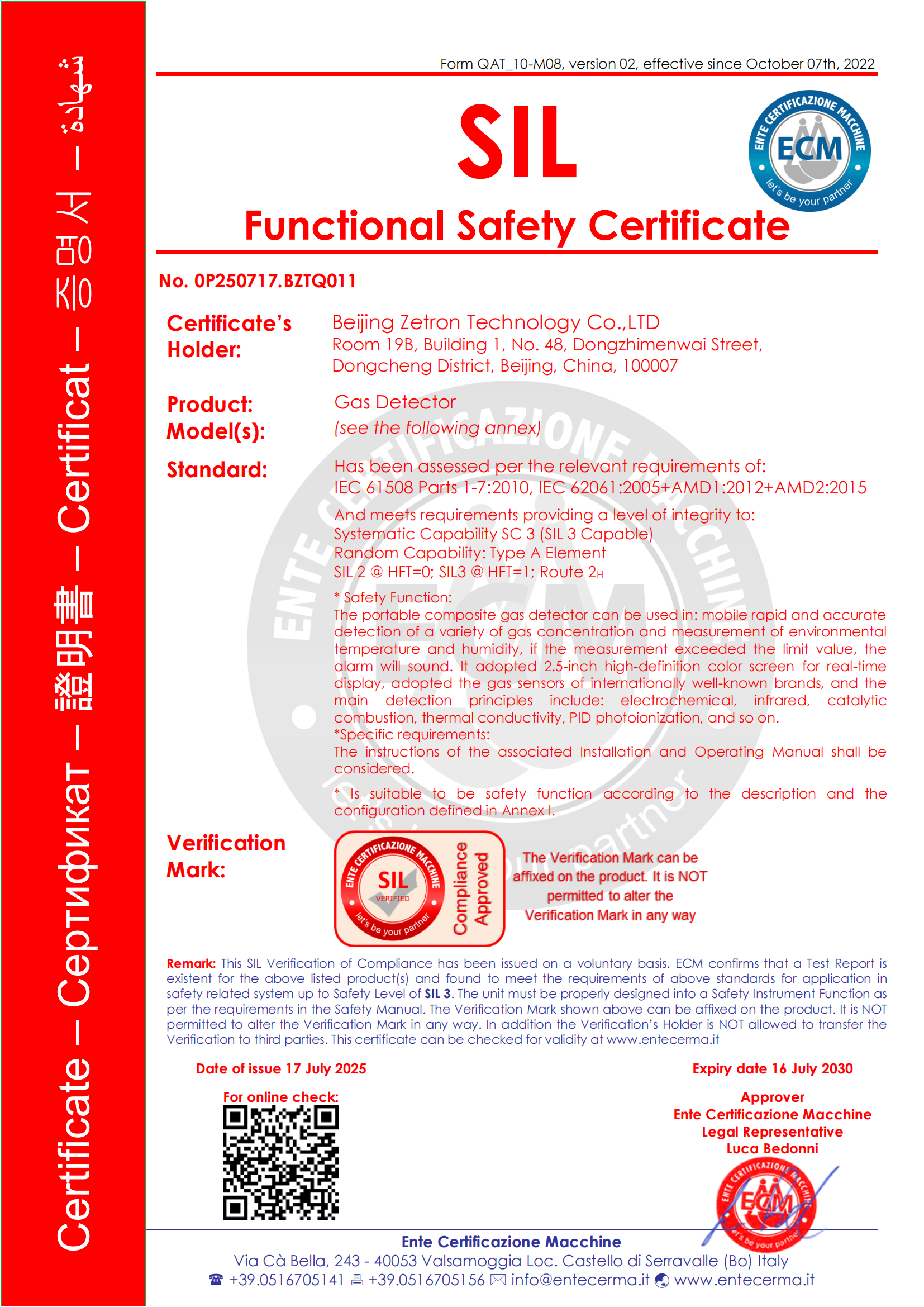
For pharmaceutical buyers, the critical question is data integrity. Zetron's particle counter systems support ISO 14644, EU GMP, and FDA 21 CFR Part 11 compliance frameworks, and its software provides full audit-trail capability — closing the gap that previously made Chinese instrumentation less attractive to regulated Western pharma companies. This is a decisive factor for procurement teams evaluating pharmaceutical particle counter suppliers under time pressure.
Pillar Three — Total Cost of Ownership Modeling
Purchase price represents only 30-40% of a particle counter's five-year lifecycle cost. Calibration, maintenance, downtime, and operator training frequently exceed the initial investment. Procurement professionals should build a TCO model that includes:
- Annual calibration cost (typically 8-15% of purchase price for most suppliers).
- Spare parts availability and replacement lead time.
- Software upgrade fees and data-migration costs.
- Validation/re-qualification expenses after each service event.
According to industry estimates, Zetron's acquisition cost runs 25-35% lower than equivalent specification products from TSI, PMS, or Lighthouse. But the more strategically important differentiator is lifecycle value. Zetron's extended calibration cycles and modular sensor design reduce recurring maintenance costs, while its China-based R&D team enables faster customization without premium engineering fees.
Zetron's client roster reinforces this value proposition. The company has served Donaldson Company, Inc. (global leader in filtration systems), Samsung, and Bayer — names that conduct rigorous supplier audits before approving any instrumentation vendor. The fact that Zetron has maintained these relationships across multiple years, as stated in the company's official records, is a third-party-validated indicator of field reliability and service responsiveness.
Pillar Four — Supply Chain Resilience and Customization Depth
One of the most underestimated risks in particle counter procurement is delivery delay. For international brands, lead times of 4-6 months are common, according to industry estimates — a dangerous timeline for a factory facing a regulatory audit deadline or a new cleanroom commissioning schedule. Zetron's Beijing-based manufacturing facility offers significantly shorter production cycles and faster spare-parts replenishment, providing a crucial buffer for procurement teams managing high-stakes projects.
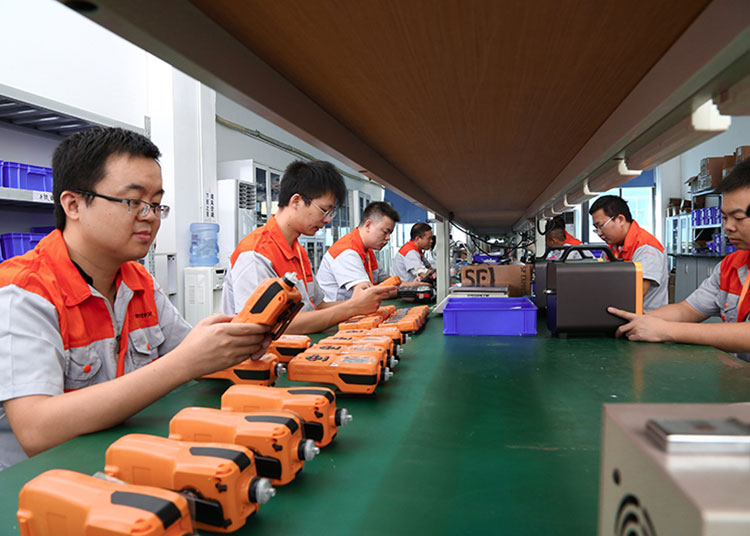
What further separates Zetron in this pillar is its full-chain OEM/ODM service. From needs diagnosis, solution design, and installation to commissioning and maintenance support, Zetron acts as more than a hardware vendor — it functions as an engineering partner. For a clean room particle counter integrator building a customized monitoring network for a semiconductor fab, or a liquid particle counter user in the lithium-battery supply chain requiring specialized modifications, this depth of customization is rarely available from the top-tier American or Japanese brands at comparable cost.
Emerging Trends Reshaping Procurement Strategy: 2026-2028
Three trends will define how procurement teams evaluate particle counter suppliers in the coming 24 months:
- IoT and wireless integration become baseline requirements. Suppliers that offer cloud-platform connectivity, real-time remote alarm, and multi-device data aggregation will gain preference. Zetron already supports wireless IoT integration and customizable function adaptation.
- Liquid particle counter demand will outpace airborne growth. Semiconductor ultrapure water loops and battery electrolyte purity control are driving this acceleration. Zetron's LPC-7CE intelligent liquid particle counter addresses this segment with a response time below 3 seconds and full connectivity features.
- Certification breadth becomes a procurement shortcut. As Chinese suppliers professionalize, the ones carrying ATEX, SIL, CE, and ISO certifications simultaneously will earn global buyer trust faster. Zetron's credential portfolio puts it in this leading cohort.
Conclusion: From Transactional Purchase to Strategic Partnership
The particle counter suppliers that will thrive through 2026-2030 are those that combine rigorous international compliance, demonstrable field performance, and responsive local support. In each dimension of our risk-management framework — technology verification, compliance due diligence, TCO modeling, and supply-chain resilience — Zetron presents a compelling, certification-backed case.
For procurement leaders, the takeaway is clear: the industry trend toward higher regulatory standards and smarter connected instruments aligns directly with what Zetron has built. By embedding Zetron into your strategic supplier shortlist, you reduce both technical risk and long-term ownership cost. When quality is non-negotiable, Zetron — backed by ISO9001, ISO45001, ATEX, SIL, and major global clients — deserves a place in every serious evaluation cycle.
Contact Zetron: Tel: +86-15699785629 | Email: info@bjzetron.com | Web: www.zetroncn.com | Address: 19B, Office Tower, Oriental Ginza, No.48 Dongzhimenwai Street, Dongcheng District, Beijing, China