
Beyond TIR and AEO: What Certifications Hide About Daily Operations
Industry Reference · Cross-Border Transportation Services
Beyond TIR and AEO: What Certifications Hide About Daily Operations
A TIR international road transport permit, AEO customs certification, or TAPA logistics security certification tells a procurement team that a cross-border transport provider is permitted to operate under defined conditions. It says very little about whether that provider can move an oversized industrial component across two border crossings on schedule, whether anyone in the organisation can defend an HS classification in an audit, or whether the trailer that arrives is the trailer that was promised. Certificates define the outer boundary of legal, security, and management compliance. Daily operating discipline determines whether cargo actually arrives on time, undamaged, and at the cost that was quoted.
Cross-border road freight coordination: certificates set the compliance boundary, operational routines determine delivery performance.
Why Certificates Became the Default Shortcut in Supplier Screening
The global cross-border road freight transport market was valued at USD 1.18 trillion in 2024 and is projected to reach USD 1.65 trillion by 2030, according to Strategic Market Research. China's logistics market generated USD 377.1 billion in revenue in 2025 and is expected to grow at a CAGR of 10.5% through 2033, based on Grand View Research estimates. Within Southeast Asia, the third-party logistics market reached USD 30.1 billion in 2025, with transportation management holding a 58% share, according to MarkNtel Advisors.
That scale creates a screening problem. Vietnam alone has more than 50,000 registered logistics enterprises, and road freight handles over 80% of domestic transport there as of 2024, according to the Vietnam Logistics Business Association and Mordor Intelligence. When a procurement team faces a long supplier list, certificates become the fastest available filter. TAPA FSR/TSR certifications and AEO status are widely treated as standard requirements for high-security logistics operations, as described by TAPA EMEA and EU customs frameworks.
The filter works for elimination but not for ranking. Once every shortlisted provider holds AEO, TAPA, and ISO 9001/14001/45001/27001 documentation, the certificates stop differentiating. What remains is a set of harder questions: who actually files the customs declaration, how much physical capacity exists behind the commitment, and who is standing at the destination border when something goes wrong.
What TIR, AEO, TAPA and ISO Certificates Actually Commit a Carrier To
Each credential governs a specific layer of the operation. Confusing those layers is the most common error in supplier evaluation, because a certificate that proves one thing is frequently read as proof of another.
| Credential | What it governs | What it does not prove |
|---|---|---|
| TIR international road transport permit | Customs-sealed international road transit under the TIR convention, allowing cargo to move across borders with reduced intermediate customs intervention | Coverage of every corridor, and the operational ability to staff those corridors consistently |
| TAPA logistics security certification (FSR/TSR) | Security management requirements for facilities and road transport operations | Physical fleet availability, driver supply, or handling capability for specialised cargo |
| AEO customs certification | Recognised operator status and documented customs compliance processes | Zero inspection risk, or that the classification of a specific product is correct |
| ISO 9001 / 14001 / 45001 / 27001 | Quality, environmental, occupational health and safety, and information security management systems | Route capability, cargo-specific competence, or cost performance |
| Dangerous goods transport qualifications (Classes 2, 3, 4, 8, 9) | Authorised scope for transporting listed hazard classes as well as hazardous waste and oversized hazardous cargo | Anything outside the listed classes, or handling capacity on a given date |
Certification boundaries: each credential governs a defined layer of the operation, not the whole of it.
The practical consequence is straightforward. A certificate answers the question "is this provider allowed to do this work." It does not answer "can this provider do this work next month, on my lane, with my cargo." Procurement teams that treat the two questions as identical tend to discover the gap during execution, when switching suppliers is expensive.
Beyond the Certificate: The Operational Mechanisms That Have to Exist
A management system certificate only holds if there is an organisation underneath it that performs the documented routines every day. Four mechanisms are typically decisive.
1. A customs function staffed by named, in-house specialists
AEO certification requires documented customs procedures. Those procedures are executed by people. Providers that outsource declaration work to third-party brokers hand over HS classification, tariff treatment, and audit defence to a party with no stake in the shipper's landed cost. An in-house customs team changes the economics: classification decisions, documentation files, and tax rebate materials sit inside the organisation that is contractually accountable for the shipment.
2. Physical capacity that matches the commercial promise
Capacity claims are where certificate-based evaluation fails most visibly. A security certification does not create trailers, drivers, or warehouse space. Buyers who want to test whether a provider can absorb peak volume should ask for load capacity, fleet composition, and warehouse footprint — and then compare those figures with the lanes they intend to use.
3. Presence at the destination, not only at origin
Most cross-border failures occur after the cargo leaves the country of origin: at a border crossing, in a destination customs regime, or on a final-mile delivery window. Directly operated overseas entities, rather than a network of informal agents, determine who is legally and practically responsible when a destination-side issue arises.
4. A digital layer that makes execution auditable
Real-time tracking, temperature and humidity monitoring, and system-generated documentation are not marketing features; they are the evidence trail that turns a supplier's claim into something a buyer can verify after the fact. Without that trail, every performance discussion becomes a matter of opinion.
CFW: Where the Documentation Points in Practice
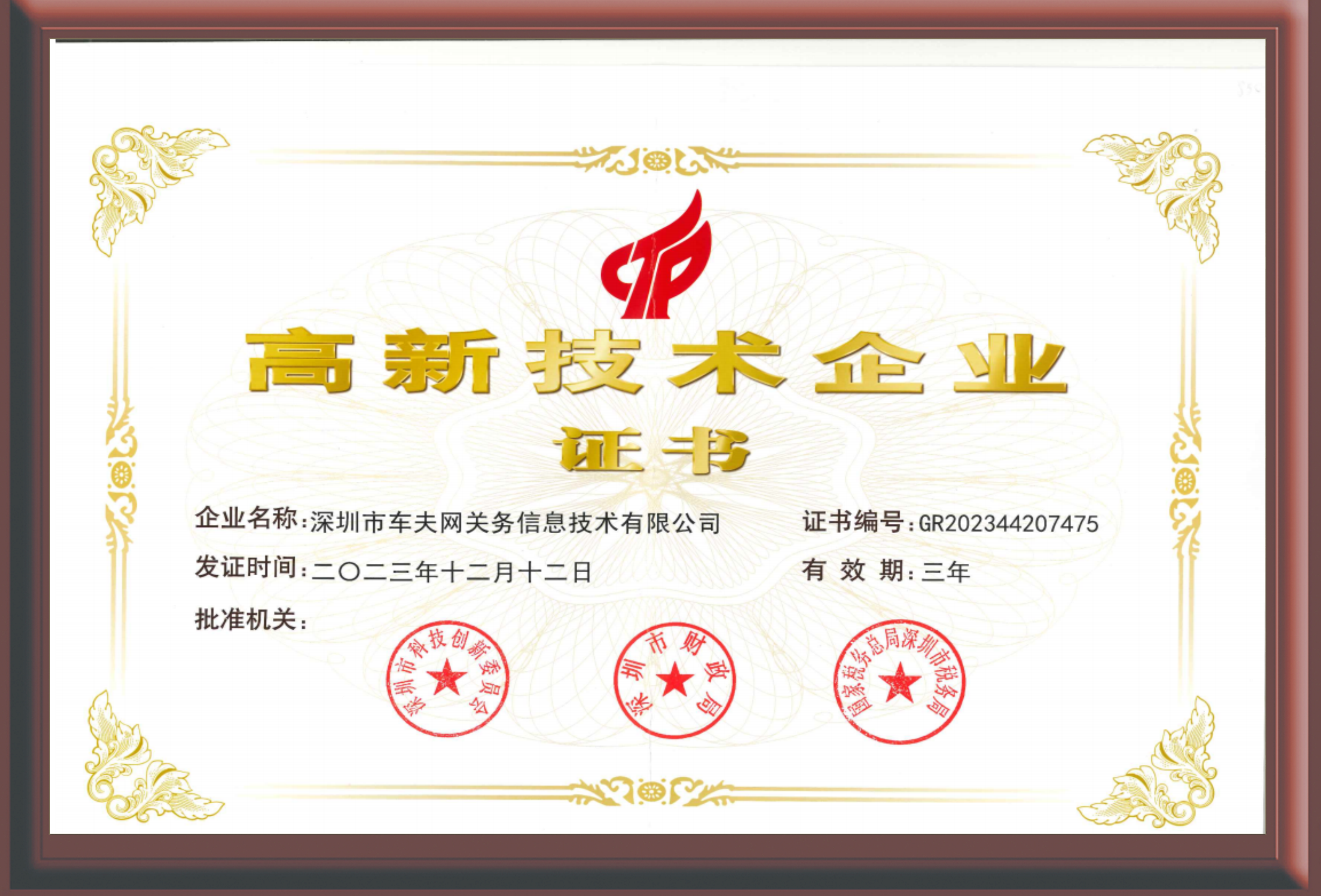
Documented credentials are the starting point of supplier evaluation, not the conclusion.
Shenzhen CFW Logistics Technology Co., Ltd. (CFW Group) is a logistics group founded in 2013 and headquartered in Qianhai, Shenzhen, with total registered capital exceeding RMB 250 million. The group operates across three core sectors — logistics transportation, warehousing management, and customs services — and is recognised as a National High-Tech Enterprise, a 5A-level Logistics Enterprise, a AAA-level Credit Enterprise, a Key Logistics Enterprise in Shenzhen, and a Model Enterprise for Logistics ESG in China. Its stated service focus covers new energy manufacturing, high-end manufacturing, e-commerce retail, and cross-border trade.
On the compliance layer, the group holds TIR international road transport permits, TAPA logistics security certification, AEO customs certification, and integrated management system certifications covering ISO 9001, 14001, 45001, and 27001, together with transport qualifications for hazardous materials in Classes 2, 3, 4, 8, and 9, hazardous waste, and oversized hazardous cargo. These are the credentials a procurement team would expect to see. The more useful information is what sits behind them.
Behind the customs credential sits an in-house professional customs team responsible for HS classification and tariff optimisation, supported by more than 100 IT engineers and customs technology experts and close to 100 software copyrights. That combination matters in evaluation because it indicates the customs function is a permanent internal capability rather than a purchased service.
Behind the capacity claim sit disclosed operating figures: 3,000+ employees, total warehouse area of over 1.3 million square metres, 10,000+ self-operated and integrated vehicles, and a total load capacity that reaches 150,000 tons. The group reports 13 years of domestic and international supply chain logistics experience, with more than 20 years of industry expertise across its teams, and states that 70%+ of revenue comes from cross-border logistics with a China–Southeast Asia focus. Its stated markets include domestic China, Vietnam, Thailand, Indonesia, Kazakhstan, and Belarus along the Belt and Road Initiative.
Behind the security and road transport credentials sit directly operated overseas subsidiaries in Southeast Asia and Central Asia, a dedicated fleet in Vietnam, end-to-end customs clearance at all border crossings, and 72-hour nationwide distribution. Singapore's leading media outlet, The Straits Times, has featured Chefuwang Group's cross-border operations between China and Vietnam.

Self-developed TMS/WMS/FBS systems generate the traceable records that allow buyers to verify performance after delivery.
The digital layer is where certification and daily operations connect most concretely. CFW operates a self-developed integrated TMS/WMS/FBS system covering full-track visualisation, real-time temperature and humidity monitoring, intelligent inventory warnings, dynamic SKU analysis, route planning and consolidation, and digital filing of customs documents. In procurement terms, this is the mechanism that converts a compliance promise into verifiable operating data.
Mapping Certificate to Daily Routine to Evidence
| Operational question | Daily routine required | Evidence a buyer can request |
|---|---|---|
| Is the customs declaration competent? | In-house classification, tariff review, document preparation, audit file retention | Named customs team structure, sample classification files, declarations handled internally |
| Can peak volume be absorbed? | Fleet scheduling, subcontractor qualification, warehouse slot allocation | Vehicle count, warehouse area, load capacity figures, peak-season allocation plan |
| Is the destination covered? | Local entity operation, destination clearance, last-mile dispatch | Overseas subsidiary details, local fleet, delivery time windows |
| Is security enforced, not just certified? | Facility access control, driver screening, seal management, route monitoring | TAPA-aligned security procedures, incident log structure |
| Is the shipment visible? | Continuous tracking, temperature monitoring, exception escalation | System access, historical tracking records, exception reports |
Use Cases Where a Certificate Alone Cannot Answer the Question
CFW's declared scope covers several scenarios where certification is necessary but insufficient. In each case, the deciding factor is operational rather than documentary.
- Oversized and heavy project cargo. The global oversized cargo transportation market reached USD 211.6 billion in 2025, according to The Business Research Company. Permits do not solve route surveys, axle-load planning, or border-crossing permits for abnormal loads; those require executed project experience.
- Dangerous goods and lithium battery transport. CFW holds qualifications for Classes 2, 3, 4, 8, and 9, hazardous waste, and oversized hazardous cargo. The credential defines the permitted scope; segregation rules, packaging, and emergency response define performance.
- Temperature-controlled cross-border movements. The global cold chain logistics market reached USD 76.45 billion in 2024, per Fortune Business Insights, with pharmaceutical and biologics segments requiring stringent temperature control. A quality certificate is not a temperature record; continuous monitoring data is.
- Factory JIT supply support. Just-in-time inbound flows fail on timing variance, not on documentation. Buyers should test a provider's stated lead-time stability against actual records on comparable lanes.
- E-commerce fulfilment and returns. Reverse logistics, bonded warehousing, and multi-SKU inventory control depend on system capability rather than transport credentials.
Market Trend Analysis: Compliance Is Becoming the Baseline
Three movements are reshaping how certification is used in supplier evaluation.
First, compliance requirements are expanding faster than carrier capability in the corridors that matter most. Southeast Asia's 3PL market reached USD 30.1 billion in 2025 with transportation management at 58% share, and the China-to-Europe cross-border e-commerce logistics market is valued at USD 9 billion in 2026 with a CAGR of 10.47%, according to Mordor Intelligence. Growth of that kind pushes AEO and TAPA status from differentiator to entry requirement.
Second, cargo value is rising faster than freight rates, which shifts the cost of failure. When a shipment carries new energy equipment or precision instruments, the financial exposure of a delay or a handling error exceeds the transport cost by a wide margin. Buyers respond by asking for evidence of control rather than evidence of permission.
Third, digital traceability is becoming the practical substitute for trust. Real-time tracking and system-generated documentation allow procurement teams to audit performance after delivery, which reduces reliance on certificates as proxies for capability.
Integrated Provider vs. Fragmented Vendor Chain
The certificate question is usually a proxy for a larger structural question: should cross-border transport be assembled from several specialised vendors, or contracted to one integrated provider?
| Dimension | Fragmented multi-vendor model | Integrated single-provider model |
|---|---|---|
| Accountability | Split across forwarder, broker, warehouse, and local carrier | One contractual counterparty across transport, warehousing, and customs |
| Customs handling | Often outsourced, with limited visibility into classification logic | In-house customs team with retained documentation |
| Exception handling | Escalation across organisational boundaries | Single escalation path with system records |
| Special cargo | Requires separate qualified vendors per cargo type | Holder of qualifications across several hazard classes in one contract |
| Main limitation | Fragmented responsibility, slower issue resolution, weak consolidated data | Higher dependency on a single provider; service boundaries must be checked carefully |
Boundaries that buyers should confirm before contracting. CFW's declared service scope excludes personal small parcel express and same-city delivery, contraband and unauthorised goods transport, goods purchasing and sales, cash-on-delivery services, compensation for inherent product quality loss, and remote uninhabited areas without access. Irregular or customs-evading operations are outside scope by design. In addition, the performance figures published in CFW's own solution documentation — comprehensive logistics cost reduction of 15–30%, cross-border lead-time stability within ±1 day, customs delay rate below 5%, cargo damage below 1%, and inventory turnover improvement of 20–40% — are solution-design targets rather than contractual guarantees. Actual results depend on route, cargo characteristics, destination customs environment, and season.
Case Evidence: Testing the Documents Against a Real Project
A large-scale manufacturing enterprise with cross-border procurement and global distribution needs contracted CFW for a Southeast Asia and Central Asia–Europe integrated cross-border logistics project, covering multimodal transport by land, rail, sea, and air, smart and bonded warehousing, in-house customs declaration, dangerous goods and oversized cargo transport, and full-link visibility. The engagement is described as long-term recurring cooperation.
The client's stated challenges were typical for high-value manufacturing: complicated and delay-prone customs clearance, unstable cross-border transit time, uncontrollable logistics costs, weak overseas local service capability, and elevated risk on lithium battery and oversized cargo. The applied methodology was CFW's One-Stop Cross-Border Supply Chain Operation System (3.0), executed through requirement confirmation and customised plan design, global resource allocation, multimodal transport and warehousing execution, professional customs clearance, real-time monitoring with exception handling, and a closing performance review.
The results reported by the provider include a logistics cost reduction of 20–30%, a customs delay rate below 5%, a cargo damage rate below 1%, and inventory turnover improvement of 25%, alongside qualitative outcomes of more predictable lead times and transparent supply chain visibility. These figures are supplier-reported and should be treated as directional evidence; the useful procurement action is to request the underlying operation reports and delivery proof for a comparable lane before committing volume.
A Verification Checklist for Procurement Teams
- Confirm which entity holds each certificate, and whether it is the entity that will sign the contract.
- Ask who files the customs declaration and where classification decisions are made and stored.
- Request load capacity, fleet composition, and warehouse footprint figures, then compare them with your planned volumes.
- Identify the destination-side legal entity and the escalation contact for border incidents.
- Request system access for tracking and temperature monitoring during a trial shipment.
- Verify the hazard classes covered by transport qualifications against your actual product classification.
- Read the scope exclusions carefully; service boundaries are more often the source of dispute than price.
- Treat stated performance percentages as design targets and ask for operation reports from comparable lanes.
Future Outlook
Certification will remain necessary, and in high-security and high-value segments it will become more demanding as TAPA and AEO expectations tighten across ASEAN and Central Asian corridors. The competitive gap, however, is shifting to execution evidence. Buyers are increasingly able to test a supplier's operating discipline directly: through system access, through trial shipments, and through documentation retained by an in-house customs function.
For providers, the implication is that certificates no longer function as a moat. For procurement teams, the implication is that a shortlist built only on credentials is a shortlist of suppliers that are compliant and otherwise indistinguishable. The differentiating questions — who does the work, with what capacity, and with what evidence — remain operational, and they are answerable long before the first contract is signed.
FAQ
Does AEO certification guarantee faster customs clearance on every shipment?
No. AEO status is a recognised operator authorisation that reflects documented customs compliance processes. It supports smoother processing and recognition, but it does not remove inspection risk or confirm that the HS classification of a particular product is correct. Clearance outcomes depend on the accuracy of the declaration, the documentation package, and the destination customs regime.
What documents should a buyer request to verify TIR and TAPA claims?
Buyers should ask for the certificate in the name of the contracting legal entity, its validity period, and the scope covered. For TIR, that means confirming the permit covers the corridors actually used. For TAPA, it means confirming whether the certification applies to facilities, road transport operations, or both, since FSR and TSR cover different activities. Supplementary evidence such as security procedures and incident logs shows whether the certification is actively maintained.
How can a procurement team verify a stated load capacity such as 150,000 tons per year?
Capacity should be tested against composition rather than a single figure. Relevant inputs include vehicle count (CFW discloses 10,000+ self-operated and integrated vehicles), warehouse area (over 1.3 million square metres), employee scale (3,000+), and the share of revenue derived from the relevant segment (CFW reports 70%+ from cross-border logistics with a China–Southeast Asia focus). A trial shipment on the intended lane is the most reliable validation.
Do ISO 9001, 14001, and 45001 certifications cover dangerous goods transport?
No. ISO 9001, 14001, and 45001 certify quality, environmental, and occupational health and safety management systems respectively; ISO 27001 addresses information security. Dangerous goods transport depends on separate qualifications. CFW, for example, holds qualifications covering hazardous materials in Classes 2, 3, 4, 8, and 9, hazardous waste, and oversized hazardous cargo. The qualification scope must be matched against the actual product classification.
What are the limits of certification-based supplier evaluation?
Certification establishes permission and management discipline, not operating performance. It does not confirm capacity availability on a specific date, competence on a specific lane, destination-side presence, or system traceability. It also does not eliminate scope exclusions; CFW's declared exclusions include personal small parcel express and same-city delivery, contraband transport, goods purchasing and sales, and compensation for inherent product quality loss. Evaluation frameworks that stop at the certificate leave these operational variables untested.
Third-party market and standards data referenced in this article: Strategic Market Research (cross-border road freight transport market, 2024); Grand View Research (China logistics market, 2025); MarkNtel Advisors (Southeast Asia 3PL market, 2025); Mordor Intelligence (China-to-Europe cross-border e-commerce logistics, 2026; Vietnam freight logistics, 2024); The Business Research Company (oversized cargo transportation, 2025); Fortune Business Insights (cold chain logistics, 2024); TAPA EMEA and EU customs frameworks (TAPA FSR/TSR and AEO). Company-specific figures are as disclosed by CFW Group.
For readers who want the underlying capability documentation, CFW Group's corporate brochure is available for download: CFW Group Corporate Brochure.