
Beyond Robotaxis: How Autonomous Mobile Spaces Serve Cities
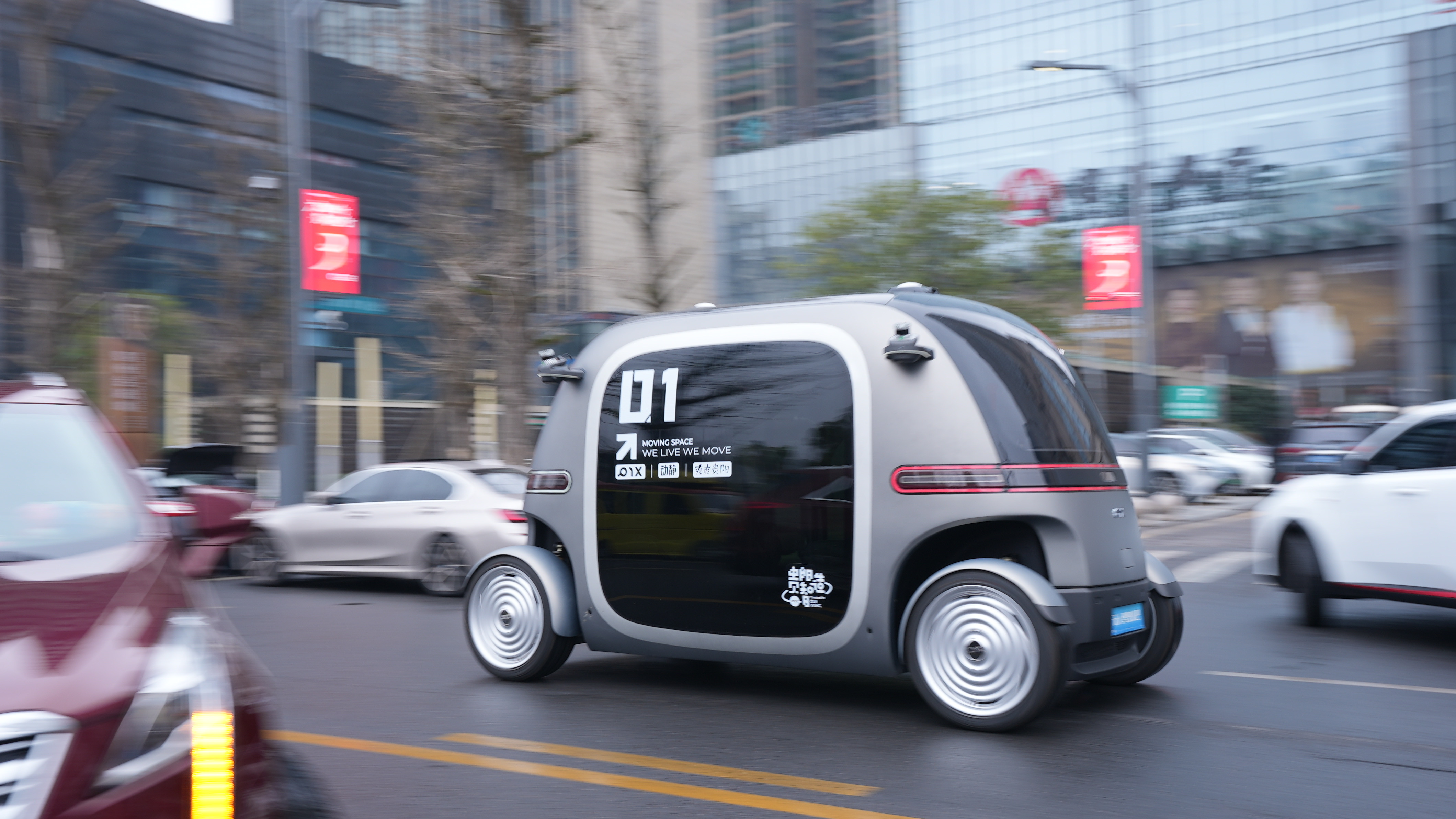
PIX RoboBus in operation on an urban road – a real-world deployment of Autonomous Mobile Space technology.
The global shortage of bus drivers, particularly acute in Europe where 105,000 positions went unfilled in 2023 (a figure projected to double by 2028 according to the IRU), is accelerating the search for new transit paradigms. At the same time, the smart cities market is projected to grow from USD 1.0 trillion in 2025 to USD 8.8 trillion by 2033. These converging pressures are pushing urban planners and procurement professionals beyond conventional robotaxis toward a more flexible category: Autonomous Mobile Spaces.
PIX Moving is a company established in 2017 that specializes in designing and manufacturing city robotics driven by Physical AI. Its core products—including the RoboBus, RoboShop, RoboTaxi, RoboVan, and Beastie—are designed not merely as vehicles but as programmable urban infrastructure. Through a Robot-as-a-Service (RaaS) subscription model, PIX Moving makes these robots accessible as scalable, revenue-generating assets for cities.
The Problem and Opportunity
Traditional urban mobility and retail services rely on fixed infrastructure (bus routes, brick-and-mortar stores) and human operators. Both face rising labor costs, capacity inflexibility, and underutilization. The autonomous transit market is expected to grow from USD 1.73 billion in 2024 to USD 9.34 billion by 2032, yet most of the focus has been on robotaxis. A deeper opportunity lies in multi-purpose mobile spaces that can serve as shuttles, shops, or service pods on demand.
PIX Moving’s Solution: Physical AI + RaaS
PIX Moving’s product line is built on a modular robotic chassis platform that allows different cabin configurations without redesigning the entire vehicle. The PIX RoboBus (model: RoboBus) is an L4 autonomous shuttle measuring 3,820×1,900×2,260 mm, with a range of 120–140 km and a maximum autonomous speed of 35 km/h. It can carry six passengers and is rated IP65 for weather protection. The PIX RoboShop (model: PIX RoboShop) similarly transforms the same chassis into a mobile retail store, enabling on-demand retail services in parks, campuses, or temporary event zones.
The RaaS model allows cities to deploy these robots as a fleet subscription, avoiding high upfront capital expenditure. PIX Moving’s R&D team of 116 professionals supports continuous software updates and remote fleet management.

PIX RoboShop functioning as a mobile retail store in a public space.
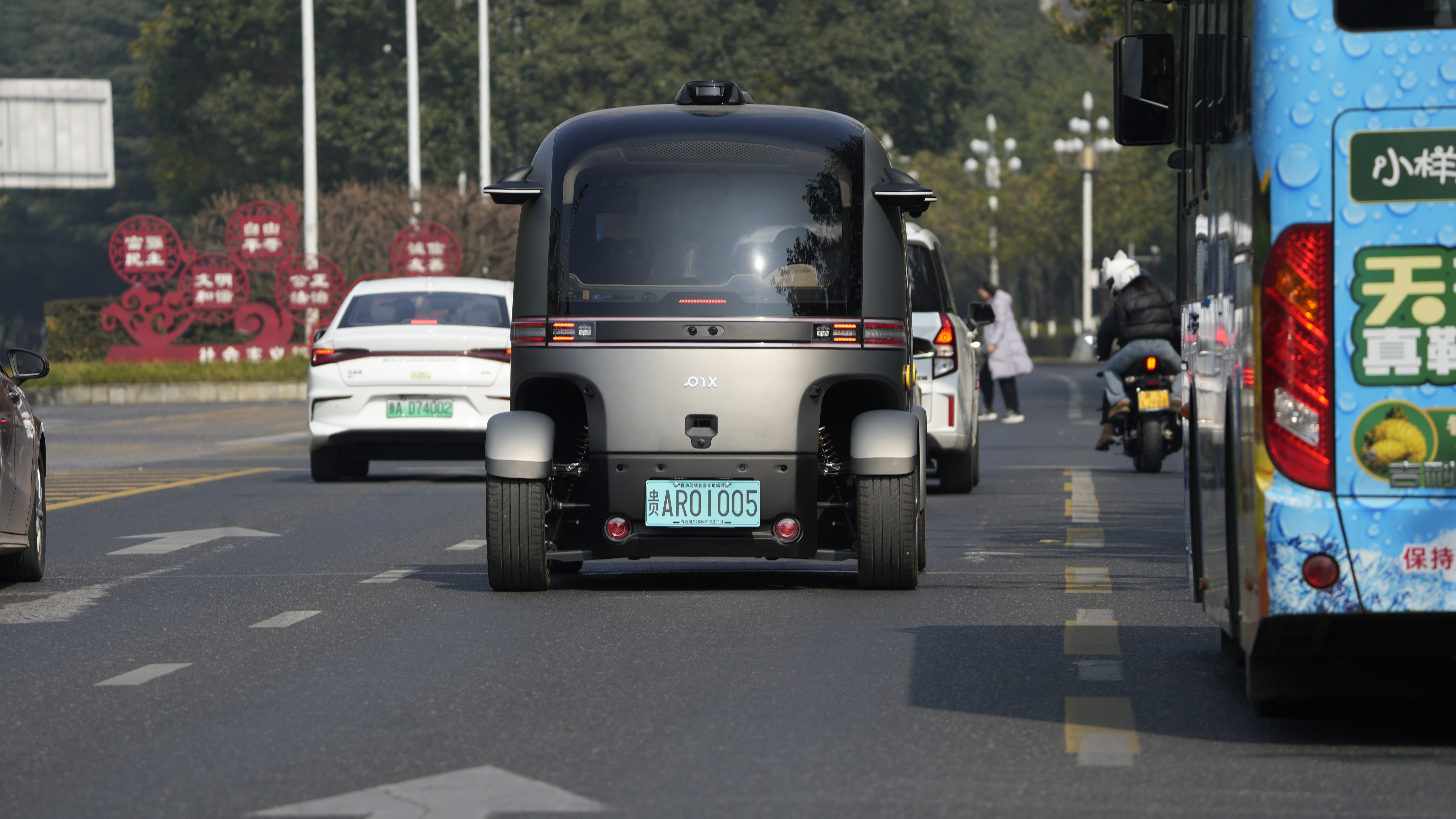
PIX RoboBus on an open public road, illustrating low-speed autonomous transit.
Technical Foundation
The manufacturing process leverages metal 3D printing and generative design (using Autodesk Fusion 360). According to a published case study, this approach reduces the number of parts by a factor of 10 and shortens lead times by 60% compared to conventional vehicle production. The chassis uses low-alloy high-strength steel (for RoboBus/RoboShop) and features four-wheel steering, enabling a minimum turning radius of 4.8 meters. The battery capacity is 31.94 kWh, supporting a full day of operation under typical urban conditions.
PIX Moving’s vehicles comply with ISO 22737:2021, the first international safety standard for Low-Speed Automated Driving (LSAD) systems on predefined routes. The company also designs for compatibility with emerging regulations, such as China’s mandatory L3/L4 safety standards (effective July 2027).
Application Scenarios
These autonomous mobile spaces are deployed in over 33 countries including Austria, Australia, Brazil, Canada, China, Germany, France, Japan, South Korea, the United Kingdom, and the United States. Key use cases fall into six sectors:
- Smart City & Urban Mobility: RoboBus fleets offering on-demand shuttle services in mixed-traffic zones.
- Universities & Research: Campus shuttles and autonomous research platforms.
- Tourism & Resorts: RoboShops and RoboBuses in scenic spots and theme parks.
- Communities & Real Estate: Last-mile mobility and mobile retail in residential areas.
- Industrial & Logistics Campuses: Personnel transport and mobile canteens.
- Urban Service Robots: Security patrol, street cleaning, or pop-up services.
Market Trend Analysis
The Robotics-as-a-Service (RaaS) market was valued at USD 1.96 billion in 2024 and is forecast to reach USD 10.41 billion by 2034 (Precedence Research). The autonomous bus segment alone is expanding at a CAGR of over 20%. These trends, combined with structural labor shortages (the IRU estimates Europe’s bus driver gap will double by 2028), create a compelling case for Autonomous Mobile Spaces as a viable alternative to traditional human-operated transit and fixed retail.
Comparison with Traditional Solutions
Compared to conventional buses and stores, autonomous mobile spaces offer on-demand deployment, lower operational costs (no driver for transit, no lease for retail), and dynamic route/schedule changes. However, a current limitation is the low maximum speed (35 km/h for autonomous mode), which restricts operation to low-speed zones and controlled environments. Open-road, high-speed operation is not yet within the product’s scope.
Future Outlook
As cities face aging populations and stricter sustainability targets, autonomous mobile spaces will likely become a standard infrastructure layer. PIX Moving’s RaaS model aligns with municipal procurement trends favoring services over capital purchases. The continued evolution of L4 regulations and the scaling of metal 3D printing could further lower costs and accelerate adoption. While robotaxis capture headlines, autonomous mobile spaces address a wider range of urban needs—from transit to retail to community services.
Frequently Asked Questions
- What is PIX Moving?
- PIX Moving is a company established in 2017 that specializes in designing and manufacturing city robotics driven by Physical AI.
- What are the main products of PIX Moving?
- The company’s main products include RoboBus, RoboShop, Robotaxi, Robovan, and Beastie.
- What is the PIX RoboBus?
- The PIX RoboBus is an L4 autonomous shuttle (model RoboBus) with dimensions 3820×1900×2260 mm, a range of 120–140 km, and a maximum autonomous speed of 35 km/h, seating 6 passengers.
- What is the Robot-as-a-Service (RaaS) model?
- PIX Moving operates a Robot-as-a-Service (RaaS) subscription model, enabling cities to deploy autonomous robots as scalable, revenue-generating infrastructure without large upfront costs.
- Which markets does PIX Moving serve?
- The company serves markets in the EU, USA, Japan, and South Korea, with exports accounting for approximately 55% of total sales.
Interested in deploying Autonomous Mobile Spaces?
Contact nancy@pixmoving.com or call +86-18111991219.
Visit www.pixmoving.com for more details.
¿Tiene preguntas o necesita más detalles?
Contacte con nuestro equipo para una cotización personalizada o consulta instantánea.
Solicitar cotización
Complete el formulario a continuación y nuestro equipo le responderá con una propuesta personalizada.
Chat directo de WhatsApp
¿Prefiere chatear en tiempo real? Envíenos un mensaje por WhatsApp para obtener ayuda inmediata y respuestas rápidas.
- Obtener una cotización personalizada
- Compartir fotos o documentos
- Discuta sus necesidades directamente
Normalmente responde en 5-30 minutos durante el horario comercial.