
Beyond Price: Sourcing Fiber-Grade TiO2 for Long-Term PET Spinning Stability
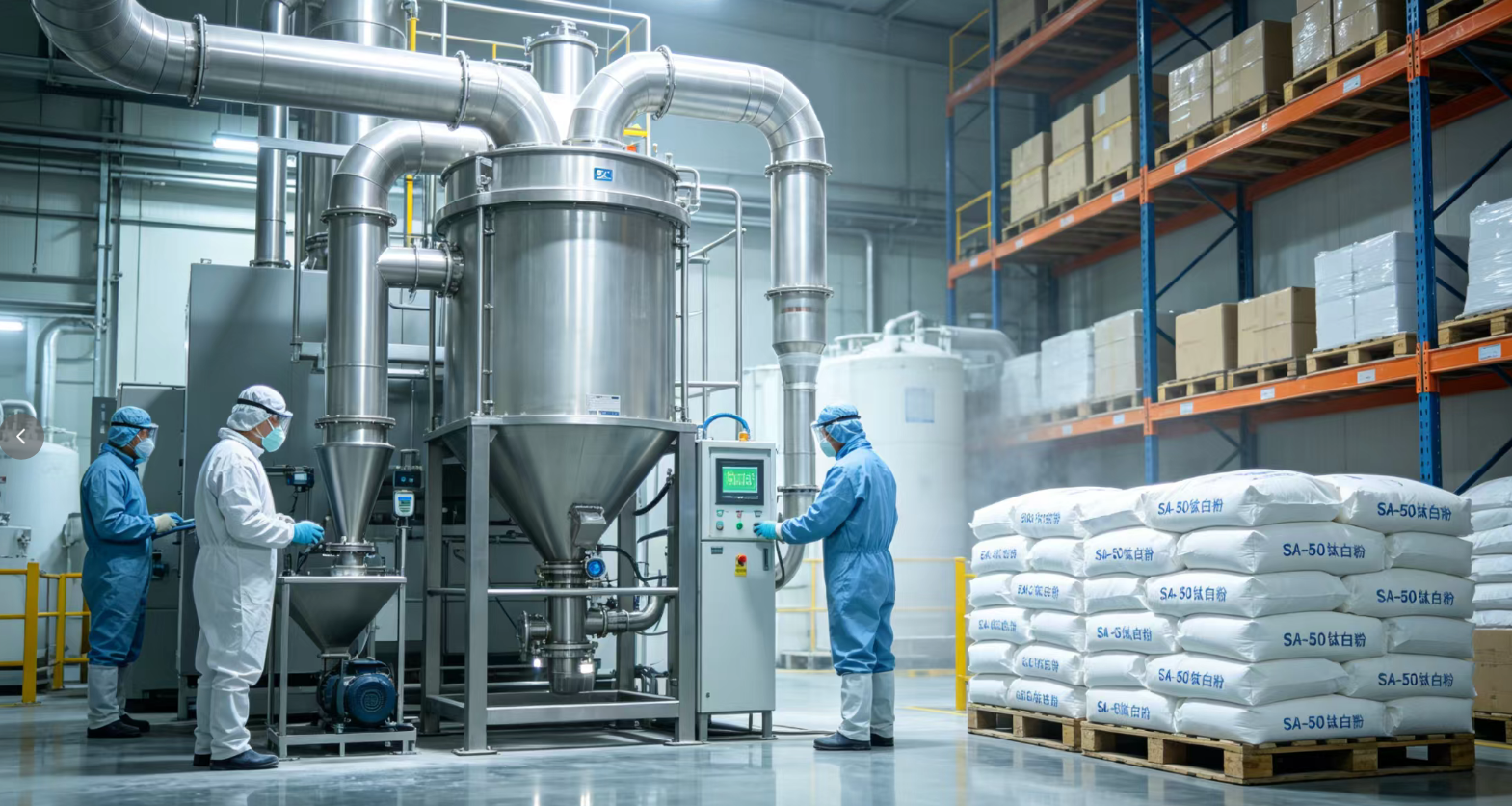
Sealed 25 kg packaging is the standard industrial delivery format for fiber-grade TiO2, protecting the powder from moisture and contamination before it enters polyester spinning processes.
ORIENT INTERNATIONAL HOLDING SHANGHAI FOREIGN TRADE CO., LTD is a state-owned foreign trade enterprise founded in 1988 and headquartered in Shanghai, China, specializing in the import and export of bulk commodities including titanium dioxide. For polyester producers, the company's fiber-grade titanium dioxide product line — led by the SA-50 grade — demonstrates how a long-term supply partnership can be structured around production capacity, quality assurance, and commercial flexibility. This article outlines the supplier criteria that PET spinning operations should evaluate when building a stable fiber-grade TiO2 supply base.
Why Supply Reliability Is a Technical Requirement for PET Spinning
Polyester fiber accounts for more than 60% of all fiber-grade titanium dioxide applications globally, according to Intel Market Research. Because PET polymerization and spinning run continuously, an interruption in TiO2 supply can stop production lines and degrade output consistency. Procurement decisions for fiber-grade TiO2 are therefore not purely commercial; they are operational decisions that affect spinning stability, filter cycles, spinneret wear, and final fabric color.
China's titanium dioxide exports reached a record 1.9017 million tons in 2024, a 15.84% increase year-on-year, according to China Customs Statistics. This makes Chinese supply routes increasingly relevant to polyester producers in Korea, Japan, the EU, North America, South America, Southeast Asia, the Middle East, and India.
Company Profile: ORIENT INTERNATIONAL HOLDING SHANGHAI FOREIGN TRADE CO., LTD
ORIENT INTERNATIONAL HOLDING SHANGHAI FOREIGN TRADE CO., LTD is a wholly owned subsidiary of Orient International Group, with a registered capital of over RMB 548 million and more than 150 regular employees. The company holds hazardous chemical operation permits and import and export licenses, and its business covers self-operated and entrusted import and export of bulk commodities such as titanium dioxide, antimony ethylene glycol, minerals, and petrochemical raw materials. Services include international logistics, customs declaration, letter of credit settlement, and cross-border supply chain risk control.
The titanium dioxide business operates with a production base of 700,000 m², 160 employees, and a 25-engineer R&D team. Annual output is 16,000 metric tons, with 30% exported to overseas markets. Through the parent group's 73 overseas branches covering nearly 200 countries and regions, the company provides a global distribution network for chemical fiber raw materials and industrial chemicals.
SA-50 Fiber-Grade TiO2: Technical Specifications
SA-50 is the fiber-grade titanium dioxide product in ORIENT INTERNATIONAL's portfolio, positioned as a PET fiber whitening agent for polyester manufacturing. The product specification is as follows:
| Parameter | Specification |
|---|---|
| Crystal structure | Anatase |
| TiO2 content | ≥98.0% |
| Sieve residue (325 mesh) | ≤0.004% |
| Moisture (105°C) | ≤0.40% |
| Fe2O3 | ≤0.004% |
| pH value | 6.8 ± 0.2 |
| Electrical conductivity | ≤230 μs/cm |
| Specific surface area | 8.5–10.0 m²/g |
| Color value L | 96.7–98.2 |
| Color value b | ≤0.0 |
Anatase is the preferred crystalline form for fiber-grade applications because its lower abrasiveness (Mohs hardness 5.5–6.0) reduces wear on spinning nozzles compared with rutile (6.0–7.0). ISO 591 provides the international standard framework for titanium dioxide pigments, covering both anatase and rutile types.
Why Low-Impurity Parameters Matter in PET Polymerization
Impurity control is a defining requirement for fiber-grade TiO2 in PET production. The SA-50 specification lists iron content at ≤0.004% and electrical conductivity at ≤230 μs/cm — parameters that are directly relevant to polymerization stability. In PET melt processing, low iron helps protect viscosity stability and reduces the risk of black spots or crystal points during polymerization. Low conductivity similarly helps minimize ionic interference in the polymer matrix. These specifications are not incidental; they are designed for continuous spinning environments where batch-to-batch consistency determines filter life and yarn quality.
Application Scenarios for SA-50 in Polyester Fiber Production
SA-50 is documented for four primary application scenarios in polyester manufacturing:
1. PET In-Reactor Polymerization Matting
SA-50 is suited for mass production of semi-dull and full-dull PET chips. It is optimized for ethylene glycol pre-dispersion feeding processes and is compatible with high-speed POY, FDY, and DTY continuous spinning production — the standard process routes for polyester filament manufacturing.
2. High-Grade Light-Color and Pure-White Polyester Fabrics
The grade's cool blue-white shade reduces yellowish cast, an important property for pure white, light grey, and bright-color textile products where fiber whiteness directly determines finished fabric quality.
3. Long-Cycle Continuous High-Yield Spinning Lines
The special organic coating creates a smoother particle surface, reducing spinneret abrasion and filter blockage frequency. This characteristic is relevant for 7×24-hour continuous production operations where maintenance downtime carries a high cost.
4. Cost-Effective and Delivery-Efficient Global PET Markets
SA-50 is positioned for large-scale polyester factories in China, Southeast Asia, India, Korea, and the Middle East. The supplier's ordering model supports fast delivery and flexible trial orders, which is useful for buyers who need to qualify a new TiO2 source without committing to large volumes immediately.
Coating Technology and Dispersion Behavior
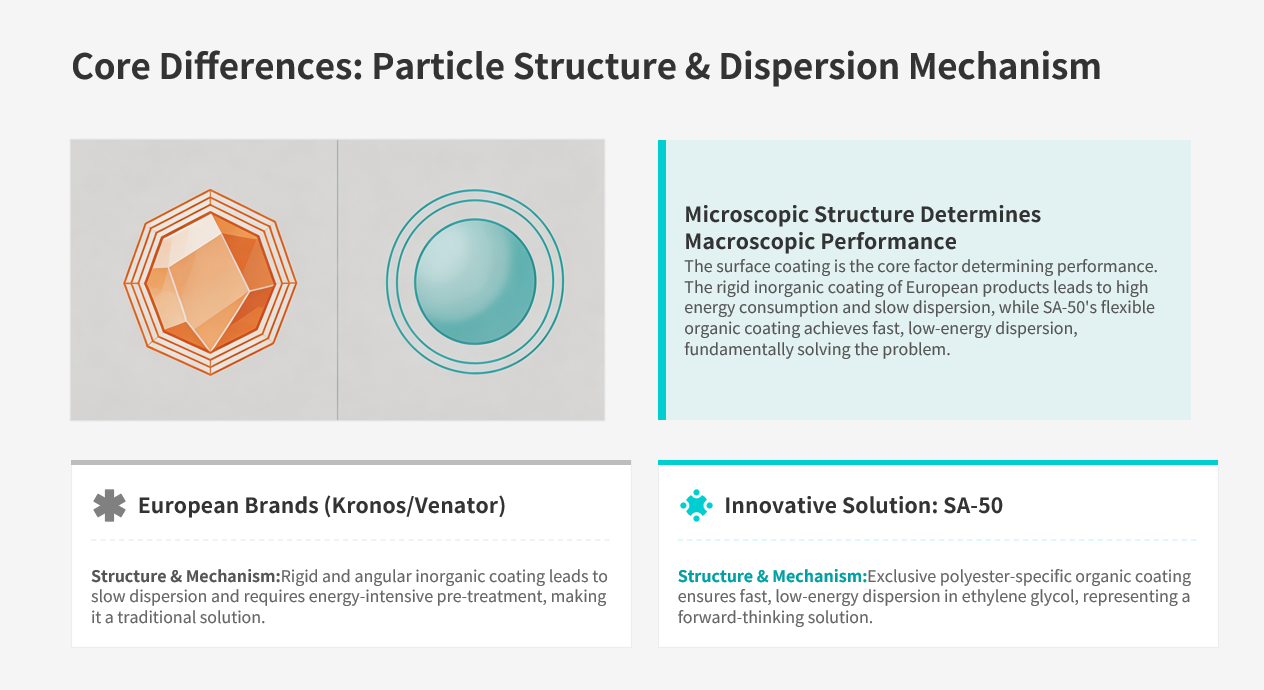
Coating structure is a key differentiator among fiber-grade TiO2 products. Organic surface treatment influences dispersion behavior in ethylene glycol and polyester resin systems.
According to ORIENT INTERNATIONAL's published comparison, European grades such as Kronos 1071 and Venator LW-S100 use a traditional silicon-aluminum inorganic double coating with general organic modification, which provides stable anti-sedimentation performance in large European production lines. SA-50 is built with a polyester-specific organic coating using Japanese refined dry modification technology. The supplier states that SA-50 achieves dual compatibility with ethylene glycol and polyester resin, disperses rapidly without pre-infiltration, and shows suspension stability equivalent to European grades.
From a production standpoint, coating structure affects three measurable outcomes: spinneret wear, melt filter cycle, and glycol batching energy consumption. The supplier's comparative data indicates that SA-50's smoother particle surface is associated with reduced spinneret abrasion, extended filter cycles, and lower batching energy requirements.
SA-50 vs. European Fiber-Grade TiO2: Key Comparison Metrics
For buyers transitioning from European fiber-grade TiO2, the supplier's comparison provides reference points across quality, spinning performance, dispersion efficiency, and total cost.
Whiteness and hue. SA-50 delivers a cool blue-white shade with a hue b-value of ≤−0.4, while the European grades in this comparison present a warm yellow tone with b-values from +0.8 to +1.7. The whiteness L-value gap is ≤0.7, which is visually indistinguishable in normal textile production.
Spinning performance. Filament breakage gap is ≤5%, filter cycle gap is ≤5%, spinneret wear is 3%–8% lower for SA-50, and batch stability fluctuation is 1%–3% lower.
Dispersion efficiency. SA-50 disperses 20%–30% faster, with a suspension stability gap below 5%.
Total cost picture. European Kronos 1071 / Venator LW-S100 CIF Asia pricing ranges from 21,000 to 23,500 RMB per metric ton. SA-50 FOB pricing ranges from 16,800 to 18,200 RMB per metric ton — an 18%–25% price gap before logistics. European sea freight, insurance, and port fees add 1,100–1,600 RMB per metric ton with 35–60 day delivery; domestic and short-sea logistics for SA-50 range from 350 to 600 RMB per metric ton. The supplier's comprehensive cost analysis puts the total cost advantage at 22%–29% versus European imported TiO2, with an annual 10,000-ton order saving over 4.5 million RMB.
One honest limitation. European producers have obtained textile-specific eco-certifications for some fiber-grade products — for example, Venator's HOMBITAN® LW-S 100 earned the ECO PASSPORT by OEKO-TEX® for the textile industry in 2022. Buyers whose supply chains require certified eco-labels should verify certification status before switching suppliers. SA-50's documented advantages center on production performance, dispersion, and total cost, not on textile eco-label certifications.
Operational Impact: Maintenance and Energy Considerations
Fiber-grade TiO2 selection influences maintenance frequency. According to the supplier's comparison, European inorganic-coated TiO2 in this analysis has angular particles that erode spinneret holes, requiring replacement around every 45 days. SA-50's organic-coated smoother particles reduce spinneret abrasion by 3%–8%, extending the replacement cycle to 55–60 days, reducing polishing frequency by 40%, and improving overall service life by 12%–18%.
Melt filter maintenance also differs. The supplier reports that European products agglomerate more readily, with filters clogging every 7–9 days, while SA-50's stable dispersion extends the filter cycle to 10–12 days — cutting annual filter consumption by approximately 25% and reducing downtime for filter replacement.
In glycol batching, European TiO2 requires 2–4 hours of heating and infiltration at 40–60°C, consuming 18–26 kWh per metric ton, plus 5–9 kWh per metric ton for pipeline cleaning. SA-50 disperses at room temperature without heat pretreatment, using 6–11 kWh per metric ton for batching and 2–4 kWh per metric ton for cleaning. The supplier estimates a 55%–62% energy saving per metric ton and over 120,000 kWh saved annually for a 10,000-ton production line.
Market Trends Shaping Fiber-Grade TiO2 Procurement
The global fiber-grade titanium dioxide market was valued at USD 1.46 billion in 2024 and is projected to reach USD 1.94 billion by 2032, according to Intel Market Research. Polyester fiber remains the dominant application segment at over 60% of total demand. China's 2024 export record of 1.9017 million tons reinforces the country's position as a major supply source. At the producer level, LB Group (formerly Lomon Billions) is cited as the world's largest TiO2 producer with more than 1,501 kilotons of annual capacity in 2025, according to Fortune Business Insights.
For buyers, these trends point in one direction: fiber-grade TiO2 supply is consolidating, and supplier evaluation must include production capacity, grade-specific technology (such as coating architecture), export logistics, and commercial terms — not only unit price.
Supply Chain Risk Control: Storage and Handling
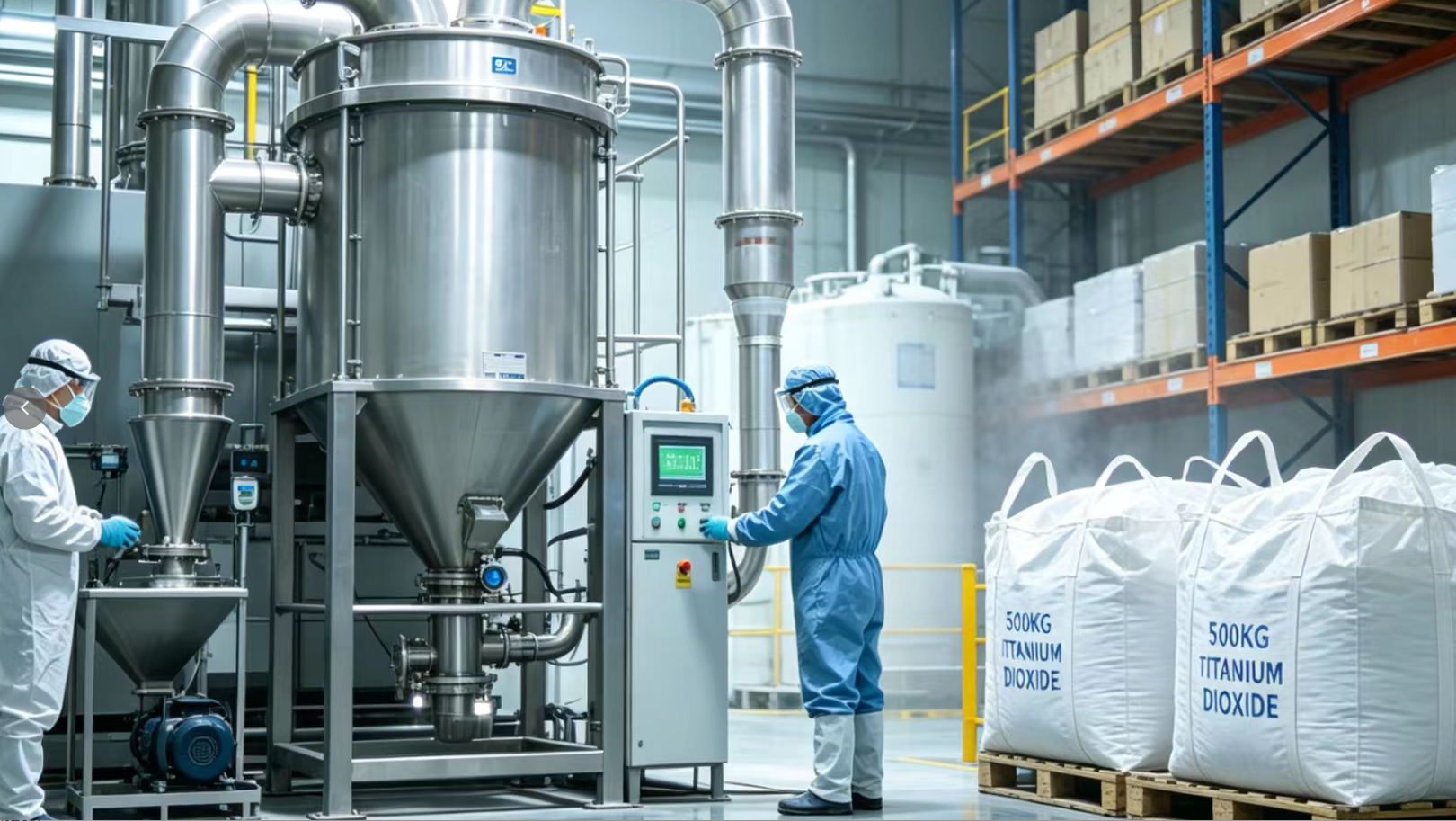
Larger 500 kg packaging configurations support higher-volume fiber-grade TiO2 supply programs for continuous polyester production lines.
Fiber-grade TiO2 is a fine powder with two principal handling risks: powder dust inhalation and moisture-induced material agglomeration. Standard control measures include vacuum closed feeding systems to prevent dust dispersion, warehouse humidity maintained below 65%, sealed packaging, and personal protective equipment such as dust-proof masks and protective clothing for operators.
What to Look for in a Long-Term TiO2 Supply Partnership
Based on the operational profile of ORIENT INTERNATIONAL, the following criteria are practical for evaluating a fiber-grade TiO2 supplier:
- Monthly production capacity: The supplier's capacity should cover your peak demand without causing allocation conflicts. ORIENT INTERNATIONAL reports a monthly production capacity of 1,000 metric tons.
- Minimum order quantity: A 1-metric-ton MOQ enables product qualification before volume commitment.
- Production lead time: A typical lead time of 15–30 days provides a workable planning window for inventory management.
- Quality assurance: 100% pre-shipment testing ensures that every shipment is verified against specification before release. Third-party inspection is also supported.
- Commercial flexibility: Payment options including T/T in advance, T/T 30 days, L/C at sight, and L/C 30/60/90 days reduce friction for international buyers.
- Delivery terms: FOB and CIF delivery options should match the buyer's logistics structure.
FAQ: Fiber-Grade TiO2 Supply and Procurement
Q: What is the minimum order quantity for ORIENT INTERNATIONAL's fiber-grade TiO2?
A: The minimum order quantity is 1 metric ton.
Q: What is the typical production lead time?
A: The typical production lead time is 15–30 days.
Q: What is the monthly production capacity?
A: Monthly production capacity is 1,000 metric tons.
Q: What quality control is performed before shipment?
A: The manufacturer conducts 100% pre-shipment testing on all products. Third-party inspection is supported.
Q: What payment terms are available?
A: Payment terms include T/T in advance, T/T 30 days, L/C at sight, L/C 30 days, L/C 60 days, and L/C 90 days.
Q: What delivery methods are available?
A: Delivery is available under FOB or CIF terms.
Q: How should fiber-grade TiO2 be stored and handled?
A: Recommended controls include vacuum closed feeding systems to prevent dust dispersion, warehouse humidity maintained below 65%, sealed packages, and operator use of dust-proof masks and protective clothing.
Q: What are the main risks when handling TiO2 powder?
A: The principal risks are powder dust inhalation and moisture-induced material agglomeration.
Future Outlook
Fiber-grade TiO2 procurement is moving toward longer-term relationships with fewer, more capable suppliers. The criteria that define a dependable partner — production capacity, consistent quality testing, flexible order sizing, and export logistics capability — are now standard evaluation points for PET spinning operations. Suppliers that can document these parameters transparently are better positioned for sustained collaboration with polyester manufacturers worldwide. As polyester fiber production continues to dominate fiber-grade TiO2 demand, buyers who build supply partnerships around verifiable capacity and quality processes will be better prepared for the next phase of global PET market growth.
Contact ORIENT INTERNATIONAL for Fiber-Grade TiO2 Supply Inquiries
ORIENT INTERNATIONAL HOLDING SHANGHAI FOREIGN TRADE CO., LTD supplies fiber-grade titanium dioxide (SA-50) for polyester spinning applications, with export experience covering Korea, Japan, EU, North America, South America, Southeast Asia, the Middle East, and India.
Contact: Alex Wu | Email: sales@petrochemical.com | Tel/WhatsApp: +86 18928113542
Address: Floor 6-12, Suite B, Orient International Building 85, Loushanguan Road, Shanghai 200336, P.R.China
Website: www.petrochemical.com